Hi,
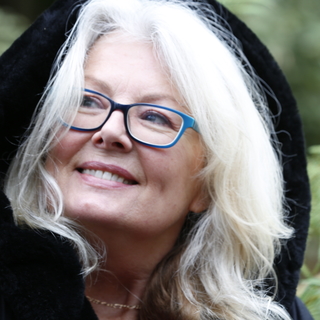
My name's Sim,
Welcome.
So if you're new to meditation,
I'm going to give you a few beginner tips.
That I have found really helpful across.
Working with people from all different walks of life.
So hopefully you'll find these tips handy as well.
I refer to consciousness,
Mindfulness when we meditate.
We can be in such a focused perspective of the mind and consciousness and One of the ways that we can understand what consciousness is and all those thoughts and feelings imaginings visual images that we might have.
There's a lot of content in the mind.
And when we meditate,
There's even more content in the mind,
It seems.
It seems that there's even more.
And we can start to sort of go,
Well,
What is this meditation all about?
I sit quietly.
I'm supposed to go into this really beautiful,
Peaceful realm.
And all I'm faced with is.
.
.
So many.
Thoughts,
Often really harsh negative thoughts coming up,
Telling me I can't do this,
I'm no good at it.
And also feelings.
So perhaps we may be taking up meditation because we've been going through a lot of stress and it's been recommended as something helpful.
And so we've got all these intense emotional experiences as well.
And that might be anger rising in the practice,
It might be jealousy,
It could be sadness and grief and loss and just wow,
You know,
Meditation doesn't feel relaxing at all.
So this is why when we begin the practice,
It's really helpful to have something to anchor the attention on,
Because our attention is the key.
Our attention is automatically directed to keeping us safe,
To monitoring the loudest noise,
If you like,
Or the loudest,
Most intense feeling that we might be feeling and experiencing.
Our attention is grabbed to that.
So internal focus,
But also our attention goes outside.
What can we hear if there's a garbage truck guys,
The dogs barking,
Sirens going off,
Busy cars,
Or we can hear a conversation someone's have happening So we think the ideal location for meditation needs to be on the top of a mountain or on a rock overlooking the ocean where there's nobody around.
And sure,
That's nice.
We're still going to have those internal distractions,
If you like,
Grabbing our attention.
So the first practice that we can do is focusing in on the breath and maybe counting as you breathe in.
Gives you attention,
Something to focus on.
So counting as we breathe in through the nose.
Holding that breath and exhaling with a smile and a sigh.
And so that's the rhythm and we want to do five repetitions of that.
So we're breathing in in our mind,
Counting one,
Two,
Three,
Four,
Holding one,
Two,
Exhale with a sigh.
One,
Two,
Three,
Four,
Five,
Six.
Pause.
And then repeating.
Breathing in.
One,
Two,
Three,
Four.
Hold.
Two,
One.
Exhale.
One,
Two,
Three,
Four,
Five,
Six.
And repeating.
And so we get into our own rhythm with that.
We're giving attention to the numbers and also to this exhaling.
Where do you feel that in your body?
In the chest,
In the belly,
So you'll notice all those things.
Where's the attention going?
So we want to be able to also practice focusing our attention.
It's a concentration practice.
On one word that we say in our mind.
That one word could be calm,
Peace,
Joy,
Any word,
Green.
Kala Love.
You choose one word.
And so what we're doing is we're narrowing the attention to that one word.
We're focusing in on that one word.
We can hear our own voice repeating that word quietly.
And we practice that just for one minute.
So when you do that practice,
Which we will do in a moment,
Again,
You'll notice all of those thoughts,
All of those feelings,
Whatever there is,
Will arise in that quiet space or in that pause that you're giving.
And it's a pause filled with lots of activity,
Noises going on,
Analyzing,
All of the rest of it.
So we just notice that and we don't go big deal.
I shouldn't have that there.
We don't give ourselves that expectation.
We understand that that is the natural way of the mind,
Natural way of the emotions.
They're going on,
But we're going to give attention to our one word.
And over that practice of doing that,
Our attention will go and we bring it back.
And we just keep bringing it back.
Now,
Who is bringing it back?
That's you.
You as the observer,
The orchestrator,
The observer,
The witness,
Bringing your attention back to the focal point.
Calm,
Calm,
Calm.
And we're just going to practice it for a minute now and then we'll talk a little bit more,
Give you a sense of the experience of it,
So you kind of have that insight as to what I'm referring to.
All right,
So you can keep your eyes open or you can close your eyes.
And you just allow for your breathing to fall to its own natural rhythm.
And think of a word.
Choose your word and focus on that word.
Repeat that word in your mind.
For the next minute and I'll let you know when the minutes pass.
OK,
That's good.
So welcome back.
And did you notice?
Was it easy to focus on that word for the whole minute or did you wander off?
You probably did wander off.
Again,
That is absolutely okay.
That is how We train the mind.
It wanders off,
We bring it back.
When we go to the gym,
If you ever go to the gym and you work out with your weight,
You don't just hold them.
Kind of move them and this is how you build up that muscle.
This is what we're doing with our concentration practice.
Our attention is focusing on one aspect,
One point.
One-pointed focus,
And it's a word that you're focusing on.
Wanders off,
Come back.
Just for one minute.
So what is the nature of the mind?
What is all that content that we're aware of?
So consciousness and awareness is what you'll hear a lot of teachers talking about.
And a useful way to understand.
The mind and consciousness.
And awareness is when we think of or we look at the sky.
So the sky.
.
.
Is a constant.
But it is filled with clouds.
With stars.
It's always changing depending on the time of day.
The sun.
The moon.
And if you think or position and imagine a lighthouse on the top of a hill,
Coast,
Beautiful lighthouse.
It's wide.
It's easy to focus on.
It's a static image.
It's the one pointed focus.
The sky surrounding.
Filled with clouds.
Or is it blue sky with no clouds?
And then the ocean.
Is kind of mirroring that,
But it has its own experience and life as well.
Tides,
Different fish.
Different times of the day.
And if you look at the ocean,
Sometimes those waves can be really high and other times that same ocean can be really calm.
And that represents,
If you like,
Our emotions and how our emotions kind of rise and fall.
That there's.
.
.
A mirroring,
If you like,
Of the ocean and the sky and the time of year,
But it's always changing.
And our consciousness is like that,
Depending on what we're doing,
What we're dealing with in our life,
The way we've been brought up.
It's all in there,
Our memories.
So much going on.
So when we practice meditation,
We're focusing in on the lighthouse.
And we just keep focusing in on that lighthouse.
Means we're not engaging in following a particular cloud that's going across the sky.
We're not analyzing it and saying,
What does it look like?
Or diving deep into the ocean and getting swept around by rough sea.
We're not going to do that.
We might notice it,
But we're going to come back.
Focus on the Lighthouse,
The constant.
And in the practice of doing that for a minute,
Working up to five minutes.
Eventually working up to 20.
In that practice.
We disengage,
If you like,
From all that's going on,
And we become the witness and the observer.
This is an awesome experience for us because it gives us space.
And we gain insight into ourself,
What motivates us.
What are those repetitions of thoughts?
Are they true?
No.
It gives us space.
And in that space very often you'll find that you will.
Calm down.
Your physiology will relax deeply and the brainwaves will also Calm down.
Into a more theta or delta state.
And that is really good for us.
That's really good for our mental health.
For our sense of self-worth.
Our relationships and our actions and the decisions that we make in life.
So let's sit again just for the minute together.
Focus on a word,
Maybe your word's lighthouse,
And that's a good image to help you.
And settle in,
Just allow for the breathing to fall to its own natural rhythm.
And again,
I'll let you know when the minutes pass.
Enjoy that minute.
Focus on your word.
And just be.
Just bait.
Okay,
Lovely.
So just bringing your attention back again,
Opening your eyes.
Have a bit of a stretch.
And Please go and have a search now.
Listen to some of the guided meditations.
It's a really helpful way.
To get a sense of the safety,
Feeling relaxed in your body.
And enjoy every minute that you can take for yourself.
Lots of love to you.
Bye from me.