
The world’s largest free audio library for everyday wellbeing
Real people. Real life. Real time.
Retreat categories
All RetreatsYoga RetreatsWellness RetreatsMeditation RetreatsYoga Teacher TrainingWomen's RetreatsYoga Retreats in BaliYoga Retreats in United KingdomYoga Retreats in AustraliaYoga Retreats in ItalyFind Your Perfect Retreat
Discover transformative Retreats led by Insight Timer's best teachers.Reconnect, recharge, and return renewed.
The world’s largest free audio library for everyday wellbeing
Blog categories
Mental Health and WellbeingTips and GuidesScience and ResearchTraditionSpiritualityAt WorkTop Articles
How to Meditate
Meditation is something everyone can do. Practicing can help improve your health and wellbeing.
Explore MeditationMeditation Timer
Free meditation timer with customizable intervals, bells, and ambient sounds.
Meditation Timer Online
COURSE
Self-Love For Perfectionists
With Laurasia Mattingly
If you’re a perfectionist this course is for you. As a recovering perfectionist, what I’ve learned is that we are so hard on ourselves. We have a story about the need to be “perfect.” In this course we will discover what our perfectionist story is, re-write that story, and learn to find the beauty in our very human imperfections. After this course, you will learrn to love yourself unconditionally, and learn to let go of the need to be “perfect” which ultimately holds us back from peace, ease, and unconditional love. Each day will include a lecture, journal prompts, and end with a meditation practice.
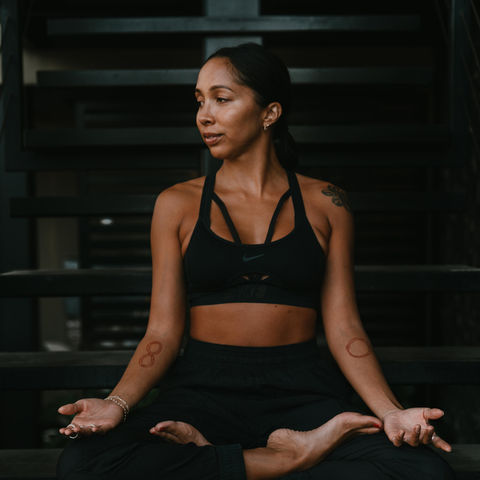
Meet your Teacher
read more
6 Days
2.1k students
4.5 stars
11 min / day
Love
English
4.5 (59)
Recent Reviews
Phoenix

June 29, 2024
The pacing of course felt too fast for me, but I found the journal prompts and reflections really helpful.
Lilian
May 13, 2024
A gentle journey towards letting go of our perfectionism or at least being more compassionate with ourselves when we make mistakes. One request, please: at times, the audio level changes, and I had to readjust my own audio level. Perhaps wrote down at which audio level you want to record at, and then stick to that every time? Thanks for sharing your own story and congrats on this course!
Richie
September 17, 2023
Such a beautiful Journey thank you so much this has been a great experience and you deliver this so eloquently. Thank you thank you thank you.
Bill
August 6, 2023
Thanks 😊
Donna
July 9, 2023
Good content, could have addressed a bit more about the nature and roots of perfectionism. A nice overview though and a good start for those taking on the task of blunting the negative effects of perfectionism on the simplicity and joys of life. Thank you!
Josefina
July 8, 2023
Insightful ! Thank you 🙏
Becky
June 10, 2023
This was a really beautiful course, and try your best to make it personal and relevant for you, your healing will be tremendous. Namaste!
Alicia
May 20, 2023
Some audios had several prompts together, cut and pasted, with no transitions. Seemed like it was a mistake? But like 3 of them where like that
Angela
May 20, 2023
Angela
May 13, 2023
Lovely class - it helped me view myself in a different way. Thank you.
Laurel
May 11, 2023
Right time!
Steve
May 8, 2023
Great content! I was frustrated at times because the recording was SO quiet that I couldn't understand (even at full volume).
Oleksii
December 15, 2022
Thank you
Cassidy
October 15, 2022
What a beautiful 6 days! Thank you Laurasia for the softness you brought to each of my days! 🤍💫🪷
Becky
June 18, 2022
Thank you!
Yasmin
May 7, 2022
Opens up a kind and compassionate way of addressing the “problem” of perfectionism.
Mariam
March 16, 2022
I really enjoyed the content of this course. It was exactly what I needed to remember. My only wish is that some of the lessons with multiple journal prompts were broken up into individual classes. That would allow the meditation practices to be a bit longer. Overall though, a great course.
Steve
March 16, 2022
Laurasia Mattingly is incredibly talented and generous for sharing so many things from her own experience to help others on their own journey. Thank you for sharing
Marla
March 7, 2022
LIFE CHANGING!
Faisal
March 4, 2022
I’ve discovered a lot about myself. I enjoyed the journal prompts and the meditations. I will visit the journal prompts and meditations from time to time. Thank you.
More from Laurasia Mattingly
Trusted by 37 million people. It's free.

Get the app


