Welcome to my favourite Zen stories for sleep time.
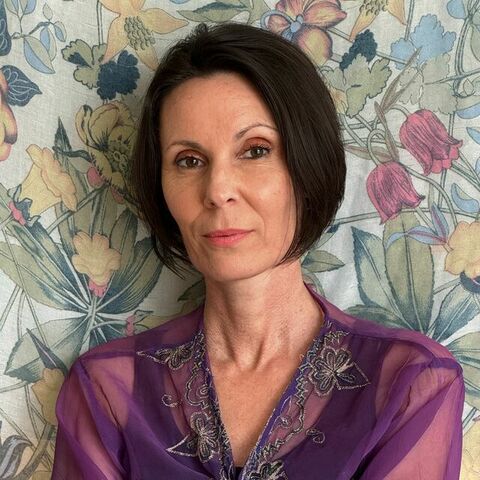
My name is Helen.
And over the past 15 years.
During my personal meditation journey,
There have been certain Zen stories that have stayed with me.
And these stories really spoke to my heart.
And they still do.
And so I feel honored right now to be sharing these favorites with you.
So please,
Settle in.
Find your comfort.
And then let's sigh out together.
And as we do so Our bodies can start to soften.
Hands open.
Jaw loosen.
And eyelids grow heavy.
The weaving thread throughout all of these stories here is reflection,
Just like a mirror.
Zen often teaches that we do not see the world as it is,
We see the world as we are.
And these five tails explore this theme from different angles.
At the end of each story,
We will pause together and I will offer a quiet question for you to hold.
As you relax even further.
Please know that there is nothing to solve.
We are here simply to listen,
Just as if you were sitting in a quiet room or perhaps next to a lake.
And watching the stories unfold like ripples.
On the still water.
To begin,
Let's take a long,
Slow breath in.
And as you exhale,
Let the world soften.
And let your world within open.
As we move.
Into Chapter 1.
The traveler,
And the town.
Our first story is a tale about two travelers who come to the same master.
And this takes place in a small mountain village.
Where the Zen master there was known for his honesty.
And he's silent.
He rarely spoke.
And when he did,
His words carried the weight of stone.
People came from far away just to hear a single sentence from his lips.
On autumn afternoon.
Two travelers arrived at his gate on the same day.
The first was a man whose face was pinched with discontent.
His shoulders were hunched.
His eyes darted nervously,
And he carried his bags as if they weighed twice as what they did.
He was shown into the Master's simple room.
The master was sitting on a cushion.
His eyes were calm.
With his hands resting in his lap.
Master,
" said the man.
I am thinking of moving to this village.
I have heard it is peaceful here.
Before I decide,
I need to know,
What is this town like?
Is it a good place to live?
The Master looked at him.
And then he asked.
What was your old town like?
The man's face darkened.
It was dreadful,
He spat out.
Everyone was hateful.
The neighbors were nosy and cruel.
The merchants chastised me.
The children,
They were disrespectful.
There was no kindness anywhere.
I hated every moment I spent there.
That is why I left.
Namaste Naruto.
His soft,
Gentle reply was,
This town is very much the same.
I do not think you will like it here.
The man's face fell.
He thanked the Master and left.
Muttering under his breath about wasted journeys.
The second traveler entered.
This man walked with a lightness in his steps.
His eyes were bright.
He smiled easily and bowed to the Master with genuine warmth.
Master,
He said.
I have heard how wonderful things are in this village.
I am thinking of moving here.
I would like to know from you,
What is this town really like?
The Master asked the same question.
What was your older town like?
The second man's face lit up.
Oh,
It was wonderful,
He said.
The people were friendly and generous.
My neighbors brought me soup when I was ill.
Shopkeepers all knew my name.
Children would laugh as we walked together down the streets.
Mmm,
I was happy there.
I only lived because I felt I needed a change.
" Master smiled.
This town is very much the same,
He said.
I think you will like it here.
Second man bowed deeply,
Thanked the master.
And walked out into the autumn light with a spring in his step.
The master's attendant,
A young monk who had been watching from the corner,
Was confused.
Master,
He said.
How can this be?
These two men described the same kind of village they were asking about.
How could this town be both dreadful and wonderful?
The Master looked at his young student.
And replied.
This town is neither.
The town is just a town.
The man carries his town within him.
A hateful heart?
Finds hate.
A loving heart.
Finds love.
The world is not the thing.
The world is the mirror.
And we see in it.
Only what we bring to it.
As we pause here for a minute.
Consider the town that you carry within you.
What qualities are you projecting and can you perhaps feel the difference between the world or the town that you live in?
And your reflection of it.
Chapter two,
Another classic Zen tale,
Is entitled The Student and the Years.
A young man came to a martial arts master full of passion and ambition.
He had trained in other schools,
But had heard that this master possessed a secret.
A deeper understanding that could not be found anywhere else.
The young man was determined to learn it.
He knelt before the master and spoke with fierce sincerity.
Master,
He said,
I am devoted to studying your art.
I will give everything I have.
I will train with all my heart.
Just tell me,
How long will it take me to master?
The old man had eyes that seemed to see through walls.
And he responded without urgency,
Saying,
10 years.
The student was taken aback.
Years was a long time,
He had hoped for something shorter.
He leaned forward.
Master,
He said,
I am not like other students.
I am willing to work harder than anyone.
I will practice every day,
10 hours a day if I have to.
I will dedicate my entire life to it.
How long will it take then?
The master looked at him with a calm gaze.
Thought for a moment and then said,
20 years.
Student was stunned.
20 years.
But I just told you I would work twice as hard.
How can it now take longer?
The Master gently explain.
When you push so hard,
You are not learning.
You are striving.
Striving closes the mind.
It fills you with expectation,
Makes you impatient.
Then you will not see what is in front of you.
You will only see the goal you want to reach.
That goal in your mind is already 10 years away.
When you try to jump toward it.
You jump right over the path.
The master picked up a cup of tea and held it out.
See this cup?
If you want to drink from it,
You must first bring it to your lips.
You cannot will the tea into your mouth by staring at it.
The steps must be taken.
The path.
Must be war.
When you try to shorten the journey by force.
You actually lengthen it.
The young student sat in silence.
Feeling the weight of his desperation.
He knew he had been too focused on mastering,
That he had forgotten.
To simply practice the art.
His eagerness.
Had become an obstacle.
He bowed his head.
Master,
" he said.
How long will it take if I simply practice?
Without counting the days.
The master smiled.
Good question,
" he answered.
Now you are beginning to understand.
As you gently focus on your breath.
Ask of yourself.
What am I trying to force?
That I could rather simply allow.
Chapter three takes us to the classic tale entitled The Crystal Cup.
A Zen master was gifted a crystal cup.
By one of his former students.
It was exquisite.
Hand blown.
Delicate.
Catching the light in a way that made it shimmer like liquid diamond.
The Master was deeply grateful.
For he knew it was given with love.
Every day he drank his tea from this cup.
He showed it to visitors.
Told them of the students' kindness.
And each time he treated it with care.
It was part of his daily life.
Ordinary and precious at the same time.
Every morning before he filled the crystal cup with tea.
The master would hold the cup in his hands for a few moments.
He would look at its beauty.
He would feel its smooth surface.
And then he would remind himself.
This class.
Is already broken.
He said this.
As a fact.
With the knowledge that one day the cup would break.
It was only a matter of time.
And knowing this did not make him love the cup leaves.
It made him love it more fully because he knew each morning with it was like a gift.
One afternoon,
A visitor came to see the Master.
He was a nervous man.
He knew he was sitting in front of a famous teacher.
And he gestured too widely.
As he did so,
His elbow caught the edge of the shelf where the cup sat.
A cup toppled.
It passed through the air and struck the floor.
Shattered into a thousand tiny pieces,
Sparkling like scattered stars.
The other visitor's gospel.
Each one looked at the master.
Expecting.
Some reaction.
The master looked down at the shimmering mess on the floor.
But his expression did not change.
He was not surprised.
And he was not upset.
Ah,
He said softly.
Yes,
There it is.
He looked at the terrified visitor who was stammering apology.
Please,
Said the master,
It is fine.
This is what it was always going to do.
He reached for a broom.
Let's begin,
He said,
And he started sweeping the pieces into a small pile.
The visitors were stunned and one finally spoke up saying,
Master,
That cup was beautiful.
How can you be so calm?
I loved that cup,
Answered the master as he carried on sweeping.
Every day I loved it.
But I never forgot what it was made of.
It was made of glass and glass breaks.
To love something without understanding its nature is not love,
It's delusion.
I love the cup as a cup.
And a cup is something that breaks.
When it broke,
I was not losing something unexpected.
I was just watching the glass return to what it was always meant to become.
He swept the last of the shards into a dustpan.
Now,
He said.
The cup is not broken.
It is just in a different form.
And tomorrow.
I will drink tea.
From a different cap.
As you relax your mind and your body.
Hold this question in your heart.
Consider something you are holding onto tightly.
Can you imagine it gone?
And does that change how you feel about it now?
Let your awareness gently guide you for the next minute.
Chapter 4 The Monk Who Said Yes The story is based on a real experience shared by a man who visited a Buddhist monastery and received a teaching that changed his life.
A man came to a silent retreat at a Zen monastery.
He had been struggling for years with work.
Relationships.
And an endless sense that something was wrong,
Something was missing.
He had tried therapy,
Self-help books,
Career changes,
Even meditation,
And nothing had given him lasting peace.
The silent retreat was difficult.
Seven days of sitting.
Walking.
Eating.
And sleeping,
All in silence.
No talking,
No phones,
No distractions.
Just him and his mind.
With nothing to hide behind.
By the end He did feel calmer.
And stronger.
The constant chatter in his head had quietened.
And yet,
Something was still missing.
A sense of completion.
Before he left,
The teacher offered him one final opportunity.
He could ask a single question and a monk would answer.
A man thought for a long time.
What question could possibly unlock what he was seeking?
And eventually he came to the question he wanted to ask.
As he sat before the monk who had kind.
Quiet ancient eye.
The man asked.
How can I find P?
The monk's answer was simple.
Say yes.
To everything that happens,
Say yes.
The man said yes to everything,
Even to bad things,
Even to pain.
Even to loss.
The monk nodded.
Especially to those things.
Because those are the things that are happening.
When I say yes to what is happening.
I am not fighting life.
When I say no.
I am fighting life.
And fighting life is suffering.
So I say yes.
And then in the years.
I also ask.
.
.
What now?
What should I do now?
What should I be now?
And the answer comes.
It always comes.
When I am not.
Fighting.
The man returned home and things didn't suddenly become perfect.
But something had shifted.
The next time something difficult happened.
A flat tyre.
A rude comment.
A cancelled plan.
He remembered what the monk said.
And he said yes to all those situations.
And he did this because he trusted him.
He trusted what came after the year.
He found that life flowed.
More smoothly.
He found that obstacles were not enemies.
They were,
In fact,
Teachers.
And he also found that peace.
Was not the absence of difficulty.
It was the presence of acceptance.
As you rest here now.
Notice whatever is present with you.
Whatever you're feeling in your body,
Your thoughts.
Your emotions.
And practice saying yes to each one.
Yes as acknowledgement.
Yes,
You are here.
And then rest in that acceptance.
Our final story in Chapter 5 is a traditional Zen tale.
And it's called The Blind Man's Lantern.
In ancient Japan.
In a time before electric lights.
Travelers carried paper and bamboo lanterns with candles burning inside.
These lanterns cast a soft,
Warm glow.
Just enough to see the path ahead.
And more importantly,
To be seen by others.
Now there was a blind man who was visiting a friend one evening.
And when it came time for the man to leave.
The friend offered him a lantern.
The Blind Man.
Was confused.
I cannot see,
He said.
Why should I need a lantern?
Darkness and light are the same to me.
I do not need to see the path.
I know it by memory,
By touch,
By the sound of my own footsteps.
The friend insisted,
I know you do not need the light for yourself,
But if you walk without a lantern,
Someone else may run into you.
They will not see you in the dark.
Please take the lantern.
For them.
If not for yourself.
The blind man accepted his friend's kindness.
He took the lantern and set off down the road.
He walked as he always did,
Feeling the ground with his stuff.
Listening for the familiar sounds of the night.
The lantern swung from his hand.
Casting its light on everything.
Except for him.
He could not see his own light.
He could only trust it was there.
Before he had walked very far.
He felt a heavy body collide with his.
Someone had run straight into him,
Nearly knocking him over.
Excuse me,
The blind man said startled.
Can you not see the lantern?
I'm carrying a light.
The path is clear.
The stranger's voice came back to him in the darkness.
Your candle has burned out,
Brother.
You have been walking in the dark all along.
The blind man stood still.
He reached and touched inside the lantern,
And indeed,
The flame was gone.
The candle was cold ash.
He had been carrying a dead lantern,
Believing it still shone.
Are all around him.
People were bumping into him and he had no idea.
He laughed,
A great warm laugh that filled the night.
Thank you,
Brother,
" he said.
I could not see my own light go out.
I needed someone like you to tell me.
He asked the stranger to light his candle again.
Or to walk with him until they reached a lamp where he could relight it himself.
And so the stranger agreed.
And they walk together.
One man carrying the light for the other through the dark country roads.
What lanterns are you carrying that may have burned out?
Whose help might you need to relight it?
And also.
Whose lantern might you help to relight?
Just by being present.
And finally.
.
.
Ask of yourself.
What light am I carrying that I cannot see?
And who might see it for me.
And now as our time gently comes to a close.
Let us rest with the echoes of these five beautiful tales.
That reflect to us like mirrors.
You have walked with a traveler who carried his town within him.
You have sat beside a student whose striving pushed his goal further away.
You have seen a master hold a crystal cup that was already broken.
You have seen a man say yes to the flow of life.
And another,
Carry a lantern,
Whose flame had gone out.
Let these stories be like mirrors for your own mind.
Each one reflecting something back to you.
Perhaps a habit,
A hope.
A fear,
A possibility.
Now what is the teaching that you see?
When you look.
Into these mirrors.
And as we give thanks for these teachings,
Having received them together.
Release them from the focus of your mind and move your attention to your breath.
Inhaling and exhaling.
Inhaling and exhaling.
May you rest without effort,
Without resistance.
With a lightness.
With a trust.
And with a willingness.
To say,
Yes.