Welcome back to a Secret Sangha episode of the Wise Effort Show.
I'm Dr.
Diana Hill,
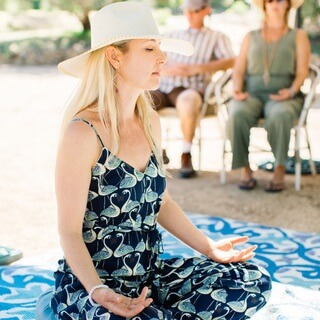
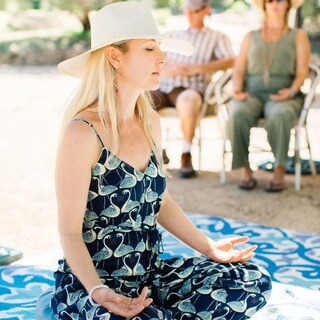
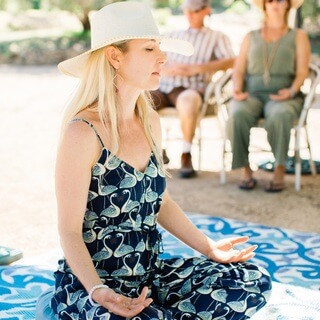
And this Secret Sangha meets on Tuesday mornings in the funk zone of Santa Barbara,
But you are part of it because you are here.
And this week we are talking about love.
It's part of a four-week series where we're exploring the four immeasurables,
Loving,
Kindness,
Compassion,
Joy,
And equanimity.
And today we're talking about equanimity,
And I'll give you a little practice to take away.
Let's start.
So we're doing this month on love,
The month of love,
And moving through the four immeasurables,
The things that we can't have enough of.
And last week we did loving,
Kindness.
Some of these immeasurables may be easier for you than others.
You may notice like,
Oh,
It's really loving,
Kindness comes naturally to me,
Or compassion comes naturally to me.
This one does not come naturally to me,
Which is steady love,
Equanimity,
Equanimity,
Steady love.
And in the symbol for upekka in Chinese,
There's a symbol for a hand,
And then a place of rest.
It's sort of like you can put it down here,
This upekka,
This steady love.
On a retreat with Jack,
Actually,
No,
This was at Jack Kornfield's birthday party.
I took all these notes.
And he said,
Things are continuously out of balance against a background of perfect balance.
And many of us think about,
You know,
Balance or steady love or upekka as something that we need to like make happen.
Like I need to get myself regulated because I'm dysregulated,
Or I need to calm down,
Or you need to calm down.
And really what the state of upekka is,
It's the prior condition.
So it's the space of equanimity and balance from which things arise.
And some of those things may be pleasant things or unpleasant things or irritating things or hard things.
Malika was talking about a hard thing that her daughter shared with her,
You know,
And it's like,
It gets you off,
Gets you out of balance,
Or it makes you feel heavy.
And I was thinking about sort of the ways in which we respond to the,
In Buddhism they call it the eight worldly winds.
You heard about these?
The eight worldly winds?
So the worldly winds are the things that can kind of throw us off,
And even good things can be worldly winds.
So praise can throw you off because you get praise,
And then you get out of balance because you want more praise,
Right?
And then blame,
You feel blamed,
And you get out of balance because you're defending,
Right?
Pleasure and pain,
Both of those can get us out of balance,
Or the other ones.
Gain and loss,
You get something and it can throw you off balance,
And you can lose things,
It can throw you off balance.
Yesterday I had to go pick up my son from school early because I had to share some news with him that was really difficult news to share.
And I was driving up to school,
I was driving up,
And I was like,
I really need to be in balance when I pick him up.
And I stop at the stoplight and I get a text from him,
I'm going to pick him up,
I get a text from him that they're having a shooter drill.
He's like,
We're having,
What do you call it,
An active,
We're having an active,
I'm like,
Are you kidding me?
You're having an,
Okay,
So I get that,
I get that news,
And I'm driving up,
And actually I called a friend to get some support,
And then there's this period of time where there's no cell reception as I'm driving up to his school.
And that was the best period of time,
Because oftentimes what we need to find our balance is nothingness,
Is quiet,
Is stillness,
To remember the prior condition.
But what we do when these worldly winds show up is we do all sorts of things that actually interfere with our equanimity.
The near enemy is indifference,
Which is not caring.
We act as if we don't care.
Or the near enemy could be controlling.
We try and deep breathe our way through it,
Which actually can make things worse.
Or we can add on,
We add on a story,
Or we can act out,
Where we become part of the dysregulation.
Do you remember during COVID when we used to have to go line up outside of Trader Joe's,
Six feet apart,
And there'd be the long line down De La Vina or Milpas,
Whichever one you go to,
Okay?
And I remember during COVID,
Same son,
And a lot of years ago,
Younger guy,
And being outside of Trader Joe's in this long line.
And while we were outside and we were masked up and we're standing in line,
It was sort of like the thing to do for the day,
Go to the grocery store.
It was kind of like half exciting,
Because you'd be around people,
But then also half totally bizarre,
Because it was like weirdness around people.
And we're in this long line,
And this guy comes up and starts yelling at the crowd,
Like really disruptive.
And my kid was,
He's like too big that I couldn't pick him up,
But too little that I wanted to pick him up.
And I think we feel that way sometimes,
Like I'm too big for you to pick me up,
But inside I feel so little,
I want you to pick me up.
And so I wanted to pick him up,
And I couldn't pick him up,
But I wanted to protect him from this guy that was yelling.
And there was a number of ways in which people responded,
Right?
So there's the people that are responding in the indifference way,
Where they're just ignoring it.
That's not equanimity.
That's not steady love.
And if you think about times in your own life when you've responded with indifference to something that's painful that's happening in this world,
We've all done it in this past week or this month,
Bad things happen and we respond with indifference.
And then there was the people in line that were responding with like,
You know,
Too much,
Like you're going to aggravate this guy,
You're going to add to the story,
You're kind of,
You know,
Now I feel unsafe because now you're fighting against the guy that's disrupting the peace.
And if you think about yourself when things get,
These worldly wins happen,
Whether it's somebody that's disrupting the line or it's somebody in your household or something bad happens,
The ways in which you respond that contribute to less steadiness.
So I'm like there with my little guy in line at Trader Joe's,
And then we also have our own version of our own inner kid.
And I'm in there in line and out comes the Trader Joe's manager.
And he comes out and he does a few things,
I didn't write on here.
The first thing he does is he listens to the guy.
He stands there,
He creates a space between us and the disruptive guy and he listens.
Yeah,
Get quiet,
Listen.
Something like 90% of people feel that they are good listeners,
But people believe that only about 8% of the time they're listened to.
So he listened.
And then as he listened,
The guy started to settle down and eventually the Trader Joe's doors opened and we all moved in.
So great imbalancers and great balancers of equanimity,
Some things to kind of pay attention to is are you in a state of indifference control,
Adding on,
Acting out?
How do we find equanimity?
The first is the great balancers are the essential self-care and for me essential self-care is stillness and silence.
I need to have nothing on,
I need it to be quiet,
I need to do that every day.
And for you it may be something different,
You may need a bike ride,
You may need for your equanimity a swim,
Or you may need,
Like my mom,
To paint,
You may need your yoga practice.
So what are your essential self-cares to help you with equanimity?
And then flexible attention is paying attention to that which stabilizes you.
And it's not indifference but it's attending to,
Like in that moment in the line of all the people,
Who are you attending to,
Which face is the calmest face or which horizon is the steadiest horizon to pay attention to?
The great balancers is also to remember the enoughness,
The a priori condition upon which all of these winds come and go and that it's enough already.
And then what's most important I think is to be the calm that you seek,
To be that.
And you can be that even if you don't feel that.
Your behavior can be a feedback loop for your own self.
And then remembering the great imbalancers are things like,
You know,
In like the 12 steps when they talk about hungry,
Angry,
Lonely,
Tired,
Being aware of those things of making sure you're taking care of your physical needs,
Not getting caught in the illusion of transparency that everyone knows what's going on with you,
Not everyone always knows what's going on.
And not getting caught in the illusion of separation that you're any separate from anybody else in this line or in this group or in this circle.
So that is my talk on steady love and full catastrophe living.
Thank you so much for listening to this episode of the Wise Effort podcast.
Wise Effort is about you taking your energy and putting it in the places that matter most to you.
And when you do so,
You'll get to savor the good of your life along the way.
I would like to thank my team,
My partner in all things,
Including the producer of this podcast,
Craig,
Ashley Hyatt,
The podcast manager,
And thank you to Van Gold at Bell and Branch for our music.
This podcast is for informational and entertainment purposes only,
And it's not meant to be a substitute for mental health advice.