Hi there,
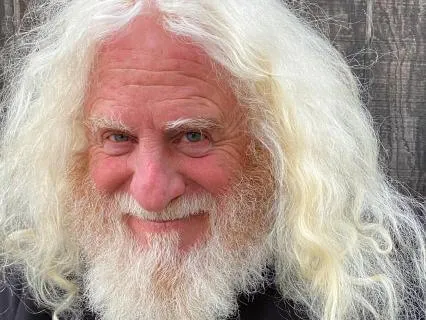
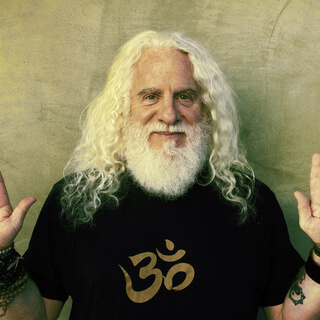
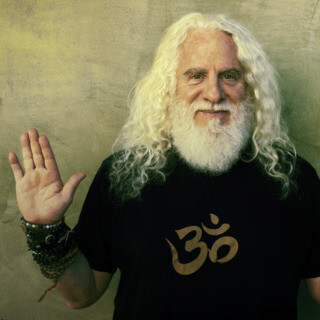
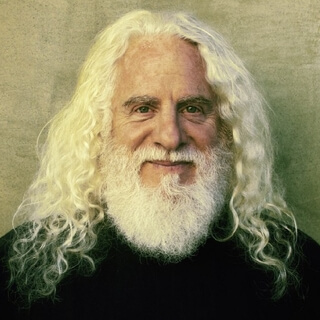
This is David G.
And I wanted to talk to you today about this really powerful and cool thing.
Stress.
Well,
One core component of stress.
And this has to do with a self-preservation mechanism that has been hardwired,
Woven into our DNA,
Into our physiology,
Into every strand of who we are,
And was woven into man and womankind.
More than 10,
000 years ago.
We call it the fight-flight response.
This is a biological stress response.
And here's how it works.
10,
000 years ago,
You're walking through the jungle and you hear a twig snap.
In that moment,
Just upon hearing the twig snap,
In under five seconds,
Every single part of you is going to get mobilized,
Remember self-preservation mechanism,
To either.
.
.
Fight a perceived threat.
Or run away and escape the perceived threat.
Again,
Just hearing a twig snap,
You think you're in the forest alone.
If it makes a twig snap,
It's either a big animal or human.
I need to either get ready to fight it or get ready to run away.
All this happens hormonally and chemically in under five seconds.
Five seconds.
We are in five seconds.
We are prepared to do one or the other.
Now,
You may be familiar with the fight,
Flight,
Freeze.
The tend and befriend.
I've written about those in depth in de-stressifying,
And I've created some powerful meditations from it.
But for our purposes now,
When we sense a threat to the physiology,
This is how we respond in under five seconds.
First,
We begin to perspire.
That is the body's first response.
That is the autonomic nervous system's response to sensing a threat.
Why?
Because your autonomic nervous system,
Sometimes referred to as the ANS,
Knows you're going to overheat.
If you're fighting or running,
You're going to overheat.
And so it preps our body through perspiration.
They're actually sweating.
Actually cool down before we even start overheating.
So that's the first thing.
If you're driving in your car,
And you get cut off and you're driving at a high speed.
You'll understand.
Instantly you find yourself a little clammy.
You know,
A little moist because.
.
.
You sense the threat to the physiology.
So first we start to perspire.
The second thing we start to do is to breathe rapidly and shallowly.
Why?
Because the ANS,
The autonomic nervous system,
Wants to get that blood pumping as quickly and forcefully as possible.
So how do we get that to happen?
Short,
Shallow,
Rapid breaths are actually the worst thing for blood pressure the heart rate and put some intensity and effort into each beat of your heart.
So instantly by having those short,
Rapid,
Very,
Very.
.
.
Intense breaths shallow right these aren't deep we're not talking about deep breaths but that gets the blood flowing Not good for us,
But it gets the blood flowing.
Good for us if we need to run or fight.
So we start breathing shallowly and rapidly.
Then what happens is,
The autonomic nervous system says,
What's operating right now?
That is not essential.
We see this sometimes when I'm looking at my computer.
My monitor of my laptop or my desktop,
I'll click on the battery and it says,
What's using a lot of energy?
And it'll tell me,
Oh,
Zoom is using a lot of energy.
Oh,
Your brightness is using a lot of energy.
Oh,
Safari is using a lot of energy.
And so I'll close those windows.
I'll close those things down.
And my laptop,
My computer starts to run more efficiently,
Starts trying or straining less.
Well,
This is exactly what happens to us.
Your autonomic nervous system scans your physical body and says,
What right now isn't necessarily critical to our survival.
Because we know there's a threat out there.
And we sense a threat to our physiology.
So what are we using right now that we really don't need to use?
So let's shut down our immune system.
Don't need to be fighting germs right now.
We need to put all of our resources into the best fight or the best runaway.
So let's just shut down.
No fighting germs.
You could be dead in five seconds.
Let's stop fighting germs.
Immune system suppresses.
Sex hormones autonomic nervous system says don't really be need to be thinking about reproduction shut it down shut all the hormones and chemicals associated with that down End.
Lastly,
Don't need to be thinking about,
Aren't my nails hard?
Is my hair lustrous?
Is my cellular development moving as quickly as possible?
Quite honestly,
Could be dead very,
Very soon.
It's a waste of time and energy.
Let's shut down all the growth hormones and growth chemicals that help ourselves replicate at a high efficiency.
Shut it down.
So anything non-essential for survival gets shut down.
And then the autonomic nervous system says,
Okay.
We're not taxing the system with anything irrelevant right now.
Let's surge all the survival stuff.
Because we have to fight or run away.
So surge adrenaline.
Surge cortisol.
Surge glucagon,
Which is like eating five Snickers bars at once.
You just want to surge,
Fill that body with sugar,
Fill that body with intensity and torque so you can bolt or fight.
So that's going on.
The blood is starting to move more rapidly through the system.
And because hormones and chemicals have been released,
They are flowing more rapidly through the system as well.
So everything's going pretty well.
So far.
But then the autonomic nervous system says,
You know what,
In scenarios like this where you sense a threat to the physiology,
There's a very high likelihood that you might be cut.
You might actually be cut.
And so let's start clotting your blood before you get cut.
Because it's 10,
000 years ago,
You're going to either be running through the forest with bare feet or something where you could get cut in the escape or you're going to be fighting and you don't know whether that animal has big teeth or claws or whether that human has a weapon.
We don't know.
So let's start clotting the blood.
The platelets,
The thicker parts of the blood that run through the plasma,
The solid parts of the blood that run through the plasma.
They become plump and sticky.
Imagine that before you even get cut.
You start clotting.
And so now you're ready.
You're perspiring.
You're breathing shallowly and rapidly.
All the blood is moving to your extremities,
Your hands,
Your arms,
And your legs.
You've shut down every non-essential aspect of your life,
Sex hormones,
Growth hormones.
Immune system hormones.
And you've elevated all the stress response.
Hormones,
Adrenaline,
Cortisol,
Glucagon,
And your blood's getting thicker.
You're ready.
All this happens in under five seconds.
And now you're ready to fight the threat or run away.
Except we've evolved over the years.
And most of us,
Are not sensing a threat to the physiology.
On a consistent basis.
Yeah,
We all did sense a threat to our safety and to the physiology.
During when COVID had its first outbreak.
We were like,
If I leave my house,
I'm going to die.
If I encounter someone who has this virus and they give it to me,
I'm going to die.
So yeah,
We were sort of like living in a fight-flight period of time for an extended period of time,
For hours and days and weeks and months and years.
So non-nourishing.
It's devastating.
Applying that level.
Chronic stress to the physiology how long do you think you can make your blood plump and sticky before you have some kind of cardiac issue.
How often,
How many times you think you can shut down your immune system?
Before you experience some immunocompromised diagnosis.
How many times do you think you can surge sugar,
Glucagon,
Into your.
.
.
Physiology before you're diagnosed with some sugar issue.
And we start to think about like,
This is not good stuff if it's consistent.
It's great stuff when we sense a threat to the physiology and then we can.
.
.
Fight or run.
To live another day.
But if we're not,
Really having a threat to the physiology or in some kind of scenario maybe we are but it comes and and passes And here we are theoretically on the other side of that.
We've evolved.
Outside of that threat to the physiology,
We've evolved over the last 10,
20,
000 years.
And since most of us are not experiencing,
Most of us do not live in a war zone,
Most of us are not really being threatened on a consistent basis.
We have challenges,
But not threats,
Mortal threats.
And so we have sort of evolved those emotionally.
It's emotional fight flight,
Referred to as the ego response or the reactive response.
Someone doesn't have to threaten your physiology.
Someone just needs to threaten your ego.
Your sense of self.
Someone just needs to challenge something that you believe you own.
Maybe it's your music group.
Maybe it's your religion.
Maybe it's your politics.
Maybe it's your outfit.
Maybe it's your weight.
Maybe it's your gender.
Maybe it's your.
.
.
Height Think about that.
Someone challenges that or mocks it in some way.
Anything you think you own,
Any belief system,
And you respond chemically and hormonally the exact same way as if they were threatening your physiology.
We've evolved,
Or we could say we've devolved.
Because that would not be like an enlightened trajectory.
I used to jump into all these hormones and chemicals used to surge into me when someone was running at me with a spear.
And now,
10,
000 years later,
Someone just has to tell me that I don't look good in that outfit.
And I have the exact same response.
These are called biological stress responses.
So we have the physiological one,
Fight flight,
And we have the emotional.
One,
The reactive response or the ego response.
But as meditators,
We have an antidote to this,
Whether that's just practicing 16 seconds,
Breathe into the count of four.
Hold that breath in to the count of four as we watch it and witness it.
Observe it in our belly.
Release that.
To the count of four,
Let that breath go out and observe it and notice it as it flows back out into the ether.
And then hold that breath out.
Continue holding it out and allowing it to just dissipate.
As I watch it.
That's one way to flatten the curve on fight flight on that.
Biological stress response,
But we can also,
There are so many other techniques,
I can suddenly,
What I thought was a mortal threat,
Was actually just a challenge.
Or a disappointment.
Or an irritation.
We're just.
.
.
Miscommunication.
And that's why when I suddenly realize,
Oh,
I don't have to take this personally.
Then none of those hormones and chemicals surge into our body.
And so meditation is this powerful antidote to stress.
And meditation can help us whether it's 16 seconds or certainly whether it's a daily.
Meditation practice and definitely an afternoon letting go releasing catharsis practice this is how we lighten our load this is how we move from embedded chronic stress.
To a more expanded and open hearted.
Way of living our lives.
So yeah,
It all starts with us cultivating our meditation practice and it all starts with us.
Being willing to connect to the stillness and silence that rests within.
It all starts with us being willing to call a time in as Andy Kelly,
The Boston Buddha,
Has always referred to it.
And introduce a pattern interrupt to break in the action.
Let me just take a breath right here.
And let this moment move through.
Without getting caught up in it,
Without letting that emotional charge suck me into the drama of that moment.
So this is sort of like a little mini intro to.
.
.
Fight,
Flight.
And the biological stress responses that accompany it.
Now,
What happens when we meditate?
We experience The opposite of fight flight.
We call that state the restful awareness biological stress response.
It's not just an antidote to stress.
It actually is its own.
Response mechanism.
And so every time we meditate,
We are fostering,
We are cultivating,
We are refining our ability to awaken the relaxation response,
Sometimes referred to as restful awareness.
Sometimes referred to as restful alertness,
Right?
Because we're alert and aware,
But we're in this total state of chill and calm.
Now,
Where do we cultivate this?
Every time we connect to the stillness and silence that rests within,
Whether that's for 5,
10,
15,
20,
25,
30 minutes at a time,
We are cultivating something inside of us.
We are training our autonomic nervous system to say,
Hey,
You know what?
Not a threat here.
There's no threats going on right now.
This is a very nourishing and safe and secure environment.
And so what happens when we meditate?
Well,
Guess what?
It's the exact opposite of the stuff that happens to us when we sense a threat to the physiology.
Number one.
We don't start to perspire.
In fact,
Our skin temperature starts to increase our skin temperature gets warmer,
Allowing us to cool off at our core.
So this actually is a powerful healing aspect that we can apply to night sweats,
That we can apply to hot flashes,
That we can apply to any time we suddenly are feeling overheated.
It's like,
Oh,
If I meditate,
My skin temperature will rise up a little bit and that will cool me off and actually cool my core down.
So the hotter our skin gets externally,
The cooler our internal core gets.
Actually Not concerned.
This can eliminate any type of feeling.
When we feel overheated,
We're feeling that at our core,
Not at our skin temperature level.
So this counterintuitively actually solves it.
So that's what happens,
Number one.
We don't start breathing shallowly and rapidly.
We start breathing more slowly.
And more deeply.
The oxygen doesn't force itself to our extremities,
But actually starts flowing through us in a more uniform.
The autonomic nervous system does the exact opposite it does during fight flight.
It suppresses adrenaline,
Cortisol,
And glucagon because it says it's safe out here.
There's no threat.
No threat going on here.
Let's eliminate,
Let's suppress any type of stress hormone or stress chemical and let's elevate.
Growth hormone let's elevate our sex hormones let's elevate our immune system.
So we're fighting germs at an even higher level.
And rather than the platelets,
The hard parts of our blood,
Becoming plump and sticky as they do with fight flight,
The opposite happens.
Those platelets become more fluid and flow through us more easily.
Like how cool is that?
So our blood.
.
.
Becomes more liquefied.
These things are so nourishing.
For us,
By simply meditating,
Suddenly you realize.
.
.
I'm giving myself some real detoxification and some real love.
You know,
Really elevating The powers that are resting inside of you.
The relaxation response is sort of like the antidote to the stress response.
It is a stress response,
But it's a relaxing one.
Every time we connect to that state of restful awareness,
Restful alertness,
We are.
.
.
Creating something.
Inside of us.
You're nourishing something.
Inside of us.
And so if you've been feeling particularly stressed out lately over something in your life,
Meditation is the antidote to that.
You might continue to feel anxious,
But your physiology will start to realize,
Just by meditating,
Just by connecting to that relaxation response,
That there's no threat going on here.
So since there's no threat,
I could actually apply all my internal physiological.
Aspects in more nourishing ways.
And that's going to allow again.
My autonomic nervous system to put me in a state of feeling more efficient.
I'm elevating the stuff that's healing and nourishing,
And I'm suppressing the stuff that's not really going to serve me in this kind of environment.
16 seconds is an easy flattener of the curve.
Taking a long,
Slow,
Deep breath in and slowing your breathing down is another one.
Reaching for SODA.
These are all techniques and tips and tools that I share in so many different courses that I've created here.
But you're familiar with them.
And so these are powerful tools for us to gain back control.
And collect ourselves and be the calm amidst the chaos.
And so we will never be able to stop what happens outside of us.
Even someone who's living in a cave might ultimately be visited by a mosquito.
So there's always going to be something external that's irritating you.
Threatening you.
We have to make that decision.
Is this a challenge or is this a threat?
And obviously,
My CFL technique has been a very,
Very powerful tool.
For post-traumatic stress disorder,
Transforming that into PTG,
Post-traumatic growth.
But let's start small.
Let's just start with a breath.
Or let's just start with 16 seconds.
And when we feel a bit of overwhelm coming into us,
Let's take a step back.
Let's take a deep breath.
Let's release that all.
And then Ask yourself.
Do I have the patience to wait until my mud settles and the water is clear?
Can I remain unmoving till the right action arises by itself?
These words by the great Chinese philosopher Lao Tzu have been a powerful support mechanism for me over the years.
This will allow us to be better listeners,
More patient.
Allow our hippocampus to thrive and our amygdala to shrink,
And for us to be less angry,
Have less emotional charge,
And really be the master of our emotions as opposed to being mastered by them.
From the sweet spot of the universe,
This is David Jean.
Hopefully you found this a powerful tool and helpful for you.
Namaste.