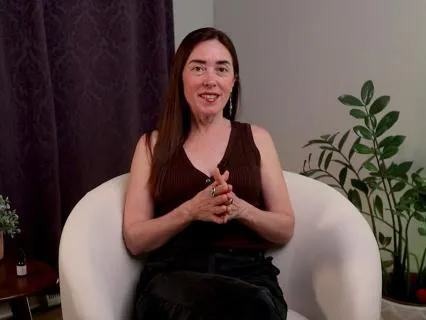
Hi,
I'm Diana Pereira,
Pelican Christ Practitioner and Somatic Teacher.
Welcome.
Let's begin.
Today we're going to the ground.
Specifically to the part of you that is always touching it,
Your feet.
We don't think much about our feet.
They carry us everywhere and receive almost none of our attention.
But in somatic work,
The feet are extraordinary.
They are the body's first conversation with the earth.
And that conversation has everything to do with how safe our nervous system feels.
There's a reason we say someone is grounded,
When they're calm,
Steady.
Present.
The metaphor is literal.
When the nervous system is activated,
Anxious,
Overwhelmed,
Bracing.
Attention moves up and in.
Into the chest.
The throat,
The head.
The lower body becomes an afterthought.
The feet,
If we feel them at all,
Feel distance.
Disconnected,
Like they belong to somebody else.
Bringing attention back down,
All the way down to the soles of our feet.
The toes,
The contact with the floor.
Sends a direct signal to the nervous system.
I am supported.
There is something beneath me.
I don't have to hold myself alone.
This is not a metaphor.
The sensory feedback from the feet travels directly into the brain's safety mapping system.
When the feet feel the ground,
The ground becomes real.
And when the ground is real.
The body can finally exhale.
In Feldenkrais' work,
We pay a lot of attention to support.
What is the surface beneath you actually offering?
Most of us unknowingly work against our support rather than with it.
We hover,
We grip,
We brace,
As if the floor may give way if we really let ourselves land on it.
Today's practice is an invitation to actually land.
To feel what's already holding you,
To discover that the ground has been there the whole time.
Patient,
Solid,
Waiting.
In that you can trust it with your weight.
When the base is settled,
Everything above it can soften.
Ankles,
Knees,
Hips.
Shoulders,
You and your jaw.
All of it reorganizes when the foundation is real.
Some guidelines for the practice.
Good reminders if you haven't done work with me before.
We're gonna make small,
Slow movements to begin with.
I'm going to ask you to rest a lot to pay attention to how you're feeling.
To take your time and to move within the easy range,
Not to push for the extremes.
More than anything to trust your sensation.
If you can,
Avoid asking yourself,
Am I doing it right?
Is this what she means?
And instead turn the attention inward.
How does this movement feel?
Slow down enough.
That you can enjoy that sensation.
Let's go.
To begin the practice we are going to uncross our legs.
And you can do this seated on a chair.
Or you can lie on your back.
If you begin lying on your back,
You can start with your legs long.
And in either position begin by checking in with yourself.
What is the sensation at the start?
How does it feel to be in your body before we change anything?
And see if you can avoid judgment.
Scanning or noticing.
Become the witness of your own experience.
If it's easier for you to close your eyes,
You can do that.
Now,
Imagine your body.
Has five lines.
Two lines for the legs.
Two lines for the arm.
One line for the spine.
And notice the arrangement of these lines.
On the floor or the chair?
How do you position your legs,
Your arms?
What is the distance between them?
The relationship between them.
And then sense the line of your spine.
How long does it feel?
What parts of it touch the floor or the chair?
Does it feel alive to you?
Do you feel?
Breathing into it.
Or is something.
.
.
More of a stranger to you.
And now begin to drive your attention all the way down to the soles of your feet.
If your legs are on the floor,
Bend them and place your feet on the ground.
The soles of your feet on the floor.
And begin to play with the distance between your feet in such a way that the feet can come closer together.
And you observe the sensations.
Especially balance.
Stability.
Maybe the efforts that it takes to keep your legs together that way.
And then spread them out a little bit.
And then a little more.
About shoulder width apart.
And then maybe a little more wider than shoulder width apart.
And feel again what is the sensation of the legs that way and balance.
How much work it takes to keep them spread out that much.
Allow your own free will,
Your own choice,
Capacity to find some place in between that overly spread leg stance and the feet really close together.
Some sweet spot for your own body proportions.
That feels just right.
Where you can sense Balance.
And it doesn't take you a lot of effort to be there.
And now with your eyes closed.
Map that position for your feet.
Map meaning Imagine the distance between both feet.
Between your heels.
And the buttocks or the pelvis if you're lying down or your heels and the chair.
Between your feet and your knees.
Perhaps imagine the five toes on each foot.
And then change position,
Maybe lengthen your legs if you're on the floor,
Stretch them on the chair or across your legs,
Just like that.
Give your brain something else to think about.
Map the legs in your mind again.
Think of that position.
And funny enough,
We use a lot of imaginary movements in Feldenkrais.
See if I tell you,
Imagine you're crossing your legs now,
You can.
Imagine one leg long and one leg bent.
You can imagine that.
Right?
So imagine that position for your feet.
And then go ahead and bend your legs again,
Put your feet on the ground and find it.
Find that placement.
We're going to call that the sweet spot for your feet.
And give yourself the time to find it if it's not easy enough or quick enough.
Feel free to pause the video right now and take your time with it to find that place where your feet Feel just right,
Not too close together,
Not too far apart.
And you feel balanced and supported.
At the same time,
There's not a ton of muscular effort on your legs to hold that position.
Now take an imaginary paintbrush or marker.
And draw a line between your big toe and your mind's eye as if you could draw it on your foot.
Between your big toe and the heel.
Back and forth.
Observing which toe you're working with even though I didn't ask you for a specific toe.
I'm working with my right big tail in my mind.
And now.
.
.
The fourth tail,
So you can think of the first one,
Big tail.
And then skip the second,
Skip the third,
And imagine your fourth toe.
And draw another imaginary line between your fourth toe and your heel.
Back and forth.
Back and forth.
And now a smaller line connecting the two toes,
So a horizontal line in this case between the big toe and the fourth toe.
And now you have a little triangle.
Two long sides,
One short side.
Triangle for this foot.
You can also think of it as a tripod.
And now press into it a little bit,
Just a little bit.
Imagine you can Create an imprint.
On the floor,
Could be imaginary sand or.
.
.
Printing.
That triangle or tripod,
Whichever foot you're working with.
And then releasing.
And observe what happens to that leg,
The whole leg,
The whole side actually,
The moment you engage your brain in visualizing that tripod.
And using it for support.
For connection.
Couple times,
Press on it,
Relax.
Press on it.
See if you can notice how it activates the whole side.
Making that leg feel a little more alive,
A little more awake.
And now let go.
Shake your legs a little,
Maybe make them long.
Take a moment.
Place your feet on the ground again and notice what happens immediately.
You know how to go to that sweet spot,
Both feet separated,
You're not crossing your legs or keeping them too close together.
You know where that place of support is.
And perhaps depending on how much body awareness we have developed together.
Perhaps the side you've been working with is already more active in your imagination.
You can feel that tripod right away.
See if this is the case for you.
And now allow the other side,
The second side,
The one you didn't pick,
Maybe your non-dominant side,
To do the same thing.
Maybe begin with the fourth toe.
Just think of the pinky toe.
And then the fourth,
And then trace that line in your mind.
Long line.
Painted in your imagination between the fourth toe and the heel.
Long line.
You don't even have to look at it.
You're simply thinking of it.
And then from the heel to the big toe,
Back and forth a couple times.
And then connect the big toe,
The head of that middle torso,
That toe,
To the fourth toe.
With a horizontal line,
A shorter line.
You can trace the whole triangle back and forth in your mind a couple times.
I'm using my hand actually to give that part of the brain,
The motor cortex,
Even more cues.
I'm moving something alongside thinking of it.
And this is doing something to the mapping,
To the organization of your foot on the ground,
Creating those anchors,
Those points of connection between your feet and the ground.
Now you can press on that foot a little bit,
Just engage it,
Give it a little more weight and see what happens.
See how that leg responds.
Back and forth.
Back and forth.
Sometimes the non-dominant side is a little more artistic,
It's more creative,
It's less burdened by compensation or weight and it might move more with more freedom.
You might be able to sense more on that second side.
Now let go.
Rest again.
In whichever position you like.
I like to close my eyes when I rest and scan the whole body and sense the differences.
Feel what's going on internally,
How your vision of yourself is changing.
Even though we're not doing much,
We're basically creating a new choice of position for our legs.
And a lot of mapping with our brain,
A lot of thinking.
Awareness.
Through movement and visualization.
Now I'm gonna ask you for something a little more forceful,
But not using 100% of your power,
Maybe 10,
20% of what you can do.
I'm going to ask you to place your feet in that same place.
And engage with both sides.
Actually,
It's easier if you're seated that your spine is free from the rest of the back of the chair.
If you're on the floor,
You're going to be able to lift the pelvis off the floor a little bit.
If you're on the chair,
You might be able to get taller,
Get longer.
So come back to feet.
Shoulder width apart,
More or less that sweet spot for your feet.
Visualizing now both tripods,
Both triangles for the right and the left foot.
And this time.
.
.
Allow your glutes your glute muscles,
Your buttocks to engage just a little bit.
To squeeze.
And as you squeeze the glutes just enough,
Let the tripods connect even more with the floor.
If they could make those imprints.
Not because you're pushing.
But because your glutes are engaging.
You're squeezing your buttocks,
Your glute muscles,
And releasing them.
And if you're on the floor,
This movement alone can lift your pelvis off the floor just a little bit.
Like I said,
10-20%.
Of what you can do.
Engaging now the whole leg.
Via the muscle work of the glutes,
Seven layers of powerful muscle.
Engage the glutes,
Release.
Engage the glutes,
Feel the bones of the legs,
The tripods of the feet.
Release.
Now one more time making sure you're not holding your breath or clenching your teeth so no parasitic efforts.
No extra tension anywhere.
Simply the legs.
Engagement,
The leg activation.
And release.
Rest again.
Take your time with this.
Let it integrate.
You can even walk around a little bit.
Come back to sit if you're lying on the back.
Go for a few steps,
Come up from the chair,
Walk around.
See if you can engage your brain in feeling,
Looking for these tripods as you walk.
Around your space as you stand in place.
And notice that the ground beneath you has a whole other sense of support for you now,
And the way you are connecting to it has changed.
Now when you're ready,
Come back.
You can sit on your chair one more time and simply place your feet wherever you want to and notice what happens.
What has changed.
Now feel the floor beneath you right now.
Really feel it.
Not as a concept,
But as a sensation.
Pressure.
Temperature.
Texture.
That contact is always available.
You can find it in a meeting.
On a train,
In the middle of a difficult conversation.
Just by dropping your attention all the way down into the soles of your feet.
A secret anchor.
Invisible to everyone else.
Thank you for being here with me today.
Take a moment before you move on.
Let what just happened settle.
The earth has always been there.
Now you know how to feel it.
I look forward to seeing you in the next video.
So much love.