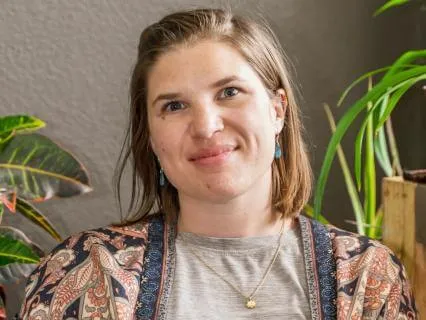
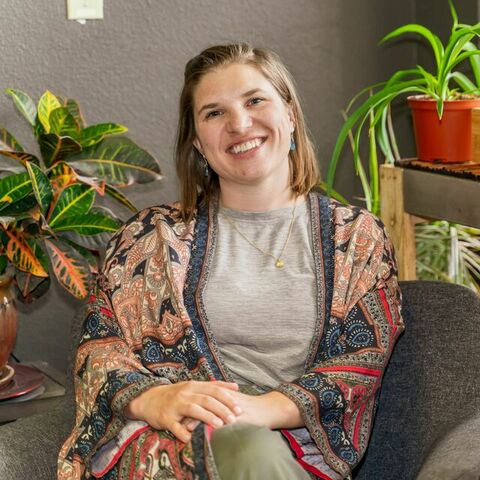
Hello and welcome.
If you're here,
There is a pretty good chance you know how deeply chronic pelvic pain can affect you.
Physically,
Emotionally,
And in relationship.
I say this not just as a clinician,
But as someone who lives with it too.
And that's part of why I care so deeply about helping people understand.
The full picture of what drives pelvic pain and what can help.
Today i'll share with you a way of thinking about chronic pelvic pain that i've found incredibly helpful a whole body for bucket model Each of these buckets contributes to pain in a different way,
But they all influence each other.
Understanding them is a powerful first step on your path.
Here's a quick overview of the four buckets that we'll be talking about.
The first,
What has the brain learned?
Then what is the state of the nervous system,
The pelvic floor itself?
And then what are you holding on to?
So bucket number one,
What has the brain learned?
This first bucket is all about the pain pathways that the brain has learned over time.
We call this neuroplastic pain,
But you may have also heard it referred to as nociplastic pain or neural circuit disorder.
All the same thing,
Many different names.
I go a little deeper into the science of this in another talk called Chronic Pain Explained,
But here's the basic idea.
The brain can generate real pain even in the absence of ongoing injury or tissue damage.
One of the biggest risk factors for developing neuroplastic pain is increased activity in the brain's emotion and learning centers,
Areas like the amygdala and the medial prefrontal cortex.
Who do you think tends to have the most activation in this area of the brain or these areas of the brain?
People with anxiety,
Stress or trauma histories,
Which is many of us.
These learned pain pathways can become very deeply ingrained,
But here's the empowering part.
Because this type of pain is learned,
It can also be unlearned.
Through approaches like pain reprocessing,
Somatic work,
And other mind-body tools,
We can teach the brain to respond differently and reduce or even resolve the pain over time.
It helps to gently challenge the assumption that pain always means damage.
In neuroplastic pain,
The danger isn't in the body,
It's in the brain's interpretation.
And luckily,
That is something that we can change.
So our next bucket,
Bucket number two,
Is what is the state of the nervous system?
And this bucket is very closely connected to the first.
When we live in a state of ongoing stress,
Fear,
Or hypervigilance,
It changes the way our nervous system processes and interprets information,
Especially signals coming from the body itself.
One powerful study used brain scans alone.
To predict with 85% accuracy which patients would go on to develop chronic pain after an injury.
What were the key predictors?
Those that had increased activity in the emotional processing regions of the brain,
Like the medial prefrontal cortex and the nucleus accumbens.
Before the pain became chronic.
So what does this tell us?
It tells us that the more emotionally activated or threatened the brain feels,
The more likely it is to create and perpetuate pain pathways.
So in order to retrain these pain pathways,
We need to help the brain,
The nervous system,
And the body feel safe.
This means reducing fear of the pain itself.
While learning to regulate stress and anxiety.
That's why nervous system regulation tools like breath,
Grounding and co-regulation are not just helpful.
But they're really essential in transforming pain.
Okay,
Let's look at bucket number three,
The pelvic floor itself.
So we can't talk about pelvic pain without addressing the pelvic floor.
These muscles support our pelvic organs and play a key role in posture,
Digestion and even emotional holding.
Sometimes the pelvic floor can become contracted or hyperactive,
Often in response to an old injury or even ongoing stressors.
The body tries to protect itself by closing in and tightening,
But over time this constant guarding really becomes a big part of the problem.
Tight pelvic muscles can compress nerves,
Misalign the pelvis,
And interfere with bowel movements,
Urination,
And intimacy.
This is why pelvic floor PT can be super helpful.
Also why it's not always enough on its own.
If your nervous system is in a state of high alert,
These muscles may not be able to soften and relax even with physical therapy.
Pelvic breathing is just one example of a simple yet powerful practice that can support multiple buckets at once,
Addressing both the body and the nervous system simultaneously.
Moving into that fourth and last bucket,
What are you holding on to?
This is the most tender and often the most overlooked piece,
Especially in traditional medical practice.
Many people with chronic pain have a history of emotional repression,
Trauma,
Or simply never having had this space.
Feel,
Process and integrate their emotions.
Research shows that unfelt emotions can contribute to pain.
In one striking study,
People with chronic pain were asked to write about deep emotional experiences for just 20 minutes on three separate occasions.
Four months later,
Those who did this expressive writing exercise had less pain,
Less fatigue,
And improved wellbeing compared to the control groups.
Whether through writing,
Movement,
Breath,
Or simply learning piece by piece how to start feeling your feelings in small,
Safe doses.
This kind of work can create real physical transformation in your pain journey.
So bringing our four buckets together.
When it comes to chronic pain,
No single intervention is a silver bullet.
Not pelvic floor pt alone usually not medication or surgery alone and not meditation alone This is because the pain doesn't live in just one place.
It's shaped by the brain,
Nervous system,
The muscles,
The fascia,
And the emotional body.
So true healing must also be multidimensional too.
When we meet ourselves with curiosity,
Compassion,
And a whole person approach,
Change really does become possible.
Not just relief from pain alone,
But deep,
Meaningful transformation.
As someone who walks this path too,
I want you to know your pain is absolutely real.
And so is your capacity to heal.
Thank you so much for spending this time with me.
I hope this framework offers a new way of understanding your pain and perhaps just a little more hope for what's possible.