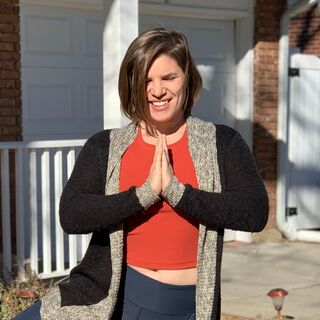
Hello and welcome.
Today I'll be guiding you through an exercise called somatic tracking.
In this exercise,
We'll be connecting with the sensation or discomfort that we feel.
With chronic pain,
The gasoline to the fire of the pain itself really is fear and anxiety.
Anxiety in our everyday life,
Fear about the pain itself,
This is what causes the pain to get stronger and to stay around longer.
So our whole approach with this exercise is to create new connections in the brain,
To engage with and connect with these areas of discomfort instead of from a place of fear and anxiety.
To approach them with sincere compassion,
Curiosity,
And as much as we can,
Calmness and neutrality.
So that is the whole intention of this exercise,
Is to connect with the pain,
The discomfort,
The sensation from a different mindset.
The other piece of this is often when we engage with discomfort,
We do so with the goal of lessening the sensation of,
I'm going to engage with this,
I'm going to relax this part of myself so it's not so intense.
I completely understand why that would be the goal.
However,
When we approach an area of the body with a goal of getting rid of a sensation,
It doesn't allow that part of us to feel witnessed.
It doesn't allow us to create connection.
Instead,
It's suppressing it and pushing it down.
Often when pain flares up,
It's because it's actually trying to connect with us and tell us something.
The other piece of this is that when we are telling the body,
We don't want you here,
We need to make this go away,
You can tell by the language of that there's some fear and anxiety,
Right?
I don't want you to be here,
This is bad.
So just by the nature of approaching the sensation with the attitude of this needs to lessen,
I want this to go away,
We are activating or turning on the fear center of the brain.
When we engage in this outcome dependent thinking,
When we place the priority or the goal on getting rid of the pain,
It's natural and normal that your brain will try to eliminate the pain.
So what I'm asking of you is to really change your approach.
It will take time and patience,
But I'm confident that you can bring in a quality of curiosity and exploration rather than focusing so much on getting rid of the sensation.
So let's begin our practice.
I want you to find a position that feels really comfortable for you,
Where the discomfort or the pain is the most manageable.
So take a few moments to really get as comfortable as possible and find that position.
And start to drop into yourself.
Soften your muscles.
Take a big breath in.
Exhale,
Let it go.
If at any time during this practice you feel overwhelmed,
I want you to return to an anchor.
An anchor can be your breath.
So coming back to the breath,
Following the inhale and the exhale.
The other anchor that we use is the resource within the body.
So each of us has an area or areas in the body that feel neutral,
Comforting,
Safe,
Or even positive.
So if you start to feel overwhelmed,
Come back to the breath.
Come back to a part of the body that feels safe,
Neutral.
Oftentimes for people,
This can be the palms of the hands,
The third eye,
The crown,
The soles of the feet.
Just know you can return to this anchor whenever you feel overwhelmed or it's too much.
Begin by bringing the area of pain or discomfort into your awareness.
It may already be there.
And engaging from a place of curiosity and truly desiring to make a connection.
Notice the sensation.
Does it feel like pressure?
Does it feel dull?
Does it feel like pins and needles?
What does it feel like?
Just try to create a description in your brain,
Even just one adjective.
Tingly,
Pressure,
Any type of adjective that isn't the word pain.
Remember you're observing the sensation like you would clouds in the sky.
Hey,
Look at that.
Isn't that a curious,
Interesting cloud?
Look at its shape.
Look at how fluffy it is.
Engage with the discomfort,
With the sensation in the same way.
Isn't it curious that my body has created this sensation?
Notice the shape and size of the discomfort,
Of the sensation.
How big is it?
What are its boundaries?
Oftentimes,
When we do this work,
We tend to really zoom in,
So we're up close and personal.
You can consider zooming out a bit,
Almost as if you're hovering above yourself.
See if that gives you a different perspective of the sensation.
You can pause this.
You can come back to your breath.
You can come back to a resource within your body.
Now that we have a better idea of its shape,
Its size,
I want you to go to the boundary,
The border.
The boundary is where you feel the most pain.
The boundary is where you feel the border.
And notice if the boundary or the border is very definite,
Or is it more soft,
Fuzzy?
Does it fade out?
And what is the sensation like on the other side of the border,
The area where you don't feel pain?
Can you go back and forth between the area just outside of the border where you don't feel pain,
And then come back into the area of discomfort?
Focus your attention on the area just outside,
And then come back in.
And outside,
And come back in.
Play with that,
Moving at your own pace,
Bringing your attention to the neutral space,
And back to the discomfort.
Now repeat the following to yourself with feeling,
With emotion,
With knowing,
Believing,
With your entire body.
I am completely safe.
I am not in any danger.
I am simply feeling a sensation in my body.
Allow these words to sink in,
And know that during the practice,
You can also relax and let go of sensation in my body.
Allow these words to sink in,
And know that during the practice,
You can also repeat these phrases to yourself at any time.
Now return to the area of sensation,
And send your breath to the space.
Maintaining the mindset of curiosity,
Neutrality.
Breathing into the space,
Not with the intention of changing or lessening the sensation,
But to breathe into the space simply to deliver oxygen,
And to notice how this area responds.
That's it.
That's all.
And when that breath feels complete,
Reassess this area of sensation.
Notice the quality again.
Has it shifted or changed?
The intensity,
Is it stronger?
Is it less intense?
Is it exactly the same?
Then what about the size?
Has it shrunk?
Has it expanded?
Does the quality of the border feel any different?
Whether the sensation is exactly the same,
Or if it's changed in some way,
Know that that is the experience you were meant to have today.
And the next time you do this exercise,
You may have a very different outcome.
Pay attention to any emotions that are arising,
That are coming up.
And you may even notice other sensations in the body.
There may be areas of the body that have become more alive or have lit up more for you during this process.
Just note that.
Cultivating that curious mindset.
Isn't this interesting?
I wonder why the sensation is coming up for me in this part of my body.
Isn't this interesting,
That I feel this emotion?
We'll close our practice by taking a few more breaths into this area of discomfort,
Of sensation.
And in whatever way feels natural,
Organic for you,
I want you to thank this part of you for engaging with you today.
For allowing you to work with it.
For revealing information to you.
That may look like saying a thank you.
It may be taking an extra breath into the space.
It may look like placing your hand over the area.
And when that feels complete,
Zoom out of the area of discomfort,
Of sensation.
And become aware of your whole body.
Your entire being.
Take a breath into your whole self.
And exhale,
Let it go.
And when you feel ready,
Slowly open the eyes,
Look around the room,
Re-anchor yourself back into the space you're in.
Thank you so much for being here today.
The more you return to this practice with a mindset of curiosity and neutrality,
The more you will see shifts in your relationship to your pain or discomfort.
And the more you will see shifts in the quality of the pain itself.
I'll see you next time.