The world’s largest free audio library for everyday wellbeing
Attention & Awareness
Centering Practice is a meditation technique that gathers scattered attention inward to a felt sense of one's center, such as the lower belly or the area around the heart, to arrive at a grounded, collected state.
Last Updated
3 Jul 2026
We are still reviewing this page. Our research team checks every technique page for accuracy and evidence quality before final release. Details may change as that review completes. The evidence badge shows our current reading of the published research.
RECOMMENDED DOSE
A short, low-commitment introductory session a few times per week helps establish the habit of settling attention without early fatigue or dropout.
A near-daily 15-20 minute sitting reflects a typical established contemplative-practice level and offers a meaningful step up once the beginner habit is comfortable
A daily 20-30 minute sitting, sometimes split into two shorter sessions, mirrors longer-term contemplative maintenance conventions and suits practitioners with an established routine.
Session length
Session length: 5–10 minutes
5
MIN
How long each individual practice session should last from start to finish.
Frequency
Frequency: 3–4 days
3
DAYS
The number of days per week to fit a session into your routine.
Session length
Session length: 15–20 minutes
15
MIN
How long each individual practice session should last from start to finish.
Frequency
Frequency: 5–6 days
5
DAYS
The number of days per week to fit a session into your routine.
Session length
Session length: 20–30 minutes
20
MIN
How long each individual practice session should last from start to finish.
Frequency
Frequency: 7 days
7
DAYS
The number of days per week to fit a session into your routine.
About this card. These recommendations are not a substitute for personalised guidance from a qualified practitioner. No direct dose-response literature was found for Centering Practice; the durations and frequencies shown are conservative starting points based on general contemplative-practice conventions rather than technique-specific trial evidence.
Quick answers to what people most often ask. Each card links to the deeper section below.
evidence
Direct research on Centering Practice remains thin, and no trial has measured its effects on attention or inflammation. The nearest signal comes from a related mindful awareness practice, which lowered a blood marker of low-grade inflammation over nine months in a single small study. Read it as an early hint, not proof.
good for
Centering Practice suits adults whose attention feels scattered and who want a brief, portable way to feel grounded before an activity or a longer meditation. Giving wandering attention one steady place to rest can make racing thoughts easier to set down. It is a self-care support, not a treatment for any diagnosed condition.
Read moresafety
Most healthy adults can practise Centering Practice safely, and it tends to feel settling rather than activating. Turning attention inward toward the breath, heartbeat, or belly can occasionally surface difficult feelings, so people with trauma, active panic, or strong anxiety should approach with care or professional support. No safety trials of this specific technique exist.
Read morehow it works
Centering Practice works mainly through attentional anchoring: holding attention on one clear target, the felt center of the body, so it stops drifting toward worry. Returning there repeatedly exercises sustained attention, and resting on internal sensations can sharpen awareness of quiet body signals like breath and tension, making early stress easier to notice. These mechanisms are inferred, not measured.
Read moreCentering Practice is a meditation technique that gathers scattered attention inward to a felt sense of your center, usually the lower belly or the area around the heart, to reach a grounded, collected state.
A session typically starts by settling the body and letting attention drop from busy, outward thinking to a felt center low in the abdomen or around the heart. Attention rests there, and each time it wanders it is gently returned. Some traditions add a carrier: a repeated sacred word in Christian Centering Prayer, hara awareness in Zen, or locating one's center of gravity in martial arts. Secular versions use plain body awareness of the physical center. It is often practiced briefly as a way to shift into stillness at the start of a longer sitting.
Centering Practice is not the same as concentrating hard on a single fixed point; it cultivates a qualitative sense of being centered rather than narrow focus. It also differs from the specifically devotional form of Christian Centering Prayer, which is one lineage within the broader family. It is a self-care and contemplative practice, not a treatment for any medical or mental health condition.
Not to be confused with
Centering Prayer
Centering Prayer is the specifically Christian contemplative form, where a sacred word signals consent to God's presence. Secular centering practice uses the same inward gathering toward a felt center but rests on somatic awareness of the body's physical center rather than a religious frame.
Grounding techniques
Grounding usually directs attention outward to the five senses and immediate surroundings to interrupt distress, while centering gathers attention inward toward a felt bodily center to feel collected. They serve different moments: reconnecting with the outer world versus settling into the inner one.
Body scan meditation
A body scan moves attention systematically through the whole body region by region, whereas centering settles and holds attention on one felt center, most often the lower belly or heart area, to establish a grounded state.
Centering Practice appears to work mainly through attentional anchoring, holding attention on one clear target, the felt center of the body, so it stops drifting toward worry or distraction. Returning to that center again and again also strengthens sustained attention, the capacity to stay with one focus over time, which practitioners often experience as fewer mental restarts and a mind that settles back more quickly. Resting attention on internal sensations can sharpen interoceptive awareness. In practice, that means a growing sensitivity to quiet body signals like breath and tension, so early stress becomes easier to notice before it escalates. These mechanisms are inferred from research on focused-attention meditation broadly, not measured in Centering Practice specifically, so they describe a plausible path rather than a proven one.
When attention keeps scattering to worries and distractions, Centering Practice gives it one steady place to rest: a felt center in the body, usually the lower belly or the area around the heart. Holding focus on that single reference point, what's called attentional anchoring, can make racing thoughts easier to set down and the present moment easier to stay with.
Resting attention on the body's felt center, the lower belly or the area around the heart, trains you to notice quieter internal signals: the movement of the breath, small changes in warmth, the first flicker of tension. As that sensitivity grows, it can become easier to catch a stress reaction while it is still small enough to settle, rather than only once it has taken over.
When you keep bringing attention back to your center and holding it there, staying focused starts to feel less effortful. That steadiness is sustained attention, the ability to hold one focus over a stretch of time instead of scattering, and many practitioners notice fewer mid-task restarts and a mind that drifts off less easily.
The clearest measured bodily change comes not from Centering Practice itself but from a closely related mindful awareness practice, where high-sensitivity C-reactive protein, a blood marker that rises with low-grade inflammation, decreased over nine months compared with an active health-education group (Ng et al., 2020). Lower inflammation is not something you feel directly, but people often describe steadier energy and less of the run-down, achy heaviness that ongoing stress can leave behind. Because this was measured in a related practice rather than centering specifically, it points to a possible effect rather than a settled one.
Ongoing stress can leave the body feeling run-down and achy. In a trial of a related mindfulness practice, C-reactive protein, a blood marker that rises with low-grade inflammation, decreased over nine months (Ng et al., 2020), you don't feel this shift directly, but people often describe steadier energy as that background load eases.
Emerging and mostly indirect evidence supports Centering Practice today. The one measured outcome in this record is a drop in high-sensitivity C-reactive protein, a marker of low-grade inflammation, and it came from a related mindful awareness practice rather than centering itself (Ng et al., 2020). Its proposed benefits, steadier focus, fewer spiraling thoughts, and better awareness of early stress signals, are inferred from focused-attention meditation research broadly, not demonstrated for this technique. What is not yet supported: large trials of centering specifically, long-term follow-up, and any claim that it treats or replaces care for a diagnosed condition.
A related mindful awareness practice lowered high-sensitivity C-reactive protein, a blood marker of inflammation, in older adults with mild cognitive impairment over nine months, compared with an active health-education group (beta coefficient -0.307, 95% CI -0.559 to -0.054, P = 0.018; 55 participants) (Ng et al., 2020). That negative coefficient means inflammation fell in the practice group relative to the comparison, a modest but statistically reliable shift in a single small study. Direct research on Centering Practice itself remains thin, and no trial in this record has measured its effects on inflammation, attention, or emotion regulation, so what we have is an adjacent-practice signal rather than confirmation. Read it as an early hint about where the mechanism might lead, not proof that centering changes the body.
0
Meta-analyses
1
RCTs
0
Systematic reviews
0
Observational
0
Pilot
Outcomes measured
Mindfulness improves inflammatory biomarker levels in older adults with mild cognitive impairment: a randomized controlled trial
n = 55
Finding: In a small pilot trial, 55 older adults with mild cognitive impairment practised Mindful Awareness Practice, a related meditation technique, and after nine months showed lower levels of C-reactive protein, a marker the body produces during inflammation, compared with people who took a health-education class instead. That hints meditation-family practices may help calm low-grade inflammation over time, though the effect showed up differently between men and women and across cognitive-impairment types, so the picture is not uniform. It is worth knowing this study tested a different practice, not centering itself, and the group was small, so treat it as encouraging background rather than direct proof that centering lowers inflammation.
beta coefficient = -0.307
Centering Practice grows out of several contemplative traditions rather than a single source. It appears in Zen as hara awareness, in martial arts as finding one's center of gravity, and in Christian Centering Prayer, developed by Thomas Keating and William Meninger in the 1970s on the foundation of the anonymous 14th-century Cloud of Unknowing. These roots help explain the practice's form, its inward gathering of attention to a felt center, rather than proving any clinical effect.
For most healthy adults, centering practice is low-risk and tends to feel settling and collected rather than activating. A few situations call for more care, and these cautions are practice-informed rather than drawn from safety trials of this specific technique. Turning attention inward toward the breath, heartbeat, or belly can occasionally surface difficult feelings or unwanted memories, and this is more likely for people with a trauma history, active panic, or strong anxiety. If focusing inward begins to feel distressing rather than grounding, opening your eyes and shifting to an external anchor such as sound is a reasonable response. Centering is a form of self-care, not a treatment for a medical or mental health condition, so it works best alongside professional care where that is needed rather than in place of it.
People with a history of trauma, active panic attacks, a tendency to dissociate, or a psychosis-spectrum vulnerability should approach inward-focused centering with extra care. Interoceptive attention, which means noticing internal body signals like the breath and heartbeat, can sometimes intensify anxiety or bring up intrusive memories rather than calm them. This is practice-informed guidance, moderate in importance, rather than a contraindication established by trials of this technique. Anyone using centering to manage a diagnosed mental health or medical condition should do so with qualified support, not as a substitute for treatment.
Turning attention inward toward the breath, heartbeat, or belly can occasionally surface difficult feelings or unwanted memories, and this is more likely for people with a trauma history, active panic, or strong anxiety. Keep an external anchor such as sound within reach, and if focusing inward begins to feel distressing rather than grounding, open your eyes and shift to that outside focus. This caution is practice-informed rather than drawn from safety trials of centering itself.
| Technique | Best for | Use with care | Evidence strength | Distinction |
|---|---|---|---|---|
| Focused-attention (concentration) meditation | Building raw concentration and steadiness of focus on one clear object over time. | If pinpoint focus feels effortful or striving, a broader felt sense of center may settle the mind more easily. | moderate EVIDENCE | Both gather scattered attention onto a single target, but concentration practices train sharp focus on a chosen object such as the breath, a candle, or a counted rhythm, and success is measured by how tightly focus holds. Centering is less about pinpoint concentration and more about establishing a qualitative sense of being grounded and collected in the body's felt center, so the goal is a settled state rather than an unbroken point of focus. |
| Mindfulness (open-monitoring) meditation | Cultivating broad present-moment awareness of thoughts, feelings, and sensations as they come and go. | Open awareness can feel unmoored when very scattered or activated; a fixed center may steady you first. |
Finding your center means gathering scattered attention inward and letting it rest on a felt sense of your body's center, usually the lower belly, called the hara, or the area around the heart, until you feel grounded and collected. It is less about concentrating hard on one point and more about settling into a steady, gathered quality.
+
Finding your center means drawing wandering attention inward and letting it rest on a felt sense of your body's center, most often the lower belly, known as the hara in Japanese tradition, or the area around the heart, until you feel grounded and collected. Unlike tight concentration on a single object, centering emphasises a broader quality of being steady and gathered, which is why people often use it as a transition from busy activity into settled awareness. This describes the form the practice takes from its contemplative roots rather than a proven clinical effect.
Anyone can do it. Christian Centering Prayer is a religious form that uses a sacred word as consent to God's presence, but centering also lives in secular somatic traditions like Zen hara awareness and martial arts, so you can practice it with no religious frame at all.
+
Anyone can do it. Centering draws on several traditions rather than one faith. Christian Centering Prayer, developed in the 1970s from the 14th-century Cloud of Unknowing, frames the felt center around a sacred word, while Zen hara awareness and martial arts treat the same inward gathering as neutral somatic attention to the body's physical center. Secular practice keeps that attentional move and drops the religious meaning, so the frame you choose is about personal fit, not a requirement. This is tradition context that shapes how the practice feels, not a claim about clinical effect.
A Japanese term for the body's vital center of gravity, located in the lower abdomen. In centering, resting attention here often brings a felt sense of being grounded and settled.
A Christian contemplative practice developed in the 1970s, building on the 14th-century Cloud of Unknowing, in which a sacred word is used as a symbol of consent to God's presence.
Holding attention on one clear target, here the felt center of the body, so it stops repeatedly drifting to worry or distraction. It tends to feel like fewer spiraling thoughts and a steadier sense of focus.
Focused attention and attentional selection: stabilizing attention on a single somatic reference point to reduce mind-wandering.
The ability to keep attention on one thing for a stretch of time without drifting off. In practice it can feel like attention staying put longer, with fewer mental restarts.
Vigilance and top-down attentional control: maintaining focused awareness on a chosen object over an extended interval.
The ability to sense and read internal body signals such as breath movement, heartbeat, and muscular tension. Growing it can help you catch early signs of stress before they escalate.
Interoception and visceral afferent processing: the detection and interpretation of internal bodily states, associated with insular and somatosensory activity.
The shift from being caught up in thoughts and feelings to observing them as passing mental events, which creates a little distance and reduces automatic reactivity.
Decentering and cognitive defusion: viewing mental content as transient events rather than identifying with it.
A protein measured in the blood that rises when the body carries low-grade inflammation, which is often linked to sustained stress. It fell over nine months in a trial of a related mindfulness practice.
Ted Kheng Siang Ng, Johnson Fam, Lei Feng, Irwin K. Cheah, Crystal Tze-Ying Tan, Fadzillah Nur (2020). Mindfulness improves inflammatory biomarker levels in older adults with mild cognitive impairment: a randomized controlled trial. https://doi.org/10.1038/s41398-020-0696-y
Cited in: Benefits, Research, What happens in the body
| Outcome |
|---|
| Effect size |
|---|
| 95% CI |
|---|
| N |
|---|
| Comparator |
|---|
| Source |
|---|
| hs-CRP at 9 months | beta coefficient = -0.307 | 95% CI -0.559 to -0.054 | 55 | health education programme (active control) | Ng et al., 2020 |
Research specific to Centering Practice is scarce; the available findings come from related meditation practices, small samples, and mostly indirect measures. No trials have isolated centering's effects on attention, emotion regulation, or inflammation, and long-term outcomes and diverse populations remain unstudied, so current claims stay at an emerging level.
People who tend to dissociate or carry a psychosis-spectrum vulnerability should approach inward-focused centering with extra care. Interoceptive attention, noticing internal signals like the breath and heartbeat, can sometimes intensify anxiety or bring up intrusive experiences rather than settle them. There are no safety trials of centering in these groups, so this is practitioner-based caution, not a proven contraindication. Work with a qualified professional and switch to an external anchor if focusing inward feels destabilizing.
Centering is a form of self-care, not a treatment for a medical or mental health condition. Anyone using it to manage a diagnosed condition should do so with qualified support and treat centering as something that works alongside professional care rather than in place of it.
Centering works best when you approach it gently and on a short scale at first, sitting in a comfortable, supported position where you can notice how turning attention inward actually feels for you. A sensible starting format keeps an external anchor, like ambient sound or the feeling of your feet on the floor, easily within reach, so you always have a settling focus to return to if the inward attention starts to feel activating rather than grounding. Treat it as a form of self-care that sits alongside professional support where that is needed, rather than something to push through.
Begin with just a few minutes in a comfortable, supported position, so you can notice how inward attention feels for you before extending the practice.
Before you turn attention to your felt center, choose a fallback focus outside the body, such as ambient sound or the feeling of your feet on the floor, that you can return to at any time.
As you rest attention on the lower belly or heart area, notice whether it feels grounding and collected or activating. This inward noticing is meant to steady you, not to overwhelm you.
If focusing inward brings rising anxiety, unwanted memories, or a sense of disconnection, open your eyes, switch to the external anchor you chose, and pause the practice rather than pushing through.
If you live with trauma, panic, or another mental health condition, practice with the guidance of a qualified professional and treat centering as support alongside care, not a replacement for it.
This information is educational and is not medical advice. This practice is not a substitute for professional care and should not replace prescribed medication or treatment for any medical or mental-health condition. If you are managing a health condition or taking medication, talk with a qualified health professional before changing your practice. If you are in distress or crisis, seek professional support.
| moderate EVIDENCE |
| Mindfulness opens attention to whatever arises, thoughts, sounds, sensations, and observes each without holding to one anchor, whereas centering deliberately draws attention in and rests it on a single felt center to reach a grounded, collected state. Centering is often used as a brief transitional step into settled awareness, while open-monitoring mindfulness is typically a fuller practice of receptive present-moment attention. |

| Mantram repetition | Steadying a busy mind with a portable repeated word or phrase that can be used anywhere. | A verbal anchor may not suit those who find a silent bodily focus more grounding than repeated words. | emerging EVIDENCE | Mantram repetition steadies attention by silently repeating a chosen word or phrase, using the repeated sound as the anchor, while centering rests attention on a felt bodily center such as the lower belly or heart region. They are close relatives within the centering family, and a randomized trial of mantram repetition reported reduced stress in veterans, though that evidence belongs to mantram repetition rather than to centering itself. |
Both, in part. Centering practice is rooted in tradition, and direct trials of it are scarce, so it cannot be called proven. Its calming, focusing effects are plausible from wider focused-attention meditation research, and the nearest measured signal comes from a related mindful awareness practice (Ng et al., 2020).
+
It sits between the two. Centering practice comes down through Zen, martial arts, and Christian Centering Prayer, and no trial has yet measured its specific effects on attention, emotion, or the body. The nearest evidence is indirect: a related mindful awareness practice lowered high-sensitivity C-reactive protein, a blood marker of low-grade inflammation, over nine months in one small study of 55 older adults (Ng et al., 2020). So the honest read is an early hint rather than a firm answer, a tradition-rooted practice with a plausible mechanism and only adjacent evidence, not a proven treatment for any condition.
Not proven for centering itself. The only inflammation finding here comes from a related mindful awareness practice, where hs-CRP, a blood marker of low-grade inflammation, fell over nine months, not from centering directly (Ng et al., 2020). Treat it as a plausible lead from an adjacent practice, not evidence that centering lowers inflammation.
+
Not proven for centering itself. No trial in this record has measured Centering Practice's own effect on inflammatory markers. The one available outcome is a drop in high-sensitivity C-reactive protein, or hs-CRP, a blood marker that rises with low-grade inflammation, in a related mindful awareness practice over nine months against an active health-education group (Ng et al., 2020). Because that signal comes from an adjacent practice rather than centering, read it as a plausible lead, not confirmation, and not as a treatment for any inflammatory condition.
Plausibly, by giving wandering attention one steady place to rest. Resting on your felt center works as an attentional anchor, so attention stops drifting to worry, and returning to it again and again builds the capacity to stay focused. This is inferred from focused-attention meditation research broadly, not measured in centering itself.
+
The likely path is attentional anchoring, holding attention on one clear target, here your lower belly or heart area, so it stops drifting toward worry or distraction. Coming back to that center each time it wanders exercises sustained attention, the capacity to stay with one focus over time, which practitioners often experience as fewer mental restarts and a mind that settles more quickly. Resting on internal sensations can also sharpen interoceptive awareness, a growing sensitivity to quiet body signals like breath and tension. These processes are inferred from research on focused-attention meditation broadly, not measured in Centering Practice specifically, so this is a plausible path rather than a proven one, and not a treatment for any diagnosed condition.
Use care. Centering is low-risk for most healthy adults, but turning attention inward can heighten anxiety or surface difficult memories if you live with trauma, panic, or a tendency to dissociate. If focusing inward feels distressing, open your eyes, shift to an external anchor like sound, and seek qualified support.
+
Use care. For most people centering feels settling rather than activating, but interoceptive attention, the act of noticing internal body signals like breath and heartbeat, can occasionally intensify anxiety or bring up unwanted memories for those with a trauma history, active panic, or dissociation. This guidance is practice-informed and moderate in weight rather than a conclusion from safety trials of centering itself. Keep an external anchor within reach, ease off if it destabilizes rather than pushing through, and use centering alongside professional care rather than as a treatment for anxiety or trauma.
Approach it with extra care. If you have a history of dissociation or a psychosis-spectrum vulnerability, inward-focused centering can sometimes intensify anxiety or surface intrusive experiences, so it is best done with qualified professional support rather than on your own. This is practitioner-based caution, not a trial-established rule, and not a substitute for treatment.
+
Approach it with extra care. Turning attention inward to sensations such as the breath and heartbeat, what's called interoceptive attention, can occasionally feel destabilising rather than settling for people prone to dissociation or psychosis. There are no safety trials of centering in these groups, so this caution rests on practitioner experience rather than a proven contraindication. If focusing inward begins to feel distressing, open your eyes and shift to an external anchor such as sound, and work with a qualified professional. Centering is a support alongside care, not a replacement for it.
Start short. A few minutes in a comfortable, supported position is a good beginning: it lets you notice how inward attention feels before extending, and you can lengthen sessions gradually as the practice becomes familiar. This is a gentle starting suggestion, not a trial-tested dose.
+
Start short. A few minutes in a comfortable, supported position lets you notice how turning attention inward feels for you before committing to longer sits. As centering becomes more familiar, you can extend the time gradually and let the settled quality deepen at its own pace. This is a practical starting suggestion drawn from safe-practice guidance, not an evidence-based or trial-tested duration, since no study of Centering Practice has established an optimal or minimum session length.
The direction of attention. Centering gathers attention inward to a felt bodily center, such as the lower belly or heart area, to feel collected and settled. Grounding techniques usually turn attention outward to the five senses and your surroundings to interrupt distress.
+
The difference is which way attention goes and what moment each suits. Centering practice draws attention inward to a felt sense of your center, most often the lower belly or the area around the heart, to arrive at a grounded, collected state before an activity or a deeper meditation. Grounding techniques point the other way, using sight, sound, touch, or your immediate surroundings to reconnect with the outer world when distress is high. Neither is a proven treatment for a diagnosed condition, and no direct head-to-head research compares them, so think of it as reconnecting with the outer world versus settling into the inner one.
A related centering technique that steadies attention by silently repeating a chosen word or phrase. A randomized trial reported reduced stress in veterans who practised it.
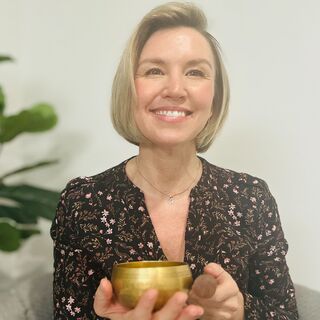
Beginner video for Centering Practice

★ 4.8
·
Guided
·
3 min
David Gandelman
How hard is Centering Practice?
Centering Practice keeps a structured floor because it asks for active recollection into a chosen center, while the reviewed Focused Attention defaults still fit.
2
Mental Effort
2 / 4
▾Emotional Depth
1 / 4
▾Physical Intensity
1 / 4
▾Prior Knowledge
2 / 4
▾Editorially curated. Tracks are not themselves clinically studied; evidence on the page applies to Centering Practice as a technique.
Explore guided sessions to deepen your Centering Practice technique.