The world’s largest free audio library for everyday wellbeing
Somatic & Body Based
Tense-and-release means briefly tightening a muscle group and then letting go, using the contrast between the two to recognise and release physical holding.
Last Updated
4 Jul 2026
We are still reviewing this page. Our research team checks every technique page for accuracy and evidence quality before final release. Details may change as that review completes. The evidence badge shows our current reading of the published research.
RECOMMENDED DOSE
A short, gentle introduction that lets you learn the tense-and-release cycle across the major muscle groups without strain. No direct dose evidence; editorial synthesis based on common progressive-relaxation practice.
A more regular routine covering the full sequence of muscle groups once the basic cycle feels familiar. No direct dose evidence; editorial synthesis based on common progressive-relaxation practice.
A sustained daily practice for those maintaining the habit long term, allowing slower, more thorough attention to each muscle group. No direct dose evidence; editorial synthesis based on common progressive-relaxation practice.
Session length
Session length: 10–15 minutes
10
MIN
How long each individual practice session should last from start to finish.
Frequency
Frequency: 3–4 days
3
DAYS
The number of days per week to fit a session into your routine.
Session length
Session length: 15–20 minutes
15
MIN
How long each individual practice session should last from start to finish.
Frequency
Frequency: 5–6 days
5
DAYS
The number of days per week to fit a session into your routine.
Session length
Session length: 20–30 minutes
20
MIN
How long each individual practice session should last from start to finish.
Frequency
Frequency: 7 days
7
DAYS
The number of days per week to fit a session into your routine.
About this card. No direct dose-response literature specifies how long or how often to practise Tense-and-Release to produce its effect, so these ranges are conservative starting points based on general relaxation-practice conventions. These recommendations are not a substitute for personalised guidance from a qualified practitioner.
Quick answers to what people most often ask. Each card links to the deeper section below.
evidence
Randomized trials in cancer patients found progressive muscle relaxation, which builds on tense-and-release, produced greater reductions in anxiety and depression than usual care during treatment. Because the method was paired with guided imagery in clinical groups, results cannot be credited to tense-and-release alone or generalised beyond cancer populations.
good for
Adults who carry stress as physical tension—tight shoulders, a braced jaw, restlessness, or a keyed-up nervous system—may find tense-and-release helpful for settling the body. Direct trials studied breast, prostate, and gynecologic cancer patients during treatment. It supports steadier settling rather than replacing care when pain, mood, or a physical condition is severe.
Read moresafety
Most healthy adults can practise tense-and-release safely, and no trials have tested its safety directly. The five-to-seven-second muscle contraction can aggravate an injured, inflamed, or recently operated area, so soften or skip the tensing there. Anyone with uncontrolled high blood pressure should check which muscle groups to engage, since brief clenching can raise pressure momentarily.
Read morehow it works
Tightening a muscle for five to seven seconds, then releasing it, lets the muscle settle below its starting tension—a relaxation rebound felt as spreading heaviness and ease. Repeating this across the body shifts the autonomic nervous system toward its rest-and-recovery branch, slowing breathing, while the tension-release contrast sharpens your felt sense of where you hold.
Read moreTense-and-release is the foundational progressive muscle relaxation method: you briefly tighten a muscle group, then release it and notice the deeper ease that follows.
The practitioner moves through the body one region at a time, deliberately contracting a muscle group for roughly five to seven seconds and then releasing it, pausing each time to feel the difference between held tension and the softer, heavier state that follows. The ordered progression through muscle groups, the timed tensing phase, and the attention paid to the moment of release are what give the practice its shape. Sessions can be self-guided or led by a recorded or in-person voice.
Tense-and-release is the core building block of Progressive Muscle Relaxation, not general stretching or a passive body scan. Unlike stretching, its aim is a neurological relaxation rebound rather than lengthening tissue, and unlike a body scan, which simply observes sensation, it uses active muscular engagement, deliberately tightening before letting go. It is a secular, physiological method rather than a spiritual or contemplative tradition.
Not to be confused with
General stretching
Stretching lengthens a muscle to build flexibility and range of motion. Tense-and-release does the opposite first, briefly tightening a muscle so that its release produces a relaxation rebound aimed at settling the nervous system, not at improving how far the joint moves.
Autogenic Training
Autogenic training relaxes the body through repeated mental phrases that evoke warmth and heaviness, working largely through suggestion. Tense-and-release relies on a physical tighten-then-let-go cycle rather than verbal self-suggestion.
Guided imagery
Guided imagery calms by directing attention to a soothing mental scene. It is often paired with tense-and-release in studies, but on its own it is a mental technique, not the muscular tighten-and-release practice itself.
Tense-and-release works through a relaxation rebound. A muscle held tight for five to seven seconds tends to settle below its starting tension once you let go, a drop practitioners feel as spreading heaviness and physical ease (Charalambous et al., 2015). Repeating this across the body is thought to shift the autonomic nervous system toward its parasympathetic branch, which governs rest and recovery, and that shows up as slower breathing and a body that feels less braced. The same tension-and-release contrast sharpens interoception, your felt sense of internal signals, so subtle holding becomes easier to catch and release. These pathways are inferred from stress-marker changes rather than measured in the muscles themselves, and the supporting trial paired the method with guided imagery, so the muscle work alone cannot be isolated (Charalambous et al., 2015).
A muscle you deliberately tighten for a few seconds and then release tends to settle below the tension it started with, a rebound that many people feel as a spreading physical ease and a softening in places that had been quietly holding. Building the practice on this tighten-then-let-go contrast is thought to help the whole body settle, and in one cancer-care trial this kind of relaxation was linked with lower stress-hormone markers alongside less anxiety (Charalambous et al., 2015).
When stress leaves you stuck between wired and worn out, deliberately tightening a muscle group for a few seconds and then letting go is thought to set off a relaxation rebound that shifts the nervous system toward its rest-and-recovery, or parasympathetic, branch. Many people feel this as the body settling and breathing slowing on its own (Charalambous et al., 2015).
When you feel wired and can't get your body to settle, deliberately tensing a muscle group and then letting it drop gives that keyed-up energy somewhere to go. That sharp contrast is thought to trigger a relaxation rebound that eases the body toward its rest-and-recovery state, and in one chemotherapy trial this kind of practice was linked with lower stress-hormone levels (Charalambous et al., 2015).
Deliberately tightening a muscle group and then letting go can leave the body settling, breathing slowing, and a spreading sense of ease after each release. This is thought to come from a relaxation rebound that shifts the nervous system toward the parasympathetic, rest-and-recovery branch that slows heart rate and eases arousal (Charalambous et al., 2015).
The most reliably measured change is in stress chemistry. In a trial of breast and prostate cancer patients undergoing chemotherapy, salivary cortisol, the body's main stress hormone, decreased over three weeks of relaxation practice while it rose in a comparison group, and salivary amylase moved the same way (Charalambous et al., 2015). A downward shift like this tends to feel like the body winding down, shoulders loosening and breathing slowing as the sense of being on guard eases. Reduced muscle tension is expected from how the technique works, though this trial tracked stress markers rather than the muscles directly, and it combined tense-and-release with guided imagery in a specific clinical group.
When the body stops bracing and is finally allowed to rest, its stress chemistry tends to settle. In a guided relaxation program that paired muscle release with imagery, participants' cortisol, the body's main stress hormone, was measured to fall over three weeks while it climbed in a comparison group who did not practice (Charalambous et al., 2015).
That wired, on-edge quality of stress shows up in the body partly through cortisol, the main hormone released under stress. In one chemotherapy trial, cortisol decreased over three weeks of relaxation practice while it climbed in the comparison group (Charalambous et al., 2015), a shift you may notice as the body settling and rest becoming easier to reach.
You can feel tension ease, breathing deepen, and the day feel a little less relentless as the body steps out of alarm mode. That shift tracks with salivary cortisol, a stress hormone measured lower across three weeks of progressive muscle relaxation with guided imagery in adults during chemotherapy, while it rose in those without the practice (Charalambous et al., 2015).
When stress won't switch off, the body can feel wired and braced. In one chemotherapy trial, salivary cortisol, a key stress hormone, fell across three weeks of relaxation with guided imagery while it rose in the comparison group (Charalambous et al., 2015). That downward shift often feels like the body winding down, with shoulders loosening and breathing slowing.
The braced, keyed-up feeling of fight-or-flight can ease with tense-and-release. In one cancer-treatment trial, saliva-based markers of the body's stress-response system fell during the practice while rising in the comparison group (Charalambous et al., 2015), a shift practitioners often feel as a slowing pulse, shoulders and jaw loosening, and breath becoming steadier as the body stops holding on.
When stress leaves you braced and on alert, that keyed-up feeling can ease as the body's sympathetic response, its fight-or-flight branch, quiets. In one cancer trial, two markers of that response, salivary amylase and the stress hormone cortisol, fell during a relaxation practice with guided imagery while rising in the comparison group (Charalambous et al., 2015), a shift often felt as a slowing pulse, looser shoulders, and less of the urge to spring into action.
Moderate but indirect evidence supports tense-and-release, delivered as progressive muscle relaxation, for easing anxiety and low mood. Two randomized trials in adults undergoing cancer treatment found lower anxiety and depression versus usual care (Charalambous et al., 2015), (León‐Pizarro et al., 2007), and major oncology guidelines recommend relaxation and muscle-relaxation training as supportive options for distress (Carlson et al., 2023), (Lu et al., 2025), (Gowin et al., 2024). The same lead trial also measured lower stress-hormone levels alongside those symptom changes (Charalambous et al., 2015). What is not yet supported: studies of tense-and-release on its own rather than bundled with guided imagery, evidence outside cancer populations, and any claim that it replaces treatment for a diagnosed condition.
In randomized trials with cancer patients, progressive muscle relaxation, usually paired with guided imagery, produced significantly greater reductions in anxiety and depression than usual care during treatment (Charalambous et al., 2015), (León‐Pizarro et al., 2007), and major cancer-care guidelines now list relaxation training among supportive options for distress (Carlson et al., 2023), (Gowin et al., 2024). The main areas studied are anxiety, mood, and stress-hormone levels in adults undergoing chemotherapy or brachytherapy. The clearest limit is directness: most studies test the tension-release cycle bundled with imagery in cancer populations, so the effect cannot be cleanly credited to tense-and-release alone or generalized to everyone, and some results are reported only as statistical significance rather than a full effect size (Charalambous et al., 2015).
0
Meta-analyses
1
RCTs
1
Systematic reviews
0
Observational
4
Pilot
Studied populations
A Randomized Controlled Trial for the Effectiveness of Progressive Muscle Relaxation and Guided Imagery as Anxiety Reducing Interventions in Breast and Prostate Cancer Patients Undergoing Chemotherapy
n = 236
Finding: In a randomised trial with 236 breast and prostate cancer patients going through chemotherapy, three weeks of progressive muscle relaxation paired with guided imagery lowered anxiety and depression scores, while a comparison group receiving usual care did not improve. Over the same period, stress-hormone markers in the saliva (cortisol and amylase) fell in the practice group but rose in the control group, pointing to a genuinely calmer stress response rather than just a change in mood. For someone considering tense-and-release, this suggests the practice can help settle both mind and body during a demanding time, though the muscle-relaxation part was always taught alongside guided imagery, so we can't say how much the tension-release step contributed on its own. It is also a single, short study in people facing serious illness, so the results won't necessarily carry over to everyone.
reported narratively
A randomized trial of the effect of training in relaxation and guided imagery techniques in improving psychological and quality‐of‐life indices for gynecologic and breast brachytherapy patients
n = 66
Finding: In a randomized trial with 66 women receiving brachytherapy for gynecologic or breast cancer, those trained in relaxation paired with guided imagery reported meaningfully lower anxiety, less depression, and reduced body discomfort than women who got standard care alone. For someone facing a stressful medical procedure, this hints that pairing muscle relaxation with calming mental imagery can take real edge off the experience. One caveat worth keeping in mind: the relaxation was delivered together with guided imagery in a small, specific patient group, so the results reflect the combined approach rather than tense-and-release on its own.
Tense-and-release comes from Progressive Muscle Relaxation, developed by the physician Edmund Jacobson in 1938, who proposed that mental strain has a physical counterpart in muscular holding. These roots help explain the practice's form, its deliberate tighten-then-let-go sequencing through the body, rather than proving any clinical effect. It is a secular, physiological method rather than a spiritual or lineage tradition, which is part of why its plainly mechanical rationale appeals to many practitioners.
For most healthy adults, tense-and-release is a low-risk practice, and no trials have tested its safety directly. Two sensible cautions come from how the technique works rather than from measured harm. First, from practical experience: the deliberate five-to-seven-second contraction can aggravate an area that is injured, inflamed, recently operated on, or in acute pain, so soften or skip the tensing step there and stay with the release, which is where the wave of ease comes from anyway. Second, from physiology: briefly clenching a large muscle group can lift blood pressure for a moment, which is worth keeping in mind if your blood pressure runs high and is not yet well controlled.
Anyone managing a recent injury, recent surgery, or acute muscle or joint pain should adapt the practice, easing off or leaving out the tensing phase over the affected area and working mainly with the release. Anyone with uncontrolled high blood pressure should ask a clinician which muscle groups to engage and how firmly, because an isometric contraction, tightening a muscle without moving the joint, can raise pressure briefly. These are cautions drawn from practical experience and from how the body responds, not risks that have been measured in trials of this specific technique.
The deliberate five-to-seven-second tensing step loads muscle and tissue in place, which can aggravate an area that is injured, inflamed, recently operated on, or acutely painful. Soften or skip the tensing over any sore region and stay with the release, since letting go is where the wave of ease comes from anyway. If you are recovering from surgery or managing a musculoskeletal injury, ask a clinician which muscle groups to modify before you begin.
Briefly clenching a large muscle group is an isometric contraction, tightening a muscle without moving the joint, and it can lift blood pressure for a moment. If your blood pressure runs high and is not yet well controlled, contract more gently or leave out the tensing over large muscle groups and work mainly with the release. Ask a clinician which groups to engage and how firmly before you begin. This is a caution drawn from how the body responds, not a measured risk or a claim that the practice raises or lowers blood pressure.
| Technique | Best for | Use with care | Evidence strength | Distinction |
|---|---|---|---|---|
| Body Scan Meditation | Readers who want quiet, effortless observation of body sensations and prefer no physical exertion or muscle contraction. | If subtle sensations are hard to detect without a strong contrast, a purely observational scan can feel elusive; the tensing step gives more to work with. | moderate EVIDENCE | A body scan moves attention slowly through the body and simply observes whatever sensation is there, without changing anything. Tense-and-release adds an active step: you deliberately tighten each muscle group for a few seconds, then let go, using the sharp contrast between holding and softening to locate and release tension you might not otherwise have felt. The body scan trains noticing; tense-and-release trains noticing plus letting go through physical action. |
| Mindfulness meditation | Readers wanting to build sustained attention and a calmer relationship with thoughts and feelings over time. | When the mind is highly agitated, sitting with attention alone can feel harder than a body-based practice with a clear physical task. |
You deliberately tighten one muscle group for about 5-7 seconds, then let go and notice the softening that follows, working region by region through the body. The contrast between holding and releasing is what helps you find and let go of tension you may not have realised you were carrying.
+
You move through the body one area at a time, briefly tightening a muscle group to a moderate effort for roughly 5-7 seconds and then releasing it, pausing to feel the difference between the held state and the looser, heavier one that follows. Working from region to region, you learn to recognise holding patterns and let them soften. This is a description of the procedure, not a promise of any clinical outcome; a first session can feel mechanical, and the sense of release often deepens with repetition.
Essentially yes. Tense-and-release is the core technique of Progressive Muscle Relaxation (PMR), the deliberate tighten-then-let-go cycle that defines the method developed by Edmund Jacobson in 1938. PMR is the broader named programme; tense-and-release is its central mechanic.
+
Essentially yes. Tense-and-release means briefly tightening a muscle group and then releasing it, using the contrast to recognise and let go of physical holding, and that cycle is the defining technique at the heart of Progressive Muscle Relaxation (PMR). PMR is the broader named method, developed by the physician Edmund Jacobson in 1938, that works through the body one region at a time using this tighten-then-release sequence. The terms describe the same practice at different scopes: tense-and-release is the mechanic, PMR is the programme built around it.
The relaxation method that tense-and-release comes from: deliberately tightening a muscle group for a few seconds, then releasing it and noticing the softening, working through the body one region at a time. Developed by Edmund Jacobson in 1938.
The tendency of a muscle to settle below its starting tension right after being deliberately tightened and released. This contrast is what makes the loosened, heavier state easier to feel.
Tightening a muscle without moving the joint, as in the tensing step of the practice. Because it loads the tissue in place, it can strain an injured or inflamed area rather than soothe it, and briefly clenching a large muscle can lift blood pressure for a moment.
The ability to sense and read signals from inside the body, such as tension, breath, or heartbeat. Practising the tension-release contrast is thought to sharpen this, so early stress signals become easier to notice.
Interoceptive awareness: the perception and interpretation of visceral and somatic afferent signals, associated with insular and somatosensory processing.
The branch of the nervous system that slows the heart and moves the body toward rest and recovery. When it takes over, breathing tends to slow and muscles loosen.
The body's fight-or-flight setting, which speeds the heart and tightens muscles. Easing it is felt as a slowing pulse, dropping shoulders, and steadier breath.
The nervous system's ability to shift smoothly between activation and rest rather than staying stuck on high alert. It is often experienced as being able to stand down and settle after stress.
Sympathovagal balance and autonomic flexibility, typically indexed by measures such as heart-rate variability.
Andreas Charalambous, Μαργαρίτα Γιαννακοπούλου, Evangelos Bozas, Lefkios Paikousis (2015). A Randomized Controlled Trial for the Effectiveness of Progressive Muscle Relaxation and Guided Imagery as Anxiety Reducing Interventions in Breast and Prostate Cancer Patients Undergoing Chemotherapy. https://doi.org/10.1155/2015/270876
Cited in: Benefits, How it works, Research, What happens in the body
Concha León‐Pizarro, Ignasi Gich, Emma Barthe, Á. Rovirosa, B. Farrús, Francesc Casas (2007). A randomized trial of the effect of training in relaxation and guided imagery techniques in improving psychological and quality‐of‐life indices for gynecologic and breast brachytherapy patients. https://doi.org/10.1002/pon.1171
Explore guided sessions to deepen your Tense-and-Release technique.
After a stressful stretch that leaves you wired, the body can soften, breathing slows, and a quiet sense of settling arrives in the moments after each muscle release. That points to parasympathetic tone, the activity of the body's rest-and-recovery branch that slows the heart and eases the system out of alert mode. It wasn't measured directly in the research, but in one chemotherapy trial the stress markers cortisol and salivary amylase dropped during progressive muscle relaxation while rising in a comparison group (Charalambous et al., 2015).
After you hold a muscle and let it go, the body can unclench and breathing can slow as the internal balance tips from stress toward rest. In one trial with cancer patients, salivary amylase, a marker of the sympathetic stress system, fell during progressive muscle relaxation with guided imagery while it rose in the comparison group (Charalambous et al., 2015), a shift toward parasympathetic, rest-and-recovery dominance.
When stress lingers, the body can stay braced and on high alert long after the moment has passed. In one chemotherapy trial, salivary amylase, a saliva marker of fight-or-flight arousal, fell during progressive muscle relaxation with guided imagery while it rose in the comparison group, and the stress hormone cortisol followed the same pattern, a shift that can feel like the body finally standing down (Charalambous et al., 2015).
As each muscle group lets go, many people feel a spreading looseness and warmth through the shoulders, jaw, and hands, with breathing that deepens on its own, the felt sign of muscle tension easing. In the chemotherapy trial behind this practice, the stress markers actually measured, the hormone cortisol and the enzyme salivary amylase, fell during the practice (Charalambous et al., 2015), while muscle tension itself was not recorded directly.
Outcomes measured
| Outcome | Effect size | 95% CI | N | Comparator | Source |
|---|---|---|---|---|---|
| anxiety and depression | regression coefficient (b) = -29.4 | — | — | usual-care control | Charalambous et al., 2015 |
| salivary cortisol / amylase | reported significant; p<0.001 | — | — | usual-care control | Charalambous et al., 2015 |
| anxiety, depression, body discomfort | reported significant; p=0.008 / 0.03 / 0.04 | — | 66 | standard brachytherapy training control | León‐Pizarro et al., 2007 |
The research is useful for setting expectations, but study methods and participant groups vary. Treat the findings as general guidance rather than a promise about any single session, and not a replacement for clinical care.
reported significant; p=0.008 / 0.03 / 0.04
Clinical practice guidelines on the evidence-based use of integrative therapies during and after breast cancer treatment.
2017
Finding: These integrative-oncology practice guidelines recommend relaxation therapies, alongside mindfulness, yoga, and music therapy, to help adults with cancer manage anxiety and low mood during and after treatment. For someone using a tense-and-release routine, that places the broader relaxation family within formal clinical recommendations, so the practice fits comfortably as supportive self-care. Keep in mind the guidelines back relaxation therapies as a group rather than singling out the tense-and-release method by name, and they report the strength of the recommendation rather than a specific measured reduction in symptoms.
See full citation in referencesIntegrative Oncology Care of Symptoms of Anxiety and Depression in Adults With Cancer: Society for Integrative Oncology–ASCO Guideline
2023
Finding: A joint expert panel from two major oncology societies reviewed the research and recommended relaxation therapies, alongside mindfulness, yoga, and music therapy, to help adults with cancer manage anxiety and low mood. For someone considering tense-and-release, this means the wider family of relaxation practices carries formal guideline support as a way to ease emotional distress during cancer care. Keep in mind, though, that these guidelines endorse relaxation approaches as a group rather than the tense-and-release method specifically, so the backing here is for the broader category rather than proof of this exact technique.
See full citation in referencesUsing Integrative Therapies to Improve Patient‐Reported Outcomes in Breast Cancer Survivors: A Living Evidence‐Based Clinical Practice Guideline
2025
Finding: A living clinical practice guideline for breast cancer care gave muscle relaxation training a strong recommendation for easing anxiety and low mood in survivors, drawing on pooled systematic-review and meta-analysis evidence. For someone using tense-and-release, that means expert panels see enough consistent benefit to actively recommend the approach for managing the emotional strain that often accompanies illness. Keep in mind, though, that the guideline reports the strength of its recommendation rather than a specific size of effect, and it speaks to relaxation training broadly in a cancer-survivor population, not to the tension-release protocol on its own.
See full citation in referencesIntegrative Therapies in Cancer Care: An Update on the Guidelines.
2024
Finding: Cancer-care guidelines from major oncology and integrative-medicine bodies recommend relaxation therapies, alongside approaches like mindfulness, yoga, and music therapy, to help adults with cancer manage anxiety and low mood. That places the broader family of relaxation practices, which includes tense-and-release, on a list of expert-endorsed supportive options rather than fringe self-help. Keep in mind that these guidelines back relaxation therapies as a group and report the strength of the recommendation, not results for the tense-and-release method on its own, so they speak to the general category more than to this specific technique.
See full citation in referencesTense-and-release is gentlest when you settle somewhere quiet and fully supported, so that as each muscle lets go you can feel the heaviness settle rather than having to hold yourself up. Keep the contractions moderate and brief rather than straining, and treat the release as the part that matters, softening or skipping the tensing wherever an area is sore or where high blood pressure makes a firm clench unwise. Coming out of a long session slowly, and checking with a clinician if you are recovering or managing a condition, keeps a low-risk practice comfortable.
Find a quiet spot and sit or lie somewhere your body is fully supported, so that when a muscle lets go you feel the heaviness settle instead of having to hold yourself up.
Tighten each muscle group to a moderate effort for about five to seven seconds. You are after a clear contrast with the release, not a maximal strain, and you should never feel sharp pain.
Wherever an area is injured, inflamed, recently operated on, or in acute pain, skip the tensing step and simply rest your attention on softening that spot, since the ease you want comes from the release.
If your blood pressure runs high, contract more gently or leave out the tensing over large muscle groups, because clenching them briefly can lift pressure for a moment. Work mostly with the release instead.
After a long session, stretch lightly and stand up gradually so you do not feel lightheaded as your body shifts from deep rest back to activity.
If you are recovering from surgery, managing a musculoskeletal injury, or living with a condition affected by exertion, ask a health professional which muscle groups to modify before you begin.
This information is educational and is not medical advice. This practice is not a substitute for professional care and should not replace prescribed medication or treatment for any medical or mental-health condition. If you are managing a health condition or taking medication, talk with a qualified health professional before changing your practice. If you are in distress or crisis, seek professional support.
| moderate EVIDENCE |
| Mindfulness meditation trains steady, non-judgmental attention on the breath, thoughts, or sensations, so the calming comes from how you relate to experience rather than from any physical manoeuvre. Tense-and-release instead works through the body directly, contracting and releasing muscles to prompt a physical settling. Mindfulness cultivates a stance of awareness; tense-and-release produces a concrete, felt loosening you can practise even when the mind is too busy to sit still. |

| Yoga-based relaxation | Readers who enjoy gentle movement and breath-linked postures and want physical activity alongside relaxation. | For those with limited mobility, acute pain, or little space, a still, seated tense-and-release practice may be more accessible than movement-based yoga. | moderate EVIDENCE | Yoga-based relaxation combines postures, movement, and breath to ease the body and mind, so the calming rides on stretching and flowing through poses. Tense-and-release needs no movement through space: you stay still and simply tighten then release muscle groups in sequence. Yoga engages the whole body in motion; tense-and-release isolates one region at a time and centres the practice on the moment of letting go. |
Moderately, but the evidence is indirect. Progressive muscle relaxation, the method tense-and-release comes from, was linked to lower anxiety and depression in cancer-treatment trials, and relaxation training is recommended in oncology guidelines (Charalambous et al., 2015), (Carlson et al., 2023). Read it as supportive, not yet proven for the technique on its own.
+
Moderately, though with an important limit. The strongest studies bundled progressive muscle relaxation with guided imagery in adults undergoing cancer treatment, so the benefit cannot be credited to tense-and-release alone (Charalambous et al., 2015), (León‐Pizarro et al., 2007). Major oncology guidelines do list relaxation and muscle-relaxation training as supportive options for anxiety and low mood (Lu et al., 2025), (Gowin et al., 2024). Direct evidence for the technique by itself, and in general or healthy adults, is still thin, encouraging but not yet settled, and not a substitute for care for a diagnosed condition.
Moderate but indirect. The strongest trials test tense-and-release bundled with guided imagery in cancer patients, so the benefits can't be credited to the muscle work alone, and no studies have isolated the technique by itself or tested general healthy adults (Charalambous et al., 2015), (León‐Pizarro et al., 2007).
+
Moderate but indirect. Randomized trials in adults undergoing cancer treatment link this kind of relaxation with lower anxiety and mood symptoms, but they pair it with guided imagery, a technique that directs attention to a calming mental scene, so the effect cannot be cleanly credited to the tense-and-release cycle alone (Charalambous et al., 2015), (León‐Pizarro et al., 2007). Some results are reported only as statistical significance rather than a full effect size, and no trials isolate the cycle by itself or test healthy general populations. Read this as encouraging support for settling and stress relief rather than proof of a technique-specific effect, and not a treatment for any diagnosed condition (Charalambous et al., 2015).
The idea is a relaxation rebound, where a muscle held tight for a few seconds tends to settle below its starting tension once you let go, making the loosened state easier to feel (Charalambous et al., 2015). This is a proposed mechanism inferred from stress-marker changes, not something measured directly in the muscles.
+
The deliberate tighten-then-release step is thought to work through a relaxation rebound. After five to seven seconds of contraction, the muscle tends to drop below its pre-tension baseline once you let go, and that sharp contrast trains your interoception, the felt sense of internal body signals, to notice and release holding you might otherwise miss (Charalambous et al., 2015). Repeating it across the body is thought to shift the nervous system toward its parasympathetic, rest-and-recovery branch. The explanation is suggestive rather than confirmed, inferred from downstream stress-hormone changes in a bundled relaxation protocol rather than measured directly in the muscles themselves.
Possibly. In one randomized trial of breast and prostate cancer patients, salivary cortisol, the body's main stress hormone, fell over three weeks of relaxation practice while it rose in a usual-care group (Charalambous et al., 2015). The evidence is suggestive, not confirmed, and does not promise a hormone drop for every person or session.
+
Possibly. The clearest signal comes from a single randomized trial in breast and prostate cancer patients undergoing chemotherapy, where salivary cortisol and salivary amylase, an indirect marker of fight-or-flight activity, decreased over three weeks of relaxation practice while both rose in a comparison group (Charalambous et al., 2015). Read this as indirect evidence, since the practice was delivered bundled with guided imagery, the change was measured downstream rather than isolated to the muscle work, and it was studied in a clinical population, so it cannot be promised as a certain effect for everyone. It supports settling rather than standing in as a treatment for any condition.
Usually, but modify it. For most healthy adults tense-and-release is low-risk, though no trials have tested its safety with injuries. Because the 5–7 second tensing step is an isometric contraction that tightens a muscle without moving the joint, it can aggravate an injured, inflamed, recently operated, or acutely painful area, so soften or skip the tensing there and work only with the release.
+
Usually, but modify it. This caution is practice-informed and mechanism-inferred rather than something measured in trials. The deliberate 5–7 second isometric tensing step, which tightens a muscle without moving the joint, loads tissue in place and can irritate an area that is injured, inflamed, post-surgical, or in acute pain. The practical answer is to soften or skip the tensing over any sore region and stay with the release, since letting go is where the ease comes from anyway. If you are recovering from surgery or managing a musculoskeletal injury, check with a clinician about which muscle groups to modify before you begin.
Likely, with care. Tense-and-release is low-risk for most people, though no trial has tested its safety in high blood pressure directly. Briefly clenching large muscles may raise blood pressure for a moment, so if yours is uncontrolled, soften or skip the tensing step, work mainly with the release, and ask a clinician which muscle groups to engage.
+
Likely, with care. For most healthy adults this is a low-risk practice, but its safety in high blood pressure has not been measured in trials, so the guidance here is mechanism-inferred rather than proven. An isometric contraction, which tightens a muscle without moving the joint, can raise blood pressure briefly, so if your blood pressure runs high and is not yet well controlled, reduce how hard you contract or leave out the tensing over large muscle groups and work mainly with the release. Check with a clinician about which groups to engage before you begin. This is not a claim that the practice lowers blood pressure or is proven safe or unsafe in hypertension.
Start in a supported seated or lying position, then tighten one muscle group at a time for about 5–7 seconds, firm but never to the point of pain, and let go, noticing the wave of softening before moving to the next region. Work through the body this way, and skip or soften the tensing over any injured, inflamed, or painful area, working mainly with the release.
+
Start simply: settle somewhere your body is fully supported, then tighten one muscle group at a moderate effort for roughly 5–7 seconds and release it, pausing to feel the contrast as the area softens. That tighten-then-let-go cycle is what tense-and-release is, and the release is thought to prompt a settling response in the nervous system. Move region by region, and keep the tensing gentle: you want a clear contrast, not a strain, and never sharp pain. Over any area that is injured, inflamed, recently operated on, or acutely sore, skip the tensing and just direct attention to letting it soften; if your blood pressure runs high and is not well controlled, ease off or omit tensing over large muscle groups and check with a clinician. These are practical, use-with-care starting points rather than a treatment protocol.
The main difference is what you do with each sensation. A body scan simply observes each area of the body without changing anything, while tense-and-release adds an active step, briefly tightening a muscle group, then letting go, using the contrast to locate and release holding you might otherwise miss.
+
The core distinction is observation versus action. A body scan moves attention slowly through the body and notices whatever sensation is present, without trying to alter it. Tense-and-release instead has you deliberately tighten a muscle group for a few seconds and then let go, and that tighten-then-release contrast is thought to trigger a relaxation rebound that helps the body settle (Charalambous et al., 2015). No head-to-head trial has compared the two, so this is a difference in how each practice works, not a claim that one settles the body better than the other.
The body's main stress hormone. Lower levels reflect the stress response easing off, often felt as being less braced and more able to rest. In one chemotherapy trial, cortisol fell during relaxation practice while it rose in the comparison group.
An enzyme in saliva used as an indirect marker of fight-or-flight (sympathetic) activity. When it drops, the stress system is easing; it fell alongside cortisol in the supporting relaxation trial.
A relaxation technique that directs attention to a calming mental scene. In the main supporting studies it was delivered together with muscle relaxation, which is why effects cannot be credited to tense-and-release alone.
Greenlee Heather, DuPont-Reyes Melissa J, Balneaves Lynda G, Carlson Linda E, Cohen Misha R, Deng Gary (2017). Clinical practice guidelines on the evidence-based use of integrative therapies during and after breast cancer treatment.. https://doi.org/10.3322/caac.21397
Linda E. Carlson, Nofisat Ismaila, Elizabeth L. Addington, Gary Asher, Chloé E. Atreya, Lynda G. Balneaves (2023). Integrative Oncology Care of Symptoms of Anxiety and Depression in Adults With Cancer: Society for Integrative Oncology–ASCO Guideline. https://doi.org/10.1200/jco.23.00857
Tingting Lu, Honghao Lai, Hongsheng Lin, Fei Ma, Li Hou, Lili Tang (2025). Using Integrative Therapies to Improve Patient‐Reported Outcomes in Breast Cancer Survivors: A Living Evidence‐Based Clinical Practice Guideline. https://doi.org/10.1111/jebm.70029
Krisstina Gowin, Meri Muminovic, Suzanna M. Zick, Richard T. Lee, Christina Lacchetti, Ashwin Mehta (2024). Integrative Therapies in Cancer Care: An Update on the Guidelines.. https://doi.org/10.1200/edbk_431554
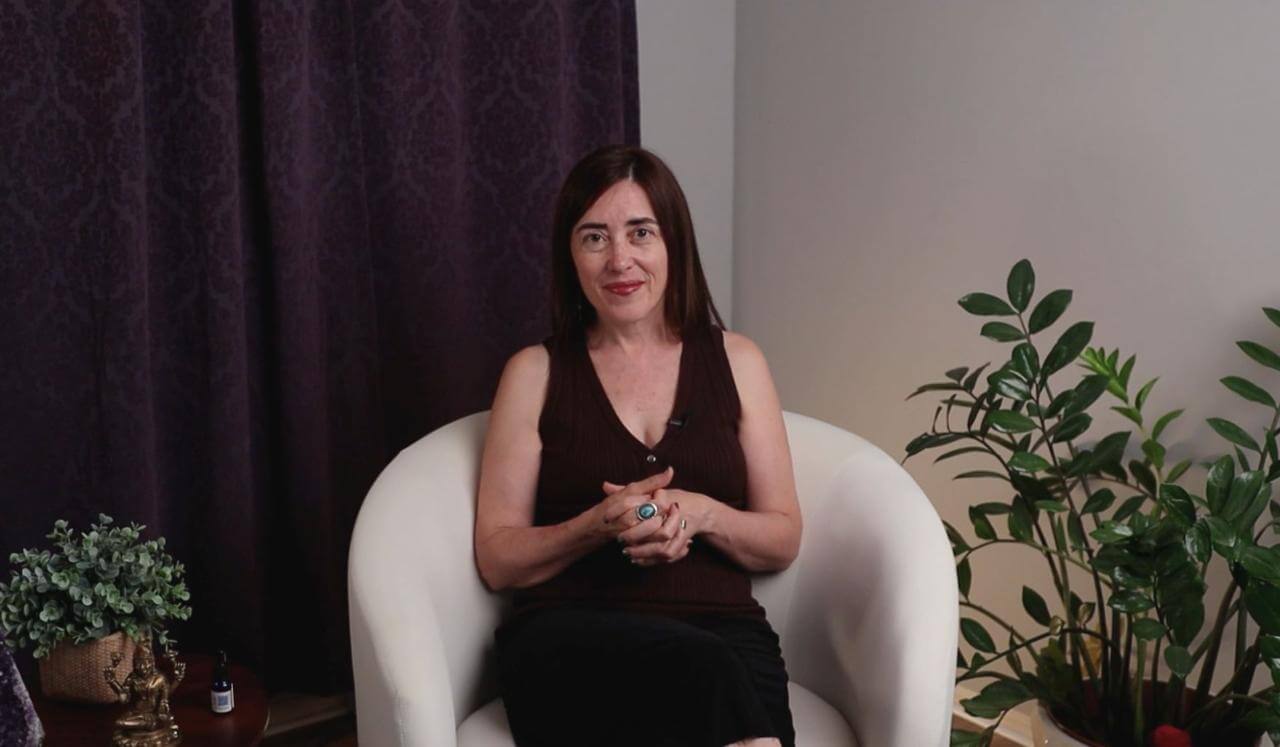
Beginner video for Tense-and-Release

★ 4.9
·
Guided
·
16 min
DAYANA
How hard is Tense-and-Release?
Tense-and-Release should sit at effort 3 because the live row is an active contraction-release method, not just a gentle softening practice.
3
Mental Effort
2 / 4
▾Emotional Depth
1 / 4
▾Physical Intensity
3 / 4
▾Prior Knowledge
1 / 4
▾Editorially curated. Tracks are not themselves clinically studied; evidence on the page applies to Tense-and-Release as a technique.