Hello,
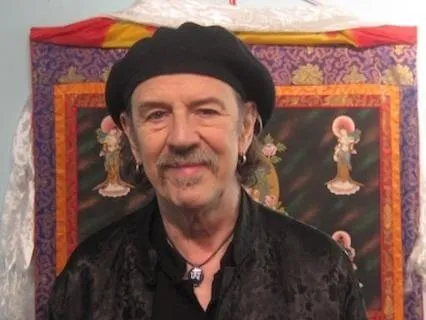
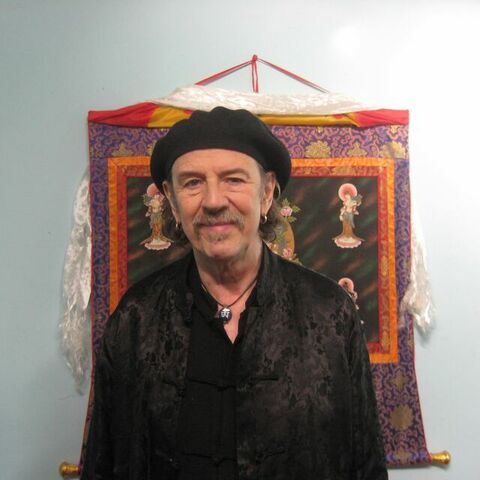
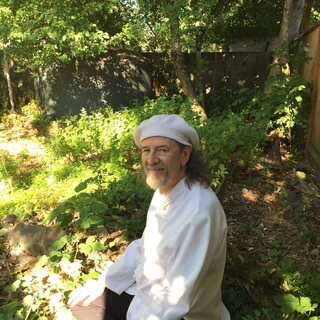
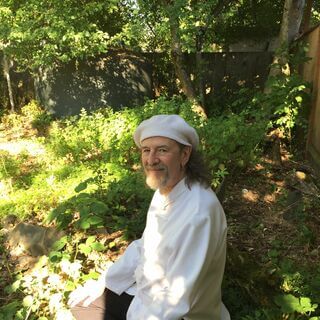
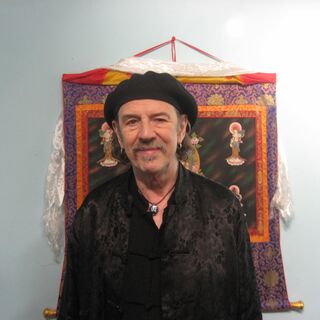
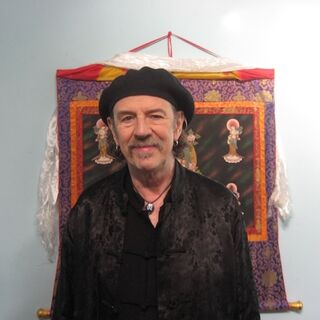
My name is Sola LaTeller and I'm here to share another simple yet powerful Qigong meditation practice with you.
Called the Crimson Palace Meditation.
And in this practice we'll be working with our middle dantian.
And you may remember in other videos here I'm sharing,
We have three major energy centers of the body.
Lower dantian in our lower abdomen,
Middle dantian in our chest area between our nipples,
Upper dantian in our third eye center.
Which I will be sharing another video just for that practice.
So the heart.
.
.
The heart in Chinese medicine,
In Taoist practice,
In Qigong,
Is thought of very differently than in the West.
Although even in the West,
We know now that the heart is not just a blood pump.
The heart is actually able to send electrical messages to the brain and down to the gut all day,
All of the time.
And in Chinese medicine and Taoist medicine.
The heart is considered the emperor or empress of all the other organs.
Very,
Very special,
Very important.
It is said when the heart is not balanced,
None of the other organs are in balance.
So this is a practice to bring our heart into balance.
Also,
Our heart center is very important in Taoist practice because it is believed that it is where our shen,
Or spiritual center,
Resides.
Not only that,
But also our cognitive mind resides in our heart and those thoughts.
We sometimes call the heart the heart-mind.
And so this is all the different aspects of the heart that we're going to be working with in this practice.
So as usual,
We begin by closing our eyes,
And that was practice called lowering the curtain.
This is because unless we are a visually impaired person,
A lot of the way we.
.
.
Interact with the world.
The way we.
.
.
Engage with the world the way we get entangled with the world around us through our eyes.
So closing our eyes,
We are better able to see within,
To use our inner vision.
And we are breathing in out of our nose.
Slowly,
Gently,
And deeply.
The tip of our tongue is to the roof of our mouth.
This is a very important part of Taoist Qigong practice and I will be doing another video just about that practice.
And I'll be explaining a lot more of why we do it and how we work with what we do when we do it.
So to begin.
We breathe into our lower dantian just to kind of ground ourselves.
And we take nine deep,
Slow,
Gentle breaths.
As we breathe in,
Our abdomen expands.
As we breathe out,
It contracts,
Or what I like to call condenses.
So let's begin with nine deep breaths.
As in one of the other videos I'm offering here,
We can do the grounding rooting practice also.
Before we start with the heart practice.
Remember,
It's about sending those energetic roots from the bottom of our feet to the yang chuan point.
Deep into the living,
Breathing earth.
So let's do that for a few moments,
Just to kind of ground our energetic body and being.
Now we bring our focus up to our middle dantian,
Our heart center,
The center of our cognitive mind as well as our spiritual center,
Our shen.
And now when we breathe in.
We feel our heart center.
Expanding.
And then when we breathe out,
It is condensing.
So breathing in,
It moves out.
Breathing out,
It moves in.
The heart is associated.
With the color red.
Interestingly enough,
Even in the West,
When we see valentines or images of the heart,
They're red.
I'm not sure where it comes from in the West,
But in the East,
In China,
It is associated with the element fire,
The color red,
The direction south.
Power Animal,
The Red Phoenix.
And the.
.
.
Positive emotions of joy,
Creativity,
And expansiveness.
So now,
In our mind's eye,
We see in front of us ball of crimson red chi.
Kind of rotating in a clockwise direction in front of our hearts.
And then as we breathe in,
We breathe in this Chi ball straight into our heart center.
Lighting up our heart center,
Lighting up our spirit,
Lighting up these feelings of joy and expansion and creativity.
And we feel our heart center.
The chi of our heart center expanding from our heart even outside of our body into our chi field.
So we breathe in,
We breathe in this beautiful healing red crimson chi into our heart.
And then breathe out,
We feel our energy starting to.
.
.
Gather within our heart.
Breathing in,
Our heart is expanding.
We are breathing in the crimson.
Qi and as we breathe out,
It is settling into our heart.
Just feeling that feeling.
Are heart-fulfilling.
Our heart full,
Feeling of our heart being full.
In the West,
We have all these sayings,
Learning something by heart,
Being soft-hearted,
Being good-hearted.
All those kinds of things that we think about when we're thinking about our heart center.
And here we take it to another level where we're talking about our cognitive mind,
Our spiritual center.
As we're breathing in,
We're feeling that opening,
Expanding in a joyous way.
Really connecting and remember our heart is our emperor or empress of all our other organs.
So as we settle our heart,
As we expand our heart,
As we tonify our heart,
How we heal our heart.
It affects all the other organs.
It affects our whole energetic system.
Even our emotional,
Psychological system.
So let's just spend a few more moments breathing into this heart center.
Feelings joy and feeling heart full and heart felt.
And safe.
And then to end the meditation,
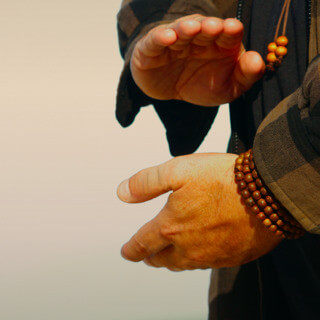
We bring our palms together,
Rub them briskly together 36 times,
Really warming them up,
Warming up what's called our laogong points.
In many traditions around the world,
There's a tradition of hands-on healing.
Even if we bang our elbow,
We don't.
Put their elbow on that,
We immediately put our hand on it.
If we bump our head,
We put our hand on it.
If we want to console someone,
We put their hand,
Either our arm or hand,
Upon them.
So let's warm these low goes up really well.
And then place them over your eyes and breathe into your eyes.
The warmth of your Lao Gong points your healing hands and then rotate your eyeballs nine times to the right and nine times to the left.
Then just rub up and down your face very gently to bring yourself out of the meditative state.
So thank you for your attention.
I would recommend doing this practice for longer.
This is just a short introduction.
But like the other videos I will be sharing here on InsideTimer,
These practices go back thousands of years.
So people have been using them to their benefit for thousands of years.
So let's keep that ball rolling.
Okay,
I'll see you next time.
Bye for now.