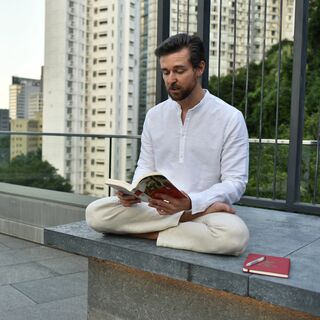
Hello there.
Good morning good afternoon good evening wherever you are I'm Ryan in Singapore.
Welcome to our mindfulness practice.
Today's topic is how to meditate.
What is meditation?
And so the definition of meditation that I'll use today is a definition from Brevchensky-Lewis from 2007,
The definition is meditation refers to a family of mental training practices that are designed to familiarize the practitioner with specific types of mental processes.
Meditation refers to a family.
Of mental training practices that are designed to familiarize the practitioner with specific types of mental processes.
What meditation isn't,
It isn't.
Drifting off and Just letting the mind wander,
Daydreaming.
It's not what meditation is.
Meditation.
It isn't necessarily relaxing.
And I know that that's,
Especially in the Insight Timer audience,
That meditation is often used for relaxation.
And a lot of the time meditation is relaxing.
But understanding that this isn't the goal of meditation.
And in fact,
One of the pieces that is key in the non-judgment aspect.
Of mindfulness,
Especially in relationship.
To meditation is to not wish things were any different from how they are.
And so this is one kind of key attitudinal foundation of meditation.
Is it's not to try to get anywhere or to be any different from how you are.
And I think that's really key,
Right?
Maybe I'll say it one more time,
That meditation isn't about trying to change anything that's happening right now.
Maybe I'm feeling stressed right now.
And the reason I'm coming to meditation is that I'm hoping to feel less stress.
Well,
Unfortunately,
That hope of feeling less stress.
May actually cause more stress.
Especially you begin meditating.
Meditation is like something you want to use as a band-aid to fix that mental pressure.
And say,
Okay,
I'm now I'm gonna,
You know.
I love serenity now.
I think we've used that before.
Seinfeld right it's serenity now serenity now right like shouting that I want to have less stress is actually going to cause more stress to show up And this is true for our meditation as well.
Wishing that the stress were gone and seeing that the stress doesn't instantly disappear is something that can actually compound your stress and make your stress worse.
So just trying to understand that.
That meditation is about.
Observation of what's going on right now without trying to change it and that's why judge non-judging is a really key part of the meditation practice to just kind of be able to say to myself This is how things are right now.
This is the way it is.
And to observe it.
To welcome it if possible.
To see that whatever it is that you're experiencing.
.
.
Is part of the human experience that through meditation and observation we can become aware of and become more familiar with.
Right?
And as we look at and understand and become familiar with.
Our difficult emotions,
Then they become more tameable.
Right?
And this is really where meditation shines.
It's that familiarization with Well,
Not only the difficult,
With the good emotions too,
With the emotions that are perceived as being good.
Is that those can actually cause us to make crazy decisions as well,
You know?
So,
You know,
Understanding that that is what this is about.
The word for meditation in Tibetan is gom.
And gom means to familiarize,
To habituate.
Can I become familiar with the inner workings of my own mind?
To habituate,
To to begin to create a new default mode of of reactivity or of responding.
Bye.
Doing some by practicing.
By practicing.
And the Pali word for meditation is bhavana,
Which means cultivate.
Cultivating is something that is a process.
It takes a long time.
Takes uh.
.
.
We cultivate.
We throw our seeds on the ground and we don't expect the seeds to instantly rise up.
And I think that's one of the mistakes a lot of people have as they come into their meditation practice.
So how do you meditate?
That is,
After all,
The topic of today.
So meditation,
We've talked about what meditation is.
So what is meditation like?
So how do you.
.
.
Pay attention.
How do you set aside time to pay attention on purpose in the present moment non-judgmentally?
And I have to say,
It's quite easy to do.
It involves focusing the mind on the present moment.
And using that focus.
To and.
You know body scan is one of the first types of meditation that we do in mindfulness-based stress reduction And we'll discover that.
As we do body scan,
One of the things that can help keep us going in the meditation is the fact that the that the object of meditation is one that is constantly shifting.
So that we're paying attention to our feet,
We're paying attention to our legs,
And as we move,
We find that this sometimes helps keep interest in the meditation,
Is that we're not stuck on a static.
Object and so so this is a you know one piece of meditating is a meditation object so when we say what is the object of the meditation It's simply referring to what is the thing that I will be paying attention to,
That I will be inclining my mind to observe in this time.
So step one for meditation is setting aside the time to do it.
And I would recommend that you use a clock,
Use a timer conveniently.
Insight Timer is how it started.
It was built as simply a timer and nothing else.
And when I first started meditating,
That's how I got going.
And I would encourage you after you set the timer.
You set the timer for that time for a particular reason.
Let that time be your time of meditation.
Don't try and shortcut it because it's too hard or suddenly I thought of something else I want to do.
All of these things,
Observing that it's too hard,
Observing that there's something else I want to do,
This becomes part of the meditation.
You set that time for a reason.
Stick to the time and try your best to stay with it.
Another piece of the meditation.
Is choosing a posture that you can remain still in.
And one of the reasons.
.
.
Is that you'll find that as you sit still.
You may.
.
.
Really want to start moving your body.
And so.
.
.
As we move we're beginning to actively engage our mind.
With our bodies,
That we're using voluntary movement.
There's a process that goes when I take my hand from down here and I move it up here,
Right?
There is a intention for me to make that movement that happens before I actually make the movement.
And so.
.
.
Is it possible?
To intend to stay still.
Because if we're constantly intending to move,
There's a shift in what's going on inside the mind,
Right?
So this intention to move.
From here to here,
Didn't start at the beginning of my meditation.
When I hit the start on the clock,
I wasn't planning at.
.
.
Five minutes and 42 seconds to lift up my arm.
Right.
This is.
.
.
Part of the reason to stay still is because it aligns with the intention of the meditation to.
.
.
Stay focused on the passive nature.
That is possible in the mind and the body.
Activating anything.
And this is another reason why meditation and sitting meditation and lying meditation are different.
From practices like movement,
Even if it's mindful movement.
So stillness is.
.
.
Is often a very important part so that we're not engaging our active minds,
So that we are observing the body in its passive state.
Without any voluntary action.
So you will see as we focus on the object.
So let's say.
.
.
The object is.
.
.
Is the belly.
The movement of the belly as we breathe.
Breathing is something that's involuntary,
So you'll find that the breathing happens no matter what.
And then I want.
.
.
To move.
Right?
Something becomes a little bit uncomfortable.
And I go,
Okay,
I want to move.
Is it possible instead of instantly moving?
To observe that feeling of wanting to move.
And making this part of the meditation.
Right,
So focusing our attention on the object as best we can.
And noticing anytime something wants to bring the attention away from the object of meditation which will likely happen many times throughout your meditation you'll find that your mind wants to go off to listen to sounds or think about what you're going to do next or observe.
That you'll notice the desire first,
Maybe some discomfort in the leg and the desire to move the leg.
It's like,
Can I become aware of all of these different things that are going on?
And the object is just basically a base to come back to when nothing else is going on,
Right?
So can I do my best to hold my attention there and then.
.
.
Discover that,
Hey,
My mind's actually all over the place.
As much as I want to hold my attention here at the belly,
My mind is going forwards in time,
It's going backwards in time,
It's going here,
It's going there.
And so each time we notice that the mind has wandered away from the object of meditation.
Can I notice that?
Without judging.
Without going,
Oh.
I stink.
Why can't I keep my mind focused?
And if that happens,
That might happen.
If that happens,
Be aware of that.
Be aware of this voice that we have towards ourselves as the meditation continues.
As we continuously fail over and over again and continuously redouble our efforts,
Bring the attention back to the object of meditation.
This is where the power of the meditation lies.
This is where the training is.
This is the mental practice.
This is the mental routine that we are practicing observing.
Hey,
Surprise,
It happens all the time in our daily lives.
That we lose focus,
That we.
.
.
Stop doing the thing that we intend to be doing.
And that.
We have to keep bringing our minds back.
How many times do I have to reread that paragraph before it finally sinks in?
Because my mind keeps wandering off.
How many times do I have to.
.
.
Come back.
To the middle of that formula I'm writing in my Excel spreadsheet because I've lost my focus.
That's.
.
.
That's the definition of meditation.
That's how you meditate.
And I know it's kind of a broad,
It's not very specific,
But that's intentional because there are so many ways to do mindfulness meditation.
Let's get into our practice.
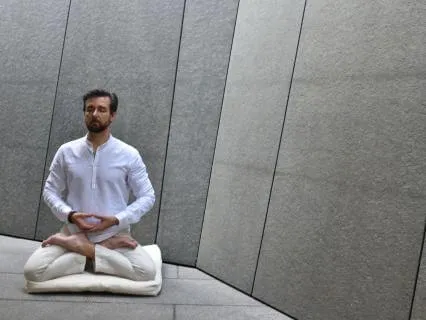
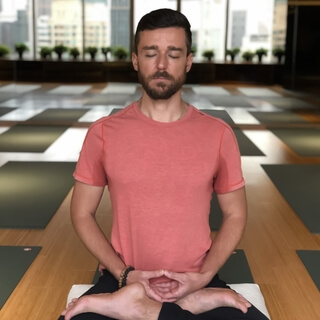
So find a posture that's comfortable.
One that brings relaxation and alertness.
So I would encourage you to sit up straight and tall.
If you're sitting on a chair,
Can you bring your back away from the backrest?
And begin to notice if you hadn't already.
When I mentioned it earlier,
That you are breathing.
Can you tune into that physical sensation of breathing at the belly?
For me,
This is the easiest place or the most obvious place.
To observe.
My body's reaction to my breath.
Noticing inhaling.
Noticing exhaling.
And as you observe,
Inhaling.
How do you know that you're inhaling?
What do you feel?
As you know that you're inhaling.
Okay,
So the the process of inhaling and the process of observing it.
At the belly goes something like this.
The diaphragm moves downwards.
It creates.
Some kind of vacuum in the lungs as that cavity.
Increases in size and the air comes into the body.
So as the diaphragm pushes downwards,
It pushes on the internal organs,
And the internal organs have no place to go except outwards.
So maybe.
.
.
Maybe that's what you feel.
You feel pressure in your abdomen.
As your diaphragm moves downwards.
Or maybe that sensation is too subtle.
And you notice the stretching of the skin of the abdominal wall.
As the diaphragm moves down and pushes the internal organs.
There's no other space.
Where do they go but outwards?
So as you observe that stretching of the skin.
Where do you begin to notice it?
So maybe searching.
So just placing my hand.
On my solar plexus.
I'm feeling just a little bit of movement here.
And just inching my fingers downwards towards my belly.
And here as I reach the top of my belly,
I start to really feel.
It's almost like there's a balloon inside of my belly that's expanding when I breathe in.
Contracting as I breathe out.
Now inch my fingers downwards a bit more getting closer to my navel.
So still feeling that rising and falling,
But it's slightly different from what I noticed.
In the upper side of my belly.
It doesn't feel as pronounced to me.
It doesn't feel as balloon-like.
Now i'll inch my fingers down more just on top of my navel and then a little bit farther down so below my navel And now here at this point in my belly,
It starts to feel more balloon-like again.
And then I notice.
.
.
I notice there's a layer of fat,
Right,
That my hand is not.
Directly on my muscles.
And then noticing that my mind starts to have some opinion about that.
This is kind of the first step of the mind wandering.
So noticing it,
Noticing that thought.
Treating it with kindness.
Gently releasing it.
Maybe in the releasing,
There is a relaxing of the mind.
As we refocus the attention back to rising and falling in the belly.
And then let's shift that hand.
Over towards the right side of the belly.
So maybe placing the.
.
.
Base of the palm.
Directly on the side body And so I've got my right hand on the right side of my body.
My fingers reaching onto my belly.
And feeling where in my hand do I feel the expansion and contraction.
So really at the base of my palm,
I don't feel much movement at all.
And my fingers are moving the most.
As I get down to the knuckles.
I feel a bit less movement.
Now you can feel free to take that hand and let go,
Let that hand come back down maybe.
Place it on one of your knees.
And switch to the other hand.
Place the base of the hand on the side of the body.
Allow the fingers to wrap around towards the abdomen.
Feel that expansion and contraction as you breathe.
Notice exactly where in the hand and in the fingers you feel the expansion and contraction.
And when you're ready,
You can let go of that hand as well.
And so now I'd like to invite you to bring both of your hands off of your belly.
Maybe fold your hands in your lap.
Maybe place your hands on your knees.
And now see.
Do you have awareness of the breath?
At the belly Was that exercise of placing the hand in different places?
Did that.
.
.
Help bring more attention.
Or more ability to pay attention.
You find it's more challenging to pay attention to the movement of the belly with the breath.
When the hand isn't there.
And as the silence and stillness.
Comes in these moments?
Do you find that the mind wanders away more easily?
So as a beginning meditator.
You may want to use something to assist you in keeping the focus for longer.
Just as an encouragement.
Because sometimes,
As we begin meditating,
We get frustrated.
When we notice that our mind wanders over and over again.
So maybe it is.
Good for you right now.
To place a hand on the chest.
Maybe the right hand on the chest,
The left hand on the upper belly above the navel.
Maybe this can help you to keep the attention focused.
Or maybe you'd prefer to keep your hands in your lap.
Just exploring.
So anything comes up,
A sound in the environment.
A physical sensation.
Maybe some desire to move or shift postures.
Can you become aware of that?
Without instantly reacting to it first.
Okay.
We're going to begin drawing our practice to its close.
So congratulations everybody for having made it through.
This meditation today.
I'm going to close practice with three rings of the bell after the sound of the bell has completely subsided from your awareness,
Feel free to begin to move the body.
To shift your position,
To open your eyes if they were close.
Thanks for practicing with me.
First of all,
How did it go?
Did you find that moving your hand around on your belly?
Was helpful.
Becoming aware of the physical sensation of breath.
Helpful in aiding in concentration.
As you worked on keeping the mind focused on the present moment.
Did you notice mind wandering happening?
Did you notice yourself moving to different things?
And what was it that your mind was moving to?
Did it seem like important things or unimportant things?
What was going on?
As you observed your mind and you did your practice today.
And for me,
I noticed some planning ahead.
And it's interesting to see how my own mind works.
And that's You know how far away I get from the topic It depends on how long it takes for me to catch my mind.
That my mind has wandered.
So if it takes.
.
.
More than a minute,
Maybe I'm really,
Really far away.
Part of the meditation is in the intention to stay focused.
So trying our best going,
Hey,
This is the time I've set aside to be focused.
And so with those moments when we know we're having,
Hey,
We may be having a great idea,
But going,
Wait a minute,
I'm having a great idea and I'm not meditating.
Can I go back?
I'm not focused.
Can I go back?
To focusing on the feeling of breathing.
So just that.
Is that possible?
And so if we.
.
.
Instead start to follow those thoughts,
Then we're not meditating anymore.
So when you notice that the mind has wandered away.
Can you go up?
There it is.
And bring the mind back.
Back to focusing on.
The intended object of meditation.
And so this is how we meditate.
Let's send our well wishes out.
So follow along with me if you like.
May I be happy.
And peaceful.
May everyone watching,
Listening,
Wherever you are,
I wish you all happiness and peace.
May all sentient life here on earth.
Throughout the universe,
Wherever it may be.
I wish all life.
To be happy and peaceful.
Have a lovely day or evening,
And I will see you again soon.