Hi,
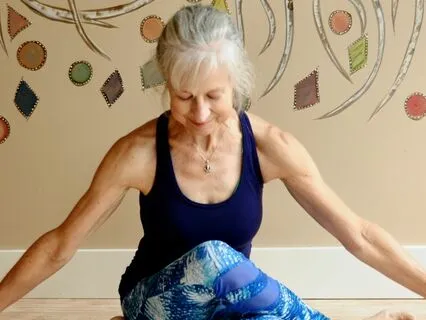
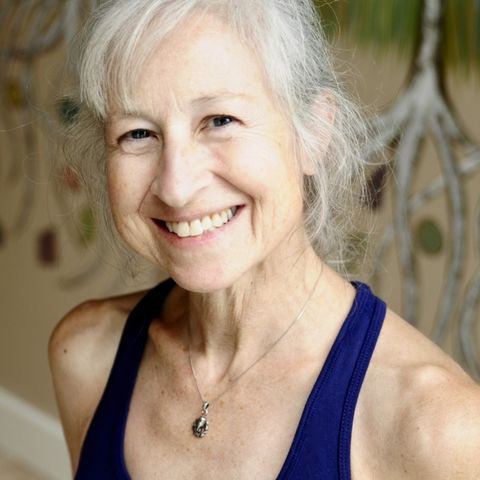
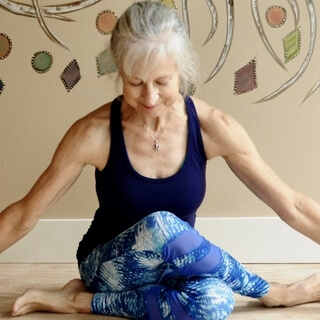
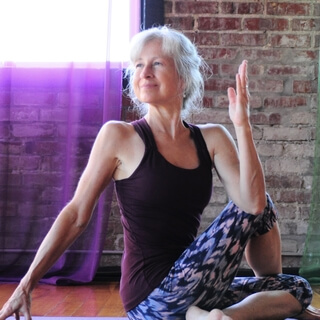
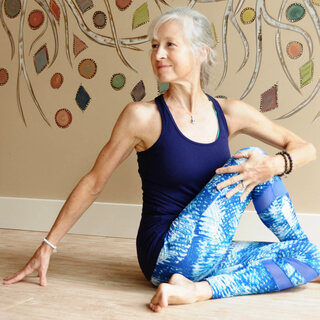
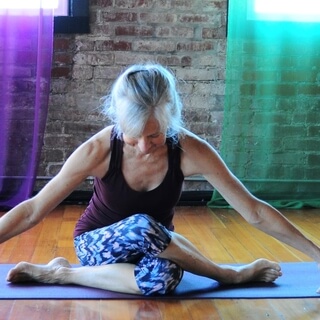
I'm Pamela,
Welcome to this Yin Yoga Plus Myofascial Release.
To begin,
You might sit on a blanket or another prop to encourage a nice tall spine.
Find a comfortable seat and we'll begin.
You can gently close your eyes or find a soft point to gaze upon and just start to tune in.
In yin,
We like to say we're going yinward.
Maintain that nice,
Tall,
Regal spine and invite your lower body to relax and release into the support beneath you,
Sinking towards the earth.
With your spine nice and long,
Invite your shoulders to soften and drip away from your ears.
Softening your arms and hands,
Hands wherever they're comfortable to you.
Gently reach the top back of your head up towards the sky,
So you're lengthening the back of your neck.
Take a nice full inhale and a soft sigh of an exhale,
Let it go.
And just start to tune in to sensations you're experiencing in your body.
You might notice where your body is feeling tight or tense,
Maybe even areas of discomfort.
Just notice that our bodies tend to hold on to tension and tightness,
Which is really just a form of stress.
In a way,
Our bodies just try to protect us.
So if there's a situation that we're stressed or even anxious about,
Our bodies tend to tense up and tighten up.
Or with an injury,
Our body tends to tighten up and try to protect itself.
You can thank your body for its internal wisdom,
That it's doing what it feels like that it needs to do to protect you.
And go,
Okay,
Thank you,
But let's let that tension go.
Don't need it anymore.
So using those soft sighs of an exhale,
Encourage areas of your body that feel tight or tense to begin to soften.
We're not trying to force anything.
We're just inviting those areas to begin to relax and soften,
Even just a little bit.
And invite yourself to be the observer during our practice today,
Watching sensation,
Watching your breath.
If any resistance arises,
Just notice that,
And then see if you can soften it,
Coming back to the present moment,
Just watching your breath,
Observing sensation.
Take another nice,
Full inhale here,
And let it go.
And then gently open your eyes if they were closed.
And we're going to come off our seats and come into a little bit of movement before we hold our first pose.
So come on to hands and knees,
Coming into table pose,
Lengthen through your spine,
And begin to flow through a few cat-cows.
So as you inhale,
Belly goes to the mat,
Draw your heart forward for exhale.
Draw your belly in,
Look to your knees for cat.
Inhale cow,
Exhale cat.
Notice how your spine and back feel,
Whether there are certain areas that feel maybe tight or sticky.
A few more rounds,
And then come back to neutral.
So we're going to come into our first pose that is just a traditional yin pose,
Butterfly pose.
So you might sit up on a blanket.
Don't want the feet too close to the hips.
So moving your feet away,
And we're going to have an option for the tennis ball in between our feet.
From here,
You're going to start to hinge forward slightly,
Keeping your spine long.
The tennis ball sometimes pushes up.
You can use your thumbs to hold the ball in place or a prop,
So it's really up to you.
If you feel like you're rounding your spine,
Especially if you have low back issues,
Sit up on the edge of a blanket so that your pelvis is tipping slightly forward.
So as you're here,
Hinging forward from your hips,
Press your feet,
Maybe using just your hands to push your feet in slightly,
And the thumbs to hold the tennis ball.
You can use a block to hold the tennis ball,
And some of you might be able to comfortably rest your forehead on the block.
But if you're like,
Ah,
No,
That's too far away,
Don't force anything.
Just use your hands.
This is totally great.
So as we hold here,
See if you can have your arms relaxed.
There might be some support.
You can also have your hands out in front of you.
If it feels like you can push the tennis ball gently with your feet and the ball's not moving away from you,
This is totally fine.
And invite your legs and hips to relax.
As you inhale,
Imagine your breath moving up the center channel of your spine,
Encouraging length through your spine,
Like you're creating space between each vertebrae.
And as you exhale,
Invite a softness,
Just like you're releasing into gravity without forcing to go deeper.
You're just softening into the shape.
Find your variation.
There should be a gentle pressure of your feet on the ball.
You decide how much.
As we hold here,
You might discover that you're going a little deeper,
Relaxing into the pose,
And you might position a prop maybe under your head.
So there's so many variations.
Just find what works best for you.
If you're not supporting your head with your hands or a prop,
Keep your neck long,
And you could start to just make a little movement with your head and neck.
So with a neutral neck,
Maybe slowly turning your head one direction,
And then back to center,
And then slowly turning your head the other direction,
Just starting to get into the neck a little bit.
This is just an option.
Stay present,
Inviting your hips and legs to relax and release.
You should feel this stretch in your outer hips,
As well as maybe some pressure where you're holding the ball against your feet.
With each exhale,
Inviting softness,
Knees should be happy,
Back should be comfortable.
Do your best to keep your spine nice and long,
Rather than rounded or flexed.
So using those props underneath your hips,
Like blankets or a cushion,
Especially if you have any low back issues,
Keep your spine long.
Change from your hip crease.
Few more breaths here.
Begin to gently deepen your breath.
Take a nice full inhale,
Soft side,
And exhale,
Let it go.
On your next inhale,
Slowly come up,
Set aside any props you were using,
Set the tennis ball aside,
Lean back on your hands,
And notice any sensation.
You might have that temporary and momentary feeling of vulnerability and fragility.
That is the yin echo.
So feet wide,
Drop your knees over to one side,
And we'll do a couple windshield wipers for our counter probes.
Knees come back up as you inhale,
And exhale the knees over to the other side,
Maybe adding a little twist,
Opposite direction if that feels good,
And then coming back up.
Might set at least one block towards the front of your mat,
And we're going to be coming into a pose that is for the back and the hips at the same time.
So this is half sphinx,
Half frog.
You definitely want to have blankets over your mat where your knees and ankles are going to be.
Slowly a little more over to the left side of your mat so that you can have support and cushion under your right knee and ankle.
Bring your tennis ball in your hands,
We'll place that after we get into the position.
And once we're in the position,
Which the left leg will be straight,
The right knee will be bent,
You might decide to place the tennis ball near the left hip flexor.
So come down onto your belly first,
Like a typical sphinx pose,
Just staying on your forearms,
Sort of like slumber party pose to start,
And then bend your right knee up so that your right knee is just about level with your hip.
Listen to what your hip is saying here.
So you can have your right ankle in line with your knee,
Or in a little bit.
Just find what feels good to you.
So you may decide you don't want the tennis ball in this pose,
It's just an option.
To complete the position here,
Option one,
You might stay up on your arms like a traditional sphinx,
But just soften into the upper back and shoulders.
So there's not a lot of effort compared to a traditional sphinx.
You might use a block,
Widening your elbows and resting your forehead on the block.
Or if that's still too much,
Just widen your elbows out,
Stack your hands and rest your forehead on the back of your hands.
So option with the tennis ball.
You might take your right hand and just lift your hips up and place the tennis ball just slightly below the hip crease.
And if you're doing that one,
You might prefer the makrasana,
Really resting and relaxing with your forehead on your hands.
So just about at your hip flexors or slightly below might be the best choice.
At least that's where I'm going.
So lower down,
So you're on your belly or whatever makes sense to you.
You can stay on your forearms or support your head with a block or your hands.
Relax and breathe here.
It's really important in yin poses to soften and relax.
So if you notice any tightening occurring,
Breathe into those areas and encourage your body to soften and release into gravity,
Staying present and aware.
And if you've placed the tennis ball somewhere that you thought would work and then you realize,
Oh,
Wait,
That's too much,
Feel free to just remove it or readjust it as you need to.
You want to be able to have some ability to relax and not create more tension.
Breathe here.
A few more breaths here.
Begin to deepen your breath.
Take a nice full inhale,
Soft sigh of an exhale,
Let it go.
And whatever you think is going to be easiest to bring yourself up and remove the tennis ball.
Straighten that right leg,
Pause for a moment,
Maybe just staying up in a sphinx.
That might be a nice counter pose with both legs straight and the tennis ball removed.
And then other side.
Use that left knee,
Position your left foot,
Either ankle in line with your left knee or in a little bit,
Making sure that feels okay for your frog.
And then when you're ready,
Place that tennis ball wherever you want.
I'm doing it on the hip flexors,
Just slightly below where you hinge the hips.
Find your variation.
So relax down onto your arms,
Option to support your head.
You might angle the block slightly,
Or you might just relax down onto your hands.
Encourage your body to soften and relax.
And notice any differences.
This side might feel different than the first side.
Encourage your right leg to relax over the ball.
Make sure your spine and back feel okay here.
And if for some reason the bent knee is just not working for you,
Just straighten that leg out.
Just come into a traditional yin sphinx,
Which is totally fine.
Make this your practice.
You might support your head with your hands or fists.
Try to encourage your leg that's over the ball to really relax,
Like you're melting over the ball.
Use those open mouth sighs of an exhale,
But anytime your back doesn't like this position with the knee bent,
Just slowly straighten the leg out.
Always listen to your body.
A few more breaths here.
Time goes slow when it's intense,
Doesn't it?
So begin to deepen your breath.
Nice full inhale,
Soft sigh of an exhale.
Let it go.
And whatever way makes sense to you,
Remove the tennis ball,
Lower down and slowly straighten that bent leg.
If you'd like,
You can rest your head on your hands again and just gently rock your hips side to side,
Releasing any tension in the low back.
And then on an inhale,
Press yourself up back into table and just come into a puppy pose or if you prefer,
A down dog to stretch out the spine.
Or if you prefer,
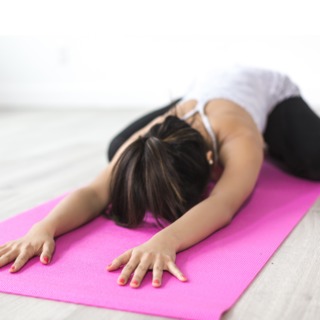
Even a child's pose with a long spine rather than a rounded spine.
So puppy pose,
Knees about hip distance apart.
You might bring a block so that it's just about under your nose and then send your hips back a little bit and support your head on that block with your arms reaching out.
Lengthen through your spine.
If you prefer,
You might just come into a down dog.
That can feel nice through the spine.
You can walk your feet in closer if you need to and bend your knees if you would like.
Any movement,
Maybe peddling your feet if you're in down dog.
Find what feels good to you.
So now we're going to get into the shoulders and upper back a little bit as well as maybe the hips at the same time.
So this one we'll be using blocks.
So we'll be getting into the upper back and shoulders.
So you'll position your blocks on the low setting about shoulder distance apart to start.
Widen your knees a little bit and sit your hips back towards your heels.
You can separate your feet a little bit or you can have the toes touching.
So a lot of variations.
I'm just going to go through some options here.
So you can move the blocks a little closer as you need to,
Elbows on your blocks,
Hands in a prayer position,
And we want to make sure the head is supported.
So if your head doesn't quite make it to that space between your blocks,
You can use your other blanket,
Maybe folding it more narrow to fit in between your blocks so that your head can have support.
So that's option one.
If your shoulders are really tight and it's a struggle to find that position,
You may not even need blocks under your elbows.
If you want to get deeper into your upper back and shoulders,
Bring your knees closer together.
You won't get as much into the hips,
But you'll get deeper into the upper back and shoulders,
Keeping your hips just about over your knees or slightly back.
Avoid letting your hips come in front of your knees.
That puts too much strain into the upper back and lower back.
So we want to keep the hips back.
And again,
Bringing your head to support either the blanket or your mat,
Adjust your legs and position so that you're getting the stretch that you want.
And if you come into a certain position with the upper body and positioning the hips and you decide halfway through you want to switch it out,
That's totally fine.
Just make sure your head is supported.
Hands may or may not make it all the way behind your head or your upper back.
Just make sure your shoulders feel okay,
Your low back feels okay,
And that your knees are feeling okay.
Wide leg child's pose.
This is also a tad full position with the hips going back towards the heels.
Mindful of how your body feels here.
Find your variation and inviting your upper back and shoulders to relax and release.
Use those open mouth sighs of an exhale at any time.
Staying present and aware.
Notice if any reaction arises in the mind,
If there's any resistance or the urge to run away or to suffer through.
Those are reactions of the sympathetic nervous system.
And when you notice that,
Just be aware,
Just go,
Okay,
And then just try to bring yourself back to the present moment,
Back to your breath.
And begin to deepen your breath.
Take a nice full inhale,
Soft sigh of an exhale,
Let it go.
On your next inhale,
Slowly and thoughtfully press your way back up.
Lift your hips if they were back towards your heels,
Bring your knees closer if they were wider,
Set your blocks aside.
And any movement for your counter pose that feels good to you.
You might want to be in table and just sort of move a little organically or come back into some cat cows,
Moving slowly.
Or you might choose to do some windshield wipers again,
Listen to your body.
And then thoughtfully make your way to a seat and just pause.
Notice how your body feels.
So let's just get into the neck and upper back a little bit,
Upper trapezius rather,
With the tennis ball.
This is more of a myofascial release,
But we'll allow the neck to get a little bit more stretch.
And while we're doing that,
We can have the legs in a position called square.
The front shin,
Whichever shin in front you want to start with,
Is parallel to your mat or blanket,
And your feet are going out towards the opposite knees.
And if you're hinging slightly,
Just a little forward,
So just leaning just a little forward with a long spine,
You might feel stretch in the outer hips.
Another option is shoelace,
Which is like a Gomukasana position.
So whatever position of your legs you want to be in,
So you're getting a little bit into your hips while we get into the neck.
It doesn't really matter which side you start with,
But my right leg is on top,
So I'm going to start with the right side of my neck,
But do whatever feels good to you.
And we're going to take the tennis ball,
Whichever hand makes sense to you,
Right at where your neck and upper shoulder meet.
Press the tennis ball down with a slight action pulling out.
So you can use either hand or both hands,
And as you do so,
Just gently tilt your head away from the ball.
So you're pressing down with a slight pulling out,
And you're also hinging slightly forward so that you feel a stretch in one or both outer hips.
We'll be here with the tennis ball just about 15 seconds or so in this one spot,
And then relax the tennis ball a little bit.
In that same general area,
Find another spot and do it again.
So you're just taking a little break,
Press down with a slight pulling out.
This is a great way to release the neck.
We didn't do an assessment,
But we'll just sort of compare how one side feels to the other.
And then again,
Release the tennis ball for a moment.
And one more time in that general area,
Maybe just a slightly different spot.
Press down with a slight pulling out.
You might also gently look down slightly,
And then release the tennis ball.
Come back to neutral.
Your legs are still in that position.
Whichever way,
If you were starting on the right shoulder,
Just gently tip your head to the left.
You're tipping away from that shoulder.
And bring your hand,
If you're tipping your head to the left,
Bring your left hand up on top of your head so fingertips are just touching your ear.
Without pulling on your head,
Press your head gently up into your hand.
You're deepening that stretch along the right shoulder and upper trapezius.
And then slide your hand to the other side of your head and just slowly,
Hand helps your head come back up and release.
Lean back on your hands,
Uncross those legs,
And come to the other side,
Either square or shoelace.
Your opposite leg is on top,
So you're getting a little stretch in the outer hips.
Take your tennis ball,
Other side.
So again,
Either the same side hand can press down,
The opposite hand holding the ball,
Or both hands.
So find that spot just where the neck and shoulder meets,
That little curve area which can be really tight.
Press down and a slight pulling away.
So you're holding the ball in this one spot,
Maybe tipping your head gently in the opposite direction away from the ball.
Notice how this feels.
And again,
You determine the level of effort here.
And then release,
Take a little break,
Reposition the ball in that general area,
But just maybe a slightly different point to press down and pull out.
I really like using a lacrosse ball for this one.
It feels better against my skin.
You also want to make sure you're not having a lot of thick clothing under the ball.
It works better with just thin clothing.
And again,
Take a little break.
And then just adjust the position of the ball one more time.
You're pressing down with a slight pulling away,
Maybe tipping your head in the opposite direction if that feels good,
Maybe slightly looking down a little bit.
And then release the tennis ball,
Set it aside,
And whichever way you were tipping your head away from where the tennis ball was,
Taking that head tilt a little deeper,
Bringing your hand up on the head.
So if you're tipping your head to the right,
Your right hand comes up,
Fingertips gently touching the top of your ear.
Without pulling on your head,
Press your head up into your hand gently.
So you're deepening that stretch along the left side of the neck if you're doing the same side.
A few more breaths here,
And then slowly slide your hand to the opposite side of your head and gently help your head come back up to center.
Place your hand down,
Lean back,
Uncross those legs,
Straighten your legs out,
Maybe point and flex through your feet.
So we're going to come into our final pose.
It's a two-sided pose,
So we'll be doing the right side and then the left side.
It's called Twisted Root,
And we're going to use the tennis ball and the outer hip as we bring our legs over to the side.
It might be nice if you feel like your head goes back too much.
Sometimes a blanket's nice under the head.
So you'll come down onto your back and constructive rest.
Just hold the tennis ball in your left hand to start and cross your right leg over your left so the knees are close together,
Thighs are touching like you're sitting cross-legged in a chair.
From here,
We're going to hold the tennis ball right up against the left outer hip.
So if you feel your bones on your outer hips,
You're going to be below that hip bone,
Not right on the bone.
So you're going to be right below the bone,
And you're just going to position it where it feels best to you.
In this general area,
It's getting into the TFL and maybe a little bit into some of the deep six muscles.
So slowly start to move your knees to the left so you're creating more pressure on that ball.
You might use a block under your right foot or right leg to help support you if it feels too much.
You can move the tennis ball a little further down or a little further up and away so that you can maybe come a little bit more onto the ball with the knees further towards the left.
Or you could keep the ball closer in,
Which might be more intense.
It's really whatever feels good to you.
So find that position.
The upper body is mostly on the mat,
Arms out,
And you might gaze softly to the right.
Let your feet and legs relax here.
Weight is on the ball,
And it should feel like you're on soft tissue,
Not bone.
Position the ball below that hip joint.
Relax here.
You might also feel a stretch in the outer right hip.
Make sure your feet and ankles are comfortable.
Breathe here,
Just letting gravity bring you to the position using those soft,
Open mouth sighs of an exhale to encourage release.
You determine the position of the ball and the angle of your legs where it feels best to you.
Again,
It should feel like you're getting a stretch or maybe an intense pressure.
Twisted root is also great for the spine.
Take a little bit here.
Make sure it feels okay to you.
We'll be here for just a few more breaths.
Gently begin to deepen your breath.
Take a nice,
Full inhale,
Soft sigh of an exhale,
Let it go.
On your next inhale,
Thoughtfully bring your knees back up to center.
Uncross that right leg.
Take the tennis ball in your right hand.
Make sure your spine feels neutral.
And then we'll do the other side.
Cross your left leg over your right.
Legs are close together like you're sitting cross-legged in a chair.
Take the tennis ball,
Just sort of up against your right hip,
Maybe feeling that bony protrusion of your hip joint.
Go below that and then start to move your legs,
Your knees out to the right,
Maybe positioning the ball a little lower so you're not on bone.
You might move the feet a little bit.
Your right foot is probably on the mat or blanket.
Position it so it feels comfortable or you can use a block under your legs.
Relax the legs.
Relax into your hips.
Keep your upper body,
Upper back,
And shoulders on the mat,
Arms where they feel comfortable to you,
And maybe turning your head slightly to the left,
Twisted root,
Find the variation and position that works best for you.
And again,
You can have the ball close in below that bone or you can move it sort of up the outer leg if you're bringing your knees more over.
That might feel good.
Just find what works best to you.
Your legs and feet relax,
Just letting your weight on the ball do the work.
You might feel like your outer right hip and glute are getting that sort of massage of the myofascial release and your top left hip is getting a stretch.
Relax your back and shoulders.
Make sure this feels okay in your back.
Just listen to your body.
Might find a variation that works best for you.
Inviting your body to relax and release a little bit deeper with each exhale.
Inhale through your nose.
Exhale through your mouth like a soft sigh.
Relaxing stress,
Tension,
Tightness that no longer serves you.
Thank your body for its wisdom of using this tension and tightness for protection.
And now just let it go.
Begin to gently deepen your breath.
Take another nice full inhale.
Soft sigh of an exhale.
Let it go.
Thoughtfully bring your knees back up to center.
Remove the ball,
Set it aside.
Feet flat on your mat,
Maybe lift your hips,
Lengthen through your spine,
Making sure you feel even.
And then draw your knees towards your chest or to each armpit to stretch out the low back.
If you prefer,
You could come into a happy baby.
Maybe holding the feet or ankles or toes,
Whatever feels good to you.
Maybe rocking side to side a little bit.
And then make your way into your shavasana.
So you might want a blanket under your head,
Like a little pillow.
You might use a blanket over your hips.
You might,
If you're in a cooler area,
Cover yourself up with a blanket to stay comfortable.
Legs maybe a little bit wide,
Arms maybe a little wide.
And just invite your whole body to soften and relax,
Letting your feet and legs be heavy and soft.
Notice your hips and any sensation or energy moving through your hips and invite your hips to relax and release.
Notice your back,
Visualize space between each vertebrae in your spine and invite your lower back to relax and release.
Relax your middle back and soften your upper back and shoulders.
Let this softening continue down into your arms and hands and fingers.
Bring your attention to the palms of your hands and notice any sensation or energy there.
Let your head be heavy,
Soften and release your jaw.
Soften all the muscles in your face,
Especially around your eyes and let go.
Thank you.
Namaste.