Most of us will sit at someone's bedside in their final moments as they're close to dying.
And final moments don't only happen in the last breath.
They happen in the last visit,
In the last phone call,
In the last moments you sit beside someone knowing it might be the very last time.
And no one teaches us how to be there in these moments.
So in this session,
We're going to talk about something most people avoid,
How to be there for a dying parent or a partner or a friend without feeling guilty or helpless or afraid.
How to actually be with someone in their final moments,
How to show up,
How to not fall apart,
How to say goodbye,
And how to stay steady when the moment feels too big for your heart.
But before we dive into the teaching,
I want to share a really personal moment that really changed everything for me around this.
A few years ago,
My aunt was dying of cancer and we all knew things were coming to an end.
And I remember the day I was supposed to go see her knowing that this would be the last time I'd see her alive.
And I was so terrified.
I didn't know what to do.
I didn't know what to say.
I didn't know how to walk into a room where both of us knew it was going to be the last time.
So I called my friend Shelly,
Who many of you know,
And I said,
Shelly,
I'm so scared.
I don't know what I'm supposed to do when I get there.
What am I supposed to say?
And Shelly just turned to me and said,
Why don't you just sing?
Why don't you just sing to her?
And I said,
What?
Sing?
Really?
I was so nervous.
My heart was pounding.
It felt like the weirdest thing to do.
Everything in me wanted to run the other way.
But when I walked into her room and I saw her lying there,
I realized something.
There are no rules in these final moments.
There's only love.
And so I sat beside her,
I held her hand,
I pulled out my guitar and I sang.
And the entire energy in that room and between us shifted.
There was no more fear.
We were both so present.
And it felt like just for a few moments,
We had stepped outside of time.
And oddly enough,
This became one of the most powerful moments that I'd ever had in my life.
But one of the most powerful moments I'd ever had with my aunt.
Just me and her and love and a moment that I will remember forever.
But the reason I'm sharing this with you is because I almost missed this moment because I was so afraid.
And I don't want you to miss the power of what can happen in this moment with someone that you love when they're in their final moments.
Now,
I'm not going to ask you to go sing on someone's deathbed,
But that moment taught me this one big lesson.
That showing up matters so much more than showing up perfectly.
And so I've created this session to help you be more prepared when this moment comes because we'll all deal with it at some point.
So you don't have to miss this sacred threshold with someone who you love so much.
So today I've got a teaching and some music for you and an invitation to dive deeper on this if you find it useful and to guide us through this lesson today.
I'm so excited.
In a moment,
I'm going to introduce you to someone so special to me,
Someone who I've learned so much from.
He is one of the leading voices on this topic.
He is my friend,
Author,
And death doula,
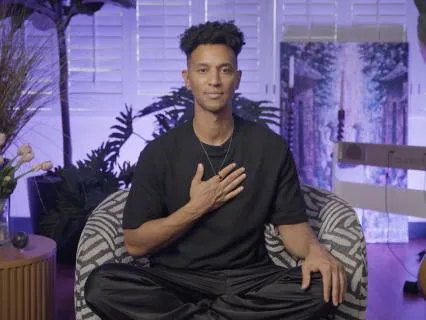
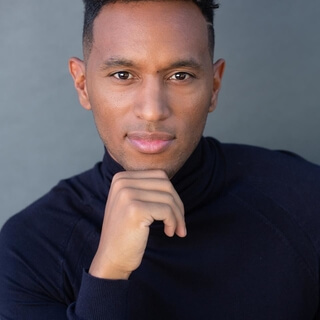
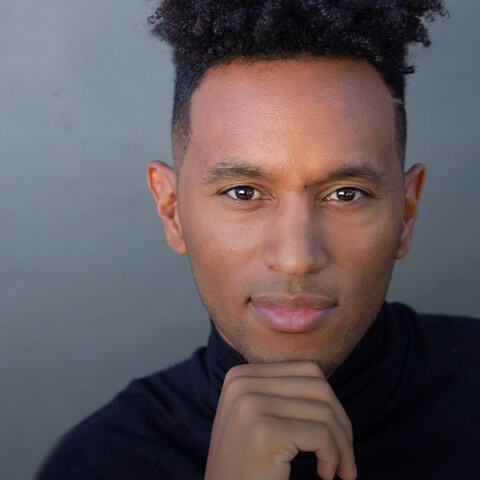
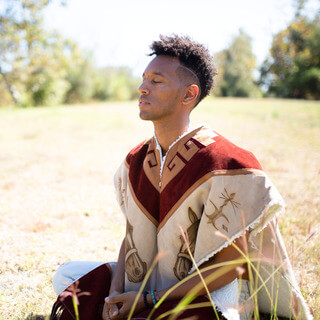
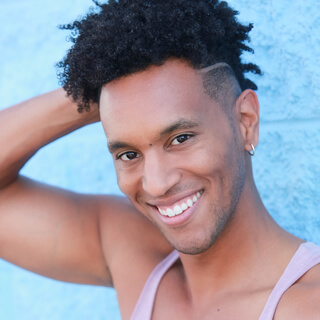
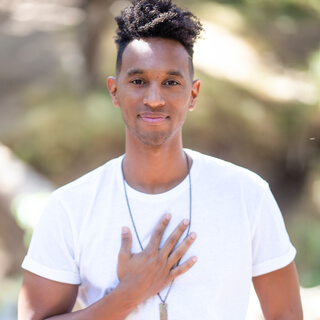
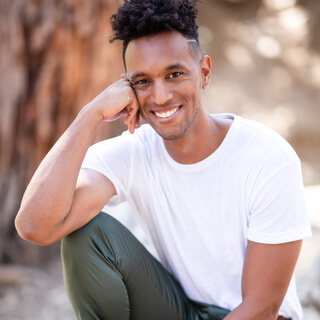
Darnell Lamont Walker,
Whose book Never Can Say Goodbye has completely changed the way I see death.
And I want you to be able to learn how to be there in these moments when death is near for the people you love.
So let's welcome Darnell.
So Darnell,
I am so excited to welcome you here to our community.
Thank you so much for taking the time to come and chat with us.
Anytime.
You know,
I'm just grateful to be here.
Thanks so much for having me.
So I want to start out with the obvious question before we get into the practical tools about last moments.
What on earth inspired you to get into this work on death and dying?
You know,
It's,
It's wild,
Man.
Like I,
I've been,
I'm one of those kids who love,
Love,
Love my grandmothers,
Always talk about how special grandmothers are.
And so I was always at her house by her side,
Um,
Whenever.
And at the time,
You know,
When I thought life was happening the way life's supposed to happen,
Like her friends were,
You know,
Dying or being hospitalized.
And so I was always there with her,
Helping take care of family,
Helping take care of friends,
Um,
And,
And just watched it.
And we took care of family who came home to die,
Um,
And not thinking that this was something that I wanted to do.
It was just,
This is what family does for family.
This is what friends do for friends.
But as I grew and ended up,
You know,
I volunteered at a hospice when I was 13,
Um,
I helped her take care of one of her nephews,
My cousin who came home to die in 94 at the height of the AIDS epidemic.
Um,
And then it just went that way year after year.
I was,
Uh,
13,
I think when I lost my first friend in eighth grade and I'm at recess doing grief circles because the school didn't want to really talk about it.
And it was kind of like,
Well,
Maybe we should reflect and share stories about Pam,
You know,
And not thinking anything of it.
And then maybe 10 years ago,
A friend who's a hospice nurse,
She says,
You know,
All these stories,
It sounds like you're a death doula.
And I thought,
What,
What the hell is that?
And so I,
I look,
I Google it,
Right?
Like sitting right there.
I Google,
I'm like,
Oh my God,
This is everything I've been doing since I was nine years old.
And it kind of hit,
It became this purpose.
Darnell,
This is amazing.
I mean,
So first of all,
I think a lot of people are like you were when you looked this up,
Death doula for everybody who's on this session,
Who doesn't even know what that means.
Can you describe to people what a death doula is?
Yeah,
It's strange.
So at the,
At the core of it,
It's someone who is there to help someone at the end of their life and to provide care for someone at the end of their life or for the people they're leaving behind.
Right.
That's,
That's basically the core.
And what's the difference between like someone who's a hospice nurse and a death doula?
Like what's the difference between those things?
Well,
Nurses are more healthcare providers where death doulas aren't.
And so,
You know,
A lot of hospice nurses do this work.
And what happens is with every death doula,
I know we all do very different things though when we bring ourselves into the work.
So again,
I'm a writer.
And so a lot of,
A lot of what I want to do is to help people share their story and to write their story before they die.
And so me as a death doula,
That's what I do.
And I'm a fighter also.
And so I,
There've been times I've been called in to make sure certain family members don't come into the room and to like,
I become this bodyguard or even to advocate in the healthcare system because,
You know,
There are people who,
Who still aren't treated well in the healthcare system.
And it's like,
I have to come in and make sure that at the end of your life,
You are as comfortable as you should be.
And you currently you're under medicated.
And so,
Okay,
How can I help you with that?
This is amazing.
I mean,
So,
So what I'm looking at is like a death doula,
You're assisting in the medical part,
But really you're there for the energetic,
Emotional comfort support,
Really anything the family or the person needs to make sure that this transition is held in like the highest esteem and comfort.
Absolutely.
Absolutely.
And,
And to help you get the,
You know,
Get as close to the,
We don't know how we're going to end,
How this thing's going to end for any of us.
But if we had the option to plan it out and to say,
This is how I want it to go,
I'm here to help you get as close to that as possible.
That's great.
That's great.
This is really helpful to help us all understand.
So I want to just get into the core of what we're going to talk about today,
Which is really giving people some practical tools that help them feel more prepared for when these final last moments come with the people they love.
And I think one of the things that I took from your work that I thought was so amazing is you just had me rethink what last moments really are.
I think so many of us think of it as the last breath that the person takes and,
And,
But there are so many moments,
There's the last conversation,
There's the last days.
And then of course there is the last breath when you're actually right there next to them.
So I was thinking we can just break them down like one by one and give people some tips.
So if they find themselves in one or more of these situations,
They know maybe like some do's and some absolutely don'ts,
You know,
So they feel like they know how to show up more clearly.
Let's start with the last conversation.
Yeah.
So for the last conversation,
You know,
It's kind of this moment where most people don't recognize it until it's done,
Until it's gone.
You don't,
Because like I said before,
We don't know how it's going to end and we don't know when our last conversation is going to happen with someone.
I talk to people all the time who are like,
You know,
I,
Had I known that was the last time I was going to talk to my mom,
My grandmother,
I would have said something completely different.
If we are privileged and if we are lucky enough to know that this is the last time I'm going to talk to someone,
And sometimes there are people who do get a deathbed and so we do find ourselves lucky enough to be in that moment.
I was there for my grandfather and I knew that when I leave your house this time,
This is the last,
This is the last time we're going to speak.
What can I,
What am I going to say in that,
In that time?
Like what can I possibly say?
What do,
What do people say?
Like when someone's wondering,
Like,
What should I say?
What should I not say?
Like what do you recommend for us to be able to go in?
That's real.
You know,
I,
You,
I always say you have to tell the truth.
You have to say the thing that's on your heart,
The thing that,
That you need to say so that when you leave there and when that person dies,
You don't say,
I wish I would have asked this.
I wish I would have said this.
I had a,
A friend who,
Whose mom died and there was three siblings and she told each of her children,
She said,
Listen,
If there's anything you want to know,
Ask me now.
And my friend is the only one who asked the questions.
The other two are now regretting,
Like I,
There are so much,
There's so much I need to know.
And she's like,
Why didn't you ask?
So,
You know,
Let that person lead the conversation.
If it's,
If there's something on your heart and they hurt you,
Even if they hurt you,
I think that's still important to say,
Like,
Listen,
You hurt me when I was,
I held on to this and I want to let it go and I need to tell you how much you hurt me.
And there can be love at the end of what I'm saying,
But I have to get this out because if you die,
I'm going to be left with these confused feelings.
This is amazing.
I mean,
So the,
I want to pull a couple of threads on what you're saying here.
So like the first thing that I really highlighted here was like,
Just go in and tell the truth and maybe the way you framed it is like,
If you knew you were going into that last conversation to go in having already asked yourself,
If this person passed,
Is there anything that I would regret not saying?
So that could like help us get to that point.
But the second thing that you brought up that I never thought of is because maybe the person who's passing wouldn't think to say,
Ask me anything,
But to not just think about what you're going to say,
But to think about any questions that you have about their life,
About anything.
I'm sorry,
But a lot of people,
You know,
In the end are so ready to talk.
Like,
So even those people who we've asked our whole life,
You know,
What's the story?
Like I have friends who are like,
I don't know the story of my birth.
I don't know,
You know,
Who my father is.
I don't know who this is.
And my mom knows,
But she won't tell me.
Okay.
That's an end of life conversation.
People are ready to,
People are ready to share things that they thought they were going to carry to their grave in the end,
Because they,
They see the hurt.
They like,
I don't,
I don't want to die with this and I don't want you to,
I don't want to die and leave you here with no one else who can answer these things.
This is really good.
I've,
I've seen this story a million times as well.
I want to go into the,
To the next part.
So we have the last conversation,
Understanding that we might ask some questions and also make sure we're coming in with truth and things that we might regret if we don't say,
Let's talk about the last days.
Yeah.
So the last days,
That's when,
You know,
The body's,
The body knows what to do,
Right?
The body starts doing what the body does.
And they may not be talking much.
They,
They're not eating much.
They're not communicating like they used to communicate and some are not communicating at all.
The room kind of just slows down,
Right?
This is where,
You know,
Love turns into action.
And you,
You,
You become the care,
If you weren't a caregiver before,
If you weren't,
You become more of a caregiver.
You're moistening the lips,
You are playing the music,
You're adjusting the pillows,
Whatever that is.
And it's also with,
You know,
The families,
Even on the family side,
The people who are going to be left behind,
It's where they start facing their own fears and they start,
You know,
Thinking about their own stories and they really,
And you have to now be face to face with your own mortality,
Especially if it's someone who,
Let's say,
You know,
The generation right above you,
Whether it's mom,
Uncle,
Whatever,
It's like,
Okay,
Well,
If there's an order to this thing,
I'm next.
And so now you have to face your own mortality in that.
But there's still,
The good part of that is that there's still a sense of presence there with the person who's dying.
And so they're not,
You know,
Dead yet.
And that's what I was going to ask you here is like,
Would you still recommend in these moments,
People are,
I think are often like maybe afraid to do this or feel like it's weird or whatever.
So like,
Here's the person,
They're there,
They're not able to talk to you anymore,
But their body is still there and alive.
Do you recommend still going up and talking to them and touching them and doing these kinds of things?
You have to,
You have to.
And you know,
I,
One of the things we know is that the,
One of the last things to go is hearing,
Right?
And so even if they aren't there,
They can still hear you most of the time.
That's not always the case,
But most of the time they are still in relationship with us.
So that means we need to make sure we're not just like,
Oh,
They're there,
They can't hear.
We need to be conscious of even what we're talking about in the room.
I've been in so many rooms like this where people just saying all kinds of stuff because they think you can't hear.
And I don't think that's true.
Or talking,
Yeah,
Talking about you as a patient and not as mom or,
And not as,
You know,
That,
And it's like,
And it,
I would,
I would imagine that if I was on my deathbed,
I still want to be talked about like I was still Darnell.
This is a really important point and I want to transition here into the last breath.
So this is a big moment,
You know,
If you're literally right there in the room with someone as they are making that transition into their last breath,
This one,
I think it's something that if people experience it,
It can create a lot of fear,
A lot of weird expectations,
A lot of ideas.
So what are your recommendations for us?
If we're there in that moment,
What do we do?
Yeah.
You know,
At,
At the moment,
The last breath comes most for,
For those who are there most of the emotional work has already happened.
And so it's,
It's such a quiet moment.
And I think what,
What needs to happen there,
And what I recommend is to,
Is to honor that.
It's not to rush,
It's not to be there and to suddenly go into,
Okay,
There's a funeral that needs planning.
There,
There are people who need to be called.
There's a,
We need to call the coroner or we need to call the EMTs or who it's,
This is not a medical emergency,
Right?
Like we hear this all the time.
And especially in the last couple of years,
Thankfully,
Death is not a medical emergency.
And so I love this idea of not rushing into that because I see people almost rush into action mode,
Probably in avoidance of the,
The bigness of the moment and the emotions that are coming up.
There's one thing that I read in your book that I think is really important to talk about here as we close out on this section,
Before we go into our practice,
Which is you talked about making sure you verbally tell the person who is passing,
You're going to be okay.
Like I'm going to be okay,
The person that's staying here and that they can go,
Like to give them permission.
Can you talk about why this is important?
I know we hear this a lot,
But I,
I read how important it was in your book and I think it's important people understand.
People hold on because they are afraid of,
You know,
The family falling apart.
My grandmother fully knew that she was the glue to the family.
There are people who would never have seen each other in our family if she didn't say you need to go and call so-and-so and make up with so-and-so,
You know?
And I know she,
She knew that if she died,
Everything would crumble.
And that last day I told her,
I was like,
Listen,
Everyone who's needed to see you has seen you.
Everything that you could have possibly,
Everything you possibly could have done on this earth,
You have done.
And you did it in such an incredible way.
If you want to die,
I think,
And I said,
I think today is a really great day to die.
So if you want to go,
You should go and I'm going to play this song and I played Coldplay Fix You,
The live version.
And I was like,
I'm going to go so you can do it.
I don't know if you want to do it while I'm here,
But I'm going to go so you can do it.
And not knowing that.
Did she actually go in that moment?
Not knowing this,
I said,
I'm going to go and you can,
And you can do what you need to do.
And I left the room,
Drove 15 minutes to my dad's house.
Literally as soon as I walked in and sat down,
The phone rang and I said,
I know that's the hospital.
And my stepmother answers and she's like,
Okay,
Darnell,
Your grandma just died.
And I was like,
I know.
And I got back in the car and I drove back up there.
Because I like,
People need permission.
Wow.
I think,
You know,
This permission part is so important because I do know and have heard,
Like I've even had people say,
Like,
I just want to make sure you're all going to be okay.
And they're holding on,
You know,
To try to figure that out.
So being able to give them this gift like you did to your grandmother,
Wow.
What a story.
That's amazing.
Darnell,
I'm so grateful that you've shared these tips with us.
I think I've taken so much that has allowed me to feel just like these simple tools of being able to be in that room when that moment happens.
I think one of my big takeaways right now that I'm having from something that you said was around asking them questions.
Like I've never thought of that.
I always think about like,
What do I need to tell them versus like,
Is there anything they need to tell me?
You know,
I've never thought about that.
And so I'm taking this as a really big one for the last conversation.
What I'd love to do,
Darnell,
In a moment is guide people into a short practice that will allow them to be more prepared for this moment when it comes.
So I think we'll go ahead and guide them into this practice together.
Does that sound good?
It sounds great.
So now we're going to get ready to do a practice together to help you actually better prepare for these moments when somebody you love might be facing their last moments.
And to set this up,
I want to sing something to you that's here as a blessing for all of the ones that we've lost,
All of the ones who are going and who we are becoming because of them.
This is Belief.
I don't want to believe when I got the news that you believe that I would never hug you.
No,
No,
No.
I'm not ready.
I'm not ready to let you go.
I don't understand how this is part of the plan.
Can you tell me why?
No,
No,
No.
I'm not ready.
I'm not ready to do this alone.
So go ahead,
Dry your eyes,
Cause you were born to fly and you will be alright.
How can I believe that it was you I felt in the breeze,
That you were right beside me telling me that you're with me,
Watching me like an angel now.
Don't worry,
I'm always here in your heart,
Guiding you here in the dark.
When you can't see me,
I'm pushing you to grow stronger,
Pushing you to grow stronger and now I'm here.
Sometimes,
We'll have to face these moments in our lives that are very challenging when someone is passing on,
But if we know how to show up with love,
We know how to communicate,
We know how to be present,
We can honor these moments and take everything that they've taught us with us and we can say,
And now all I see in these photographs of you and me is how much you loved me,
I just want to say thank you,
I just want to say thank you now.
So,
Let's dive into our practice together now.
Darnell and I are going to guide you through an experience that allows you to be more prepared when you end up in one of these final moments with somebody that you love.
So,
Go ahead and get cozy in your seat,
Place your hands over the center of your chest,
One over the other and take a full deep breath in and a breath out and close your eyes if you haven't done so already and take another breath in and hold it.
Open the mouth,
Let it out.
Just softening into this moment and now to the count of three,
Inhale with me for one,
Two,
Three,
Hold for one,
Two,
Three,
Exhale one,
Two,
Three.
One more time,
Inhale one,
Two,
Three,
Hold for one,
Two,
Three,
Exhale one,
Two,
Three.
Let's do it one last time,
Inhale one,
Two,
Three,
Hold for one,
Two,
Three,
Exhale one,
Two and three.
And now Darnell is going to guide you through this experience to be more prepared to be there in these moments,
These final moments with somebody who you love.
So,
I want you to think of someone in your life who you might be there for their last days,
Their last moments,
Their last breath.
Now imagine where you are,
At their bedside,
In their hospital room,
In the garden they chose to die in.
How's the energy in the room?
And I want you to ask yourself,
What do you say?
And what do you choose not to say?
What do you want them to feel because you're there?
When you're ready,
Just be in this moment.
And just let anything bubble up that's bubbling up.
And give yourself gratitude for having the courage to go to this moment right now,
So that you can be more prepared.
This that you're doing right now is a gift of service so that you can be more prepared to make sure this moment is sacred and special for the person you love who is passing.
Go ahead and take a deep breath in and a deep breath out.
And when you're ready,
I invite you to open your eyes.
And just be with whatever's coming up for you in this moment.
Because even though you're doing this as a gift to prepare for someone else's passing,
This is also a big,
Can be a lot of emotions that come up here.
And to help you out,
We're going to make sure that these five questions that Darnell put here are in the description for you,
So you can come back to them and even share this practice or share this with any family or friends that might find it useful for these moments.
Sometimes in our lives we all have pain,
We all have sorrow.
But if we are wise,
We know that there's always tomorrow.
Lean on me when you're not strong,
And I'll be your friend.
I'll help you carry on till I'm gonna need somebody to lean on.
So,
So many times we have these hard moments in our lives.
And when this happens,
It's so important that we take a moment to be present,
To show up in these last moments with the people that we love.
Because in these moments,
They don't want to be alone and we don't want to be alone either.
And so if we're together,
We can lean on each other.
So I want you to sing this last chorus with me as a prayer for all of us.
Lean on me when you're not strong,
And I'll be your friend.
I'll help you carry on,
For it won't be long till I'm gonna need somebody to lean on.
Go ahead and place your hands over the center of your chest,
One over the other.
And take a deep breath in,
And a breath out.
Close your eyes.
And just ask yourself,
What is one thing that's worth remembering from this session?
What is your one golden nugget?
And once you have it,
Take a breath in,
And out.
And open your eyes.
And type it in the comments here,
Or if you're a member of our community,
You can open up your JMW app and type it in our forum so I can see you there.
You know,
My golden nugget is this.
Final moments are not about perfection.
They're the moment when love becomes more important than anything else.
You don't have to say the perfect thing.
You don't have to be unbreakable.
You just have to be willing to show up.
Take that risk.
Say that thing.
And that,
Your presence,
Is enough.
Thank you so much for being with us today.
And we'll see you in the Masterclass.
Bye for now.