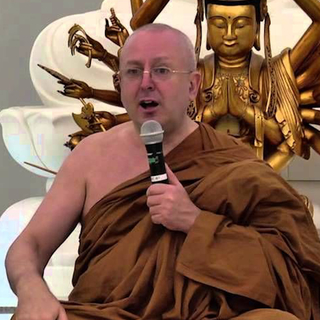
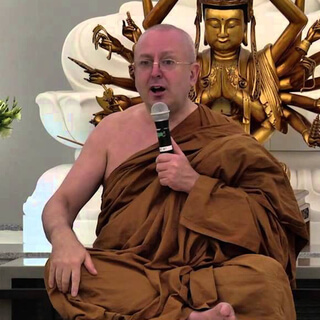
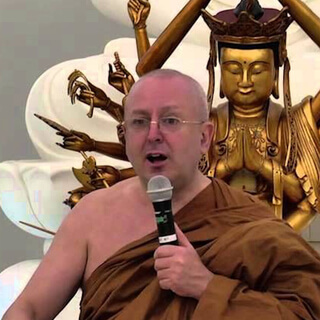
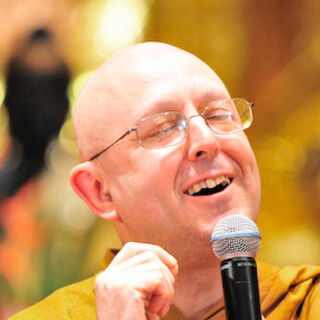
So welcome everybody to this afternoon's meditation class.
Again,
If there's anyone here for the introduction to meditation class that is held in the room to my right,
This is the ongoing class.
And I would ask everyone to please turn off their mobile phones so it doesn't make a noise.
And on the Saturday afternoon sessions,
I usually talk about one or two aspects of the meditation.
One of the aspects I'm going to talk about now is a question which somebody asked me very recently,
That when they meditate that sometimes their body moves or falls forward or leads backwards.
What the heck is going on?
Sometimes at a certain stage of meditation,
When the mind starts to settle down and you let go of your body,
The body can move into strange positions and you sometimes wonder why.
All that's really happening there is that the body knows much better than you where it needs to place itself so that very often tensions can be removed from the body or some sort of healing can happen.
Many years ago when I was teaching a retreat,
I opened my eyes and I saw one woman in such a contorted position.
I would demonstrate it for you now,
Only it would hurt me and probably break her through bones.
Her position was one of the most extreme I've ever seen.
And so as soon as the meditation was over,
I took her aside and asked her,
You know,
How do you feel?
She said she felt absolutely wonderful.
And then I tried to show her how she was sitting during the meditation.
She was so shocked.
Was I sitting like that?
I said yes.
And then I asked her,
Sort of,
Well,
Any idea?
And she told me that she had an accident,
A car accident I believe it was,
And had an injury and that now she felt so,
Sort of,
Good and so relaxed and the body felt so at ease where it was quite painful and stiff before.
And it became very obvious to me that when she let go of her body in the meditation,
When she was still and peaceful just watching her mind,
The body took its opportunity to heal itself,
To release some of the tensions,
To allow energies to flow where it was needed and the way it did that was to contort the body.
And I realized from that experience onwards that when a person is meditating and you're meditating,
You lean forward and it is totally unintentional,
That you didn't do that or you lean to the side or twist around or there is some jerking in the body,
Please understand that that is the body releasing its tensions,
Opening up channels where energy can flow.
It is a body healing itself and most people would experience that after that has happened,
Which they usually don't know about anyway,
Other people may see that,
But after that has happened you usually feel very relaxed and very good.
It is the fact that in meditation we let go,
Especially stop controlling,
Being so concerned about our body and that degree of letting go,
That degree of you,
This big control freak stepping aside and letting the body do its thing is one of the main reasons why this happens.
This is part of the psychology of the mind,
That when you start looking at something you interfere with it.
Usually the most common little example of this,
Which you can teach so people understand what I'm talking about,
Is when you ask meditators,
Can you please notice the saliva in your throat?
Can you notice the saliva in your throat right now?
Okay,
Now forget about it.
You can't.
That's a problem.
Now you're wondering whether you should swallow or what you should do.
It's a strange thing that when we pay attention to something it usually becomes a problem.
We try and control it.
It's very difficult for us to watch something without controlling it.
So what happens is when we're watching our body we tend to control it,
We tend to cause it to tense up,
We prevent it from relaxing simply because attention is very often concerned with control.
It's one of the reasons,
It's a general principle that when you do mindfulness of the body or mindfulness of anything you have to add the important ingredient compassion and kindness to overcome this tendency of the mind when it watches something it wants to control it.
When you observe something you interfere with its natural state.
So that is why that when you let go of this controlling,
When you're literally not mindful of the body but you're mindful of the present moment or you're mindful of the breath or you're mindful of the deep peace and stillness in meditation,
That is the time the body can heal itself.
Associated with that,
That many people have the experience in meditation when you get quite peaceful and quite deep,
You get the hot spots in the body.
Those hot spots in the body,
In the shoulders,
In the tummy or in the head somewhere,
They're so pronounced that often you ask what the heck is going on,
I was meditating and one part of my body was really,
Really warm.
And again,
The classic story which I use,
Which explains what's happening in similar instances of hot spots was a woman in a retreat many years ago who came to me very concerned about her shoulders,
Her neck being really,
Really hot and it was a result of whiplash.
She had a whiplash injury some months previously and I explained that to her and I did ask her even though I knew the answer,
Yes,
But how do you feel now?
She said,
Oh,
I never felt so relaxed and so good in that part of my body.
Because what had happened when she let go of control,
When she was in a peaceful meditation,
The body for once had a chance to send its energies to that injured part of her body to release the tensions,
To heal the muscles,
Whatever it was going on in there,
The body was doing its therapeutic job.
So to this day when somebody has a hot spot somewhere in their body during meditation,
Something which is uncommonly warm,
Please understand that's some healing going on.
Or if you're generally very,
Very hot in meditation,
I don't mean just because it's a hot day or you're sweating or whatever,
If you're very,
Very hot for some reason,
That is again quite likely to be a healing going on.
Now I'm not talking about that heat when you first start meditating because when you first begin meditation sometimes you do feel uncommonly hot but that's the same phenomena as when you've been driving your car and you turn off the engine,
Your car is going to be hot,
The engine is going to be hot because it's been doing a lot of work and this is just as your body metabolism starts to slow down,
The excess heat from your body just coming out.
It's just because you're in a transition from being active to being very still and excess energy just gets burnt off as heat in the beginning minutes of your meditation.
So I'm not talking about the beginning of your meditation,
I'm talking about that middle to later part when you really get peaceful,
You get still and you feel heat in the body.
If that happens,
Please don't disturb it,
Please don't get worried what's going on here.
The answer is it's a healing happening.
You're letting go,
You're being peace and you're allowing things to flow through the body and that does teach you a lot about the power of just letting go and the power of just allowing things to balance,
Nature to do its job when you get out of the way.
Too often the problem in our life is controlling and the solution is learning how to let things go,
Let things be and sort themselves out which they often do and the trick is how on earth do we do this?
How do we let go?
We've got an injury in the body,
We've got an ache in the body,
We've got a disease in the body,
How can we not be concerned about it?
This is how you do it in this meditation and first of all being kind to your body,
Being aware of it,
Being kind and then learning how to put the body aside and attend to the mental world.
The mental world is what we're doing,
We've relaxed the body,
Now we're relaxing the mental world and then we realize present moment awareness,
No past,
No future,
Get into the present moment,
The first stage of relaxing the mental world,
Then some silence of the mind not talking to yourself or thinking too much and after that just watching the breathing and you find that is the way that you're letting go of things.
Little by little you're letting go of one thing after another,
After another,
After another,
Not trying to let go of everything all in one go but one thing after another,
Putting the body aside,
Letting that go,
Letting time go,
The past and the future,
Letting that disappear and then afterwards letting these thinking disappear,
All these words and letting everything disappear except for the breath.
It's a training in how to let things go,
How to be aware without controlling.
I'll just mention just the last couple of minutes that when you do become aware of the breath,
Again you will find the first time you watch the breath it becomes unnatural,
A little bit tense,
A little bit,
Well it's the result of when you watch you're controlling it a little bit.
When you watch the breath it is unpleasant,
When you first begin please understand that's natural,
Just relax with it,
Be kind with it and you'll find after a few minutes the breath will go to its natural state as it would be if you weren't watching it.
So you have to add that kindness,
That letting go with the breath so it returns to its natural state.
So this is actually how we meditate,
We learn how to let go and that letting go leads to a lot of physical therapy for the body,
Let alone for the mind.
I just wanted to focus on that because some of you may come and say,
Oh my back started to go back,
My head started to lift,
My body started to twist or I started rocking forward,
What was going on,
Just the body doing its thing.
Let it be,
Don't worry about it,
It's good,
The body knows much better than you what to do so just let it be,
It will disappear in its own time once the healing is done.
Well done,
You're being peaceful.
Okay,
Is there any questions about that from the floor?
Okay,
So let's do some meditation.
So if you'd like to adjust your posture and again for anyone who's coming late,
This is the ongoing course.
If you come here for the introduction to meditation class,
That is in the room to my left.
This is the ongoing class for those who meditated many times before.
So you close your eyes,
I will lead the first few minutes of this meditation and then I'll let you go.
So first of all you become aware of your body,
As much as you can generate at the beginning.
Later on you'll be able to generate much,
Much more.
And you just observe the feelings,
Sensations in your body.
If there is a prominent or gross sensation,
It's usually because you haven't got your posture quite right yet.
You do need to make some adjustments.
So don't just observe that irritation,
Ache or pain,
That's just mindfulness,
Just observing it.
Add kindness,
Do something about it,
Adjust,
Fidget,
Get the legs,
The hands,
The arms,
The bottom in exactly the correct position by feeling it,
Even your bottom on the chair or the cushion.
Do you think you can sustain it like that for 45 minutes,
The length of this meditation?
If not,
Adjust,
Move it.
It's better to move it now than to experience discomfort in the middle of the meditation period.
Stay with your body.
When your eyes are closed you have more space in the brain for knowing physical sensations.
Not so much as taken up with visual sensations.
How does your body feel?
One of the most important parts of the posture,
I'm not saying this as a joke,
This actually works,
Is your mouth.
The mouth is an indicator of your emotional state.
Please turn the corners of your mouth upwards,
A half smile.
You'll find that will generate a sense of happiness,
Light happiness in the mind when you start meditating and that will be very,
Very helpful for you.
So please don't grit the teeth.
This is not going to a dentist or some sort of operation.
Turn the corners upwards of the mouth and you'll find the mind becomes more engaged,
Mindfulness becomes easier.
Stay with your body.
Is there anything else you can do?
Is there any tight piece of clothing which needs to be loosened?
Any part of your body which is squashed against another part.
And if you're comfortable,
Now let the body go.
You've looked after it,
It should be okay now as you put most of your attention on the mental world.
Learning how to find peace,
Joy,
Relaxation in the world in which we mostly live,
The world of the mind.
And please know the first stage of meditation,
The first place you can relax in is called the present moment.
You have to learn how to let go of everything which happened in the past.
I know there's some really,
Really important heavy stuff which happened to you,
But in meditation that's not allowed.
You can consider that just as you have to leave your shoes outside this room when you come into a Buddhist meditation hall,
The left shoe represents your past,
The right shoe your future.
You have to leave both outside the meditation hall.
No past is allowed in,
No future either.
This hall is a place for the present,
For now.
And as for the future,
You have some very important difficult things ahead of you.
The best way to prepare for them is to be in this moment.
Now is the time your future is being made.
The present is the only place you can do anything for your future.
You make this present moment peaceful,
Happy,
Compassionate,
And you are doing as much as you possibly can to have a future of peace,
Health and compassion.
This is where you build it,
Right now.
So whatever you're experiencing now,
The sound of my voice,
The heat,
Any feeling or whatever,
Please open the door of your heart to this moment.
To be here with a mindfulness which embraces but does not judge.
Unconditioned awareness.
Just to know.
Just being here.
Meditation is all about being here.
In every moment being more fully right here.
Not somewhere else,
Not the past,
Not the future,
Not in think,
Think land,
But just being here.
Yes.
Yes.
Yes.
Yes.
Yes.
Yes.
Yes.
Yes.
Just being in the present moment.
See if you can let go of the inner conversation.
Can you imagine watching a sports event on TV?
You have the picture,
What's actually happening.
You have the commentary which comes over on the sound.
In the same way you have what you're experiencing right now and a commentary which goes alongside of it.
See if you can silence the commentary and just listen to life,
Experience life before the words distort it.
To know the bark of a dog without giving it a name.
To know the sound of a car.
To know the wind.
To experience life without a commentary.
Yes.
Yes.
Yes.
Yes.
Yes.
Yes.
Yes.
Yes.
Yes.
Those who want to anchor their mindfulness on the breathing.
Just to know the sensation of breath as it goes in.
To experience the sensation of breath as it goes out.
Always in the present.
Silent.
Just being the breath.
Understanding when you first watch it,
You disturb it.
Your kindness and softness,
It settles down again.
Your job is just to be the breath.
Yes.
Yes.
Yes.
Yes.
Yes.
Yes.
Yes.
Yes.
Yes.
Yes.
Yes.
Yes.
Yes.
Yes.
Yes.
Yes.
Yes.
Yes.
Yes.
Yes.
Yes.
Yes.
Yes.
Yes.
Yes.
Yes.
Yes.
Yes.
Yes.
Yes.
Yes.
Yes.
Yes.
Yes.
Yes.
Yes.
Yes.
Yes.
Yes.
Yes.
Yes.
Yes.
Yes.
Yes.
Yes.
Yes.
Yes.
Yes.
Yes.
Yes.
Yes.
Yes.
Yes.
Yes.
Yes.
Yes.
Yes.
Yes.
Yes.
Yes.
Yes.
Yes.
Yes.
Yes.
How do you feel?
What mental state has this meditation generated?
In particular,
Look for the quality of peace in your mind right now.
To understand as a direct experience what peace feels like.
And understand where peace comes from.
You let go,
You're kind,
You're gentle.
It makes peace.
You strive,
You try to control.
It just makes more tension,
The opposite.
How much freedom do you feel?
What is freedom?
You can experience directly the freedom from desires.
The mind is not pushed and pulled by wants and dislikes.
How free that feels.
It is called contentment,
The freedom from wanting.
These are important spiritual qualities to recognize,
To value,
To cultivate.
I am now going to ring the gong three times.
Please respect the gong and listen to every sound before you open your eyes.
The three ringings of the gong.
The three gong.
Okay,
So please open your eyes and again move the body.
If it needs moving to become comfortable again.
Now we have the questions.
This is broadcast worldwide.
We have a question from Germany,
Sri Lanka and from United States.
Question from Germany is,
Can you please tell us what is Mitra Samadhi and what is Sama Samadhi means?
Many of you who have been listening to me for the last couple of years know this word Samadhi is often called concentration,
That is a bad word.
It's much better to render it as stillness.
So Samadhi,
The stillness.
It is,
If anything,
The goal of this meditation to be here and to be still.
And the more still you are,
The deeper you go in the meditation.
So Mitra means wrong,
Sama means right.
So the talking here about two qualities which is mentioned by the Buddha,
Wrong stillness and right stillness.
And the best example of wrong stillness is what you can observe if you go to places like Buckingham Palace in London and see those soldiers standing perfectly still out of force,
Control.
That is like the wrong stillness.
Yes,
You can make the mind reasonably still,
The body still,
By controlling it,
By using force.
But such a degree of force will take you so far and no further because it's not a letting go type of stillness.
Again,
It's more control.
The right type of stillness is the stillness born of letting go.
We literally let go of this control,
Of this doer,
This will and just allow things to become still naturally.
The example I usually give,
You may be seen as before,
But I do it so that people worldwide can see it.
I usually take a glass of water which I'm getting now.
The job in meditation is hold the water perfectly still.
I can get it reasonably still by force,
By holding it.
I can never get it perfectly still.
That is wrong stillness,
Trying to hold the water still.
Right stillness,
The easy way where you get very deep and very still is putting the water down,
Letting it go.
Interesting thing you notice in this exercise which is similar to what happens when you really let go in the mind,
When you first put the water down it moves more.
It does control,
The mind goes a bit wobbly.
But after a short while the water is almost perfectly still.
I could never hold it that still.
That is right stillness,
The stillness which comes from letting go.
That,
Trying hard to hold it still,
That is wrong stillness.
Now a question from Rohantha in Sri Lanka.
What is the best way to balance restlessness and worry at the start of the meditation which is the tena meter,
Which is sloth and trouble when the body relaxes?
You don't balance these things,
You have to overcome both of them.
Because if you try and balance your sleepiness by thinking and by being active,
Yes,
You can actually overcome sleepiness.
As one monk once told me,
He was a bit of a,
Not a good example of a monk,
He said,
If ever you feel sleepy just think sexual fantasies,
Then you'll never go asleep.
It's true,
But that's not the purpose of meditation.
So the only way to overcome restlessness and worry,
Restlessness is when you want something.
The more you want,
The more the mind moves.
Going back to the simile,
The cup,
Restlessness is the shaking of the cup,
Wanting,
Wanting this,
Wanting that.
And that is the restlessness.
The opposite of restlessness is if you're content,
If you're happy to be here,
That this is good enough.
I'm not trying to get the deep meditation or jhanas and enlightenment.
Every time you set a goal,
The separation between where you are and where you want to be,
That is the cause of restlessness,
Wanting something.
So even wanting good things like deep meditation,
Jhanas is powerful deep meditation or enlightenment states,
That's a beautiful thing to want,
But it's still you're separated from where you want to be.
Here I am now and I want to be over there.
That is the cause of restlessness.
So you don't balance these things,
You let go of restlessness first of all.
And it is very common that once you let go of restlessness,
Tiredness comes.
That is natural in our modern world when people work so much and think too much.
As soon as you let go and are content,
The brain in particular takes a chance to catch up on its lack of energy.
You get dull,
Well done,
That is par for the course.
If you try and fight that dullness by putting forth efforts,
Driving,
Whatever it is,
I'm going to really watch my breath now,
I'm going to really put maximum effort in.
Yes,
You can sort of overcome the dullness,
But you just fall back into restlessness again.
That is not the way.
The way is to be content with your dullness,
To let it be,
To be kind to it,
To be gentle,
Making peace with the dullness.
Because what you are doing then is you are allowing the dullness to vanish naturally.
All the dullness in the mind is your mindfulness is weak simply because all the energy has been going into striving.
When you stop the energy going into striving,
Struggling,
Wanting,
Controlling,
When the energy stops going into that black hole,
It's free to flow into knowing.
The mindfulness gets the energy rather than the active,
Controlling,
Doing,
Wanting mind.
Literally the dullness just vanishes very similar to the mist in the early morning when the sun rises.
Letting go evaporates the dullness.
I know that I've been meditating for such a long time.
If I'm dull because I travel and work a lot,
If I'm dull I let that dullness be.
I never fight it because I know if I fight it,
Yeah,
I can overcome it,
But then I'm restless.
I let it be.
It's a wonderful thing to watch.
Yeah,
You're dull.
Nothing wrong with that.
I'm dull.
I'm at peace with my dullness.
I open the door of my heart to my dullness.
And because I don't fight it,
The dullness starts to vanish.
The sun of mindfulness just gets rid of it.
And soon after a while the dullness is vanished.
I'm awake.
But I'm not awake and restless.
I'm awake and peaceful.
I just carry on like that and you get into great deep meditations.
So please,
Please,
Please don't fight dullness.
Don't think you're balancing restlessness and dullness.
Let things go.
Be content.
Be kind.
Be compassionate.
Open the door of your heart to anything in meditation.
It's called letting it be with compassion.
Making peace,
Being kind,
Being gentle.
You find the restlessness goes first of all.
And lastly the dullness goes and you get into great meditations.
And lastly,
Rocky from the United States.
How do you keep,
I wonder if that was Sylvester Stallone.
He was Rocky,
Wasn't he?
Maybe this might be from Sylvester Stallone.
He says Rocky from the United States.
How do you keep arguments you had early in the day from interfering with meditation?
I frequently have arguments popping up in my head which keep me from relaxing.
Number one,
Don't have arguments.
They're a waste of time having arguments with people.
They never believe what you say anyway.
You can't convince them.
So if people say it's a duck,
Don't say it's a chicken.
It's a duck.
If they say it's something else,
You just agree with them for goodness sake.
If you want to know where that story comes from,
Look at opening the door of your heart in the United States.
Who ordered the truckload of dung?
That is the story of the chicken and the duck.
It's a waste of time having arguments.
Whatever your partner or someone else says,
Just agree with them and then you can do what you want afterwards.
But if they have had an argument,
One of the reasons why they keep popping up in their head,
Why you can't let it go,
Is just the attachment we have to those arguments.
Maybe you've lost face,
Maybe it's your ego,
Maybe it's really sort of hurt you and dented your opinion of yourself of being right.
So please let go of the sense of self,
Let go of the ego and you find it's very easy to let go of the past.
In particular,
Most modern people,
They can let go of the wonderful things that happened to them in the past,
But they have such a difficult job of letting go of the bad things which has happened in the past.
So there is a method which I've taught on Friday nights,
I taught it in Hong Kong last week,
It's very powerful.
If you had an argument earlier in the day,
Just before you do your meditation,
Write it down on a piece of paper.
In psychology it's called acknowledging it,
Bringing up,
Admitting there was an argument,
Something unpleasant.
Write down the unpleasant things which have happened to you today before you meditate.
The type of paper you should use when you're writing these things down is called toilet paper because all that shitty stuff,
That's where it belongs.
So write the argument down on the toilet paper.
Once you've written it down in detail,
Read it to yourself,
Just to acknowledge,
Yes,
This argument happened,
Yes,
I lost it,
Or yes,
You know,
Whatever.
Acknowledge it and then take it to where toilet paper belongs,
Into the toilet bowl,
Put it in the bottom and doing what we call the letting go ceremony.
You press the button or the water comes down,
All that stink goes round and round and the toilet paper with the argument on it just goes away.
You've let it go and then go and meditate.
That works for the reason that psychologically you're associating the argument of whether it was unpleasant with the stuff which belongs on toilet paper.
The association is this is not the sort of stuff you should keep.
Whoever keeps used toilet paper in your pockets or your bags,
So you associate this is something which needs to be thrown away and then you do the throwing away ceremony in the toilet bowl and as you watch it go down,
Because it's a ceremony,
It's an action,
It reinforces the emotional ability to let things go.
It works.
So that's the way of overcoming the argument you had earlier in the day,
The negative stuff,
So when you meditate you can be free.
When you go to bed at night you can be free.
Throw it down the toilet first of all,
Doing the toilet paper ceremony,
One of the most amazing Buddhist ceremonies.
Okay,
Thank you for that.
Are there any questions from the floor here?
That's from the United States.
Okay,
Well there's no more questions.
I'm sure that after we've finished there'll be the usual line of people asking questions.
But that's natural,
That's the way it is.
Okay,
So thank you very much and now we can pay our respects to the Buddha,
Dharma and the Sangha or if you wish to virtue,
Peace and compassion can go away or have a cup of tea.