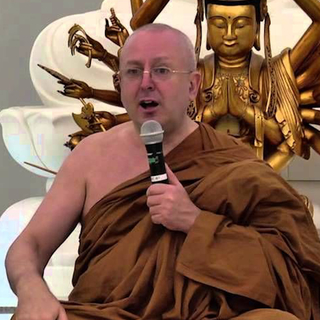
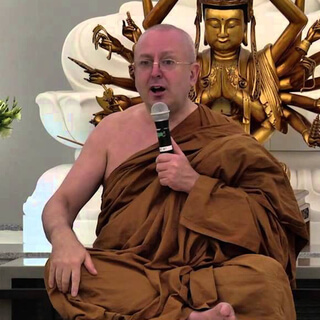
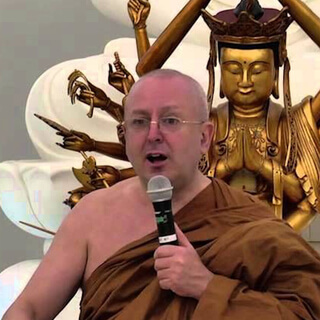
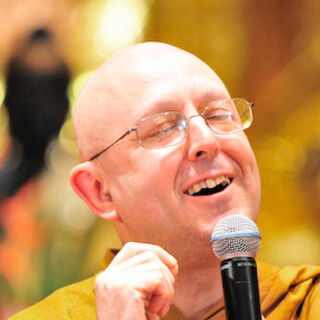
So welcome to our Saturday afternoon meditation class,
Which we call Happy Hour at the Buddhist Centre.
So here's to Happy Hour.
So first of all the usual announcement.
Those who have come for the Introduction to Meditation class,
Which is a series of four classes,
Introducing People to Meditation,
That class is being held in the room to my right.
So those who have come for the first time here,
The room to the right.
This is the ongoing class where we teach different aspects of meditation and also that we manage to sit for longer periods of time,
Which is usually about 45 minutes.
So if you've never sat much before,
That might be a bit of torture for you.
And if you accuse us of torture,
Of cruel and unusual treatment,
Then we get into big trouble because of that.
And I have to go to jail,
Which is not such a bad thing because then I can have a bit of peace and quiet,
Have a nice bit of a retreat.
But anyway,
I don't think that many people think that's a good idea,
They disagree with me there.
So we have to learn how to sit nice and peacefully and calm and comfortably.
And that brings me up to the idea of a happy hour.
Sometimes people feel that no pain,
No gain,
That if you don't really push through aches and pains,
That you will just become weak and you will never get anywhere in the spiritual path.
And that was always something which never sounded correct to me.
Part of the Buddhist tradition was kindness and compassion.
And why is it we're compassionate to so many other beings but not to ourselves?
Push ourselves,
Sit there,
Become enlightened or bust.
And there's something very,
Very wrong with that.
And of course there is,
Because that does not work.
You can get so far,
But you can't really get into the deep states of meditation.
And the deep states of meditation is not through pushing,
Striving and effort,
It's through something very different,
Through letting go.
And the old story is,
The old glass of water,
How can I hold this still?
Nowhere in the world can I hold it still.
I'll go through this again because some of you haven't seen this,
Most of you have.
Is this glass still yet?
Okay,
This will work.
Is it still yet?
No,
It's not.
Why?
Because I'm paying no attention.
Now I pay attention,
Now I'm mindful.
Is it still yet?
Because I'm not concentrating.
So now I will concentrate.
And I enjoy this part because I can play.
I'm concentrating,
Don't disturb me,
Shush.
Is it still yet?
It gets worse,
Doesn't it?
When you try to focus,
You try to make it still,
It gets worse.
Now that's an interesting point in this experiment.
When you really try,
You actually disturb reality.
You leave it alone.
At least it's not been so disturbed,
But how can I make this become absolutely perfectly still?
I can try like this for a long time and just get tired.
But then you hear someone like a Buddha say,
Let go,
Let go.
So I just let go of the glass of water.
And this is really comfortable.
No ache,
No pain,
No tiredness.
You just sit there and watch.
Oh,
Where did I?
What do you reckon?
There you go,
So simple.
So,
Can you meditate like that?
You just sit down,
Let go,
And everything becomes nice and still.
Why?
Because the hardest part is letting go,
Understanding what letting go is.
Every now and again you let go just by chance sometimes.
You fluke it.
And I don't know,
Other times it's because you're just so.
.
.
Your back's against the wall,
Everything is going wrong,
You don't know what to do,
And so you've got no choice but to let go.
Try every escape,
Every way of overcoming the difficulties,
Everything,
Oh,
You just let go.
It becomes still.
However,
You don't need to get yourself into such a difficult situation to actually do letting go.
I was talking to some of the monks about that,
About in a time of when I was a young monk,
There was this monastery in Laos,
And it was very famous,
This was just before the Vietnam War and before Laos was taken over by the communists,
The Pathet Lao.
And there was a monastery,
A very famous monastery,
A great meditation teacher,
And he would take all the new intake of meditators,
He'd take them for a long walk in the jungles up the mountains,
And they were really steep mountains.
And I went to a few of those close by,
Up and down,
Up and down,
And then the whole day,
About to get back to the monastery,
And that,
When they were tired,
Really thirsty,
They came to this clearing in the middle of the jungles with these huge,
Beautiful tall trees.
And way up,
Maybe,
I don't know,
50 metres,
100 metres up in the sky,
Maybe 100 is a bit much,
But really big trees,
They had built platforms,
Platforms just about the size of that cushion,
With no railings,
Just a piece of wood,
Flat,
And there was a bamboo ladder to go up.
And so the teacher would tell each one of those disciples,
Go up the ladder,
And they had to,
Went right up to the top of the ladder,
And the teacher would take the ladder away,
So be back in the morning for any of you who survived the night.
Because if you were sleepy,
If you started to wobble,
You would fall to your death.
And even if you didn't die,
You injured yourself,
The tigers in that part of the jungle would gobble you up.
So they had to do that,
Sitting there all night,
No way down,
No escape but to meditate all night.
And they said that many monks became great meditators after that.
Those who didn't,
We don't talk about,
Maybe who knows what happened to them.
But that was a crazy way of doing things.
It might work for some,
But for most of you,
Even most of,
I don't know,
Some of the monks I know,
Maybe me when I was a young monk,
Maybe I would have fallen off and got eaten by the tigers.
But anyway,
Using fear,
There's something which ties you up and tensions you up,
That's not letting go.
There's something else which lets go.
And that is why to let go needs a little bit of happiness and joy.
If you're having fun,
You're enjoying yourself,
You're happy.
You find it so easy to let go.
You don't need to struggle and strive when you are content.
But contentment,
We have our little metta chant,
Be content and easily satisfied,
Easily satisfied,
Is part of being content.
So we're happy here,
Just meditating.
This is good enough for me.
Who do I think I am to get enlightened just like this?
You hear stories of people,
Lifetimes,
Trying to get enlightened.
Lifetimes!
Trying to get enlightened today?
Forget it.
And you know what happens when I teach like that?
Sometimes on retreats,
People are meditating and meditating and meditating,
Getting nowhere and I tell them,
Ah,
Forget it,
You're hopeless,
You can't do it.
And that's when they start to meditate.
They learn how to let it go.
I can't meditate,
What's the point?
I just might as well meditate here,
Just kill time basically.
So sitting here just not really doing anything,
They're relaxing.
They're just being,
Enjoying this moment instead of trying to become enlightened sometime in the future,
Like getting on a bus not knowing where the destination is.
You want to get enlightened?
You know what enlightenment is?
I think you'd enjoy it when you get there.
A mystery destination,
Sounds good.
But at least what we do know,
We do know how to relax,
What relaxation feels like.
And for these days when people say,
Yeah,
I know I should let go,
But how do I let go?
How do I let go of the past and the future,
The pains and the fear of what might happen next?
How do I just give up,
Let go?
This is where we have a method,
An ancient old path of how to let go.
You can't just say,
Okay,
Let go.
We learn this very subtle training.
For many people it's very helpful to start with your body.
Feel it.
Feel any tightness and tension in your body.
What is tightness and tension in your body anyway?
I'll use my robe as the example.
This is tension.
Pulling hard,
And that's some of your body,
Stretching it in frame,
Squashing it,
It's tight.
And what is letting go?
Relaxing.
Somehow or other there's two ends of a string and your body is pulling it this way,
Pulling it that way,
Washing it,
The natural position of the body is just not there anymore.
It's being squashed,
Being stretched.
You can feel that,
That is called physical stress,
Strain.
What do we do?
I'm not sure too much about one medicine,
But a lot of times we have relaxants.
Just to relax our body,
Therefore we're in pain,
So that the whole body has a chance to heal.
It's not being stretched anymore.
Sometimes I get the hay fever,
And so it's just an inflammation of the nasal passages.
My body is overreacting and gets inflamed.
So a lot of times you can actually feel the body is tight and tense.
It may have an emotional basis behind it.
But anyway,
Let's start working with the body first of all.
In your body right now,
What is the most tight,
Tense part of your body?
When you can actually feel it,
Why on earth haven't we learnt how to relax our own body?
All these years we've been alive.
So if I have an acre of pain anywhere in the body,
I feel it.
Actually there's not much going on in my body right now,
It's pretty healthy,
It's a nice place to be.
If I say I've got a bit of a tummy ache,
There's only a slight one there.
If I've got a tummy ache,
I just focus on it,
Zoom in on it,
Just so everything else just fades away,
You just zoom in like I'm zooming in on this little microphone.
Zoom in on it,
So it's hardly,
That's all I can see,
Just a tiny bit onto the left and the right,
Really zooming in on it.
So I can get to know what this is without being disturbed by other things.
I get to know what that feeling,
That pain,
That irritation,
That tightness is.
You learn how it works,
The inflammation.
Because when I start doing that,
Sometimes I feel the inflammation get tighter,
Sometimes looser,
It changes.
Why?
And that's the interesting part,
What makes that irritation,
That pain,
That sickness,
That fever,
Whatever it is,
Worse.
What makes it ease off,
Become relaxed and more comfortable.
You can do this.
Sometimes it's your overreaction,
Your fear,
Your trying to do something,
Pushing it.
You just learn how to just realise to the max,
You find your body starts to become all loose and easy,
Without any tightness anywhere in your body.
It's what apparently you get when you go for an expensive massage at a spa.
However,
Here,
This is not an expensive relaxation technique,
But a priceless one.
You can't charge any money for this stuff,
Even though it's much better than any expense you can pay.
Priceless.
And if you're after it,
You feel so loose.
One little thing about having a looseness in the body is that,
If this is tight,
Well this is even better,
It hates the sound,
It vibrates when you hit something which is tight and tense.
When you hit something which is really loose,
It doesn't make any sound at all,
It doesn't hardly hurt,
Simply because you're nice and relaxed and loose.
So you have a body with all of the diseases,
Viruses and other stuff which is around.
People who are tight and tense usually get diseases.
People are relaxed.
You don't get irritated.
Just let's go straight away.
Your body is really healthy.
So anyway,
From there you can see how to relax your body.
You can actually feel it.
Now when I was talking about the light happy hour,
You find that when you are relaxing your body,
It feels really good.
It's happy.
And once you have some happiness,
There's some delight with a relaxed body,
Then you get even more relaxed.
It feels really good.
Yeah,
I can take some more of this.
More,
Yeah.
It is a happy state.
It feels like getting up in the morning and you don't need to go to the toilet,
You don't need to go anywhere,
You can sit in bed and the snooze button.
This is very nice.
You relax,
No pressure on you to do anything or go anywhere.
That sort of feeling is what you have when your body relaxes.
Why?
Because you've let go,
You've learnt what letting go is.
And of course then you go up to your mind and you practice exactly the same thing on your mind.
How relaxed or how tense is your mind?
It's like a string,
Is it really tight and taut?
If it is,
You know what's going to happen.
Somebody says something,
Sit up!
What's he going to say that to me for?
I'm not like that.
I'm sitting straight,
Look at him,
He should talk.
When you are very tense in the mind,
They call it a short fuse.
Small thing hits you,
Makes a huge noise.
When you are really relaxed and at ease and somebody says,
Ahh Jampara,
You are such a slob,
You are such terrible jokes,
You are just,
Ahh yeah,
That's accurate.
You don't react.
Simply because you are at ease,
You are like a string which is loose.
Something hits it,
Doesn't resonate.
Reverberate was the word I was going to say.
So this is actually where we learn what letting go is.
You apply it to your emotional world.
You let go.
Because the two things which are pulling us most of all is the past and the future.
Stretching us,
Pulling us,
Unfinished business,
The past,
Fear of the future,
Being stretched.
Rejent,
Past,
Gone.
Let it go,
Totally,
100%,
Not now.
What's done is finished.
Now I'm going to enjoy this moment.
I've worked so hard,
Struggled,
Strived just to get to this moment called now.
I'm going to sit down and enjoy this moment.
I'm going to think of the past.
Future,
Now is where my future is being made.
Right now,
I've got lots of things to do afterwards but not now.
Because if I realize now,
This moment is going to really affect my future.
It's going to affect how I'm going to meditate in a few moments.
So I'm going to make sure I'm going to focus on this moment,
Make this moment peaceful,
Free.
And then else will follow peacefully and free also.
So,
That means no pressure from the past or the future.
Totally at ease.
That's just about enough.
Be in the present moment,
At ease,
Not forcing it but letting go.
You're learning what letting go is.
And letting go is the cause of freedom.
Physical peace,
Mental freedom,
Not trying to attain something.
Just having another type of sales target to reach.
I have to find out how many people got enlightened.
The committee asked me how many people got enlightened in your meditation classes and compare it with Ajahn Brahmāṇi.
And so I see who gets promotion and who gets relegated and who gets a sack.
There's no target that's against the whole idea.
How to be peaceful,
How to be relaxed.
If you get that,
You learn how to let go and it is joyful.
It's happy when you don't need to do anything.
When you don't want anything.
When you don't require anything.
You're here and this is fine.
You let it go.
Okay,
That's just an introduction.
So let's give it a try.
So for those of you who've just come in,
The usual.
.
.
I should have this on tape all the time,
I just press the button.
So this is the ongoing class.
Those who come to the beginners' meditation class,
The introduction to meditation,
Is being held in the room to my right,
Just over there.
This is the ongoing class.
We're going to torture you for 50 minutes if you don't know what you're doing.
40 minutes.
In other words,
It's a bit tough to sit still if you haven't done any meditation before.
So if you've come to the right class,
Brilliant.
So here we go.
Sitting down,
Close your eyes.
There we go.
Don't rush these things,
Take a bit of a while.
This is fidget time.
Fidget this way,
Fidget that way,
Until you get it just nice.
Again I take my cue from cats and dogs,
Even little kangaroos.
They scratch a nice place in the forest,
And they can,
Under the tree somewhere,
Nice place in the shade where they can relax and go to sleep.
And then just preliminary,
Now checking of your body.
And then the more meticulous awareness of the body and relaxing the body as we go,
Starting with your legs.
The reason I start with my legs is because that is not so important as when you get to your torso.
So building up my mindfulness,
My letting go-ness on my legs.
And here is legs.
And as I get to know them,
It's like I've been ignoring them,
I've been focusing on other things.
Now I'm zooming in just on my legs,
Including my feet.
How are they?
I could need some adjustment to my legs.
There we go.
And when you get your legs in a position which you feel they're comfortable,
Then you move up your body to your buttocks.
How do you break that up?
Are they well positioned on the cushion,
The chair or the stool?
Now when she is comfortable,
Move up to her waist.
And when we feel,
We get to know the sensations just in that area of the body.
Zooming in on it,
Checking that it's the best position you can get.
And you move this way,
You move that way.
When you move,
You get feedback.
This is getting better,
No that didn't work.
This is how you find the best position,
But at the same time you're increasing your awareness and you're also learning how to notice feedback and get the kindness to find the best position for you.
And you move up your back.
People have lots of tension in their back.
You feel it,
Relax it.
And then you go to your shoulders.
Just tight bundles of strings on either side of your spine.
Relax both sides.
You can feel what relaxation is.
Try this,
Try that.
Always watching with your mindfulness,
Being aware of the tightness,
Tension there.
It all works,
What relaxes.
Then you go down your arms and hands.
Then you go down your arms and hands to relax anything there.
So your arms and hands in a comfortable position.
Then you go up to your neck,
Making sure that's nicely relaxed.
Then you go up to your face,
Muscles around the eyes,
Muscles around the forehead and the mouth.
Everything is relaxed and relaxed.
You can feel it.
Then you can go to your ears.
Sometimes you can feel your ears tense up when somebody snores.
It doesn't tense up when you pay attention to the click-click of the fans or the sound of the traffic.
Why do we focus on one sound and not on others?
We let things be.
We let them go with kindness.
Just sound,
Just sound.
This is into this present moment,
Which is here.
See if you can notice the whole body relaxed to the max.
Not fighting anything.
The part of the body is squashed,
Compressed,
Suppressed,
Stretched,
Strained,
Stressed,
In any which way.
Just open,
At ease.
See if you can notice the delight of a body which is not at war with itself or at war with the world.
Just at peace with the feelings in the body.
And that can feel so delightful.
Focusing on relaxation with your body.
And mindfulness of the body,
Knowing how to make it peaceful.
It must be sometimes like indulging at this point,
Staying with the delightful feelings of the body.
There must come a time where we go deeper,
Go into our mental world,
Our mind,
Our emotions.
And here you ask yourself,
How peaceful are you?
Your level of peace,
Your level of disturbance.
Begin to become aware of your peace-o-meter.
The needle which,
One is peaceful,
Ten is very disturbed.
Agitated.
Give yourself a number right now.
Just get in touch to get to know the peace-o-meter of your mind.
It's private so you can be honest,
Don't have to be ashamed or proud.
This is how your mind feels now.
As you begin to know how peaceful or how agitated you are,
Then you start to discover what makes your mind more agitated,
What disturbs it,
Or what makes it more peaceful,
Relaxed.
This is not theory,
This is your own direct experience.
Getting in to understanding peace of mind.
You'll find that trying to disturb things,
Make things happen,
This interference causes disturbance.
So it will just let this natural process of calming down happen.
We let it be.
Let go of controlling and aiming and manipulating.
So how peaceful are you?
What's happened to that needle on the peace-o-meter?
How you are observing the focus of your meditation is something really important.
What peace feels like and what develops it,
What disturbs it.
It might help when you become aware of your breathing.
Breathing in,
Breathing out.
But still,
You've been aware of the peace-o-meter.
Like when you're driving a car,
You can still notice the speedometer.
You're watching your breath going in and out.
You still know whether this is calming your peace-o-meter.
You're getting more peaceful,
More agitated.
You're enjoying the breath,
Breathing in peace,
Breathing out the paper.
I'm going to be quiet now.
Speak again,
I'll be close to the end of the meditation.
I'm going to be quiet now.
I'm going to be quiet now.
I'm going to be quiet now.
I'm going to be quiet now.
I'm going to be quiet now.
I'm going to be quiet now.
I'm going to be quiet now.
I'm going to be quiet now.
I'm going to be quiet now.
I'm going to be quiet now.
I'm going to be quiet now.
I'm going to be quiet now.
I'm going to be quiet now.
I'm going to be quiet now.
I'm going to be quiet now.
I'm going to be quiet now.
I'm going to be quiet now.
I'm going to be quiet now.
I'm going to be quiet now.
I'm going to be quiet now.
I'm going to be quiet now.
I'm going to be quiet now.
I'm going to be quiet now.
I'm going to be quiet now.
I'm going to be quiet now.
I'm going to be quiet now.
I'm going to be quiet now.
I'm going to be quiet now.
I'm going to be quiet now.
I'm going to be quiet now.
I'm going to be quiet now.
I'm going to be quiet now.
I'm going to be quiet now.
I'm going to be quiet now.
I'm going to be quiet now.
I'm going to be quiet now.
I'm going to be quiet now.
I'm going to be quiet now.
I'm going to be quiet now.
I'm going to be quiet now.
I'm going to be quiet now.
I'm going to be quiet now.
I'm going to be quiet now.
I'm going to be quiet now.
I'm going to be quiet now.
I'm sitting close to the end of this meditation.
How relaxed is your body?
And how peaceful is your mind?
You are at peace and contented.
The jinni who rose said,
I will give you three wishes.
How would you answer?
So not today,
Thank you,
In your content.
I know in the gong three times.
Please be patient to listen to every sound of the gong.
And only then,
Open your eyes.
Thank you.
There you go.
Okay,
So let's see what we have here.
Oh,
From Canada,
Sweden and Indonesia.
So that's all from Canada.
When pleasure arises during meditation,
My body and mind reacts to it,
Which ultimately makes it disappear.
How does one suppress his body and mental reactions to this pleasure?
Sometimes from a little bit of wisdom,
Wisdom being that it's okay to feel some pleasure and happiness.
Many people have the understanding that happiness and pleasure has nothing to do with spiritual life.
Or they feel guilty,
They don't deserve to have happiness,
That something's wrong if they're happy.
I know this is really true but I remember reading that the definition of Kṛṣṇa,
Kṛṣṇa,
Kṛṣṇa,
Very ascetic,
Very unfun loving,
So 17th century Christians.
There was the fear that somewhere,
Someone is happy.
It was an anti-pressure.
Give up pleasure in this world,
So have pleasure in your next.
Something very strange about that.
When first of all understand the importance of,
You can only call it pleasure,
Contentment,
Fulfilment,
The same feeling when you really have retired for the weekend,
You can just sit down and just relax,
You deserve it.
And to just enjoy this moment and find great pleasure in just simple things.
So when your mind reacts to it,
It means that it's usually the case that one is not accustomed to that type of pleasure.
Years ago I noticed that when I go travelling anywhere,
The first night in a new monastery,
A new hotel,
I never sleep well.
Even though it's people I know,
Friends,
It's pretty safe,
But it's a new bed,
New situation.
Second night,
Much more relaxed,
Third night it's like your own bed.
It's a case of the three stages of recognition,
Familiarity and ease.
For those of you just coming to this place for the first time,
It's a very safe,
Comfortable,
Joyful place.
But the first time you recognise,
What is this place?
Are they going to convert me?
Are they going to strip me of all my assets?
Am I going to end up going out of here totally brainwashed?
So there's always a bit of tension there.
And then as you get to know the place,
It gets more relaxed.
From recognition you get to being familiar with the place.
So many of you are friends here,
And then you get to be at ease in the place,
The final stage when you're at ease.
You can relax and then you can enjoy the pleasure.
So that's one of the reasons why the pleasure arises.
Great,
My body and mind reacts to it.
So just relax mind,
Have a bit of a nice time.
Also sometimes the pleasure in meditation gets very strong.
It's almost that one thinks one is out of control.
It's nice to be out of control if you're having a good time.
Let go,
Don't be such a control freak.
So people are much more able to control negative stuff.
They think a lot about fixing up problems.
So if they haven't got a problem to fix up,
That's really scary.
Some of you having a beautiful relationship,
Having a wonderful time together,
Something must be wrong with us somewhere.
I must be the FOMO,
Fear of missing out.
My relationship is okay,
I'm not going through a divorce,
I'm missing out on life.
But sometimes we're afraid.
So just relax and enjoy and don't destroy and self-destruct the happiness which comes from time to time.
There's a lot of psychological insights you get from trying to explore.
Why it is when happiness comes?
People don't want it.
They destroy it.
So it might be,
Basically just,
Oh let it come,
It will go by itself sooner or later.
Sometimes,
Although I do the opposite sometimes,
How are you feeling today?
I feel good today,
It won't last.
But for happiness,
Don't worry about it,
It won't last,
So let it go by itself.
You don't have to do anything about it.
In other words,
Just let it be.
So your eyes are doing meditation,
That's a great sign.
Your body and mind reacts to it,
Why?
You've got something,
Something's happening,
Why react?
Just learn how that happiness and pleasure stays and gets deeper and the reactions which make it disappear.
The peace-ometer now turned into the happy-ometer.
What makes you more happy?
What makes you miserable?
How's your happy-ometer right now?
From Sweden.
When I meditate my brain is a storm.
All of a sudden I think of anything I'm not usually thinking of.
Past memories,
Future memories,
Music memories,
My brain doesn't want to relax.
Can you offer advice?
Your brain is throwing a tantrum because you've been a control freak for such a long time.
You say,
Brain,
You do this,
You do that.
So when you start to meditate your brain is a storm,
Great,
Off you go.
Have a nice storm,
Brain.
That's what we call brain storming,
Isn't it?
That's supposed to be good.
But if it's a storm,
Just let it be.
Here we go again,
That story that when my mind was really going crazy,
Six range retreaters,
A monk,
In a beautiful idyllic monastery in the north of Thailand,
Up in the mountains,
It was just,
It was heaven,
Except for my mind.
I was by myself,
Alone,
And then I started getting all these thoughts,
Being restless.
I tried to stop them,
Stop,
Stop,
Now come on,
Watch your breath,
And the thoughts got stronger and stronger.
I said,
Now come on,
Just watch the breath,
And they got stronger and stronger.
That's when I started thinking in my phrase,
Un-monkish thoughts.
And to be more specific,
I wonder if she's still available,
You know,
It was only six years as a monk,
I was still pretty young.
No,
No,
No,
Come on,
I just want to be sort of,
But what about her?
Maybe she was really nice.
I'm like,
Come on,
Stop it Ajahn Brahm.
And the more I try to stop it and prevent it,
The worse those thoughts go.
I started getting really,
Really crazy thinking of just really weird sexual fantasies,
And stuff,
And I think,
Look,
Where's this coming from?
I'm a monk,
Come on,
Watch your breath,
Watch your breath.
And every time I really tried to keep those thoughts out,
They just kept sort of breaking through every one of my defences,
Stronger every time,
And I just didn't know what to do,
Going crazy.
And no one there to talk to,
No mobile phones or anything.
So I just went to the main hall,
Bowed to a Buddha statue and just said,
Help.
Who knows,
Might get some inspiration.
I did get inspiration.
And the inspiration was,
And just a good sort of wisdom you find from,
Who is it,
Donald Trump,
Let's make a deal.
That's what I did,
It's a long time before Trump,
Do a deal.
And my deal was this,
Compromise for one hour every afternoon,
From three to four,
I still remember the time,
Three to four,
Anything goes.
Any sexy,
Weird,
The sort of thoughts I'd be embarrassed,
Even sort of telling my fellow monk about it,
Let alone telling you,
Oh,
I'm sorry,
I just think you know,
Sort of,
But I said,
No,
Three to four pm,
Everything goes,
Anything goes.
And the rest of the day I'd follow my breath and behave,
Be a good monk.
So I tried it,
See what happened.
Those thoughts still came back,
It was a struggle,
It was difficult,
But I kept my part of the bargain,
Three o'clock,
I went up to my room,
Lay down,
Okay,
Any weird fantasies,
Thoughts,
Sex,
Girlfriends,
Whatever,
Open.
I'm not going to fight you.
And I leaned against my wall and this is no exaggeration,
The next hour I watched every breath without missing one,
So easy.
Well that's true,
And what on earth is going on?
And you realize that what you are doing when you are fighting that storm in your brain,
You are reinforcing it,
Feeding it,
And it gets stronger and stronger.
So if you have a storm in your brain,
Just let it be,
Okay brain,
That's fine,
Whatever you want to do.
So this is my storm,
Ach,
So give yourself time and say,
Okay,
Whatever goes on,
You're not fighting it,
You're not controlling it,
You're letting it be,
Whatever it is,
Making peace with that state of mind.
Not fighting a war,
Not trying to destroy it,
Being kind,
This beautiful gentleness,
Storm,
Stupid thoughts,
Ach,
You know,
You deserve to exist as well,
I love you too,
My stupid mind.
And being so gentle with it,
However long it takes,
That's fine.
Now that is called letting things go,
Putting things down.
And if you do that properly,
Whoa,
That blows your mind how easy it is to be peaceful.
So just let things stop.
So this is from Sweden,
This is a marvelous point you got into your meditation.
Stop fighting your mind,
Just be with it,
Just be kind to it,
Let it be.
See what happens.
And I see from Indonesia,
When I meditate I get stuck with an out-breath and check in sensation,
How do I solve that?
My goodness,
If you're an out-breath and you get stuck there,
I hope you breathe in again afterwards,
Otherwise this must be your last question.
That's one of the important things that after you breathe out always remember to breathe back in again.
Sometimes I tell people,
Okay,
Breathe in and out three times and then sort of open the eyes.
I always remember now to tell people,
Yeah,
Breathe in and out three times but then carry on.
But what you're doing there,
The out-breath is sometimes,
The in-breath is something which is like usually cool air or just more fresh and it's easier to feel the in-breath.
But the out-breath,
There's something happening there,
You know it's going out.
You no need to check the sensations,
Just to know you're breathing out.
And if that feeling sensation is very light and hard to see,
It doesn't matter,
Just this dull sensation,
This dim sensation of breathing out,
Fine.
You're going to breathe in again soon.
So then there is another little technique which is a weird one,
But sometimes innovation is what happens when you do good meditation and you see other ways of doing it.
So from Indonesia,
What I will encourage you to do is what I call the reverse breath meditation,
Sometimes called backwards breath meditation.
You know that,
But sometimes it's a bit fun but it actually works.
And I'll teach it to everybody here as well.
It may take a minute or two.
So if you'd like just to close your eyes and just breathe in and out three times.
At the end of the third breath,
Open your eyes and carry on breathing.
After the third out-breath,
Just open your eyes.
Pretty simple,
You could all do that.
Now,
I'm pretty sure that I asked you to breathe in and out three times,
Watch three breaths.
You always start with the in-breath.
Now,
Backwards breath meditation,
I'm going to ask you,
When I say go,
Not yet,
To count from the first out-breath,
Out,
In,
Out,
In,
Out,
In,
And then open your eyes.
Okay,
Instructions are clear?
Okay,
Go.
Starting with the out-breath and then the in-breath.
It feels different.
Most people I've asked,
Certainly personally,
It's totally different than breathing in,
Out,
In,
Out,
In,
Out,
To breathe out,
In,
Out,
In,
Out,
In.
Psychologically,
You're actually focusing on the out-breath first,
Putting it in front,
Making it more important,
Which makes it easier to feel.
Years ago when I first came here to Perth,
I saw in the shop,
I think it was in North Perth,
The corrective map of the world.
And the corrective map of the world had Australia in the top centre.
The other way around,
As we normally see,
It's the Darwin is at the bottom and Adelaide was at the top.
And United States was in the corner somewhere where it belongs,
Not central to everything.
Europe was also in the corner,
But the central place was,
Sort of top central,
Was Australia,
Upside down.
So England was down under,
Not Australia.
That's shaming,
Isn't it?
Australia,
Down under.
That is offensive.
We should stop all this down under nonsense and put Australia at the top centre.
Interesting idea.
Why is it that people who made the maps,
Which was the Brits,
Put them in the centre?
Greenwich Mean Time.
We should have,
I reckon,
Serpentine Mean Time.
Well,
I'm sorry.
I'll get you out of Mean Time.
But that's our monastery sign.
Okay,
Nollamara Mean Time.
So we're the very centre.
But what we do,
Why is it we just get assumed that the breath has to start with the in-breath?
Out first,
Then in.
Out first,
Then in.
Out first,
Then in.
From Indonesia,
You probably won't get that problem.
You'll overcome it.
Okay,
Innovative little ways.
So any questions from those people who are here?
Are there any questions?
Where are we going?
Going.
Usually when I say that,
Going is always right there in the very end,
So I'll put that hand up.
But not tonight,
Today.
Get out of here.
Okay,
That's enough for the day.
So thank you all for listening.
And also that if you really want a question,
You don't want to say who it is,
You get your little hand phones and just type out a question.
And you know you'll always get it answered if,
Like someone once did here,
Instead of a question from Canada,
From Sweden,
From Indonesia,
They had a question of Mohammed from Saudi Arabia.
And that was such a weird,
Mohammed from Saudi Arabia?
And then of course that was the first question on the list being answered.
It wasn't Mohammed from Saudi Arabia,
It was Jim from Dainara or somewhere.
So you get first on the list of questions,
All your tricks.
Well done.
Okay,
Just pay respect to Buddha,
Dhammasankar.
That's really cool.