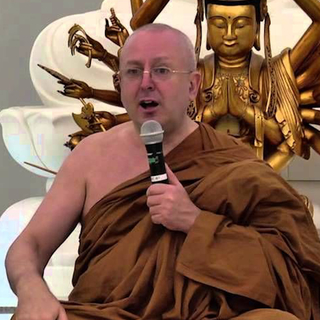
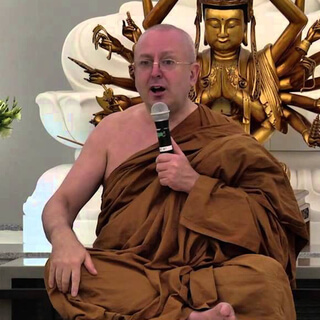
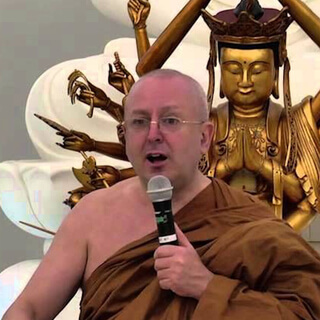
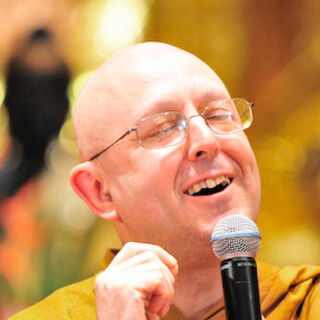
Hello and welcome to this afternoon's ongoing meditation class.
For those who have come to the introductory to meditation class,
I even know there's five Saturdays,
Dennis has come to do an extras bonus class for those who have come to the introduction.
So that's for those who haven't meditated for long periods before.
Because here we do do a 40 minute meditation,
It can be a bit long,
Sometimes 45 minutes for people.
So that's the introductory class.
In the room to my right,
This is the ongoing class and today,
Just talk,
Sometimes people have been talking to me about what I've been teaching overseas about the posture for meditation,
How you should sit.
And basically,
That it doesn't matter how you sit,
There's nothing special if you put your hands in this way or on your knees or however you put your hands.
That is not important at all,
As long as your hands are comfortable.
You don't get any extra power,
You know,
By connecting the thumbs together.
Nor do you get any extra power by sitting on the floor.
That's why we have many seats.
And these days,
As modern people learn how to do meditation,
The majority of them now sit on a chair because it's just too hard to sit on the floor comfortably.
Those who like sitting on the floor,
We have these wonderful stools you can sit on which actually take a lot of pressure off your knees.
But if you're used to sitting on the floor,
Fine.
And you don't have to be full lotus,
Any old lotus will do.
Half lotus,
Quarter lotus,
1% lotus.
I don't know why they even call it that,
But it's just how you can cross your legs so it feels comfortable.
And I know that I was taught when I was young that posture was important and the strongest posture was the full lotus,
But it was so hard.
You could sit there as a young man,
I trained myself to sit in the full lotus,
But after half an hour,
45 minutes,
It started to get very painful.
And the thing which changed my whole attitude towards posture was on the occasion when I was only about one or two years as a monk,
When I developed typhus fever,
Scrub typhus in the jungles of Thailand.
I was hospitalized for about a month.
And having a bad fever for a long time,
You felt so tired and you felt so aching and everywhere.
And just wondering,
I thought,
What the hell,
I'm going to meditate to heck with all the pains and aches.
I just went into a very beautiful deep meditation.
These are the meditations where your body disappears.
And they disappeared and it was just such a wonderful when you had a fever and everything was aching,
You felt very weak,
To go to a deep place inside where you couldn't feel your body at all.
And it was a very nice deep meditation.
But one of the results of that was when I came out and observed how I was sitting.
I just couldn't believe,
The arms were all over the place.
Like someone who has just had a deep sleep.
You look at your posture when you wake up in the morning and arms and legs are all over the place.
And that was my meditation posture for an hour or two or three,
I forget how long,
I've been in a deep meditation.
And I realized from that,
Look,
If my posture was really,
Really,
Really important,
There's no way I could get into deep meditation sitting or laying down like that.
So it proved to me and it's proved to me ever since,
Your posture is not really important.
Your body is not the mind,
The mind is not the body.
There is some connection between them.
The whole point of your physical posture is so you can be comfortable.
And so learn from people who have been meditating before.
You can use cushions,
You can use stools.
If your chair is too high,
You put a cushion underneath your feet just to raise your legs,
It makes you feel comfortable.
And if that are you sitting next to,
You've got far longer legs.
So you sometimes put a cushion under his bottom to raise that up.
So your legs are nice and comfortable.
So you make your body comfortable.
However,
You manage to do it,
That's what you have to do.
And once your body is comfortable,
That is good posture.
However,
No matter how you try to get your body comfortable from the very beginning,
There will always be some discomfort usually comes up later on during the meditation.
And this is one of the reasons I'm talking about this.
Because last night someone said to me,
Oh,
You know,
That when I meditated,
If I get an ache or pain,
Should I just bare it,
Force myself through it,
Contemplate the aches and pains and become a master of them,
Don't give in,
Conquer them.
And I heard those teachings when I was young,
And again the experience which told me just how stupid that attitude was,
Was one of my fellow monks who decided to try that.
He had had a motorbike accident when he was young,
He lost all his teeth,
As some of you may know him,
He's been here,
That's Ajahn Munindo Lin.
Sometimes he takes out his teeth and he's like an old man,
He is an old man now like me,
But this is when he was young,
Had a motorbike accident,
No teeth,
And he brushed his body up quite badly,
And so he does have aches and pains in his knees.
So he heard this teaching,
You be a tough guy,
Just forget about the pain,
It's all in the head.
And that's what he tried to do,
He tried to sit and meditate and just force his mind,
Pass those pains.
And what happened in the end was we had to take him to hospital and he had a double knee reconstruction.
He wasn't able to walk for days,
For weeks,
Because he tried to fight his way through pain.
That is not the Buddhist way,
That's not the way to meditate.
If you want to try that,
Just go and do some martial arts or whatever,
Just join the army,
Become a member of the SAS or something,
But this is not the Buddhist way.
The Buddhist way is just a very gentle,
Compassionate and wise way,
Not a forceful way.
Just the one minor is that we use wisdom power,
Not will power,
To get deep in meditation.
And even with your posture,
Wisdom power,
Not will power.
So that means if you do get an ache and pain during your meditation,
Number one,
You understand it.
Use wisdom power.
And eventually you'll understand that is ache or pain.
Is it the sort of pain which I have to move or is it just a tiny irritation which will go away by itself?
Now a lot of these irritations,
They do go away by themselves.
And sometimes I liken it to just my knee.
I just started meditating,
Maybe just getting nice and rested and peaceful.
Just like my knee gives me a call,
Hey,
Move me.
And I know if I answer that call and I move it,
Then another part of my body will call.
Hey,
It's my nose,
Can you please scratch me?
Hey,
It's my bottom,
I need to be moved.
It's once they know you're at home,
They'll continue calling you.
But on the opposite of that is if my knee calls me and I refuse to answer my phone,
I refuse to listen to it,
And it rings me up again and after a while it realises I'm not going to do anything and it just doesn't call anymore.
It matters to any other part of the body.
So that is a little simile there.
And I know that type of irritation and pain which I can ignore,
And once I do ignore it,
I call that not answering the phone,
Then I know just the rest of the body will just vanish and they will stop annoying me with all their demands.
But I also know that sometimes that pain is more serious than that.
I haven't really put myself in a good position.
If I do ignore it,
It will just get worse and worse and worse and worse and become a huge irritant to my meditation.
Cos the nature of the body and the mind is that you have to be incredibly powerful and strong to be able to ignore those aches and pains.
They will come there and they will always be there,
And always,
Always,
Always,
Always,
Always,
And they will just destroy the meditation.
So instead of doing that,
If you feel wisdom power,
A lot of time you gain that wisdom power just through trial and error,
You get to know the body,
You get to know the pains which you can just ignore and the pains which you need to move.
And if you do need to move your body,
It's a simple thing to do.
Just move the body around,
Move it a little bit,
Do it slowly,
Do it as mindfully as you can,
Because even though you are losing some of your peace and stillness,
You are not losing your awareness.
The awareness is always right there,
Poised.
So you maintain the awareness,
But you know,
Lose a bit of the stillness as you adjust your body,
You move.
And I've been teaching that for a long time now,
Which went against many of my teachers,
But I was very pleased to see that modern teachers have come on board,
And people who teach meditation,
Such as one of the old friends,
Who doesn't come here these days,
Used to come and visit very often,
A very famous monk in Thailand,
Ajahn Pleyan.
I was reading one of his books,
He advises the same.
If you've got a serious ache or pain somewhere,
Please move,
Adjust the body,
And then you find the time you have so-called wasted,
Moving the body,
Disturbing your physical tranquility.
It does mean you go backwards for a few stages or few pegs in the meditation,
But you soon regain that ground,
And better,
You can go much deeper afterwards.
But if you just stay trying to endure that pain,
That's as far as you're going to go in meditation,
You won't get any deeper at all.
So yes,
You do lose something originally,
Initially when you change your posture,
But you soon regain that ground,
And because there's no aches and pains,
To disturb you can go far,
Far,
Far deeper.
But it's also the case that sometimes the people,
They move and the pain goes away,
The irritation goes away.
Sometimes they have these experiences where the body moves by itself.
And that is really weird,
When you're sitting here and the body moves and you're aware enough,
I never did that,
That wasn't me who did it.
This is where I hope you'll start to learn that a lot of the body is automatic.
It doesn't have to move because you will it to,
It does it by yourself,
Like your lungs,
Like your heart.
Now that also automatic,
It's under your radar,
It just does what it needs to do.
A lot of your body does that as well.
Again one of the first times that occurred to me,
You know you was a bit tired when I was a young monk in Thailand because the food was bad,
Too hot,
Not enough sleep,
So sometimes you'd meditate,
You'd slump down.
People say that's bad posture,
But if you need to do that,
You have to do that.
So my body was slumping down.
I had enough awareness,
I was just used to that,
And then suddenly my body straightened up.
I was aware enough,
I did not do that.
No way did I decide to straighten my body.
It was fully automatic and that was really weird when you start to experience your body do something and you never ordered that,
Totally automatic.
There's many other examples afterwards,
I realised my body knows how to look after its posture.
And I don't need to.
I'm just sitting there and I let the body adjust itself.
And a lot of times it does.
Sometimes people have these experiences of jerking when they're meditating.
And some of these jerks or strange movements of the body can be really weird.
Sometimes people's arms go up and say,
Did you know your arm was going,
Oh no,
I never did that.
You did it by itself.
Now all that is,
It's nothing to be scared of,
It's just some energies in the body,
Mostly stress produced,
Sometimes because of some accidents you had in the past,
Some injuries which are stored somewhere in the body and when you relax and let go,
The body knows how to heal itself.
This is actually where the body knows the right posture.
And the most extreme case,
And I often mention this during my meditation retreats,
I was teaching a retreat before we had Jhana Grove Retreat Centre,
The Redentress Monastery in North Perth,
In Vincent Street,
Where we'd always hold our retreats.
And the ice cream man.
Monks can't eat ice cream in the afternoon.
You know,
Ice cream,
Always for monks who can't eat in the afternoon,
Always feels more delicious.
During the morning time,
They're not interested.
When you can't have it,
It's always more delicious.
But anyway,
Going back to meditation,
Impostures.
I was teaching this retreat and somebody actually told me,
Hey,
Better have a look at that girl over there.
And this woman,
She was twisted,
I mean really,
Really twisted.
I can't just show you how much because if I did what she did,
She'd have to take me to hospital,
I'd break things.
And I was so concerned about her as a teacher,
I waited for her to come out of meditation,
Took her aside and said,
No,
Excuse me,
How are you,
You feel okay?
And I was so surprised,
She said,
I feel incredible,
I feel wonderful.
I said,
Well,
During the meditation,
I was watching you,
You were twisted,
Incredibly.
And she said,
Was I?
I didn't know.
And then when she said that,
She said,
I saw her twisted,
She didn't know what she was doing.
And she said she was really peaceful,
Having a wonderful meditation.
And she felt so good.
Then of course,
I added one on one,
Got to understand what was going on,
I said,
When did you have your accident?
And then she told me she had a very,
Very bad car accident,
Lucky to get out alive after many weeks in hospital.
And all that was happening,
Those injuries which were inside her body somewhere,
When she was meditating,
When she let go,
The body started to move,
How the body wanted to,
Totally automatic,
To get into a posture,
Which no one else could do,
Which she needed to get some healing going on.
And that is a very rare posture because that's what this person needed suited those injuries.
And from that time on,
I let people know,
If you move during the meditation,
Totally automatic,
It's usually excellent,
You usually feel very good afterwards,
Your body is doing what it needs to do.
Why it needs to do that?
You can look at history,
You can look at stress,
You know,
Of your work,
Could be an injury from the past,
Sports injury,
A motorbike crash,
Or other crashes,
You know,
We carry a lot of those injuries inside of ourselves and the body just adjusts automatically.
And you know that it must be a good posture,
Because afterwards people say they feel so good,
And the body is relaxed,
It's healthy,
Tightness is pains,
Lingering sort of tensions,
Accidents and trauma of the past just get released.
So it's things like that which taught me that your posture is something,
You sort of adjust it at the beginning,
Sort of,
But then you let your body do the rest of the posture stuff.
You don't just tell the body,
You must sit like this,
You must be full lotus,
Right leg over the left leg,
Right arm,
Right sort of hand over the left hand,
Thumb is just touching,
And just straight back,
Chin down,
And that sort of stuff,
It may sound good,
But it's not how the body works,
Not how meditation works,
That's far too much control.
Your posture is what you learn through mindfulness,
Awareness and kindness and letting go.
And you'll find in meditation,
Your posture,
Your body will just move,
Just how it needs to do it.
And that way you are learning how to relax your own body.
It's amazing just how many people can't do that.
If you learn these skills in meditation sitting here right now,
Not only do you get healthy,
You'll also learn how to overcome those amazing,
How common the problems are these days of insomnia.
Insomnia is a lot of pain or stress contained in the body,
And because you keep the body in these really uncomfortable positions,
So when you are in bed you find that comfortable position,
Carefully.
Not maybe the same position you slept in last night,
Because your body changes,
Those positions change,
Find out how the body feels comfortable,
And then what happens when you are unconscious in sleep,
The body will start to move as it needs to.
The main thing is you are aware,
You are kind,
You let go,
And the body does the rest.
You let go of control.
And that's exactly what you do for the rest of the meditation too.
First of all you do it on your body,
And then you apply the same principles to your mental world,
And that relaxes and becomes really,
Really peaceful.
Today I was just focusing on posture.
Okay,
So let's give it a try.
So we can start meditating now,
So if you'd like to follow what I've just been talking about,
We can get into something which is reasonably comfortable for you.
And we'll be meditating for 40 minutes till 4 o'clock,
And then I'll transfer some questions.
So we keep our eyes closed,
Because that can make us more sensitive to our body.
It's like one major distraction is removed.
Seeing and all the business associated with sight is removed.
Instead of focusing on our thoughts or memories or plans,
We focus on our body,
Feeling it as fully as we can,
Establishing mindfulness,
The awareness of our body.
It's not that now you've established mindfulness,
The mindfulness grows in power the longer you observe and feel the body.
It's not just making contact with it,
It's increasing the strength of the signal by just maintaining your awareness of your body.
Now this early stage,
If you need to move,
Please move.
If you have an ache,
A pain,
An irritation,
A tightness anywhere,
At this stage it will certainly get worse later on.
So please move now.
And we are aware of our body,
We are kind to our body,
We let our body be,
Not controlling it,
But finding the best possible position as far as we could know and then we let the body do the rest.
Sometimes I spend a long time with my body,
Sometimes not so long.
When the body is comfortable,
I let the body do the rest.
I focus on my mental world,
By which I mean the thoughts,
Memories of the past,
Intentions and plans for the future,
All the wanting and the not wanting going on in my mind.
Those are all the things in the mental world.
And I recognise many of those cause me problems,
Especially the wanting.
So in this meditation,
I am aware of every time I want something and I let the wanting go.
I don't follow it until I can get to a state where wants just don't come up.
Because the opposite of wanting is contentment,
Just happy to be here with all the wonderful sounds of mobile phones and birds,
Not wanting it to be different.
When the sound goes,
You don't even remember it.
In meditation,
We develop a mind like a lotus,
Whatever falls on the lotus just drops off leaving no residue.
Nothing sticks to the lotus petal.
Your meditation,
Your mind in meditation,
Make it like the lotus petal.
So nothing sticks.
A memory of the past falls on the lotus petal of your mind and just runs off leaving no remnant of the past.
Plan of the future,
A thought about everything falls on your mind like a lotus petal and runs off leaving no trace that ever fell on you.
Imagine your mind like a lotus petal,
Free of all past,
Of all future,
Of all thinking,
Not by doing anything,
But just letting everything run off leaving nothing.
.
.
.
.
.
.
.
.
.
.
.
.
.
.
.
.
.
.
.
.
.
.
.
.
.
.
.
.
.
.
.
.
.
.
.
.
.
.
.
.
.
.
.
.
.
.
.
.
.
.
.
.
.
.
.
.
.
.
.
.
.
.
.
.
.
.
.
.
.
.
.
.
.
.
.
.
.
.
.
.
.
.
.
.
.
.
.
.
.
.
.
.
.
.
.
.
.
.
.
.
.
.
.
.
.
.
.
.
.
.
.
.
.
.
.
.
.
.
.
.
.
.
.
.
.
.
.
.
.
.
.
.
.
.
.
.
.
.
.
.
.
.
.
.
.
.
.
.
.
.
.
.
.
.
.
.
.
.
.
.