Hello and welcome to the CalmCast,
A time to feel calm and think clearly.
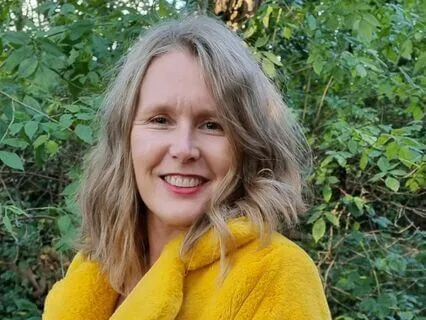
I'm Clare Downam,
The Queen of Calm,
A Transformational Life Coach.
I was a burnt-out headteacher who finally made the journey to calm after years of trying,
And I want to prevent you from having to do the same.
The CalmCast is a series of short explorations gently guiding you back to your natural state,
Which is calm and clarity.
Just listen like you would listen to music,
With an open mind and curiosity.
There's nothing else to do.
Now let's relax into today's episode.
So today we're exploring forgiveness.
And I've been through all sorts of different kind of relationships with that word over the years.
So I looked it up on the internet because I wanted to get myself some kind of clarity on what was being said in general,
Because I think it's yet another word that's had really good PR in marketing.
People talk about it a lot,
Probably a lot more than they used to.
Or maybe that's just what I've noticed.
It might not be true at all.
So I've written down a definition for it that I found on the internet.
It said an intentional decision to let go of resentment or anger.
An intentional decision to let go of resentment and anger.
And I guess that's probably my first relationship with forgiveness,
Was that it was kind of something worth doing,
Because I would feel better if I did it,
If I let go of those awful feelings towards somebody who'd wronged me in the world.
And trust me,
I had to use that a lot because a lot of people seemed to be wronging me a lot of the time.
It's been really fun to have this,
Be doing this exploration about relationships recently and seeing that,
Yeah,
I mean,
I would say people were my biggest,
Have always been my biggest problem.
And maybe that's the same for everybody else,
But I suspect for some people it's more around circumstances.
But for me,
It was always people.
They've been people and now they don't do what we want them to do.
There's a lot of fear,
Isn't there?
There's a lot of people not obeying the rules that we've set out in life and how we think life should go.
And it felt to me like the act of forgiveness.
I remember first when I first kind of started doing my self-help stuff that I read about forgiveness and there was very much this sense of it doesn't really matter whether the other person even knows that you've forgiven them.
It's an internal process.
It's an internal kind of making yourself let go.
And I guess that's what's different really from that perspective and what we might look at from the three principles of understanding.
Because,
Of course,
From the three principles,
We're not going to say,
Right,
Well,
The thing to do,
The thing to do,
The thing to make you feel better is to just stop,
Just stop that,
Those horrible,
You know,
Stop,
Stop.
Just get rid of that feeling.
Just stop it.
Just stop.
Force yourself to make yourself stop.
That's not,
That's not.
And yet,
For me,
That really felt like that was the way it used to be.
But that's not what we're talking about here.
It's,
You know,
It's back to that thing I do where I hit myself on the head with a ruler.
Some of you may have seen me do that on a live session on Insight Time.
I do it quite often because if I'm hitting myself on the right hand side of my head with a ruler repeatedly,
And you're,
You know,
I'm telling you all about a terrible headache I've got and a terrible discomfort I'm in and how I've tried everything to get rid of this headache and I'm sniffing lavender oil and I've been for walks in the fresh air and I've drunk loads of water and all this other stuff I'm doing to try and make myself feel better.
And really,
You're just going to say,
Well,
You could just stop hitting yourself on the head with a ruler,
Couldn't you really?
Because that's what's creating the suffering.
Now,
When we look at all of this from a three principles perspective,
We can see that the reason we're not feeling good about somebody else's,
Usually it's somebody's behavior,
Isn't it,
Is because we are caught up in thinking about that person's behavior.
It's not the person's behavior.
I mean,
That's when forgiveness can feel really hard.
If we really are in this state of believing that another person's behavior is creating the way we feel,
Then forgiveness seems foolhardy,
Doesn't it really?
Because to retain the anger almost feels like,
Well,
We can't not retain the anger because the other person has really done something.
And I really do feel bad.
And it really is coming from the outside world.
So it can almost,
From that perspective,
Seem impossible to forgive,
Impossible to let go.
Because they still did that thing,
Didn't they?
They still hurt me.
I'm still hurting.
Whereas when we align it with this ruler hitting yourself on the head metaphor,
We can really see,
Well,
The anger,
The frustration,
The resentment,
That horrible,
That feels horrible in your body,
The sensation of that is unpleasant,
Isn't it?
Really unpleasant.
Well,
It's your train of thought that's creating that.
So what do you want to do about it?
What do you want to do?
Do you want to carry on or do you want to stop?
And it's like knowing that it's coming from the inside is so empowering.
I've heard people say,
My fiance's ex said this once that it was,
You know,
That the inside out understanding is about letting people do what they want.
And there's bullies out there and they can treat you bad and people can treat you bad.
Ooh,
You know,
All of that.
When,
You know,
The inside out understanding is empowering is that it opens up this window of choice to get off the train of thought and feel better,
To stop thinking that way and therefore have a nicer experience,
Both for yourself,
But also seeing how letting something go,
Which I kind of prefer to forgiveness really,
And seeing other people through the eyes of compassion with an understanding that they have a separate reality to us,
That just,
It just makes sense to let go.
It just makes sense that you want to feel good and the train of thought is the only thing creating discomfort.
Because,
Of course,
When we're not in a place of forgiveness,
All we're doing really is thinking over and over again about the horrible thing that somebody did to us.
And that doesn't feel good.
But the thing isn't happening anymore.
So it has to be thought created,
Doesn't it?
Like,
It just has to be because it's not happening right now.
Invariably,
When we're not forgiving,
We're not really.
The thing's not happening anymore.
The person's done the thing we didn't like.
It's all finished.
But we're still thinking about it.
You know,
All the resentment,
All the negative emotions,
The grudges,
Whatever you might call them,
Are just arising in our moment-to-moment thinking.
They don't come from the outside world.
Because they're not happening as a rule,
Are they?
When we're actually thinking about them.
So the freedom,
The peace of mind,
The calm that we're all seeking really is on the other side of understanding where any suffering is coming from in the first place.
Back to the ruler.
Do you want to carry on feeling bad about the thing that somebody else did?
Or do you want to let it go?
And the deeper you become connected to this understanding,
The more time you spend in this conversation,
The more you want to stay in the conversation,
The more you will experience this window of choice where you just kind of go,
Oh,
I can't be bothered to think about that.
And that might sound like,
Well,
What's the process of forgiving them?
What do I need to do?
Well,
You don't need to do anything because I pretty much guarantee as you let go of the resentment,
Of the anger,
Of the grudgy feeling or whatever it is,
As you let go of that,
Your mind will become quieter and you will fall more naturally into that peaceful state.
It's not as hard as it might look.
It's hard if you're trying to force yourself to do it.
But without all that uncomfortable feeling,
There is peace,
Love,
And wisdom,
And that's it,
And connection to all the people.
And maybe that's an experiment.
I don't often talk about experiments,
But in my latest Insight Timer course,
I've set some little experiments to do.
It's not,
It's,
You know,
Hopefully by the time you listen to this,
The course will be out.
I've just released it,
Mid-August,
2023.
So,
You know,
In that course,
I really did set a lot of experiments.
I said,
You know,
Right,
Go off and play.
So what's the place to play around this forgiveness thing?
Just to notice if you,
Just for a moment,
Stop thinking all those thoughts about that person and what they did.
What does that feel like?
You know,
This is not a thought-change thing.
It's an experiment.
It's a curious place to look at it from.
You know,
Is Claire right?
Does my experience change if I just stop thinking about something?
The more you see this,
The more that window of opportunity will open up for you on a more natural,
Present moment basis,
Day to day.
And you don't need to do very much because,
Or anything at all,
Because the nature of your psychological system is a self-writing one.
It's always passing through.
It's never stationary.
So thank you so much for listening to this.
It is a gift,
This forgiveness,
And it's because the gift we can give ourselves is just to find our way back home to a place of peace,
To a place of calm,
To a place of natural well-being without really needing to do very much at all.
So lots of love.
Come and join me on a nice live session or,
You know,
One of my courses.
Let's get to know each other a bit better.
Lots of love and thank you for listening.
Thank you so much for listening.
There's nothing to do now,
But bring some awareness to how this is working out in your life.
Listen regularly to experience longer and longer periods of calm.
This has been the Calmcast with Claire Downer,
Queen of Calm.
Take care and keep listening.