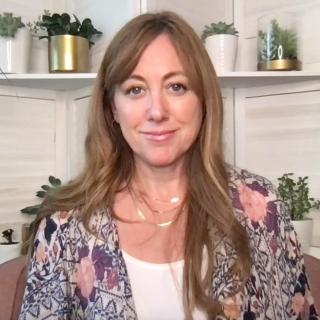
Welcome everybody.
So this meditation is going to be a mindfulness of breath.
And this is where we are going to start with meditation practice.
So please take a moment to find a comfortable posture.
And I always find that sometimes it's helpful to do a little bit of stretching first,
Get yourself,
Kind of allow some movement,
And then settle in.
So you want to find a position that allows you to be alert with your spine erect,
But not stiff.
And also relax.
And this could be in your chair.
And if more comfortable,
You could stand or lay down.
And if you're comfortable,
You can go ahead and close your eyes.
And if this doesn't feel supportive to you,
You can have them open with a downward gate.
Just go ahead and take a moment to find a position.
Now allowing your awareness to scan through your body,
And wherever possible,
Softening and releasing obvious areas of physical tension.
And establishing a simple sense of presence.
So you might take a few very full breaths.
And then you can go ahead and allow your breath to become natural.
And as we move through the meditation,
It will be helpful to have a home base.
Or an anchor that allows you to quiet and collect the mind,
As well as a deepened,
Embodied presence.
So this will be a place that you can return to if your mind wanders or you feel intense emotions.
So I'm going to offer a couple options for anchors.
And you can go ahead and try them out.
And see what works for you.
So one anchor could be the breath.
As it enters and leads the nostrils upper lip.
And or throat.
Just notice what it feels like when you track breath.
Into your body through the nostrils,
Upper lip and or throat.
Another anchor can be sensations during breathing,
Such as the rise and fall of the chest or belly.
So just take a moment.
And see what it feels like to bring your awareness to the rise and fall of your chest or your belly.
Another option is your whole body breathing.
Almost like an octopus.
Think about the whole body.
You're taking in as it breathes.
So just take a moment and feel what that might feel like for you.
So another option for an anchor is sensations in your hands or feet.
So your hands on your thighs or your feet.
On the floor.
Just see what it feels like to bring your awareness to sensations in your hands and feet.
And then lastly,
An option for an anchor would be one of your senses.
So.
Seeing,
Hearing,
Sitting,
Touching.
Listening to sounds.
What happens when you bring your awareness to one of your senses?
Okay,
So if any of these resonate for you,
Please feel free to use the breath or any of the other anchors during this meditation as a place to come back to.
So just take a moment and make a choice,
And it's fine for you to change that throughout the meditation,
But just decide where you'd like to start.
And with a relaxed and interested attention,
Just starting to track.
Or your chosen anchor.
What does it feel like?
Moment to moment.
Where is your attention now?
Each time that you notice that your mind has wandered,
Is a moment of mindfulness.
So you can gently bring your attention.
To your breath.
Or your chosen anchor.
Offering everlasting and wakeful presence.
So again,
If your mind wanders,
That's okay.
This is what happens.
This is what our mind does.
Just gently bring it back to your breath.
What does it feel like?
To just bring all of your awareness.
To your breath coming in and out of your body.
We often use the breath as the anchor because it is always available to us.
Where is your mind now?
I'm going to offer two ways to work with the breath.
If you're having a hard time focusing.
So the first.
.
.
Is you can label the inhale as you bring breath into your body.
Just say inhale.
And then as you exhale,
You just label it exhale.
So just try that for a minute.
Inhale.
Exhale.
Inhale.
Exhale.
If you have a strong thought that pulls you away.
Just gently return back.
This is our practice.
Just over and over coming back to our breath or anchor.
Very simple.
Yet difficult.
Jack Kornfield talks about.
Training puppies.
Your thoughts and your mind are like puppies.
You're just gently,
Very gently,
Sweetly.
Bringing back.
Your awareness.
To your breath.
So the second way.
That I'll introduce for this practice that you can work with your breath.
Is that you can count your breath.
So an inhale,
You can count one.
And exhale too.
Inhale three.
Exhale for And you just continue like this until you get lost in thought.
You notice.
And then you come back to your breath and you start over.
So go ahead and give that a try.
Okay.
So we'll just be practicing for another minute or so.
And now you can go ahead and choose if it's helpful for you to either label,
Inhale,
Exhale or count.
Go ahead and continue that practice.
If you'd like you can drop the labeling.
And just continue practicing bringing your awareness.
To breath.
Coming in and out of your body.
In the way that you chose to notice.
And each time you have a thought,
Just gently return.
Where is your mind now?
Gently return to the breath.
So we're slowly going.
Come back into the room And I'm going to ask you to be mindful about this.
So you're going to slowly bring your awareness from your breath.
And your internal experience,
And just notice.
As you transition.
To the external world.
And opening your eyes.
Okay.
Just take a moment and see how you're feeling.
And there's no one way to feel.
You may feel calm.
You may feel agitated.
You might feel super stirred up.
It's not often that we place this much attention on our internal experience.
And it can be really uncomfortable at first.
So I just want to honor that.
And let you know that if you're feeling uncomfortable.
Irritated,
Anxious.
That that is all welcome.
That's okay.
We can include that in gentleness.
And self compassion.
And please keep coming back.