Hello,
My friend,
And welcome back to the Grounded Sleep Podcast.
I know it's been a minute since I made my last episode.
I've been getting so many messages,
David,
I need help with sleep.
So I am back and I want you to have a really good grounded sleep tonight,
As always.
So when you're ready,
Get into bed,
Make sure everything is ready,
Lights are off,
Pajamas on,
Your teeth are brushed,
And you feel nice and comfortable under your blanket in your bed.
And tonight I'm going to take you on a special journey,
And we're going to be going to Italy.
That's right,
So Buona Sera,
Which means good evening.
And in tonight's journey,
We're going to be going to the island of Sardinia.
And Sardinia is in the middle of the Mediterranean Sea.
And I chose this place tonight for our episode because I'm going to be going to Sardinia.
I'm going to be going with my good friend Scott Stabile.
We're going to be teaching a retreat there,
June 6th to the 13th.
And of course,
You're invited to come and meditate with me while you're awake.
So let's go to Sardinia.
And as we do,
I want you to just drop your shoulders,
Maybe you relax your jaw,
Soften the palms of your hands.
Perhaps you breathe a bit more deeply into your belly.
So let's go to Sardinia,
Which is in the middle of the Mediterranean Sea.
And it's not just a beautiful place,
It has a lot of ancient history.
It's also the second largest island in the Mediterranean.
It sits between Italy and the coast of North Africa.
And its landscape is really extraordinary.
The coastline is the part most people picture when they think of Sardinia.
It has long stretches of white sand beach,
Really unique rock formations carved by the wind and the water.
Sometimes these rocks look like they've come from some kind of myth.
And then you go inland and everything is different.
The interior of the island is rugged.
It's got areas that are flat and desert-like.
It's got beautiful mountains,
Wild forests,
And even narrow valleys where fog sits in the morning.
It really is an island of contrasts.
And it has this ancient,
Almost untouched feel.
And before I go any further,
Just let your body start to melt into your bed,
Just letting each part of you relax as you listen to the story history of Sardinia.
So human beings have been living on Sardinia for a very long time.
We're talking traces of human presence going back nearly half a million years.
So perhaps it wasn't always an island.
But the story that I think captures our imagination begins somewhere around 1800 BC,
During the Bronze Age,
When something really remarkable started to take shape on the island,
And that's called the Nuragic civilization.
And the Nuragic people built these incredible stone structures all across the island.
I've been there and I've gotten to see them and go inside of them.
And these structures are called Nuragi.
And they're like nothing else in the ancient Mediterranean world.
There are thousands of them all across the island,
Especially when you drive across the center of the island.
For example,
I drove from one city in the north called Sassari to a city in the south,
I can't pronounce,
Called Cagliari.
And in that three-ish hour drive,
I saw countless of them.
And they're kind of like stone towers,
Some of them several stories high,
With internal chambers,
Staircases,
And even sometimes surrounded by entire villages of stone huts.
And I've been in a few where you can really feel an energy in them.
I sat in a few and meditated,
And it was powerful.
They say there are more than 7,
000 of them that still stand today.
And the strange part is that we don't fully know what they were all for.
They could have been defensive,
Maybe ceremonial,
They could have been symbolic for something,
Perhaps all of the above.
The Nuragic people also built sacred wells,
Temples to the water with intricate stonework staircases descending underground.
They created small bronze sculptures,
Figures of shepherds and warriors and animals.
And every figure is unique and one of a kind.
They also worshiped the earth,
The water,
The sacred forces of the natural world.
And they lived close to the land for centuries.
And in 238 BC,
The Romans came to Sardinia,
Seizing the coastline,
But having a hard time with resistance from the center of the island,
From the mountainous regions.
And there were major rebellions a number of times.
And that created a mix,
A cultural fusion of Nuragic,
Punic,
And Roman cultures that formed a really unique identity.
And while the Romans never fully brought the rugged interior of the island under complete control,
The island remained under Roman influence for a number of centuries.
But the Sardinian people are a very independent people,
In my experience,
A very proud people.
And also,
They happen to live a long time.
In fact,
Sardinia was the first ever blue zone,
Or labeled blue zone,
Let's say,
A place where people on earth live the longest.
And there are only five regions in the world where people consistently live longer on average than everywhere else.
And that's one of the reasons I'm taking a group there to eat the food,
The delicious food,
And feel the energy of a place where people live a really long time.
And there's all these questions of why do people live so long in Sardinia?
And researchers are still exploring,
But part of the answer may be genetic,
But a large part is likely just lifestyle.
In Sardinia,
People tend to walk a lot,
Not as exercise,
Just as part of life.
They eat very simply,
Lots of whole grains,
Beans,
Local vegetables,
Some really good seafood,
Since it's an island.
There's cheese made from sheep's milk.
There's traditional flatbread.
And they do eat meat,
But not too much.
And so the diet is,
In my experience,
Simple,
Local,
And seasonal.
There's very little processed food,
But it is Italy,
So of course there is wine.
Sardinia has its own red wine.
And there's some research that suggests that it contains two or three times the antioxidant compounds of most other wines.
And often in Sardinia,
People don't retire in the conventional sense.
The elders tend to remain integrated in the villages,
In the communities,
In family life.
And the idea that you reach a certain age and remove yourself from active participation in life isn't really part of the culture.
And interestingly,
Men tend to live as long as the women in Sardinia.
And that sounds good to me.
And as I think about a place like Sardinia,
I've traveled to many places in the world and brought groups to sacred sites.
And there's something special about this island.
I don't think it's just their long life,
But their lifestyle.
They kept making their own food.
They gather,
They walk their land.
They keep their relationship with the earth,
With their neighbors.
There's more of a connection to the rhythm of the natural world,
Not eating food out of season.
And something about just being in the rhythm of life,
Being present,
Slowing down,
It does something to us.
And so this special island in the middle of the Mediterranean just really captured me last time I visited.
And it's got so much rich history,
Spirituality,
And really delicious food.
And of course,
Stunning,
Stunning coastlines and beaches.
And one of the things that it taught me was how powerful and special simplicity can be.
You don't need a lot of ingredients in your food.
Your day doesn't have to be overly complex and you can stop and take in the beauty of the natural world.
One of the cool things about Sardinia is it has its own language,
Sardinian.
The island has its own music and you can really feel how much people on the island care about their heritage.
So as you settle into sleep tonight,
As you let go of the day,
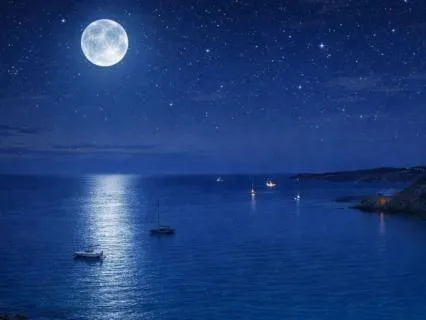
There's some beach in Sardinia with no people on it right now,
Or the water is just hitting the shore.
The mountains are still,
The stones are resting.
This ancient island continues to exist and thrive as you soak in the energy,
The frequency of Sardinia,
That ancient peacefulness.
Allow yourself to drift away into sleep,
Letting your whole body just dissolve into the night.
As the Italians say,
Buona notte,
Good night.
Have a deep restful sleep.
Have some beautiful dreams.
Allow your energy to rest and regenerate,
And I'll see you on the other side.