If you are in the river,
You cannot see the river.
But when you see the river,
That means you are out of the river.
But the river is still there.
You don't have to block the river.
Welcome to the one you feed.
Throughout time,
Great thinkers have recognized the importance of the thoughts we have.
Quotes like garbage in,
Garbage out,
Or you are what you think ring true.
And yet,
For many of us,
Our thoughts don't strengthen or empower us.
We tend toward negativity,
Self-pity,
Jealousy,
Or fear.
We see what we don't have instead of what we do.
We think things that hold us back and dampen our spirit.
But it's not just about thinking.
Our actions matter.
It takes conscious,
Consistent,
And creative effort to make a life worth living.
This podcast is about how other people keep themselves moving in the right direction,
How they feed their good wolf.
Thanks for joining us.
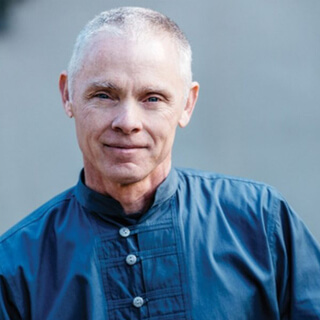
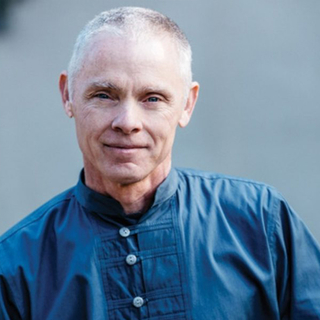
Our guest on this episode is Minyor Rinpoche.
He's a much-loved,
Accomplished Tibetan Buddhist meditation teacher.
When not attending the monasteries under his care in India and Nepal,
Rinpoche spends time each year traveling and teaching worldwide.
Today,
Him and Eric discuss his new book,
In Love with the World,
A Monk's Journey Through the Bardo's of Living and Dying.
Hello,
Minyor Rinpoche.
Thank you for being on the show.
I'm really excited to have you and welcome.
Thank you.
Thank you very much.
Very happy to be here.
It is a real pleasure to have you on.
You are a very esteemed figure in Tibetan Buddhism,
And I'm excited to get to talk with you.
We will talk about lots of different things.
One of the main things that I want to talk about is your book,
In Love with the World,
A Monk's Journey Through the Bardo's of Living and Dying.
But before we do that,
Let's start like we always do with the parable.
In the parable,
There's a grandfather who's talking with his grandson.
He says,
In life,
There are two wolves inside of us that are always at battle.
One is a good wolf,
Which represents things like kindness and bravery and love,
And the other is a bad wolf,
Which represents things like greed and hatred and fear.
And the grandson stops,
And he thinks about it for a second,
And he looks up at his grandfather,
And he says,
Well,
Grandfather,
Which one wins?
And the grandfather says,
The one you feed.
So I'd like to start off by asking you what that parable means to you in your life and in the work that you do.
Yeah,
So for me,
Since childhood,
I learned meditation.
So according to our meditative teaching,
We all have fundamentally wonderful nature.
Sometime what we call basic innate goodness,
Or the original purity,
Or the inner well-being.
So there's many names,
But then at the same time,
What we call,
Because we are not recognized our fundamental qualities,
Sometimes what we call,
If we have 10 qualities with us,
Nine is positive,
One negative.
So normally what we see is only one negative one,
And maybe we're lost with that negative one.
We exaggerate that.
And even though we have nine good qualities within us,
We don't see and we ignore that.
So that is what we call ignorance.
So therefore,
From the ignorance,
Then there's a lot of mental disturbance,
What we call pleasures and the suffering,
Like all the not pleasant and the difficult things may arise,
But we have wonderful,
Great,
Wonderful nature,
What we call,
We have skills,
Love and compassion,
Awareness,
Potential,
Wisdom,
All these are there.
So yeah,
We can say there are two things within us,
But the important is,
First important is how you recognize these qualities within you.
And second important,
How you act on it.
I want to talk a little bit more about what you said there,
Because I'm going to just read a line of yours that I read that I think is really important.
And you say,
If you're determined to think of yourself as limited,
Fearful,
Vulnerable,
Or scarred by past experience,
Know only that you have chosen to do so.
The opportunity to experience yourself differently is always available.
And I think that's what you're speaking to here.
It's not that those things aren't true.
Not that there's not some,
Yes,
Maybe I have been damaged by past experiences.
Maybe I do have,
As you said,
The negative quality,
But it's where I'm putting my attention,
And that I can learn to experience myself very differently if I stop sort of hanging on to these fixed qualities.
Yeah,
Yeah,
Totally true.
So I had panic attacks when I was seven,
Eight years old.
And then I learned meditation when I was nine years old.
So normally,
My father said,
Our innate quality is always calm,
Free,
Pure,
Just like sky.
So in my hometown,
We have wonderful sky.
But our ignorant and cliches and all this ups and downs,
And for me,
The panic in that time,
Panic is like storm in the sky.
Although we might have very strong and very turbulent of weather and storm,
But the nature of sky is still free,
Still present,
Still always there.
The storm cannot change the nature of sky.
So,
Of course,
We all have problems.
We all do mistakes.
Everybody has some events in the past,
Some encounter with problems,
Obstacles in our life.
That's normal.
But the very important is sometimes what we call obstacle is the opportunity.
Actually,
We learn from problem.
We learn from mistakes.
We learn from suffering and obstacles.
So,
You know,
One time my father said,
If you're going somewhere and if you reach the dead end,
There's a huge wall in front of you,
What you should do?
First,
Take out your backpack and throw the other side of the wall.
So once your backpack is on the other side of the wall,
Now what you will do?
You will cross this huge wall,
But you may not cross like that way,
Maybe that way is impossible,
But we have to accept that also.
But there's a which and ways you can cross the wall.
So that is really important.
We all have capacity.
We all have potential.
We all have wisdom,
Love and compassion within us.
So it's really important that where,
Which side of us we should look and discover and nurture and be with that.
I think it's very important.
Staying on this same topic,
You say that we often talk about ourselves in static mental postures,
Such as I am an angry person,
And that our attachment to these things narrows our experience and it induces them to repeat themselves.
Yes.
So I think very important that normally we have to make different between me and my emotion,
Me and my mistake,
Me and my panic.
So my mother,
You know,
When I was young,
When I did something mistake,
And my mother said,
Oh,
You're this action is not good,
But she never say you is not good.
So I think this is a really important that we need to learn that I think fundamentally everybody want to do good.
Sometimes what we call the nature of tree and the habit of tree.
So the tree,
The nature of tree is straightforward and the balancing the branches,
But because of the wind,
Because of other situation,
She may go this way or that way.
But that is not our true nature.
So it is really important that to gratitude,
Appreciate,
Recognize about our fundamental qualities.
I love that.
I've never heard that habit of tree and nature of tree.
It speaks to this idea that sort of what you're saying,
This underlying goodness,
You used a lot of different terms for it.
The one I've heard in my Zen tradition is Buddha nature,
Right?
We all have Buddha nature,
Right?
Similar idea.
But then we have all this conditioning that comes from the world,
We are conditioned this way,
We have this experience,
And we're treated that way.
And we have this fear.
And so you're talking about dropping back into that underlying reality.
How do you do that?
Because that sounds great.
But it's very difficult to do.
So we can do a few things with that one.
One of the easier is if we are not familiar with the meditation,
Then we learn to appreciate and gratitude.
So maybe in the ancient time,
What we call counting stone.
So we have bright stone and dark stone.
And then we count whatever we see,
Try to observe,
Try to see the good things within yourself.
Actually,
There are so many good things there.
But what happened at the beginning,
We see negative part.
So whatever we see negative,
We don't judge,
Dark stone and positive part,
Bright stone.
But nowadays,
Sometimes not easy to find stone.
You can write down.
So let me tell you a story.
One time,
A couple came to me.
And this couple is really stuck and they are having kind of like,
Argument and fighting every day.
The husband is always want to control everything.
And wife is worried.
She's always worried.
And then the both of them came to me and asked me,
Please pray for us.
They're expecting some magic,
You know,
Power of blessing that I give them.
Then the problem will solve.
But as I told them,
I don't have that capacity or power.
Sorry,
I cannot help.
But I can guide you something.
And the both said,
Whatever from you is okay.
So then I told them,
Okay,
From today on,
Every day,
You both,
You know,
Dedicate 30 minutes of time to talk about positive things each other.
And they both said,
Oh,
Yeah,
Yeah,
That's good idea.
And they went back.
After a few weeks later,
They both came.
And they said,
Half hour is too long,
You know,
They try to discuss positive things each other then.
Yeah,
When I first time met you,
And you are really look kind,
But you know,
Now that was 20 years ago.
So then they cannot discuss and become quiet.
So then they asked me,
What should I do?
And I told them,
Okay,
Okay,
I will give you a discount.
So now it's just five minutes.
And they both are very happy.
Five minutes,
We can do that.
And they're gone.
And I haven't met them for one year.
And after one year,
They both came and they said,
This five years changed their life.
Actually,
Now,
Even 30 minutes not enough.
I was surprised.
What happened?
You know,
I asked them and they said,
Because they just discussed about five minutes,
And they kind of like,
Lost stress,
And they found actually a lot of good things within each other.
Actually,
They really do believe they kind each other.
But they also know they both have personality.
One is one to control one is,
You know,
Worry.
And they give humor about sense of humor about each personality.
When the husband go out,
Come back,
He knocked the door and he said,
The most powerful person is coming and the wife open the door and say,
Welcome,
The most warriors person in the world is welcome to you.
So he sends humor about their own personality,
But they never give up,
Can you transform?
I think this is really important.
Yeah,
It's interesting,
Because here in the West,
There's a number of scholars of relationships,
They study relationships,
And they found that,
You know,
It really takes,
Like five positive remarks to make up for like one negative remark.
And so you've got to make an effort,
What can I see in this other person that's positive?
And I think we'd apply this right back to ourselves looking inside and I heard you say once talking about your panic attacks.
And you said that your father said to you,
Even in your panic attacks,
Underneath it is love and compassion.
Explain that.
Because I think that's a really important point,
That even in what we consider something negative about ourselves,
If we go deep enough,
We find something else.
Yeah,
Actually,
We find what we call awareness,
Love and compassion and wisdom.
And these three is the actually fundamental quality of panic.
Why panic exists?
Because of awareness,
Love and compassion and wisdom actually.
Without that,
Panic cannot exist.
So what we call what we call ocean and wave.
The wave is panic.
But what is ocean is the water,
Sky and cloud.
Cloud is panic.
But without sky,
We cannot have cloud.
So actually,
Of course,
There's a step by step practice.
Normally,
I teach this as course.
I do level one,
Level two.
So of course,
It takes some time.
Maybe I will say,
Okay,
Now maybe I focus on the love and compassion.
So when we really look at what is love and compassion,
Love meaning looking for something nice,
Looking for happiness,
Looking for virtue,
Looking for meaning for you,
For others,
For everybody.
So there's a seeking,
There's a longing,
There's a motivation.
So that is the love to help this to you and everybody.
Compassion is wanting to free from problem,
Obstacles,
Mistakes,
Uneasiness.
So that is the fundamental essence of love and compassion.
So why we have panic?
Actually,
We don't like something or we are craving something.
We are looking for happiness,
May not happening and we don't like that.
So everybody looking for happiness,
Actually.
Maybe you are now listening to this broadcast.
Why you are looking for happiness and why you're listening now?
Maybe you're drinking coffee or tea,
Looking for happiness.
And each moment of your body,
Each glimpse of your eyes is looking for happiness.
So that is actually love and compassion.
But then normally we don't go deeper level into panic.
We start on the service level.
So service level,
There's a panic,
There's some concept,
There's some depression could be hated,
So many different things.
But then when we go deeper and deeper,
Actually there's genuine love,
Compassion,
Awareness,
Wisdom.
Can you share briefly the difference between those three?
So love and compassion,
Awareness and wisdom.
We've talked about love and compassion.
Let's talk about awareness and wisdom briefly and how those are used in the terminology you're using.
So awareness meaning knowing.
Our mind,
The fundamental quality of what we call clear and knowing.
So mind actually is,
In another word for the mind,
Sometimes what we call clarity,
Luminosity.
Normally when we think of a mind is thought,
Emotion,
Feeling,
Memory.
But these are what we call function of mind or mental factors or the sometimes what we call radiance of the mind,
Not the actual mind.
So what is the actual mind?
Clear and annoying.
But that is not easy to find because it cannot be grabbed by conceptual mind.
You need to find when you know how to be with it.
So rather than looking or controlling,
Just be.
And that luminosity or clarity or awareness is the fundamental of panic,
Essence of depression,
Essence of thought,
Essence of memory,
Like ocean and wave.
The wave is ocean actually.
Without water,
How you can have wave?
So awareness is basically the space that everything is happening in.
Would that be another way of describing it?
Yes.
Yes.
Great.
So the awareness,
Love and compassion are one actually.
And that is the basis of whatever happening in our mind,
The basis of all these thoughts.
Then wisdom.
Wisdom.
Yes.
So wisdom is I think,
Although recognizing all these are wisdom,
So wisdom is quite difficult to understand.
So we need to practice step by step.
Got it.
So you do talk a lot about this ocean and wave idea.
And I like it.
And you say that when most beginners start with the idea that meditation is supposed to be peaceful,
Right?
If they feel peaceful,
They conclude they're doing it right.
If we're not,
Then we conclude we're doing it wrong.
And when the waves come,
We say we cannot meditate,
Or we assume the presence of waves means we're not meditating correctly.
Say a little bit more about that.
Yeah.
So there are two types of meditation I think in the world.
So for my lineage is what we call object oriented meditation and subject oriented meditation.
The object oriented meditation meaning whatever kind of meditation you have to have objects.
Object is important.
Breath,
Body,
Feeling,
Thought,
Emotion,
Whatever.
The object is important.
But the mind lineage is subject.
Subject meaning the awareness.
So awareness is with us all the time actually.
And you don't have to really,
No need to even meditate.
Normally what we call just be let it be as it is.
But you can use object of course.
But object is to support awareness,
To recognize the awareness.
So for that case,
When we begin to learn meditation for my lineage is even when you watch breath,
The awareness is important.
Then there's a thought,
Emotion,
Feeling,
Whatever.
Let them come,
Let them go.
You can even be aware of the dull.
Eventually you can be aware of panic,
Depression,
Hatred.
Then everything becomes support for awareness.
So what we call when you see the river,
You're out of the river.
So if you're in the river,
You cannot see the river.
But when you see the river,
That means you're out of the river.
But the river is still there.
You don't have to block the river.
Maybe you can enjoy the river,
You know,
Do some exercise,
Walk along the river while watching the river.
And if the river becomes waterfall,
Even better,
You know.
But normally what happens,
We fall in the river,
Lost in the river.
Then if river becomes waterfall,
Dangerous,
You know,
Big problem.
So sometimes I make a little bit funny name for this.
Horizontal liberation and vertical liberation.
So most people expecting horizontal meaning the gap.
If I meditate in my mind,
There's no bala bala,
No yada yada.
I need to have peace,
Empty,
Spacious,
Think of nothing.
But that is the horizontal,
The gap between past and future.
But the vertical meaning,
You can have thought,
You can have emotion,
Everything,
But you are being with that.
So awareness become bigger than thought,
Bigger than panic,
Bigger than emotion.
And you are not the emotion.
You are not the thought actually.
We can have both,
Of course.
We don't need to choose whatever comes to us.
But eventually by practicing like this awareness,
Then we will free ourself,
Not by controlling,
Not by creating,
Just being as it is.
Right.
Because you described the fact that no matter what happens,
These waves are going to keep coming.
That's the nature of mind.
You know,
The nature of mind is it's going to think it's going to have thoughts,
It's going to have emotions.
So even if we were to take your horizontal,
You know,
I want this gap between things.
Those gaps are by the very nature of the way the mind works somewhat limited.
We just we don't sit down and shut it off.
I like to think of it from a neuroscience perspective.
It's not like you'd sit down and start meditating and just power down all the neurons in your brain.
They don't have an off switch.
Yeah.
I love this concept of horizontal versus vertical.
Vertical says I don't have to have space between thoughts.
I need to have space around thoughts.
Yeah,
Correct.
And so one way I've heard this described is so you start with an object like you're saying,
Okay,
I'm paying attention to my breath.
That's the content of awareness.
But then I turn my attention to what is the content arising within,
Which is the awareness.
Yeah.
So then we don't need to look for peace,
Calm,
Joy,
Or dull confusion,
Because all these just cloud anyway,
Eventually.
So the most important is the awareness become more salience.
Love and compassion become more vivid.
So once we found the space,
We can have cloud actually.
We can have thought and emotion.
Nothing wrong to have thought and emotion.
In fact,
It's good,
You know.
If by meditation then thought and emotion all are gone,
Then we are becoming robot or become like a zombie.
So then life become very dry.
So you say I finally discovered the only reliable liberation from suffering,
Not trying to get rid of the problem.
Say more about that.
Yeah.
So that is the really fundamental teaching that I've been practicing.
So once you discover this basic innate goodness,
The awareness,
The clarity,
Love and compassion,
Wisdom,
No matter what happened in your mind,
It's always there.
Then no need to do anything.
Just be who you are.
And you are perfect from beginning.
So sometimes what we call self liberation,
Liberate by itself,
Not by blocking,
Changing,
Or fighting with the thought and emotions.
The problem become solution actually.
You say elsewhere that it's our preoccupation with a problem that nails it in place.
So I think this is a similar idea that we're saying here.
It's by trying to get rid of the problem or our preoccupation with the problem.
We basically are grabbing on to it.
And we're not allowing the nature of impermanence of change to happen because we are grasping at it.
Right.
So when I was young,
I had panic attacks.
But what is the most problem during those days,
The panic of panic is worse than panic,
Fear of panic,
Aversion of panic.
So that makes panic longer.
That is the feeding food for the panic.
So you can try maybe sometime I make one funny meditation called pizza meditation.
Maybe we can try pizza meditation.
For the pizza meditation,
For a few seconds,
You are not allowed to think of pizza.
Okay.
Now,
No pizza.
Cannot think pizza even one second.
What happened?
Pizza comes.
So when we say no pizza,
Actually more pizza will come.
So that is what we call the service level of mind.
The monkey mind does.
So monkey mind always does the opposite.
When we say no,
Monkey mind say yes.
When we say yes,
Monkey mind say no.
So then actually you don't have to do anything with the monkey mind because essence of monkey mind is awareness,
Love and compassion and wisdom.
So be with that.
My producer Chris is finally interested in meditation though he has listened to hundreds of these episodes,
Not cared about meditation.
But now that you've mentioned pizza meditation,
I think we finally have him on board.
He has been doing pizza meditation for years.
He's a meditation master of pizza apparently.
You have a phrase that you used in the book that is used in your lineage,
Which is adding wood to the fire.
Describe a little bit about what adding wood to the fire is and why on earth would we want to do this?
So although my lineage of meditation awareness is important,
So awareness,
Love and compassion,
Wisdom with us all the time.
But then in order to discover that is quite difficult at the beginning.
Sometimes it's difficult because too easy and too close to us.
So become difficult.
So first we need to learn a step-by-step practice meditation,
Meditation with objects.
Then let go of object what we call objectless meditation or open awareness meditation.
Then eventually make what we call transform cliches,
Ignorant as support for meditation,
Hatred,
Craving,
Pride,
Jealousy.
So cliches transform into meditation.
They become support for meditation and then they lose their power but we don't need to block them.
Sub-liberate,
Poison become medicine.
Then suffering.
So eventually panic,
Depression,
Stress or physical illness whatever.
But of course we have to balance.
If you're sick you have to check with the doctor.
Of course it's very important for the relative level but just checking may not solve the problem.
So the problem might be there and we transform this suffering as support for meditation.
But eventually you know whatever problem comes in the life then all this become adding wood to the fire.
So fire is the recognition of awareness,
Love and compassion,
Wisdom,
Whatever comes in our life.
So at the beginning we have to make fire with tiny wood with the potential of the wind.
Once fire become bigger,
Let wind come and we can add various wood,
Even be wood.
The fire become bigger.
So that's the analogy.
I think it's interesting because your book,
In Love with the World,
Journey through the Bartos of Living and Dying,
You actually leave your monastic living to go out into the world and essentially add wood to the fire.
And what I think is interesting is that you sort of had to go out to find wood to put on the fire.
Whereas I think it's almost the opposite problem for a lot of people who live life outside of a monastery is it's almost as if when we start there's too much wood in the fire already.
We didn't get to train with the little wood,
Right?
It's been burning all along and now at whatever age we get to 20,
30,
40,
50,
60,
We go,
Oh I want to start to train in developing or I think the word you would use is not developing love and compassion awareness,
Discovering or recognizing because they're already there,
Right?
So recognizing,
I want to start to recognize them.
But boy,
There's a lot of wood on the fire already.
So would it be safe to say that in to use your analogy of you know,
You start by putting little pieces of wood on the fire,
If we're going to work with our afflictions,
If we're going to work with our suffering,
That maybe we work with some of the easier parts of it to start with versus the hardest parts?
Yes,
That's correct.
That's correct.
So at the beginning,
We always need to start something easy,
Something safe,
Something you can do.
So transform small things.
For me,
Like,
Although I learned meditation from my father and many great meditation teachers,
And they always recommend that don't work with the panic right away.
Even when you transform panic into awareness,
Compassion,
Whatever that practice you're doing,
If you feel panic is too strong,
You cannot watch,
You cannot find love and compassion within that,
Then let go.
Look for another emotion.
So what I did is,
Panic is quite strong with me,
But I don't have so much anger normally.
So I create anger and meditate with anger.
Meditate with anger.
I feel good.
I can find awareness with anger,
But sometimes I cannot find awareness with panic.
So I take time,
Step by step,
Step by step.
I want to ask you a question about sensation.
You say sensation is the link between the object and the mind.
So we have an object in the outer world.
It causes a sensation in us and we register that in the mind,
Usually as I like it or I don't like it.
Good feeling bad feeling.
In Buddhist psychology or analysis,
I've heard that the first thing that arises is pleasure,
Or pain or neutral.
So I experience an object and immediately comes pleasure,
Pain or neutral.
Is that somewhat accurate in your understanding?
In Buddhism,
First appear as object.
So what we call,
Let's say,
Let's we can talk through the eyes.
So we have eyes,
Ear,
Nose,
Tongue,
Body.
First,
What we call the organ,
The object and the consciousness,
They meet first millisecond,
Whatever.
When they meet,
The eyes doesn't see the object yet.
So like science saying the light touch to the eyes.
And then next,
Whatever millisecond,
The image appear on the eyes.
And that time,
Maybe for you image appears beautiful,
Not beautiful,
Nice image,
Not nice image,
Neutral image.
Then after that sensation comes.
The image nice,
Pleasant sensation.
Image not nice,
Unpleasant.
And from neutral,
There is some neutral sensation,
Normally not easy to recognize.
Then what happened,
The conceptual mind grab that,
Oh this is good,
This is not good.
I need that.
How I look for that in the future,
I may need.
So then the blah blah blah comes.
But it's kind of what we call circle.
The suffering is circle.
So whether this object is nice or not nice,
It depends on your habit,
Your past mental,
Like trauma in a way or kind of an imprint.
So for some people,
When they look at the pizza,
Nice image.
For some people,
When they look at the pizza,
Not nice image.
For some people,
Neutral.
It depends on your habit,
Depends on how the imprint comes to you.
So these imprints again go to this process and then make new imprint again and we will see again that object becomes like circle.
So object,
Seeing,
Then would you call that perception?
Yes.
And then sensation?
Yeah.
So if the detail level object,
Image,
Recognize,
Sensation,
Again describe and become imprint and stay in the mental stream.
And so that sensation of pleasant,
Unpleasant,
Neutral is happening so quickly and so far below the conscious level based on these imprints that you're describing,
Can they change?
Of course,
You can change.
So how do you go about doing that?
So I'll give you an example from my life here in the US,
People when they're doing outdoor work,
They have these gas powered leaf blowers.
They're really loud.
And when I hear them,
I instantly don't like it.
I don't like it.
I'm irritated by it.
I don't want it.
But I recognize that like the gas powered leaf blower is just an object,
Right?
It's just a sound.
Okay,
So all right,
I'm far enough along that I recognize,
Okay,
The problem isn't the sound.
The problem is how I'm reacting to the sound.
And yet it's happening so split second,
I can't seem to get in between those things.
So how do you start to change that on something like that?
So normally what we call view,
Meditation,
Application,
We have to work with three areas.
So view starting from cognitive level,
Meditation,
Start with the feeling or experiential level,
Application start with the habitual level or the tendency level.
So the view is you look for the reason.
So maybe that noise is just you're disturbing for some other people.
Maybe they hear unpleasant noise or what is the cause and condition that really bothering you.
So you can look for many different reasons that you can find and you can start new belief,
What we call view.
View is belief.
And then second meditation you can work with that sensation.
Normally suddenly an unpleasant sensation comes to the body without knowing that.
Maybe sometime from heart,
Sometime from the head,
Sometime from the gut,
Sometime from the shoulders,
Suddenly unpleasant like wave kill entire body in one second.
So what we can do?
Be with that sensation.
You don't need to look for the reason.
Just accept and be with the sensation.
Sensation becomes support for awareness or find the love and compassion within the sensation or wisdom.
So from the feeling level,
Experiential level,
You can work with it and that has automatic healing also.
And by this too the view and experiential level,
The meditation together.
Try again,
Again.
Again you have to build new habit.
Z comes bring this too.
Noise comes bring this too together.
Then slowly,
Slowly the noise become it doesn't disturb to you and it's okay.
And slowly,
Slowly the noise comes awareness comes.
Noise comes,
Love and compassion comes.
And then that is become support for love and compassion,
Awareness and wisdom.
One of the things we say at the One You Feed a Lot is that there's no shortcut to lasting happiness,
Right?
We've got to do the work to improve our lives.
But this can be really challenging to do without some support.
Our lives are busy.
There's a lot of things clawing at our attention.
And we might have ways of working with our thoughts,
Emotions,
And behaviors that are not very good for our well-being.
So if you'd like help working on any or all of those things,
I've got a couple of spots that have just opened up in my one-on-one coaching practice.
You can book a free 30-minute call to talk with me,
No pressure,
And we get to know each other at oneyoufeed.
Net slash coach.
Are there any things that we encounter that you can't make that change with?
So for example,
Physical pain seems like as humans,
We all react to physical pain with go away,
Right?
That's our natural reaction.
Can we change that?
Like the noise I'm describing,
I can tell you that I don't know anybody who would be like,
Oh,
That's a nice sound.
They almost everybody be like,
Imagine a really loud,
Bad motor running in your ear,
You'd be like,
Well,
It would be sort of jarring,
You know.
So are there some things that as our nature,
We're going to never be able to relate to that way?
Or is everything malleable in this fashion?
In general,
It takes some time,
Of course,
Everything can be changed from the mental level,
But you cannot change pain.
Pain is there.
But the reaction to the pain can be changed.
Sometimes what we call getting old,
Sick,
Natural suffering.
So sometimes we cannot change but fear of getting old is worse than getting old.
So that can be changed.
Maybe we can set up your book here for a minute because I found it really remarkable.
Can you describe the basic premise of what you were trying to do in the book?
Yeah,
So this book is the my last book and I went to wandering retreat,
Actually,
Just,
You know,
Leave my monastery,
Everything and go on the street without much support by myself.
So I have a lot of wonderful experience,
Though they are very difficult,
And I was kind of naive that just go on the street,
Then I will be fine.
It's not like that.
But actually,
I really learn a lot.
One of the real lessons is what I call if you love the world,
The world loves your back.
So then the title,
The book title name in love with the world.
Why?
As we discussed here,
Awareness,
Love and compassion,
Wisdom is the fundamental essence of all of us.
So when we more and more connect with those things,
And actually we find wonderful people,
Cause and conditions and the courage and you will find a solution also if there's a problem.
So first month was quite difficult.
I was almost dying because of the I dig foot poison,
But then I didn't die.
I come back.
Then I have really great appreciation that just being alive and the street where I'm staying,
The street become like my home.
Look at the trees,
Trees become like what I call the tree made by love.
So now the before what I feel is unsafe here.
There's no problem.
Oh,
There's a danger.
Of course,
Now I know they're relatively aware of the danger,
But still everything become like my home.
So now there's the first one.
And after that,
I spent more than four years.
Actually,
Everything is quite good.
So what I call,
This is a really important part of the book,
Transformation,
Self transformation,
Obstacle become opportunity.
So you describe in the book that you leave your monastic life,
You are a highly revered figure in your monastic life.
And while you may not be considered wealthy,
You lived a life in which you never really had to do things for yourself.
You had people who took care of your basic needs so that you could focus on your meditation practice deepening your spirituality,
All that.
So you had attendance,
You had all this stuff,
And you suddenly decide,
I'm walking away from all of that.
And I'm just going to head out into the world and see what happens.
It's a little bit like the Buddha leaving his the legend of the Buddha's,
You know,
Had all his needs met,
And he decided to wander out into the world.
So similar thing,
What I found so striking about the book,
At least in the beginning,
Is how jarring this was for you.
Like you went out and all of a sudden you go from living in a monastery and being taken care of to basically being on a train in India.
And describe a little bit about how jarring these things were for you,
Because I think it's really powerful because it speaks to what we've just been talking about,
Which is your initial reaction to all those things.
You were able to overcome that and now relate to those things totally differently.
Yeah.
So my name is the Rinpoche.
So like in Tibetan tradition,
That is high title.
Wherever I go,
I have these attendees and someone taking care of me so I can do study and teaching and learning all these things.
And then I was teaching around the world since 2000,
Yeah 2000.
And there's a lot of students and I have few monasteries.
I've become head of the monastery and I wrote the book.
The first book is Joy of Living.
That's become bestseller.
So normally what I describe myself as like Dharma Prince.
So everything is wonderful condition,
Everything.
Then kind of pride comes.
Oh,
I'm the teacher,
Abbot,
You know,
Writer and teacher,
A lot of students.
So we have this practice about the wandering retreat.
I have this in my mind.
So when I was young,
My mother used to read great wandering meditators in the past,
Like Milareva.
So it's kind of bedtime story.
People who wander,
Wandering retreat.
Yeah.
Yeah.
Yeah.
During retreat.
And I have this idea that I really want to,
You know,
Leave everything and do the wandering retreat.
I did that.
But at the beginning,
I never went alone by myself.
Anyway,
So that time,
I have to buy a basic train ticket and everybody's lying there.
That time in India.
Everybody pushing each other.
I was waiting,
Waiting.
Many people come and I become always last,
Last,
Last.
Then someone pushed me behind.
So finally I got the ticket.
Then we are waiting at the train station.
Everybody pushed inside.
When the train comes,
The door is totally blocked by people.
And inside people push,
Come out.
And I was like,
Push inside.
So I don't have control.
You know,
I'm on the,
Eventually I cannot touch my feet to the ground.
Then I lived inside the train.
In the train,
I was thinking I move a little forward,
But somehow I stuck.
I look back.
I have a small backpack,
You know,
There's a true person between me and backpack,
You know.
And in the train,
Some of them,
Goat comes,
Cow comes,
Very smelly.
So then I was really shocked,
You know,
I never thought like that way.
So there's a lot of emotion comes,
There is fear or unsafe,
Unpleasant sensation come.
Will this train lead?
And when I arrived there,
What should I do?
So so many emotion comes.
So meanwhile,
I try my best to practice,
Practice.
I did four and a half years retreat.
Only thing that really protect me,
Save me is my practice.
Yeah,
It's kind of amazing as you describe the book to see you sort of overwhelmed with these very human emotions.
It'd be the equivalent of a listener of the show me going from living a somewhat comfortable,
Upper middle class Western life to suddenly going and being homeless on the streets of Mexico.
It would be about the equivalent,
Right?
And that's what you did.
And and like any of us would,
You have all the normal feelings.
I'm afraid,
I'm disgusted,
I'm being given food that I'm like,
What is this?
And what's so fascinating in the book to me is how as all that's happening,
You're applying your practice to it.
And you are in real time,
Working to transform these emotions using these qualities we've been describing using loving kindness and compassion,
Using awareness,
Using wisdom,
You're actually transforming these things.
And then you go on to get incredibly sick.
I'm not sure if we describe it as a near death experience,
But you were very close to death,
You finally get so sick,
So dehydrated,
You lose consciousness and you wake up in a hospital.
But that experience of that close to dying also was a deep awakening experience for you.
Right.
Yeah.
So actually,
I don't have much money,
A few thousand Indian rupees,
And that money gone within three weeks,
Actually.
So I,
I went from both Gaia to Varanasi and Varanasi to Kushinagar.
Kushinagar is where Buddha passed Nirvana,
You know,
Para-Nirvana,
Buddha died there.
So first I ran a small what they call Dharamsala,
Kind of like a guest house,
Very basic.
It's only few,
200 rupees,
That means three,
Four dollars.
And after finishing my money,
Then I have to stay on the street.
Then I move from the guest house on the street.
Then I have to back food.
So first I never back food in my life.
Feel very shy and,
You know,
Nervous.
And first I went to this street kind of like shop.
Normally I buy food there,
It's very cheap.
So I went there and tell them,
Oh,
All my money is gone.
Can you give me some leftover food?
And that person knows me and tell me come in the evening.
So I went there in the evening and got the food and found the food.
Then I start have diarrhea in the midnight.
So four or five days,
Diarrhea,
No medicine for,
No money for the medicine,
Drink the water only.
There's a pump,
No hand has to do like this.
Then water come and we have to drink.
So then in the end,
Somehow I cannot even look for water.
My body become really failing actually.
I cannot really see.
All the scents are gone and my body become paralyzed.
And what I did is normally what we call dying meditation.
So there's a very clear description when you die what happens.
First stage,
Second stage.
And all these states are happening to me.
There's a disillusion of element what we call falling,
Floating and then melting.
And then in the end,
Like blow away like wind.
All these experiences are there.
But at the same time awareness become more clear actually,
More vivid,
Deeper level.
In the end,
I cannot see,
Cannot think.
Nothing.
But awareness is so present and even there's no really thought there.
So normally when we think about an apple,
So there's image of apple there.
That is also gone.
So there's no time,
No front,
No back,
No up,
No down.
So peaceful joy and there's sense of love and compassion without object.
What we call non-conceptual love and compassion.
So I was in that state for few hours.
Then after that I come back.
So when I come back,
Then everything is become really wonderful.
The street become like my home and the wind blow to my face and the body before wind is quite hot during that time.
Very unpleasant feeling,
But now it's really unpleasant.
So this is really in my,
I described this very detail in my book,
But normally I'm saying that don't try.
Don't try at home,
You know?
So if you want to really have this meditation,
Now when I think about this,
It's kind of like,
It's like a suicide mission.
So don't try that at home.
But in our life we have a lot of problems as you mentioned before.
So try to transform whatever problem comes to our mind and make friends with that.
Well that is a great place for us to wrap up.
Thank you so much for taking the time to come on the show.
It is a real honor to have you on and I have really enjoyed this conversation and talking with you.
Thank you.
Thank you very much.
Thank you.