The world’s largest free audio library for everyday wellbeing
Sound-Based
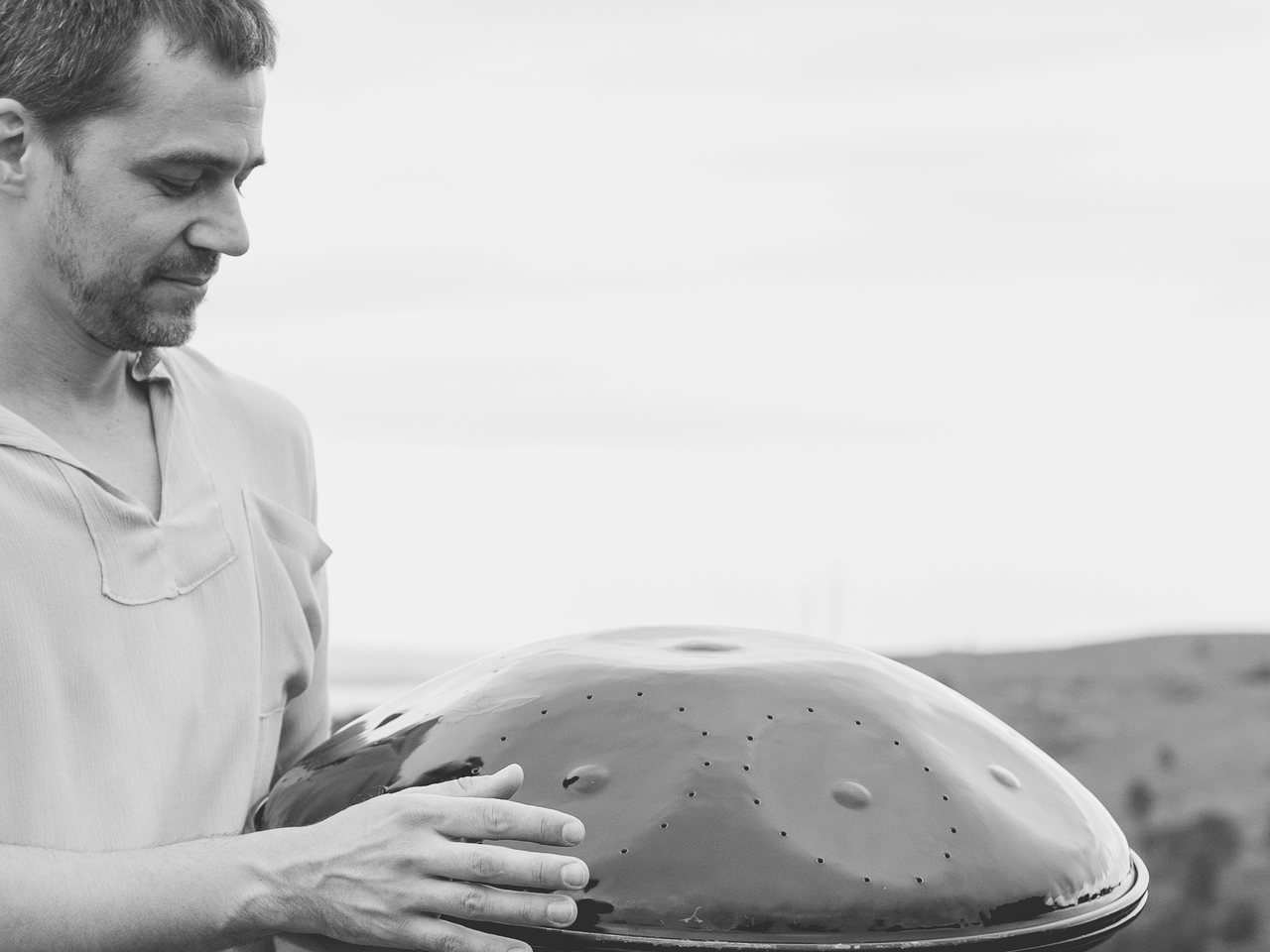
Tongue drum and handpan meditation is a receptive sound practice in which attention rests on the ringing, slowly fading tones of a tuned steel instrument to support calm and present-moment focus.
Last Updated
4 Jul 2026
We are still reviewing this page. Our research team checks every technique page for accuracy and evidence quality before final release. Details may change as that review completes. The evidence badge shows our current reading of the published research.
RECOMMENDED DOSE
No trial has tested tongue drum or handpan meditation directly at a beginner dose. A short 10–20 minute session is a conservative editorial starting point; the twice-weekly frequency is extrapolated from a related group percussion-music intervention that ran 30-minute sessions twice weekly.
A 30-minute session length is extrapolated from closely related sound- and music-based protocols: a group percussion-music intervention delivered 30-minute sessions twice weekly, and a Tibetan-music relaxation study used a single 30-minute exposure. These are related modalities, not tongue drum / handpan specifically.
The upper session range draws on related sound-meditation practice: a randomised group music programme used 40-minute sessions three times weekly over eight weeks, and a Tibetan singing bowl group meditation ran hour-long sessions. Doses are extrapolated from these adjacent modalities.
Session length
Session length: 10–20 minutes
10
MIN
How long each individual practice session should last from start to finish.
Frequency
Frequency: 2–3 days
2
DAYS
The number of days per week to fit a session into your routine.
Session length
Session length: 30 minutes
30
MIN
How long each individual practice session should last from start to finish.
Frequency
Frequency: 2–3 days
2
DAYS
The number of days per week to fit a session into your routine.
Session length
Session length: 40–60 minutes
40
MIN
How long each individual practice session should last from start to finish.
Frequency
Frequency: 3 days
3
DAYS
The number of days per week to fit a session into your routine.
About this card. These recommendations are extrapolated from studies of closely related sound- and music-based meditation practices rather than from trials of tongue drum or handpan meditation itself, so treat them as starting points. These recommendations are not a substitute for personalised guidance from a qualified practitioner.
Quick answers to what people most often ask. Each card links to the deeper section below.
evidence
Listening-based music produces a small-to-moderate drop in reported anxiety: a meta-analysis of 51 trials found receptive listening outperformed more active methods. One early, single study of handpan sound meditation with hospitalized adults reported eased anxiety and better sleep, but no large trial tests tongue drums or handpans directly.
good for
Adults wanting a low-effort way to settle everyday stress, pre-sleep restlessness, or a busy mind may benefit, since the clear, sustained tones give restless attention something steady to rest on. The closest direct study looked at hospitalized adults with an anxiety disorder. Tongue drum and handpan meditation offers calming support, not a treatment for diagnosed conditions.
Read moresafety
Most healthy adults can practise tongue drum and handpan meditation safely, with no evidence of harm from ordinary listening or playing. People with sound sensitivity, misophonia, or sensory processing differences should start quietly at low volume, and those working through recent trauma may prefer short, self-paced sessions. No safety studies exist for these instruments.
Read morehow it works
Rhythmic entrainment appears central: brain rhythms, breathing, and small movements tend to fall into step with a steady repeating sound, so settling feels less like effort. Resting attention on each ringing note anchors a wandering mind on a clear external target. Calming sound also shifts the nervous system toward its rest-and-recovery state.
Read moreA sound-based meditation centered on the bell-like, sustained tones of a steel tongue drum or handpan, where attention rests on each note and its fading overtones to encourage calm and presence.
Sessions are usually informal and self-directed: a person plays the instrument by hand or with mallets, or simply listens, letting each tuned note ring and decay while attention follows the tone, its overtones, and the pause before the next strike. The pentatonic scale and consonant intervals keep the sound field soothing, so there is no fixed protocol or posture to hold. Practice can be brief or extended, solo or guided, and leans on receptive listening more than technical skill.
Though it sits within sound healing, this practice differs from frame-drum or taiko drumming, which are primarily rhythmic and percussive; tongue drums and handpans instead produce tuned, melodic notes that ring like bells. It also differs from singing-bowl sound baths, though the two share a receptive-listening quality. It is not a clinical music-therapy protocol delivered by a trained therapist, and it is not a treatment for any diagnosed condition.
Not to be confused with
Steel tongue drum vs. handpan
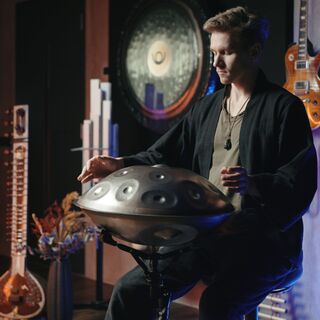
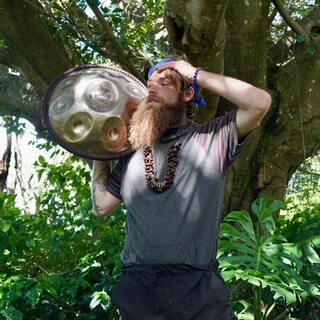
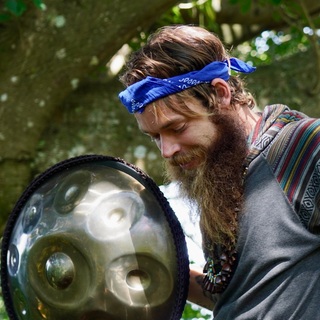
These are two different instruments often grouped together. A steel tongue drum has cut tongues in a metal shell; a handpan (hang drum) has hammered tone fields on a convex steel shell. Both produce tuned, ringing notes suited to the same meditative listening.
Sound bath / gong bath
A sound bath is usually a passive group session where you lie down and receive waves of gong or bowl sound. Tongue drum and handpan meditation is frequently something you actively play, resting attention on notes you produce yourself.
Music therapy with a credentialed therapist
Music therapy is a regulated clinical profession delivering personalised treatment. Tongue drum or handpan meditation is a self-directed wellbeing practice; the instrument can appear within music therapy, but the meditation itself is not clinical treatment.
Tongue drum and handpan meditation appears to work mainly through rhythmic entrainment, the tendency for brain rhythms, breathing, and small movements to fall into step with a steady repeating sound, so that settling feels less like effort and more like being carried along (Noda & Noda, 2025). Resting attention on each ringing note also anchors a wandering mind on a clear external target, and turning toward absorbing sound this way offers a quick, low-effort route back toward steadier emotion (Rodriguez & Kross, 2023). These pathways are drawn from music-and-brain research broadly, not from trials of tongue drums or handpans specifically, so they describe a plausible route rather than a proven one.
That sense of being carried by the drum's pulse is rhythmic entrainment at work: brain rhythms, breathing, and small movements drift into step with a repeating external beat, which can make settling feel effortless rather than something you have to force (Noda & Noda, 2025). It is a proposed pathway drawn from wider music-and-brain research, not yet a proven effect of tongue drum or handpan sessions themselves.
As each note rings and slowly fades, attention tends to settle and follow it on its own. The brain's rhythms, along with breathing, fall into step with the steady sound, a process called entrainment that can make calming down feel less like work and more like being carried (Noda & Noda, 2025). Turning toward absorbing sound this way also offers a quick, low-effort route toward steadier emotion (Rodriguez & Kross, 2023).
A keyed-up, on-edge feeling can start to loosen when steady tones and a repeating pulse give the nervous system something regular to lock onto. Researchers call this arousal downregulation, the winding-down of the body's state of activation, and suggest that musical features like consistent tone and rhythm support it through entrainment (Noda & Noda, 2025), alongside the way absorbing sound can offer a fast, low-effort route back toward steadier emotion (Rodriguez & Kross, 2023).
As the drum's sustained, ringing tones give attention something steady to rest on, the body can shift toward parasympathetic activity, the rest-and-recover side of the nervous system that slows heart rate and lets breathing and muscles ease (Noda & Noda, 2025), (Rodriguez & Kross, 2023). This is a proposed explanation borrowed from wider music research, not something measured in handpan or tongue drum studies, so hold it as an early, plausible idea rather than a proven effect.
When you listen to a tongue drum or handpan, attention is pulled outward onto the interplay of fundamental tones and their ringing overtones, so the mind has a rich outside sound to follow instead of its own churn of thought. This is exteroceptive awareness, the sensing of the outside world through the ears and other senses, and researchers suggest that engaging the senses this way can be a quick, low-effort route back toward steadier emotion (Rodriguez & Kross, 2023), (Noda & Noda, 2025).
In the body, calming sound sessions tend to shift the nervous system toward its rest-and-recovery state, which can feel like heaviness, a slower breath, and less urge to brace. Studies of music listening in medical patients have measured small reductions in heart rate, breathing rate, and systolic blood pressure, the force of blood pushing against the artery walls (Joke & Cheryl, 2014), (Joke et al., 2013), and a small singing-bowl session tracked heart-rate variability shifting toward relaxation (Prasad et al., 2024). These measurements come from music and sound practices broadly rather than tongue drum or handpan sessions, and body markers change less reliably than how calm people say they feel.
When stress sends your heart racing, calming resonant music can help it settle: in medical patients, listening has been measured to slightly lower heart rate (Joke & Cheryl, 2014), (Joke et al., 2013), a shift toward the body's rest-and-recovery state you may feel as your breathing slowing and your pulse steadying while each note rings and fades.
The breath may start to lengthen on its own, with less sense of the chest being held tight. That reflects a lower respiratory rate, the number of breaths you take each minute, which slows as the nervous system settles; studies of medical patients listening to calming music measured small drops in breathing rate (Joke & Cheryl, 2014), (Joke et al., 2013).
As physical tension eases during a calming sound session, systolic blood pressure, the force of blood pushing against the artery walls with each heartbeat, tends to drop modestly alongside slower heart and breathing rates (Joke et al., 2013), (Joke & Cheryl, 2014). These readings come from music listening in stressed medical patients rather than tongue drum or handpan practice specifically, so the change is best read as small and not yet certain.
That wired, keyed-up feeling of a stress response can ease during calming sound sessions, when sympathetic arousal, the body's fight-or-flight gear, begins to settle. Studies of music listening measure small drops in heart rate, breathing rate, and blood pressure (Joke et al., 2013), and early singing-bowl work tracked the nervous system shifting toward a more relaxed, less activated state (Prasad et al., 2024).
The braced, keyed-up feeling of being ready for action comes largely from sympathetic tone, the body's activation branch that speeds the heart and primes you for effort. In a small study of sustained resonant sound, that activation eased toward a calmer autonomic balance (Prasad et al., 2024), a shift practitioners often notice as the chest loosening, the breath lengthening, and a sense of no longer being on guard.

Being carried by the rhythm is a familiar feeling in sound meditation, and it has a physical trace. In a small one-hour singing bowl session, listeners' body rhythms grew more synchronized with the sound and with one another (Prasad et al., 2024). Brainwave synchronization itself wasn't measured here and is inferred from related sound practices, but the settling it points to often feels like attention steadying and mental urgency easing.
Limited, emerging evidence supports tongue drum and handpan meditation, and most of it is borrowed from music practice broadly rather than these instruments specifically. At that broader level, moderate evidence links receptive, listening-based music to reduced anxiety and in-the-moment calm (Lu et al., 2021), (Witte et al., 2025); one early single study tested handpan-based sound meditation directly with hospitalized adults and reported eased anxiety and better sleep (Mou & Chen, 2024); and a controlled trial found group percussion sessions lowered anxiety for older adults with dementia (Sung et al., 2011). What is not yet supported is any large randomized trial of these instruments as a stand-alone practice, evidence of long-term benefit, or a claim that they treat a diagnosed condition.
Racing, keyed-up feelings may ease as the handpan's clear, sustained tones give attention something steady to rest on. Early research testing handpan-based sound meditation with hospitalized adults reported reduced anxiety and better sleep, though this comes from a single small study (Mou & Chen, 2024).
The clearest finding is that listening-based music practice produces a small-to-moderate drop in reported anxiety. Across 51 trials, a multilevel meta-analysis found a Hedges' g of 0.41 for self-reported anxiety, a moderate effect meaning the average person who listened reported less anxiety than about two-thirds of those who did not, with receptive methods outperforming more active ones (Witte et al., 2025). A separate meta-analysis of 32 randomized trials points the same way (Lu et al., 2021), and one early study tested handpan music directly with hospitalized patients (Mou & Chen, 2024). Two limits matter for a reader: this evidence is borrowed from music broadly rather than measured on tongue drums or handpans, and results are mixed, with some melodic styles and very brief sessions showing no measurable benefit (Tara et al., 2025), (Soqia et al., 2025).
5
Meta-analyses
1
RCTs
1
Systematic reviews
0
Observational
8
Pilot
Studied populations
A scoping review of music-based digital therapeutics for stress, anxiety, and depression
2026
Finding: This scoping review of music-based digital tools found that while the broad case for music easing stress, anxiety, and low mood is well supported, the research on any one specific tool or approach is still too thin to say how well it works in everyday life. In practical terms, that means the calming benefits people report from sound-based practice are real at the level of music generally, but no study here tested tongue drums or handpans on their own. If you're drawn to this practice, it's reasonable to expect it may help you settle and unwind, while treating instrument-specific claims as borrowed from the wider evidence rather than proven for the drum itself.
See full citation in referencesEffects of music therapy on anxiety: A meta-analysis of randomized controlled trials
n = 1,924
Finding: Across 32 randomised trials with 1,924 adults, this meta-analysis found that music therapy left people measurably less anxious right after the sessions compared with those who received no music, a small-to-moderate effect. That benefit had faded by the time researchers checked back at follow-up, so the calming effect looks more like an in-the-moment relief than a lasting change. The trials covered music therapy broadly rather than tongue drum or handpan specifically, so this supports the wider family of receptive sound practices these instruments belong to, not the instruments on their own.
SMD = -0.36
Tongue drum and handpan meditation grows out of the wider world of sound healing and contemplative listening, where resonant tone is treated as a doorway to presence and calm. The handpan itself is a modern instrument developed around the turn of the millennium, while steel tongue drums descend from older slit-drum designs; both were quickly adopted as portable personal meditation instruments for their accessible, soothing tones. These roots help explain the practice's form, its receptive, let-the-notes-ring approach, not its clinical effects.
For most healthy adults, tongue drum and handpan meditation is a gentle, low-risk practice, and there is no evidence of harm from ordinary listening or playing. A few situations call for a softer approach. If resonant sound tends to feel overwhelming rather than soothing, whether from sound sensitivity, sensory processing differences, or misophonia, a strong aversion to particular sounds, begin quietly and keep the volume low. No safety studies exist for these instruments, so this is a practical, practice-informed caution rather than a measured risk. Because sustained tones can occasionally stir up unexpected emotion, anyone working through recent trauma may prefer short, self-paced sessions over long immersive ones; this too is grounded in practice rather than a documented adverse effect. Music-based practice shows real promise for easing anxiety, but it settles and supports rather than treats, so when anxiety, low mood, or sleep problems persist it works best alongside care from a qualified professional (Venkatesan et al., 2026).
A few groups have good reason to ease in gently. People with auditory hypersensitivity, misophonia, or a history in which certain sounds feel activating may find sustained resonant tones jarring rather than calming, so lower volume and shorter sessions are a sensible adjustment. Because no safety research covers these specific instruments, that guidance is practice-informed. Anyone managing persistent or diagnosed anxiety, depression, or a sleep disorder should treat the practice as a complement to professional care rather than a stand-alone remedy, since direct evidence for tongue drums and handpans remains thin and drawn mostly from broader music research (Joke et al., 2021). People recovering from trauma may want to keep early sessions brief and gently paced, stopping if the sound begins to feel distressing.
If resonant, sustained tones tend to feel overwhelming rather than soothing — whether from auditory hypersensitivity, sensory processing differences, or misophonia, a strong aversion to particular sounds — begin quietly and keep the volume low, and shorten sessions so you can notice how the sound lands. No safety studies exist for these instruments, so this is a practical, practice-informed caution rather than a measured risk.
| Technique | Best for | Use with care | Evidence strength | Distinction |
|---|---|---|---|---|
| Receptive music therapy (clinician-led) | Significant or persistent anxiety where a structured, professionally guided course of care is appropriate. | Do not substitute self-guided tongue drum sessions for professional treatment when symptoms are severe or need clinical support. | strong EVIDENCE | Music therapy is a structured intervention delivered by a credentialed therapist and backed by a large trial base, including meta-analyses reporting small-to-moderate reductions in anxiety. Tongue drum and handpan meditation is a self-directed personal practice built around one resonant instrument, and its evidence is borrowed indirectly from that wider music-therapy field rather than measured for the instrument itself. |
| Tibetan singing bowl / sound bath | Passive, lie-down group relaxation where you receive sound rather than produce it. | emerging EVIDENCE |
Either works. Tongue drum and handpan meditation is a receptive practice, so you can play the tuned steel instrument by hand or mallet, or simply listen to its ringing, slowly fading tones. No musical skill is required for it to count as practice.
+
Either works. The practice rests your attention on each sustained note and its overtones as they decay, and that happens whether you strike the instrument yourself or listen to someone else play or a recording. Playing adds a gentle rhythmic and tactile element; listening keeps things effortless. That is simply a description of the two ways to practise, not a claim that one mode is more effective, since no direct comparison of these instruments exists.
They are two different instruments that are often grouped together. A steel tongue drum has tongues cut into a metal shell, while a handpan (hang drum) has hammered tone fields on a convex steel shell. Both produce tuned, bell-like notes that ring and slowly fade, suited to the same receptive meditative listening.
+
They differ mainly in construction. A steel tongue drum makes its notes from tongues cut into the surface of a hollow metal shell, while a handpan, also called a hang drum, uses hammered tone fields on a convex steel shell that you tap with your hands. Despite the different builds, both are tuned to produce clear, sustained, bell-like tones that ring and decay, so they support the same calm, present-moment listening. This is a difference of instrument design, not of clinical effect, and no comparison suggests one works better than the other.
A hollow steel instrument with tongues cut into its surface that ring with clear, sustained notes when struck by hand or mallet. Its pentatonic tuning keeps the sound soothing, so most combinations of notes feel consonant rather than jarring.
A convex steel instrument with hammered tone fields that produce tuned, bell-like notes when tapped with the hands. The tones ring and slowly decay, carrying both a gentle pulse and layered overtones.
The tendency for internal rhythms such as brainwaves, heartbeat, and breathing to fall into step with a steady external beat or tone. It is often felt as being carried by the rhythm, so settling and focusing feel effortless rather than forced.
Synchronization of neural oscillations and autonomic and motor rhythms to an external periodic stimulus.
Attention directed outward to the world through the senses, especially hearing. In this practice it shows up as the ringing tones and their overtones becoming vivid and detailed while inner chatter recedes into the background.
Perception and conscious tracking of environmental stimuli received through the external sensory modalities.
Steadying attention on one clear target, here a resonating note, to reduce mind-wandering. It tends to feel like fewer spiralling thoughts and a clearer capacity to stay present moment to moment.
A form of music therapy where a person listens to music rather than playing it, guided by a trained therapist. Reviews link receptive methods to modest reductions in self-reported anxiety.
The quieter higher tones that ring above a struck note, giving tongue drums and handpans their shimmering, bell-like quality. Following these layers as they fade gives attention something rich and absorbing to rest on.
Tara Venkatesan, Andrew M. Demetriou, Audrey Hempel, Daniel L. Bowling (2026). A scoping review of music-based digital therapeutics for stress, anxiety, and depression. https://doi.org/10.3389/fnhum.2026.1602004
Cited in: Faq, Research, Use with care
Guangli Lu, Ruiying Jia, Dandan Liang, Jingfen Yu, Zhen Wu, Chaoran Chen (2021). Effects of music therapy on anxiety: A meta-analysis of randomized controlled trials. https://doi.org/10.1016/j.psychres.2021.114137
Editorially curated. Tracks are not themselves clinically studied; evidence on the page applies to Tongue Drum / Handpan Meditation as a technique.
Outcomes measured
| Outcome | Effect size | 95% CI | N | Comparator | Source |
|---|---|---|---|---|---|
| anxiety at post-intervention | SMD = -0.36 | 95% CI -0.54 to -0.17 | 1,924 | control group | Lu et al., 2021 |
| anxiety at follow-up | SMD = -0.23 | 95% CI -0.53 to 0.08 | — | control group | Lu et al., 2021 |
| self-reported anxiety | Hedges' g = 0.41 | 95% CI 0.236 to 0.585 | — | — | Witte et al., 2025 |
| systolic blood pressure | mean difference = -5.52 mmHg | 95% CI -7.43 to -3.60 | — | standard care | Joke et al., 2013 |
| anxiety | SMD = 0.14 | 95% CI -0.14 to 0.42 | 197 | — | Tara et al., 2025 |
| state anxiety change between arms | reported narratively; p=0.622 | — | 69 | no-music control | Soqia et al., 2025 |
| physiological outcomes | Hedges' g = 0.153 | 95% CI -0.153 to 0.400 | — | — | Witte et al., 2025 |
| HADS anxiety change, week 8 | between-group mean difference = -0.15 | 95% CI -0.78 to 0.49 | 300 | cognitive behavioral therapy | Liou et al., 2026 |
| anxiety | reported significant; p=0.004 | — | 60 | usual care | Sung et al., 2011 |
The research is useful for setting expectations, but study methods and participant groups vary. Treat the findings as general guidance rather than a promise about any single session, and not a replacement for clinical care.
Application and Effect of Receptive Music Therapy Based on “Handpan Music” in Patients with Anxiety Disorder
2024
Finding: This is the most instrument-specific study found: a randomized trial in which hospitalized patients with an anxiety disorder received handpan-based sound meditation alongside their usual care, and were compared with patients who got usual care plus randomly chosen music to listen to. The researchers tracked anxiety, sleep quality, and emotion-regulation skills both right after the sessions and again a month later, which is a promising sign that someone drawn to this practice may find it worth exploring for calm and rest. That said, a verified summary of the results was not available, so we cannot say how large the benefits were, and this is a single early trial in a hospital setting rather than strong proof that handpan meditation eases anxiety.
See full citation in referencesA group music intervention using percussion instruments with familiar music to reduce anxiety and agitation of institutionalized older adults with dementia
n = 60
Finding: In a controlled trial with 60 older adults living with dementia in care homes, group sessions playing percussion instruments along to familiar songs, held twice a week for six weeks, measurably lowered anxiety compared with usual care, while restlessness and agitation showed no clear change. For someone drawn to rhythmic, hands-on sound practice, this hints that making music in a group setting can ease anxious feelings, even in a vulnerable population. Keep in mind, though, that this study used familiar songs and shared percussion rather than tongue drum or handpan meditation specifically, so it speaks to the broader family of percussion-based music practice rather than to those instruments on their own.
reported significant; p=0.004
The Influence of Music on Mental Health Through Neuroplasticity: Mechanisms, Clinical Implications, and Contextual Perspectives
2025
Finding: This wide-ranging review of music and mental health maps how the basic ingredients of sound, steady tempo, regular beat, tone quality, and predictability, can sync up the brain's rhythms and shift the body's stress and reward systems in ways that help steady mood. For someone drawn to rhythmic, resonant instruments like the tongue drum or handpan, it offers a credible reason why the practice can feel calming: the qualities of the sound itself may help the nervous system settle. It is worth knowing, though, that this is a broad look at music in general rather than a test of these specific instruments, so it explains a plausible pathway rather than proving a particular effect.
See full citation in referencesEvaluating the Efficacy of a 5‐Min Music Listening Intervention for State Anxiety Reduction in College Students: A Randomized Controlled Trial
n = 69
Finding: In a randomized trial with 69 college students aged 18 to 24, a single five-minute music listening session did not lower anxiety any more than sitting without music. For anyone hoping a quick few minutes of sound will reliably settle nerves before a stressful event, this result is a useful reality check: such a short exposure may simply not be enough, and what helps likely depends on practising longer and choosing sound that feels personal to you. Keep in mind this was one brief study in young adults, so it speaks to very short one-off sessions rather than a regular, sustained practice.
reported narratively; p=0.622
Music therapy for the treatment of anxiety: a systematic review with multilevel meta-analyses
2025
Finding: Across 51 trials of music therapy for anxiety, this meta-analysis found a moderate reduction in self-reported anxiety, and the benefit was strongest when people listened to music rather than only playing it, which is close to how many practise tongue drum and handpan meditation. The gains showed up in how people felt rather than in their bodies: effects on physical markers like heart rate and blood pressure were small and inconsistent, so the practice is more reliable for easing a worried mind than for measurably calming the body. Keep in mind this evidence covers music therapy in general, not these specific instruments, so it points to a promising direction rather than proof for tongue drum or handpan alone.
Hedges' g = 0.41
Music interventions for mechanically ventilated patients.
2014
Finding: Pooling trials of medical patients, including people recovering from heart disease and those on breathing support in hospital, this review found that listening to calming music produced small but consistent drops in heart rate, breathing rate, and the top number of blood pressure, a pattern doctors read as the body settling into a relaxation response. For anyone drawn to soothing instruments, that hints the practice may help the nervous system unwind, though the effects here come from music listening in general, not from tongue drum or handpan playing specifically. The changes were modest and measured in hospital settings, and evidence for other body signals was mixed or missing, so this is a gentle pointer rather than proof of what any one instrument can do.
See full citation in referencesMusic for stress and anxiety reduction in coronary heart disease patients.
2013
Finding: Pooling trials of music listening among people with coronary heart disease, this review found that listening to calming music lowered systolic blood pressure by about 5.5 mmHg on average compared with standard care, alongside slightly slower heart and breathing rates, changes consistent with the body settling into a relaxation response. For someone drawn to tongue drum or handpan practice, this points to a plausible calming effect from soothing sound, though the studies tested recorded music listening in medical settings, not these instruments specifically. It is also worth knowing that the effects were small and that evidence for other nervous-system measures was mixed or missing, so this is best read as encouraging background rather than proof that playing a handpan produces the same results.
mean difference = -5.52 mmHg
Music interventions for improving psychological and physical outcomes in people with cancer.
2021
Finding: This Cochrane review gathered the trials on music therapy and recorded-music listening for people living with cancer, and while it points to benefits for easing distress and treatment side effects, it also flags that most of those studies carry a high risk of bias, so the certainty behind the results stays low. None of the trials tested tongue drums or handpans directly, which means the encouraging picture applies to music broadly rather than to these specific instruments. If you are drawn to playing a tongue drum or handpan to calm yourself, it is reasonable to expect the general soothing quality of music, but treat any claim of proven, instrument-specific effects with caution until closer research exists.
See full citation in referencesClassical Indian music for managing anxiety and pain among patients in a hospital setting: a systematic review and meta-analysis of randomized controlled trials.
n = 197
Finding: This review pooled two hospital-based trials with 197 patients total and found that listening to classical Indian music did not measurably lower anxiety, and had no clear effect on blood pressure or pulse. For someone drawn to melodic sound practices, the honest takeaway is that pleasant music does not automatically calm the nervous system in a way this analysis could detect. The evidence here is thin, just two small studies rated as very low certainty, so it neither proves music is useless nor confirms a benefit; it simply cautions against assuming any soothing melody reliably eases anxiety.
SMD = 0.14
Participants tend to Synchronize with the Tibetan Singing Bowl
2024
Finding: During a one-hour Tibetan singing bowl session, researchers tracked the heart rhythms of five participants and saw their nervous systems settle into a calmer, more relaxed pattern, with heart-rate variability shifting in a direction linked to rest rather than tension. The participants' physical responses also began to line up with one another as the session went on, hinting that shared sustained tones can draw a group into a common relaxed state. Because this was a very small session of just five people, with no comparison group and using singing bowls rather than a tongue drum or handpan, treat it as an early clue about how resonant sound affects the body rather than firm proof for these specific instruments.
See full citation in referencesMusic Therapy Versus Cognitive Behavioral Therapy via Telehealth for Anxiety in Survivors of Cancer: A Randomized Clinical Trial
n = 300
Finding: In a randomized trial of 300 cancer survivors, telehealth music therapy eased anxiety just as effectively as cognitive behavioral therapy, the standard talk-therapy approach, with both groups holding onto meaningful improvements at 8 weeks and again at 26 weeks. For someone drawn to sound-based practice, that is encouraging evidence that working with music can be a genuine, lasting way to steady an anxious mind, not just a pleasant distraction. Keep in mind, though, that this study tested structured sessions guided by a trained music therapist, not tongue drum or handpan meditation on your own, so it points to the promise of the broader approach rather than proving this specific practice matches talk therapy.
between-group mean difference = -0.15
Sensory emotion regulation
2023
Finding: This review of how the senses shape our emotions makes the case that sensory input, sound included, offers a fast and relatively effortless way to turn feelings up or down. For anyone drawn to a tongue drum or handpan, it helps explain why an engaging tone can work as an anchor for attention and mood, giving the mind something absorbing to settle on. Keep in mind, though, that this is a broad theoretical discussion, not a test of these instruments themselves, so it points to a plausible reason the practice may help rather than direct proof that it does.
See full citation in referencesEffects of music listening on adult patients' pre-procedural state anxiety in hospital.
2008
Finding: This review looked at people listening to music before hospital procedures, when anxiety tends to run high, and found a familiar split: the music eased how anxious people said they felt, but it did not reliably move physical stress markers like blood pressure or heart rate. For someone drawn to tongue drum or handpan meditation, that points to where the real benefit likely sits, in calming your subjective experience rather than producing measurable changes in the body. The evidence here is stronger for psychological relief than for any physiological effect, so it is worth treating claims about biomarker changes with caution.
See full citation in referencesSustained resonant sound can occasionally stir up unexpected emotion during trauma recovery, so keep early sessions short and self-paced rather than long and immersive, start at a low volume, and stop or ground yourself if the tones begin to feel distressing rather than settling. No safety research covers these instruments, so this is grounded in practice rather than a documented adverse effect, and the practice works best alongside care from a qualified trauma professional.
Music-based practice shows real promise for easing anxiety, but it settles and supports rather than treats. When anxiety, low mood, or sleep problems are persistent or severe, treat tongue drum and handpan meditation as a complement to care from a qualified professional rather than a stand-alone remedy, since direct evidence for these instruments remains thin and drawn mostly from broader music research.
Tongue drum and handpan meditation is best approached softly, starting at a gentle volume in a comfortable space where the resonant tones feel soothing rather than intense. For most people a short session of a few minutes is a sensible starting format, giving you room to notice how the sustained sound lands before you settle into anything longer. If you are sensitive to sound or working through something tender, keeping things quiet and self-paced lets you ease in at your own speed.
Begin quietly, at a level that feels soothing rather than intense, and raise it only if that stays comfortable. This matters most if you are sensitive to sound.
Try five to ten minutes at first and lengthen sessions gradually, so you can notice how sustained resonant tones affect you before committing to a longer practice.
Pause and notice how the tones land in your body and attention. If they begin to feel jarring, activating, or distressing rather than settling, stop, lower the volume, or shorten the session.
If you are striking the instrument yourself, keep a comfortable distance and avoid prolonged loud playing, especially in small or hard-surfaced rooms where resonance builds.
If you are living with persistent anxiety, low mood, or sleep problems, treat this as a supportive practice that complements, rather than replaces, guidance from a qualified professional.
This information is educational and is not medical advice. This practice is not a substitute for professional care and should not replace prescribed medication or treatment for any medical or mental-health condition. If you are managing a health condition or taking medication, talk with a qualified health professional before changing your practice. If you are in distress or crisis, seek professional support.
| Singing bowls also work through sustained resonant tone, but a sound bath is usually a passive group session where you lie back and receive the sound. Tongue drums and handpans are tuned, melodic instruments you often play or listen to individually, inviting both a gentle rhythmic pulse and close harmonic listening. |
| Frame drumming / rhythmic percussion | Energising, expressive, movement-based rhythmic release, including group drum circles. | emerging EVIDENCE | Frame drums, taiko, and drum circles are primarily percussive, driving energy and movement through a strong beat. Tongue drums and handpans produce tuned, bell-like notes that ring and decay, so the practice leans toward calm harmonic listening rather than propulsive rhythm. |
| Binaural beats / auditory beat stimulation | Headphone-based sessions aimed at a specific focus or brainwave state. | emerging EVIDENCE | Binaural beats create a perceived pulse from two slightly different tones fed to each ear through headphones, aiming to nudge brainwave states electronically. Tongue drum and handpan meditation uses real acoustic resonance in the room, engaging entrainment through audible rhythm and overtones rather than an engineered frequency difference. |
Partly. Broad music-listening research shows a moderate drop in in-the-moment anxiety, and one small early study tested handpan sound meditation directly with hospitalized patients (Lu et al., 2021), (Mou & Chen, 2024). Treat it as a calming support and an encouraging direction, not a proven treatment for diagnosed anxiety.
+
Partly, and mostly by borrowing evidence rather than measuring these instruments directly. At the broad level, a meta-analysis of music therapy and a multilevel meta-analysis of listening-based, receptive music both link it to a moderate reduction in self-reported anxiety, with receptive methods faring well (Lu et al., 2021), (Witte et al., 2025). The only direct test of handpan sound meditation is one small early study of hospitalized adults, so the instrument-specific evidence is early and encouraging rather than established (Mou & Chen, 2024), (Venkatesan et al., 2026). Read it as a calming support rather than a stand-alone remedy, especially when anxiety is persistent or severe.
Mostly music in general. Just one early, small study tested handpan sound meditation directly (Mou & Chen, 2024), with a related percussion trial in dementia (Sung et al., 2011); the rest is borrowed from broad music research rather than measured on these instruments (Venkatesan et al., 2026).
+
Mostly music in general. Direct evidence is thin: one small, early study tested handpan-based sound meditation with hospitalised adults (Mou & Chen, 2024), and a controlled trial found group percussion sessions eased anxiety in older adults with dementia (Sung et al., 2011), but no large randomised trial has tested tongue drums or handpans as a stand-alone practice. Most of what is known is drawn indirectly from broader music-therapy and receptive music-listening meta-analyses (Lu et al., 2021), (Witte et al., 2025), so the picture for these instruments is promising at the broad music level but not yet established for the instruments themselves (Venkatesan et al., 2026).
Likely because their steady, ringing tones invite rhythmic entrainment, the tendency for brain rhythms and breathing to fall into step with a repeating sound, while giving restless attention a clear target to rest on (Noda & Noda, 2025), (Rodriguez & Kross, 2023). These are plausible routes borrowed from broad music-and-brain research, not proven for handpans specifically.
+
Likely through several overlapping routes rather than one proven mechanism. The sustained, bell-like tones can prompt rhythmic entrainment, where brain rhythms, breath, and small movements settle into step with the sound, so calming feels effortless rather than forced (Noda & Noda, 2025). Resting attention on each ringing note also anchors a wandering mind on a clear external target, and turning toward absorbing sound this way offers a quick, low-effort form of emotion regulation (Rodriguez & Kross, 2023). These pathways come from music-and-brain research broadly, so they describe a plausible route rather than one measured for handpans or tongue drums.
Possibly, but the evidence is indirect. Studies of calming music listening have measured small drops in heart rate, breathing rate, and blood pressure, and a small singing-bowl session shifted heart-rate variability toward relaxation (Joke & Cheryl, 2014), (Joke et al., 2013), (Prasad et al., 2024). No trials have measured this for handpans specifically, and body markers shift less reliably than how calm people report feeling (Witte et al., 2025).
+
Possibly, but the evidence is borrowed from music and sound research rather than handpans themselves. Reviews of music listening in medical patients found small reductions in heart rate, breathing rate, and systolic blood pressure, the force of blood against the artery walls (Joke & Cheryl, 2014), (Joke et al., 2013), and a small Tibetan singing-bowl session tracked heart-rate variability, the beat-to-beat timing that reflects a calmer nervous system, moving toward relaxation (Prasad et al., 2024). No tongue drum or handpan session has been measured this way, and across studies these physical markers change less consistently than people's reported sense of calm (Witte et al., 2025). So a settling effect is plausible but unproven for these instruments.
Use care. For most adults, ordinary listening or playing is low-risk, but if you have sound sensitivity or misophonia, a strong aversion to particular sounds, sustained tones may feel jarring rather than soothing. Begin quietly, keep the volume low, use short self-paced sessions, and stop if the sound feels activating. No safety studies cover these instruments, so this is a practical caution, not an evidence-based verdict.
+
Use care. There is no evidence of harm from ordinary handpan or tongue drum listening or playing, but no safety study covers these instruments for people with misophonia, a strong aversion to particular sounds, auditory hypersensitivity, or sensory processing differences, so this guidance is practice-informed rather than a measured finding (Venkatesan et al., 2026). If resonant tones tend to feel overwhelming, start at a low volume, keep sessions short and self-paced, and lower or stop the sound the moment it feels activating rather than settling. Evidence for these instruments stays thin and indirect, so treat the practice as a gentle experiment you can pause at any time (Joke et al., 2021).
Use care. For most adults tongue drum and handpan meditation is low-risk, but sustained tones can occasionally stir up unexpected emotion, so while working through trauma it helps to keep sessions short and self-paced, start quietly, and stop if the sound feels activating. Treat it as a complement to qualified trauma care, not a substitute.
+
Use care. No safety studies exist for these instruments, so this is a practice-informed caution rather than a measured risk: resonant, sustained sound can sometimes bring up difficult emotion during trauma recovery. A gentle approach is to begin at a low volume, keep early sessions brief and self-paced, and stop or ground yourself if the tones feel distressing rather than settling. Evidence for sound meditation is encouraging for music broadly but limited for tongue drums and handpans, so it works best alongside care from a qualified trauma professional rather than in place of it (Venkatesan et al., 2026), (Joke et al., 2021).
Start with about five to ten minutes, then lengthen sessions gradually as you notice how the tones land. This is a sensible starting point rather than a research-backed optimal dose, since no studies have tested session length for these instruments.
+
Start with about five to ten minutes at a comfortable, low volume, then build up slowly once you know how sustained resonant tones affect you. Notice whether the sound stays settling rather than jarring, and shorten or pause it if it begins to feel activating. This is a practice-informed suggestion, not an evidence-derived dose: no dose-response studies exist for tongue drums or handpans, so adjust session length to your own comfort rather than aiming at a fixed target tied to any calm or sleep outcome.
The main difference is format, not effectiveness. Handpan meditation is usually self-directed, where you often play the tuned, ringing notes yourself and rest attention on each one, while a singing bowl sound bath is typically a passive group session where you lie back and receive sustained tones. No study has compared the two head-to-head.
+
The main difference is how each is delivered. Handpan meditation is a self-directed practice built around a tuned instrument you often play yourself, resting attention on each bell-like note as it rings and decays, while a singing bowl sound bath is usually a passive group session where you receive waves of sustained tone. Both work through resonant sound, and a small study found participants tended to synchronise physiologically during a singing bowl session (Prasad et al., 2024). Direct evidence for either as a stand-alone practice remains thin, with most support borrowed from music practice broadly rather than these specific instruments (Venkatesan et al., 2026), (Joke et al., 2021), so choose based on whether you prefer to actively play or passively receive rather than any proven advantage.
A shift toward the rest-and-recovery branch of the nervous system, which slows the heart and eases breathing. It is felt as the body settling, muscles loosening, and a sense of no longer being on alert.
Increased parasympathetic autonomic tone relative to sympathetic arousal.
The activating, fight-or-flight side of the nervous system that speeds the heart and primes the body for effort. Lowering it is felt as slower breath, a softer chest, and less urge to brace or keep moving.
The small beat-to-beat differences in the timing of your heartbeat. More variability generally reflects a calmer, more adaptable nervous system, so a shift toward it is a marker of relaxation.
Variation in the time interval between successive heartbeats, used as an index of autonomic, particularly vagal, regulation.
The force of blood pushing against the artery walls when the heart beats. Small reductions can accompany a settled, rest-and-recovery state.
Qing Mou, Fang Chen (2024). Application and Effect of Receptive Music Therapy Based on “Handpan Music” in Patients with Anxiety Disorder. https://doi.org/10.12677/ap.2024.142082
Cited in: Benefits, Faq, Research, What it is
Huei‐Chuan Sung, Wen‐li Lee, Tzai‐Li Li, Roger Watson (2011). A group music intervention using percussion instruments with familiar music to reduce anxiety and agitation of institutionalized older adults with dementia. https://doi.org/10.1002/gps.2761
Yoshihiro Noda, Takahiro Noda (2025). The Influence of Music on Mental Health Through Neuroplasticity: Mechanisms, Clinical Implications, and Contextual Perspectives. https://doi.org/10.3390/brainsci15111248
Cited in: Faq, How it works, Research
Jameel Soqia, Laila Yakoub‐Agha, Mhd Basheer Alameer, Lujain Nahas, Lama Mohamad, Ibrahim Antoun (2025). Evaluating the Efficacy of a 5‐Min Music Listening Intervention for State Anxiety Reduction in College Students: A Randomized Controlled Trial. https://doi.org/10.1002/hsr2.70590
Cited in: Research
Martina de Witte, Sonja Aalbers, Annemieke Vink, Stijn A.H. Friederichs, Anne Knapen, Thomas Pelgrim (2025). Music therapy for the treatment of anxiety: a systematic review with multilevel meta-analyses. https://doi.org/10.1016/j.eclinm.2025.103293
Bradt Joke, Dileo Cheryl (2014). Music interventions for mechanically ventilated patients.. https://doi.org/10.1002/14651858.cd006902.pub3
Cited in: Faq, Research, What happens in the body
Bradt Joke, Dileo Cheryl, Potvin Noah (2013). Music for stress and anxiety reduction in coronary heart disease patients.. https://doi.org/10.1002/14651858.cd006577.pub3
Cited in: Faq, Research, What happens in the body
Bradt Joke, Dileo Cheryl, Myers-Coffman Katherine, Biondo Jacelyn (2021). Music interventions for improving psychological and physical outcomes in people with cancer.. https://doi.org/10.1002/14651858.cd006911.pub4
Cited in: Faq, Research, Use with care, Who should use care
Rajendran Tara, Patil Akshay, Mohanta Subham Kumar, Krishnadasa Subbalakshmi Narasajjana, Natarajan Venkatesh (2025). Classical Indian music for managing anxiety and pain among patients in a hospital setting: a systematic review and meta-analysis of randomized controlled trials.. https://doi.org/10.1093/pubmed/fdaf048
Cited in: Research
Rajan Prasad, Sara Nasrat, Zakia Dimassi, Eman Alefishat, Herbert F. Jelinek (2024). Participants tend to Synchronize with the Tibetan Singing Bowl. https://doi.org/10.1109/esgco63003.2024.10767056
Cited in: Faq, How it works, Research, What happens in the body
Kevin T. Liou, Joke Bradt, M. Beatriz Currier, Raymond E. Baser, K. Panageas, Jodi MacLeod (2026). Music Therapy Versus Cognitive Behavioral Therapy via Telehealth for Anxiety in Survivors of Cancer: A Randomized Clinical Trial. https://doi.org/10.1200/jco-25-00726
Cited in: Comparison, Research
Micaela Rodriguez, Ethan Kross (2023). Sensory emotion regulation. https://doi.org/10.1016/j.tics.2023.01.008
Cited in: Faq, How it works, Research
Gillen Elizabeth, Biley Francis, Allen Davina (2008). Effects of music listening on adult patients' pre-procedural state anxiety in hospital.. https://doi.org/10.1111/j.1744-1609.2007.00097.x
Cited in: Research
Explore guided sessions to deepen your Tongue Drum / Handpan Meditation technique.
Beginner content for Tongue Drum / Handpan Meditation

★ 4.8
·
Music
·
3 min
Fernando Sessé
How hard is Tongue Drum / Handpan Meditation?
Tongue drum or handpan meditation reads softer than the active percussion default, so it should downshift toward passive capped listening.
1
Mental Effort
1 / 4
▾Emotional Depth
1 / 4
▾Physical Intensity
1 / 4
▾Prior Knowledge
1 / 4
▾