The world’s largest free audio library for everyday wellbeing
Energy & Subtle-Body
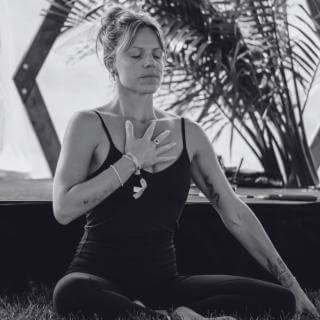
Reiki self-healing is a self-administered biofield practice in which you rest light or near-body hand positions on yourself in a calm, receptive state to support relaxation (Lipinski & Velde, 2020).
Last Updated
3 Jul 2026
We are still reviewing this page. Our research team checks every technique page for accuracy and evidence quality before final release. Details may change as that review completes. The evidence badge shows our current reading of the published research.
RECOMMENDED DOSE
Single Reiki sessions of around 30 minutes have been reported to produce measurable relaxation and immediate symptom relief in peer-reviewed studies. A slightly shorter 20-minute lower bound is offered as a gentle starting point. No study specifies an ideal weekly frequency for newcomers, so the 1–2 sessions per week figure is editorial guidance.
Experimental studies used 30-minute Reiki sessions to reduce pain and anxiety — one delivered a nightly (daily) 30-minute session for five consecutive nights, and another used three 30-minute sessions. This supports a 30-minute session delivered several times per week.
A randomised controlled trial delivered Reiki as a structured 6-week program, and a systematic review supports sustained, protocol-based practice for mental-health benefits. The 30-minute session length reflects the doses tested across the literature; the exact 2–3 times per week maintenance cadence is a conservative synthesis, as the multi-week studies did not fix a single weekly frequency.
Session length
Session length: 20–30 minutes
20
MIN
How long each individual practice session should last from start to finish.
Frequency
Frequency: 1–2 days
1
DAY
The number of days per week to fit a session into your routine.
Session length
Session length: 30 minutes
30
MIN
How long each individual practice session should last from start to finish.
Frequency
Frequency: 3–7 days
3
DAYS
The number of days per week to fit a session into your routine.
Session length
Session length: 30 minutes
30
MIN
How long each individual practice session should last from start to finish.
Frequency
Frequency: 2–3 days
2
DAYS
The number of days per week to fit a session into your routine.
About this card. Reiki dose evidence comes largely from small pilot and single-session studies, so these ranges are best treated as reasonable starting points rather than precise prescriptions. These recommendations are not a substitute for personalised guidance from a qualified practitioner.
Quick answers to what people most often ask. Each card links to the deeper section below.
evidence
Research most consistently shows reduced anxiety: a 2024 meta-analysis of 824 adults found a large drop in anxiety scores, and formal evidence grading rates the case for clinically relevant stress and depression as relatively strong. Pain evidence is more limited and mixed, and blinded tests found practitioners could not detect an energy field.
Read moregood for
Adults who feel stressed, anxious, or unable to switch off may benefit most, since resting quietly with warm hands on the body gives the nervous system time to settle. Studied in college students, caregivers, and people living with cancer or chronic illness, self-Reiki fits best as a calming addition alongside treatment, not a substitute for care.
Read moresafety
Most healthy adults can practise self-Reiki safely, and reviews across adult populations report no adverse effects. The clearest caution is scope: Reiki has not been shown to treat medical or psychiatric conditions, so it should not replace prescribed care. Quiet inward attention can occasionally let difficult feelings surface, so keep sessions shorter if that happens.
Read morehow it works
Self-Reiki appears to work mainly through ordinary relaxation: lying still with warm hands resting on the body shifts the nervous system toward its rest-and-recovery branch, slowing heart rate and letting muscles loosen. Each hand position also gives attention a simple tactile anchor that quiets circling thoughts. Small studies record blood pressure drifting downward during sessions.
Read moreA self-guided energy practice in which you rest light or near-body hands through a set sequence of positions on your own body, staying calm and receptive so the body can settle into relaxation.
A session follows a fixed sequence of hand positions covering the head, torso, and limbs, each held for roughly three to five minutes while you rest in a still, receptive state. Practitioners traditionally learn the method after an attunement from a Reiki teacher, and many frame each session with the Five Precepts, brief daily intentions to not anger, not worry, be grateful, be diligent, and be kind. Hands rest lightly on or just above the body, and the practice is meant to be unhurried and meditative rather than effortful.
Reiki self-healing is the self-applied form of Reiki, distinct from practitioner-delivered Reiki, where a trained person places their hands on or near someone else. It is a biofield or energy practice rather than massage, physical manipulation, or a medical treatment, and it does not replace mental health or medical care. The traditional idea of a universal life energy is the practice's meaning framework; blinded testing has not confirmed a detectable energy field, and the calm people report is better attributed to relaxation and attention.
Not to be confused with
Practitioner-delivered Reiki
Self-Reiki means placing your own hands through the positions on yourself. Most published Reiki research studies sessions given by a trained practitioner to someone else, so those findings do not transfer directly to a self-guided practice.
Distant (absent) Reiki
Distant Reiki is sent without physical presence or contact, sometimes across a distance. Self-Reiki is a hands-on-your-own-body practice, so the two differ in method even though they share the same tradition.
Reiki self-healing appears to work mainly through ordinary relaxation. Lying still with warm hands resting on the body shifts the nervous system toward parasympathetic activity, the rest-and-recovery branch that slows heart rate and lets muscles loosen (Mackay et al., 2004). Each hand position also gives attention a simple tactile anchor, a place to rest awareness that quiets circling thoughts. The tradition's own explanation, a transferable energy field, has not held up under blinded testing, where practitioners could not detect such a field better than chance (Moss et al., 2022). The calming effect looks real for many people, but it most likely runs through settling and focused attention rather than transmitted energy.
Lying still with warm hands resting on the body for a few minutes is the kind of quiet, receptive state that helps the nervous system shift out of alert mode and toward rest and recovery. Small studies have measured signs of this settling during Reiki, including a slower heart rate and lower blood pressure (Mackay et al., 2004), (Wardell & Engebretson, 2001), though not every trial finds the same change (Richeson et al., 2010).
During a session the keyed-up, on-alert feeling tends to step down as the body settles into rest, a shift researchers call arousal downregulation, a general lowering of nervous-system activation. Blind testing found practitioners could not detect a human energy field better than chance (Moss et al., 2022), so this calming most likely runs through ordinary relaxation rather than transferred energy.
As a session goes on, the body can grow heavier and warmer and the breath can slow, the physical signature of the autonomic nervous system, the automatic controller of heart rate and blood pressure, tipping toward its rest-and-recovery side. Small studies have measured lower heart rate and blood pressure during Reiki (Mackay et al., 2004), (Wardell & Engebretson, 2001), though not every study finds these changes (Richeson et al., 2010) and the idea that a special energy field drives them is not supported (Moss et al., 2022).
That braced, wired feeling often eases during Reiki as breathing slows and the shoulders let go, a shift carried by the vagus nerve, the main pathway of the body's rest-and-recovery branch. In one small trial, lying quietly under still hands lowered heart rate and diastolic blood pressure (Mackay et al., 2004), the kind of settling many people feel as the body finally stopping its guard.
Tight shoulders and a clenched jaw can loosen as a Reiki session settles the body. Small studies record lower blood pressure and slower heart rate during sessions, physical signs that usually go along with muscles letting go rather than staying braced (Wardell & Engebretson, 2001), (Mackay et al., 2004).
Resting the hands on the head, heart, or belly draws attention to what is actually happening there: warmth, tension, and the slow rise and fall of the breath. Noticing these internal signals, called interoceptive awareness, is a plausible way self-Reiki helps the body settle, and it does not depend on any detectable energy field, since tested practitioners could not sense one better than chance (Moss et al., 2022).
During Reiki, small studies have measured the body easing toward rest, with heart rate and blood pressure drifting downward, changes many people feel as heaviness, slower breathing, and held tension letting go (Wardell & Engebretson, 2001), (Mackay et al., 2004). In one study of 23 healthy adults, systolic blood pressure fell alongside reduced anxiety, and a separate trial of 45 adults recorded slower heart rate and lower diastolic pressure. These shifts are modest and not seen in every study; a small trial in older adults found no change in heart rate or blood pressure at all (Richeson et al., 2010).
As a session settles, the body can feel heavier and the breath slower, and in a couple of small studies blood pressure, the force of blood pushing against artery walls, has been measured drifting modestly downward toward rest (Wardell & Engebretson, 2001), (Mackay et al., 2004). Those readings were small and did not appear in every trial, so this is an early signal rather than a reliable drop.
As a session goes on, many people feel the pulse settle and the shoulders loosen while the body eases toward rest. In one small controlled trial, heart rate, how fast the heart beats, dropped during Reiki, an early sign of the nervous system shifting toward recovery (Mackay et al., 2004).
As a Reiki session goes on, many people feel the body grow heavier and warmer, the breath slow, and held tension begin to release. In small studies, heart rate and blood pressure edged downward at the same time (Wardell & Engebretson, 2001), (Mackay et al., 2004), pointing to more activity in the parasympathetic, rest-and-recovery branch of the nervous system.
Moderate evidence supports Reiki for anxiety and stress, with more limited and mixed evidence for pain (Guo et al., 2024), (Zadro & Stapleton, 2022), (Thrane & Cohen, 2014). The clearest result is for anxiety: a 2024 meta-analysis of 824 adults reported a standardized mean difference of -0.82 (95% CI -1.29 to -0.36), a large effect in which the negative sign means anxiety scores dropped and the typical practitioner ended up calmer than roughly four in five comparison participants (Guo et al., 2024). A formal GRADE appraisal, which rates how trustworthy a body of evidence is, judged the case for clinically relevant stress and depression as relatively strong above placebo, though weaker at ordinary symptom levels (Zadro & Stapleton, 2022). What is not yet supported is large, high-quality trials of self-Reiki specifically, long-term follow-up, or any claim that Reiki treats or replaces care for a diagnosed condition.
The tight, restless, on-edge feeling of anxiety can start to loosen during a self-Reiki session, as resting quietly with warm hands on the body gives the nervous system time to settle. Pooled research across 824 adults linked Reiki to meaningful reductions in anxiety (Guo et al., 2024), and reviews report similar easing of anxiety alongside pain relief (Thrane & Cohen, 2014).
Lying still with your own warm hands resting on the body, each position held for a few minutes, gives the nervous system time to settle, and many practitioners describe stress loosening its grip and the body feeling calmer. A clinical review suggests Reiki, including self-Reiki, may ease clinically relevant stress (Zadro & Stapleton, 2022), and a small trial found daily self-Reiki lowered perceived stress in students (Hocking, 2025).
Pain can feel more manageable during and after Reiki, where lying still while warm hands rest on the body gives the nervous system room to settle. A review of randomized trials found reduced pain among adults in cancer, post-surgical, and older-adult settings, though the studies were small and varied in quality (Thrane & Cohen, 2014).
The most repeatable finding across Reiki research is that people feel less anxious. A 2024 meta-analysis pooling 824 adults found a meaningful drop in anxiety, and reviews using formal evidence grading rate the case for clinically relevant stress and depression as relatively strong (Guo et al., 2024), (Zadro & Stapleton, 2022). Smaller studies report lower perceived stress and modest relaxation signs such as reduced blood pressure, though the samples are tiny and quality varies (Hocking, 2025), (Wardell & Engebretson, 2001). Systematic reviews still describe the overall evidence as limited and mixed, and one blinded test found practitioners could not sense an energy field better than chance (vanderVaart et al., 2009), (Moss et al., 2022).
2
Meta-analyses
2
RCTs
2
Systematic reviews
0
Observational
12
Pilot
Studied populations
Effects of Reiki on anxiety, depression, pain, and physiological factors in community-dwelling older adults.
2010
Finding: In a small trial with 20 community-dwelling older adults, those who received Reiki reported less pain, lower anxiety, and improved mood compared with a group still waiting to start, while their heart rate and blood pressure stayed the same. That mixed result is worth keeping in mind: the practice may help how you feel emotionally and how you experience pain, but this study gives no reason to expect it will shift physical readings like your pulse or blood pressure. With only 20 people involved, these findings are an early signal rather than firm proof, and they apply most directly to older adults dealing with pain, low mood, or worry.
See full citation in referencesReiki for depression and anxiety
2015
Finding: This systematic review gathered the available trials of Reiki for anxiety and depression and found the evidence too thin to say whether it helps. The studies were mostly small and had design weaknesses, so the review couldn't confirm a real benefit or rule one out. If you're drawn to Reiki for low mood or worry, it's reasonable to try alongside established care, but this research doesn't yet support treating it as a proven remedy, and stronger, larger studies are still needed.
See full citation in referencesTherapeutic effects of Reiki on interventions for anxiety: a meta-analysis
Reiki self-healing traces to Japan and the teacher Mikao Usui in the late 19th and early 20th century, within a tradition that frames a "universal life energy" channeled through the hands (Zadro & Stapleton, 2022), (Lipinski & Velde, 2020). These roots help explain the practice's form, its standardized hand sequence, receptive stillness, and the Five Precepts, rather than proving a clinical effect. The energy framing is the practice's meaning system and history, and the calming benefits people report are better explained by relaxation and focused attention.
Self-Reiki is gentle and widely considered low-risk, so most healthy adults can practise it on themselves without concern. Reviews across adult populations report no adverse effects, though that reassurance comes from practice and observation rather than from trials built specifically to measure harm. The clearest caution is about scope: Reiki has not been shown to treat or resolve medical or psychiatric conditions, so leaning on it instead of evidence-based care risks delaying treatment that works. A gentler, experience-based note is that resting quiet attention on the body can sometimes let difficult feelings surface, a restless or tearful sense that can rise in stillness.
Anyone managing a diagnosed medical or mental health condition should treat self-Reiki as an addition to their care, not a replacement, keeping prescribed treatment and clinical follow-up in place. Efficacy evidence for Reiki is still limited and mixed, so this is a cautious positioning rather than a documented risk. People moving through recent trauma or grief may find that quiet, inward attention brings up unprocessed emotion, the wave of feeling that can arrive when the body finally settles; shorter, gentler sessions and support from a therapist can help.
Reiki has not been shown to treat or resolve medical or psychiatric conditions, and the overall evidence is still limited and mixed. Leaning on it in place of evidence-based care risks delaying treatment that works. Keep any prescribed medication, therapy, and clinical follow-up in place, and talk with your clinician before changing your care.
If you are managing a diagnosed medical or mental health condition, treat self-Reiki as an addition to your care rather than a replacement, keeping prescribed treatment and clinical follow-up in place. Efficacy evidence for Reiki is still limited and mixed, so this is a cautious positioning rather than a documented risk.
| Technique | Best for | Use with care | Evidence strength | Distinction |
|---|---|---|---|---|
| Massage therapy | Active hands-on release of muscular tension and physical soreness through soft-tissue work with a trained therapist. | Massage needs a practitioner and physical touch, so it suits one-off relief more than a low-cost, self-guided daily habit. | moderate EVIDENCE | Both are hands-on practices that can leave people feeling calmer in a single session, but massage works by actively manipulating soft tissue and muscle, while self-Reiki rests light or near-body hands still through a fixed sequence of positions in a receptive, meditative state. Massage is done to you by a practitioner; self-Reiki is something you do for yourself. |
| Therapeutic Touch and Healing Touch | People already working within a biofield-healing framework, often in nursing or hospital settings. | Like Reiki, the proposed energy-field mechanism was not supported under blinded testing, so choose for relaxation value rather than for energy claims. |
Traditionally, yes. In the Japanese Usui lineage, attunement from a Reiki master is taught as the conventional first step before practising on yourself (Lipinski & Velde, 2020). That is how the practice is passed on, not a proven requirement, and the calm people report comes from resting quietly rather than the ceremony itself.
+
Traditionally, yes. In the Usui lineage, attunement is understood as a one-time initiation that opens the ability to channel 'universal life energy,' so it is taught as the conventional first step before self-Reiki (Lipinski & Velde, 2020), (Miles et al., 2003). Treat that as the practice's teaching form and history rather than a demonstrated mechanism (Zadro & Stapleton, 2022). The relaxation and focused attention people notice come from lying still with warm hands resting on the body, and those effects do not depend on having been attuned.
Not quite. Self-Reiki uses the same Japanese tradition and hand positions but you apply them to your own body, whereas practitioner Reiki is delivered to you by someone else. Most published research studies practitioner-delivered sessions, so those findings don't transfer directly to self-practice (Lipinski & Velde, 2020), (vanderVaart et al., 2009).
+
Not quite. Both draw on the same Usui lineage, the same receptive stillness, and the same sequence of light or near-body hand positions, so the practice form is shared (Lipinski & Velde, 2020). The difference is who does it and to whom: self-Reiki means resting your own hands through the positions on yourself, while practitioner Reiki is given to another person. This matters when reading the research, because most trials studied practitioner-delivered sessions and the overall research base is still small and uneven in quality, so those results should not be assumed to carry directly to a self-guided practice (vanderVaart et al., 2009).
The initiation a Reiki student receives from a Reiki master, which the tradition understands to open the ability to channel Reiki. It is treated as a one-time ceremony and a prerequisite for practising on yourself or others.
The five guidelines at the heart of Reiki: just for today, do not anger; do not worry; be grateful; be diligent; be kind. They frame each session as a meditative and ethical practice rather than only a technique.
The Japanese roots of the word Reiki, with rei meaning universal and ki meaning life force. Together they name the universal life energy the tradition understands to flow through the hands during practice.
A proposed subtle field of energy in and around the body that biofield therapies such as Reiki aim to influence. When Reiki practitioners were tested under blinded conditions, they could not detect this field better than chance.
A hypothesised endogenous energy field surrounding and permeating the body, posited as the target of biofield therapies; its existence and detectability are not supported under controlled blinded testing.
A shift toward the body's rest-and-recovery branch of the nervous system, which slows heart rate and eases tension. It is the calming state small studies have measured during Reiki sessions, felt as the body growing heavier and breathing slowing.
Increased activity in the parasympathetic branch of the autonomic nervous system, largely via vagal pathways, associated with reduced heart rate, lower blood pressure, and restorative physiological states.
The ability to notice and read internal body signals such as warmth, tension, heartbeat, and breath movement. Resting the hands over different regions is thought to draw attention to these sensations during self-Reiki.
The perception and interpretation of visceral and internal bodily signals, supported by insular and anterior cingulate processing of afferent interoceptive input.
Nancy E. Richeson, Judith A. Spross, Katherine Lutz, Cheng Peng, Richeson Nancy E, Spross Judith A (2010). Effects of Reiki on anxiety, depression, pain, and physiological factors in community-dwelling older adults.. https://doi.org/10.3928/19404921-20100601-01
Cited in: Faq, How it works, Research, What happens in the body
Janine Joyce, Peter Herbison (2015). Reiki for depression and anxiety. https://doi.org/10.1002/14651858.cd006833.pub2
Outcomes measured
| Outcome | Effect size | 95% CI | N | Comparator | Source |
|---|---|---|---|---|---|
| anxiety | SMD = -0.82 | 95% CI -1.29 to -0.36 | 824 | — | Guo et al., 2024 |
| state anxiety | reported significant; P=0.02 | — | 23 | — | Wardell & Engebretson, 2001 |
| salivary IgA | reported significant; P=0.03 | — | — | — | Wardell & Engebretson, 2001 |
| systolic blood pressure | reported significant; P<0.01 | — | — | — | Wardell & Engebretson, 2001 |
| pain (within-group, community adults) | Cohen's d = 2.08 | — | — | — | Thrane & Cohen, 2014 |
| fatigue and anxiety vs massage | reported significant; p<0.0001 (fatigue); p<0.001 (anxiety) | — | — | massage therapy | Vergo et al., 2018 |
The research is useful for setting expectations, but study methods and participant groups vary, and some findings rest on significance alone rather than full effect-size estimates. Treat the findings as general guidance rather than a promise about any single session, and not as a replacement for clinical care.
n = 824
Finding: Pooling results from studies covering 824 adults, this meta-analysis found that Reiki sessions produced a sizeable drop in anxiety, a large effect by the usual research benchmarks. The benefit was clearest for short courses of Reiki given to generally healthy adults and to people managing chronic illness, so it may be a reasonable calming support to try alongside your usual care. The picture was less consistent for anxiety tied to upcoming surgery or facing death, so this isn't a guarantee that Reiki eases every kind of worry.
SMD = -0.82
Effects of reiki in clinical practice: a systematic review of randomised clinical trials
2008
Finding: This review gathered the nine randomised trials of Reiki available at the time and concluded there was not enough good-quality evidence to say Reiki works for any specific condition. The trials that existed were mostly small and had design flaws that make their results hard to trust, so the reviewers couldn't rule out that any reported benefits came from other factors. For someone considering Reiki, the honest takeaway is that it hasn't yet been shown to be a proven treatment; larger, more rigorous studies are still needed before firm claims can be made.
See full citation in referencesReiki
2020
Finding: This paper describes what Reiki is and where it comes from rather than testing whether it works: it defines Reiki as a biofield or energy-healing practice in which a practitioner rests their hands on or near the body to encourage deep relaxation, and it traces the method to Japan and the teacher Mikao Usui in the late 19th to early 20th century, taught through standardized hand positions and the Five Precepts. For someone considering self-Reiki, this means applying those same hand positions to yourself in a calm, receptive state, more as a structured relaxation ritual than a proven medical treatment. Because this is background and descriptive material, it does not measure health outcomes, and the idea of a healing "energy" has not been scientifically confirmed.
See full citation in referencesDoes Reiki Benefit Mental Health Symptoms Above Placebo?
2022
Finding: This review gathered 14 randomised trials that compared Reiki against a placebo version of the same hands-on treatment, and found that Reiki did more than the placebo to ease mental health symptoms, with the strongest signal for people dealing with clinically meaningful stress and depression and a somewhat weaker one for anxiety. For someone under real strain, that suggests Reiki may be worth trying as a calming complement to mainstream care rather than a replacement for it. The benefit was much smaller for people whose symptoms were already in the normal range, so those who feel generally well may notice little. Keep in mind that each outcome rested on only a handful of studies, several with quality concerns, so the authors themselves called the overall picture promising but not yet conclusive.
reported narratively
Biological correlates of Reiki Touch<sup>sm</sup> healing
n = 23
Finding: In this small study, 23 healthy adults each received a single 30-minute Reiki session, and afterward their anxiety scores fell, their systolic blood pressure dropped, and a marker of immune activity in their saliva (IgA) rose, all pointing in the direction of a calmer, more relaxed state. One stress hormone the researchers tracked, cortisol, did not change meaningfully, so the relaxation picture is partial rather than complete. Because everyone received Reiki with no comparison group, it isn't possible to rule out that simply resting quietly for half an hour produced some of these shifts. Still, if you're curious about Reiki, this early study suggests a session may be accompanied by real physical signs of settling down, even if it can't yet tell us how much of that is the Reiki itself.
reported significant; P=0.02
A Systematic Review of the Therapeutic Effects of Reiki
2009
Finding: This systematic review gathered the available clinical trials on Reiki and concluded there was not enough solid evidence to say it works for any specific condition. The trials that existed tended to be small and had methodological weaknesses, so their results couldn't be trusted with confidence or confirmed by stronger, independent studies. For anyone considering Reiki, this means it's reasonable to explore as a relaxing practice, but the research so far does not establish it as a proven treatment; larger, more rigorous trials would be needed to know whether it delivers a real effect.
See full citation in referencesImmediate Symptom Relief After a First Session of Massage Therapy or Reiki in Hospitalized Patients: A 5-Year Clinical Experience from a Rural Academic Medical Center
2018
Finding: Reviewing five years of records from hospitalized patients, this study found that a single session of Reiki or massage brought comparable relief across pain, nausea, fatigue, anxiety, depression, and overall well-being, with Reiki edging out massage slightly on fatigue and anxiety. For someone weighing the two, this suggests Reiki can offer similar in-the-moment comfort during a hospital stay. Because the records were gathered after the fact rather than through a controlled trial, and patients chose which therapy they received, the results point to a real-world pattern rather than proof that one approach outperforms the other.
reported significant; p<0.0001 (fatigue); p<0.001 (anxiety)
A Study to Test the Effectiveness of Placebo Reiki Standardization Procedures Developed for a Planned Reiki Efficacy Study
1999
Finding: This paper describes Reiki as an energy healing or biofield practice, where a practitioner rests their hands lightly on or just above the body to channel what is called "universal life energy" and help the body relax and settle into its own healing. In the self-practice version, you apply the same set of standardized hand positions to yourself while staying in a calm, receptive state. It's worth knowing this is a descriptive account of how Reiki is defined and practised rather than a test of whether it works, so it tells you what the technique involves but not how effective it is. The existence of a measurable healing "energy" has not been scientifically confirmed, and the research base here remains thin.
See full citation in referencesThe impact of daily self-reiki on perceived stress and well-being in college students
2025
Finding: In a small crossover trial, 36 college students who practised 10 minutes of self-Reiki each day for four weeks reported lower stress and higher well-being by the end of the intervention, and their written reflections echoed the same sense of feeling calmer and more settled. For someone curious about a simple daily practice, this hints that a short, self-guided routine may take the edge off everyday stress. That said, the study was small and limited to students aged 18 to 35, and it did not report how large the effect was, so the results are an encouraging early signal rather than firm proof.
See full citation in referencesEffect of Reiki Treatments on Functional Recovery in Patients in Poststroke Rehabilitation: A Pilot Study
2002
Finding: In a carefully controlled trial with 50 people recovering from a recent stroke as hospital inpatients, adding Reiki to standard rehabilitation did not improve their physical recovery or ease depression in any meaningful way. There were only slight hints of a lift in mood and energy, too small to count on. For anyone considering Reiki as a companion to stroke rehab, this study offers no reason to expect it will speed physical recovery, though its focus on a specific hospital population over a short recovery window means it doesn't speak to other uses or settings.
See full citation in referencesEffect of Reiki on the stress level of caregivers of patients with cancer: Qualitative and single-blind randomized controlled trial
2021
Finding: In this single-blind trial, 42 women caring for a family member with cancer were randomly assigned to receive either real Reiki or a convincing sham version. Those who received real Reiki reported feeling less weighed down by their caregiving role, and their blood pressure and pulse improved more than in the sham group. Their stress hormone levels (measured in saliva) did not change any differently than the sham group's, so the benefit here shows up in how caregivers felt and in some heart-related readings rather than in measurable hormone shifts. Because the study was small and limited to women in one caregiving situation, it points to possible comfort during a hard time rather than a proven physiological effect.
See full citation in referencesEffect of Reiki Therapy on Pain and Anxiety in Adults: An In-Depth Literature Review of Randomized Trials with Effect Size Calculations
2014
Finding: This review gathered seven randomized trials and calculated how much Reiki shifted pain and anxiety across adults dealing with cancer, surgery recovery, and the ordinary stresses of daily life. The results leaned toward less pain and less anxiety, with some groups showing large improvements and others only slight ones, so the practice may offer real relief for some people even if the size of that relief varies a lot. Because the trials were few and small, these numbers are best read as an encouraging early signal rather than settled proof, and larger studies are still needed before we can say how reliably Reiki eases pain and anxiety.
Cohen's d = 2.08
Autonomic Nervous System Changes During Reiki Treatment: A Preliminary Study
2004
Finding: In a small blind trial, 45 people were split into three groups, one receiving Reiki from an experienced practitioner, one a mimicked placebo session, and one simply resting. During the Reiki sessions, heart rate and the lower ("diastolic") number in blood pressure dropped more than they did in either the placebo or rest-only groups, a sign that the practice may shift the body toward a calmer state. The changes were small and this was an early pilot with few participants, so it points to a possible effect worth studying in larger groups rather than a proven one.
See full citation in referencesAssessing the Ability of Reiki Practitioners to Detect Human Energy Fields
2022
Finding: When 67 experienced Reiki practitioners were asked, under blinded conditions, to sense the location of a nearby human hand, they guessed correctly only 25.4% of the time, no better than random chance and essentially the same as the 24.2% scored by 25 untrained volunteers. In plain terms, the practitioners could not reliably detect a "human energy field," which suggests that whatever benefits people report from Reiki likely do not come from manipulating a measurable field. The study's authors point instead to the effects of touch and healing-touch as more plausible explanations. Keep in mind this test measured only energy-field detection, not whether a Reiki session helps you feel calmer or more cared for.
See full citation in referencesReiki--review of a biofield therapy history, theory, practice, and research.
2003
Finding: This article describes Reiki as an energy healing or biofield practice, in which a practitioner rests their hands on or just above the body to encourage relaxation and support the body's own capacity to heal; self-Reiki applies the same set hand positions to yourself while in a calm, receptive state. It is a background overview of the practice and its history rather than a test of whether Reiki works, so it explains what the technique involves without measuring health outcomes. If you are curious about Reiki, this offers a clear picture of what a session looks like, but it does not confirm that a measurable healing energy exists or demonstrate specific benefits.
See full citation in referencesMusic for stress and anxiety reduction in coronary heart disease patients.
2013
Finding: In a small three-week pilot, 17 nurses who practised self-Reiki tracked their own stress, and those who did it more often reported lower stress by the end. For someone facing a demanding job, that hints self-Reiki may be worth trying as a simple self-care habit you can do on your own. Keep the scale in mind, though: with only 17 people and no comparison group who skipped the practice, this can't tell us whether the Reiki itself lowered stress or whether other factors were at play.
See full citation in referencesResting quiet, inward attention on the body can sometimes let difficult feelings surface, a restless or tearful sense that can rise in stillness, and this may be more likely for people moving through recent trauma or grief. This is a practice-informed note rather than a trial-measured risk. Keep sessions shorter and gentler, ground yourself by opening your eyes and feeling the surface beneath you, and reach out to a therapist or clinician if difficult feelings persist.
Self-Reiki is best approached as a gentle, calming addition to whatever care you already rely on, not something to lean on in place of treatment that works. A sensible starting point is a quiet spot where you can lie down or sit somewhere you won't need to drive or stand up quickly afterward, resting your hands lightly and staying within what feels comfortable. Because quiet, inward attention can sometimes let difficult feelings surface, shorter and gentler sessions are a kind way to begin.
Continue any prescribed medication, therapy, or medical follow-up, and treat self-Reiki as a calming addition rather than a replacement for treatment you already rely on.
Practise lying down or seated somewhere quiet where you won't need to drive or stand up quickly afterward, so the settled, heavy-limbed feeling that often follows a session has room to ease off.
Rest your hands lightly through each position for roughly three to five minutes, letting attention notice the warmth or tension underneath without forcing anything. There is no need to push into sensations that feel uncomfortable.
If quiet attention brings up distressing emotion or a wave of restlessness, open your eyes, feel your feet or the surface beneath you, and stop or shorten the session. Reach out to a therapist or clinician if difficult feelings persist.
Come out of the practice slowly, take a few easy breaths, and give yourself a moment to reorient before getting up. This matters most after longer sessions or if your blood pressure tends to run low.
This information is educational and is not medical advice. This practice is not a substitute for professional care and should not replace prescribed medication or treatment for any medical or mental-health condition. If you are managing a health condition or taking medication, talk with a qualified health professional before changing your practice. If you are in distress or crisis, seek professional support.
| These are sister biofield therapies that, like Reiki, involve a practitioner's hands on or near the body to influence a supposed energy field. Reiki is set apart by its Japanese Usui lineage, its one-time attunement, and its standardized hand-position sequence rather than by any different underlying claim. |
| Mindfulness meditation | Training sustained attention and present-moment awareness without touch or lineage-based initiation. | EVIDENCE | Both cultivate a quiet, receptive state and may share relaxation and attention pathways, but mindfulness meditation anchors awareness on the breath or present-moment experience without hand positions, touch, or an energy framework, and needs no attunement to begin. |
Moderately, with limits. A 2024 meta-analysis of 824 adults found Reiki meaningfully lowered anxiety (SMD -0.82) (Guo et al., 2024), but most of that evidence is practitioner-delivered and self-Reiki's own trials are small, so treat it as steadier calm alongside care, not treatment for a diagnosed anxiety disorder.
+
Moderately, with limits. Pooled research across 824 adults links Reiki to a meaningful drop in anxiety, and reviews rate anxiety as one of its more consistent findings (Guo et al., 2024), (Thrane & Cohen, 2014). The caveat is scope: most of that evidence involves sessions given by a practitioner, while a small self-Reiki trial found lower perceived stress in students (Hocking, 2025). Reviewers still call the overall evidence limited and mixed, so the calming effect is supported but not yet definitive, and self-Reiki fits best as an addition to care rather than a substitute (Joyce & Herbison, 2015), (Lee et al., 2008), (vanderVaart et al., 2009).
Not simply. The proposed energy-field mechanism isn't supported, practitioners couldn't detect a field better than chance (Moss et al., 2022), yet a GRADE review still rated the calming effect on stress and depression as relatively strong above placebo (Zadro & Stapleton, 2022). The benefit looks real but likely runs through relaxation, not transmitted energy.
+
Not simply. Under blinded testing, Reiki practitioners could not sense an energy field better than chance, so the tradition's own 'universal life energy' explanation is not supported (Moss et al., 2022). The calming effect people report still looks genuine: small studies record real relaxation signs such as lower blood pressure and gentler shifts in heart rate (Wardell & Engebretson, 2001), (Mackay et al., 2004), and a formal evidence appraisal rated the case for clinically relevant stress and depression as relatively strong above placebo (Zadro & Stapleton, 2022). The likeliest driver is ordinary relaxation and focused attention rather than energy transfer, and the wider research base is still thin and inconsistent (Joyce & Herbison, 2015), (Lee et al., 2008), (vanderVaart et al., 2009).
Warmth or tingling under the hands is common and normal, most likely from the physical heat of resting your hands on your body plus relaxation and attention settling on that area (Mackay et al., 2004). The tradition explains it as transmitted energy, but blinded testing found practitioners could not detect an energy field better than chance (Moss et al., 2022).
+
Warmth or tingling is one of the most commonly reported sensations, and everyday physiology explains it more readily than transmitted energy. Resting still with your hands on your body warms the skin, and as the nervous system settles toward its rest-and-recovery state, small shifts in blood flow and relaxed attention drawn to that spot can register as heat or a faint tingle (Mackay et al., 2004). The Reiki tradition frames these feelings as flowing 'universal life energy,' but that is the practice's meaning system rather than a proven cause: under blinded testing, practitioners could not sense an energy field better than chance (Moss et al., 2022).
Sometimes, but only slightly and not reliably. Small studies have recorded modest drops in blood pressure during Reiki sessions as part of general relaxation (Wardell & Engebretson, 2001), (Mackay et al., 2004), while at least one trial found no change at all (Richeson et al., 2010). It is not a treatment for high blood pressure.
+
Sometimes, but the effect is small and inconsistent. In small studies, systolic blood pressure and heart rate have drifted downward during Reiki as the body settles into rest (Wardell & Engebretson, 2001), (Mackay et al., 2004), yet a separate trial in older adults recorded no change in heart rate or blood pressure (Richeson et al., 2010). These findings come mostly from practitioner-delivered sessions rather than self-Reiki, so treat any dip as a possible sign of relaxation rather than a dependable way to manage blood pressure, and keep your hypertension care in place.
Sometimes, yes. Resting quiet attention on the body during self-Reiki can occasionally let difficult feelings surface, such as restlessness or tearfulness, and this may be more likely after recent trauma or grief. If that happens, open your eyes, feel your feet or the surface beneath you, and shorten or stop the session.
+
Sometimes, yes. Self-Reiki is gentle and widely regarded as low-risk, but turning attention inward and settling into stillness can occasionally let unprocessed feelings rise, especially for people navigating recent trauma or grief. This is a practice-informed note rather than a trial-measured risk. If distressing emotion or a wave of restlessness arises, ground yourself by opening your eyes and feeling the surface beneath you, keep sessions shorter and gentler, and reach out to a therapist or clinician if difficult feelings persist.
No. Self-Reiki is a low-risk calming practice best used alongside prescribed therapy or medication, not as a replacement, since it has not been shown to treat or resolve a diagnosed condition and relying on it instead can delay effective care (Zadro & Stapleton, 2022).
+
No. Reviews describe Reiki as generally safe and suitable as a complement to conventional care, but the evidence for treating medical or psychiatric conditions is still limited and unsettled rather than established (Joyce & Herbison, 2015), (Lee et al., 2008), (vanderVaart et al., 2009). Formal evidence grading suggests it may ease clinically relevant stress and depression above placebo, yet that supports it as an addition to treatment, not a replacement (Zadro & Stapleton, 2022). Keep any prescribed medication and clinical follow-up in place, and talk with your clinician before changing your care.
Roughly three to five minutes each. In the Usui tradition, you rest your hands lightly through each position for a few minutes in a still, receptive state before moving to the next. This is traditional session form, not a clinically tested dose shown to drive results.
+
Roughly three to five minutes per position is the traditional guideline, working through the sequence over the head, torso, and limbs while resting in calm, receptive attention. Treat this as practice-informed guidance on how a session is usually structured rather than a validated dose: no trial has linked a specific hold time to measured outcomes. Let comfort guide you, so if a position feels settling you can linger, and there is no need to force or rush any step.
The main difference is method: self-Reiki rests your own hands through a fixed sequence of light or near-body positions in a receptive state within the Japanese Usui tradition, while mindfulness meditation anchors attention on the breath or present moment with no touch, hand positions, or energy framing (Lipinski & Velde, 2020). Both may share calming, attention-settling pathways.
+
The clearest distinction is in form and framing rather than proven results. Self-Reiki follows a standardized set of hand positions held on or just above the body in a still, receptive state, and traditionally begins after an attunement within an energy-based worldview; mindfulness needs no touch, positions, attunement, or energy frame, and instead trains awareness on the breath or present-moment experience (Lipinski & Velde, 2020). Both may draw on overlapping relaxation and attention effects, and Reiki's proposed energy-field mechanism has not held up under blinded testing (Moss et al., 2022). No head-to-head trial compares the two, so this is a difference of practice form, not a claim that one works better than the other.
A way of expressing how large an effect is on a common scale so results from different studies can be pooled together. In Reiki anxiety research, a negative SMD means anxiety went down.
A meta-analytic effect-size metric expressing the difference between groups in units of pooled standard deviation, allowing outcomes measured on different scales to be combined.
A structured system researchers use to rate how trustworthy a body of evidence is, from high down to low. Reviewers have applied it to Reiki's evidence for stress, depression, and anxiety.
The Grading of Recommendations, Assessment, Development and Evaluations framework, which rates certainty of evidence across domains such as risk of bias, inconsistency, indirectness, imprecision, and publication bias.
Cited in: Faq, Research, Use with care
Xiulan Guo, Yue Long, Zhikai Qin, Yongtao Fan (2024). Therapeutic effects of Reiki on interventions for anxiety: a meta-analysis. https://doi.org/10.1186/s12904-024-01439-x
Myeong Soo Lee, Max H Pittler, Edzard Ernst (2008). Effects of reiki in clinical practice: a systematic review of randomised clinical trials. https://doi.org/10.1111/j.1742-1241.2008.01729.x
Cited in: Faq, Research, Use with care
Kathie Lipinski, Jane Van De Velde (2020). Reiki. https://doi.org/10.1016/j.cnur.2020.06.017
Cited in: Faq, Roots and tradition, What it is
Sonia Zadro, Peta Stapleton (2022). Does Reiki Benefit Mental Health Symptoms Above Placebo?. https://doi.org/10.3389/fpsyg.2022.897312
Cited in: Benefits, Faq, Research, Roots and tradition, What it is
Diane Wind Wardell, Joan Engebretson (2001). Biological correlates of Reiki Touch<sup>sm</sup> healing. https://doi.org/10.1046/j.1365-2648.2001.01691.x
Cited in: Faq, How it works, Research, What happens in the body
Sondra vanderVaart, Violette Gijsen, Saskia N. de Wildt, Gideon Koren (2009). A Systematic Review of the Therapeutic Effects of Reiki. https://doi.org/10.1089/acm.2009.0036
Cited in: Faq, Research, Use with care
Maxwell T. Vergo, Briane Pinkson, Kathleen Broglio, Zhongze Li, Tor D. Tosteson (2018). Immediate Symptom Relief After a First Session of Massage Therapy or Reiki in Hospitalized Patients: A 5-Year Clinical Experience from a Rural Academic Medical Center. https://doi.org/10.1089/acm.2017.0409
Cited in: Comparison, Research
Ahlam A. Mansour, Marion Beuche, Gail Laing, Anne Leis, Judy Nurse (1999). A Study to Test the Effectiveness of Placebo Reiki Standardization Procedures Developed for a Planned Reiki Efficacy Study. https://doi.org/10.1089/acm.1999.5.153
Cited in: What it is
Nicole J. Hocking (2025). The impact of daily self-reiki on perceived stress and well-being in college students. https://doi.org/10.1080/07448481.2025.2550386
Samuel C. Shiflett, Sangeetha Nayak, Champa Bid, Pamela Miles, Sandra Agostinelli (2002). Effect of Reiki Treatments on Functional Recovery in Patients in Poststroke Rehabilitation: A Pilot Study. https://doi.org/10.1089/10755530260511766
Cited in: Research
Ulviye Özcan Yüce, Sultan Taşçı (2021). Effect of Reiki on the stress level of caregivers of patients with cancer: Qualitative and single-blind randomized controlled trial. https://doi.org/10.1016/j.ctim.2021.102708
Cited in: How it works, Research
Susan E. Thrane, Susan M. Cohen (2014). Effect of Reiki Therapy on Pain and Anxiety in Adults: An In-Depth Literature Review of Randomized Trials with Effect Size Calculations. https://doi.org/10.1016/j.pmn.2013.07.008
Nicola Mackay, Stig Hansen, Oona McFarlane (2004). Autonomic Nervous System Changes During Reiki Treatment: A Preliminary Study. https://doi.org/10.1089/acm.2004.10.1077
Cited in: Faq, How it works, Research, What happens in the body
Gabriel Moss, Gi-Ming Wang, Bethanny Bristol, Hasina Momotaz, Ming Li, Richard T. Lee (2022). Assessing the Ability of Reiki Practitioners to Detect Human Energy Fields. https://doi.org/10.21926/obm.icm.2203033
Cited in: Faq, How it works, Research
Pamela Miles, Gala True, Dettling Ulrike (2003). Reiki--review of a biofield therapy history, theory, practice, and research..
Cited in: Faq, What it is
Bradt Joke, Dileo Cheryl, Potvin Noah (2013). Music for stress and anxiety reduction in coronary heart disease patients.. https://doi.org/10.1002/14651858.cd006577.pub3
Cited in: Benefits
Editorially curated. Tracks are not themselves clinically studied; evidence on the page applies to Reiki Self-Healing as a technique.
Beginner content for Reiki Self-Healing

★ 4.9
·
Guided
·
18 min
Nicole Robinson
How hard is Reiki Self-Healing?
Reiki Self-Healing keeps the modality defaults, but the live practice is structured enough to warrant base effort 3.
3
Mental Effort
2 / 4
▾Emotional Depth
1 / 4
▾Physical Intensity
1 / 4
▾Prior Knowledge
3 / 4
▾Explore guided sessions to deepen your Reiki Self-Healing technique.