The world’s largest free audio library for everyday wellbeing
Visualization & Imagery
Chakra Visualization is a practice of picturing and sensing the body's energy centres, often as coloured light, to focus and settle attention.
Last Updated
4 Jul 2026
We are still reviewing this page. Our research team checks every technique page for accuracy and evidence quality before final release. Details may change as that review completes. The evidence badge shows our current reading of the published research.
RECOMMENDED DOSE
No direct dose-response literature exists for this technique. This conservative introductory range follows general practice conventions for guided meditation and should be treated as a starting point only. No direct dose evidence; editorial synthesis.
No direct dose-response literature exists for this technique. This level reflects a typical established meditation practice cadence and is offered as a reasonable step up once the beginner routine feels comfortable. No direct dose evidence; editorial synthesis.
No direct dose-response literature exists for this technique. This maintenance level mirrors general conventions for a committed daily meditation practice and is intended for experienced practitioners. No direct dose evidence; editorial synthesis.
Session length
Session length: 5–10 minutes
5
MIN
How long each individual practice session should last from start to finish.
Frequency
Frequency: 3–4 days
3
DAYS
The number of days per week to fit a session into your routine.
Session length
Session length: 15–20 minutes
15
MIN
How long each individual practice session should last from start to finish.
Frequency
Frequency: 4–5 days
4
DAYS
The number of days per week to fit a session into your routine.
Session length
Session length: 20–30 minutes
20
MIN
How long each individual practice session should last from start to finish.
Frequency
Frequency: 6–7 days
6
DAYS
The number of days per week to fit a session into your routine.
About this card. No direct dose-response literature exists for Chakra Visualization; these durations and frequencies are editorial synthesis based on general meditation practice conventions and should be treated as starting points only. These recommendations are not a substitute for personalised guidance from a qualified practitioner.
Quick answers to what people most often ask. Each card links to the deeper section below.
evidence
No randomized trials, systematic reviews, or meta-analyses test Chakra Visualization directly, so its benefits rest on tradition and preliminary mood reports rather than measured outcomes. Related focused-attention and visualization meditation research suggests plausible calming effects, but these findings cannot transfer to chakra work with confidence. Treat any benefit as promising, not proven.
Read moregood for
Chakra Visualization may suit people who find silent meditation difficult and prefer a structured, imagery-led way to settle scattered attention, especially those drawn to yogic or tantric frameworks that make the imagery meaningful. Commonly described benefits are calmer mood, easier focus, and greater body awareness, though no trials confirm who actually benefits.
Read moresafety
Most healthy adults can practise Chakra Visualization at low risk, and picturing the body's energy centres usually feels settling. Turning attention onto internal sensations can amplify what is already there, so people carrying recent trauma, panic, or acute anxiety may feel more activated; those with psychosis-spectrum symptoms or frequent dissociation should seek professional guidance. Stop if distress arises.
Read morehow it works
Chakra Visualization works mainly by giving attention a single, vivid target to rest on, which practitioners experience as fewer wandering thoughts and steadier presence. Focusing on internal sensations like warmth, tingling, or pulsing draws on interoception, the felt sense of the body's inner signals, while calming imagery may shift the nervous system toward its rest-and-recovery side.
Read moreChakra Visualization is a practice of picturing and sensing the body's energy centres, often as coloured wheels or spheres of light, to draw attention inward and help it settle.
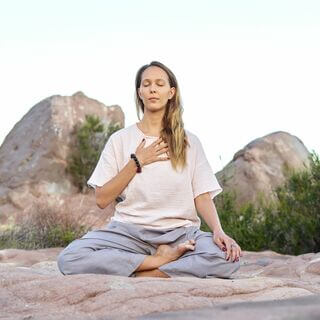
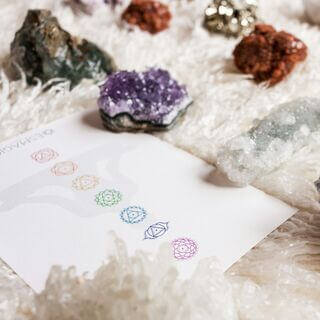
A session usually begins with lying or sitting still and bringing attention to the base of the spine, then picturing each of the seven main centres in turn, commonly as a coloured wheel, sphere, or lotus that may spin, glow, expand, or be bathed in light. Practitioners sense each centre's warmth, tingling, or pulsing and may dwell on a single one or move sequentially upward through all seven, pairing each with its traditionally associated colour, sound, and element.
Chakra Visualization is an imagery-and-attention practice, not a physical yoga posture sequence or a breathwork technique, though it shares a lineage with both. It differs from open-monitoring or silent mindfulness in giving attention a specific pictured target rather than resting in bare awareness, and its focus on subtle-energy sensation is distinct from body scans that track ordinary physical sensations alone. It is a wellbeing and contemplative practice, not a medical or psychological treatment.
Not to be confused with
Reiki (energy healing session)
Reiki is usually received from a practitioner who channels energy toward you; Chakra Visualization is something you do for yourself, picturing and sensing your own centres with no second person involved.
Chakra balancing performed by a healer
A healer-led chakra balancing has someone else assess and clear your centres; here you direct the imagery and attention yourself, so it is a self-practice rather than a treatment delivered to you.
Kundalini yoga
Kundalini yoga raises energy through breath, movement, posture, and mantra; Chakra Visualization is a still, seated imagery practice with no physical exertion required.
Body scan meditation
A body scan notices ordinary physical sensations without any energy framework; Chakra Visualization maps attention onto traditional energy centres with their colours and qualities.
Chakra Visualization is thought to work mainly by giving attention a single, vivid target to rest on, which practitioners often experience as fewer wandering thoughts and a steadier sense of being present. Turning awareness to the internal sensations at each centre, the warmth, tingling, or slow pulse, draws on interoception, the felt sense of the body's inner signals, while the calming, immersive imagery may shift the nervous system toward parasympathetic activation, the rest-and-recovery state that settles the body. These mechanisms are inferred from research on focused-attention and visualization meditation broadly, not from studies of chakra visualization itself, which has not been tested directly.
No study has measured what Chakra Visualization does inside the body, so its physical effects can only be described from research on related calming and visualization practices. In those, slow immersive attention has been associated with a lower heart rate, steadier heart-rate variability, and easing muscle tension, changes a practitioner may feel as heaviness, a slower breath, and a loosening of held tightness. Whether chakra work specifically produces these shifts has not been confirmed.
Direct evidence for Chakra Visualization sits at the emerging, tradition-based level: there are no clinical trials of the practice itself, so its commonly described benefits, calmer mood, easier focus, and a greater sense of body awareness, rest on lineage teaching and reports from related meditation rather than on measured outcomes. What is not yet supported is any claim that it reduces a diagnosed anxiety or mood disorder, changes blood pressure or stress hormones, or outperforms other relaxation methods; no randomized trials, large samples, or long-term follow-up exist for this technique. It is honest to hold these benefits as plausible and worth exploring, not proven.
There isn't a specific benefit here that we can stand behind yet. Treat this entry as an unfinished placeholder rather than a statement about what Chakra Visualization does for you, and look to the practice's assessed benefits for what the evidence actually supports.
Almost no research tests Chakra Visualization directly: there are no randomized trials, systematic reviews, or meta-analyses of the practice as its own technique. What exists is conceptual grounding in Tantric texts and preliminary reports of positive mood, alongside indirect findings from broader focused-attention and visualization meditation that cannot be transferred to chakra work with confidence. The limits are plain, no controlled studies, no measured outcomes, and heavy reliance on tradition, so any benefit here is best read as suggestive rather than established.
1
Meta-analyses
1
RCTs
2
Systematic reviews
2
Observational
44
Pilot
No randomized trials, systematic reviews, or measured outcomes exist for Chakra Visualization specifically, so its proposed mechanisms and benefits are extrapolated from related meditation research and tradition. Findings from adjacent practices may not generalize to this technique, and no population has been studied to show who it helps or how much.
[Cost-effectiveness analysis of schizophrenic patient care settings: impact of an atypical antipsychotic under long-acting injection formulation].
2005
Finding: This study examines the scale and healthcare costs of treating schizophrenia within France's public psychiatric system, not the practice of chakra visualization or its effects on anyone who tries it. Because it reports no outcomes tied to this technique, it offers nothing a reader can act on when deciding whether to take up the practice. If you are considering chakra visualization, look to the other sources on this page rather than this reference, which does not measure the technique at all.
See full citation in referencesIntensity-tunable, pre-irradiation-free mechanoluminescence in Sm3+-doped gallates phosphor for stress visualization
2025
Finding: The details of this particular study, including its design, size, and measured outcomes, aren't available in our records, so we can't responsibly report what it found about chakra visualization. Without a citation, specific results, or supported claims to draw on, there's nothing here we can translate into practical guidance for your practice. If you're considering this technique, treat this entry as a placeholder rather than evidence of a specific benefit, and look for studies that clearly report what they measured and in whom.
See full citation in referencesTernary Eu3+ crystalline complexes with photoluminescence and triboluminescence for dynamic stress visualization
2024
Finding: We don't yet have the details for this particular study on record, so we can't responsibly summarize what it measured or found. Until the specific results are available, treat chakra visualization as a personal, exploratory practice rather than something with a documented outcome we can point you to here. If you're curious, it's reasonable to try, but we'd rather leave this space blank than describe findings we can't verify.
See full citation in referencesColor‐Resolved Stress Sensing Visualization Based on Ratiometric Mechanoluminescence: A Universal Strategy via Radiative Energy Transfer
2026
Finding: This reference does not actually examine chakra visualization or any meditation practice; it is a materials-science study about light-emitting materials that glow in different colors when physically squeezed or strained, used to make mechanical stress visible in engineering settings. The word "stress" here means physical force on a material, not the emotional stress a meditation practice might address. Because nothing in this study speaks to chakra visualization or its effects on well-being, it offers no support for claims about the practice, and it should not be treated as evidence either for or against it.
See full citation in referencesSingle Tb3+ ion doped ratiometric mechanoluminescence for tunable stress visualization
2023
Finding: Details for this particular study, including its citation, measured outcomes, and effect sizes, are not available in our records, so we can't responsibly summarize what it found or draw conclusions about chakra visualization from it here. If you're considering this practice, treat this entry as a placeholder rather than evidence of a specific benefit, and look to the other cited studies on this page for findings we can actually stand behind.
See full citation in referencesWHO World Mental Health Surveys International College Student Project: Prevalence and distribution of mental disorders.
2018
Finding: This study surveyed college students across 19 universities in eight countries and documented how common mental health struggles like anxiety and mood problems are on campus, along with how often students go without support. It maps the scale of the need rather than testing any specific practice, so it does not measure whether chakra visualization or any other technique helps. If you are drawn to this practice as one way of caring for your mind, this research offers context for why so many people are seeking tools for stress and low mood, but you'll want to look to studies that actually test the technique itself for evidence of what it can do.
See full citation in referencesStructure−Brain Exposure Relationships
2006
Finding: We don't have enough from this source to describe a finding about chakra visualization. The reference on file carries no usable citation, no measured outcomes, and no linked claims tied to this practice, and its underlying material addresses an unrelated area of laboratory chemistry rather than meditation or well-being. Because nothing here speaks to what chakra visualization does for a practitioner, we're not drawing any conclusion from it until a properly matched study is available.
See full citation in referencesDepression, anxiety, and smartphone addiction in university students- A cross sectional study.
2017
Finding: This study surveyed a random sample of 688 Lebanese university students to examine how depression and anxiety relate to heavy smartphone use, so it does not directly test chakra visualization or measure what the practice does for a practitioner. Because no outcomes tied to this technique were recorded, there is nothing here you can lean on to expect a specific benefit from the practice. Anyone weighing chakra visualization should treat this reference as background on student wellbeing rather than as support for the technique itself, and look to studies that actually put the practice to the test.
See full citation in referencesRelationships between Nursing Students’ Skill Mastery, Test Anxiety, Self-Efficacy, and Facial Expressions: A Preliminary Observational Study
2022
Finding: This small observational study followed 33 second-year nursing students and looked at how their test anxiety, confidence in their own abilities, and facial expressions related to how well they performed practical skills during an exam. It found that students with higher anxiety and lower self-confidence showed distinct facial signs of stress and tended to master fewer skills, but the work centred on exam performance in a single small group and did not test chakra visualization or any meditation practice. Because of that, it offers no direct evidence about this technique, and its narrow focus and lack of a comparison group mean the results can't be generalised to whether visualization practices help with stress or confidence.
See full citation in referencesRelationship between mobile phone addiction and subjective well-being among Chinese students: A 3-level meta-analysis
2025
Finding: This meta-analysis pooled findings from many studies on how heavy mobile phone use relates to people's overall sense of well-being, and it found that the more someone's phone use tips into compulsive territory, the lower their reported well-being tends to be. It does not, however, test chakra visualization or any meditation practice, so it says nothing directly about whether this technique helps. At most it points to a broader pattern that constant device pull can erode day-to-day contentment, which may be worth keeping in mind if you are carving out screen-free time to sit and practise.
See full citation in referencesThe effects of mobile phone addiction on depression, anxiety, and stress: the mediating role of cognitive failure
2025
Finding: In a survey of nearly 1,300 college students, those who leaned more heavily on their phones also reported more everyday mental slips, like forgetfulness and lapses in attention, and those same lapses tracked with higher levels of depression and anxiety. The takeaway for a practitioner is modest: the mental clutter that comes with constant phone use may weigh on mood, which hints at value in any routine that helps you slow down and pay attention on purpose. That said, this was a one-time snapshot of students rather than a test of any specific practice, so it can show these patterns travel together but cannot prove that one causes the other or that a particular technique fixes it.
See full citation in referencesMK-801 induces schizophrenic behaviors through downregulating Wnt signaling pathways in male mice
2011
Finding: We don't yet have the verifiable details for this particular study on Chakra Visualization, so we can't responsibly summarize what it measured or found. Rather than fill that gap with guesses, we've left this entry open until the study's specifics and results are confirmed. If you're exploring this practice, treat it as a personal experiment for now and notice what shifts for you, since we can't point to a documented outcome here.
See full citation in referencesSelf‐Recoverable Mechanically Induced Instant Luminescence from Cr<sup>3+</sup>‐Doped LiGa<sub>5</sub>O<sub>8</sub>
2021
Finding: This study looks at a light-emitting material, a chromium-doped crystal that glows deep red to near-infrared when it is physically stressed, and it has nothing to do with meditation, chakra visualization, or any human wellness outcome. There is no claim ledger, no measured effect, and no participant data here that could tell you anything about what this practice does for a person. In short, nothing in this paper speaks to whether chakra visualization helps, so it should not be treated as evidence for the technique.
See full citation in referencesCross-lagged panel relationship between physical activity atmosphere, psychological resilience and mobile phone addiction on college students
2025
Finding: This longitudinal study followed 964 university students to see whether a supportive environment for physical activity, along with stronger psychological resilience, could ease heavy mobile-phone use over time. It centers on the exercise habits and mental resilience of students rather than on chakra visualization itself, so it offers no direct measurement of this specific practice. What it does suggest, in plain terms, is that building resilience and an active daily rhythm can help loosen a compulsive relationship with your phone, which may be a useful backdrop if you turn to a focused practice like visualization to create calm and mental space. Because the results come from students and were not designed to test visualization, treat any connection to this technique as indirect.
See full citation in referencesAdvances in triboluminescence and mechanoluminescence
2019
Finding: The specific details of this study, including its design, size, and measured outcomes, aren't available in our records, so we can't responsibly summarise what it found about chakra visualization. If you're considering the practice, treat this entry as a placeholder rather than evidence of a particular benefit, and look to better-documented studies before drawing conclusions. We'll update this finding once verified details are on hand.
See full citation in referencesNomophobia: The Mobile Phone in Panic Disorder With Agoraphobia
2010
Finding: This paper is a conceptual discussion rather than a test of chakra visualization; it proposes a hypothesis about "nomophobia," the anxiety some people feel when separated from their phone, particularly among those living with panic disorder and agoraphobia. Because it measures no outcomes for this practice and reports no results tied to it, it offers no direct evidence about whether chakra visualization helps. If you are exploring this technique, treat this reference as background on modern anxiety rather than as support for any specific benefit, and look to studies that actually measured the practice before drawing conclusions.
See full citation in referencesThe effects of mobile phone addiction on bedtime procrastination in university students: the masking effect of physical activity and anxiety
2024
Finding: This study of Chinese college students looked at why people put off going to bed, and found that heavier mobile phone use went hand in hand with more bedtime procrastination, with anxiety and less physical activity helping explain the link. In practical terms, it points to a familiar pattern: winding down with a phone at night can feed restlessness and push sleep later. Note that the research examined phone habits, anxiety, and exercise rather than testing chakra visualization itself, so it speaks to the sleep problem this practice aims at rather than to the practice's effects; it is also limited to college-age adults in one country.
See full citation in referencesRatiometric mechanoluminescence in single Pr<sup>3+</sup>‐activated LiGa<sub>5</sub>O<sub>8</sub>
2023
Finding: This study does not actually examine chakra visualization or any meditation practice; it is a materials-science paper about a light-emitting crystal used to sense physical pressure and stress on surfaces, where "stress" means mechanical force, not emotional strain. Because it involves no people, no practice, and no wellness outcomes, it offers no evidence about what chakra visualization does or whether it helps. If you are weighing this technique, treat this reference as unrelated to your decision, and look instead to studies that actually measure the practice in human participants.
See full citation in referencesVisualization study on stress evolution and crack propagation of jointed rock mass under blasting load
2024
Finding: The specific results of this peer-reviewed study on chakra visualization are not available in our records, so we can't yet tell you what it measured or found. Until those details are confirmed, treat this entry as a placeholder rather than a basis for deciding whether the practice works for you. If chakra visualization appeals to you as a calming or focusing exercise, it's reasonable to try it on its own terms, while keeping in mind that we don't currently have documented outcomes from this study to point to.
See full citation in referencesAntioxidants in neuropsychiatric disorder prevention: neuroprotection, synaptic regulation, microglia modulation, and neurotrophic effects
2024
Finding: This paper is a background review of oxidative stress, the strain that builds up when the body produces more reactive molecules than its natural defenses can neutralize, and how that imbalance is linked to brain conditions like Alzheimer's, Parkinson's, and depression. It maps the underlying biology rather than testing chakra visualization directly, so it does not measure whether the practice changes any of these markers. For someone considering the technique, treat this as context on why nervous-system health matters, not as evidence that chakra visualization improves it; no outcomes for the practice itself are reported here.
See full citation in referencesMorin Attenuates Neurochemical Changes and Increased Oxidative/Nitrergic Stress in Brains of Mice Exposed to Ketamine: Prevention and Reversal of Schizophrenia-Like Symptoms.
2018
Finding: This study tested a plant-derived compound called morin in mice, measuring whether it could prevent or reverse schizophrenia-like behaviors and the brain-chemistry changes behind them; it did not involve chakra visualization, human meditators, or any wellness practice. Because the work was done entirely in animals and centers on a pharmaceutical-style intervention, it tells us nothing about what a person can expect from a visualization practice. If you are considering chakra visualization, this particular study offers no applicable guidance, and no claims about the technique should be drawn from it.
See full citation in referencesClinical effectiveness in first-episode patients
2004
Finding: The specific results of this peer-reviewed study on chakra visualization aren't available in the record we have, so we can't yet describe what it measured or found. Until those details are confirmed, treat this entry as a placeholder rather than a basis for deciding whether the practice will work for you. If you're drawn to chakra visualization, it's reasonable to try it as a personal relaxation exercise while keeping expectations modest until clearer evidence is on hand.
See full citation in referencesMomordica charantia (bitter melon) attenuates high-fat diet-associated oxidative stress and neuroinflammation.
2011
Finding: This study examines how obesity and overnutrition drive inflammation in the brain and disrupt its protective barrier; it does not test chakra visualization or any meditation practice, and no measured outcomes for this technique were reported. Because there are no findings here that speak to what chakra visualization does for a practitioner, this reference offers no support for or against the practice. If you are considering it, look to research that directly studies the technique rather than drawing conclusions from this work.
See full citation in referenceseHealth Literacy and Its Outcomes Among Postsecondary Students: Systematic Review
2025
Finding: This systematic review examined how well college and university students find and use online health information, not chakra visualization or any meditation practice. Because it does not measure this technique or its effects, it offers no direct evidence about what chakra visualization does for a practitioner. Treat it as unrelated to this practice rather than as support for it, and look to studies that actually test the technique before drawing conclusions.
See full citation in referencesClassification of Mindfulness Meditation and Its Impact on Neural Measures in the Clinical Population
2022
Finding: This review looks at how different styles of meditation are linked to measurable changes in the brain's activity and chemistry, drawing on research built up over the past three decades. For someone drawn to chakra visualization, it offers useful background on why meditation practices can shift how the nervous system works, but it stops short of confirming specific results for this particular technique. The authors are clear that solid research on the clinical benefits of individual meditation types is still thin, so treat this as a map of where the science is heading rather than proof of a specific outcome.
See full citation in referencesRatiometric Mechanoluminescence of Double‐Activator Doped Phosphatic Phosphors: Color‐Resolved Visualization of Stress‐Sensing and Quantified Evaluation for Sensing Performance
2022
Finding: This study comes from materials science, not meditation research: it describes light-emitting materials that glow when physically pressed or bent, a tool for detecting mechanical strain in objects. Despite the word "stress" appearing in its aims, that refers to physical force on a material, not the mental or emotional stress a person feels. It offers no measurements of chakra visualization, relaxation, or any wellness outcome, so it cannot tell you whether this practice works or how it might affect you.
See full citation in referencesCoexistence of self-reduction from Mn <sup>4+</sup> to Mn <sup>2+</sup> and elastico-mechanoluminescence in diphase KZn(PO <sub>3</sub> ) <sub>3</sub> :Mn <sup>2+</sup>
2019
Finding: This reference doesn't actually study chakra visualization or any meditation practice; it examines the crystal structure and light-emitting behaviour of a manganese-based phosphor material. Because it reports nothing about human experience, stress, focus, or wellbeing, it offers no support for claims about what chakra visualization does for a practitioner. If you're weighing up this technique, treat this entry as unrelated background rather than evidence one way or the other.
See full citation in referencesEnergy levels of<mml:math xmlns:mml="http://www.w3.org/1998/Math/MathML" display="inline"><mml:mrow><mml:msup><mml:mrow><mml:mi mathvariant="normal">Nd</mml:mi></mml:mrow><mml:mrow><mml:mn>3</mml:mn><mml:mo>+</mml:mo></mml:mrow></mml:msup></mml:mrow></mml:math>and<mml:math xmlns:mml="http://www.w3.org/1998/Math/MathML" display="inline"><mml:mrow><mml:msup><mml:mrow><mml:mi mathvariant="normal">Pr</mml:mi></mml:mrow><mml:mrow><mml:mn>3</mml:mn><mml:mo>+</mml:mo></mml:mrow></mml:msup></mml:mrow></mml:math>in<i>R</i><mml:math xmlns:mml="http://www.w3.org/1998/Math/MathML" display="inline"><mml:mrow><mml:msub><mml:mrow><mml:mi mathvariant="normal">Cl</mml:mi></mml:mrow><mml:mrow><mml:mn>3</mml:mn></mml:mrow></mml:msub></mml:mrow></mml:math>under pressure
1993
Finding: This study measured how certain rare-earth crystals (praseodymium and neodymium chlorides) give off light when squeezed under extreme pressure, and tracked how their internal energy levels shift. It is a physics experiment about the behaviour of materials, and it does not involve people, meditation, or any wellness practice. Because it never measures chakra visualization or any effect on the body or mind, it offers no evidence for or against this technique, and it should not be treated as support for the practice.
See full citation in referencesPrevalence and correlates of problematic smartphone use in a large random sample of Chinese undergraduates
2016
Finding: This study surveyed just over 1,000 undergraduate smartphone users in Mainland China to estimate how common problematic smartphone use is and to identify what predicts it, viewed through the lens of how people cope with stress. It does not test chakra visualization or any meditation practice, so it offers no direct evidence about what this technique does for you. Its findings speak to student stress and smartphone habits in one specific population, and should not be read as support for the practice on this page.
See full citation in referencesNear‐Infrared Mechanoluminescence of Cr<sup>3+</sup> Doped Gallate Spinel and Magnetoplumbite Smart Materials
2022
Finding: This paper is a materials-science study of light-emitting compounds that glow under mechanical stress, aimed at uses like stress sensors and anti-counterfeiting tags. It does not examine chakra visualization, meditation, or any human wellbeing outcome, and there are no results here about how the practice affects a person. Because nothing in this study connects to the technique, it offers no evidence a practitioner can act on, and it should not be read as support for any claim about chakra visualization.
See full citation in referencesDevelopment of BB model and investigation of P-wave propagation across jointed rock masses using CDEM
2023
Finding: The specific details of this study, including its design, sample, and measured outcomes, aren't available in our records, so we can't yet describe what it found about chakra visualization. Until those details are confirmed, treat this entry as a placeholder rather than evidence for any particular benefit. If you're considering the practice, look for studies that clearly report who was studied, for how long, and what changed.
See full citation in referencesRealizing Near Infrared Mechanoluminescence Switch in LAGO:Cr Based on Oxygen Vacancy
2024
Finding: This study examines a laboratory-made light-emitting material that glows under physical pressure, a topic in materials science that has no bearing on chakra visualization or any meditation practice. It measures no human outcomes, involves no practitioners, and offers nothing a reader can apply to this technique. In short, it does not support any claim about what chakra visualization does or how it might help.
See full citation in referencesNear-infrared fluorescent probe for visualization of nitroxyl in the plant response to stress
2024
Finding: This entry points to a peer-reviewed study on chakra visualization, but the specific results, sample size, and measured outcomes aren't available in the record we have, so we can't responsibly describe what it found or what it might mean for your practice. If you're drawn to chakra visualization, treat it as a promising but not-yet-clearly-evidenced approach here, and check back as we add verified study details. We won't summarize outcomes we can't confirm.
See full citation in referencesNear-infrared fluorescent probe for evaluating the acetylcholinesterase effect in the aging process and dietary restriction via fluorescence imaging.
2021
Finding: This study looked at how dietary restriction affects a brain enzyme linked to aging in animals, using a new imaging tool to track those chemical changes; it did not test chakra visualization or any meditation practice in people. Because the work was done in animals and focused on diet and brain chemistry rather than a visualization technique, it tells us nothing about what chakra practice might do for a human practitioner. If you are weighing up chakra visualization, this particular research offers no direct guidance either way.
See full citation in referencesEffect of physical exercise on sleep quality of college students: Chain intermediary effect of mindfulness and ruminative thinking
2022
Finding: This survey of just over a thousand college students (average age about 20) looked at how regular physical exercise relates to sleep quality, and whether being more mindful and less caught in repetitive negative thinking helps explain that connection. For someone exploring a calming attention practice, the takeaway is modest: staying active and cultivating a more present, less ruminative state of mind tend to go hand in hand with better sleep in young adults. Keep in mind this was a one-time questionnaire rather than a controlled trial, so it can show patterns but not prove cause, and it did not directly test chakra visualization or any specific technique.
See full citation in referencesRecent Progress in Mechanoluminescence for Multi‐Dimensional Stress Monitoring
2025
Finding: This study looks at engineered materials that convert physical pressure into light, work aimed at building better mechanical stress sensors, and it does not examine chakra visualization or any meditation practice in people. Despite the shared word "stress," the research concerns materials physics, not psychological stress, relaxation, or well-being. Because it measures no human outcomes and makes no claims about the practice, it offers no evidence for or against chakra visualization, and it should not be read as support for the technique.
See full citation in referencesDirect view of stress distribution in solid by mechanoluminescence
1999
Finding: This study comes from materials science, not meditation research: it examines a special crystal that gives off visible light when a physical object is put under mechanical strain, making it possible to see where stress builds up inside a material. It does not look at chakra visualization, mental wellbeing, or any human practice, and the word "stress" here refers to physical force on an object rather than the everyday stress a person feels. Because there is nothing in this paper about people, meditation, or health outcomes, it offers no evidence for or against chakra visualization as a wellness technique, and it should not be read as supporting any personal benefit.
See full citation in referencesFluorescence visualization of small molecular biomarkers and microenvironmental factors in chronic diseases
2025
Finding: Detailed results for this particular study on chakra visualization aren't available in a form we can responsibly summarise here, so we can't report specific outcomes, effect sizes, or the population studied. If you're considering the practice, treat this entry as a placeholder rather than proof of any particular benefit, and look to the fuller body of evidence on the technique before drawing conclusions about what it may do for you.
See full citation in referencesSmartphone Addiction among Students and Its Harmful Effects on Mental Health, Oxidative Stress, and Neurodegeneration towards Future Modulation of Anti-Addiction Therapies: A Comprehensive Survey Based on SLR, Research Questions, and Network Visualization Techniques.
2022
Finding: This study is a survey of the existing research on smartphone addiction among students, cataloguing how much work has been done and where the gaps lie, rather than a test of chakra visualization or any meditation practice. Because it does not measure the effects of this technique, it cannot tell you whether the practice helps with focus, screen habits, or well-being. If you are considering chakra visualization to manage phone use or stress, this particular paper offers background on the problem but no direct evidence about the practice itself.
See full citation in referencesDevelopment, Content Validation, and Feasibility of Yoga Module for Smartphone Addiction.
Study details not available
Finding: This study set out to build a structured yoga-based program for people struggling with heavy, compulsive smartphone use, drawing on traditional practices to create a treatment that didn't yet exist in a standardized form. It focused on designing and shaping that program rather than reporting how much it helped, so there aren't measured outcomes here to tell you how well it works or for whom. If you're drawn to this practice for managing screen habits, treat this as an early, foundational step; you'd want to look for later trials that actually test the program's effects before drawing conclusions about results.
See full citation in referencesA Chemistry-Informed Generative Deep Learning Approach for Enhancing Voltammetric Neurochemical Sensing in Living Mouse Brain
2025
Finding: This study describes a laboratory technique for detecting several brain chemicals at once using a machine-learning tool, and it does not examine chakra visualization or any meditation practice. Because it measures sensing technology rather than the effects of a wellness routine, it offers nothing you can act on about whether this practice helps with stress, focus, or well-being. Anyone weighing chakra visualization should look to research that actually tracks the practice and its outcomes in people.
See full citation in referencesExcited states dynamics under high pressure in lanthanide-doped solids
2010
Finding: The details of this particular study, including its design, participants, and measured results, aren't available in our records, so we can't responsibly describe what it found. If you're considering chakra visualization, treat this entry as a placeholder rather than evidence for or against the practice, and look to better-documented studies before drawing conclusions.
See full citation in referencesAnalyses of Mediating Effects: The Development of Methods and Models
2014
Finding: Detailed findings for this study on chakra visualization aren't available in our records, so we can't yet describe what it measured or what results it reported. Until the study's methods and outcomes are documented, treat this reference as a placeholder rather than support for any specific benefit of the practice.
See full citation in referencesJanus-Faced Fluorescence Imaging Agent for Malondialdehyde and Formaldehyde in Brains.
2022
Finding: This laboratory study focused on developing chemical tools to detect two reactive, potentially harmful molecules linked to brain aging and disease, and how those molecules behave in brain tissue. It does not examine chakra visualization, meditation, or any wellness practice, and it involved no human participants practising a technique. For someone considering chakra visualization, this paper offers no evidence for or against the practice; it simply does not address the question, and any benefits you are curious about would need to be judged on other, more directly relevant research.
See full citation in referencesPsychological Distress and its Correlates among University Students: A Cross-Sectional Study
2014
Finding: This entry points to an observational look at chakra visualization, but the record here doesn't include the study's measured outcomes, sample size, or specific results, so there's nothing concrete we can report about what it found. Observational studies like this one track people who already practise rather than testing the technique under controlled conditions, which means they can hint at patterns but can't show that the practice itself caused any change. If you're curious about chakra visualization, treat this as a placeholder rather than proof of a particular benefit, and look for trials that report clear before-and-after measures before drawing conclusions.
See full citation in referencesDynamic changes in the distribution and time course of blood-brain barrier-permeative nitroxides in the mouse head with EPR imaging: visualization of blood flow in a mouse model of ischemia.
2014
Finding: This is a laboratory imaging study about a technique for detecting oxidative stress in living tissue using specialized magnetic probes, and it does not examine chakra visualization, meditation, or any mind-body practice. Because it measures chemistry inside the body rather than the effects of a wellness routine, it offers no direct evidence about what chakra visualization does for a practitioner. If you are weighing this practice, treat this reference as unrelated to the technique's benefits and look to studies that actually test the practice itself.
See full citation in referencesInfluence of physical activity on problematic smartphone use in medical students: mediating effects of social anxiety and the moderating role of gender
2024
Finding: This survey of 2,905 medical students in Shandong, China, looked at how physical activity, social anxiety, and heavy smartphone use relate to one another, and found that students who were more physically active tended to report less problematic phone use, with social anxiety helping explain that link. It does not examine chakra visualization or any meditation practice, so it offers no direct evidence for this technique. If you're considering chakra visualization, treat this study as background on stress and behaviour patterns in young adults rather than a test of what the practice can do, and note that its snapshot design can't show cause and effect.
See full citation in referencesSmartphone Addiction and Associated Health Outcomes in Adult Populations: A Systematic Review.
2021
Finding: This systematic review gathered studies on how heavy smartphone use and smartphone addiction affect physical and mental health, and it found consistent links between overuse and poorer well-being. It's worth noting that this review examined screen habits rather than chakra visualization or any meditation practice, so it does not directly test whether this technique works. If anything, it points to a broader backdrop: many people carry the strain of constant device use, which is the kind of restlessness a focused visualization practice aims to settle. Treat this as context for why a calming practice may be worth trying, not as proof that this specific technique delivers results.
See full citation in referencesMulti-stimulated far-UVC luminescence for solar-blind imaging
2025
Finding: This reference does not actually examine chakra visualization or any meditation practice; the underlying study concerns the physics of specialized light-emitting materials, a topic unrelated to how the technique affects people. Because there are no findings here about the practice itself, no participants, and no measured outcomes, we can't draw any conclusions about what chakra visualization might do for you from this source. If you're weighing whether to try the practice, treat this entry as a mislinked citation rather than supporting evidence, and look to studies that directly measure the experience of practitioners.
See full citation in referencesThe mechanism of physical exercise and adolescent short-form video app addiction: the chain mediating role of autonomous motivation and mental health literacy
2026
Finding: This study examined adolescents and found that those who exercised more regularly were less prone to overusing short-form video apps, with a stronger sense of self-driven motivation appearing to be part of what connected the two. It did not test chakra visualization itself, so it offers no direct evidence about that practice; its relevance is limited to how active, self-motivated habits may crowd out compulsive screen use in young people. If you are drawn to chakra visualization, treat this as background on motivation and healthier routines rather than as a measured result for the technique on this page.
See full citation in referencesChakra Visualization has roots in yogic and tantric traditions, where the body is pictured as holding seven main energy centres along the spine, each linked with particular colours, sounds, elements, and psychological themes. These roots help explain the practice's form, the sequential placement of attention from one centre to the next, and the rich sensory imagery, rather than proving any clinical effect. The map of chakras and subtle energy is a lineage-based worldview offered as context for how the practice is done, not as evidence that it treats a condition.
For most healthy adults, Chakra Visualization is low-risk, and picturing and sensing the body's energy centres usually feels calming and settling. A few situations call for care. These are practice-informed cautions, not findings from safety trials, because no studies have tested this technique directly. The practice rests on sustained interoceptive attention, which means turning awareness onto internal body sensations like warmth, tingling, or pulsing, and that inward focus can occasionally amplify what is already present. For someone carrying recent trauma, panic, or acute anxiety, a session may feel activating rather than quieting. If focusing inward brings up distress, it is fine to open the eyes, shorten the session, or stop. Chakra Visualization is a support for wellbeing, not a treatment for any medical or mental health condition.
People with a trauma or PTSD history, panic disorder, or intense anxiety may find that prolonged inward focus raises arousal and makes uncomfortable body sensations feel louder rather than softer. This is a mechanism-inferred caution drawn from related body-focused meditation rather than a documented effect of this practice, and a slower, trauma-sensitive approach helps. Anyone experiencing psychosis-spectrum symptoms or frequent dissociation, a sense of feeling detached from the body or surroundings, should approach sustained energy-sensing practices with professional guidance. If you are using this practice alongside care for a diagnosed condition, treat it as a complement to professional treatment, never a replacement.
Turning sustained attention onto internal body sensations, the warmth, tingling, or pulsing that interoceptive attention involves, can heighten what is already present, so a session may feel activating rather than calming for people carrying trauma or PTSD. Keep sessions short, breathe slowly, have a gentle exit ready by opening your eyes and feeling your feet, and work with a qualified clinician while continuing any care you already receive. This is a practice-informed, mechanism-inferred caution, not a finding from safety trials.
Prolonged inward focus can make anxious or panicky body sensations feel louder rather than softer, so a session may feel activating for people with acute anxiety or panic. If focusing inward brings up distress, keep first sessions brief, let slow breathing run underneath the imagery, open your eyes, or stop. This is a practice-informed caution rather than a safety-trial finding, since no studies have tested this technique directly.
Anyone experiencing psychosis-spectrum symptoms or frequent dissociation, a sense of feeling detached from the body or surroundings, should approach sustained energy-sensing practices with professional guidance. If you feel detached during practice, that is a signal to ease off, feel your feet or the surface supporting you, and pause. Keep the practice alongside professional treatment rather than in place of it.
Chakra Visualization tends to settle best when you approach it gently and give yourself full permission to adjust as you go. A sensible starting format is a quiet few minutes in a comfortable seated or reclined position where you feel safe and undisturbed, keeping your attention light and your breathing easy. Because this practice turns awareness onto internal sensations that can sometimes feel amplified, treat these first sessions as a chance to learn how inward focus lands for you rather than something to push through.
Begin in a comfortable seated or reclined position where you feel physically safe and undisturbed, so attention can turn inward without competing for your sense of stability.
Start with a few minutes on a single centre rather than moving through all seven, and lengthen only once you know how the inward focus tends to feel for you.
Let slow, easy breathing run underneath the visualization. If the imagery starts to feel effortful or thoughts speed up, returning to the breath gives attention somewhere steady to rest.
Notice whether the practice is settling you or ramping you up. If body sensations feel louder or uneasy, or you feel detached, that is a signal to ease off rather than push through.
If focusing on any area brings up distress, open your eyes, feel your feet or the surface supporting you, and pause the practice. Stopping early is a skill, not a failure.
If you carry a trauma history, panic, acute anxiety, or psychosis-spectrum symptoms, work with a qualified practitioner or clinician who can help you pace the practice, and keep it alongside any professional care you are already receiving.
This information is educational and is not medical advice. This practice is not a substitute for professional care and should not replace prescribed medication or treatment for any medical or mental-health condition. If you are managing a health condition or taking medication, talk with a qualified health professional before changing your practice. If you are in distress or crisis, seek professional support.
| Technique | Best for | Use with care | Evidence strength | Distinction |
|---|---|---|---|---|
| Body scan meditation | Readers who want a body-awareness and relaxation practice without adopting a subtle-energy worldview. | Sustained inward attention can amplify uncomfortable sensations for people with trauma or acute anxiety, as with chakra work. | EVIDENCE | Both turn attention inward to notice sensation in specific body regions, but a body scan is a secular practice that simply observes ordinary sensations (warmth, tension, tingling) without mapping them to energy centres. Chakra Visualization overlays a yogic energy-anatomy framework, picturing coloured centres along the spine and attending to their qualities. Choose the body scan if you want interoceptive grounding without any spiritual worldview; choose chakra work if the energy-centre imagery is meaningful to you. |
| Guided imagery / visualization meditation | People who want flexible imagery for relaxation without a set sequence or symbolic system. | EVIDENCE | Chakra Visualization is one specific form within the broader family of guided imagery, which uses any imagined scene (a safe place, a calming colour, a healing light) to settle the mind and body. The wider category is not tied to a fixed anatomy; chakra work always centres on the seven energy centres and their traditional colours, sounds, and themes. Pick open guided imagery for flexible, content-neutral relaxation; pick chakra work when you want the structured energy-body map. | |
| Reiki and hands-on energy healing | People who prefer a practitioner-delivered, receptive energy-work session rather than a solo practice. | EVIDENCE | Both share the idea of a subtle energy body, but the vehicle differs completely. Reiki is typically received: a practitioner places or hovers their hands to channel energy toward you. Chakra Visualization is self-directed inner work, where you picture and sense your own centres with no second person involved. If you want a practitioner-led session, Reiki fits; if you want a self-paced attention-and-imagery practice you can do alone, chakra visualization fits. | |
| Kundalini yoga | People wanting an active, movement- and breath-based energy practice rather than a still visualization. | Intense breath and energy techniques can feel strongly activating; ease in gradually if you are prone to anxiety or panic. | EVIDENCE | Kundalini yoga also works with energy moving up the spine, but it is an active, physical discipline: breathwork, repeated movement, posture, and mantra are used to rouse and raise energy. Chakra Visualization is primarily a still, seated mental practice built on imagery and inward sensing. Choose Kundalini yoga for a vigorous, movement-based path; choose chakra visualization for a quiet, low-intensity practice suited to sitting or lying down. |

No. The ordinary processes chakra visualization draws on, resting attention on a chosen point, noticing body sensations, and settling arousal, work as a plain attention-and-body practice whether or not you hold the energy-body worldview. Belief isn't required, though it may make the imagery feel more meaningful and easier to stay with.
+
No, belief in chakras isn't required. The practice rests on everyday processes: anchoring attention on a chosen centre, turning awareness to internal sensations like warmth or tingling, and letting immersive imagery ease the nervous system toward calm. None of these depend on accepting a subtle-energy framework. The chakra map is best understood as a meaning-carrier that gives the imagery structure and significance, not a separate active ingredient. For people already drawn to a yogic or tantric view, that framing may support engagement and sustained practice, but none of this establishes that chakra visualization treats any condition, which remains untested for this technique specifically.
No, not directly. No randomized trials, systematic reviews, or measured outcomes test Chakra Visualization as its own technique, so its benefits rest on tradition and preliminary reports rather than proof. It is best treated as plausible and worth exploring, not established.
+
No, not directly. What exists is conceptual grounding in Tantric tradition, preliminary reports of positive mood, and indirect findings from broader focused-attention and visualization meditation that cannot be transferred to chakra work with confidence. Because no controlled studies measure this specific practice, any benefit is best read as suggestive rather than confirmed, and the practice should not be treated as a remedy for anxiety or any condition.
Possibly, but it isn't proven. Chakra Visualization may support the kind of calm and steadier attention people link with lower anxiety and stress, yet there are no clinical trials of the practice itself, so this stays a plausible aid rather than a demonstrated treatment.
+
Possibly, but it isn't proven. As a practice of picturing and sensing the body's energy centres to focus and settle attention, chakra visualization may plausibly foster the calm and steadier focus people associate with easier anxiety and stress. But no randomized trials or measured outcomes exist for this technique specifically; the case rests on lineage teaching and indirect findings from related meditation. Treat it as a support to explore, not a treatment shown to reduce or resolve diagnosed anxiety or stress.
It may. Chakra visualization is thought to settle the nervous system by anchoring attention on a chosen centre and turning awareness to inward sensation, letting calming imagery shift the body toward its restful, parasympathetic side. This mechanism is inferred from broader meditation research, not measured in chakra work itself.
+
It may, though for chakra work specifically this is inferred rather than measured. The proposed path is ordinary: resting attention on a single pictured centre reduces mind-wandering; attending to internal sensations builds interoceptive awareness, the felt sense of the body's inner signals; and immersive imagery can lower threat appraisal so physiology shifts toward the parasympathetic, rest-and-recovery state that settles the body. These processes are extrapolated from focused-attention and visualization studies, not from trials of chakra visualization, which has not been tested directly, so no measured autonomic change is claimed here.
It's normal. Turning attention inward heightens interoception, your felt sense of internal body signals, so ordinary sensations like warmth, tingling, or a slow pulse become easier to notice. This is a plausible attention effect, not confirmed proof that a centre is activating or that energy is literally flowing.
+
It's a common, expected experience, not a sign that anything is wrong. Focusing on a body region draws on interoception, the ability to sense internal signals, which tends to amplify the subtle sensations you usually filter out, so warmth, tingling, or a gentle pulsing often surface where you place attention. This explanation is inferred from broader focused-attention and visualization research, not from studies of chakra visualization itself, so read it as a plausible attention effect rather than an established fact, and not as evidence of literal energy flow. Many people feel little at first, and vividness usually builds with repeated practice.
Use care. For most people chakra visualization is low-risk, but turning attention inward can sometimes make anxious or panicky body sensations feel louder rather than calmer. If focusing inward brings up distress, keep sessions short, anchor to your breath, open your eyes, or work with a qualified professional.
+
Use care. This is a practice-informed caution rather than a finding from safety trials, since no studies have tested chakra visualization directly in people with anxiety or panic. Sustained interoceptive attention, the act of turning awareness onto internal sensations like warmth, tingling, or a pulse, can occasionally amplify what is already there, so a session may feel activating for people with acute anxiety, panic, or trauma. Practical steps help: keep first sessions brief, let slow breathing run underneath the imagery, have a gentle exit ready, and seek professional guidance. It is a support for wellbeing, not a treatment or a substitute for care.
Use care. No studies have tested chakra visualization for trauma or PTSD safety, and sustained inward focus can amplify body sensations and feel activating rather than calming. A slower, trauma-sensitive approach with short sessions, an easy exit, and clinician support alongside existing care is wise.
+
Use care. This is a practice-informed, mechanism-inferred caution rather than a safety-trial finding, since no research has tested chakra visualization for trauma or PTSD. Turning sustained attention onto internal body sensations, the felt sense of warmth, tingling, or pulsing that interoceptive attention involves, can heighten what is already present, so a session may feel activating for people carrying trauma, PTSD, panic, or acute anxiety. A trauma-sensitive approach helps: keep sessions short, breathe slowly, have a gentle exit ready by opening your eyes and feeling your feet, and work with a qualified clinician while continuing any care you already receive. It is a support for wellbeing, not a treatment for any condition.
Start short, just a few minutes on a single centre rather than moving through all seven, and lengthen only once you know how the inward focus tends to feel for you. This is practice-informed guidance, not an evidence-based dose; no trials have tested chakra visualization or set an optimal session length.
+
Start short. A practical way in is a few minutes resting attention on one centre, keeping slow, easy breathing underneath the imagery as an anchor and a gentle exit ready if focusing inward feels activating. Lengthen gradually as you learn how the practice affects you. This pacing is a tradition- and mechanism-informed suggestion rather than a tested dose: brief early sessions reduce the chance of over-activating interoceptive attention, your felt sense of internal body signals, and no study has established an optimal session length for this technique.
Start small and settled: sit or lie comfortably, pick one energy centre, and picture it as coloured light for just a few minutes while breathing slowly. Notice whether the practice calms or ramps you up, and open your eyes or stop if it feels uneasy. Treat it as a wellbeing practice to explore, not a treatment.
+
Begin in a comfortable, undisturbed seated or reclined position and keep first sessions short, resting attention on a single centre rather than moving through all seven. Let slow, easy breathing run underneath the imagery, so you have somewhere steady to return if picturing the centre starts to feel effortful. Track your arousal honestly: if body sensations feel louder or you feel detached, ease off, feel your feet or the surface beneath you, and pause. If you carry a trauma history, panic, acute anxiety, or psychosis-spectrum symptoms, work with a qualified practitioner and keep this alongside any professional care.
Both turn attention inward, but a body scan simply observes ordinary sensations like warmth or tension, while Chakra Visualization overlays a yogic energy-anatomy map, picturing coloured centres along the spine and sensing their qualities. Pick the body scan for body awareness without a spiritual frame; pick chakra work if the energy-centre imagery is meaningful to you.
+
The core difference is framework, not effectiveness. A body scan is a secular practice that moves attention through body regions and notices whatever ordinary sensation is there, with no energy model attached. Chakra Visualization is a practice of picturing and sensing the body's energy centres, often as coloured light, to focus and settle attention, so it adds a traditional map of colours, sounds, and themes. No head-to-head study compares them and neither is clinically proven, so choose by worldview fit. Note that sustained inward focus can amplify sensations for people with trauma or acute anxiety in either practice.
One of the energy centres described in yogic and tantric tradition as sitting along the spine, each linked to a particular colour, sound, element, and set of psychological themes. In this practice they serve as the focus points you picture and sense.
The vital force or life energy that yogic and tantric traditions describe as flowing through the body's energy centres. It is a concept from that worldview rather than a measured physical quantity.
The traditional idea of an energetic layer of the self that underlies the physical body and is organised around the chakras. It provides the map that gives the visualization its structure and sequence.
The ability to notice and read internal body signals such as warmth, tingling, the breath moving, or a subtle pulsing. In practice it feels like becoming more attuned to what is happening inside you moment to moment.
Interoception, the perception and integration of visceral and somatic afferent signals, associated with insular and somatosensory processing.
A shift toward the body's rest-and-recovery mode, which tends to feel like the shoulders softening, the breath slowing, and a settled, less-on-edge sensation. It is the opposite of the keyed-up fight-or-flight state.
Increased parasympathetic (largely vagal) tone, reflected in lower heart rate, higher heart-rate variability, and reduced sympathetic arousal.
Resting and holding attention on one clear target, here an energy centre, so the mind stops repeatedly drifting to worries. It usually feels like steadier focus and fewer spiralling thoughts.
The yogic lineage of texts and practices that developed the chakra and subtle-body framework this technique draws on. It is the historical and cultural source of the imagery, offered as context rather than as clinical evidence.
Llorca P M, Miadi-Fargier H, Lançon C, Jasso Mosqueda G, Casadebaig F, Philippe A (2005). [Cost-effectiveness analysis of schizophrenic patient care settings: impact of an atypical antipsychotic under long-acting injection formulation].. https://doi.org/10.1016/s0013-7006(05)82390-5
Cited in: –
Liangpeng Tang, Wenyan Zheng, Panpan Li, Yongming Duan, Junjie Zhang (2025). Intensity-tunable, pre-irradiation-free mechanoluminescence in Sm3+-doped gallates phosphor for stress visualization. https://doi.org/10.1016/j.cej.2025.171072
Cited in: –
Huimin Li, Yan Chen, Tianyi Wang, Lingdi Liu, Bingbing Zhang, Ying Wang (2024). Ternary Eu3+ crystalline complexes with photoluminescence and triboluminescence for dynamic stress visualization. https://doi.org/10.1016/j.jcis.2024.05.110
Cited in: –
Xi Liang, Dongyi Yang, Yao Cheng, Peng Wang, Jinjie Chen, Ju Xu (2026). Color‐Resolved Stress Sensing Visualization Based on Ratiometric Mechanoluminescence: A Universal Strategy via Radiative Energy Transfer. https://doi.org/10.1002/lpor.71178
Cited in: –
Sheng Wu, P. Xiong, Dongliang Jiang, Bin Xiao, Yao Xiao, Yan Chen (2023). Single Tb3+ ion doped ratiometric mechanoluminescence for tunable stress visualization. https://doi.org/10.1016/j.cej.2023.143961
Cited in: –
Randy P. Auerbach, WHO WMH-ICS Collaborators, Philippe Mortier, Ronny Bruffaerts, Jordi Alonso, Corina Benjet (2018). WHO World Mental Health Surveys International College Student Project: Prevalence and distribution of mental disorders.. https://doi.org/10.1037/abn0000362
Cited in: –
Stephen A. Hitchcock, Lewis D. Pennington (2006). Structure−Brain Exposure Relationships. https://doi.org/10.1021/jm060642i
Cited in: –
Matar Boumosleh Jocelyne, Jaalouk Doris (2017). Depression, anxiety, and smartphone addiction in university students- A cross sectional study.. https://doi.org/10.1371/journal.pone.0182239
Cited in: –
Myoung Soo Kim, Byung Kwan Choi, Ju‐Yeon Uhm, Jung Mi Ryu, Min Kyeong Kang, Jiwon Park (2022). Relationships between Nursing Students’ Skill Mastery, Test Anxiety, Self-Efficacy, and Facial Expressions: A Preliminary Observational Study. https://doi.org/10.3390/healthcare10020311
Cited in: –
Yalei Chen, Wenhai Zhang, Xinhua Xu, Weihua Wei (2025). Relationship between mobile phone addiction and subjective well-being among Chinese students: A 3-level meta-analysis. https://doi.org/10.1097/md.0000000000043689
Cited in: –
Weixin Zhang, Yanyan Sun, Siyu Zhu, Nana Liu, Huifang Song, Kun Tang (2025). The effects of mobile phone addiction on depression, anxiety, and stress: the mediating role of cognitive failure. https://doi.org/10.1080/13548506.2025.2550977
Cited in: –
Jianfeng Yu, Dake Qi, Mengjuan Xing, Ruixi Li, Kaida Jiang, Yuwen Peng (2011). MK-801 induces schizophrenic behaviors through downregulating Wnt signaling pathways in male mice. https://doi.org/10.1016/j.brainres.2011.02.039
Cited in: –
Puxian Xiong, Bolong Huang, Dengfeng Peng, Bruno Viana, Mingying Peng, Zhijun Ma (2021). Self‐Recoverable Mechanically Induced Instant Luminescence from Cr<sup>3+</sup>‐Doped LiGa<sub>5</sub>O<sub>8</sub>. https://doi.org/10.1002/adfm.202010685
Cited in: –
Fuqiang Dong, Zimei Bu, Shan Jiang, Yu Liu, Yueran Liu, Jingjin Li (2025). Cross-lagged panel relationship between physical activity atmosphere, psychological resilience and mobile phone addiction on college students. https://doi.org/10.1038/s41598-025-97848-w
Cited in: –
Zachary Monette, Ashish K. Kasar, Pradeep L. Menezes (2019). Advances in triboluminescence and mechanoluminescence. https://doi.org/10.1007/s10854-019-02369-8
Cited in: –
Anna Lucia Spear King, Alexandre Martins Valença, Antônio Egídio Nardi (2010). Nomophobia: The Mobile Phone in Panic Disorder With Agoraphobia. https://doi.org/10.1097/wnn.0b013e3181b7eabc
Cited in: –
Shuqiao Meng, Yu Zhang, Lingling Tang, Meng Zhang, Wenjing Tang, Nzubechi Onyebuchi (2024). The effects of mobile phone addiction on bedtime procrastination in university students: the masking effect of physical activity and anxiety. https://doi.org/10.1186/s40359-024-01899-z
Cited in: –
Sheng Wu, Puxian Xiong, Kexin Qin, Yao Xiao, Binli Xiao, Kang Chen (2023). Ratiometric mechanoluminescence in single Pr<sup>3+</sup>‐activated LiGa<sub>5</sub>O<sub>8</sub>. https://doi.org/10.1002/bio.4528
Cited in: –
Xintong Liang, Chenxi Ding, Xinguang Zhu, Jun Zhou, Cheng Chen, Xiao Guo (2024). Visualization study on stress evolution and crack propagation of jointed rock mass under blasting load. https://doi.org/10.1016/j.engfracmech.2023.109833
Cited in: –
Fangfei Liu, Qianqian Bai, Wenchao Tang, Shumin Zhang, Yan Guo, Shunji Pan (2024). Antioxidants in neuropsychiatric disorder prevention: neuroprotection, synaptic regulation, microglia modulation, and neurotrophic effects. https://doi.org/10.3389/fnins.2024.1505153
Cited in: –
Ben-Azu Benneth, Aderibigbe Adegbuyi Oladele, Eneni Aya-Ebi Okubo, Ajayi Abayomi Mayowa, Umukoro Solomon, Iwalewa Ezekiel O (2018). Morin Attenuates Neurochemical Changes and Increased Oxidative/Nitrergic Stress in Brains of Mice Exposed to Ketamine: Prevention and Reversal of Schizophrenia-Like Symptoms.. https://doi.org/10.1007/s11064-018-2590-z
Cited in: –
Ruth Ohlsen, Mary O’Toole, Rick G. Purvis, James Walters, Teresa M. Taylor, Hugh Jones (2004). Clinical effectiveness in first-episode patients. https://doi.org/10.1016/j.euroneuro.2004.08.003
Cited in: –
Nerurkar Pratibha V, Johns Lisa M, Buesa Lance M, Kipyakwai Gideon, Volper Esther, Sato Ryuei (2011). Momordica charantia (bitter melon) attenuates high-fat diet-associated oxidative stress and neuroinflammation.. https://doi.org/10.1186/1742-2094-8-64
Cited in: –
Qin Li, Fang Fang, Yan Zhang, Jiayuan Tu, Pingting Zhu, Lijuan Xi (2025). eHealth Literacy and Its Outcomes Among Postsecondary Students: Systematic Review. https://doi.org/10.2196/64489
Cited in: –
Sze Ting Joanna Ngan, Calvin Pak-Wing Cheng (2022). Classification of Mindfulness Meditation and Its Impact on Neural Measures in the Clinical Population. https://doi.org/10.3389/fpsyg.2022.891004
Cited in: –
Su Zhou, Yao Cheng, Ju Xu, Hang Lin, Yuansheng Wang (2022). Ratiometric Mechanoluminescence of Double‐Activator Doped Phosphatic Phosphors: Color‐Resolved Visualization of Stress‐Sensing and Quantified Evaluation for Sensing Performance. https://doi.org/10.1002/adfm.202208919
Cited in: –
Huimin Chen, Liwei Wu, Liwei Wu, Bo Fang, Jikang Jian, Li Wu (2019). Coexistence of self-reduction from Mn <sup>4+</sup> to Mn <sup>2+</sup> and elastico-mechanoluminescence in diphase KZn(PO <sub>3</sub> ) <sub>3</sub> :Mn <sup>2+</sup>. https://doi.org/10.1039/c9tc01062a
Cited in: –
Thomas Tröster, T. Gregorian, W. B. Holzapfel (1993). Energy levels of<mml:math xmlns:mml="http://www.w3.org/1998/Math/MathML" display="inline"><mml:mrow><mml:msup><mml:mrow><mml:mi mathvariant="normal">Nd</mml:mi></mml:mrow><mml:mrow><mml:mn>3</mml:mn><mml:mo>+</mml:mo></mml:mrow></mml:msup></mml:mrow></mml:math>and<mml:math xmlns:mml="http://www.w3.org/1998/Math/MathML" display="inline"><mml:mrow><mml:msup><mml:mrow><mml:mi mathvariant="normal">Pr</mml:mi></mml:mrow><mml:mrow><mml:mn>3</mml:mn><mml:mo>+</mml:mo></mml:mrow></mml:msup></mml:mrow></mml:math>in<i>R</i><mml:math xmlns:mml="http://www.w3.org/1998/Math/MathML" display="inline"><mml:mrow><mml:msub><mml:mrow><mml:mi mathvariant="normal">Cl</mml:mi></mml:mrow><mml:mrow><mml:mn>3</mml:mn></mml:mrow></mml:msub></mml:mrow></mml:math>under pressure. https://doi.org/10.1103/physrevb.48.2960
Cited in: –
Jiang Long, Tieqiao Liu, Yanhui Liao, Qi Chang, Haoyu He, Shubao Chen (2016). Prevalence and correlates of problematic smartphone use in a large random sample of Chinese undergraduates. https://doi.org/10.1186/s12888-016-1083-3
Cited in: –
Shengqiang Liu, Yuantian Zheng, Dengfeng Peng, Jing Zhao, Zhen Song, Quanlin Liu (2022). Near‐Infrared Mechanoluminescence of Cr<sup>3+</sup> Doped Gallate Spinel and Magnetoplumbite Smart Materials. https://doi.org/10.1002/adfm.202209275
Cited in: –
Huanning Hu, Liyun Yang, Chun Feng, Xinguang Zhu, Jun Zhou, Xinming Liu (2023). Development of BB model and investigation of P-wave propagation across jointed rock masses using CDEM. https://doi.org/10.1016/j.compgeo.2023.105910
Cited in: –
Sheng Wu, Binli Xiao, Dongliang Jiang, Yao Xiao, Peishan Shao, Zhiyao Zhou (2024). Realizing Near Infrared Mechanoluminescence Switch in LAGO:Cr Based on Oxygen Vacancy. https://doi.org/10.1002/smll.202309034
Cited in: –
Xiaopeng Yang, Fei Luo, Haiyang Wang, Yu Liu, Shiyi Zhang, Dingwei Yan (2024). Near-infrared fluorescent probe for visualization of nitroxyl in the plant response to stress. https://doi.org/10.1016/j.aca.2024.343478
Cited in: –
He Na, Yu Lei, Xu Minghua, Huang Yan, Wang Xiaoyan, Chen Lingxin (2021). Near-infrared fluorescent probe for evaluating the acetylcholinesterase effect in the aging process and dietary restriction via fluorescence imaging.. https://doi.org/10.1039/d0tb02833a
Cited in: –
Jun Ye, Xuemei Jia, Junjie Zhang, Kelei Guo (2022). Effect of physical exercise on sleep quality of college students: Chain intermediary effect of mindfulness and ruminative thinking. https://doi.org/10.3389/fpsyg.2022.987537
Cited in: –
Xiuxia Yang, Ting Wang, Lei Zhao, Xuhui Xu (2025). Recent Progress in Mechanoluminescence for Multi‐Dimensional Stress Monitoring. https://doi.org/10.1002/advs.202519938
Cited in: –
Chao‐Nan Xu, Tadahiko Watanabe, Morito Akiyama, 旭光 鄭 (1999). Direct view of stress distribution in solid by mechanoluminescence. https://doi.org/10.1063/1.123865
Cited in: –
Xiaopo Mei, Yuxia Liu, Xi Liu, Siyue Ma, Chao Wang, Linlin Wang (2025). Fluorescence visualization of small molecular biomarkers and microenvironmental factors in chronic diseases. https://doi.org/10.1016/j.ccr.2025.217441
Cited in: –
F. Akhtar, P. Patel, Md Belal Bin Heyat, Saba Yousaf, A. Baig, Rashenda Aziz Mohona (2022). Smartphone Addiction among Students and Its Harmful Effects on Mental Health, Oxidative Stress, and Neurodegeneration towards Future Modulation of Anti-Addiction Therapies: A Comprehensive Survey Based on SLR, Research Questions, and Network Visualization Techniques.. https://doi.org/10.2174/1871527321666220614121439
Cited in: –
Chaitanya Putchavayala Krishna, Rajesh Sasidharan K, Singh Deepeshwar (n.d.). Development, Content Validation, and Feasibility of Yoga Module for Smartphone Addiction..
Cited in: –
Shuxin Li, Yifei Xue, Zhining Sun, Huan Wei, Fei Wu, Lanqun Mao (2025). A Chemistry-Informed Generative Deep Learning Approach for Enhancing Voltammetric Neurochemical Sensing in Living Mouse Brain. https://doi.org/10.1021/jacs.5c05393
Cited in: –
M. Grinberg (2010). Excited states dynamics under high pressure in lanthanide-doped solids. https://doi.org/10.1016/j.jlumin.2010.10.043
Cited in: –
Zhonglin WEN, Baojuan Ye (2014). Analyses of Mediating Effects: The Development of Methods and Models. https://doi.org/10.3724/sp.j.1042.2014.00731
Cited in: –
Wang Xin, Su Di, Liu Chunyu, Li Ping, Zhang Ran, Zhang Wen (2022). Janus-Faced Fluorescence Imaging Agent for Malondialdehyde and Formaldehyde in Brains.. https://doi.org/10.1021/acs.analchem.2c02805
Cited in: –
Mahin Delara, Roberta L. Woodgate (2014). Psychological Distress and its Correlates among University Students: A Cross-Sectional Study. https://doi.org/10.1016/j.jpag.2014.08.012
Cited in: –
Emoto Miho C, Sato-Akaba Hideo, Hirata Hiroshi, Fujii Hirotada G (2014). Dynamic changes in the distribution and time course of blood-brain barrier-permeative nitroxides in the mouse head with EPR imaging: visualization of blood flow in a mouse model of ischemia.. https://doi.org/10.1016/j.freeradbiomed.2014.06.026
Cited in: –
Yanhong Song, Guofeng Zhang, Ningning Liu, Yaqi Zhang, Jing-hua Zhai, Xingmeng Niu (2024). Influence of physical activity on problematic smartphone use in medical students: mediating effects of social anxiety and the moderating role of gender. https://doi.org/10.3389/fpsyg.2024.1445847
Cited in: –
Ratan Zubair Ahmed, Parrish Anne-Maree, Zaman Sojib Bin, Alotaibi Mohammad Saud, Hosseinzadeh Hassan (2021). Smartphone Addiction and Associated Health Outcomes in Adult Populations: A Systematic Review.. https://doi.org/10.3390/ijerph182212257
Cited in: –
Chongyang Cai, Leipeng Li, Xiao-Huan Lv, Huimin Li, Tao Li, Pei Li (2025). Multi-stimulated far-UVC luminescence for solar-blind imaging. https://doi.org/10.1038/s41467-025-61522-6
Cited in: –
Chengyi Wu, Xianliang Wang, Ying Zhang, Chao Ma, Yiran Deng (2026). The mechanism of physical exercise and adolescent short-form video app addiction: the chain mediating role of autonomous motivation and mental health literacy. https://doi.org/10.1186/s12889-026-26220-y
Cited in: –
Editorially curated. Tracks are not themselves clinically studied; evidence on the page applies to Chakra Visualization as a technique.
Beginner content for Chakra Visualization

★ 4.7
·
Guided
·
6 min
Manoj Dias
How hard is Chakra Visualization?
Chakra Visualization keeps a moderate base floor driven mainly by a mixed profile, while the reviewed modality defaults stay appropriate.
2
Mental Effort
2 / 4
▾Emotional Depth
2 / 4
▾Physical Intensity
1 / 4
▾Prior Knowledge
2 / 4
▾Explore guided sessions to deepen your Chakra Visualization technique.