The title of this class,
Kind of generic,
But just to the point is Hatha yoga and meditation.
We.
.
.
Ultimately,
We're going to be leading toward a guided meditation,
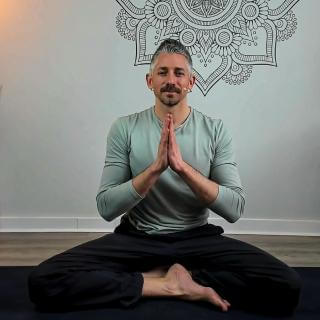
A nice seated meditation practice.
We'll sort of ease our way into that process,
Right?
Just sitting down and trying to still the mind.
Is challenging,
Challenging enough.
We're going to work with the breath.
We're going to work with the body.
Release some tension And then we'll do a relaxation.
And sort of all the movements,
Everything that we do is preparing either the mind or the body for that seated meditation practice.
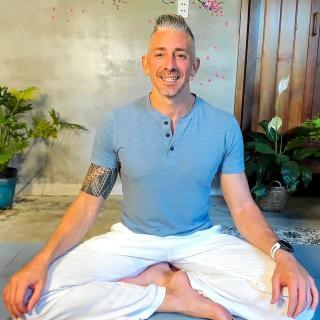
And so just the only thing I ask is that you have your meditation seat.
Available before we begin.
And that way,
As we transition from our relaxation to our seated practice,
You'll be prepared and ready to just do that in an easy way.
So if you're sitting on the floor,
If that's comfortable.
Figure for let's say a 10 or 15 minute meditation,
Ideally you want to have some propping so that you're able to.
.
.
You can get the hips just a little bit higher than the knees That really goes a long way for helping to open the hips and keep the legs nice and stable.
You're also welcome to use any props at all.
Your seat doesn't need to look.
Fancy in any way.
It really just needs to be stable.
You might even place You know some blocks under the legs.
You might even sit in a chair.
So just do what you need.
Get some propping available so that way.
.
.
At the end of practice,
We'll be able to just transition right into our seat.
Cool,
So let's get started.
Let me just adjust my.
.
.
My space a little bit.
And so we're going to start off lying face down.
In crocodile pose or makarasana.
And if it's new,
You can just explore the pose a little bit.
If it's super uncomfortable,
You can flip over and rest on your back instead.
But we're lying down on the abdomen.
And then whichever is more comfortable,
You can either stack your forearms or just stack your hands.
So there's a little bit of lift in the upper chest.
The chest is.
.
.
Not on the floor,
But the abdomen is on the floor.
And then you just rest your forehead down.
And again,
If this is new,
It might take a little bit of time to feel some amount of comfort.
You can keep your legs as they are,
Or if it's available,
You can also.
.
.
Walk the knees out about the width of your mat and then allow the toes to point outward.
This will give you a little bit more openness through your hips.
Just begin to settle in,
Allow yourself to relax,
Allow your eyes to close.
And just spend a few minutes here.
So really.
.
.
Surrender to the pose.
Relax through the upper back especially and the shoulders and all the way down the arms.
Then you might sort of move your hips a little bit side to side to really ground down more firmly through the abdomen and the pubic bone all the way down the legs.
And then start to establish just a nice yogic breath.
So you breathe in and out through the nose.
Starting with first just a natural breath.
So allow your breath to flow in and out through the nose in its own natural rhythm.
And then allow your awareness to gather at the.
.
.
Abdominal area,
And just start to notice.
The movement in the body so on the inhalation Your diaphragm contracts.
The abdomen expands,
Pressing into the support of the floor.
On the exhalation,
There's a relaxation.
Just notice that natural movement.
He might even sense some movement in the low back and along the sides of the ribs.
And we'll just gently shape the breath.
On your next exhalation I'd like you to breathe out just a little bit more slowly.
And on your inhalation you'll also be breathing in just a little bit more slowly so you're starting to Lengthen and smooth out your breath.
And our breath is really the most powerful tool we have.
Not only for our everyday existence,
But especially for meditation.
When we can link movement to the breath.
There's a natural relationship between the mind and the breath.
So we can start to calm the mind.
With our awareness on our breathing.
And so as much as it feels good throughout the movement portion of this practice,
Keep your awareness on your breath.
You can keep your eyes closed as much as it's comfortable so your awareness stays inward.
So you can walk your knees closer together if they're separated.
And then bend at the knees,
So lifting the lower legs.
And in whichever way feels good,
Just begin to slowly.
.
.
Lower the legs from side to side.
It could just be a small movement Feeling a little bit of release in the low spine.
You can relax that effort.
And then let's sit the hips up and back,
Knees are wide,
And press back to child's pose.
Now,
If this is If your hips are really tight and this doesn't feel good,
You can sort of take like a half child's pose,
Just keeping the hips lifted.
Otherwise,
You'll press the hips back toward the heels and then lower your head down.
Find some length through the low back.
Really draw out through the fingertips.
And then just a gentle side stretch.
We're going to walk both hands over to the right side.
Keep lengthening your spine.
So your right hand will likely come off the mat.
Your left hand will probably still be on the mat,
Stretching along the left side of the body.
Breathe into the left side ribs.
Come back to center.
And then go to the opposite side.
Both hands walking over to the left.
Looking to create some length from the right hip all the way along the right side body out through those right fingertips.
Come back to center.
And then let's make our way to table pose,
All fours.
Spread the fingers and ground down through the palms.
On an exhalation,
You're going to draw the chin in toward the chest,
Round the spine,
Press through the hands.
And then on an inhalation.
Look forward,
Lift the heart,
Lift the chin.
So moving through this cat-cow.
Exhale.
As you round,
Inhale as you lengthen.
Close the eyes if it's comfortable.
Really connect to the core of the body.
So really sense the spinal column.
From your tailbone all the way up through your crown.
Or working with the spine in a very supported way.
And then we'll add a little bit of engagement in the abdomen.
So as you exhale,
You're going to draw the belly in toward the spine as you round,
Chin in toward the chest.
And then as you inhale,
You relax the belly as you lengthen.
And do that a couple times.
So you're finding some activation,
Starting to gently wake up.
At the Naval Center.
Good,
Come back to the neutral spine.
Walk your hands a bit forward,
Maybe about a hand's length,
And then tuck your toes,
Send your hips back towards your toes.
And then as you're ready,
Just lift up through the hips.
Find a downward facing dog.
Press through the palms.
And then we're going to bend deeply through the right knee.
Allow the hips to shift to the right.
Maybe the left heel starts to press toward the floor.
Inhale to center.
And then exhale,
Opposite side.
So bend the left knee,
Let the hips shift toward the left.
Pressing the right heel toward the floor.
And do that a couple times So you inhale,
You come to center.
As you exhale,
You bend deeply and let the hips shift.
In that direction So feeling some,
Likely feeling the stretch.
Along the.
.
.
Sides of the hips Good.
Lower back down.
Inhale.
Lifting the heart And then exhale,
Send the hips towards child's pose.
Then on an inhale,
We're going to rise up,
Arms overhead.
Look up to the fingertips.
And then exhale back down to child's pose.
Inhale to all fours.
Lift the heart.
Exhale tuck the toes lift the hips downward dog So we'll go through that little sequence.
Inhale back to table,
Lengthening through the front of the body.
Exhale,
Send the hips back,
Child's Pose.
Inhale,
Rise up.
Reach up,
Look up to the fingertips.
Exhale hips back to child's pose arms extend in front of you Maybe a little naval activation here.
Inhale to all fours,
Lengthen through the front of the body.
Exhale hips up and back downward dog So one more of those,
Really connecting to your breath.
So you might be moving at a different speed than I am.
As you're ready.
Inhale to table.
Exhale child's pose Inhale,
Rise up.
Look to the fingertips.
Exhale,
Child's Pose.
Inhale to table.
Lift the heart.
Exhale,
Hips up and back,
Downward dog.
Good.
Slight bend in the knees.
Press through the hands.
Lift the hips.
Feel yourself gain a little bit more length through the spine.
And then see if you can keep that length.
Maybe you start to unbend the knees.
But it's not a requirement.
Good.
From here,
We're going to inhale right leg up and back.
Three-legged dog And then let's bend the knee and start to open up the hip in any amount that's comfortable.
Breathe here,
Keep pressing through the hands.
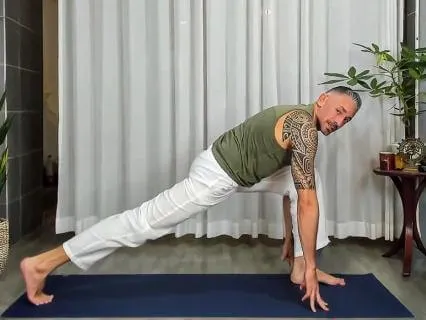
And then look forward and step the right foot in between the hands.
Coming into this runner's lunge with the back knee lifted.
Now if you have blocks this might be a place for you to use blocks.
Really good way to give some added support.
Otherwise keep lifting through the heart.
If you need to lower the back knee feel free to do that.
And just a little bit of movement.
So on an inhalation,
Just gently bend the back knee,
Hover it above the floor.
Exhale,
Extend the leg.
And just do that a couple times.
One of the ways to prepare for meditation is to really open up the hips.
We really want to.
.
.
Increase our flexibility there too.
Support our meditation seat.
Let's lower the back knee,
Untuck the toes.
Bring your hands to your thigh.
And start to.
.
.
Bring your hips forward.
So almost like you're drawing your tailbone toward that front heel.
And then press through the front foot.
Inhale,
Arms overhead.
Good.
Then we're going to lower the right arm,
So the same arm with the bent knee,
And then reach up to the left hand and then just gently.
Gently reach toward.
.
.
That bent knee.
Should likely be feeling a really good stretch all along that left side body.
You might even use a block for support if it's challenging to balance here.
Inhale back up.
And then lower the hands down either to the floor or your block.
And then go ahead and send the hips back.
Forward and do that a couple times.
I like to inhale forward And exhale back.
Keep looking forward,
So you keep a little bit of length through your spine.
And then next time you extend,
You can pause.
You might even come up onto the heel of that foot.
And breathe.
And so you're breathing all.
.
.
Into the right side leg.
Good.
We're going to release.
And then step back to downward dog.
Take a moment here,
Really recenter.
Lift your hips maybe even a little bit higher as your body is starting to warm up.
And then we'll do that same sequence on the second side.
So starting with the three-legged dog,
Left leg,
Up and back.
And then start to bend the knee and open the hip.
Might just be a small movement Maybe you're able to really bring that left leg.
To the side almost like you're pressing that left foot on the right wall.
And stay nice and steady.
Then we'll look forward and find the runner's lunge on the second side.
Again,
Maybe there's blocks here.
You want to lift the heart and keep drawing through the back heel.
And then a little bit of movement.
Inhale,
Slightly bend the back knee.
Exhale to extend Do that a couple times.
Lower the back knee.
Hands come to the thigh And then bring the hips forward.
So tailbone toward that front heel.
Ground down to the front foot.
Arms come up,
Low lunge.
But this time we're going to lower the left hand or whichever hand is on the same side as the bent knee.
Reach up through the right arm and then gently stretch toward the bent knee.
Seeing where you feel that stretch.
Breathing into the hip,
Breathing into the side of the body.
Good release down.
And then send the hips back.
And just a little movement.
I like to,
Again,
Inhale forward,
Exhale back.
In this movement,
It doesn't matter too much.
So whichever breath rhythm feels good.
Which is coming in and out of that lunge a couple times.
And when it feels good,
You can hold maybe coming up onto the heel of that front foot.
Good release there.
And step back to downward dog.
Bring awareness to the navel,
So the abdominal area,
Especially the low part of the abdomen.
As you exhale,
Draw in.
So activate and engage the navel,
Drawing in toward the spine.
And as you inhale release And do that a couple times.
Exhale,
Drawing in.
Inhale to release.
Next Excel,
We're going to engage and then see if you can keep that engagement.
Allow that to help.
You bring the weight of your body forward.
Your shoulders come over your wrists.
If you need to lower the knees,
Feel free to do that.
So finding a Planck variation here.
Press through the hands.
And then eight-point pose,
Knees,
Chest,
And chin.
Let's lower down.
So knees first.
Chest,
Second.
And chin Untuck the toes.
Hands stay alongside your chest.
Draw your elbows in toward your body.
Ground down through your pubic bone and then use the muscles of your back.
Gently lift,
Just a low cobra.
Keep the neck nice and neutral so you're mostly looking down,
Maybe slightly forward.
Lifting.
With the strength of your back Breathe here.
Slowly lower down,
Let's lift up and back Find Downward Dog And then we're gonna look forward,
Step both feet in between the hands.
Stay here in a forward bend,
Uttanasana.
And really soften,
So let the head and shoulders relax down.
You can bend the knees as much as it's comfortable.
And then slowly rise up Arms reach.
Keep the arms extended.
Go ahead and clasp the.
.
.
Fingers together press your palms up and away.
And so here you're grounding down through the feet.
At the same time,
You're pressing through the heels of the hands and then also keeping the shoulders relaxed.
Good,
And then you're gonna stretch over to your right side,
Perhaps look over to the left.
Press through the Left palm.
Good.
Inhale,
Come back to center.
You can bend the elbows.
Keep the hands behind the head.
And then exhale opposite direction.
So stretch to your left,
Look to your right.
And do that a couple of times.
So as you inhale,
You bend the elbows,
Come back to center.
As you exhale,
You stretch in one direction and possibly look in the opposite direction.
Really nice.
And then gradually release down.
Take a nice full inhalation.
In a full exhalation And again,
Full inhale.
And a full exhale.
Relax the arms alongside the body.
Widen your stance just a bit,
A little bit wider than hips distance.
Comfortable close your eyes Reach up through the crown of your head.
So stand nice and tall.
Soften your shoulders.
Find your breath.
So that nice,
Smooth and relaxed breath.
And then keep your awareness on your breath.
For the length of the inhale,
Let's sweep the arms overhead,
Palms facing up.
And then the length of your exhale,
Palms face down as you lower the arms.
Inhale arms overhead Exhale as you lower.
So keep moving.
Awareness here is It's on the breath,
So you can.
.
.
Almost think about.
.
.
How the breath would look.
In this physical posture.
Thank you.
You might even consider for a moment your energy body,
The pranic body.
Which.
.
.
Supports and surrounds the physical body.
As you move in this really simple way,
Maybe you can.
.
.
Tune into that.
Chronic body the more subtle.
We'll do one more inhalation.
Arms up.
And then on the next Excel,
We'll.
.
.
Also lower the arms,
But this time we're going to stay.
Completely still so when your arms reach alongside your body Simply remain still.
Resist the temptation to Fix your clothing or move and just relax in absolute stillness.
Notice how you feel.
Perhaps you can tune into The experience of the non-physical.
There's a non-physical life force that.
.
.
Paul said it.
Our body pulsates through this entire world.
And the yogis call that prana.
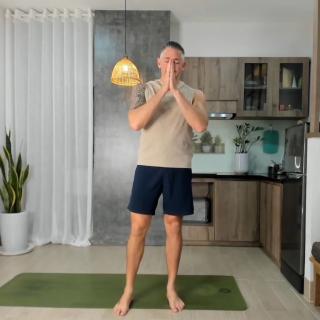
If you'd like you can bring your hands together at your heart.
Take a moment to.
.
.
Recognize this unseen force,
Even if you don't have an experience of it just yet.
Recognize that.
You and each of us are supported by something beyond the physical.
There's an intelligence that governs all aspects of our body.
Keeping us alive and allowing us to operate in this physical world.
Release your arms and allow your eyes to open Very good.
We're halfway there.
Let's take a wide stance now.
So we're going to face the long edge of the mat.
Turn your right toes to the short edge and then step your left heel out slightly.
And then just a few times,
Bend in and out of that right knee,
Whichever toes are pointing forward.
We're ultimately going to prepare for Warrior 2,
Virabhadrasana 2.
So when you found your distance,
You found the adjustment in your legs.
Ensuring that knee is over the ankle.
Stay there.
Find some stability.
And then arms extend out from the shoulders.
And just for a moment,
We'll turn the palms up.
Allow the shoulders to draw down and back.
And then keep the shoulders there and then just turn the palms back down.
Like you can look out over those front fingertips.
Good feeling the strength.
Your own inner strength here.
Sometimes life asks us to bring that spirit of a warrior.
When we come through challenges.
Let's add some movement.
So inhale,
Straighten that leg.
Arms overhead.
And then exhale,
Lower back down.
Move with your breath.
So now along with that strong warrior spirit,
We're also.
.
.
Connecting to that sense of gracefulness.
Life is often a balance of.
.
.
You know,
Strength and Just more subtleness,
Needing to relax.
We can't just.
.
.
Push ourselves through every situation sometimes we need.
Rest.
Good.
Next,
Warrior.
Let's stay there.
And then turn that front palm up.
Release the back arm and then reach up and back.
Reverse warrior.
Come back to center.
And then in the opposite direction.
So resting the forearm down just for support.
So keep some activation through the abdomen.
So you're not dumping all your weight into that forearm.
You can keep hand on the hip.
Maybe you can extend the top arm toward that top ear.
And in the extended arm version,
You're reaching from the back corner of the foot.
All the way along the side body out through those fingertips.
Rise back up.
And release lower the arms bring your feet to parallel Really nice.
Let's do the second side.
So left toes.
Or whichever toes you didn't.
Or whatever side is different for you right heel steps out and again just take a few kind of stretches in and out.
Adjusting your feet.
Finding the distance that feels good hips stay open to the long edge.
And then if it's available,
Arms extend up.
Keep the shoulders relaxed.
Take a moment,
Really find that.
Place within you that your inner strength connect,
Reconnect to that.
Maybe you've lost touch with it.
Good.
And then some movement.
Inhale,
Straighten the leg,
Arms overhead.
Exhale,
Bend the knee,
Lower the arms.
Move with your breath.
And so awareness is just as much on the breath here.
As it is on the movement.
Eventually the movement just.
.
.
Become secondary.
Stay in your warrior.
Front palm up,
Release the back arm,
Reach up and back.
And so it's more up than trying to go too far back.
Your breath should stay relaxed and you should feel.
Some nice openness.
In that side body.
And then back to warrior and then opposite direction.
Just a gentle.
.
.
Relaxing of the forearm down.
Maybe you can extend the top arm.
Totally fine.
That top arm can stay on the hip.
You want to be able to stay open through the chest.
The top arm is extended keep relaxing that shoulder away from the ear.
Good.
Rise up.
And release.
Bring your feet to parallel.
Slightly bend the knees.
Hands on the hips and then begin to hinge forward.
Let's take a wide-legged forward bend.
Taking any arm variation You can relax your hands down to the floor,
Maybe the blocks.
But start by finding some stillness.
Connect to the breath.
And then if you'd like,
You can add a little movement.
You can.
.
.
Shift the weight a little bit from side to side.
Either a small or a big movement,
Whichever feels.
Better for you.
Good and then you're going to turn to the front of the mat.
And step your way to downward dog.
Good.
Lower the knees.
Find yourself in table position.
Allow your eyes to close.
Bring awareness to the space of the abdomen.
And so we're going to work with the.
.
.
Naval Center So on the exhalation,
We're going to engage.
So draw the navel in toward the spine.
You might naturally lower,
Or excuse me,
Round the lower back.
And then as you inhale,
You just relax the abdomen.
And the lower spine moves in the opposite direction.
There's maybe a natural tilt in the pelvis.
So exhale,
Engage.
Draw the navel in toward the spine.
Inhale to release.
Continue just like that.
Keep your awareness there at the navel as you.
.
.
Engage on the exhale.
And release on the inhale.
We talked a little bit about prana.
The yogis call this center of the body the the pranic center it's really the the hub of prana in the body And so we can start to build prana in the body.
Which is that nourishing force.
Luminous Self-guided.
Life force And the more access that we have to prana,
Naturally.
It brings stillness to the mind and allows us to have a very fruitful practice of meditation.
Just a few more rounds Relax that effort.
Go ahead and make your way back down.
Let's find Crocodile Pose once again,
Just like we started off.
Forearms or hands are stacked and then rest your forehead down Relax your shoulders and just breathe naturally.
Good.
And then go ahead and turn over.
Make your way onto your back.
A few more stretches before our.
.
.
Relaxation.
So just extend your legs nice and long.
Reach your arms overhead.
Lengthen through the.
.
.
All the way through the body from your fingertips down to your toes.
And then draw your knees in.
Then begin to circle.
I like to separate the knees.
You might prefer to move your knees in the same direction.
So on an inhalation circuit,
Open.
Exhale,
Bring the knees back together.
Any other circling variation,
Just any.
.
.
Tension in the hips.
Circle in the opposite direction.
Place the feet on the floor.
Extend your right leg up to the ceiling.
Clasp the back of the thigh and just gently draw the leg in toward the body.
Keep your upper body relaxed and then circle at the ankle.
Both directions.
Nice.
When you feel done,
You can switch sides,
Extend the left foot.
Clasp the left thigh.
Find a stretch for the back of the leg.
And circle the ankle on this side Lower down when you're ready.
Draw a bolt in using.
And then lift the chin in toward the chest shoulders off the mat.
And then relax all the way down.
Extend your legs.
Separate the feet.
Come into your Shavasana.
So this is your final resting position.
The movement portion of class has concluded.
Take your time.
Really get comfortable in your Shavasana.
I'm going to sit up.
So I can guide you through the rest of our class.
Relax in Shavasana.
Allow your eyes to close.
Feel the floor underneath you and Really let yourself.
.
.
Relax into that support so you're completely held there's no physical effort.
And then take a moment to notice.
The natural movement of the abdomen as you breathe.
So the body is effortless,
But also.
.
.
The breath is effortless.
Release any.
.
.
Shaping of the breath just allow your body to breathe And just take a moment to notice how you feel.
Let's relax a little bit more deeply Just going to guide your awareness through various points on your body.
And as you rest in stillness,
You'll just.
.
.
Bring your awareness to those places and continue to breathe.
So let your awareness travel to the crown of your head,
The very top of your head.
Excuse me.
Breathe into that space and.
.
.
Release any tension through the.
.
.
Crown of the head.
Cross your forehead.
Relax your eyebrows.
Soften your jaw.
Relax your tongue.
Allow that relaxed awareness to travel down through the throat.
Cross your collarbones.
To your shoulders.
And then soften down the arms all the way to the fingertips.
Back up the arms to the shoulders across the chest.
And then rest and breathe.
The center of the heart.
The inhalation has a nourishing quality.
The exhalation has a cleansing quality.
Keep relaxing down your ribs and your abdomen.
Pelvis and your hips down your legs all the way to the tips of your toes.
Then back up the legs for the hips and the pelvis through the core of the body the abdomen heart center.
Throat center.
Center of the forehead.
Back where we started at the crown of the head.
Now allow your awareness to fill the entire space of your body.
And then sense.
As you inhale,
Your whole body is breathing,
Every cell inhaling,
Being nourished.
As you exhale every cell is cleansed.
For another few moments,
Just stay with this awareness.
This beautiful rhythm of nourishment and cleansing throughout the entire body.
You're sensing the breath Maybe you even have an awareness of that more subtle energy of the breath.
Which is prana.
Prana Shakti No rush.
But gradually,
Just slowly,
Effortlessly deepen the breath.
And when you're ready,
Invite some movement,
Small movements in your.
.
.
Your hands and your feet.
And extend your arms overhead.
Take a full body stretch.
As you're ready,
Draw both knees in toward the body.
And.
.
.
Make your way onto your side.
Rest for a few breaths there.
Keeping your awareness.
As inward as you possibly can without being rigid.
Use your arms,
Press yourself up.
And find your meditation seat.
Using You're propping if you're sitting on the floor.
Maybe even some blocks under the knees.
Or sitting in a chair.
Sitting at the front of the chair with your feet on the floor.
Any meditation seat that you can be stable and comfortable.
Rest your hands down on your thighs anywhere that feels good Reach up to the crown of your head.
Sit up nice and tall.
Relax your shoulders and then allow your eyes to close.
Settling down into your seat relaxing through the hips lengthening through the spine Gradually start to move toward the experience of stillness.
So you'll likely sense a relative stillness in your body,
Your physical body.
There's also even a.
.
.
Deeper stillness that resides within you,
Within each of us.
As you relax and breathe allow that stillness to arise from within Take a moment to also notice the breath.
Just how effortless each Inhalation flows seamlessly into the exhale There's almost no effort required.
The body just simply breathes.
And release any tension.
Starting at the crown of your head.
Just make your way down,
Soften.
All the muscles of your face Relax your shoulders.
Down your arms,
Your chest,
And your abdomen.
All the way down through the hips So the bottoms of your feet.
So you're able to sit.
Completely comfortably.
The body and breath are effortless.
Keep breathing into your experience of stillness.
So whatever is real for you in this exact moment.
Bye.
Then gradually let your awareness travel up.
Resting your focus at the opening of your nostrils.
See if you can.
.
.
Sense that Gentle touch of air.
In the nostrils as you breathe.
And try to find that exact location.
Where is it that the breath.
.
.
Enters the nose.
Where is it that the outer world merges with the inner world and use that point as an anchor.
So keep the mind resting at that point as you observe your breath.
When you find that the mind has perhaps.
.
.
Gotten lost in thought.
Totally natural Just really.
.
.
In an effortless way,
Just a really friendly way.
Just bring the mind back.
To that anchor point.
Return your awareness back to your breath.
In an effortless way making minor adjustments noticing if you've accumulated any more tension through your face or your shoulders.
Notice if you've lost the integrity of the spine.
Just very effortlessly.
Making small adjustments so that you Coming back to that absolute still and supported and effortless place in the body.
And then allow that awareness to travel upward.
And rested at the The center of your mind For you,
You might consider it your third eye.
I like to think of it as.
.
.
Sort of the the backs of the eyes or you can think of it as the center of the forehead deep within the center space of the mind.
So find what feels real for you and breathe with awareness into that space.
Let that be your new anchor point.
You're welcome to stay here as long as you'd like.
We are at the top of our hour.
I want to be respectful of your time.
If you do want to close your practice.
Release the effort at the center of the mind.
Allow the awareness to fill the entire body now.
Remain in stillness.
Soften into your posture.
And spend a few moments to notice your experience.
Observing how you feel and enjoying the space that you've created.
Recognizing that Anything that you've cultivated through the practice has come from you,
From within you.
If you'd like you can bring hands together at the heart and gently bow your head to your heart Just take a moment to close out your practice in any way that is meaningful for you.
Might offer a prayer or gratitude.
Once more just acknowledging that unseen force that vast intelligence that.
.
.
Supports us.
Making it possible for this amazing machine,
This human body to survive and exist and transform and transcend remembering that the balance and peace that we seek dwells within.
Om Shanti.
Shanti.
Namaste.