In this video I'm going to teach you the most important skill in the Botteco method.
And that's how to relax all the muscles in your body.
When we relax the body,
We down-regulate our nervous system.
Calms the body,
It calms the mind.
And more importantly,
It reduces the amount of air that we breathe.
And over time,
This resets our breathing centre.
Our breathing becomes calmer.
It becomes lighter and it becomes slower 24-7 and that has enormous health benefits.
Okay,
So let's get straight into the relaxation.
I'm just going to get myself comfy.
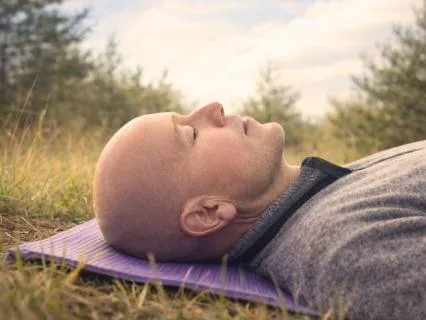
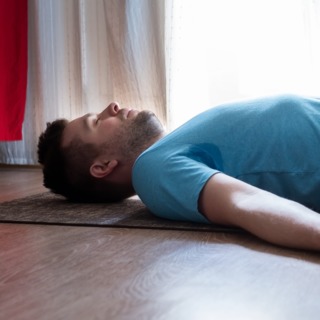
And so beginning just by finding yourself a comfortable place either to lie down or to sit on a chair.
Doing the relaxation lying down will take you into a deeper state of calm.
Whereas practicing relaxation in an upright posture will help you to improve your ability to relax in everyday life.
And then just getting yourself settled in.
I'm just taking a few moments to pause Just giving yourself some time where you don't need to do anything at all.
The mouth is closed.
And just letting your breathing be relaxed,
Quiet and gentle.
So no big breaths,
But at the same time,
Not trying to control or constrain your breathing.
And as you pause in this way,
Noticing already how your nervous system begins to slow down.
And the body drops into the first stages of relaxation.
Bringing a gentle smile to your face.
And then noticing any places in your body where you're holding tension.
So often around the mouth and the jaw can be a place where we tend to hold some tension.
There can be some clenching there.
Just allowing all of the muscles around the mouth and the jaw to begin to relax.
Also noticing what's happening on the tops of the shoulders.
For many of us,
We might wear our shoulders up around our ears like earrings.
Just as best you can,
Just letting your shoulders begin to drop down away from your ears.
Letting go of any gripping in the hands.
So letting your hands and fingers be soft.
And allowing your belly to relax as well.
So in the Botteco method,
We have a saying,
Belly soft like jelly.
And for many of us,
Or bellies.
.
.
Either because of wanting to look attractive or because of stress.
There can be a lot of tightness held in the abdomen.
So just exploring what it's like just to let go of the belly,
Let your belly become soft and round.
And just allowing your body to be heavy,
Sinking down into the surface beneath you.
Bringing a gentle smile to your face,
Just to soothe and.
.
.
Soften the nervous system.
Can have your eyes open or closed whichever one feels right for you And if your eyes are open,
Maybe just softening your gaze.
So rather than focusing on anything in particular,
Just start allowing your gaze to be open and soft.
Soft gaze,
Soft diaphragm.
And as each out breath comes just allowing your whole body to relax 1% more.
Allowing all the muscles in the face to begin to soften.
The smile and the cheek muscles.
The tongue and the root of the tongue.
All the muscles down the sides of the neck begin to lengthen and open up.
The shoulders continue to soften.
Especially if you're sitting upright,
Really just let the arms be heavy.
Let the shoulders drop down away from your ears.
Letting go of any holding in the arms and the hands.
A sense of letting go with the fingers.
Loosening your grip.
Letting go of whatever you've been holding on to.
And allowing thoughts to come and go,
Allowing sounds to come and go in the background.
Nothing that you need to do.
You don't even need to try to relax.
It just happens all by itself.
Allowing all the muscles in the chest to begin to release.
Around the collar bones and the pectoral muscles.
Softening and loosening and letting go.
And the belly continues to relax and loosen.
Allowing all of the intercostal muscles between the ribs to begin to soften.
And around the bottom of the rib cage,
You might just have a sense of the rhythmic movement of the diaphragm.
It's our primary breathing muscle and it's a dome-shaped muscle that attaches to the bottom of the ribcage.
And on each out breath,
You might just imagine that the diaphragm just becomes a little bit softer,
A little bit more relaxed.
On each out breath,
The belly just becomes softer and softer.
And as the body relaxes,
As our breathing muscles relax,
Breath becomes lighter and lighter.
Really surprising how little air we actually need to breathe.
And the size of the breaths just automatically becomes smaller as we surrender into relaxation.
You might even Have a sense of a mild shortage of air.
And mild air hunger.
And if you do,
That's a good thing.
It shows that you're breathing less air.
Don't worry if you don't feel that.
It might be that your breathing health is at a stage where you don't feel an air hunger just from the relaxation.
And if you like you could bring in a little bit more air hunger Just by breathing even more quietly.
And on each out breath,
Just really giving up yourself to relaxing into the body.
Allowing all of the muscles around the bottom of the rib cage to release.
Allowing the whole of the pelvis to begin to soften noticing if there's any clenching or holding in the upper legs or the buttocks.
And just letting that go.
Another way that Dr.
Buteyko found to relax the diaphragm was.
.
.
To gently look upwards to lift the eyes up above but without moving the head.
Looks a little bit strange when you see it.
You can do it with your eyes open or closed.
And just looking up in a way that doesn't cause any discomfort if you want to try it.
And we think this might activate the mammalian dive response.
So our bodies are designed so that when we dive underwater,
And often as we're swimming the eyes will look up above This just slows the heart rate and it reduces the desire for the body to breathe so that we can stay underwater for longer.
And on each out breath,
We're just allowing the whole body to relax.
Okay,
And then we'll begin to bring this relaxation to a close.
When you're ready just beginning to bring a little bit of movement into your fingers and your toes.
Having a little bit of a stretch with the arms.
Blinking the eyes open.
Bit of a twig in my ear.
Yeah,
And just noticing.
.
.
How you feel.
So feelings of calm or extra saliva in the mouth or warmth are all really good signs.
Mental clarity.
And just practicing this relaxation on a daily basis will really train your body to relax very easily.
And it makes it easier to relax during some of the more advanced breathing exercises as well.
But very beneficial for the mind and the body,
Just on its own.
But for now.
.
.
Wish you all the best.
Bye bye.