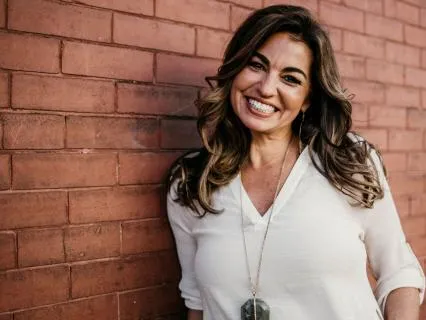
Hello and welcome to the Michelle Chalfant show.
It is so good to be here with you today.
Ooh,
I've got a guest on for you today.
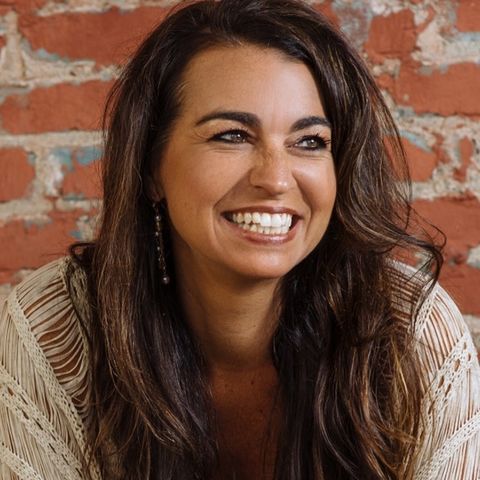
Her name is Ashley Dilello,
And she's the founder and creator of Bio Emotional Healing.
Think nervous system,
Brain,
Body,
And how it's all connected.
Boy,
This woman went through incredible illnesses,
Chronic pain,
Surgeries that went wrong,
You name it,
For years and years and years that led her to creating this incredible method.
So she gets into it.
And this is,
You know,
As I say that,
This always brings me back back to,
You know,
Why do we go through these difficult things in life?
Perhaps our soul planned this all along in order for us to do something at the end of whatever that horrible thing was that we went through.
I see this and hear about it all the time.
So just as a side note,
Remember,
When you're in something that might not feel great,
That does not feel good at all.
Just know that maybe on the other end of that,
There's a lesson for you,
There's a teaching,
There's an experience,
There's something that you will take from this experience.
And create goodness from.
Think about that.
Think about that.
And when we're in the middle of it,
We can't see it.
Which is exactly what we're gonna talk about today with Ashley.
This bio-emotional healing is a revolutionary method based on neuroscience.
And she helps her clients around the world finally break free from emotional trauma,
Limiting beliefs,
Anxiety,
And the effects of chronic pain and illness.
So despite being told by doctors that she wouldn't live past her teenage years,
She refused to give up and discovered the secret to rewiring the brain-body connection.
She became an elite athlete,
TV and Broadway star,
Entrepreneur,
Brain coach,
And now a keynote speaker.
I think you're really going to like this show.
Here we go with Ashley DiLello.
So welcome to the Michelle Chalfant Show,
Ashley DeLillo.
Yes,
I'm excited to be here.
Yes,
Me too.
I'm excited to have this conversation with you.
I'm excited to learn about bioemotional healing.
You have quite a story.
So,
Yeah,
I'd like to start with your story.
I'd like to start with your story about really the beginning of what happened with you and then the beginning of,
Excuse me,
Bioemotional healing and how it all came to be and what it is and all the things.
But I think your story is really important to the discovery of what this is and your whole life journey.
So let's start there.
OK,
I'll give an overview and then if you want to go back and dive into it,
We can because it has been quite the journey.
But learning how the brain works,
How the nervous system works,
You know,
Really did save my life twice.
So I've been through two life altering health experiences.
The first one when I was only 13 years old.
And you have to think there's a very different world.
This was like 28 years ago.
What we're doing now didn't exist.
The Internet didn't exist yet.
Right.
Which is which sounds crazy,
But very different world.
I really wasn't the epitome of health.
You know,
My nickname was the Energizer Bunny.
I danced five hours a day.
That was the love of my life.
And then literally overnight I was fighting for my life and became deathly ill.
And I literally lived between life and death for four years.
I went all over the country.
I was tested for just about everything that existed at the time because no one could figure me out.
The best really that they could surmise from all of my blood work is that I had a rare viral infection.
No one could diagnose and therefore no one really knew how to treat.
My organs were shutting down.
My skin was yellow from my liver shutting down.
I got down to 90 pounds.
My hair was falling out.
I had just about every symptom you can think about.
And one of the hardest things about the whole journey was,
Of course,
Not just being so sick,
But having no answers.
And I would literally pray when I'd go in for tests or scans,
Even tests for cancer,
And say,
Please just let us find out what I have.
Let it be positive because then I can have a plan and we can have a path forward and so Not only are you going through this thing that is so uncertain that all the doctors really gave me no chance of surviving.
But then you have the uncertainty of what you're actually fighting.
So it was a double edged sword and to love something so much like I did dancing and have it ripped away from you just really felt like a death.
It was like the thing I felt born to do,
Love to do.
And now that's stripped away from me as well as my teenage years.
You know,
I had to grow up overnight because you can't handle that type of experience as a 13 year old.
Right.
So it was such a tremendous,
Tremendously life altering experience,
But it was the introduction to the power of the brain for me in a way that,
Of course,
I didn't know the neuroscience behind.
Again,
That information was not widely spoken about then in any way,
Shape or form.
But I just had this deep,
Deep belief and resolution that I would somehow survive this,
Overcome this and dance again and be healthy again.
And so much so that I had nights where I was terrified that if I went to sleep,
I wouldn't make it to the morning.
I mean,
I had these moments where I could barely speak.
I could barely lift a finger.
I know what it feels like to to be dying and to be right there and so I would stay awake and will my body to keep fighting.
I would stay awake through the night and and tell it to keep going to keep fighting and as terrifying as these moments were and they were.
They were also so empowering as I intricately experienced how powerful that brain-body connection is and the will to live,
Right?
And the beliefs and how powerful those beliefs drive us in every single way,
Including our body's ability to heal.
And so,
Again,
This is a long journey of itself,
But four years between life and death,
Six years before I was healthy enough to go back to dancing,
And back to life.
And of course,
I mean,
I was like,
This is the day,
You know,
I got a second chance at life.
I went to school,
Got my education,
Went back to dancing,
Which is in and of itself so miraculous,
But also crazy to go back now as a woman when I left as a child and to then have this amazing professional career.
Where then my husband and I,
Who became my professional partner because we were ballroom dancers,
We did shows like So You Think You Can Dance and Dancing with the Stars and Headline Broadway,
Eight shows a week,
You know,
And it was just,
It was like all these pinch me moments of look at what I'm doing.
I've made it.
You know,
I climbed the mountain,
Like I slayed my Goliath,
Like here I am,
You know,
And then I had my two year old daughter,
Which I had also been told I'd never have children because of course,
When you're dying through your adolescence,
Your body goes,
Well,
I can't handle a cycle.
So I never had a cycle through the most,
You know,
Formidable years as you're growing up and your hormones are establishing themselves.
And so really it was just like life is amazing.
The height of our career.
I've got my daughter.
And then in 2016,
I had to go into a second hip surgery,
Just as a byproduct of being really hard on my body,
Having a professional dance career,
And it completely failed.
And it launched my entire body into chronic pain.
I lost the ability to walk.
I lost my career,
Which lost me and my husband's career.
Wow.
I have a two-year-old daughter that now I can't even lift,
Can barely hold.
You know,
Even now,
The nerve pain spreads throughout my body,
I could hardly hold a book.
I can't do daily tasks.
I went from an elite athlete,
My strongest physical self to once again,
Just like what happened to my life again overnight,
You know,
And it was very deja vu,
But this time harder as I'm a mother,
I'm a wife,
I have a career,
You know,
I'm not being taken care of by my parents.
I have all these responsibilities that literally overnight changed.
And but at the same,
Same time,
Way I was like,
Well,
I've overcome this before.
Well,
We'll do this.
Right.
And I threw everything in the kitchen sink.
Getting well,
You know.
And I mean,
Western,
Eastern,
Alternative,
Regenerative,
Holistic,
Energy work,
Body work,
EMDR,
Like,
You name it.
I did it.
I mean,
Even over 200,
Like,
Regenerative injections,
Like,
I did it.
But I still wasn't getting well.
I was diagnosed with over five different chronic pain conditions that,
Of course,
Were told you know have no cure the best as you can manage you know and even though we were doing everything the reality seemed to validate again what all the experts were telling me is that chronic pain was my life now you know I was told it was downhill from here that I'll never live an active life again.
And you know,
Again,
The evidence of reality was validating that other than I had this,
Again,
Belief there has to be a way,
But really this experience nearly broke me.
It broke me.
Living in debilitating pain,
24 hours a day,
Sleeping two to three hours a night,
The shame,
The guilt,
Burden you feel as a wife,
As a mother,
Right?
It's not just you,
It's what your family's going through.
Life to be a mom and now I'm just,
I'm not able to do it in the way I want.
You know,
I loved her but I felt so incapacitated to play and she was two.
She didn't remember me,
Who I was before all this happened.
All of that to say one day my husband and I had a conversation and we're like,
There's nothing left to try.
Like literally there's nothing left to try.
And that was the most hopeless I had ever felt,
Which is saying a lot with what I had already gone through.
And that night I remember it was like two in the morning.
I was on my bedroom floor just rocking back and forth because the pain was so horrendous.
I mean,
Even the strongest pain meds don't do anything for nerve pain.
So you're really just left suffering.
And,
Uh,
It's the closest I've ever felt to just wanting to give up,
Wanting to stop fighting,
Wanting to stop trying to find answers because I was just depleted to the depths of my soul.
You know,
And as I,
I sat in that truth of,
Well,
What if I just accept what I'm being told?
You know,
I,
It was,
It was an awful reality to think that the next 50,
60 years looks like this for me and my family.
And.
And so even though I felt I had nothing left,
I started to feel that kind of fighter spirit come up and say,
Well,
If I can't find the answer,
Well,
I'm going to create it.
And because I had already studied pain and knew all pain came from the brain,
Even though it's real and felt in the body,
The brain is the one that decides when and where to send pain.
And so I thought,
Well.
They're saying my nervous system flipped a switch into pain.
I'm going to figure out how to flip it back.
And so the next day,
I started studying neuroscience and pain science and understanding how our nervous system gets stuck in these pain signals.
But then,
Of course,
In my studies,
I realized,
Well,
The stress response is different for each of us,
Right?
For some people like me,
It's pain.
Other people,
It's anxiety,
It's depression,
It's OCD behaviors,
Right?
It's addictions,
It's autoimmune,
It's gut issues,
It's histamine intolerances.
No one way in which that stress manifests itself,
But the nervous system is one of those main driver routes that we're often missing.
And so,
In merging all of the science and studies with my lived experience of both of these experiences and realizing how much my nervous system had been altered through my illness as a teenager,
Which I didn't understand,
Didn't register,
But literally had been living in subconscious fight or flight since I was 13,
Because I had to,
And then it worked.
And so my brain thought,
Well,
This is where we stay.
And then I had that failed hip surgery.
And those survival mechanisms just went into overdrive.
And even though I had a catalyst,
The surgery did fail.
They messed up the infrastructure of my hip.
Way in which my body responded was very much driven by its memory of that very traumatic time and that's when I realized it's not just a matter of like rewiring these pain receptors but my nervous system and the depths of my experiences and how they've altered me.
And what is that process?
Not one modality,
Not one treatment.
What is that step-by-step progressive process?
And I became my own guinea pig in creating bioemotional healing.
Obviously gave my life back and then the last seven years I've been coaching clients through it.
Wow.
No,
It's a mouthful.
I'm like,
Wow.
The whole time I'm thinking,
Whoa,
Whoa,
Wow,
Wow.
That's a lot.
I'm thinking back to being just 13 and what you went through.
You had this will to live that nobody else gave you.
You know,
There was something inside of you saying,
No,
No,
This is part of what you're here to do.
I think I'm going really higher perspective,
But it's so fascinating to me how when we are given things like this for a greater purpose,
Which clearly you're here for this greater purpose.
Like,
Wow.
But what you went through at age 13 had to be just,
I can't even imagine.
I can't imagine as a parent,
Having a 13 year old,
Let alone being 13,
Having that really strong will to go through that.
So all of a sudden,
Like,
So you're going through all these treatments when you're 13.
It just started getting better for no reason?
They never figured out what was going on with you?
Yeah.
So after about two and a half years making our way through the medical system and I had some misdiagnoses because I literally just start throwing things out there.
You know,
Let's try this.
Let's try that.
You know,
And I literally was like one of those people from the TV show House.
If you ever watch that on Fox,
He treated all the mysterious people.
You know,
I never met him.
Him,
Unfortunately,
A doctor like him.
But after about two and a half years where there was nothing left there,
My family turned to what is now really known as functional medicine and so forth.
But back then it was really like seen as voodoo.
Oh,
Yeah.
That was woo woo.
I don't know who you are,
But yeah,
I'm guessing way back when.
Oh,
Yeah.
And again,
There was no Internet,
No podcast,
Social media,
YouTube.
So it was like yellow pages,
Referral.
You know,
You're going to who?
What are you doing?
And so And literally that was all we were left with was,
Okay,
If my immune system is trying to fight this viral infection,
Then let's support my immune system as much as possible.
And so food literally became life or death to me,
Right?
It was,
Is the food serving my immune system or taking from it?
You know,
I did supplementation,
I did homeopathic medicine,
I did acupuncture.
It was just,
Okay,
Let's just support my body to do what it was designed to do,
Which is to heal.
And then of course,
My mindset and that will to live was so powerful because I saw people,
I saw people less sick than me die because they gave up.
And I saw other people more sick than me survive like me too,
Right?
I mean,
Even though at some point no one was more sick than me.
So those two together,
I mean,
It was very slow and very gradual.
Okay,
Now I can a little bit,
I can sit up longer.
Okay,
I can hold a book for longer.
I can walk from my bed to the bathroom.
You know,
I,
Okay,
The pain is not lasting as long today.
Like it was,
It was patience and persistence,
You know,
And continuing to hold on to that belief that it's possible.
Cause I'm often asked like,
Well,
What evidence did you see?
I'm like,
Well,
For a long time,
I saw none,
Like none,
None in my reality.
It was this intrinsic belief that,
Do not get me wrong,
Was not easy to hold on to.
It literally asked all of my faith,
All of my resilience,
And my determination.
I definitely came to this earth as a stubborn soul,
And you can ask my husband about that.
But it's served me,
You know?
Yeah.
And then,
You know,
I always believed someone in God and that we were created.
And that really was it.
You know,
I had this deep soul,
Heart belief that I was created for more than 13 years.
No one else can understand that but you because they sent,
Actually the doctors were sending psychologists to actually help me,
Quote,
Come to terms with my reality.
Wow.
Yeah.
Yeah.
13 years old being told you're living in denial.
And I remember the first time this happened and this woman coming in and I'm like,
Listen,
I know I'm dying.
I can feel it.
Like I know it better than any of you.
And I I'm terrified.
And I also know deep down inside or feel deep down inside,
Again,
I didn't know any of the science about it,
But that if I just accept that I'm dying like you're telling me to.
Then any chance of survival is off the table.
Yeah.
I want to survive.
I want to survive.
And so I'm going to hold on to that belief and I'm going to fight for that.
And that was probably the most important shift in my thought processes that I had,
As obviously I had lots of time with myself into the thing,
Was,
You know,
The instinct is I don't want to die.
I don't want to die.
But I knew that put me in fear every day.
Right and and all day every day and with every symptom.
I don't want to die And so I thought well every day I can put my focus into not dying Mm-hmm,
Or I can put my focus into healing Mmm Wow Same outcome,
But a totally different Focus energy effort and then now I know a completely different neurobiological state each day right that was literally taking more resources if I stayed in fear or more.
Putting my body and my brain into this state of appealing,
Of possibility.
And that's where,
No matter what else I did to treat the body,
I mean,
I know how crucial the brain was in me surviving that.
Your belief,
You're saying.
Wow.
Okay.
So they never figured out what the virus,
It was a virus,
But they don't know.
They never knew what it was.
And you just suddenly just started getting better.
And then you were back to your health after four years.
Yeah.
Six total.
Four before I was out of danger zone.
So I mean,
Not many people go that long.
It's a long time.
It's a long time.
And yes,
Once I became a mother,
I remember calling my mom and saying,
I don't know how you did that.
I was afraid to die.
How did you go through that?
" And she's like,
Yeah,
I would check on you throughout the night,
You know,
Make sure you were still here.
And that brings tears to my eyes because I just,
My daughter's almost 12 and.
.
.
I can't,
I mean,
As a mother,
I just,
You know,
And I know,
But that was also part of my pain.
My mom was amazing,
But I also felt so guilty for what I was putting my family through,
You know?
I knew it wasn't,
Quote,
My fault,
But I was the source,
You know?
And so then you carry that with you as well,
Which is very painful,
You know?
My mom would say,
I wish I could take it.
I wish I could take it.
And as a mother now,
I totally relate to that.
But also it was so hard because I knew it was my journey,
You know?
And then I would just There was an added layer of that that I definitely had to heal later in life,
As well as,
You know,
I was a fighter,
But there was some deep trauma around my body.
I mean,
Very warranted,
You know,
But I was so oriented towards fighting.
I did not realize the deep impact living like that at such a formidable age when you're really being designed like into adulthood,
How much that had altered my nervous system no matter How hard I fought,
How determined I was,
It had an impact that,
Of course,
My second experience really revealed.
Wow.
So you were bedridden and you weren't even able to go to school or anything like this from 13.
Yeah.
Yeah.
So this set your nervous system in just fight or flight,
Like every single day,
Even if you were resting,
You just,
You resided in fight or flight.
Okay.
Which again,
It didn't know,
Had no language around that back then.
Sure.
Did you feel when you were healed after the six years,
And I'm guessing it just became your new norm,
Your normal state.
So did you feel anxious?
Did you feel jittery?
Did you feel overwhelmed or was it just your norm?
Yeah,
So mine took the form of I was always a highly driven person,
Like grades were always very important to me.
I loved life.
So in that,
I would say I was always like,
Let's live life to the fullest.
And then being so competitive in dance at such a young age.
And so that obviously came back,
But it was perfectionism.
So my stress response wasn't anxiety.
Perfectionism,
High achievement in every aspect of my life,
Almost to like a survivor's guilt in terms of like,
I survived.
I have to earn the right to be here,
You know?
And that took the form of being excellent in everything.
I mean,
To the point of I cried when I got my first A-minus in college,
Like,
And I was devastated.
And that's crazy because to anybody else,
I'd be like,
Well,
That's nuts,
You know?
But to me,
I felt like a failure.
And at the time.
.
.
I mean,
I did not understand,
Though,
That the deeper root of that was.
I felt like I had to be perfect to survive,
What no expert gave me a chance of surviving.
And that actual need of like,
My life depends on me being perfect,
Perfect in what I eat,
Perfect in what I do,
Perfect in what I think.
And then I survived.
So,
Of course,
My brain was like,
Hey,
That worked.
Like,
Yeah,
Let's stay there.
Yeah,
Exactly.
Exactly.
And I didn't know I couldn't talk about it in that way.
Right.
I just knew no matter what I would consciously say,
Like,
This is stupid.
It's an A minus deep inside.
It doesn't matter.
My brain was like failure equals death.
Right?
And so everything became that rigidity of life or death,
Life or death,
You know,
Deep,
Not on the surface level.
I knew it was just a test,
But deep inside it was like your continued survival is dependent on you being perfect,
You know?
And so I was so driven to an unhealthy place,
But also how I felt in my body was this internal buzzing that like never really turned off.
And it was so hard to explain to people.
Again,
Nervous system talk wasn't even on the table,
Even back then,
Right?
I just remember saying,
And I feel like my system can never turn off.
And I knew I'm driven,
I wanna accomplish all these things,
But I couldn't really relax.
I had to always be doing something or being productive,
Or even as a professional dancer,
When I'm stretching,
You'd probably look at me and go,
Oh man,
Look,
She looks so calm,
But inside I wasn't.
And it wasn't anxiety.
It was just like this buzzing buzzing.
Yeah.
That was like we must do.
We must produce.
We must achieve.
And it was never enough.
Right.
It was it was never enough.
It was that next thing.
And I know now because I suffered a lot of injuries a lot.
No matter.
I took better care of myself than probably anyone because of what I'd gone through.
Right.
But I kept getting injured and I was because those or flight mechanisms were always turned on.
My brain was hyper protective and also very aware and vigilant vigilantly monitoring my body.
Right.
And then I was very hard on my body as a dancer.
And so I really believe that was one reason I kept getting injured.
And then and then it would just reinforce the fight or flight cycle because it's like I got to fight to get back to dance.
I got to fight to get back again.
Like I'm a fighter.
That was my identity.
In fact,
I am not a jewelry but I wore one necklace that said fighter on it because.
.
.
Wow.
That's what my life felt like.
But I also kind of wore it like a badge of honor and there is a good part of it.
But the byproduct of that was I literally lived in flight.
Wow.
It became safe to my brain.
Right.
And so.
It really didn't know how to operate any other way.
And then again,
I have this surgery.
And those fight-or-flight mechanisms just went,
Oh my gosh,
Here we go again.
Let's go into absolute overdrive,
Which took what I was already experiencing and put it in the most extreme of those nerve pain signals,
Right?
Going throughout my whole body because the brain was like,
Okay,
Protect,
I'll protect,
I'll protect,
I'll protect,
I'll protect.
And it was just insane,
You know,
And that it was it was crazy until I started to again dive into neuroscience and pain science and understand the nervous system.
And frankly,
I was kind of ticked at for Steve.
I'm like,
I've gone through all of this,
You know,
And I've survived it.
And in order to now heal this debilitating pain throughout my body,
I have to figure out how to heal my nervous system whilst still living in this body.
That is validating my nervous systems to stay in fight or flight,
You know?
And I got to figure this out too,
Like it was just another layer,
You know?
But then the flip side was,
Okay,
But then I can do this.
And then maybe I actually really get free of the tremendous impact my health has had on my life.
And that buzzing turns off and I don't just get well,
I stay well.
And I can be that high achiever without the perfectionism and the all or nothing and the,
I can't rest,
You know?
So it was also very empowering,
But it was,
I tell people all the time,
The hardest thing I've ever done is rewire pain out of my body.
The hardest thing I've ever done.
I want to hear about that next.
I just want to just say one thing.
It's so interesting that you say this because I have been working with,
Of course,
Like inner core beliefs with people to then produce the reality that they want to live in on the outside.
But most of us don't know that the reason that we're a perfectionist,
Controlling,
People pleasing,
Codependent,
Whatever it might be,
Is again,
It's because something inside of us is driving us to do that or to be that way.
It's just not random.
Leave something inside of us that is driving us forward.
And it feels like we don't have control over it.
And we really don't,
Because to me,
It feels like a program on our phone or on our laptop.
It's a program.
You've got to take time to go in and work with that.
So tell us,
Here you are on your,
Let's fast forward now to round two of all of this.
You're in excruciating pain,
Nerve pain,
Which is unbelievable pain.
Surrendering and I don't I don't want to you didn't you say that word.
I'm gonna say surrendering It sounds like you said,
Okay,
I'm gonna learn everything I can so tell us now Fast-forward now to get us where you are today.
So what was that journey like and what did you learn?
Yeah,
So I The paradigm shift was,
OK,
I've got pain and it's in the body,
But I have to heal it from this,
You know,
Biopsychosocial approach.
Like,
OK.
Why is it producing this?
Yeah,
There's a physical reason.
And eventually I did have to fix my hip,
Which one of two surgeons in the world could,
Thankfully,
Very grateful for him.
So I see obviously the place of,
You know,
Western medicine has its place.
And I'm grateful for that.
But it was Okay,
These pain signals are taking my whole life into account.
And this time,
I survived my illness by fighting.
This time,
I have to fight differently.
I have to fight with faith.
I have to fight with trust.
I have to heal the deep threat response that my brain has around my body,
Right?
Because whatever is challenging,
And especially something that goes on for a long time,
Your brain creates a threat response around it.
And mine was my own body,
Right?
Which then therefore created a constant flow of stress hormones and so just that paradigm shift of I can heal by healing me the person by healing my nervous system and and that that was just I'd never heard that especially when it came to healing the physical body right it was well then you have to treat it physically that's the solution and I'm not discounting that need But then,
You know,
I developed processes and one based on 200 neuroscience studies of how to start to really move through that deep trauma.
Right.
Not just consciously,
Because we all can do that.
Right.
And you know that it's a whole other mechanism to actually move it through the nervous system.
Right.
So now your brain can have the memory,
But not all the wounds that then rooted in those survival mechanisms.
Right.
Because those survival mechanisms are but they at one point did serve you,
Right?
For sure,
Yeah.
So then the brain's not super apt to let those go because it's like,
Look,
We made it through that,
Right?
You made it through that divorce or that childhood or that illness or that devastation.
You made it,
Right?
This is now where we need to stay.
And so being able to process out that deep impact,
Which then helps From a science standpoint,
Too,
Turn down those spear and defense networks in the brain.
Now the brain's actually more in a receptive place to.
.
.
Let's create a new program.
Because before that,
I'd feel like a crazy person.
I'd tell my brain,
Like,
Oh,
Look,
We can heal.
We can trust the body.
And my brain,
And I think people can resonate with this,
Would literally throw in my face all the memories.
All the times I couldn't trust it,
You know what I mean?
And for you,
That could be another person,
Like relationships,
Right?
That could be family,
That could be romantic,
That could be your career,
That could just be life.
Like,
No,
You can't trust life,
Right?
We got to be prepared for the next shoe to drop,
Right?
And my brain would literally,
Like,
Lay out all of the memories.
Like,
What are you talking about,
Ashley?
Look,
This is why I must stay,
You know,
In these alarm signals.
And so being able to partner with it and the body,
Right?
So not just brain but connecting to the body to process that out and then doing very specific practices to start to shift the brain sphere and defense networks to what are called pro-social networks.
That's where they're more open.
That's where there is more trust.
That's where it's receptive to possibility and expecting good things,
Not just oriented towards we must expect the bad.
So you're prepared and I can predict that.
And then starting to reestablish trust with yourself,
Right?
Because when you go through hard things,
You,
You inherently attach it to yourself.
Like,
What's wrong with me?
Why can't I heal?
Why can't I get over this?
Why am I still anxious?
Why am I not succeeding?
Like,
I'm broken,
I'm damaged.
So also repairing that relationship with myself,
Right?
Most high achievers can still be at absolute war with themselves,
Right?
It just looks different.
And then repairing that trust with my body,
Right?
Because If I didn't do that,
If I was at constant war with the vessel I lived in,
Then no matter what else I did,
I'd still be in fight or flight,
Right?
Going through the steps to repair and rebuild that trust and understand my brain and body are fighting for me.
They just get misguided into these overprotective signals that come out in stress response.
And then as that is there now your state's really in a place to be receptive,
To harness our incredible ability we have to accept a new identity,
Right?
Say,
Yep,
This has been my life,
But it doesn't have to be the rest of my life.
And,
And let's use the brain's creative powers and let's create a new identity.
But let's also envision a total different operating system,
A total different person.
Actually my whole life doesn't have to be defined by my health,
Right?
I can get free of that.
And I,
And literally it wasn't just my identity.
It was like,
I have to change that in other people's minds.
Right.
And that's also something we all come up against because to everyone,
It was like,
Wow,
Ashley's a fighter.
Her health,
Like her whole life is going to be overcoming,
You know?
And so That's a challenge we all have when we're really wanting to shift our identities.
We have to do it within us,
But we also have to own that with other people,
Right?
Or they'll just inadvertently.
Pull us back to the identity their nervous system knows.
Exactly.
That is such a great point.
So true.
Because people see us in the old version of self.
So we have to update them.
For sure.
And it's uncomfortable sometimes because they'll just assume,
And I always tell my clients,
Even your spouse,
They're not going on your internal journey.
Even if they live with you,
They're not privy to all that is changing.
They'll see changes.
So they'll just assume,
Right?
And I even had those moments.
My husband's amazing and went through all this hell with me,
But sometimes he would say,
Oh,
That's your trauma.
And I'd have to be like,
No,
It is not.
No,
It is not.
And I understand where you're coming from,
But I am not there anymore.
Because again,
His nervous system and his brain is just going to predict what has already been there.
And so in the absence of learning how to not just own that yourself,
But also communicate that and even defend it in a owning my truth and where I am now,
Like eventually just the people who know you well and have been on that journey with you.
They will unintentionally pull you back,
You know,
Because they haven't done that internal work.
That is all that they know.
And like you said,
They have not done their own internal work.
And they're like,
Well,
That feels unsafe to me that you become someone new because I only know you as this person.
Yeah.
Yeah.
I don't want you to be someone new.
That feels weird and scary to me.
Yeah.
And their brain is going,
Oh,
My gosh,
I can't predict this.
Right.
The brain is a predicting machine.
So it's not that people don't want you to evolve and change.
It's it's also just the brain is like,
Wait,
Now who is this person?
And now who are they going to show up as?
And what does that look like?
And now their nervous system is feeling unsafe,
Even though it seems crazy to logically speak about it.
It's just what is happening,
Whether we want it to or not.
And so just being aware of that is so important because I've seen that sabotage people.
Right.
So good.
So true.
Something you talk about is the difference between regulating nervous system and actually rewiring it.
So can you talk about that,
Please?
Yes,
I would love to because,
You know,
The good news is the nervous system is widely spoken about now.
Yes.
I think also we've just associated regulation with it,
Which is great.
Do not get me wrong.
Regulating tools are necessary and they're very important.
And in fact,
You need them in order to put your nervous system in a place to rewire.
But regulating is managing that current moment.
And if we don't do the deeper work to rewire,
Then you will be constantly hijacked and constantly having to manage that moment.
And that gets exhausting,
Right?
It's like,
Wait,
I have this stress response,
Right?
Whether it's a physical symptom or anxiety.
And then I have to have all these tools in place all day just to keep trying to come back to a regulated state.
And that just seems like,
That's not freedom.
That's a full-time job.
Right.
And I'm like,
We have to be greater than that.
So obviously regulating groundwork,
Mindfulness,
Meditation,
Cold therapy,
Sauna,
Walking,
Exercise,
Co-regulation,
Right?
Having a great conversation with someone you trust,
Right?
Self-care.
Those are all regulating tools and important.
But it's like turning down the volume of a stereo,
Right?
The stress is still there.
It's just not overwhelming you.
But rewiring is is actually changing those habitual patterns of response in your brain and body and how they communicate.
So it's it's the deeper work to understand all the root pieces,
Both physical and psychological and past and present.
Right.
The brain takes all of it into account.
And yes,
Some of it is from childhood.
But I'll tell you,
I have lots of clients that had awesome childhoods,
But then went through a lot of hard stuff in their 20s.
Right.
So it's not just chat inner child work like that definitely has a place but your brain is like I'm taking last week into account you know so looking at all of those aspects,
Diving in,
Doing,
Yes,
Emotional processing,
Somatic processing,
Right?
Trauma-informed processing,
But also having the brain practices that turn down those fear and defense networks,
That open our pro-social networks.
Like it has to be brain and body.
And that's why somatics part of my emotional healing,
But brain retraining is cognitive refraining.
Neuroplasticity practices are because the nervous system is how the brain and body communicate.
There's top-down brain to body,
But there's also bottom-up from body to brain.
So if we really want to rewire the nervous system,
We have to treat both cohesively.
And that's really what bioemotional healing is.
It's all based in neuroscience,
But it is a brain and body practices cohesively throughout.
So we're,
We're targeting both sides of the nervous system simultaneously.
And as we go through all of these in this progressive process,
Your operating system starts to change.
So like symptoms start to not be as severe or last as long,
Right?
And the anxiety stops going to panic attacks or where it used to last for days.
It now lasts for a day.
Right.
Or then then we get to a place where clients are like,
Oh,
My gosh,
I just realized if I had gone through this experience,
I would be in a full blown panic attack and I'm not.
Oh,
My gosh.
Like that's the type of where You do have to use regulation tools along the journey,
But then you get to a place where your brain and body no longer respond to that trigger as if it's a threat,
Right?
Because you've changed how they perceive things.
That's freedom,
Right?
That's where you really get to no longer be defined by what you've gone through in your life in a negative way.
The goal is right now we have the wisdom and the growth and the empathy and the depth of being a human who's gone through the storms,
But not the negative side of the triggers and the wounds and the traumas and the defense mechanisms,
Then we get to get free of that.
That's what rewiring is.
Can you give us a couple ways that you would do this?
Like if someone's listening right now,
They're thinking,
Okay,
I know how to regulate,
But what are some rewiring?
How would we do that?
Give us a couple ideas.
Yeah,
Absolutely.
First,
I will tell everyone in the absence of self-compassion,
You will not be able to.
And that's just not a feel-good love yourself.
It is literally,
We know from scanning the brain,
When you're in a harshly critical state,
The neural synapses in the brain lock down.
Is where information is exchanged.
That's where the brain can actually contemplate and integrate new information.
Now,
The brain doesn't change without new input.
So when you're trying to do that from a harshly self-critical place,
You can temporarily feel like you can deride yourself into action,
But you are not changing the brain.
So rewiring is impossible in the absence of self-compassion.
So how do you get there?
And this is,
Believe me,
From someone who,
If I cried during my illness as a teenager,
I would deride myself.
I would say,
You're weak.
You have to survive.
So I was very good at being very critical.
Again,
If I'm going to do anything,
To do it really,
Really well.
So this is coming from someone who had to go on that journey of self-compassion.
So if people first can understand it's one of the greatest barriers to your nervous system to being able to change,
Then at least that starts to go.
Okay,
I better figure this out.
So how do you start to access that self-compassion?
Well,
I'll have clients make a list on paper,
Write it,
Not type,
Write all the significant experiences they've gone through in their life.
Let's just get it on paper.
Because moving it from out of your brain and seeing it This is really a gateway where I have found and even my mail clients who Doing any of this,
They have even more reservations for.
They start to go,
Wow.
I've been through a lot.
Maybe no wonder I'm struggling.
Not just that I'm less than broken damage,
Not good enough,
But whoa.
And seeing that on paper opens that door.
Okay,
Great.
Then what do you do with that?
Well,
Anytime you have a stress response,
You need to know that's coming from your emotional brain,
Okay,
Which is the toddler brain.
And if anyone has had a toddler,
Been around a toddler,
You know they're very emotional.
That's because they have no prefrontal cortex.
But your stress responses are coming from that part of your brain.
You know when you criticize a toddler,
Like,
What's wrong with you?
Like you shouldn't be doing this.
Why are you acting this way?
What do they do?
They get louder.
They get more emotional.
Your brain is no different.
So if you can start to meet those stress responses like you would a toddler.
That also starts to shift from self-criticism,
Resistance to,
Okay,
Let me try to understand what's going on.
Let me meet myself like I would a toddler.
And then when that calms down,
I can actually now.
Give my brain a new input.
So going,
Self-compassion opens the door to your brain being receptive to new information.
Okay.
Okay.
So when that stress response is going,
It's not just the stress response,
It's your reaction to it.
Right?
If you're feeling anxious,
It's like,
Oh my gosh,
Here it is in the anxiety.
And what's wrong with me?
Will this ever go away?
I feel so defeated and broken.
That becomes part of the fight or flight cycle.
So to ever change anything,
We have to first change how we respond to what we're experiencing in our brain or our body.
That's if you can see it as a toddler,
Then you can calm it down.
You start to disrupt that cycle,
But then you have to understand And you have to give your brain new input.
So if I'm paying attention now to that internal dialogue and what that looks like,
And if maybe it is,
I'll never get better,
Or this is going to be the rest of my life,
Or I'm not good enough.
Then you have to start to give the brain space.
New direction,
A new belief,
A new possibility,
Because most of us just react to what's happening inside of us,
Right?
Yeah,
So true.
Versus create some space between that stimulus,
Which is usually that stress response,
And our reaction.
We create some space by meeting like a toddler,
Right,
Having compassion because of what we've gone through,
And then understanding that no matter what the brain says and how validated it is,
We are the stewards and there will be no new input in the absence of our own stewardship of programming the brain for a different possibility.
And I always tell my clients to put it in the journey language because.
.
.
When you're just like,
No,
I'm healthy.
And then my brain's B.
S.
Radar is like,
Yeah,
No,
You're not like.
Uh,
I don't know what you're thinking here,
You know,
Or,
Oh,
I'm safe in this relationship.
And your brain's like,
Um,
Do you remember the fight last night or,
Right.
But if you start to reclaim something that says I'm becoming healthier each day,
Or I'm becoming healthier,
Safer in myself,
Right.
Where I'm learning to trust myself and other people and separate my relationships today from relationships from the past.
You're starting to introduce a new idea.
And then,
Right,
And there's many practices,
But the nuances then.
Well,
If that is a new idea,
How do you show up in your life if you actually believe that idea?
Right.
Because,
Yeah,
You have to start building evidence to your brain and your body that it is in fact possible by by saying,
OK,
Even if it's one moment today,
How would I show up different,
Interact different,
Hold myself if I truly believed that I am becoming healthier,
That I am becoming more trustworthy?
And that I am becoming safer,
Good things are coming,
Then that's one of the hardest parts,
Is showing up,
Acting,
Frame it with that before it feels real.
But when you do that,
You build these micro evidences to your brain and body,
So to your nervous system,
That we are moving in that direction.
And that builds momentum,
That builds self-trust.
And then that starts to become even more receptive to the continuation of it.
One aspect of it,
But in the absence of what I just spoke about,
No other practice matters.
So true.
It's like you have to get in the driver's seat,
What I call living in your adult chair.
It's like you have to get conscious and in the driver's seat and start with,
With,
Again,
I love the self-compassion.
Love that.
That opens the door to possibilities,
Like such curiosity,
Like,
Well,
Wait a minute.
And everything from there,
It's just like this downhill thing.
It just feels,
But we've got to wake up to how we're speaking to ourselves.
It's so important.
And know that we can change it,
You know?
And then,
You know,
They're utilizing those regulating tools to bring yourself down,
But then doing some of the deeper work too.
You know,
Everyone has a lot of stuff to process out,
Right?
Again,
Not everyone's gone through depths of trauma,
But you've lived a life that's altered you,
You know?
And one of the most effective ways to move that out of us is to ride it out.
You know,
Writing slows the brain down.
You know,
We think we can think our way out of it or even speak our way out of it.
But the brain moves so fast.
And especially as women,
We know,
I mean,
It can ping pong here and there and there and there,
You know.
And when we've like,
Man,
I thought about this over and over and over again,
It's like,
No,
You've ruminated.
Right.
Which really reinforces those neural pathways and those patterns.
And we're almost re-traumatizing.
Right.
And it's like,
Man,
I've I've cried a million times,
Cried a million times.
But if you're also shaming yourself while crying,
You're reinforcing it.
It feels like you're trying to get out of you.
But that again,
That self-criticism is reinforcing the whole pattern.
And so to start to allow emotions in the absence of criticism and start to ride out versus try to think your way out.
And yes,
Speaking with another helps.
But let's be honest.
We all hold back a little like some of the ugliest darkest,
Fearful thoughts,
Like maybe we don't want another person to know what that looks like.
I remember even a client once called me terrified.
She's like,
I just wrote,
I hate my children.
And I'm like,
Okay,
Yeah.
And then she started to go into guilt.
Oh my gosh,
I can't believe I wrote that.
And I'm like,
Well,
Okay,
Let's just,
For a second.
Do you hate your children?
Well,
Of course not.
I'd die for them.
I'm like,
I know.
But with everything you've gone through,
Has that thought come up more than once?
Yeah.
And then what did you do with that?
Oh,
You shamed it,
You guilt it,
And it just registered in.
So remember,
Emotions and thoughts,
They're not you.
You're a human.
You're not a robot.
So when you've lived a life,
Gone through hard things,
You're going to have all types of thoughts and feelings we don't like,
But they're not who we are unless really we bury them.
Then they do become part of our identity,
Right?
Because they're part of our operating system.
So when you can allow emotion,
And I know you talk about that,
Just learning to sit with it,
But sit with it without criticism,
Right?
That's the caveat,
Because I did that.
Oh my gosh,
Why are you crying?
You got to be tough.
You had a hard day.
Like,
This is weak,
Right?
And you can't be angry.
You're not an angry person,
Right?
But I knew when I started to allow anger,
I was like,
Oh,
I'm healing.
And not at other humans,
But just.
.
.
Allowing it,
Going,
Of course,
I'm not an angry person.
But man,
Look at what my life has taken from me.
Look at what it has asked of me.
And yes,
I've turned it into becoming greater.
But there's another side of that.
Like it's nearly broken me.
I can't go back and relive those years.
Right.
I can't.
Took my ability to have more children away.
It took all those years of that carefree teenage life.
I don't know what that looks like.
Right.
And then moving from rumination to processing,
I mean,
Writing is one of the best ways.
And then you get rid of that writing.
And that gives you the permission to speak clearly and boldly because no one's going to read it.
It's just you with you,
Which creates this safe container of communication.
Starting to rebuild that trust because healing always requires rebuilding self-trust.
So those are two other thoughts.
That was so good.
Thank you so much.
I loved this.
Well,
Thank you so much.
Thank you for the work that you're doing and thank you for.
Wow.
What a beautiful creation that you've put in the world.
Bio emotional healing.
I love it.
Thank you so much.