Welcome back and thanks for joining me.
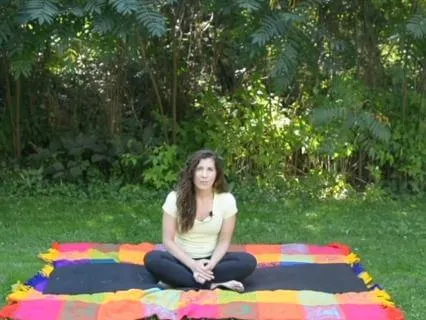
My name is Megan and I'll be leading you through your next yoga session.
For today's session,
We're focusing on this idea of reclaiming our body and coming back home to our body.
What I mean by this is,
Oftentimes,
After the experience of a trauma,
It's not uncommon to go through phases where you feel absolutely disconnected from the body.
I don't know if this rings true for you exactly,
But it's not uncommon to feel like you're seeing the world from outside of yourself,
Almost as if you're over here.
You're going through the motions.
You're going through your day by day,
But there's a disconnect.
You're lacking that feeling,
That emotion and connection to what you're doing.
For many of us that have experienced trauma,
A tremendous amount of time is spent avoiding and distracting ourselves from ever experiencing that same scenario or sensation of fear again.
And when we move into that space and continuously protect ourselves,
We unknowingly shut ourselves down from experiencing life and experiencing the present moment.
As if it were real and happening.
So today's session we're going to get back into the body.
We're going to learn ways to notice when the mind is pulling us away and how we can ground ourselves and bring ourselves back to the present moment.
So it's not uncommon through these next series of movements to find them a little bit difficult.
Maybe even notice some mental chatter coming up in the form of self-criticism or judgment.
But remember that you're safe here.
Remember that every time you make it to your mat,
You give yourself an opportunity to heal what needs to be healed.
So try your best.
Really,
Really find some time to extend compassion,
Patience,
And kindness to yourself.
And let's have some fun doing these movements together.
Let's get started.
As we get started,
The invitation is to find yourself in a standing mountain position.
And just like the base of a mountain is solid and firm.
Doing whatever it is in your body to feel the sensation of being solid,
Grounded,
And rooted to your mat.
If you'd like,
Take a moment rocking into the tips of the toes and all the way back into the heels a couple of times.
Just to really connect with the soles of the feet.
Notice what it feels like to bring a slight lift to the kneecaps and a slight inward rotation of the thighs.
At the same time,
Drawing the belly button in towards the spine and checking in with the shoulders,
Seeing if you may drop them a little bit further away from your ears.
If you'd like,
You can take the eyes to a close or just gently draw the gaze downward off the tip of the nose.
Really tuning into the body here,
Drawing the attention to the physical body,
Perhaps starting at the soles of the feet.
And scanning all the way up through each of the major joints.
Right through to the crown of the head.
Just checking in with any sensations you may or may not observe.
Knowing that there's no right or wrong sensation to feel or not feel,
We're just tuning in.
To our experience exactly as it's unfolding.
Spend as many minutes as you'd like.
Checking in with yourself here.
And as you're ready,
We're going to begin with a simple breathing exercise.
Taking the hands to interlace,
Press the palms down and away from you towards the floor and lengthen through the arms.
Notice what that feels like through the upper arms and shoulders and make any adjustments that you need to so that it feels comfortable for you.
Focusing the gaze on the middle fingers and using this as our focal point as we use our breath.
On your next inhale,
Slowly lifting the hands.
With lengthened arms all the way up above head,
Keeping the gaze on the middle fingers.
When you reach the top,
Release the hands together and draw the hands down through your center line.
When the hands get to the gaze,
Re-interlace the fingers,
Pressing the palms all the way down and exhaling all the way out,
Even tucking the chin to chest.
Slowly inhale,
Lengthen the arms all the way up.
Keep taking little sips of breath in as best as you can till the arms get to the top.
Release the hands together,
Take them down through center.
Exhale and interlace the fingers.
Keep exhaling all the way out until the arms extend towards the floor.
Inhaling,
Float the arms high.
Keep breathing in.
Big breath in.
Release the hands together down through center.
Exhaling,
Interlace the fingers.
Press and force the excess air all the way out of the body.
Inhale,
Lengthen the arms up.
And exhale,
Release the hands.
When they get to the gaze,
Reinterlace the fingers,
Press the palms down to the ground.
Another one here,
Big breath in.
With each breath,
A new beginning,
And as you exhale,
The hands through your center line.
Let each exhale be a release,
A letting go,
And moving anything out of the body that you don't need.
Inhale.
And exhale.
Great,
Continue to do as many cycles of breath as you need to until you feel fully present in this moment.
Taking a moment now to reconnect to the source of the feed.
We're going to move into a position called awkward pose and you'll see exactly what I mean in just a moment.
Float the arms up to shoulder height with the arms parallel to the floor beneath you.
See what it feels like in your body to draw the shoulders back into the shoulder joints.
We want to experiment with what it feels like to not be reaching the hands forward,
But to draw the shoulders right into the socket.
As you're comfortable,
Begin to shift the weight into the big toe mounds and tips of the toes,
Feeling weightless in the heels and ankles.
If this is where you're comfortable to start balancing,
Stay exactly right here.
This is a perfect beginning.
And as you're comfortable,
Experiment with perhaps lifting the heels up off the mat,
Coming to the tippy toes.
You may start to notice a little bit of a shake or vibration through the physical body.
And while this may be uncomfortable at first,
Trust that this is the body's way of working for you,
Making that connection to the brain that we are trying to stay in balance.
You might notice you'll feel a little off kilter,
Maybe fall out of balance once or twice.
Trust that you can get right back in.
It doesn't matter how many times we topple or move around.
What matters is being open to the experience and trying to find our way back into balance whenever we fall out of it.
Remembering that you get to choose how long you want to spend on the tiptoes and you get to choose how high you want the heels to come.
So readjust as you need to and let's try a second round together.
Shifting the weight forward into the big toes,
Into the big toe mounds.
Feeling weightless in the heels and then just experimenting with wherever you're comfortable at today with how high you want to lift the heels up off the floor.
Knowing that there's no right or wrong,
There's no better or worse way to do this.
We're just experimenting with balancing on our tiptoes.
And whenever you're ready.
Find your way back into a standing mountain position.
If you'd like,
You can also bend the knees and walk out the feet.
We have very small muscles in the feet,
So sometimes it can feel a little intense,
The sensations there.
So do what you need to do to feel comfortable.
Finding our way back into our setup position for awkward pose.
We're going to experiment again with coming to the tiptoes,
Lifting the heels as much as we're comfortable with.
And this time,
Slightly bringing a bend to the knees.
And at the same time,
Sitting the hips down with the back flat as much as you're comfortable with.
Keeping the heels up off the mat if you can.
Remembering that you can come out of this at any time you're feeling uncomfortable or just need a moment to flush out the legs and the feet.
As you're comfortable.
See if you might wish to try a second option today.
So we're up on the toes and we start to bend the knees.
Slowly bend the knees,
Draw the hips down towards the ankles.
And just have fun experimenting with how low you can go.
And embrace that shake.
Great job.
You can do this as many times as you'd like and just start to pay attention to the sensations that emerge in the body.
You may have already noticed what's happening in the mind as well.
Maybe some judgments of how long you should be able to hold something.
Remembering there's no right or wrong.
We're just trying something out today.
Now that we've moved through the awkward pose,
We're ready to start with tree pose.
So finding a comfortable position here in your standing mountain,
Solid base,
And the hands can come to the hips or rest at the sides,
Whatever is most comfortable for you.
I'm going to choose to start on my left foot,
But you can choose to start on whichever leg feels most comfortable for you.
As you're comfortable,
Shift the weight into the leg that you've chosen and really firmly press down through all the surfaces of that foot.
If you'd like,
You can lift all five toes up and really plant down through the sole of the foot and then gently replant the toes back down.
For the opposite leg,
We're going to open up the knee to the side as much as you're comfortable with and take the sole of the foot to a place on the solid leg where you're comfortable.
So it can be at the ankle or perhaps you want to experiment with lifting the sole of the foot up to the calf.
Remembering to protect the knee joint.
We never want the foot to press against the knee joint because it adds a little too much force to that joint.
Keeping your hands at your hips or at your sides,
Notice what it feels like as the body starts to try and keep you in balance.
It's not uncommon to feel a little bit shaky.
Maybe you need to touch the foot down to regroup and get back into balance.
Know that this is practice.
When we do this on our mat,
We're preparing ourselves off the mat and into the world when it's not uncommon to lose a little bit of balance.
Trust yourself that you have the resources and the skills to get right back into balance each and every time.
When you're ready,
Take the hands to your center.
And notice what it feels like to add a little challenge to the balance here.
If you'd like,
You can begin to grow the hands through the gaze and open up the fingers to come to the full expression of tree.
Maybe even let the leaves sway in the wind here.
You get to choose how long you want to stay in this position.
There's no right or wrong wherever you're at today,
And it doesn't matter how many times you have to touch down and get back in.
As you're comfortable,
Bringing your hands back to center and we'll release that leg down and give the soles of our feet a little bit of love.
We have about 45 to 50 really small muscles in the foot,
So it's not uncommon on the balancing leg to feel those muscles fatigue quite quickly.
So choose whatever feels comfortable for you to get the blood flow back to that side.
So let's set up now for the opposite side.
So shifting the weight into the next balancing leg,
Lift all five toes up off the ground so that you can feel the entire sole of the foot plant onto your mat.
Then rest all the toes down so that you have a solid balancing foot.
Open up the opposite leg now off to the side and take the sole of the foot to the ankle,
To the calf,
Wherever is comfortable for you,
Knowing that it doesn't have to be the same way that you did on the first side.
We all have differences in our body and so choosing the option that feels best for you today.
As you're comfortable,
Take the hands to your center.
And just gently direct the gaze down off the tip of the nose to a focus point in front of you.
Tuning into all the points of the body that are connected here.
We have our balancing foot connected to our mat.
We have our opposite foot connected to the leg.
Our core is connected to the spine.
Our gaze is connected to a focus point.
Our hands are connected.
And finally,
We're connected to the breath.
Seeing what it feels like to pay attention to the breath.
As you're comfortable,
Begin to grow the hands through the gaze.
Breaking the arms open.
Into tree.
Remember that you get to choose how long you want to stay here.
You get to choose how many times you want to touch down.
Regroup and get back into balance.
There's no right or wrong and taking the hands back to center.
Releasing that foot.
And walking out the feet.
All right,
We're going to move into one of our final balancing positions.
This is called toppling tree here.
So find your way close to the back of the mat and again choosing whichever side feels most comfortable to start with.
I'm going to choose my left,
But you can choose your right or your left.
It doesn't matter.
We're going to take a small step forward onto the mat to about the middle of the mat and we're going to shift the weight into the left foot and at the same time come to the tippy toes of the right leg.
So we're gonna feel a little weightless in the right foot.
And feel all the weight connected into your balancing leg.
The hands now are going to extend behind you,
If you'd like,
Palms facing downwards.
And as you're comfortable,
Experiment with lifting up the back leg as much as you'd like,
And at the same time,
Toppling the body forward.
You get to choose how far or how long you want to experiment with this.
Maybe you do it a couple times.
Maybe you take the foot just an inch up off the mat and notice what that feels like.
Maybe you feel like toppling over just a little bit more.
It's getting that sensation of trusting that balancing leg to catch you.
And slowly begin to rise up.
Make any adjustments that you need to.
Coming back to the back of the mat,
We're going to move into the opposite side.
So for me,
It's going to be my right leg,
But choose the opposite leg that you like.
Are going to do.
Take a step forward with the opposite leg now.
Root down through the sole of the foot and then just come to the tippy toe on the back leg.
Feel a little weightless in the back leg and feel the strength.
Feel the balance happening in the solid leg here.
Now as you're comfortable,
Lifting.
That back leg up as much as you'd like and at the same time toppling over as much as you'd like.
Remember that you get to hold this as long as you'd like.
You're fully in control here.
You may need to come back up,
Readjust.
And topple over again.
You get to choose.
And slowly lifting back up.
And walking out the legs so that you're comfortable.
Whenever you're ready,
Find your way back into your standing mountain starting position.
Tuning into the body.
Directing the awareness to the lower body,
The legs,
The knees,
The soles of the feet.
These are the joints.
These are the parts of the body that ground you,
That balance you.
And so just like we began,
We're going to end off with our simple breathing exercise.
So interlacing the fingers here and pressing the palms downwards.
Take the gaze to the middle fingers.
As you inhale,
Extend the arms upwards,
Keep breathing in right into the ribs.
Release the hands to center through the gaze.
Interlace and press the palms and exhale all the way out.
Inhale,
Float the hands high.
Exhale,
Release the hands together,
Down through center,
Interlace the fingers,
Press the palms away.
Inhaling.
.
.
And exhale through center.
Keep exhaling as you press the palms down,
Chin to chest.
Inhale.
And exhale.
Interlace,
Release all the excess stale air.
Last one,
Long slow breath in.
Let it be your new beginning.
And exhale,
Release the hands through center.
Interlace the fingers.
Exhale and release and let go.
Thank you for tuning in to your grounding balancing series.
Have a great day ahead.