Hi everyone,
Welcome to the Mindful Matters podcast by Blue Matter Project.
This is Eileen Clark,
Your host,
And this podcast brings together practitioners,
Thought leaders,
Teachers,
And inspiring individuals on how to best support your mental health and wellbeing.
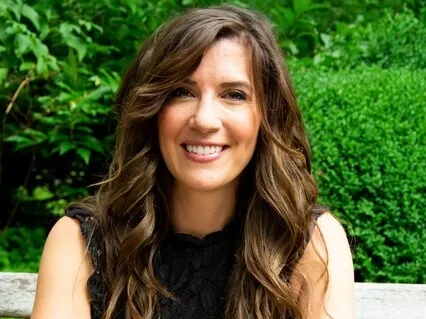
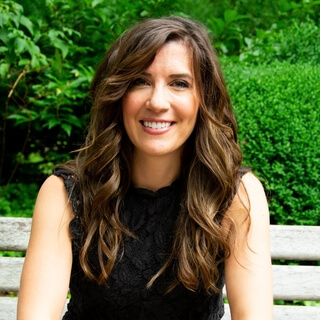
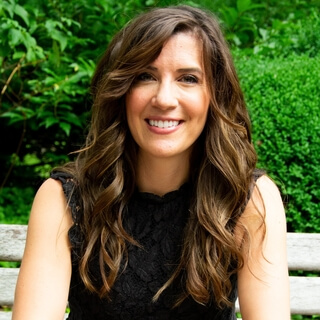
Joining me in today's episode is Megan Kirk-Chang,
Who is a PhD candidate in health sciences at York University,
And she's specializing in behavior change,
Mental performance,
Psychophysiology,
And cognitive neuroscience.
As part of her doctoral research,
She has developed the first registered clinical trial in Canada,
Investigating the effectiveness of an online mindfulness-based cognitive behavioral intervention for adults diagnosed with PTSD.
She's a certified trauma-informed yoga teacher,
A meditation facilitator on the Insight Timer app,
And she has now launched an evidence-based program called Heal My Trauma,
Which supports people with the physical and mental disruptions caused by any trauma or hardship.
In today's episode,
Megan and I talk about PTSD,
Complex PTSD.
We talk about what happens to the brain after trauma.
We touch a little bit on somatic sensory practices,
And she even shares with us some of her really important and exciting research findings as part of her doctoral research.
I'm so excited to introduce you,
Megan.
I'm so thrilled to have you here today.
Thank you so much,
Megan,
For joining us.
Oh,
Thank you so much.
It's always a pleasure to connect with you,
And I'm just so grateful for the work that Blue Matter Project is up to.
So thank you for having me.
Oh,
Well,
Thank you.
Before we take a dive into some of the science and the research that you're up to,
Which,
By the way,
I am so excited to talk about,
I'd love if you could take us back to the unexpected life event that happened several years ago for you and how it's actually influenced a big part of your journey and even your research.
Yeah,
Absolutely.
So about five and a half years ago,
My now husband,
We were newly engaged,
And just one random Sunday,
He was playing non-contact football,
Keyword being non-contact,
And I got a phone call from him that said,
You need to come get me immediately and take me to the hospital.
And my mind was racing.
He wouldn't say anything more.
He's like,
You just need to come.
And my mind went to,
Okay,
He broke his femur or he broke his leg.
And when I arrived,
So I was about 45 minutes away.
When I arrived,
He showed symptoms of partial paralysis in his arms,
And that was not on my radar of in the realm of possibility in a non-contact league.
And long story short,
We went immediately to the emergency room at the hospital where we live,
And he was immediately transferred by ambulance down to Sunnybrook Hospital in Toronto.
And for the listeners who might not know Sunnybrook Hospital,
It's the trauma center of Ontario.
So the best physicians in the world dealing with the most critical cases.
And he was into emergency spinal cord surgery that night because his disc had slipped.
He got hit the wrong way,
And it was compressing his spinal cord.
And newly engaged,
You don't imagine having to listen to doctors talk about DNR forms and potential risks of this surgery.
And so it really affected both of us in very different ways.
And what was interesting after his recovery,
About six to eight weeks later,
Is a whole flooding of symptoms were happening to me.
So panic attacks,
Just seemingly doing regular activities,
And then having a flushing in my face,
Anxiety,
Lots of crying.
And it confused me because I didn't witness the event.
I wasn't a part of the event,
And what I actually realized was that I was having a retriggering of PTSD symptoms that were linked to a childhood trauma that I had gone through.
And this was just a retriggering that happened.
And so I just got really curious about that,
That here's my husband who was the actual person involved in the event who is managing quite a lot better with it than I was.
And so I say that because I really believe that a lot of people are walking around thinking they don't qualify as having PTSD because they weren't the one that directly had the traumatic event happen to them.
And I'm living proof that symptoms can happen when you learn about something and you're not necessarily part of it.
So I hope that that's a long-winded explanation,
But I really wanted to touch home on that.
Yeah,
No,
Honestly,
That's such a great reminder that trauma is not just about what happened,
But more about what happens inside of us as a result of an external stimulation.
So I want to thank you so much for sharing that and really sort of bringing to light that it is possible for us to experience trauma in ways that are not often talked about.
And I think that this is also what I love so much about the way that you tell your story is that it's also a great reminder to us that PTSD isn't just a veterans-only condition,
Which I feel so often it's associated with.
Talk to us a little bit more about this.
Absolutely.
And I agree wholeheartedly with you.
And actually one of my main pieces of advocacy work,
I guess you could say,
With my PhD work is bringing this education to the masses that PTSD is not a veterans-only condition.
But what we do know is that,
So post-traumatic stress disorder is an actual clinical diagnosis created by the American Psychiatric Association.
And it was originally created to explain a host of symptoms that soldiers returning from the Vietnam War were presenting with.
So this original diagnosis came about in the early 1980s.
And since then,
There's been more revision to the diagnosis.
But it is a clinically recognized condition that has to be diagnosed by a qualified health professional like a psychiatrist.
And the common symptoms of PTSD range from intrusion symptoms,
So memory intrusion,
Like flashbacks,
Negative cognition and mood symptoms,
Avoidance of the reminders,
Either avoidance of thoughts or avoidance of the external reminders,
And hypervigilance.
So reactivity,
Easily to startle,
Lots of physiological symptoms there.
So there's a set criteria for PTSD that exists.
Yeah.
Well,
I'd actually love it if you could talk to us about the difference between PTSD and complex PTSD for anybody who isn't familiar.
For sure.
And I think this is also another really important thing to deconstruct.
So PTSD typically is diagnosed based on a single index event,
So a single traumatic event,
Which let's be honest,
How many people really have only ever had one thing in their life happen to them.
So complex PTSD,
Which I just want to add is not yet recognized by the American Psychiatric Association,
Which I do have concerns about.
But complex PTSD describes severe,
Prolonged or repeated trauma,
Particularly related to,
You can think about childhood abuse,
Domestic violence,
Repeated emotional psychological abuse.
Complex PTSD has such a substantial impact on one's personality,
Their identity,
Memories and emotional regulation to,
I would dare say,
A much greater capacity than a single traumatic event.
So it's complex,
Right?
You can't differentiate if the car accident that you were just in is causing your symptoms or the 10 year history of childhood abuse that you went through,
For example.
So PTSD is its own clinical diagnosis.
Complex PTSD is not yet recognized as a clinical diagnosis,
But I do believe that it is important because it does describe a more severe long-term presentation of symptoms.
And I also think that it's also a more sort of integrated and whole diagnostic criteria.
So I'm so glad that you brought that up and you distinguished the two for us.
And I do think that trauma also has the ability to deeply imprint and encode our mind and our body.
It's almost like trauma happens in the body first before we become aware of it in our mind.
And I feel like the best way that I feel that I know how to describe it is that it's like a haunting whisper that sort of lingers and keeps our nervous system on alert,
Where our nervous system is constantly evaluating for safety,
Danger,
Threat or risk.
I'd love if you could talk to us about what happens to the brain after trauma and how that shows up in our physiology,
Like our nervous system response.
For sure.
Before I do that,
I just want to touch on something really important that you said about the integrated experience of trauma.
Like now more than ever,
With the global pandemic happening and the rise of the anti-racist movement,
We're starting to recognize other forms of trauma,
Such as historical intergenerational trauma,
Racialized trauma.
And I think we really do need to expand our view of what could somebody be carrying with them that is traumatic for them.
It's a very subjective experience that we rigidly are trying to define,
But I don't think you can.
So I just wanted to touch on that because we are at very interesting times right now.
Absolutely.
Thank you so much for saying that.
Yeah.
And in terms of,
You're absolutely right about your comment that trauma happens physically first.
I wholeheartedly believe that.
And when we look at how we evolved as a species,
We have our primitive brain,
Which basically is our threat and danger detection center.
And so that is the first part of us that evolved to get ourselves out of danger.
Now as a species,
The dangers I'm talking about long ago were not being attacked by a tiger or a bear.
Nowadays we've evolved so much where those dangers aren't present,
But we still can experience that same level of fear,
But it could be more of a psychological trauma.
So think of increased stress,
For example.
So to dive in,
And I mean,
I could talk about this for hours upon hours.
Some of the main regions of the brain that we know get affected by trauma.
So one of the most widely known ones is our amygdala.
So our amygdala is like our fear detector.
It gets activated and over-activated when a traumatic event happens.
And this area of the brain is responsible for processing our physiological response,
Our musculoskeletal response,
Our autonomic responses to get us out of danger.
So it detects threat and fear and sends the signal to the body that,
Okay,
Danger is present.
So the interesting thing with trauma though is long after the event occurs,
The amygdala is over-activated,
So it's starting to actually constantly feel like you're in danger,
Even when no danger is present.
So with an overactive amygdala,
We're just constantly viewing the world as dangerous after the result of trauma.
So that's the main one that many people probably have heard of.
There's also the prefrontal cortex.
So this part of the brain,
More at the front center part of the brain,
Is responsible for emotional responses that are triggered by the amygdala.
So this helps us manage our emotions,
Control our impulses,
Helps us make conscious decisions to respond versus react.
When a trauma happens,
This part of the brain actually deactivates.
So if we have an overactive amygdala and an underactive prefrontal cortex,
We are not regulating.
And so a deactivated prefrontal cortex means that we might make impulsive decisions,
We might act out of fear or rage as opposed to ground ourselves,
Et cetera.
So this may lead to more aggressive outbursts or withdrawal symptoms.
And one of the areas of the brain that I'm fascinated by,
We don't know as much about,
But I do want to mention it,
Is the Broca's area.
Very tiny,
Tiny,
Tiny area in the brain,
Maybe about an inch diameter.
And this area of the brain is responsible for our language production.
So our ability to verbally express or verbally communicate to someone an experience that we've had.
When we've been through trauma,
The Broca's area gets deactivated.
A decrease in blood flow goes to this area of the brain,
Which impedes its function.
So this explains why some people might struggle with talk therapy,
For example,
Because they are struggling to put words to their traumatic experience.
So think about things like maybe a fragmented narrative of your traumatic memory.
You can't quite piece together coherently what occurred.
This area of the brain is thought to be responsible for that.
So I just wanted to mention that one as well,
Because we hear so much that cognitive behavioral therapy,
Dialectical behavioral therapy are really effective for PTSD recovery,
Which they are.
But it does explain why some people might struggle with this type of therapeutic approach.
And it's not because there's something wrong with them.
It's literally because their body needs to be regulated first.
And this is so fascinating.
And I feel like it ties really nicely into the topic of somatic sensory practices.
Can you describe to our listeners today what that is and how someone can integrate these with talk therapy to heal PTSD or even complex PTSD?
Yeah,
Absolutely.
So somatic sensory basically refers to your ability to sense,
Feel,
Think of the five senses if I can break it down a little bit more simply.
So somatic sensory activities really look at helping us ground and re-regulate our nervous system from a heightened state to a more calm and relaxed state.
And if you think about the presentation of trauma,
Our body is operating in an overactive,
Hypervigilant state.
So chronic anxiety,
Fear,
Lots of emotion.
And somatic sensory awareness really helps a person put themselves in touch with sensing how they're navigating the world physically.
We spend a lot of our time up in our minds ruminating,
Thinking about thoughts,
Worrying about the past or the future.
We don't do enough to get into our bodies and understand what's going on.
So somatic sensory activities really do help us come back into the body in safe and healing ways.
And this can be done through mindfulness practices.
Yoga is another really great practice.
There's also other various modalities like trauma release exercises,
Which is like vibration and tremoring to the body.
Walking even,
Just walking in barefoot,
Lots of different activities to increase our somatic sensory awareness.
Wonderful.
What would you say are just two simple practices that our listeners can try when they feel an overactive nervous system?
So just really two simple practices that if they feel like they're in that stress response,
What can they try to get out of that stress response?
For sure.
We hate to oversimplify it,
But we cannot underestimate the power of being able to anchor to our breath.
Our breath is linked to so many neural pathways in our body and is directly responsible for helping us flee danger,
But also helping us calm and digest and get back into a regulated state.
My first and foremost recommendation is being able to consciously sit with your breath.
And I'm not saying you have to sit for an hour with special incense and clothes.
You can do that if you like,
But I'm just talking about,
Can you consciously turn your attention to your breath for five breaths right now?
When we consciously think of our breath,
We naturally breathe deeper,
Which is getting us back into parasympathetic dominance,
That rest and digest state.
The second activity I would recommend is tuning into your five senses.
Again,
These sounds so simple,
But for somebody who's chronically dealing with symptoms of PTSD,
We've got to start small and build from there.
So I would say connect with the five senses.
Notice right now in your environment,
One thing you see,
Hear,
Touch,
Smell,
And taste,
And then build gradually to maybe noticing two or three or four of those each time.
I love telling this to my clients that it is neurologically impossible.
It's just not possible for the brain to be in the present moment if you're thinking about the past or worrying about the future.
So if you're finding that you're ruminating on some thoughts,
You know you're not in the here and now.
So tuning into the five senses gets us right back into the present moment.
I love it.
Thank you so much.
Megan,
I'd love if we could now dive into your research.
Talk about your research project.
Oh my gosh.
First of all,
I'm so grateful that you're asking because I'm finding,
Especially during this pandemic,
That it's very isolating work.
It's literally me,
Myself,
And I at my computer running these analyses.
So thank you.
So as you mentioned in the introduction,
From my experience with my husband,
I got really curious about this idea of retriggering of PTSD symptoms and how can we actually heal across the lifespan.
And so I actually ended my full-time permanent cushy hospital job to go back to school and study with a clinical psychologist,
Dr.
Paul Ritvo at York University,
To see if we could build a hybrid program.
So using elements of CBT with elements of mindfulness and yoga.
So the two of us created this eight-week clinical trial.
It's a registered clinical trial through the National Institutes of Health in the US,
And it's the first in Canada of its kind to deliver an online treatment program.
And the reason,
You know,
Some people might say,
Oh,
Why online?
But the reason for that is in Ontario,
And I'm sure across the nation,
We're seeing a six to eight-month wait list for people who require psychiatric services at CAMH,
The Center for Addiction and Mental Health.
And so we wanted to create an adjunct treatment for people who are struggling to access services.
And so an online delivery format eliminates geographic barriers,
It's more cost-effective,
It's also accessible 24-7.
And what we know with trauma and PTSD is that,
You know,
Your symptoms don't happen between nine and five.
You might wake up in the middle of the night after a nightmare and our online program is right there,
You can access it.
So this eight-week program that we developed has a weekly yoga session that is based on trauma-informed principles.
We have a daily guided meditation and then a weekly breath technique to practice every day.
So this could range from deep belly breathing to alternate nostril breathing.
Every week kind of progresses to a more difficult or more involved,
I guess you could say,
Breath technique.
And then every week the client and I would have a touch point where we would talk about their progress,
We'd discuss some of the challenges they were coming up against.
And so this was my PhD project.
So I launched this clinical program,
I guess,
Two years ago this month,
Actually.
And it was overwhelming,
Elaine,
Like I couldn't,
I thought recruitment would be challenging.
We had to immediately drop the weightless control arm because so many people were coming forward and ethically we were like,
We don't want to tell you,
You have to wait for eight weeks.
So we dropped the control arm.
But as a researcher,
Like you're always up against,
You know,
Choosing the human over the scientific rigor.
And I definitely wanted to put the human first,
Obviously.
So we dropped the control arm and just made it a straight treatment group.
And now I'm at the phase of analyzing the results.
So what's incredible in just eight weeks is that the participants reported a 56% reduction in PTSD symptom severity.
And just to put that into context,
We're looking for a 10 to 15% reduction as meaningful.
So we saw,
You know,
Four times that amount in just eight weeks.
We also did some psychophysiology metrics.
So we looked at heart rate variability and pupilometry.
So how did the eyes and the heart respond to an eight week meditation and yoga program?
And those results are a little bit less clear.
I'm finding so we did see that pupilometry,
So peak pupil dilation saw a reduction at the end of the eight week program,
Which is expected.
But what it really depended on was the comorbidity of somebody's depression level.
So PTSD can be further complicated by other conditions such as depression or anxiety.
So we're just trying to explain why some people saw dramatic reductions and some people didn't.
It's a little less clear than the self-report measures,
But it's fascinating nonetheless.
Oh,
Fascinating.
Thank you so much,
Megan,
For coming on the show and chatting with us.
I honestly loved talking about this with you.
I feel it's such an important conversation that we need to be having.
And I'm so excited about the research that you're doing that you continue to do.
Thank you so much for being here with us today.
I really appreciate your time.
Thank you for having me.
The mindful matters podcast is written,
Hosted and recorded by me,
Elaine Clark,
Edited by Karen Zorzi,
Art by Tawny Stoiber and music by Bellwoods.
If you'd like to support the podcast,
Please leave us a five star review and share with your friends and family.