Live Directly: Stop Believing Everything You Expect - by Mahaprana

COURSE

Live Directly: Stop Believing Everything You Expect

With Mahaprana

Before this meeting, you expected stress. Before this meditation, you expected peace. Before this task, you expected failure. And then — something different actually happened. The mind does not simply observe life. It constantly predicts it. And most of the time, those predictions shape how we feel, what we avoid, what we chase, and how much we suffer — before anything has even begun. Nowhere is this more visible than in procrastination. The task feels impossible before it starts. The conversation feels unbearable before a single word is spoken. The practice feels pointless before a single breath is taken. And so we wait. We delay. We avoid. Not because the task is actually hard — but because the mind's prediction of it is. This course directly dismantles that mechanism. Across three progressive practices, you will learn to predict your own thoughts before meditation and discover what actually arises, sit with time itself — observing how mental state distorts the felt experience of duration, and pause before any task or interaction and compare imagined experience with actual reality. What this course does for you: — Breaks procrastination by exposing the gap between imagined difficulty and actual experience — Reduces anxiety by testing fearful predictions against direct reality — Improves meditation by dissolving fixed expectations of how practice should feel — Builds patience by revealing how emotional state distorts the perception of time — Weakens blind habits by comparing expected pleasure with actual satisfaction — Develops genuine self-knowledge through honest, repeated reality-testing This is not positive thinking. This is not reframing. This is something more honest — learning to see the gap between what the mind imagines and what life actually offers. Who this course is for: Anyone who overthinks, avoids, procrastinates, assumes, or suffers from the distance between what they expected and what they got. The mind predicted. Awareness observed. Reality revealed.


Meet your Teacher
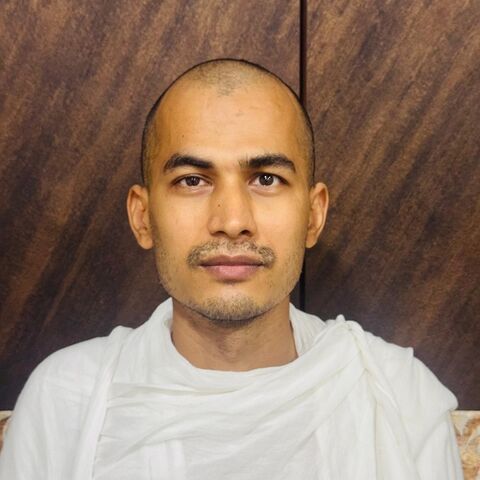
Suvvidhi is a meditation teacher and researcher who has spent decades exploring the intersection of traditional contemplative practice and the challenges of modern life. His path began in early childhood with a natural inclination toward simplicity and inner stillness, which led him to embrace a monastic way of life. For nearly a decade, he walked barefoot across India, living closely with people of diverse backgrounds, cultures, and traditions. This journey gave him a deep understanding of both the spiritual roots of meditation and the very real struggles ordinary people face in trying to access genuine inner peace. Through extensive study of traditional and modern philosophy, psychology, and neuroscience — combined with direct dialogue with thousands of people across all walks of life — Suvvidhi came to recognize a fundamental gap: most conventional meditation methods are not well-suited to the overwhelming pace and stress of contemporary life. This insight led him to research and develop original meditation techniques that work with the body and mind simultaneously — practices that are accessible even to those who struggle with focus, restlessness, or the inability to simply sit still. His work integrates classical yogic and contemplative wisdom with a clear-eyed understanding of modern psychology, making ancient inner practices genuinely relevant and effective for people today.

read more

3 Days

0 students

No ratings

10 min / day

Anxiety

English


Lesson 1

Guess Your Thoughts Before They Appear

This opening lesson introduces a practice that begins before meditation even starts. Before sitting, you pause and ask: "What kind of thoughts will appear during this meditation?" You name your predictions — work thoughts, worries, memories, plans, boredom — and then enter meditation and observe what actually arises. Afterward, you compare. The goal is not accuracy. The goal is something more revealing: discovering that the mind follows recognizable emotional patterns, that many thoughts are not random but repetitive, and that observing the machinery of thinking is fundamentally different from being carried away by it. This single shift — from unconscious thought to conscious observation — is where genuine self-understanding begins.

read more

Lesson 2

Psychological Time Vs Real Time

The clock measures one thing. The mind experiences another. This lesson investigates the profound and often overlooked gap between objective duration and subjective time — and what that gap reveals about the quality of your inner state. Through a simple but psychologically precise practice, you sit without checking the clock and observe how time feels from the inside. Restlessness stretches it. Anxiety slows it. Calm absorption makes it disappear entirely. When you finally check the actual time, the difference between your estimate and reality becomes a direct readout of your mental state — more accurate than any self-assessment. This practice exposes something modern life actively suppresses: the nervous system's capacity for genuine presence, undistorted by constant clock-monitoring, notification-checking, and productivity pressure. What this lesson trains: — Direct observation of how emotional state constructs the experience of time — Patience and tolerance for stillness without external stimulation — Freedom from compulsive time-checking and urgency addiction — Deeper meditation by removing the constant question "how much time is left?" — Awareness of the difference between felt difficulty and actual duration The mind said it was taking forever. The clock disagreed. That gap is where self-knowledge lives.

read more

Lesson 3

Most Procrastination Is Just A Wrong Prediction

You did not avoid the task because it was hard. You avoided it because your mind predicted it would be hard — and you believed that prediction without testing it. This is the hidden mechanism behind most procrastination: not laziness, not lack of discipline, but an unconscious forecast that makes the task feel heavier, longer, and more painful than it actually is. This lesson trains one precise and repeatable skill: pausing before any task to name the expectation clearly, then comparing it honestly with what actually occurred. The email you dreaded writing took four minutes. The conversation you postponed for days was over in ten. The exercise you avoided for a week felt energizing after the first two minutes. The practice works not by motivating you — but by repeatedly exposing the gap between imagined difficulty and actual experience, until the mind's predictions gradually lose their power to stop you. What this lesson trains: — Direct observation of how expectation creates avoidance before a task begins — Repeated reality-testing that weakens the mind's catastrophic forecasts — Awareness of how the body responds to expectation — tightening, resisting, retreating — The ability to distinguish imagined difficulty from actual difficulty — A practical daily tool applicable to work, study, conversations, and habits The task was waiting. The obstacle was the prediction. This practice removes it.

read more


Trusted by 36 million people. It's free.

Insight Timer

Get the app