The Identity Trap — And How To Step Out Of It - by Mahaprana

COURSE

The Identity Trap — And How To Step Out Of It

With Mahaprana

Most of us carry powerful inner images — "I am strong," "I am not enough," "People don't respect me" — that feel like truth. But these images are mental constructions. And when they are challenged, the body reacts, emotions flare, and suffering begins. This course trains one of the most liberating skills available: the ability to see your beliefs clearly, hold complexity without inner conflict, and experience yourself beyond fixed identity. Across four progressive practices, you will learn to question self-images that create hidden pressure and emotional reactivity, hold opposite qualities — strength and vulnerability, confidence and fear — as simultaneously true, recognize the repeating belief-filters that distort how you see yourself and others, and temporarily drop a belief completely to experience the spacious awareness that exists beyond it. This is not positive thinking. This is not self-improvement. This is something deeper — a direct investigation into the mental structures that quietly run your inner life. Who this course is for: Anyone who feels trapped by perfectionism, approval-seeking, low confidence, emotional reactivity, rigid self-image, or the exhausting pressure of maintaining who they think they are.


Meet your Teacher
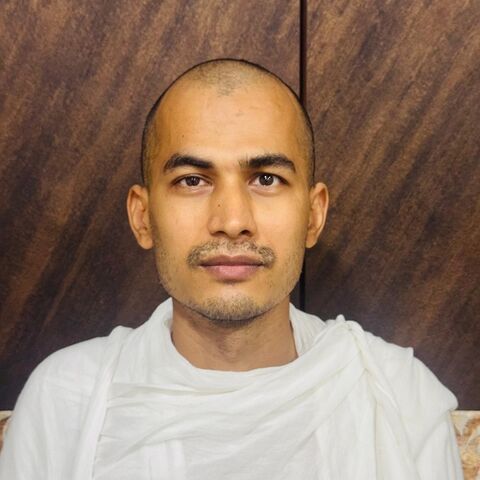
Suvvidhi is a meditation teacher and researcher who has spent decades exploring the intersection of traditional contemplative practice and the challenges of modern life. His path began in early childhood with a natural inclination toward simplicity and inner stillness, which led him to embrace a monastic way of life. For nearly a decade, he walked barefoot across India, living closely with people of diverse backgrounds, cultures, and traditions. This journey gave him a deep understanding of both the spiritual roots of meditation and the very real struggles ordinary people face in trying to access genuine inner peace. Through extensive study of traditional and modern philosophy, psychology, and neuroscience — combined with direct dialogue with thousands of people across all walks of life — Suvvidhi came to recognize a fundamental gap: most conventional meditation methods are not well-suited to the overwhelming pace and stress of contemporary life. This insight led him to research and develop original meditation techniques that work with the body and mind simultaneously — practices that are accessible even to those who struggle with focus, restlessness, or the inability to simply sit still. His work integrates classical yogic and contemplative wisdom with a clear-eyed understanding of modern psychology, making ancient inner practices genuinely relevant and effective for people today.

read more

4 Days

1 students

No ratings

7 min / day

Clarity

English


Lesson 1

Examine The Belief That Shapes Your Reality

Some thoughts return again and again — "I am not enough," "People will reject me," "I always fail." This lesson invites you to stop fighting or blindly believing these repeating thoughts and instead study them carefully. By asking how a belief shapes the way you see yourself, other people, and the world around you, you begin to see it as a filter rather than a fact. What looked like reality gradually reveals itself as interpretation — a mental lens formed through emotion, repetition, and conditioning that has been quietly shaping your perception, behavior, and relationships without you realizing it.

read more

Lesson 2

Question One Self-Image — And Feel What It Protects

We all carry inner images — "I am calm," "I am strong," "I am spiritual" — that feel like truth. This lesson invites you to choose one identity you strongly hold and ask: "Who am I when this image is not true?" By observing the body's reaction without defending or attacking the image, you begin to discover how much of your emotional life is quietly organized around protecting a mental picture of yourself — and what becomes possible when that protection is no longer needed.

read more

Lesson 3

Hold Two Opposite Images As True

Most psychological suffering comes not from reality itself, but from the rigid insistence that we must be only one thing. "I am strong, therefore I cannot be vulnerable." "I am confident, therefore I cannot be afraid." This lesson introduces a practice of holding two opposite self-images simultaneously — not choosing one and rejecting the other, but allowing both to exist without inner conflict. By sitting with the simple statement "both can be true," you begin to loosen black-and-white thinking, reduce shame around ordinary human complexity, and discover a more honest and flexible way of experiencing yourself.

read more

Lesson 4

Release One Belief And Rest In The Gap

This final lesson invites you to do something most people never try — to temporarily drop a deeply held belief without replacing it with anything else. Not "I am not enough" replaced by "I am enough," but simply the absence of both. For a few quiet moments, you let the belief become inactive and observe what remains: silence, fear, openness, relief, or emptiness. This practice reveals something profound — that awareness existed before the belief appeared, and that much of our suffering comes not from reality itself, but from the interpretation we have repeated so many times it began to feel like truth.

read more


Trusted by 36 million people. It's free.

Insight Timer

Get the app