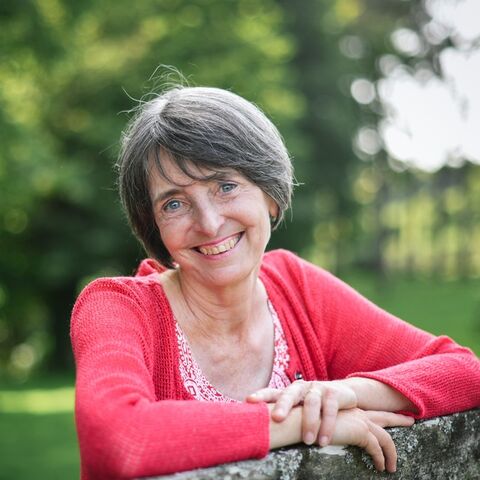
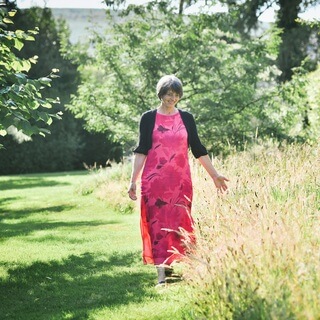
Hello and welcome to Five Minutes in Nature with me Liz Scott.
I'm still in Slapton,
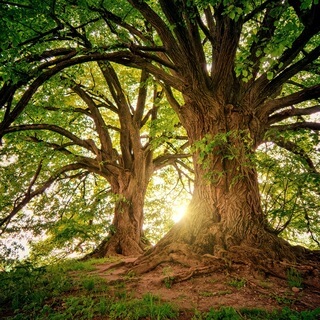
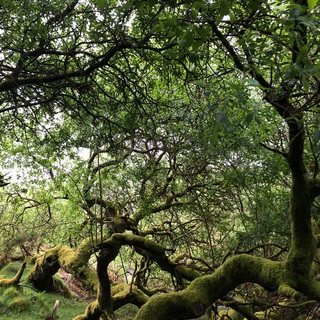
I've just walked beside the lay and I was beside the lay yesterday when I connected with you and today I'm walking in the wooded area.
It's quite shady,
It's rather nice,
It's a warm September day.
I'm very grateful for that and it's quite nice just to get out of the heat.
And today is a question I'm asking myself and you might want to answer it too and I'd love to hear from you if you do.
And the question is what are you making a stand for?
What am I making a stand for?
And I'm particularly struck as I come here to Slapton because during the war this whole area was requisitioned by the government during the war and everybody that lived here had to go and live somewhere else and it became a place that the soldiers who were going to land on the Normandy beaches and eventually that's how the victory was won in Europe but the soldiers landing on the Normandy beaches came here and they practiced here because there's a long beach.
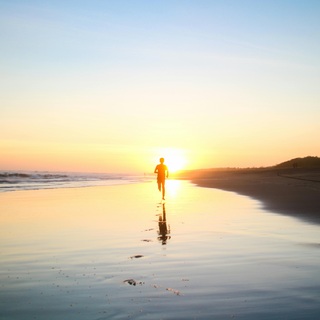
If you remember I described it yesterday we've got a long beach at Slapton it's probably about two and a half miles long and there's a strip of land that separates it from the Freshwater Lake.
It was thought that the beach here represented best the kind of terrain that the soldiers were going to face when they went to Normandy so a lot of their practicing to land on the beaches of Normandy was done here.
And several years ago when I was a radio reporter I came down to this area it was down to Torcross because somebody as they'd been renovating their house had found on the window ledge where the lead was around the window a name that had been engraved probably with a fingernail or maybe a stick and the name was of one of the soldiers that had been here in their house during the war and they'd done a little bit of research and they later realized that this soldier didn't make it back home so this soldier had gone to Normandy gone to the beaches and had been killed and as I stood in that window looking out on the same view that he would have looked out on I could see the Freshwater Lake,
The Slapton Lay,
The strip of land and I could see the ocean as well.
I just imagined what it must have been like for him knowing that he was going to be deployed and he might never come back.
There were people that fought during the Second World War for freedoms that now I have benefited from and they fought and they died in that Second World War and I wonder if I truly appreciate the freedoms that I've got and so my reflection today is one of gratitude,
One of gratitude that there were soldiers that gave their life to change the trajectory of what was happening in Europe at the time which was a despicable,
Frightening,
Horrible experience.
They gave their lives and they gave it so that I who was not even born then might live into a future that was settled and peaceful and had freedoms that much of Europe didn't have and that's why I'm asking the question what do I stand for,
What am I willing to make a stand for because there is much I see in the news and there's much I hear where people speak on behalf of what they think is right but they aren't representing me in my voice.
You see I truly deeply see that the world I want to live in is one of compassion and of love and connection and community and that kind of world doesn't exist if the people whose voices are loudest start saying that they're speaking on my behalf and they're speaking for a world that is very different where there is division and there is separation and there is a them and an us and so that's the question I'm reflecting on today what am I willing to make a stand for and how am I willing to make a stand so that people realize that they are not representing my voice in the world and I just feel it's really important to stand with courage and grounding and love to ensure that my voice is heard in the world.