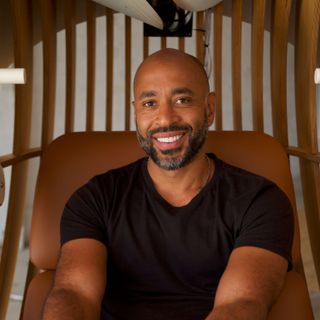
So let's start by finding a comfortable position.
So sitting in an alert and a relaxed position and knowing that it's okay to move at any time during this meditation.
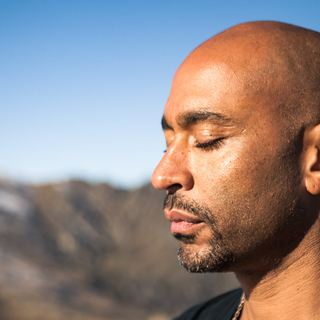
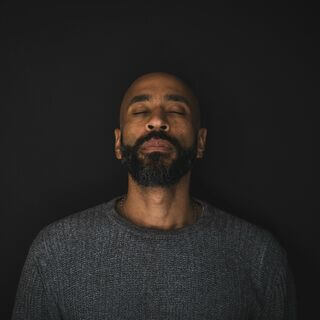
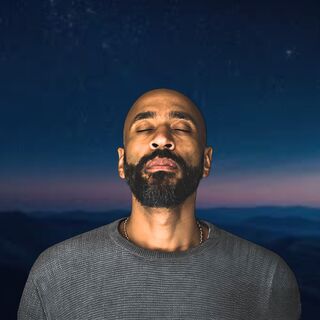
So I invite you now to close your eyes or you can leave your eyes open with a soft gaze in front of you on the floor.
Starting off by taking a few deliberate deep breaths breathing in and breathing out.
Breathing in and breathing out.
Allowing our bodies to become still we're becoming aware of the breath as it enters the body and when it leaves the body.
The cool air coming in through the nostrils,
The lungs and the chest and the stomach expanding and then the warm air leaving the nostrils on the out-breath and the body relaxing and softening a little.
Taking one more full breath in and a full breath out.
And now allowing the breath to return to its natural rhythm.
And again we're noticing that we don't have to do anything or make any effort to breathe.
The body knows exactly what to do.
We're using the breath as the place to return to when we get lost or distracted so we can observe,
어디<|is|> we go to the topic of breathing,
We may notice that during our practice breathing may be a more guru way ofalls,
But if you are comfortable excusing yourself with other things like lasts faithkill's words and our approach to that things So we can look at the breath as a kind of mindfulness anchor.
So something that's anchoring us into the present moment.
And the mind will get distracted.
It's what the mind does.
And when it gets carried away on a train of thoughts,
So thinking about the day,
Planning the week ahead,
We gently and we quietly come back to the breath without giving ourselves a hard time.
We patiently come back to the breath and we just pick up where we left off.
Breathing in and breathing out.
And we're allowing our attention now to shift from the breath.
So we'll let the awareness of the breath move to the background.
And we're going to move our attention to our emotions.
So as we sit here,
We may notice emotions coming into our awareness.
So what we're doing,
We're practicing stepping back and observing those emotions rather than being our emotions,
Just like we practiced observing our thoughts yesterday.
And each time an emotion arises,
We're going to make a conscious effort to observe it.
So taking a moment to hold it in your awareness with curiosity.
Much like thoughts,
We can see that emotions have a beginning,
A middle,
And an end.
Emotions rise and emotions pass.
So it's not always inevitable that we get carried away with an emotion.
And not that we're seeking out an emotion,
But what emotion can we feel now?
Is there an emotion?
Is there some feeling that we can feel underneath the surface?
Maybe there's a sense of anger,
Or maybe a sense of joy,
Or happiness,
Or sadness,
Or there could be fear,
Confusion,
Calm,
Contentment,
Excitement,
Whatever's present in the body right now.
And no matter how subtle,
We're just going to bring that into our awareness.
And noticing that emotions are always felt somewhere in the body.
There's always a location of this emotion.
So where in the body can you feel this emotion?
Perhaps we can feel this emotion in the chest.
Maybe there's a heaviness,
Or a tightness,
Or a tingling,
Or a warmth.
Is there perhaps a churning,
Or a fluttering in the stomach,
Or maybe a tightness,
Or pulsing in the hands,
Or heat,
Or burning,
Or tingling in the face or forehead?
Just wherever this emotion is manifesting itself,
We're just paying attention and bringing awareness to that area.
Often by labeling an emotion,
We can reduce the temptation to get carried away by that emotion.
So perhaps we can choose to acknowledge whatever emotion we're feeling now in a rational matter of fact kind of a way.
So perhaps there's a flutter in my stomach.
I call this excitement,
Or I have tension in my hands,
And heat in my temples.
I call this anger.
By engaging with an emotion in this way,
We're observing and labeling our experience rather than automatically identifying with it.
So once we've labeled the emotion,
We gently and we quietly come back to the anchor of the breath and then just continue paying attention to the emotions running around our body.
During this meditation,
We're experimenting with relating in a different way to emotions,
Both pleasant and unpleasant emotions.
What's it like to observe an unpleasant emotion without trying to push it away?
And what's it like to observe a pleasant emotion without grabbing onto it and trying to get more of it?
We're just noticing whatever comes up without grabbing and without pushing away.
And as we approach the end of our practice today,
We're going to take a couple of more breaths and we're going to feel the body once again connected to the ground or to the chair.
And we're just noticing how the body's feeling right now.
And does the body feel differently in any way?
You can wiggle your fingers and toes and you can bring your attention back to the room.
Over time,
You're going to begin noticing when you get carried away with emotions during your day.
And you're going to be able to skillfully bring yourself back to the present,
To whatever it is that you're doing at the time in the same way that you practice bringing yourself back to the breath with meditation.
And opening your eyes if you haven't already done so.