So welcome to this practice moving into stillness.
In this practice we'll be exploring sensing body sensations through movements and also in more stillness.
Sometimes when the body is moving it's a little easier to notice sensations,
They're a bit more vivid,
We can be a bit more present with them but in this practice we're also going to have some periods of more stillness.
And the invitation is to be curious and accepting of body sensations even when they're very subtle,
Perhaps almost imperceptible.
And how would it be to be curious and accepting of sensations when they might be more intense?
The first part of the practice will be lying down and then I'll guide you into sitting.
And just remembering that the whole way through the practice everything is part of the curriculum,
Even sleepiness,
Distractedness,
Boredom,
Anxiety,
Irritation,
Liking and not liking.
None of it's wrong,
It's just all more states that we can be mindful of.
So we're really wanting to slow down,
Become present,
Listen to the language of our body,
Sensing,
Savouring,
Dropping into the felt sense of being alive in this moment.
Letting ourselves feel what's going on in the body with open-heartedness and care.
And it's always nice to relax but just remember that the intention is more about being present and feeling our body rather than relaxing.
So if you're able to,
Finding your way now to the floor,
Maybe lying down on a mat or a thick blanket,
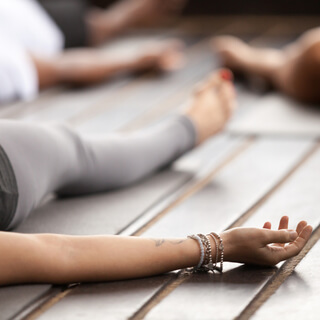
Feeling into the felt sense of lying here.
Letting your legs be long or having your knees bent and your feet flat on the floor.
Seeing if you can feel the contact your body is making with the floor through the back of your head,
Your shoulders,
The back of your chest,
Pelvis,
Buttocks and legs and feet.
And while you're settling in,
Allowing yourself to make any spontaneous movements or stretches that would just feel nice right now.
Just noticing sensations as you move and then notice how it is to come back into stillness.
Feeling the contact of your clothing on your skin too and the air on your skin,
Warm or cool.
And resting,
Breathing,
No rush.
And remembering you're the expert on your body,
So making any changes to the movements if any of them are not quite right for your body today.
And so right now,
Taking a few fuller breaths and deliberately releasing,
Letting go,
Maybe even yielding to the earth on the out breath.
And let's start with some movements,
Some small movements that you might be familiar with.
Starting off by just rolling the head gently from side to side and really noticing the sensations of this.
Evening that up.
And noticing how does your head and neck,
Perhaps shoulders,
Feel after these gentle head rolls.
And moving now to just gently opening and closing the hands.
Noticing sensations in the fingers and the hands,
The thumbs as you do so.
And do this two or three times,
Slowly,
Really noticing.
And coming to stillness and noticing the effect of that.
And then allowing the feet to be pulled back towards your face.
And then pointing them away from you.
Doing this two or three times,
Noticing the sensations.
And then coming to stillness and noticing the sensations in your feet and ankles.
And moving now to gently pulling your knees up with a hand on each knee.
And doing some knee circles.
You can bring them away from each other,
Around in circles like that,
Or you can keep them together and move them around together.
Just changing the position.
Checking out what's right for your body right now.
You might go once or twice in one direction,
Really noticing all the sensations in the legs,
The lower back,
The arms and hands,
The groins,
The buttocks.
And then reversing the direction,
Doing a couple of circles in the other direction.
And then letting those knees go,
The feet coming to the ground,
Or perhaps you might prefer to stretch your legs out.
Coming into stillness,
Noticing the sensations in your hips,
Your knees,
Your lower back.
You might like to do a slightly stronger stretch here,
So just sensing if this is right for you.
But if you'd like to,
You might pull your right knee towards your chest.
This might be plenty for you,
Or you might like to stretch out your left leg flat on the floor,
Feeling all the sensations in your groin and hip and buttock and leg.
And if you'd like to,
You might even pull your head up towards your knee,
Feeling the strong stretch in your upper body,
But this is optional.
So wherever you are,
Noticing the fairly strong sensations in your body.
Noticing and then release,
And really notice the release of your head if that's the case,
And your leg down to the floor.
And then trying that with the other side,
Pulling that left knee up towards the chest,
Noticing the strong sensations,
Choosing if you perhaps want to stretch that right leg out on the floor,
And choosing if you want to pull your face up towards your knee,
Noticing wherever you've chosen the strong stretches.
And then really noticing the release as you let go.
Having a full rest,
Noticing the effect on the whole body.
And if you'd like,
You can put your feet on the floor,
Knees pointing to the ceiling,
And try some gentle pelvic rocking movements.
So you might start by tipping the tailbone down and then you can start to relax your getting a little gap in the small of your back.
And then flattening the small of your back and tipping your tailbone up.
You might do very little movements or bigger movements,
And they might be quite slow,
Perhaps a little quicker if that's what your system wants right now.
Really noticing the sensations as you move the pelvis back and forward.
You might want to continue with this or next time you tilt your tailbone towards the ceiling,
You might even press down on your feet and bring your pelvis and hips right off the floor into what we call a bridge pose.
And then folding the vertebrae down towards the ground and tipping the pelvis the other way.
You might like to try that one more time,
Tipping the tailbone up to the ceiling,
The hips,
Maybe the lower back off the ground,
Feeling the strong sensations in your buttocks,
In your upper back,
Anywhere else in the body,
And then coming down and releasing that.
Having either the feet on the floor,
Knees pointing to the ceiling,
Or you might like to stretch the legs out,
Noticing the sensations.
If you'd like to,
You can put your arms out in a kind of T position with your palms facing towards the ceiling.
And bring your arms gently towards each other so the palms of your hands are facing each other.
And then actually cross the arms over and come into a kind of hug,
Really noticing the sensations of the hug.
Might even want to give your shoulders a little squeeze here,
Send yourself a little bit of love.
And then opening those arms out again,
Allowing them to come to the floor.
And bringing them back towards each other,
Noticing all the sensations as you move against gravity,
Bring the hands towards each other and maybe cross over the other way now and trying that hug again.
Noticing how does it feel to be hugging yourself?
What are the body sensations?
What do you notice?
Perhaps an emotional response or some thoughts?
And then releasing that hug and slowly allowing the arms to come to rest by your sides,
Really noticing the release.
And just having one final stretch,
Any stretch of your choice,
Perhaps like an animal or a baby stretches when they wake up.
Noticing the sensations of that stretch and coming into stillness again.
So noticing if you're comfortable with your legs stretched out or whether you want your feet on the floor,
Knees pointing to the ceiling.
You can put a big pillow under your knees if you want to.
Or you can even rest your lower legs on a chair.
Staying in stillness for a little while.
No need to struggle with thoughts if they arise or emotions or sounds.
Any of that is so fine,
Just noticing that and then coming back to sense the body.
Easy does it,
No rush,
Just being present with the body,
Not trying too hard.
You might like to take your attention to the top of your head and just notice any sensations in the top of your head,
In the back of your head,
The ears,
And the face.
Noticing sensations in the forehead,
The eyes,
The cheeks,
The jaws,
The chin,
The mouth,
Perhaps the lips touching,
Tongue touching in the mouth.
Any other sensations you can notice in your mouth.
And noticing your nose,
Perhaps the air coming in and out of the nostrils.
Moving now to notice the neck.
Any sensations you can feel in the front of the neck,
The sides of the neck,
The back of the neck,
Within the throat.
Moving on to the shoulders.
Seeing if you can notice sensations in the shoulders from the inside out.
What can you notice?
Perhaps lots of sensations or perhaps a blank,
That's not doing it wrong,
As long as you're just noticing what you can feel,
That's all you need to do.
Maybe it might be a lot,
Maybe not much at all.
And moving your attention down your arms,
The tops of your arms,
The elbows,
The lower arms,
The wrists,
And the hands.
All the way to the ends of the fingers and thumbs.
Perhaps you might notice air or clothing touching the arms and hands,
Perhaps some tingling or pulsation.
Just noticing.
And moving the attention now to the upper chest.
You might notice the breath moving there,
Might notice the heart beating,
Contact of the upper back with the floor,
Sensations in the muscles,
The ribs.
Notice the diaphragm moving up and down with the breath.
And moving the attention into the abdomen,
Noticing the rise and fall of the abdomen with the breath.
Sensations in the lower back.
Perhaps sensations within the belly,
In the digestive organs,
Or in the reproductive organs,
Or the organs of elimination.
Just noticing whatever there is to notice in the belly.
Moving down to the pelvis,
The groins,
The buttocks,
Noticing sensations there.
And the thighs,
The front of the thighs,
The backs of the thighs,
The insides and the outsides.
Perhaps you might notice the very heavy thigh bones,
The weight of them.
Noticing sensations in the knees,
The kneecaps,
The sides and the backs of the knees.
Sensations in the lower legs,
The shins,
The calves.
Noticing sensations in the ankles,
The front of the ankles,
The sides,
The backs of the ankles,
Where the Achilles tendons are.
And into the feet,
The tops of the feet,
The soles of the feet,
The balls of the feet,
The heels.
Right down to the ends of your toes.
Noticing the whole body,
The whole body.
Lying on the floor of a mat,
Spending a moment to notice sensations throughout the whole body.
And knowing that we're going to move to a seated posture now to finish with some sitting meditation.
So taking your time now to find your way into standing.
However that's possible for you.
You may want to,
If it feels right for your body,
Come via a forward fold.
So you might keep the knees bent,
Leaning forward into a forward fold.
Very slowly stacking one vertebra at a time on top of each other.
Taking a moment when you get to standing to notice how it is to be standing after lying for a while.
Noticing the sensations in the body.
And then finding your way to your seat,
Whether that be on a kneeling stool or a meditation cushion or a chair like a dining room chair.
Taking some time now to get yourself arranged.
Finding your way to sit that is comfortable.
Somewhere ideally that you can be both relaxed and alert.
Perhaps finding a sense of balance and support.
You might notice that your sit bones are underneath you.
That your shoulders are soft.
You might even want to put them forward,
Up and back.
Your chin tucked a little towards your chest.
So that the back of the neck can lengthen slightly.
Keeping the jaw soft.
Closing the eyes if that's comfortable.
Or perhaps lowering the eyes that you have a so that you have a soft gaze.
Noticing all the sensations of sitting.
Pressure from the chair or whatever else you're sitting on.
Maybe your feet touching the floor.
Touch of clothing on your skin.
And the temperature of the air.
And noticing that this whole time without being guided you've been breathing.
So that's the amount of effort that I invite you to bring to the process of breathing.
Just enough that you notice your breathing.
Paying attention to the actual felt sensation of this ordinary process of breathing.
You might notice where your attention is drawn in order to sense the breath.
Maybe it's the breath coming and going through the nostrils.
Perhaps there's a rise and fall of the chest area.
Maybe you notice the movement of breath in the expansion of the belly.
As you breathe in.
And a release of the belly as you breathe out.
Noticing the breath coming and going.
Entering and leaving the body.
In whichever way is most easeful.
Most easy to notice.
Might allow your attention to settle there now.
Noticing whatever is there in this moment.
In this breath right now.
You might become a little curious about the quality of the breath.
A gentle noticing if it's shallow or deep.
Constricted or easeful.
Fast or slow.
No need to change anything.
Just paying attention to the felt sensation of this breath.
Sense of the breath.
Just as it is.
Following each breath as best you can.
Knowing that you will have thoughts because you're human.
It's so fine.
Smiling when you notice thinking.
And perhaps choose to come back to the breath.
Following the inhalation.
A small pause as the breath turns around and then all the moments of the exhalation.
A little gap again.
All the small movements of the inhalation and exhalation.
Noticing the sensations that arise in this ongoing ebb and flow of the breath.
Each breath a new expression of rising and falling.
Of entering and leaving.
Of coming and going.
Birth and death.
This breath right now which has never been breathed before and will never be breathed again.
Being with the breath just as it is.
Maybe bringing a kind curiosity to the quality,
The texture of each breath.
The mind will wander.
Sounds,
Thoughts,
Feelings.
No problem.
Just noticing that.
And gently coming back to the breath.
The intention of the practice is not to get anywhere or feel anything special.
Even relaxation.
Simply allowing yourself to be here where you already are.
To feel the sensations of the breath as they are right here,
Right now.
This is mindfulness.
Simply being aware and accepting of each moment as it is.
As it arises and passes.
Not pushing out thoughts or feelings or perceptions or urges.
Just accepting and acknowledging them.
And gently,
Compassionately including the breath in awareness again.
Back to the reality of this moment.
The present moment.
Mindfulness of the breath as an anchor.
A place to come home to.
Might like to reconnect with your posture.
Perhaps extending forward through your spine and neck to realign your back a little.
Perhaps allowing the shoulders to come forward,
Up and back and soften.
And allow the jaw and face to soften a little.
The chin to tuck a little.
And for the last moments of the meditation,
You might allow your awareness to expand around the breath.
To include a sense of the whole body.
The whole body breathing.
Just allowing your attention to notice sensations in the body as they arise.
Observing them.
No need to react to them.
No need to be drawn into them.
Simply observing.
You may even notice strong sensations.
You might want to explore these a little.
In the way that you explore the qualities of your breath,
You may want to explore the qualities of these strong sensations.
Maybe even using the breath as a vehicle to carry the awareness into areas of intense sensations.
So you're breathing into them.
Letting go on the out-breath.
Curious,
Aware in each moment.
You might even find you get a sense of the movements of the breath throughout the whole body as if the whole body were breathing.
That beautiful breath,
That anchor.
Place to reconnect again and again.
And knowing that the meditation is coming to an end.
Perhaps spending some moments feeling into the impact of the practice.
You may even like to send yourself a little gratitude,
A little appreciation for having spent the time doing this practice.
And taking your time now to gently start to move parts of the body,
Hands and feet.
You might like to have a bit of a stretch.
Let a little bit of light into the eyes.
Keeping a soft gaze as you open your eyes.
And going about your day.