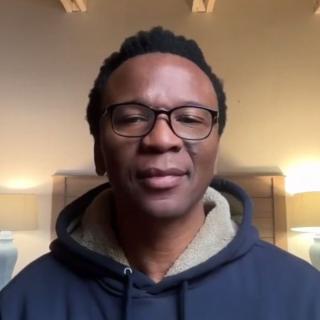
Good morning,
Good afternoon,
Good evening,
Wherever you are,
Whatever you may be doing.
Hello.
This is a
Interview,
Discussion on boundaries that I had with a very good and dear friend of mine,
Sarah Kartika,
Who is a certified health coach and somatic parts work practitioner.
And Sarah and I have known each other for about three years
And basically keep bumping into each other.
But you'll hear a bit more about that on the interview.
It's a topic of discussion which is really quite important to both of us because I believe at least
That it kind of has shown up in various parts of our journey over these last three years.
And in talking offline about this and in talking about boundaries over the last three years together,
It's definitely something which is very important and central to who we are and what we do.
So here's the interview.
I hope you enjoy it.
Yeah,
I mean,
For me,
It's,
I guess it's talking about boundaries.
And I guess before we jump into it,
I guess the conversation is,
How did we meet?
How long have we known each other?
Yeah.
And I actually know the date,
Because we had this conversation really,
Well,
Not date,
Roughly,
It was 2020.
Yeah,
You looked it up.
So we met on an online course.
And then I sent you a message.
And then geez,
What is it,
Four years later,
Three and a bit years later.
Three and a bit,
Yes.
We're still talking.
Yes.
But we've never met in person yet.
Never met in person.
Welcome to the life post-COVID.
Right.
True.
Yeah.
So look,
We've had a lot of conversations,
A lot of voice notes,
A lot of WhatsApp messages.
We've probably only spoken face to face,
Like three,
Four times.
Probably,
Yeah.
Yeah,
Like once a year.
So this is 2020,
24,
Speaking in person out the way.
But no,
But it's been,
It's been really quite cool.
We've had fairly similar
Kind of life experiences at the same time.
And I would say probably a fairly milestone moments in life in happening at the same time.
And then really similar experiences tracking alongside each other.
Yes,
That was so interesting whenever I would say something or you would share something.
And then we're both kind of like,
Oh,
Yeah,
You too,
Me too.
What the heck?
It felt very connected in a way,
Kind of like,
Oh,
OK,
We're on similar paths,
But
On total different places in the world with total different lives,
Actually.
But going through,
You know,
Similar things at the similar or same time,
Which was kind of like very interesting.
Yeah.
Yeah.
And,
You know,
I guess both on the kind of coaching trajectory
And I want to say maybe approaching it from different ways in some instances.
You know,
I think you've taken a very definitive,
This is what I'm going to do
Outlook on it.
And you are doing that.
And I take my hat off to you for that.
And I'd say that I'm probably,
Yeah,
Doing it at a different pace,
Let's put it that way.
Well,
I'm not racing either.
I just don't know where I want to go.
But I'm working alongside with my nervous system because I also felt that whenever I
Push it too hard,
Some parts within me come up and it's like,
We're not ready.
And I'm like,
Okay,
Just sit with it.
Really?
Yeah.
Have you become
More comfortable with that?
With going slowly?
Yeah.
Yes and no.
What's the yes and no?
The yes is that I'm more comfortable with surrendering and knowing that,
You know,
I might need some steps in between.
I might need some more preparation in between.
And I am much more comfortable with that.
You know,
Not having to put up a persona that I'm not
Just so I can be successful.
Yeah.
But another part within me that craves the independence,
Financial freedom,
Also timely freedom,
Because I'm working part-time,
Right?
For another company where I don't have this kind of freedom,
That part is kind of like,
Can you get on with it now?
I don't think you can swear,
Okay?
We need to have some boundaries here,
Sarah.
Oh,
Shoot.
I'm kidding.
You probably need to make a thing that it's not for children,
Andrew,
You know,
Like this PG rating,
Because I do swear.
I'm sorry.
Yeah,
So do I,
Susan.
I think we all know that one.
So yeah,
Look,
I rudely cut you off.
So what were you saying in terms of timing?
Again,
I didn't hear that.
I said I rudely cut you off.
So what were you saying?
That's what I was saying.
There's nothing to it.
That's it.
That's how it is right now.
Yeah,
No,
I get that.
I get that.
I mean,
I guess,
You know,
For me,
I've just been thinking about this boundaries thing actually for the last couple of days.
And I remember being really quite unboundary,
If that's the word.
And as I thought over the last couple of days,
You know,
What really showed up for me in terms of
What's the difference between them,
Arguably?
Arguably,
And this,
You know,
That's the other quite cool and interesting thing about
This relationship is that it's a milestone for me,
At least with regards to
Where I was at one point in time,
And where I am now,
And the time in between.
And I find that quite cool.
I think that was one of the cool things about
Finding that original message.
Because in many ways,
It was like,
Wow,
That's a message
From a very different time and place,
You know,
Obviously,
My words,
But from a very different time and place.
And weirdly enough,
You know,
In some of the ways,
I'd have thought that I'd look back on it and be like,
Oh,
My gosh,
I don't think like that anymore at all.
And the words would be unfamiliar.
But they weren't.
They weren't unfamiliar.
And I suppose that's kind of,
You know,
When people say,
Oh,
I'm a different person now.
I guess,
You know,
To each his own.
But for me,
That's never really kind of resonated with me,
You know,
In terms of being a different person.
And I guess that's,
That's the thing,
Which really was quite cool,
In many ways about
Having that marker.
And I guess that's the good thing about social media is that,
You know,
You
Can time and place things in positive things that happened to you as well as non positive,
I guess.
Anyway,
I digress.
So my point about boundaries was,
You know,
I looked back at it,
And I was
Going over and I was thinking to myself,
Well,
What really has changed?
And I remember having a
Conversation,
A very distinct conversation with someone who,
You know,
Really,
I'd given a lot
Of space to allowing them to engage with me and get a hold of me,
Whenever,
You know,
And that
Was just kind of part of the course,
I was like a relationship,
You know,
I thought,
I felt like
I was showing up being a good friend,
In doing that being available.
And until I became conscious
Of it,
I hadn't really understood what it was doing for me.
You know,
You know,
You're like,
Chilled out on a Saturday evening,
And you're watching a movie.
And then you get this,
You know,
Five alarm,
You know,
Warning coming through on WhatsApp.
And you know,
This person is in
This crisis mode.
And you've got to,
You know,
Pull out of that place of space and calm and
Tranquility.
And then really give yourself to that and to them.
And that was,
I guess I hadn't
Been conscious to it until I started to really notice and dial into it,
You know.
And then when I put that boundary in,
That relationship most definitely changed.
And for a while,
I guess I kind of struggled with the newness of things.
Oh,
What is my value?
What's my place in this relationship?
And I guess the word value is
Quite important.
I'll come back to it.
But anyways,
I'll stop my monologue and let you jump in.
Well,
Um,
Yeah,
Boundaries mean to you?
I guess that's the question.
Yes.
That's a good question,
Actually,
Because what I have perceived boundaries in the past
Was kind of like a wall,
Right,
To protect myself,
But a wall that felt disconnecting to others.
Um,
And I think,
You know,
When you look at the pop culture psychology post,
Let me call it like
That,
Um,
They are sometimes kind of like,
You got to honor yourself,
You got to place your
Boundaries,
That really harsh,
Right.
And for me,
Boundaries are not something very harsh.
My experience with boundaries in the past two years have been much more connecting,
Actually,
It is not a demand.
It's more kind of like,
Maybe a request.
But there's not so much
Expectation tied into it,
You know,
Like,
You have to do this for me,
Because that's my boundary,
Or you have to honor my boundary.
It's not about that,
Which in the past,
It used to be for me,
You know,
Like,
I misunderstood that as a protection mechanism.
It's like,
It's about me,
Me,
Me,
Me,
Right?
And you have to kind of like,
What's the word in English,
Kind of have to act
In a way that I want you to act.
And it's kind of like this half to right now,
You don't have to do
Anything.
So boundaries is about honoring my own energy,
About honoring my own values,
My own needs,
And about communicating them.
And at the same time,
Letting go how people react to it,
Letting go of their,
You know,
Like,
Them saying,
Oh,
No,
I can't meet you there.
I can't do that
And be kind of like,
Okay,
And then stepping,
Stepping back.
Right.
And it's kind of like this.
And also,
The way I communicate them,
I can give you an example,
If you want.
You know,
Like,
I used to communicate boundaries in my past relationship in a very unhealthy way,
Meaning that I need this to be like this or else.
This is not a boundary.
I need this to be like this or else.
Yeah,
Or else I'm going to be unhappy,
Or else I'm going to be unhappy.
Yeah,
So controllable.
Yeah,
It's controlling.
And I think,
From what I felt,
You know,
When I read some of those
Posts,
You know,
Kind of like,
Or quotes on boundaries,
It sometimes kind of feels like
This controlling,
It's about me.
And it's not about,
I mean,
Yes,
It is about me.
But it's
Not that I put my fate in your hands,
I put it in my own hands,
I'm just communicating what feels
Good for me and what doesn't.
And if you say no to it,
I'm fine with that.
I'll go find it
Somewhere else,
Because I know I'm not going to meet it there.
Interest.
So it actually has a lot to do with freedom and connectedness.
And I think the connectedness
Is the point where people actually realize that with placing that boundary,
You actually care
About them.
And I know it sounds a bit weird,
But I say it like that.
I have this example with my
Sister,
Where,
You know,
She had a few issues in her life that would really get her dysregulated.
And in that dysregulating state,
She would always reach out to me.
And for me,
At some point,
It became,
You know,
It became daily,
A daily habit for her to just kind of like always,
Like you said,
Kind of like,
Help,
I'm in a,
You know,
A distressed state,
This and that,
Okay?
Like,
What am I going to do?
What am I going to do?
And whenever I became,
Whenever I got
A message from my sister,
My first reaction was,
Oh,
No,
What's it going to be?
My peace was gone.
And what I told her was,
You know,
When I placed my boundary,
I realized this is not healthy for me.
And I also realized,
I do want to be there for her.
I do care about her.
But I also care about
My own energy,
And my own inner peace,
And my own capacity that I have to show up for her.
Now,
The thing is that,
You know,
If my capacity is low,
I cannot show up fully for her.
So it's
Not benefiting her either.
Right?
So I told her that I told her that,
You know,
You know,
I would
Love to connect on more than just,
You know,
The issues you're having in life.
I would love to also talk about nice things.
And I understand you're going through a hard time right
Now.
I understand.
But I also,
You know,
And I do want to be there for you.
But the way this has,
You know,
Our conversations have,
Have developed,
Exactly,
Is just draining for me.
And I cannot be
There for you anymore.
So I asked her if it would be okay,
If she just,
You know,
Actually,
I didn't
Ask her if I didn't ask her anything.
I think I just informed her what actually felt good for me.
And I was like,
You know,
Just,
You know,
I think I made a suggestion.
It wasn't asking her.
Yeah,
It was just a suggestion that I will be there for her.
If it's really an emergency,
I will always
Be there.
But I would appreciate it,
If she could first sit with it herself,
And see if she can deal
With it herself.
And if not,
If she can't,
Then she's free to contact me and I'm here to help her.
Now,
This did two things.
First of all,
It puts the responsibility that she put on me on her again.
So I actually unintentionally taught her how to be with herself.
And at the same time,
She understood that,
Oh,
Yeah,
I see,
I have been doing all this.
And I wouldn't want
My friends only to reach out to me when they're in distress,
And with all this negativity.
And she kind of understood that.
And what happened was that we came closer,
Because she understood what I was going through.
And I think this is,
You know,
When you're setting
Boundaries,
I think it's a lot of times also about how we said it,
You know,
How do we say it?
I could have,
You know,
Just not answered her,
Ignored her,
I could have told her,
Hey,
It's too much.
That's it.
No,
I let her in what I cherish about her.
I let her in,
You know,
Into how I feel and what I wish.
But then I let go the expectation,
How she reacts to it.
Hmm.
I've got a question for you.
Some people will ask this question,
And we'll be wanting this question.
So I'll ask the question,
Did that make you a bad sister?
What about that?
What makes me a bad sister?
The fact that you weren't there for her,
You know,
She's going through a difficult time.
And she's,
You know,
You're her sister.
And,
You know,
We're told that for the people who
Are close to us,
Who we care about,
Who we love,
We,
We need to be there for them.
And I am there for her.
The thing is that I cannot be a good sister to her if my batteries are low.
I cannot show up for her if I am barely holding on myself.
And,
You know,
To be fair,
I was having a lot on my plate during that time as well.
And the thing is that,
You know,
You can be a good sister,
Friend,
Spouse,
Whatever it is,
Without taking on too much responsibility.
And I think it's about the responsibility that we need to talk about because,
You know,
As much as we can be there for other people and as much as it's important,
Because also we are
A social species and this connection,
This is important.
But I cannot heal her wounds.
I can be there and hold her.
I cannot heal anyone.
You know,
My work is never about healing
Others.
It's about showing others how to heal themselves and holding that safe,
Sorry,
And holding that safe space.
Holding that safe space for them.
But for that,
I need to be in a certain state myself.
If I'm constantly stressed,
I cannot hold that space for you.
And if the reaching out elicits that,
Elicits stress,
I can't hold a space for you either.
Yeah.
In the sense that,
You know,
If you're constantly getting
Crises and,
You know,
I mean,
We're all human and,
You know,
Our brain starts to associate
Things with certain feelings and a response.
And if every time,
It's like,
You know,
Every time you
Get a phone call from a boss and,
You know,
They're shouting at you,
Every time you see that
Number,
Your blood pressure is going to go up because that's what you expected.
And,
You know,
That's a really good example.
And thanks for sharing that,
You know,
Because it's,
And obviously,
You know,
I asked that question quite deliberately because that's what we've been taught.
Yes.
Especially me.
We've been taught that other people are,
I don't want to use the word more important,
Because that doesn't sound right.
We've been taught that we need to always,
To not be there for someone.
And those words in particular,
Means that you aren't a good
Fill in the blank,
Friend,
Sister,
Brother,
Boyfriend,
Girlfriend,
Husband,
Wife,
Son,
Daughter,
Grandson,
Granddaughter,
Whatever,
You know.
Self sacrifice.
Yeah,
Exactly.
Kind of like almost held very high.
That's kind of like a virtue.
Exactly,
Exactly,
Exactly,
Exactly.
And,
And that's what it's just,
You know,
You hear it,
And you hear it,
It's like,
Oh,
You know,
Fred is such a nice person,
You know,
Every time I have an issue,
He's there to help me.
Geez,
Really?
You know,
Every time my car doesn't start,
He comes over and helps me get a new car,
You know,
It's just like,
Take it in to get repaired.
I mean,
Let's be realistic about things.
And,
And in some ways,
Because,
You know,
I think that if you speak to certain people,
And I'll probably say a fair number of people,
If you speak to them about boundaries,
In many ways,
You'll get the same response,
As if you speak to somebody and you use the word woke,
You know,
There are very different
Interpretations of that word.
And they both elicit very different responses,
You know.
And,
You know,
I really believe that,
You know,
Whilst boundaries might not necessarily be
The centre of it,
They're definitely part of the chain,
In terms of journeys,
You know,
Because if we just use,
You know,
Your journey,
My journey,
As an example,
And correct me if I'm wrong,
I don't want to put words in your mouth,
You know,
Well,
Speaking for myself,
I know definitively,
I wouldn't be in this place in space,
Without
Having an understanding of boundaries,
And putting those in place.
And,
You know,
That links me to,
You know,
In order for you,
In order,
Authenticity,
And value,
What I said earlier on,
And understanding yourself is heavily linked to boundaries.
It's a precursor for it.
Exactly.
And that's what I'm saying is that it's part of that chain.
Yeah.
And,
You know,
My ability to,
You know,
I mean,
I don't even think about boundaries anymore.
Like,
It doesn't even,
Not even like,
You know,
It's not a conscious thing for me,
Whereas
Before it was like,
Oh,
You know,
Everywhere,
It's just like boundaries,
Boundaries,
Boundaries,
Boundaries.
But I think that that speaks to that journey of authenticity.
You know,
Knowing who you are,
Knowing your self worth,
Knowing your personal value.
Yeah.
And it's about taking responsibility for yourself.
I think a lot of people misunderstand
Boundaries about putting responsibility on other people.
It's not about that.
It's not about that at all.
You misunderstood the whole thing.
I'm laughing.
It's about me.
It's about me honoring what I need,
Honoring my own energy,
Honoring my own needs and just communicating that if you're on board with it or not,
I don't care.
I mean,
Sometimes I do care,
But I can let go of the expectation that
You are on board with it.
And that's it,
Isn't it?
And I guess that kind of leads me into what's the difference or is
There a difference between boundaries and discipline?
And the reason why I say discipline
Is because and the reason why I was laughing is because all too often,
You know,
There's a
Miss in that piece in terms of boundaries,
You know,
And that boundary is your internal boundary.
Your own ability to say no to how the mask wants to respond.
And I think that's the next
Level of granularity in all of it is that piece that,
You know,
Showing up for someone or no,
Being there for someone is often about a mask.
It's often about,
Well,
It's not often.
It can
Be about masks.
It can be about people pleasing.
It can be about I am expected to do this because
I am this person.
And,
You know,
For me,
That was the bit where,
You know,
When I first started
This whole kind of self-journey and understanding myself a lot better and looking at boundaries,
I did believe that.
I missed the portion of,
I don't know if the word is self-control,
But I missed the portion of discipline.
I missed the portion of showing up for myself,
You know,
Because and almost like what you were saying,
You know,
Boundaries was all about a wall.
It was all about,
Oh,
No,
You need to do this so that I can that.
And I guess that is,
You know,
That's the next floor,
Isn't it?
You know,
The next floor is understanding I need boundaries.
Or the first floor is there's something which doesn't feel right here with this relationship,
With the way we interact,
With the way you show up,
You know,
The way you come to me,
The way
I'm here for you or vice versa.
And then it's identifying it's a boundary.
And then it's,
Okay,
What am I doing about?
And,
You know,
I'm,
You know,
I was talking about this,
You know,
Previously in another podcast about,
You know,
The first abandonment which we have
Is to ourselves.
Yes.
You know,
And everyone says,
Oh,
You know,
That abandonment wound is,
You know,
Based off of X parents,
Whatever,
You know.
Well,
I mean,
It starts with the parents,
Actually,
And then you internalize it,
And then you'll get disconnected from yourself.
Now,
That's another call.
That's another discussion.
That's a rabbit hole.
Yeah,
It is.
I mean,
And I suppose it's a chicken and egg thing,
Perhaps,
Like,
Yes,
I completely agree with you.
You know,
There is,
There is a relationship piece to it.
But what
I'm,
You know,
The bit that I'm zoning in,
Is,
You know,
In my,
You know,
In my experience,
The example that I used,
Sitting on the couch,
Watching a,
You know,
Watching a movie.
And previously,
After the last call,
I was like,
You know what,
I'm not gonna let that happen
Again.
Next time the call ring,
The phone rings,
Or I get a message,
I'm going to do X,
Show up for myself,
And then you don't.
Yeah,
Then that instance of self-betrayal
Is where it all starts to unbundle,
You know.
And that's it.
It's that self-betrayal abandonment,
Like,
Yeah.
And I guess in there,
That's where the relationship with self plays into everything.
Yes.
Because without that relationship,
How can you have boundaries?
You can't for me.
Sorry?
No,
I can't.
I can't.
For me,
I only started,
I was only able to start to really set healthy boundaries.
After I got in connection with myself.
After I started honoring myself,
After I,
You know,
Did my inner child healing,
After all that work,
Inner work.
And I didn't start with placing
Boundaries so much as starting actually with myself,
With the relationship I have with myself.
And then honoring the relationship I have with myself required me to more or less effortlessly,
Actually.
And I say more or less,
Sometimes it's easier,
Sometimes it's
Not as easy.
Depends on,
You know,
Who I'm setting boundaries with.
Yeah.
And the situation.
But it became more and more effortless,
Whereas in the past,
I would have resented those people.
And I don't want to resent,
You know,
My friends or my sister or my family or anything.
I don't
Want to resent them.
Right.
So,
It also helped me to,
You know,
Not resent them anymore by just
Saying,
Like,
Hey,
This is what I need or,
You know,
Kind of like,
Need time for myself,
For example.
Kind of,
You know,
It really helped.
And also something very wonderful that also
Happened was because I communicated them from a very vulnerable and authentic place,
You know,
Not from a,
I need you to do X,
Y,
Z,
But,
Hey,
I feel X,
Y,
Z when this and that happens or when
You do this.
Right.
Without putting blame on them,
Without,
You know,
Expecting them to do
Anything different.
Like,
I just had another thought,
But I will put that aside.
They
Got to know me on a much deeper level because they didn't know.
They didn't know I didn't
Have the capacity because I was functioning in that role for so long.
Yeah.
They didn't
Know how I was really feeling.
I like that word role.
Yeah.
And then once you get rid of those
Roles,
Both on their side and your side,
You're now having a real,
Genuine,
Authentic conversation.
Yeah.
So,
I've got a question.
In a conversation and in a relationship like ours,
What are the boundaries?
And I ask that because,
You know,
We're talking about
It allows people to show up as themselves.
And maybe there aren't any boundaries.
I guess that's
A question that I'm just going to throw out there.
I mean,
In this scenario,
What do you,
And this is an interesting question because we've talked about boundaries so much.
What do you define as a boundary in this question right now?
Because a boundary can be a like and
Dislike.
A boundary can be,
You know,
Certain needs.
A boundary can be,
I don't know.
Many things.
I guess the root of the question was,
And I was just following from what you were
Saying in terms of,
You know,
It allowed you to interact with whomever from a place of genuineness
And for you to not be adopting a role.
Sorry,
Adopting our?
A role.
A role.
And I guess what I'm saying is that,
What does it look like on the other side of that?
And I would
Say that,
You know,
On the other side of that is,
You know,
A relationship like which we have,
Which is,
You know,
Pretty authentic,
You know,
You are you and I am me.
And,
You know,
We both
Do and continue to do the work.
And,
You know,
We're more authentic than we were three years ago,
Whatever it was,
Or whatever it is,
I guess.
And maybe there isn't a question in there.
I mean,
What is the,
What's the word I'm looking for?
Maybe I'll talk it out.
Like,
I enjoy our
Conversation,
You know,
Because they're real.
And whether,
You know,
And I feel like you understand
Me,
Etc,
Etc.
Now,
Do boundaries play a role?
And maybe they play a role in the sense of,
Yeah,
And that's the question.
And it goes back to the point about that it starts with self,
You know,
And that,
You know,
Again,
Speaking for myself,
You know,
I am able to enjoy a relationship
With someone,
Full stop,
I am authentic,
Don't show up in a role with the master.
So it's really
Quite a,
In many ways,
Vulnerable relationship,
Because,
You know,
You aren't,
And this is the
Thing,
Like,
I mean,
You know,
I'm not showing up with any kind of barriers,
But at the same time,
I'm boundaried.
Does that make sense?
I don't know if I can follow you completely.
But I had
Two things that came up.
First of all,
Is trust.
Yes.
And I think trust can be also a boundary.
And I think we trust each other enough to be able to be that open.
So we could kind of like,
Define that as our boundary that we have mutual trust.
And we're not going to betray each other.
We're not going to laugh at each other for what we are sharing,
You know?
Yes.
And then the other,
Sorry?
With,
Not at.
Yes,
Exactly.
Exactly.
We have both quite a bit of humor,
Which is kind of fun.
And then also,
The other thing is respect.
And I almost sense kind of this,
There's not a lot
Of expectations that we hold towards each other in the way that we want each other to show up.
Or maybe like,
It is more like hidden in terms of,
You know,
We're so authentic anyway,
And we trust
Each other so much anyway,
You know,
That we're not going to hurt each other with words.
That
There's this containment or kind of like this non-judgmental zone.
Yeah.
And I guess,
You know,
My point around the question was,
You know,
All too often,
I'll speak about,
You know,
In the past,
You know,
There was a version which felt like,
You know,
Safety came with control.
Safety came with being a certain type of person,
With saying a certain type of things,
With,
You know,
Acting a certain way.
And that's
What connection created.
And,
You know,
As we said at the beginning,
There's this connection over,
You know,
Three years,
Which is virtual,
And is none of the previous stuff,
You know.
And it's
Almost that,
You know,
There's this belief that in order to have that connection,
You need to have
All of these masks,
And you need to have all of these defence mechanisms,
And you need to have
All of these,
You know,
Kind of quips on,
You know,
To kind of,
You know,
At your fingertips.
But in actuality,
You know,
The real kind of essence and joy and goodness of relationship
Is vulnerability,
And authenticity.
And presence.
And presence,
Which,
As part of that,
Is about boundaries,
You know,
The trust that you spoke
About,
The respect,
Yeah.
And these are my boundaries for any relationship.
Yeah.
So someone doesn't treat me with respect,
I'm kind of like,
Okay,
Bye.
Yeah,
Exactly.
Whatever.
Whatever.
But bye.
I'm not trying to change anyone.
I'm just kind of like,
Exactly.
I respect for me.
Yeah,
I respect myself,
Completely,
That I'm not going to allow
Any disrespect in my space.
Full stop.
Yeah,
Exactly.
So,
I say,
In terms of kind of wrapping it up,
What would you say are your takeaways in terms of
Boundaries?
Like,
For myself,
I mean,
In terms of people who are watching and listening,
You know,
My kind of what to do now,
Is really take the time to sit and think about,
Because boundaries is all about feelings,
Isn't it?
You know,
Like,
You can feel when you are,
When your boundaries have been crossed.
Oh,
Yeah.
I mean,
The entire life is about feelings,
To be honest.
So boundaries includes that big time as well.
But yeah,
You're right.
Yeah.
And,
You know,
In there,
In there is,
You know,
What is it?
Like,
You know,
I remember,
I was quite practical about things,
You know,
I remember,
You know,
It might have been,
You know,
Part of a course,
Maybe the one we were on,
Or a different one,
You know,
Sitting down,
Taking the time to sit down,
And really,
And really focusing in on a relationship,
Which made me feel a certain way.
And noting down what I didn't,
What didn't make me feel good about it.
And having almost a contract with self,
About what am I going to do about those things,
Those two things,
Three things,
Five things,
However many things they were.
And then going to the next one,
It's the next one.
And,
You know,
And it kind of,
For me,
It started with those kind of immediate relationships,
Where there was that much
Energy around me.
And that helped me,
You know,
I think it helped me,
Along with all of the other
Things that I was doing,
To really identify what it was that I don't like,
Because,
You know,
In both of our examples,
We were picking up the phone,
And answering,
Or responding to the text
Message until we got to the point where we're like,
This doesn't feel good.
And we identified,
It was that.
And I guess that's the whole thing around my,
My thing is that around,
You know,
What I've been saying is identification of it.
And then as you quite rightly said,
In
Terms of the empowerment that you gave to your sister,
And it's the same thing,
It's that
Empowerment giving to self,
Because it is that relationship with self,
As you quite rightly,
And definitely said,
Is the primal relationship,
Then it's a matter of,
So what am I going to do
In that situation,
And holding yourself to it,
Having the discipline to do that.
And being okay with the discomfort that it brings.
I tell you,
It's not always comfortable,
You have to be able to sit with the discomfort,
You have to learn that,
Or else you're not going to set those boundaries,
Especially if people that
Are close,
And that you really love,
But you really have to be able to be kind of like,
Okay,
I might lose them in that process.
And I have to be okay with that loss.
And yes,
This is,
You know,
Choosing myself over someone else has a lot to do with this inner resiliency that,
Okay,
I can be with what comes up internally for me.
And that happens,
The self trust.
Yeah.
And you know what,
And you know,
I was saying about my son,
All too often,
You know,
We have this fear that it's,
Oh,
This relationship is going to end,
I'm no longer going to interact
With my sister,
Or this person,
Or that person,
Or my brother.
But it doesn't.
No relationship does
Change.
It absolutely does change.
You know what,
In many situations,
And in many instances,
Personally,
For me,
That relationship did need to change.
Yeah.
And going through that change,
As you said,
Having the confidence and self to sit through that change,
On the other side was
A very different relationship,
But in many ways,
A healthier one,
Not in many ways,
But on the other
Side was it was a different relationship.
And in many,
And it was,
And it is a healthier relationship
For self,
And a more connected relationship between me and the other person.
Exactly.
And that's what I mean with,
You know,
Boundaries is not about putting up a wall,
It's about connection.
How can I connect with you on a more vulnerable and true level,
Authentic level?
So there's a lot of love in that whole process around boundaries.
Sorry?
I said,
There's a lot of love around the whole process of boundaries.
Absolutely.
Like I said,
I don't want to resent my friends.
I don't want to resent my sister,
My family.
I don't want that.
So I have to make sure that some boundaries are in place,
That this doesn't happen.
And when you come from that place,
Right,
People will feel that.
And it's not so much the words that you're using.
This is something that came up,
A little thought
Just earlier,
I thought,
Oh,
I had another idea or thought interrupt me,
Right?
Remember?
Yeah.
But earlier on,
I was in a workshop a few weeks ago,
Where it was about from conflict
To connection,
Right?
So how to communicate.
And I loved what the speaker said.
He said that
It's not about nonviolent communication,
You can learn how to say things in a way that
It doesn't hurt anyone,
Right?
But still be honest.
It's the intention behind it.
You can say things in a way that,
You know,
You're using all the tools of nonviolent communication,
And yet the energy behind it is like an expectation.
Now,
You have to be able to
Learn to somehow let go of the expectation.
And then it doesn't matter what words you use anymore,
Because they will feel the energy.
You can be clumsy in expressing yourself.
It doesn't matter.
They will feel that energy that,
You know what,
There is not this expectation behind it.
And
They feel like they have the free will to decide for themselves if that's correct for them or not.
Because we have to honor other people's free will as well,
When we are setting boundaries.
That's another podcast.
So we've got two more.
Right.
I went a bit on a tangent.
But I mean,
This is a little tip for anyone who's kind of
Like trying to set boundaries and really struggling with how to communicate things.
Learn how to,
You know,
Be with the discomfort,
Be with loss,
Be with emotions in general,
Because this is basically the core of it all.
If you know how to be with your emotions,
You know how to set boundaries,
Because it's going to be easy then.
And that was 100%.
You know,
For me,
I remember,
You know,
A therapist at the time saying,
You have to be comfortable sitting in the,
I won't use the word,
You know,
But.
.
.
I already cursed so much.
But it's true.
And in there came a lot of peace,
You know,
A lot of peace came from being able to
Sit in the shit.
You said it.
Yeah,
I know.
Yes.
Because it doesn't,
It doesn't,
You get through it.
That's the point.
And that's the point where you gain self-trust.
Exactly,
Exactly.
Completely.
You know,
You get through it.
And yeah,
Yeah,
Yeah,
Yeah.
I like
That.
I think we need to,
We need to write down,
I think we've got a,
We've got a,
We've got an
Abandonment podcast to do.
You know,
Trials healing,
Sitting with emotions,
How to do emotional processing.
No,
But look,
I think,
Thank you for that.
I mean,
I,
As ever enjoyed our engagement.
And,
You know,
I hope that everybody else did as well.
Because fundamentally,
It's just kind of,
And this was the whole premise behind this for the both of us was just two friends talking,
Wasn't it?
It was.
So I hope it was enjoyable,
Insightful,
Fun.
Alrighty.
Thank you.
I'll catch you later.