Hello my fellow fallible human.
Welcome to The Harmonious Mind,
A time to slow down and calm your nervous system.
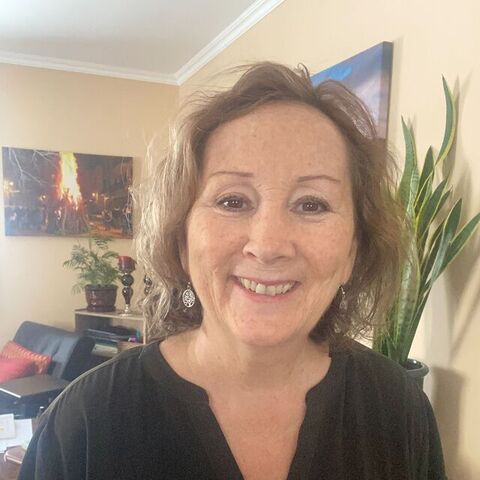
I'm Tanya McIntyre,
Your mindfulness mentor.
Each short episode of The Harmonious Mind offers practical insights rooted in mindfulness and brain science to help you shift perspective,
Reduce stress,
And strengthen your mental health.
Listen to this the way you would listen to music,
With an open mind and curiosity.
There's nothing to do,
Nowhere to go.
Just relax and be here in the present moment.
Today we'll explore how unconditional acceptance can contribute to our better mental health.
I'm grateful to be managing my mental health and remaining free from addictions by using a few of my favorite tools that are based in cognitive science,
That's brain science,
Helping me,
I don't want to say change my thoughts,
But notice my thoughts,
Be aware of my thoughts,
And be aware that most of my thoughts are not helpful.
Most of the thoughts that we have every day are negative because they're fed by negative influences.
In our English language,
We have three times as many negative words to positive words,
So we actually have to work three times as hard to even formulate a positive thought or a positive sentence.
We really have our work cut out for us,
And it is said that we are now processing about 70,
000 thoughts a day,
And most of those are negative.
So considering that most of our thoughts are negative,
It's certainly understanding that we are now considered to be the most stressed,
Depressed,
Overweight,
And over-medicated population in history.
One of my favorite science-based tools is the whole concept around unconditional acceptance.
I had a lot of conditional acceptance in my life,
So when I was introduced to this idea of unconditional acceptance for myself,
For others,
And for life,
I was intrigued.
I wanted to learn more.
I thought,
Well,
Some people say that the idea of unconditional acceptance can actually free us from being sad with the suffering that we encounter in life,
And let's face it,
There is no shortage of suffering in life.
So how can we live our lives fully,
Peacefully,
And not get sucked into the vortex of negativity that seems to surround us everywhere?
Unconditional acceptance for myself,
For others,
And for life is what I call the hammer in my toolbox.
When it comes to dealing with heightened emotions and refraining from harmful substances and behaviors,
The unconditional acceptance piece is definitely my favorite compass.
So let's start with unconditional self-acceptance.
I am more than my behaviors.
I have worth just as I am.
I can't change the past,
But I can change my future.
Repeating affirmations like this can help to repair the brain and build resilience.
Resilience can help us delay gratification,
Resist temptations,
And maintain motivation to achieve our goals.
Our brain has this magnificent ability,
Neuroplasticity,
And that literally means that we can sculpt and strengthen new neural networks to serve us in healthier ways,
And we do this with repetition.
Repeating something so often it becomes a true belief for us.
What we practice grows stronger.
And next we look at unconditional other acceptance.
Other people have value regardless of their flaws.
Other people don't always act in ways that I prefer.
Other people often do things that annoy us,
But not necessarily to annoy us.
Other people are just as worthy as I am.
Repeating affirmations like these can pave the way to cross the bridge to forgiving someone who isn't sorry and accepting an apology never received.
Crossing that forgiveness bridge can be a long trek,
I know,
And it can also be transformational when we finally reach the other side.
And now we look at unconditional life acceptance.
I think it was actually Mark Twain who said,
The only certainty of life is life's uncertainty.
There's no shortage of uncertainties in life,
That's for sure.
For me,
Having a structured routine can be the glue that holds life together for me sometimes.
I have a set pattern,
A schedule of sleeping,
Eating,
And exercising at the same time every day.
It provides me with a sense of order and accomplishment.
It's also good to practice what I call the Ps.
Practice the Ps.
The first one is patience.
Patience reminds me that my direction is more important than my speed.
I had setbacks almost every year for a few years while attending recovery meetings.
I kept going to meetings.
I kept doing all the work.
The setbacks were not failures.
They were simply opportunities for me to learn a lesson.
The next P is practice.
Knowledge teaches us what to do,
And practice teaches us how to do it.
If we want to learn how to do anything,
Especially building new healthy habits,
It takes daily dedication and practice.
The next P is persistence.
Recovery doesn't take long necessarily.
Success doesn't take long.
It does take a persistent willingness to exert consistent efforts to help ourselves.
Remember,
Repeated experiences shape our brain.
Repeated practice can sculpt and strengthen our synaptic connections.
Neurons that fire together wire together.
Repetitive slogans,
Mottos,
Affirmations,
These can all be motivational and transformational.
At least they have been for me.
We can groove new neural pathways to take us in better directions.
We can create new neural networks to override and redirect the pathways that were leading us into unhelpful habits.
We can condition ourselves to replace our old reflex responses of feeding the cravings with a new reflex response using time-tested techniques.
The essential element in all of this is repetition.
Daily,
What we practice grows stronger.
Acceptance isn't passive.
It's the first step in an active process towards self-improvement.
Thank you so much for being here with me.
I hope you have steadier thoughts,
Calmer emotions,
And a more balanced nervous system.
Join me for upcoming explorations of the harmonious mind.
Until then,
May your coffee,
Your tea,
Your heart,
And your patience be strong.
My name is Tanya McIntyre,
Your Mindfulness Mentor.
May the force of mindfulness be with you always.
And remember,
You are the force.