We are continuing our exploration of the Niyamas,
Yoga's guidelines to help us build a stronger relationship with ourself,
With creating a supportive inner world and supportive patterns that feed our growth and our development.
And as we move into the third Niyama,
Tapas,
This is exactly what we are working toward.
It is our relationship with growth and transformation.
Now when we look at the Yoga Sutras,
The translation that I'm using talks about the idea of austerity,
Which is a strictness or a plainness,
Like an extreme simplicity.
And that seems like kind of a strong word,
A strict word to be quite literal.
And you know,
Our approach to studying the Niyamas is a little bit more influenced by the modern world and modern psychology as a way to create this stronger relationship with ourselves.
And strictness is not necessarily the most ideal word that I would want to go with.
So I'm going to give you some other options and some other things for you to explore and see what you find supportive to you personally.
If you feel drawn to the word strictness and extreme simplicity,
That feels supportive to you,
You can lean into those.
But we're going to explore the idea of Tapas and your relationship with this concept as the fire of discipline.
Discipline requires some effort,
Some push.
We have to work through resistance to make this change.
We all know if you have ever tried to start a new habit,
Tried to pull something into your life that you knew was good for you,
And even if you knew how good it was for you and how much it made you feel better,
There can still be a lot of resistance to getting yourself to do that thing.
Whether it's getting onto your yoga mat,
Going for a daily walk,
Getting onto your meditation cushion,
There's going to be a lot of friction most of the time.
Some days it's easy,
But often there can be other things that pull for our attention and our energy,
Especially in the modern world.
There are no end to the things that can pull us away and distract us.
There's so many choices that it's very easy for our energy to get scattered.
So this is the fire of discipline,
Of pulling your energy and saying,
No,
No,
This is the thing that I know I need to do.
As tempting as it is to put on the TV and watch something or to scroll through my phone,
I know that stopping those things and getting onto my meditation cushion is what's actually going to fuel my personal development.
So there's some resistance there.
There's some friction that you have to work through,
But that's the fiery part of tapas.
We can also think about this as the process that builds inner grit,
Because there's an understanding that we come to of knowing if we are creating change,
If we are growing,
If we are stepping out of our comfort zone,
It's going to be hard and there's going to be a lot of discomfort,
A lot of unknown that comes from that.
And it's kind of that acceptance that the difficult parts,
The scary,
Uncertain,
Uncomfortable parts are part of the deal.
We don't get to avoid them.
And if we do avoid them,
We also avoid our own growth.
So effort.
Let's talk about this idea of focused effort,
But also the idea of right effort.
As someone who is working on fixing my own patterns of overdoing things,
Over-efforting.
I was just writing this morning about growing up in a time when the narrative that was shared,
Especially in the movement space,
In the athletic space,
It was 110% effort for whatever you were doing.
110% effort.
And a lot of us really absorbed that and said,
Okay,
Well,
If we're going to do anything,
You have to do it as hard as possible,
No matter what.
You might get hurt.
That doesn't matter.
110%.
Oh,
You don't feel good today.
Doesn't matter.
110%.
So it was always more effort is better to the point of draining yourself.
I always think,
You know,
100% is the only capacity that we have at any given moment.
And when you go through that mental shift of giving 110%,
It's literally like you're stealing that from the future.
You're taking your energy,
Taking your health,
Taking that resource that was supposed to be for a future version of you,
And you're stealing it to give more in the present moment.
And that is this connection to too much effort.
Very common in the modern world of thinking more is always better.
But when we think about this relationship to the fire element,
To effort,
To transformation,
There's this reminder that it is not more effort.
It is the right amount of effort.
Just right.
In the world of therapy,
We talk about something called the just right challenge.
If I give something to my patient that is way too challenging,
It's going to frustrate them and they're going to walk away from it.
They're not going to want to engage with it.
It's not going to be therapeutic because it was overwhelming to them.
If I give them something too easy,
They're going to think,
Well,
Why am I doing this?
What's even the point of doing this?
It's so easy.
I don't even think it's worth my time.
Right?
So those two ends of the spectrum and what we work on very carefully as therapists or even as yoga teachers is to notice the person in front of you and say,
What is the just right challenge that I can give them?
That's a good match for their skill level and stretches them just a little bit beyond it so that they step into that place of growth and learning without being overwhelmed.
That's the just right challenge.
And that's what we're looking for here in terms of our growth.
We don't want to overwhelm ourselves by changing all the things at the same time and deplete ourselves by giving everything 110% because we will literally have nothing left in the tank.
And when you start to move into the future,
Feeling depleted,
Even your future self,
Because you stole that energy,
You stole that effort so strongly that even your future self feels like it's hard to recover from that.
So we're replacing that old pattern with this pattern of saying,
What's the right amount of effort to support my evolution into who I'm becoming to support that transformation and keep me away from the process of stagnation.
We don't want to get stuck in our comfort zone where we are not willing to step into discomfort.
We're not willing to experience the difficult or icky feelings of uncertainty,
Fear,
Maybe the vulnerability of looking at some of the ways that we self-sabotage.
That can be a really icky feeling,
But that is really key to transformation.
Noticing those old habits that are holding us back and literally lighting them on fire so that we can burn that away and use it to fuel the next evolution of who we are becoming.
So there's this strong connection to the heat of effort and the fire element.
I love talking about the five elements as a way to understand yourself,
As a way to understand where you need to create balance in your life or balance within your own composition.
When you're going through something difficult,
The fire element is there to give you the heat,
The energy,
The oomph that you need to go through the challenge,
To go right through it.
Very often when we're talking about tapas as the niyama in yoga,
There's a connection to spiritual effort.
Sometimes it's translated as spiritual zeal or religious zeal.
It's this process of a spiritual evolution,
So not just physical or mental or emotional,
But going down to the spiritual level of transformation.
You can keep that in mind.
The other way that we can think about this is self-discipline.
This is kind of a tricky one because for a lot of us,
When we think of the word discipline,
It might not have a very good connotation in your mind.
You might have a little bit of an emotional reaction or a physical reaction to the word discipline,
So notice if that happens because that's pretty common.
But we put the word self in front of it.
Self-discipline.
We are disciplining ourselves and depending on what your inner dialogue is like,
What your inner critic is like,
Or how much work you have done on healing and creating supportive inner patterns,
Self-discipline might be something that is very supportive.
It is me talking myself into getting onto my meditation cushion where I'm sitting right now versus going to my computer and answering emails.
The pull first thing in the morning of,
Oh,
What if somebody sent me an important message?
I should probably check that.
And then the next thought in my mind is,
It'll be there after your meditation practice.
Sit down,
Do your practice,
Emails come later.
So that's my self-discipline dialogue that goes on in my head in the morning.
And for some of us,
There can be certain topics that might bring up the harsher inner critic.
A lot of times that can be around movement or the body.
A lot of people will have very strong expectations of,
Oh,
I should,
Should,
This is the key word,
Always pay attention when the word should gets thrown in there.
I should go to the gym four days a week if I want to lose weight and hit my goal.
And it becomes this self-imposed shame,
This self-imposed pressure,
And kind of this way of bullying yourself.
Be very vigilant of that process because many of us have soaked that in and internalized that where we take this expectation of thinking,
Well,
The ideal situation is that I go to the gym five days a week,
Or I have to meditate every single morning.
That's what a good yogi would do.
And then when you don't,
You have all of these harsh criticisms.
And you might think,
Well,
I'm a failure.
I'm bad at yoga.
I am never going to be in shape because I just don't have the discipline to get myself to the gym.
So it can create this outpouring of self-criticism,
Especially if you have a strong,
Well-exercised inner critic,
And you haven't learned the patterns to steer away from that or to balance that out yet.
That's an important process that we're working on through this experience of working with the niyamas,
Really noticing our inner patterns,
Figuring out which ones are helpful and which ones are destructive,
And seeing if we can shift our energy toward the helpful ones.
So now if you have difficulty with this idea of self-discipline or kind of discipline in general,
I want you to focus on the idea of self-guided.
This is coming from an inner space of wisdom.
So often,
We think of discipline as something that comes from the outside.
It was a parent.
It was a family member.
It was a teacher.
It was some sort of authority figure that dictated what we were supposed to do.
Whether or not it was good for us,
Whether or not it was what we actually needed,
It was dictated to us.
And that was our relationship with discipline.
So a lot of us created these patterns of either complying and listening to that external authority and doing what they wanted so we didn't rock the boat.
If you have patterns of people-pleasing,
That might be something that you internalized.
I'm going to listen to them.
They know better.
They're the expert.
They're the authority.
I'm going to defer to what they say.
The opposite end of that,
Some people decide to go in a more rebellious direction.
So that authority figure,
That person who is creating this external measure of discipline and expectation,
You hear what they're telling you to do.
And whether or not you want to or don't want to,
You're going to go in the opposite way.
You're going to rebel.
You're going to rebel.
And that was just your way of coping with that externally imposed source of discipline.
So look for those patterns within yourself if you maybe lean in the direction of compliance,
People-pleasing,
Deferring to the external source of information as the authority,
Or if you tend to be very rebellious and go in the opposite direction of what you are told to do.
And then I'm going to suggest that you find something in the middle,
Or more accurately,
Something from within.
And this takes work.
This is not something that's going to happen overnight.
It's not a snap of the finger kind of thing,
But deciding that you're going to put some of your own effort toward listening to your own inner guidance.
When you're trying to make a decision,
Instead of looking outside and asking the authority figures or your family members or anybody else,
Practicing the process of looking in and asking yourself,
What do I need?
What does my inner guidance steer me toward?
The only person who can give you that information is you.
So remind yourself of that.
And that counts when you are in my yoga class,
If you're taking my class and I tell you to do a certain pose and you're like,
Oh,
That pose doesn't feel good,
Or if there's something going on that you feel like it's too much.
Listen to your inner guidance above what I say.
I'm just there to give you suggestions to keep track of the time and to create a little bit of structure.
You are ultimately the authority within your own life.
And we very often forget that,
And we get disconnected from it because we're told not to listen to that inner guidance.
Not to listen to that inner guidance.
So the work that we have here in connecting to the Niyama of Tapas is to remind ourselves of the incredible wisdom that we have within us that will guide us toward growth.
It will guide us in the direction of what we need to do and what we need to experience to grow and evolve into the next version of us.
Now,
What I always say when I'm talking about listening to inner wisdom and getting inner guidance is that you need to be prepared that it's going to rock the boat.
It's going to shake things up in your life because when we're in our comfort zone,
We're not growing.
We're comfortable,
We're stagnant.
When we start listening to our inner guidance,
That always wants us to grow.
It wants us to learn.
It wants to expose us to new things so that we have a wider scope of understanding.
It's going to be difficult.
It's going to bring uncomfortable things up.
It's going to make us have to feel feelings that we usually don't want to feel.
It's going to put us in situations that might not necessarily be our favorite experience because it knows that those are the things that we need to be exposed to to grow and to learn.
So there's the fieriness of it.
There's the challenge of it.
The mantra that we are working with is from one of my favorite books.
The mantra is,
I can do hard things.
And you can let yourself sit with that for a moment.
When you say those words,
I can do hard things.
Notice how that lands in your body.
Does it feel like it soaks in?
You're like,
Yeah,
I can do hard things.
Or are you like,
No,
No,
I don't do hard things.
I push hard things away.
I avoid hard things.
I'm not a hard thing person.
So there might be some resistance to that phrase.
We learn a lot just by saying a mantra or saying an affirmation and noticing the ripple effect.
It might be very subtle in our body and in our breath,
But you can learn a lot from it.
So saying that phrase,
I can do hard things,
And specifically tucking that in your pocket,
Taking it with you into your day.
And when you're in that moment where you feel the stress,
You feel the pressure of doing something new,
Being in kind of an uncharted situation in your life,
And you recognize,
Oh,
Here it is.
This is the discomfort of growth.
And then you say to yourself,
I can do hard things.
I can do hard things.
That can be very supportive to you in the moment,
And it can possibly make the difference between you going ahead into that situation that's going to help you to learn and grow,
Going into the discomfort,
Versus backing yourself away and avoiding that challenge.
So take that affirmation with you.
It is from one of my favorite books that I think every female should read,
And that is Untamed by Glennon Doyle.
It's an amazing memoir-style book about what it's like to grow up female,
And the conditioning that we get,
And how to break away from that,
And to remind yourself that you can absolutely do hard things.
So this is the way that we evolve into the future version of ourselves.
We do the hard things.
We go into our human experience instead of drawing ourselves back and protecting ourselves from our human experience.
And one of the things that I will caution you on is to watch out for comparison,
Because we will do this.
There's a lot of tricky ways that we will use comparison to create shame or to cover up our true feelings,
And it can be comparison of looking at somebody else's life and being like,
Oh,
Well,
They had it so much easier than I did.
They got all these opportunities that I never got,
And that's why they're at where they are in their life,
And I didn't get those opportunities.
So we can compare in that way.
We can also compare in the other way and be like,
Well,
My problems are not that bad.
Somebody else has it worse.
When you hear those words coming out of your mouth,
Yes,
There's always somebody who has it worse,
But that is a phrase that we will often say to ourselves or say to somebody else when we don't want to feel whatever the icky feeling is that we have at that moment.
Maybe we're really sad about something that happened in our life,
And we're like,
Well,
How dare I be sad about this thing?
I don't want to feel sad.
Those other people,
They've had a lot more loss than I have.
They have the right to be sad.
I don't have the right to be sad.
So you see how you're using that as a way to push down the feeling to deny yourself the experience of sadness.
You're a human.
You are going to feel sadness.
You are going to have loss in your life.
Those are your hard things to sit with,
To learn how to relate to them,
Really to learn how to be sad.
So that can be something that comes up a lot,
Especially for those of us who didn't necessarily have someone modeling good emotional regulation or how to relate to your own feelings when you were growing up.
You have to kind of learn a new pattern of being in that discomfort of your own feelings.
Don't minimize them.
Don't try to shame yourself out of them.
It can be really uncomfortable,
But that is absolutely the discomfort of learning how to be with hard feelings.
And that is what comes with the human experience.
So it's a very important tool for us to work on and tapas is there for it.
You could be sitting there in your meditation practice and feeling that sadness,
Being like,
Oh,
This feels crappy.
I hate this heaviness and this deep,
Sad,
Heavy energy that I feel.
And I'm going to sit with it.
I'm going to sit right here with it without trying to fix it,
Without trying to move away from it.
That is my challenge.
And the growth that you get from that is being able to sit with yourself in difficult times.
And when somebody else around you is feeling sadness,
You're not going to push their sadness away.
You're not going to try to talk them out of it or deny it.
You're going to be able to sit there with their sadness too,
Because you expanded your emotional capacity through that process of tapas,
Through being with the discomfort and going into the discomfort in the right way.
Not too much.
You're not jumping in at the deep end.
You're going in gradually and working your way into that challenge and letting your strength grow as a result of that.
So it's an interesting way to think about this.
I haven't heard many people talk about this in terms of our emotional capacity,
But this is a big topic when we're doing self-healing because many of us struggle with difficult situations when big feelings come up and nobody ever taught us what to do in a healthy way,
How to be with big feelings and discomfort in a healthy way.
So part of our evolution and our transformation is learning that,
Expanding into it,
Finding that full range of human emotions because it's all part of our wholeness.
All right.
So with tapas,
We're thinking about this as a process to strengthen our character.
I mentioned earlier,
Heather's like an idea of grit that when things get hard,
You look down inside of yourself and you're like,
Yeah,
I have the strength to do this hard thing.
I trust my inner strength and I trust my ability to learn and evolve into someone who can handle something that maybe I've never handled in the past.
That alone can start to disconnect us from our experience of anxiety.
Anxiety says,
What if this happens?
I won't be able to handle it.
I won't be able to cope.
It will be too much.
Tapas comes in and says,
You have this bright burning inner fire.
You have the ability to do hard things.
You have the ability to burn away the old and use that to fuel this new growth and this new evolution of who you are.
So in that moment,
You will turn into the person who can handle that thing.
And that's how we start to pull away the cycle of anxiety because you feel so much inner support from the fire element,
From this experience of tapas,
That you have that feeling of trust that you will figure it out if something really challenging were to happen in front of you.
So we let the fire of tapas burn away what we do not need and fuel where we are going,
Burning away judgment,
Burning away old unhelpful patterns,
Burning away negative core beliefs.
We're going to talk about that a little bit later.
It's a very important one.
Maybe one of the most important topics here.
Using it like a controlled burn.
So the area where I live is in the pine barrens.
We have a lot of pine trees and the forest service regularly does a controlled burn where they set the brush on fire and kind of let it burn through acres and acres to clear out the undergrowth.
And it makes the trees healthier.
It puts nutrients back into the soil.
And within a year or two after an area goes through a controlled burn,
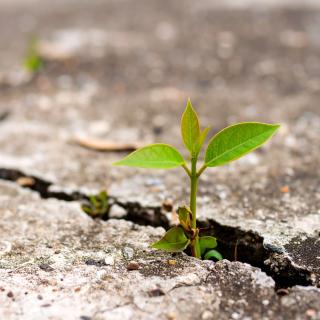
You'll see all these new trees and all of these things sprouting up this like bright vibrant green coming out of that dark ashy soil because that controlled burn took away the clutter,
Turned it into nutrients to facilitate that future growth,
And it prevented an out of control wildfire.
Whenever we talk about the fire element,
It is about creating a balanced healthy fire.
If fire element gets too high,
Too hot,
Too strong,
Very destructive.
So if it broke out into a wildfire,
All of those trees would probably be burnt to the point where they would have died and you would have had this barren wasteland.
But because it is a controlled burn and it's only a certain amount of heat and they make sure it stays in the area that they have designated,
It becomes this very healthy process for the forest.
And we take that idea and we bring it into our life.
And you can sit there for a moment and be like,
Okay,
Where do I need to do a bit of a controlled burn?
Where do I need to clear out the undergrowth that is just kind of pulling energy and nutrients away from me and let that burn?
And then from the ash,
What am I taking that to grow?
Very important process in our life.
And it ties back strongly to the purifying process of saucha.
That's more of a water cleansing.
It's like a,
A gentler process of cleansing where tapas is a cleansing process as well,
But it is a stronger cleansing process.
It has more oomph,
More burn,
More fire to it.
And sometimes that's exactly what we need.
Sometimes the,
You know,
Gentle flow of water is not enough to clear that stuff out.
We need the heat of fire to create that change.
So we are burning away the things that disconnect us from ourselves.
Just like we did with saucha,
We were cleansing the layers to get a better view of us.
Our personal evolution is this process of looking at what do I need to let go of?
What do I need to drop away that has clung to me?
What do I need to burn through so that I can have that stronger connection to who I am?
That's the underlying message here,
Getting closer to that experience of pure you.
So it's this personal alchemy.
It is cooking yourself.
It is taking all these pieces and putting the heat of fire and the discomfort of pressure and change and using that to create this alchemy of the future version of you.
You can think of a time in the past in your life when you felt very passionate,
Very driven,
Connected to that inner fieriness.
You just knew what you needed to do and you felt like you had the energy to do it,
To make it happen.
Right?
Think of that time.
What was that experience like in your body?
Where was that information coming from?
Where was that drive coming from?
I could almost guarantee you it was from inside.
Okay,
So take note of that.
And then I also want you to think about a time in your life when you felt disconnected from that passion.
You felt like your inner fire had just dwindled and there was no heat and there was no oomph.
What did that feel like?
At that point in your life,
Where was the information coming from?
And I can almost guarantee you when we feel like that,
We were listening to all the external sources.
We were listening to our parents,
Our teachers,
Any authority figure,
Maybe our yoga teachers,
Who knows?
Any external authority figure that we were listening to because we thought they knew better for us.
They were going to give me the advice that was going to steer me in the right direction.
And you ended up in that place where you felt extinguished.
So that is very common.
Those two different points in our life that kind of give us two different landmarks of connection or disconnection.
So the other way that we can think about this in a very yoga and meditation format is the idea of sadhana or a daily spiritual practice.
As I said earlier,
It takes an element of effort,
An element of discipline,
Creating self boundaries.
So from an inner source of knowing that this is what I need,
Not from an external source of expectation and telling,
Has to come from the inner knowing.
Just because it comes from the inner knowing does not mean it will be easy,
Does not mean that it's going to feel natural and seamless.
And my perfect example that I have right now is that I am a student in a mindfulness training right now.
And I was talking to my teacher about how my practice was going.
And he asked me,
You know,
How I was doing with my consistency.
And I said that I was rather frustrated because I felt like I had to really push and force myself to do my practice most of the time.
And that's not always my experience.
I've had long periods of time where I felt very natural going to my practice and it didn't have a lot of resistance like it was at that point.
And his very simple answer was just,
He kind of shook his head and he said,
Yes,
Your practice will require effort.
Your practice is not expected to be easy and that's okay.
And I just remember being like,
Yes,
I know that,
But we all need that reminder.
Sometimes I really felt like my practice was not correct because I was feeling that friction and that opposition to getting there,
But that's absolutely part of the process.
And my work of saying,
Oh,
Okay,
I see that friction.
I see the other things pulling my attention,
But I'm going to get myself onto my cushion because I know that's what I need.
And I do,
I know that my deep inner knowing is like,
You better meditate today if you want to feel connected to yourself.
And I do.
So that's the pattern that you're looking at here.
And there will be some,
Um,
You know,
Inner turmoil that can come up with that because your ego and your thinking mind will try to pull you away from that inner knowing.
Um,
But you can connect to this idea of spiritual discipline.
I'm doing this because that deep inner layer of wisdom or of spirit knows that this is what I need.
I don't need to answer my emails right now.
I don't need to clean the kitchen right now.
I need to do my meditation practice.
So there will be effort.
That is a guarantee.
So we can think about this as,
Um,
Passion or drive.
And sometimes that can feel very natural,
Might not feel like there's a lot of resistance or effort.
So that's kind of a different experience.
And enjoy that because it won't always be like that,
Right?
As I said,
I've had times where my meditation practice was just the top of my priority list and it felt very important and I loved doing it and I would sit and,
You know,
Didn't want it to end when the timer went off.
So I had this deep passion of drive that helped me with my meditation practice at that point in my life.
And then there are also the other times when you'll have to root down a little bit more into the effort portion of it to keep yourself in that space of consistency of doing your spiritual practice.
So we can look at things that bring up the spark of joy and that spark of joy is leading you in a very important direction.
It is literally connected to your inner fire.
It's like a little,
Little hint from your inner fire that comes up.
Something that you are so passionate and drawn to.
And even when things get difficult or even when things are not glamorous,
You have the grit to work through that.
There is a wonderful video by the author Elizabeth Gilbert who wrote Eat,
Pray,
Love.
And she talks about being a writer and how many people try to become a writer and give up and go to other careers because there's so much difficulty and challenge that you deal with.
And she talks about it as a crap sandwich.
I'm using different words than she did,
But she says,
If you are not willing to sit there and eat that crap sandwich,
Somebody else is.
And they will pick that up and they will happily eat it because it's that important to them that they become a writer.
You have to have that much grit to stay in the field of writing because there's so much competition and there's so much challenge.
But for her,
She sat there and being a writer was her passion.
So she dealt with the crap that came with it and the difficulty and the struggle.
And she is somebody who obviously achieved great success,
But that is not always the way that that unfolds.
So understanding that that challenge will be on the path and there may or may not be a shift where that challenge starts to transform and become smoother or it might become stronger.
So there's kind of an ebb and flow to that relationship with challenge that can be interesting to watch.
So one of the topics that I like to talk about here is our relationship with the concept of laziness.
We like to throw this term around that,
Oh,
This person is lazy.
They just don't want to put the effort in.
And in my experience as a therapist and just kind of observing people out in the world,
I've never seen somebody that I think is truly inherently lazy.
I've seen many people who have functioning depression,
Anxiety.
They don't have a connection to their inner passion.
They feel lost and misguided.
They have a lot of fear.
I see that very frequently.
I have never seen a person who I believe is just lazy to their core.
Haven't come across it yet.
So keep this in mind on the outside,
You might think lazy,
No effort.
They just don't want to put the effort in.
But underneath that,
There's a lot of other things that are probably going on.
Is this person burnt out?
Did they put a lot of effort in and in the past too much,
Maybe,
And it burnt them out.
These are all different ways that people can present in front of us as having like a stuck,
Stagnant,
Heavy energy that they're unable to move forward.
They're unable to break out of that because their fire is so low,
Their connection to top us is so low that they are very stagnant.
So there's a lot of work that can go in behind that.
And one of the things that I also want to point out there is the relationship between procrastination and anxiety.
So procrastination is another one of those things where we think,
Oh,
Well,
You know,
That student in high school,
They just want to play video games.
They don't want to get to their homework or they don't want to start working on that paper.
They always procrastinate and wait until they get to their procrastinate and wait until the last minute.
When we start to look underneath that and get a little bit more nuanced in our understanding of what that person's inner experience is,
We start to see that there's usually anxiety and fear,
Specifically performance anxiety.
There's an underlying experience of,
I don't know if I can do it well enough.
I don't know if I can uphold the expectations that other people have for me.
So I'm going to avoid that feeling by playing my video games or playing on my phone until the pressure of the impending deadline is so strong that I have no choice,
But to do it.
But then I'm going to tell myself,
Well,
I threw it together at the last minute,
So it wasn't my best work.
So if I don't get a good grade,
It's not my fault.
It's because I threw it together.
Right?
So you see this little game that we can start to play in our head where anxiety is creating this trap.
Anxiety is creating this pitfall that is very easy to fall into.
And it's very easy for the outside observer to look at that and be like,
Well,
They're lazy.
They're just avoiding the work that they have to do,
But there's actually a lot more going on underneath that.
So keep that in mind as you work with this within yourself.
And if you start to notice some of these patterns,
Maybe in the people around you.
All right.
So the other way that we can think about this in terms of yoga terminology,
Of course,
Is a habit pattern or a samskara.
These well-worn grooves,
I always think of it as like a canyon.
And from a neurological understanding,
We have strong pathways in our brain.
When we practice something over and over,
We get a strong neurological connection.
There's a lot of neurons that are helping to transfer that information,
To make that movement happen,
To convey that emotion,
Whatever it is,
It's a well-worn groove.
It happens easily.
So to get out of that pattern,
To climb your way out of that canyon.
One of my other classes that I teach,
I literally have a picture of a person standing in the middle of like a deep canyon.
And if you want to get out of that cycle,
You're literally going to be climbing the walls of that canyon.
It's going to take great effort to break yourself out of that pattern.
And for many of us who have put the effort in to change a pattern,
You know how easy it is to slide right back into that old pattern because it is there and it is deep and the walls are steep.
Very easy to slide back in.
Okay.
So thinking about that,
Our habits as these well-worn grooves and these familiar places that we find ourselves in,
That are going to take a lot of effort to climb out of.
In,
You know,
The healing circles and self-development circles,
We talk about people as cycle breakers within your family,
Within your lineage,
You might be a cycle breaker.
If you are breaking old family patterns,
If you are working through generational trauma,
It's going to take a lot of effort and energy to transform that cycle.
Okay.
So if you are doing that work,
Tell yourself loud and clear,
I can do hard things.
I can do hard things.
I can go through this discomfort of breaking this unhealthy cycle and creating a new path.
That is the path to healing.
This can also be the courage to look into some of our own dark corners,
To look for those places of self-criticism.
That takes a lot of courage.
To look at some of the accumulated debris and things that we've kind of shoved into this corner and that corner that we didn't want to deal with at that moment.
So it turns into this junk that accumulates in our inner space and we go in and we look at it and we go,
Okay,
Yeah,
This stuff,
Not good,
Not working for me anymore.
We're going to go through that process of the controlled burn.
We're going to let it go and we're going to turn it into fuel for that next evolution of who I'm becoming because I don't need that stuff and that stuff's going to hold me back.
It's going to keep me heavy and stuck.
So it's looking in those dark corners.
It's opening up those boxes where we packed away feelings and experiences that we didn't want to or maybe just didn't have the capacity or the skills to deal with at that time.
When we have those skills,
When we have a better connection to our emotions and a new tool set to be with the difficult ones,
We start to go back into those dark corners and open up those boxes and go,
Okay,
This is really hard,
But now I have the ability to sit with this.
And as I mentioned earlier,
The idea of core beliefs are one of those things that we are working our way down,
Down,
Down,
Very deep to take a look at.
And this is hard and this is uncomfortable and it takes a lot of courage.
We all have core beliefs about ourselves.
These are usually very short,
Clear statements,
And they are usually things that were imprinted on us at a very young age because of something that happened in our life,
Some sort of experience,
Something someone said to us or did to us.
And a core belief might be something like,
I am dumb or I am smart.
Your core belief might be,
I am worthy,
Or you may have learned through something like neglect or abuse at a young age,
I am not worthy.
You might have an underlying belief of,
I am unlovable.
So these are all core beliefs that exist in this deep place below the surface of our thinking.
They're in our subconscious,
But they pull the strings constantly.
They tell us what to think,
What to do in our life,
What choices to make.
Those core beliefs have a huge ripple effect and very often can create a roadblock.
They will come up often as self-sabotage.
Maybe you want to go for a new job,
But that unspoken deep understanding of,
Well,
I am dumb.
If I try for that job,
I am not going to get it.
Somebody smarter than me is going to get it.
And you might not say those exact words in your head.
Probably not.
It's underneath.
There's like a deeper,
Deeper layer where that knowing exists,
But here's the good part.
It's still an external layer that we can take our little flashlight of awareness,
Our heat and our light of tapas.
And we shine that light down into that dark place.
And we go,
Oh my gosh,
Do I really think I'm unlovable?
Why do I think that sometimes there might be a memory or an experience that you had early in your life that you're like,
Oh,
It was that,
That made me think that I'm unlovable.
And I know that is not true.
That core belief is false.
We take that fire.
We go into that deep place and we let that negative core belief burn.
And from the ash,
We replace it with something that is correct and true.
And that is the fact that at the very core of your being,
You are worthy of love,
That you are good and you are worthy.
And when we take that light,
We notice that core belief.
This is the interesting thing about awareness.
Once you have the awareness and you shine that light in there,
We can't unsee it.
We know it's there.
We know we need to work on it.
And then you'll start to become more aware of how that ripples out into the rest of your life.
Where is it holding me back from the growth and the evolution that I could be experiencing?
Right?
So when you do that inner work and you kind of expose those negative core beliefs,
It can open you up and remove some of those roadblocks so that you can actually go forward and start that evolution because you don't have that inner roadblock just holding you back,
That false core belief.
And you can start the process of creating a much friendlier,
More supportive,
Healthier inner world by having positive core beliefs about yourself,
That you are worthy,
That you are worth the effort,
That you are lovable.
Okay.
Sometimes just seeing how those things land with you,
If they soak in,
Or if there's resistance to them,
That can start to give you a little clue of somewhere that you might want to look deeper,
Somewhere where there might be some inner work that could be done.
All right.
Now,
The other thing about this idea of discomfort and stepping into that for people who have patterns of people-pleasing,
We talked about the two different patterns of like rebelling or giving in and kind of listening to that external authority figure.
When you have these patterns of people-pleasing,
Very often you will avoid expressing your truth,
What you need to say,
Because you don't want the other person to become upset.
You don't want them to dislike you.
You don't want to quote,
Ruin the relationship because you think,
Well,
If they're unhappy with me,
Then,
You know,
They won't love me anymore,
Or we won't be friends anymore.
So we end up avoiding the truth because we don't want to ruffle feathers,
Or we don't want someone to dislike us because that would be way too uncomfortable.
But instead,
When we start to embrace this idea of tapas and stepping into challenge,
Into discomfort,
If you have people-pleasing patterns that you are recovering from,
Speaking your truth,
Being truthful with yourself about what you want,
Being truthful with the people around you,
And having the courage to say what you need to say,
To express your needs,
And the title of this book that I put in here is called The Courage to be Disliked.
I love that phrase,
Because if you are a recovering people-pleaser,
Like many of us are,
The courage to be disliked is a phrase that you can say to yourself when you feel like there's something you need to express that might not be a popular opinion,
That might,
You know,
Require people to pay attention,
And to recognize that you're different,
Or you have different needs,
Or that you're not going to bend to what they need all the time.
You have to have the courage to be disliked.
You have to have the courage to step into that experience of discomfort,
To be truthful with yourself.
So that's a challenge.
It's stepping into that experience So that's a challenge.
It's stepping away from patterns of betraying yourself,
Because that's the hard reality.
When we start to look underneath the people-pleasing,
There is a consistent pattern of ignoring yourself and betraying your own needs.
So that's one of those places where you kind of look in there and you're like,
Oh man,
That,
I can't believe I've been doing that to myself,
Right?
So that can be kind of a harsh reality when you look in and you see that,
Like,
Nobody else was doing that to me.
I was doing that to me.
But then you know,
Then you have the awareness and you go,
Okay,
I have to do some very uncomfortable growth out away from that existence of people-pleasing.
Or another similar pattern might be a codependent relationship where you really,
Like,
Your thoughts and needs and expectations are,
Like,
Tied into this other person.
Very common,
Especially with people-pleasing patterns.
But this is about the process of turning in,
Of strengthening the pattern of turning to yourself for information,
Turning to yourself for guidance,
Not looking outside of yourself to know what is best for your own growth.
You know,
It's inside of you.
You just have to get good at turning in and being able to listen to that.
And then having the courage to follow through with it,
Because it can be scary and it can be uncomfortable.
And that's when you say to yourself,
I can do hard things.
This is tapas.
Playing out in my life,
The challenge,
The discomfort,
The growth.
This is tapas.
And I know that it's worth it,
Because it came from a place of inner knowing.