Hi,
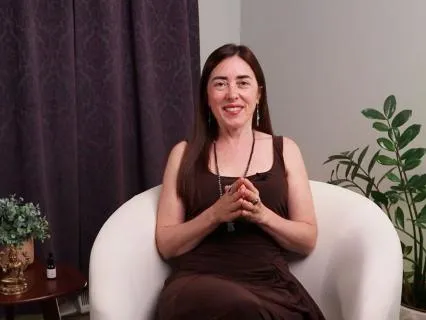
I am Diana Pereira,
Felincris practitioner and somatic teacher.
Welcome.
Let's begin.
In our last session,
We explored what the Feldenkrais method is.
The philosophy behind it,
What makes it different,
And what to expect when you practice this way.
Today we go deeper into the experience itself.
This session is called Awareness Through Movement.
And that phrase is worth sitting with for a moment before we move on.
It's not awareness.
Of movement.
It's not movement through awareness.
Is awareness through movement.
Movement is the doorway.
The body in motion is how we find our way back to ourselves.
We live in a culture that values speed.
Fast results.
Quick fixes,
Efficient workouts,
Get in,
Get out,
Move on.
Fending Chris Ward Ask something different of us.
It asks us to slow down far enough that we can actually feel what we're doing.
What is happening inside of us.
Not what we think it is.
We should be doing,
Or should be happening,
And not what we've been told is happening,
But what is actually happening in this body.
Right now.
And here's what's remarkable.
When you slow down enough to feel,
The body starts to reorganize itself.
Not because you told it to.
Not because you forced it into a better position.
But because the nervous system,
Given enough information,
Is extraordinarily good at finding ease.
It already knows how.
It just needs the condition.
Slowness,
Attention,
Permission.
To remember.
Most of us have a habitual relationship with effort.
We apply roughly the same amount of tension to everything.
Opening a jar.
Holding the wheel in the car,
Having a hard conversation,
Sitting at the desk,
Trying to relax.
Feldinger is called this parasitic effort or parasitic tension.
Is efforts we're using that the task doesn't really require.
Muscles working when they don't need to.
Breath held when there's nothing to brace against.
This isn't carelessness.
It's learning.
At some point,
That tension served a purpose.
The body is loyal.
It keeps doing what once worked,
Long after the situation has ended.
Today's practice is an invitation to notice where you might be holding that parasitic effort,
Working harder than you need to.
Not to judge it.
Just to see it.
Because the moment you see it,
Really feel it?
Something in the nervous system.
Goes up.
I don't actually need that right now.
And a let's go.
On its own.
It feels like magic.
A few reminders that are always worth repeating.
Move within a range that is comfortable,
Well within it actually.
If I suggest a movement and it pulls or strains,
Make it smaller.
Make it so small that it's almost imaginary.
Trust me on this one.
That's not cheating.
That's how this works.
Rest when I invite you to rest.
And if you feel the urge to rest before I suggested,
Your body's timing is more important than mine.
So now let's begin a little practice together,
Shall we?
For this one,
I'm going to invite you to sit on a chair.
We spend so much time in sitting.
That I want to give you something that you can do often,
Anywhere.
And also to invite you to sit on a chair that is comfortable enough.
That you feel good on it but not so comfortable that you sink in it.
But not too padded,
So you feel the contact of your pelvis on the chair.
The pelvis is this part that holds your hips.
Your legs,
Where the legs meet the hips.
You may feel the sitz bones.
If you haven't been in touch with those,
Put your hands under and feel.
Sits bones where your pelvis meets the chair,
The round bones and maybe uncross your legs.
To see that there's space between your legs.
Your feet are on the ground.
You can feel.
Maybe.
Hunched over or overarched or tall,
Whatever your initial posture is,
Just observe that.
Don't charge it.
Sensitive.
And now from this baseline position or neutral position,
We're going to move a little bit more towards the front edge of the chair together.
In the middle of the chair to the front and there's space behind you.
And I want to ask you to close your eyes.
Perhaps put your hands on your thighs.
And connect to the sensation of your feet on the ground.
Imagine that you're sitting.
With two scales,
One under each foot,
Those old bathroom scales.
That could tell you the exact weight on each foot and see if you feel weighted the same amount or one side feels heavier.
And then imagine you have also two scales,
One under each glute.
One under each buttock and see if they are the same weight.
Body feels heavier also in the glutes.
The chest area.
And now gently begin to locate the position of your eyes.
Where are your eyes?
Are you looking forward?
If you were to open your eyes.
Which you will be able to see.
Right in front of you,
Are you looking down?
Whatever you're looking for.
Does it feel like your eyes are centered?
Or maybe a little bit tilted to the right or to the left or turned.
Remember we're building body awareness and it takes a moment sometimes to calibrate so don't rush through this.
And allow yourself to move slowly and gently and take a lot of rest.
Begin now by moving your eyes a little bit down towards your feet.
Move your head down.
As if you could see in between your feet.
And feel what happens all the way down in your pelvis see if you can allow your pelvis also to move and roll a little bit.
Round in your chest.
Creating a sense connection between the head and the pelvis and relax in your hands your thighs.
And then as you come back up observe where is that moment where you feel your eyes are at the horizon level looking forward and not extended upward,
Not looking at the ceiling,
But just forward.
Now the next time you do the movement observe what is happening in your abdomen,
What happens to your breath as you look down and roll your pelvis.
Collapsing your chest and rounding your spine.
What happens to the belly?
What happens to your breath.
And if you need to put your hands there,
You can do that.
Now finding a connection between the contraction of the abdomen when you look down.
In the expansion of the abdomen as you come back up.
To be upright.
To be tall.
Long spine that you can be.
Now take a little rest there,
Just break for a moment,
Observe if you can rest.
Or you are,
Or you need to lean back on the back of the chair,
Whatever feels comfortable.
Thinking now of the distance between your head and your pelvis as if it was connected by a thread.
Your spine is now this fluid ribbon.
And not a rigid.
Set of bonds.
Okay.
And now thinking about this same distance and observing what happens when you look up.
With your head and eyes and how can you also move your pelvis and arch your back a little bit.
Perhaps separating your legs even more and bringing your pubic bone forward.
Pushing your belly forward.
In some sort of an arch.
That maybe even invites you to open your mouth and expand your throat and make a sound.
Hmm.
Then gently come back to that neutral baseline place where your spine is long,
Your eyes are forward,
Your sitz bones are on the chair,
You're not rounded or arched.
You're in the middle.
Now a couple more times as you go upward with your face and eyes.
Your spine,
Perhaps arching at the low back a little bit.
Observe what happens to your breath.
How different it is than when you round.
When you.
Collapse your chest.
Is it easier to inhale?
When you arch and extend.
Or to exhale.
To breathe in or to breathe out.
Beautiful.
And now let this go.
Rest again.
Remember slow,
Small movements.
Lots of rest.
In the rest,
Your brain is integrating,
Your nervous system is recalibrating to these options.
Perhaps recognizing a familiar one and a new one.
When you come back to the chair interconnect both options or weave connecting the going down and rounding.
Looking down in between your legs all the way to looking up,
Expanding.
Contracting,
Perhaps a little bit arching in the low back.
And go alternating between one and the other in a rhythm that feels nice to you.
Not too fast.
Slow enough that you can feel the transition between one and the other what is happening with your feet.
With your breath.
And remembering the questions that I was asking before.
How does this feel in your body?
What is happening right now?
Do you notice that one of these two extremes may be more familiar?
And the other one perhaps new.
And then come back to the neutral place.
Where you're not extended and not rounded or flexed.
Observe now the feet on the ground,
The weight of the feet.
Differential or distribution between left and right.
Both on your feet and on your glutes.
You're butter.
Close your eyes one more time.
Check in with yourself,
See where are you now compared to 10-15 minutes ago when we started.
How does it feel to be in your body?
Beautiful.
Now stay where you are for just a moment longer.
Notice the quality of your attention right now.
Is it different?
From when we started.
Softer maybe or more present.
Or perhaps just quieter.
That is what Awareness Through Movement does.
It doesn't take you somewhere else.
It brings you here.
More fully.
More completely.
Into this body.
Into this breath into this moment.
You don't have to maintain it.
You don't have to hold on to it.
Just notice that it's possible.
That this is available to you.
In your own body.
Anytime.
Thank you for being here with me today.
Take a moment before you move on.
And let what just happened settle.
In our next session,
We are going to bring the same quality of attention to something you do every single day without thinking.
We're going to check in with the body.
Briefly,
Gently,
Honestly.
And we will discover what it has to say.
I will see you in the next one.