Be where you are and be satisfied with the achievements that you have that are appropriate to where you are.
Welcome to the one you feed.
Throughout time,
Great thinkers have recognized the importance of the thoughts we have.
Quotes like garbage in,
Garbage out,
Or you are what you think ring true.
And yet,
For many of us,
Our thoughts don't strengthen or empower us.
We tend toward negativity,
Self-pity,
Jealousy,
Or fear.
We see what we don't have instead of what we do.
We think things that hold us back and dampen our spirit.
But it's not just about thinking.
Our actions matter.
It takes conscious,
Consistent,
And creative effort to make a life worth living.
This podcast is about how other people keep themselves moving in the right direction.
How they feed their good wolf.
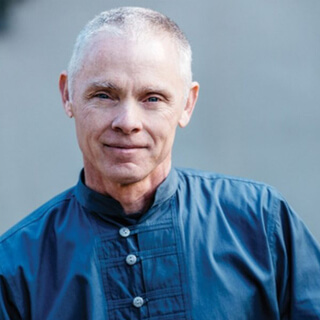
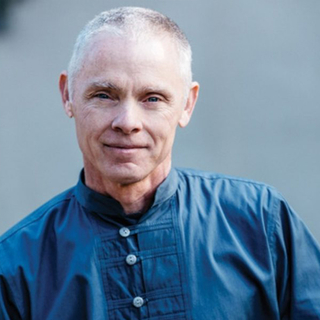
Thanks for joining us and welcome to part two of our interview with Chuladasa.
A meditation master with over four decades of experience in the Tibetan and Theravadan Buddhist traditions.
He taught psychology and neuroscience at the universities of Calgary and British Columbia.
Chuladasa lives in Arizona's wilderness and leads the Dharma treasure,
Buddha's Sangha.
And here's part two of our interview with Chuladasa.
Okay,
We are back with Chuladasa for part two of our two-part interview.
And what we're going to focus on in this section is a little bit more around meditation.
One of the things about the book The Mind Illuminated that I found so interesting was the level of depth of instruction in meditation.
And I want to start with the idea of intention.
Because you talk about this a lot and you say that one of the things that will happen to somebody when they start meditating,
And I can vouch for this being true not only when I start,
But often if I'm not watching myself,
Is that we sit down and we notice that we can't really control our thoughts.
We still try and wrestle them to the ground.
Right?
And this leads to a great deal of frustration.
And what you talk about is that we can't really do that.
And if we pay attention long enough,
We realize that.
And so you talk about intention,
About the power of setting intention,
And how this is how we actually change what the mind is doing.
Can you share more about that idea?
It's a really fundamental and important thing to understand.
You know,
We did talk last time a bit about illusoryness of the I who seems to be in charge.
And we also talked about intention.
That illusory I is really made up of the activities of many unconscious sub-minds.
And that each of those unconscious sub-minds has an intention.
Now,
Maybe we can just look at intention.
It's by itself for a moment and then come back.
So think about the actions that you perform in the world,
And what the sense of you or I really does.
Something as simple as my reaching over to pick up my cup of tea and take a drink.
Now,
I would tell the story that I reached over and picked up my cup of tea.
But what did I really do?
And anybody can experience this,
Is that I formulated the intention and then something else took over and it made that happen.
Except that sometimes it doesn't make that happen.
Sometimes those mechanisms don't work right.
And instead of picking up the cup of tea,
I strike the cup in the wrong way and it spills all over the table.
Or perhaps I've been sitting in such a way that part of my arm has fallen asleep and my arm just doesn't do what it's supposed to do.
You start to,
If you start to examine motor activity,
You start to realize that what the mind does is create an intention,
Which it broadcasts and then the motor systems of the brain and the body,
They take over and they fulfill that.
Now something similar happens,
You know,
When you're meditating.
So I sit down and there are enough of those unconscious sub-minds that like the idea of meditation and the promises of meditation and my past experiences of meditation,
They all share the intention that we experience that I'm going to sit down and meditate.
The real story is more,
We are going to meditate.
Now what actually happens in the mind is you have that intention,
Which is dominant because it's supported by quite a few different sub-minds,
But you have other parts of the mind with different intentions and you subjectively experience them competing with each other.
So if you get into the place of a war of intentions,
Then all you do is you add more confusion to the mix that you already have.
And now instead of just,
You know,
I'm intending to meditate,
But these stray thoughts of other concerns keep coming in.
Well now added to that,
You've got a sense of frustration,
Disappointed expectations and on and on,
Right?
So what you want to do,
If you understand how this works,
If you're working with a group of people and you wanted them to all cooperate around the same intention,
You'd want to give them some kind of motivation.
You'd want to make them feel good about it,
Right?
But do the same thing with your mind.
Creating a war in your mind,
Complete with feelings of frustration and failure,
Etc,
Etc,
Certainly isn't going to help.
Relaxing,
Looking for the joy,
Looking for the pleasure,
Accepting that there are different parts of your mind that have different agendas.
What this does is it really brings different parts of your mind online to the group that has the shared intention to meditate.
So what I encourage meditators to do is to drop the idea that I am trying to do this,
But I can't,
Or I want my mind to do this,
But my mind is not cooperating.
And instead,
Just drop into this place of,
Okay,
My intention is to meditate.
Meditation involves a few simple tasks,
So I'll just do those tasks,
But I'm going to do them from a place of just accepting whatever comes up,
Finding the joy,
Finding the pleasure.
It's comfortable sitting this way.
It's comfortable sitting this way.
Yes,
Okay,
My knee might ache a little bit,
But other parts of my body feel really good.
There's a certain pleasantness to being able to take the time away from the world and all of my other concerns and just have some time for myself to relax and enjoy it.
There's a sense of satisfaction when I succeed in following the breath or performing whatever meditation you're performing.
When you succeed in doing that,
There's a sense of pleasure and satisfaction that arises.
Put the focus of your activities on the positive aspects.
Let the negative aspects be there.
I use the analogy of you're trying to persuade a group of people to share the same intention so that they produce a good result.
Well,
What you're doing is you're letting the ones that disagree be there.
You're showing them how this can be a positive experience.
We can anthropomorphize these seven minds as saying,
Well,
Actually,
That doesn't look so bad.
Maybe I'll join in too.
Yeah,
That's one of the things that I got from the book so much more than I had gotten previously.
Now that,
Of course,
I've gotten it,
I noticed that it's been in other things I've read,
But nobody's ever pulled it out for me in the same way.
That that importance of trying to enjoy your meditation being such a big driver of progress.
And then the alternate of that,
The scolding of your mind,
You know,
When your mind wanders off and you catch that it's wandered off.
For a lot of us,
There's a scolding that happens like,
Oh,
There I go again.
I did it again.
Right?
And what you say is it's so important to treat that moment almost as a celebration in that you caught your mind wandering off.
And the reason that's so important is because that's training the submind to do that.
It starts to say that's what we're looking for.
Versus if it's a scolding,
You know,
It's the same thing.
If I get scolded every time I'm going to do something,
I'm going to be loath to do it.
Right?
You know,
I had heard do it non-judgmentally.
When your mind wanders off,
Non-judgmentally come back,
Which is great.
But you're even a step,
You know,
Sort of beyond that,
Which is really more of a make that a good moment.
Oh,
I caught myself.
That's good.
That's good.
And that that is what's training ourselves to come back.
Versus it's sort of like training a puppy,
Right?
You can you can slap it with a newspaper or you can use treats.
And the treats are usually a more effective and more humane way to do it.
Yes,
Exactly.
It's what you focus on in the moment.
Do you focus on the fact that something happened that I didn't want to happen?
Or do you focus on,
But then it was followed by something that I did want to happen.
And not only that,
That when that thing happened,
I find myself in a state of mind that is actually quite delightful.
And wouldn't it be nice if my mind could be in this state all of the time?
I've awoken to the present moment.
I've awoken to what it was I intended to be doing and the fact that that intention wasn't being fulfilled.
So there's there is that wonderful feeling.
And you're right.
The tendency is to focus on the wrong thing and ignore the wonderful thing that's just happened.
Yep.
So that's been a real learning for me.
Another thing about the book that I will say I think has been both wonderful and at the same time challenging for me is you lay out sort of a roadmap of what happens as you meditate over time.
You know,
There's these different stages you go through.
And I found it to be really useful in laying it out,
Being sort of like to know what to look for,
How to be very specific about what to do depending on what stage you're at.
I found all that to be incredibly helpful.
And then I found the challenge of the fact that there's more stages to get to means I want to get to those stages and becoming frustrated when I'm not.
And so I think it's the classic trying not to try,
Right?
But I'd just be interested in your thoughts because you certainly indicate in the book like,
Watch out for that.
But it just seems to be endemic to having a path.
And so I just wonder if you could talk about that for a minute.
There's always that inherent danger when you point out the systematic and developmental nature of anything.
Is that there's a part of our mind that is,
For lack of a better word,
Ambitious.
The ego seeks gratification through progress and success.
And in meditation,
These are just obstacles.
What you need to do is,
First of all,
You need a certain amount of trust in the process.
You need to believe.
That's why it's really good to have contact with people who already follow this path and been successful at it.
Because it helps to build that confidence that,
Well,
If I just deal with what's happening right now in the moment and accept it,
Then eventually I'll get there.
It requires the understanding that there are things that I have to do first before I can be there.
If you were learning to play the piano and when you're just at the stage is learning to play scales successfully,
Become upset because you couldn't play a piece by Mozart.
I wouldn't,
But a lot of people do.
I think that's why we quit a lot of things,
Honestly,
Right?
Exactly.
Those are the people who give up trying to learn the piano.
It's the ones that understand that,
Well,
I have to be happy.
I have to be really satisfied now that I can play these scales.
And it's getting easier and it's sounding better and it's smoother and things like that.
I have to do these exercises first.
Then I have to learn to play a simpler piece of music.
And experience the satisfaction that comes with each of those.
That's the thing to just be where you are and be satisfied with the achievements that you have that are appropriate to where you are.
And now back to the interview.
What you're encouraging is to enjoy each step of it,
To try and find the enjoyment.
And it's the same way with learning to play an instrument.
The beginning stages are frustrating.
But there are moments in there where it's like,
Wow,
This is really great.
And I think the reason I learned to play guitar,
It doesn't come to me easily like a lot of people.
Or it comes easier to certain people than me.
It was a bitter struggle.
But it was made possible because I had friends at the time who were good musicians.
Who would,
You know,
One of them would get on the drums,
One of them would get them on bass.
I'd turn on the electric guitar,
Turn it up loud,
And my three chords that I could play sounded great.
And so I was able to appreciate and enjoy whatever level of skill I had gotten at that point.
Which was very minor.
But I was really able to enjoy it.
And that gave me the fuel to continue going.
And I think it's a very similar thing of what we're talking about here.
And it's why you're stressing so much,
Looking for the pleasure.
You've got a phrase that you recommend that,
You know,
People can use.
And I use it now every time before I meditate.
Which is,
Relax and look for the joy.
Observe.
Let it come.
Let it be.
Let it go.
Which sounds like long to memorize,
But it's not.
And I find that is a great way to try and get myself in the right space before I meditate.
And that look for the joy is so important.
I've been meditating on and off for,
I'm not even going to say how long,
A long time.
You know,
Decades.
Let's say that.
And,
You know,
I don't think I ever really picked up that idea of look for the pleasure that's inherent in it where it is.
You know,
Instead of looking at the fact like that your mind's wandering and feeling bad,
Look for the little bit that's good.
And then there's another thing you say that was,
You know,
I did get,
And it was really the key for me of unlocking meditation was there's no such thing as a bad meditation.
If I sat down and tried,
As long as I do that,
I am,
I try and be happy and content with that.
Like that's,
That's the best I've got,
You know,
I'm given,
You know,
Given that my all.
And so that's another really important thing I think is,
And that's what I found to be slightly challenging about the stages model is that it's great in that it lays things out and my intrinsic nature is like,
But I didn't get to stage,
You know,
I didn't increase stage today,
You know?
So I think it's just,
It's just something I work with.
One of the other things I wanted to talk about meditation wise is I wondered if you could describe the four step process of settling in the type of meditation you're teaching in the early stages as a following the breath type meditation.
But you've got four sort of things that you do as you head to that instead of just plunking down and,
You know,
Immediately paying attention to your breath,
You've got sort of a four step settling process that I found to be a really useful way to start.
Yes,
It allows you to allow things to happen naturally on the way to focusing your attention to a meditation object.
It does another thing that's very,
Very important is it allows you to understand your mind and learn much more clearly that distinction between attention and awareness and spontaneous movements of attention versus intentional movements of attention.
But we have a certain mode that our mind is functioning in on our way to the cushion.
You sit down,
Let's enter into the meditative state in a very comfortable and sensible way.
Let's start out with just letting our attention move between things the way it normally does.
And let's bring that awareness online.
And then what we do is we practice maintaining that awareness as we gradually and comfortably and not stressfully narrow the scope of the attention.
We do two things.
In the process of this is we observe,
And we're actually observing with awareness,
We observe with our awareness how attention moves spontaneously.
And then we intentionally move attention and observe the difference between those.
And at an unconscious level,
You may become conscious of it,
You probably will after you've done this a while.
But even for somebody who's just learning to meditate,
They're just at an unconscious level,
All of these things are registering in a way that's going to pay off when you come to the place where you're actually trying to keep the focus of your attention on the meditation object.
It's telling your mind at an unconscious level,
Yes,
This is how things work.
And yes,
You can do this.
So you already arrive at the meditation process a little bit less prone to that frustration that your mind is doing what it does,
Because you gently introduced yourself to this state.
And you watched your mind do what it does.
And there were,
As a part of that process,
You also allowed your intentions,
You intentionally directed attention and sustained it on different things.
So with no forcing,
No pushing,
No determination,
No anything like that,
You've arrived at a place where you're beginning to do the meditation practice,
But you've already reduced a lot of that tendency.
Now,
Of course,
What we find if you're going to sit for 45 minutes is,
Is that starts to wear off.
And then you have to work with the frustration that arises and you have to,
You have to relax and look for the joy,
But you get better at it with every set.
Yeah,
I find it just a nice ritual way to sort of settle in and,
And the process,
You know,
For listeners just at a very high level is you,
You sit down and become aware of your environment,
What are you hearing what's going on around you,
You then move into paying attention to the sensations in your body,
What's it feel like to sit,
Etc.
Then you start to pay attention to the breath very generally.
And then you finally,
You know,
Get to where you pay attention to the breath at a specific point,
Which leads me into my next question.
So do you recommend paying attention to the breath at the nose?
That seems to be the place that I absolutely feel it the least.
I have tried and continue to try to do that.
But how important is it that that be the object versus say my abdomen rising or falling and what are the trade offs of choosing to use a different point of the breath for meditation?
Because I got the sense like you can start with your abdomen,
But finally,
You should ultimately get to what's going on in your nose.
And I thought,
Well,
If that's where I'm going to get,
I'll just stay there.
But why?
Why is one more important than the other or more useful?
Well,
First of all,
Let's go back to to the first part of your question.
There are certain trade offs or certain values that the breath that the nose provides,
But you don't have to use the breath of the nose.
There are all kinds of other things that you can use.
The breath at the abdomen,
Mantras,
Visualizations,
There's all kinds of things that you can use,
Alternative things.
But there are certain advantages to the breath at the nose.
And one of them is that it allows you to do certain practices later on,
Which are quite powerful because of the nature of the breath of the nose.
Now,
Initially,
It's difficult to find.
You might ask yourself why that is.
Well,
It's going on all the time.
And you've basically spent a lifetime ignoring it as you're relevant.
On the other hand,
You have an enormous number of sense receptors in the skin,
In and around the opening of the nostrils and just inside the nose and even in the skin just below the nostrils.
So that if you can overcome that condition,
Tendency of the mind to ignore this as a,
Oh,
Yeah,
Unimportant sensation,
You actually end up in a place where once the breath becomes very shallow and very faint,
Which it does.
And that,
By the way,
Is another one of the advantages of the breath.
But you'll come to the place where your breath is so faint,
So shallow,
Yet the sensations are so intense that you might think to yourself,
If they were any more intense,
I couldn't stand it.
There are other things.
Like the breath is completely spontaneous and automatic.
Well,
That applies to the breath of the abdomen as well.
The last thing I mentioned about the sensitivity of the nostrils doesn't apply to the abdomen because there aren't as many sense receptors.
And when the breath becomes very faint,
Shallow,
That's at that point,
The sensations that the abdomen are more difficult than those at the nose.
So I'm not saying that a person has to learn to meditate using the sensations of the breath at the nose.
They will have to adapt a different meditation object in order to do some of the later practices that the breath at the nose is very conducive to.
So they might have to adapt.
And there'll be certain practices that they might not be able to do.
But that's not important.
They can still succeed that.
So I'm by no means saying,
You know,
Everybody's got to use the breath at the nose.
But I do recommend for the sake of later utility that you learn to use the breath at the nose at some point,
Even if you start with something else.
But even there,
I say that's just a recommendation.
You don't have to.
When you were just talking,
You reminded me of maybe the most valuable thing I got out of the book,
Which I completely forgot up until you just said something,
Which was that breath is completely spontaneous.
And so we're told when you're meditating,
Don't control your breath,
Right?
But I found and still find to some degree that the minute I observe it,
There's some sense of like that I that I'm thinking about controlling it,
Right?
And you said,
As long as you're not deliberately trying to,
You know,
Breathe a certain way,
There may be some,
You know,
Slightly unconscious or,
You know,
Very low level adaption where you are sort of noticing there's a little bit or the tendency to control.
And for me,
Breath meditation up till then had been so difficult because I would get in that moment where I go,
I feel like I'm controlling it.
No,
I wasn't really in any conscious way.
But I was conscious of like,
Is this the way I normally breathe?
I don't know if I breathe this way.
And that teaching of yours,
Like,
Don't worry about that was incredibly helpful because I suddenly just dropped all that and didn't have to worry about it.
And that for me was one of the big changers that allowed me to meditate on the breath much,
Much better.
And I just think it's a subtle teaching.
But boy,
It was critical for me.
It's also a very deep teaching.
It's not an obvious one.
But think about what's happening.
So you have the intention to observe the breath and some unconscious process alters the breath to make it easier to observe,
Then selfing takes place.
You notice that and you take credit for it.
You say,
I'm doing this.
Well,
It's nonsense.
There's no I that was doing this,
Right?
Yeah.
You know,
That's selfing.
So it's subtle.
It's also very deep because it applies.
It ultimately applies to almost everything.
Yeah,
You're right.
And it is probably a indicator of mental state to some degree,
You know,
But it just was one of those things that I just felt like I couldn't,
I don't know how to describe it.
It wasn't like I was intentionally,
All right,
I'm going to breathe deep or anything.
It's just that I noticed something about,
I felt like I was altering it in some way,
Even though I wasn't trying to.
And so,
Again,
That was just so helpful to me.
And then I think,
You know,
We're near the end of our time here.
So I think the last thing that I thought maybe we would talk about,
There's so much great meditation instruction in the book,
And I'd encourage people to get it.
But I wanted to talk about something buried near the very end of the book.
And it's a process called mindful review.
And it's a process really of taking some of the skills that we're learning in meditation and then taking them into our lives and really being able to do that in life.
And I just thought it was a very concrete teaching about what to do when you're not just sitting there meditating,
Although you encourage people to do it in a way that they would,
If they can,
You can do it while you are meditating.
But it's a process of thinking through things that I thought was really helpful.
So I was wondering in conclusion,
If you could just walk us through what that process is?
Yes,
I call it the mindful review,
Because the easiest way to develop this high degree of mindfulness in your daily life is to begin doing it reflectively.
Otherwise,
Somebody gets up in the morning and they say,
Okay,
I'm going to be mindful today.
And then the next thing you know,
It's four thirty in the afternoon.
And I haven't been mindful at all.
So let's start where it's easy.
Let's review the day's activity.
And let's think of those major events when we quite clearly were not mindful.
And let's think about how they would have been different had we been mindful.
And what would it have meant to be mindful?
We could just sort of rehearse how it could have been in our minds,
How it might have been different had I truly been mindful when that took place.
Well,
The effect that that's going to happen is the next time the same or even a similar situation arises,
There's more likelihood that that mindfulness is going to arise.
And you do the mindful review again.
And now you're recognizing not only that you weren't as fully mindful as you could have been,
But that you actually were mindful to a certain degree.
That's once again,
That positive reinforcement.
So now,
Now you're even more likely to be mindful in similar situations in the future.
So it's a way of training your mind to bring this much higher level of consciousness.
On the cushion,
You've developed this awareness that's allowed you to notice encroaching distractions and encroaching dullness and to be able to see things much more clearly and vividly.
Now you're learning to bring that into your life situations and what your goal is with this.
And this is something that when I describe it,
A lot of people are going to say,
I can't imagine that being possible.
But try to imagine it.
Try to imagine that as you go through your life,
You are aware,
Not focusing attention,
But you are aware of the thoughts and emotions that arise and pass away.
You're aware of what you're saying.
You're aware of your actions.
But not only are you aware of them,
You're aware of the motivations behind them.
What is driving those thoughts and emotions and that speech and that action?
Not only that,
But there's a part of your mind that looks at those thoughts and that speech and those actions and says,
Is this conducive to me being the kind of person that I want to be?
Is this even conducive to producing the result that I want in this particular interaction or situation?
So imagine yourself as someone who has that degree of mindfulness all the time.
Wouldn't that be wonderful?
It surely would.
And it's a great practice.
And one of the things I like about it is inherent in it is one of my favorite questions to ask people when I'm working with them and to ask myself also is in a very nice way,
What could I have done differently?
Yes.
You know,
Because it's one thing to go,
I don't like the way I acted there or I don't like what I did.
But unless we take the time to think through what could I have done as an alternative,
It's very difficult to know.
You know,
You just repeat the same thing because you haven't given yourself the education.
That's the learning piece to me of that type of review.
Now,
Again,
You got to do it judgmentally or non-judgmentally.
But what could I have done?
And that's built right into the heart of the practice you just described.
And I had to pull it out because I wanted you to know I read the whole book.
Well,
I'm kidding.
I'm kidding.
It is in the very back,
But that's a joke.
I loved it.
Well,
Thank you so much for taking the time to,
You know,
Be with us for two full episodes.
I'm sure the listeners will appreciate it.
And I greatly appreciate it.
There will be links to your website,
Your book,
All that stuff in our show notes.
So thank you so much.
Thank you.
And it was a real pleasure.
I really enjoyed our conversation.
You're a great interviewer.
The one you feed podcast would like to sincerely thank our sponsors for supporting the show.