Even when we have a question,
Almost every question comes out of a worldview,
So it comes out of our answers.
Welcome to The One You Feed.
Throughout time,
Great thinkers have recognized the importance of the thoughts we have.
Quotes like,
Garbage in,
Garbage out,
Or you are what you think ring true.
And yet,
For many of us,
Our thoughts don't strengthen or empower us.
We tend toward negativity,
Self-pity,
Jealousy,
Or fear.
We see what we don't have instead of what we do.
We think things that hold us back and dampen our spirit.
But it's not just about thinking.
Our actions matter.
It takes conscious,
Consistent,
And creative effort to make a life worth living.
This podcast is about how other people keep themselves moving in the right direction.
How they feed their good wolf.
Thanks for joining us.
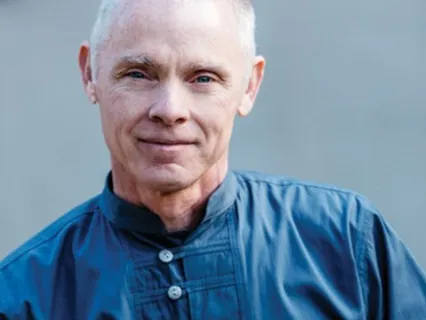
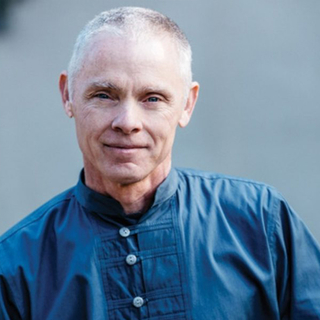
Our guest on this episode is Adyashanti,
Author of The Way of Liberation,
Resurrecting Jesus,
Falling into Grace,
And The End of Your World.
He's an American-born spiritual teacher devoted to serving the awakening of all beings.
His teachings are an open invitation to stop,
Inquire,
And recognize what is true and liberating at the core of all existence.
Based in California,
Adyashanti teaches throughout the U.
S.
And in Canada,
Europe,
And Australia.
This interview was recorded live at Adyashanti's Open Gate Sangha,
Located in the Bay Area.
If you value the content we put out each week,
Then we need your help.
As the show has grown,
So have our expenses and time commitment.
Go to OneUFeed.
Net slash support and make a monthly donation.
Our goal is to get to 5% of our listeners supporting the show.
Please be part of the 5% that make a contribution and allow us to keep putting out these interviews and ideas.
We really need your help to make the show sustainable and long-lasting.
Again,
That's OneUFeed.
Net slash support.
Thank you in advance for your help.
And here's the interview with Adyashanti.
Hi,
Adya.
Welcome to the show.
Thank you,
Rex.
Nice to be here with you.
It's a pleasure to be sitting here with you.
We are in your studio in San Jose,
And it is a treat for us as always to be able to do an in-person interview.
So thanks for helping us to arrange it.
I'm glad we could pull it off together.
We'll get into a lot of your teachings here in a bit,
But let's start the show like we normally do with the parable of the two wolves.
There's a grandfather who's talking with his grandson.
He says,
In life,
There are two wolves inside of us that are always at battle.
One is a good wolf,
Which represents things like kindness and bravery and love,
And the other is a bad wolf,
Which represents things like greed and hatred and fear.
And the grandson stops and he thinks about it for a second.
And he looks up at his grandfather and he says,
Well,
Grandfather,
Which one wins?
And the grandfather says,
The one you feed.
So I'd like to start off by asking you what that parable means to you in your life and in the work that you do.
Well,
First of all,
It points to something very universal about all of us.
In a certain sense,
I always think of a human being as we're all sort of walking paradoxes.
In fact,
I think part of the journey is to go from a walking contradiction to a walking paradox.
And that story kind of highlights both of those.
If these two forces within us,
Which are often thought of as like the light force or the dark force,
And I'm not even meaning in some like demonic sense necessarily,
But just your ordinary garden variety,
You can get triggered easy,
Your buttons get pushed,
You know,
That kind of stuff.
We all have these forces within our lives.
And yeah,
I think it is important that we become conscious of what's driving us,
Where we're being driven from,
Where we're being moved from.
And I think we also have this amazing physical biological organism,
Because I think sometimes when we look at these kinds of things,
It gets kind of abstract or you don't know how do I deal with that?
How do I make a better choice?
Because really a lot of it comes down to making better,
More compassionate,
Loving,
Wise choices.
And I think our bodies actually tell us really clearly that when we're not seeing something clearly,
When it's not really in alignment with reality,
Whether we're lost in some story or some interpretation or some belief system,
If it's not in accord with what's happening in that moment,
We'll feel that as tension,
Anxiety.
And that's the way that we're literally biologically hooked up to the way the world tells us.
We're not seeing things really clearly,
Because to me that's the underlying issue,
Even beyond trying to give attention to the better angels of our nature,
Is to kind of almost get underneath that paradigm at the same time that we're making wise and loving choices,
But to get to where they're really coming from.
And our body helps us,
Right?
When we're in a clear,
Open,
Loving space,
Our bodies feel clear,
Lacking of tension.
We feel certain ways.
But often I think our bodies are our best aid in navigating this inner territory of our consciousness.
We had a guest on,
I can't remember who it was at this point,
Whose main thought was just watch for tension,
You know,
Watch and notice for tension in your body as an indicator to what you're saying,
That there's something else going on there.
And with the tension will always be some sort of story or belief or inaccurate judgment.
If the story is more or less in alignment with what is and we're kind of in alignment,
It does.
We feel open and easy and available and whenever we don't,
We can bet we're actually talking to ourselves in some way at some level that's putting us at odds against ourself.
Of course,
We can even do this with the two sides of our nature,
The lighter side and the darker sides of our nature.
You don't eliminate the darkness without eliminating the light part.
It's like two sides of one coin.
I'm a spiritual teacher,
So spiritual seekers come to see me and one of the first things I have to try to help orient them around is this isn't the light winning out over the dark.
That's a good way to lead a very,
You know,
Conflicted life.
It's really about first of all,
Being a big enough space to start to recognize these forces within us and being willing to recognize them.
I think that's something we'll get to a little bit later in the interview is I want to talk about that.
What's the role of emotion in everyday day to day life,
You know,
In an awakened state?
But let's start with the awakened state.
More than a lot of people we've had on the show,
Your teachings focus on this idea of awakening or liberation or realizing the nature of our being.
You say that the question of being is everything.
Nothing could be more important or consequential.
Nothing where the stakes run so high.
So talk to me about this question of being and awakening.
What does that mean to you?
First of all,
Not all awakening is the same.
So that's I think really important to make that there are different kinds of awakening.
Of course,
Awakening is starting to be used for almost everything.
You know,
I woken to my whatever,
You know,
That I don't have to eat a piece of pie today.
I had a dietary awakening or something.
But in a really deep sense,
Awakening is at the very least,
It's a fundamental shift of identity.
And basically,
It's the shift of identity out of image,
Memory,
Ideas,
The way we talk to ourselves,
I'm good,
I'm bad,
All those evaluations,
All of that lives in our mind,
Right?
So conceptual and image,
Past,
Future are images.
And that's really what awakening,
We wake up out of that.
We realize that that actually,
While it may be there,
It may even still be functioning,
That our sense of what we are when we've had this shift is no longer exclusively found within that sort of conceptual matrix.
And that's the fundamental sort of nature of awakening.
What we awaken to is a whole other matter.
It can be sort of pure awareness,
It can be the unity of all things,
There can be different things we awaken to when we wake up out of the mental construct really is what it is.
One of the things that you talk about is you say the primary task of any good spiritual teaching is not to answer your questions,
But to question your answers.
Yeah,
Yeah,
Because we all walk around with a whole host of answers that often we don't even know that we have.
When somebody asks me a question,
When a student asks me a question,
What I'm listening for is what's the set of beliefs and opinions,
What's the worldview that they're operating from?
And that worldview is literally constructed out of a whole series of answers.
We often call them beliefs,
Opinions,
Things like that.
So these are our answers,
Right?
Our answers are actually often what are causing us most of the suffering.
I know you shouldn't have done that,
So we have a belief,
We have the world should be this way,
But it's not.
You should be this way,
But you're not.
I should be different than I am,
But I'm not.
They start out as answers,
Right?
I know,
I know who I am,
I know who you are,
I know the way the world should be.
And when I say to question your answers,
That's what I mean.
Even when we have a question,
Almost every question comes out of a worldview,
So it comes out of our answers,
Right?
Comes out of our belief system.
You talk about needing to be willing to let go of those things.
Even if I feel willing,
Those things are still kind of there,
Right?
I might be like,
Okay,
I'm willing to believe that's not true.
And at the same time,
There's a big part of my brain going,
That's absolutely true.
And I'm like,
Well,
No,
I'm willing to believe that's not true.
Oh,
It's true.
And so how do you work through that process?
Because it seems like what you're talking about is on a slightly different level than what the conscious chattering mind is.
Yeah,
Yeah,
Because I think we've all had the experience of,
You know,
I want to change.
I'm willing to change even more than willing.
I actually want to.
I don't want to live according to that belief pattern or whatever it is.
And then you feel like you can't change,
It doesn't happen or it changes,
It's for a very short period of time.
So first of all,
When I say willing,
One of the things I'm really trying to get at is we can say we want to let go of something,
And we're trying to let go of it with one hand and subconsciously we're desperately holding onto it with the other hand.
The reason we do that is because the beliefs and opinions and ideas that we have,
That is what we construct our separate self out of,
Right?
That's how we do it.
Right?
So if we want to get to know each other,
Usually in the conventional world,
We ask each other,
You know,
What are you doing?
What's your background?
What's your work?
Are you married?
Are you,
You know,
We're searching for all this information and then we want to also see what people believe.
So we're searching often without asking direct questions,
You know,
What's your political affiliation?
What's your spiritual way of being?
And so when we're doing that,
It's a natural thing to do,
But we're kind of boxing.
Categorizing.
Yes.
So a willingness is really,
Am I really willing to look not only at my beliefs really deeply or whatever seems to be causing me trouble,
But am I also willing to see that one of the reasons I find it so hard to let go of those things is because I'm literally letting go of what gives me my sense of myself.
And even if it's contracted and even if it's difficult,
At least it's known.
You know what I mean?
Are you willing to go through this doorway where you actually don't know anymore?
Where you realize it's all being constructed on the spot through image,
Idea,
Belief,
And the associated feelings and emotions that that creates.
Am I really willing to call that into question and not actually know?
Because I won't know who I am if I actually call the whole thing into question for a period of time,
However long that lasts.
You've written a bunch of different books and one of the books that I looked at was,
Is it The Way of Liberation?
And you really sort of boil down a lot of your teachings into a fairly practical structure,
Which I found very helpful to sort of organize a lot of what you've thought about.
And so I thought we might use that as a way to work through some of this conversation because I think it really does sum up a lot of what I've read and a lot of other things and videos of years that I've watched.
And you talk about there being five foundations of spirituality.
So let's just maybe talk briefly about those and see where that takes us.
The first one is to clarify your aspiration.
It's interesting when I came up with that first one when I first wrote the book and I did a sort of an internet course on it and I learned something because,
You know,
I was going through those first five foundations in one evening.
And what kept happening weeks after that,
As the weeks went on,
I kept getting emails and people calling me saying,
I'm still on the first foundation.
You know,
What is my aspiration?
Which is a way of saying,
What's my intention?
What do I want?
The reason this came to me many,
Many years ago is when I was teaching retreats,
People would come to me and I literally would have dozens of people over a few years that I would start asking people.
So why are you here?
You know,
You came to this week-long retreat.
What brings you here?
What do you want?
What's your intention?
And they usually will tell me something that really sounds like they got from somebody else,
Right?
I want to be enlightened,
Right?
What does that mean?
What does that mean?
Or I want to be awakened.
Why do you want to be awakened?
I'm trying to get underneath.
And what I found out,
I always talk with people who have been doing serious spiritual practice,
Sometimes for 20 or 30 years,
And they didn't actually know why they were doing it when they really looked at it.
They had in their minds things that they were told and promised.
But when it really came down to what am I really,
Really here for,
I was very surprised by how often people didn't actually really know,
Which is interesting because in almost any other aspect of our lives,
We would know,
At least to some degree,
And we'd need to know.
Like if you go to work,
You know,
What am I doing today?
You're clarifying your intention for that day,
Right?
And you have to know,
And you have to know what you're doing,
And you have to know why you're there,
And all these things that are very natural to us.
So I find that clarifying your intention and your aspiration in any area of life,
It could be in relationships,
It could be spirituality,
It could be work,
It could be anything,
This is what provides our orientation.
The backside of that is when we start to look at it,
What we start to discover is what our orientation actually is.
Because often our orientation that actually is,
Is different than the one we'd like to think.
One of your lines that comes to mind is that the ego is really interested in two things,
Survival and feeling better,
Right?
And it seems to me that a lot of the spiritual search falls under the very nebulous feeling better category.
I want to feel better,
And I realize maybe that shopping or drinking or all the various other things don't really work,
So I'm going to give this thing a try.
So that's a very egoic aspiration,
But is that an aspiration to work from?
I just,
I want to feel better.
That's a good question.
I think of it as not sort of,
Okay,
Maybe egoic,
But it's also relevant.
So every biological being that I've ever heard of,
When you give them the choice,
Do you want to experience pain or pleasure,
They'll go for pleasure.
We're hooked up.
It's just ego,
The DNA structure of our bodies,
Right?
It's part of what helps us survive.
So first of all,
You just make that okay.
Of course I want to feel better.
Of course I want to have the richest,
Most meaningful experience that I can have.
That's totally natural.
Now we also have to see then,
If we don't address that drive in a wise way,
How much trouble that's gotten any of us into,
Right?
That same drive can make us drink a six pack of beer or put a needle in our arm or whatever it is,
Jump off a high mountains with parachutes on our backs.
I'm two for three on those.
So it's really learning to work with that in a wise way.
But at some point,
Even though wanting to feel better is natural to all of us,
At some point I think we do bump up against this limitation with it.
It can only take us so far.
Because when we start feeling better,
We'll stop looking deeper.
If that's what we want,
Perfectly okay.
We're happy with that,
Fine.
But if we actually have a deeper aspiration,
Going back to your earlier question or an intention,
Then there's a point where it has to transform.
It has to transform from only wanting to feel better to,
Okay,
Wanting to feel better,
But also wanting to know,
For me it would be what's really true in any situation,
Whether it's spiritual,
The nature of our being or any other kind of truth.
Because this is what can take us beyond how we feel.
If we want that more than we want to feel better,
Because some truths make us feel much better.
Some truths are kind of shocking.
And temporarily you might,
Whoa,
I'm not so sure I was prepared to see that.
Yep.
It's like the sobering up process.
Exactly.
It's not exactly a pleasant process.
It's a great place to get to,
But the process can not feel good.
That's right.
It's a fantastic way to put it.
All right.
It's that time,
I guess.
All right.
It's time to ask for your support.
Yep.
To rattle on the mic stand.
That's what your money goes to.
One of the things it goes to is keeping Chris around here so that we get something that actually sounds good instead of what you'd get with me,
Which is me rattling the mic stand and fidgeting with papers and all that stuff.
This week's interview with Adi Ashanti is another example of how what you donate helps us out.
You're able to go see him live and in person and interview him.
And I think that reflects in the quality of the interview.
So your support definitely helps with that.
The amount you've contributed so far has helped so much with that.
And it really takes a big burden off being able to meet those basic needs.
So we could continue to use the support.
So that's a couple examples of the way your donations help.
If you go to oneufeed.
Net slash support,
You can make a donation of any size.
Please go ahead and do it now if you can before you forget.
And then also I wanted to mention real quick,
For those of you who would like to support the show but aren't in a position to give a donation,
I want to give you a couple other ideas of things you could do.
You could share the show with your friends.
You could go to iTunes,
Leave us a rating and a review.
You could go to oneufeed.
Net slash Amazon and buy things there.
We get a small percentage of that money also.
So any of those things you do can certainly help support and grow the show.
We are truly appreciative,
Is that a word?
Appreciative of your help.
So thanks so much and here is the rest of the interview with Adi Ashanti.
I don't think we're going to hit all five just due to time,
So I'm going to cherry pick a couple of these.
But never abdicate your authority.
That one you can utilize it in different contexts.
But I specifically wrote it again for sort of people coming into spirituality because it's one of these things that I noticed over and over and over again.
Now I started teaching,
I'm 54 now,
I started teaching at 33 which was pretty young.
And when I was younger,
You know,
Most of the people that were coming to see me were older than I was.
Even though I'm not the kind of person,
Almost just my makeup,
You know,
I don't like exercising power over people and all that kind of thing.
It's never been my thing.
But even for somebody like that,
I would notice people coming to see me and I can just see in the way they look in the way they relate to me that at some level it's like they're walking in the door and without even knowing it,
They're almost like reaching inside,
Taking the best of themselves out of themselves and hanging it on me.
And so now I become their sole spiritual authority.
And even as a teacher,
I saw that doesn't work.
That's a good way to go down a lot of blind alleys.
It ends up being sort of a paradox between in any area of life again,
Because we can broaden this way beyond spirituality,
Almost any area.
At certain times in our lives,
You know,
We are either sort of subordinate to an authority or playing the role of authority.
It could be just at work,
It could be sort of,
You know,
Different areas.
But if we abdicate too much of our authority,
We're actually abdicating or giving away something of ourselves that,
As I see it,
We should never actually be giving away.
That final authority of what we decide to do or not to do should never lie in somebody else's hands,
Spiritual teacher or otherwise.
It's a very sort of dangerous dynamic to get into.
And as you mentioned,
It's a fine line,
Right?
Because a lot of the spiritual practices or teachings are,
Like we said earlier,
Suspending our beliefs for a point of time or a certain amount and following a path.
And I agree with you,
I think it's a very difficult place to find.
I think the middle is difficult to find in most nearly anything,
Which is why I'm always interested in it.
But I think that's one where it's very difficult to find the right.
I mean,
I made the sobriety analogy earlier,
But I would see that in recovery programs where people,
You know,
Two years sober,
I'd be like,
Well,
Do you want to do X,
Y and Z?
And I'm like,
I'm not a sponsor.
I'm like,
That doesn't seem to be,
To me,
The spirit of what we're talking about here,
Right?
It is that abdication of responsibility.
I think a wise authority will work in tandem with our own inner sense of authority.
They won't completely take it over and we won't completely give it up,
But yet will remain open.
This is actually,
I think,
A lot simpler than we often make it sound.
We've all went through lots of school in our life.
You go to school,
You go to college or wherever you want to learn science,
You go to the science teacher.
You don't go to the science teacher and say,
Okay,
Now you're a scientist,
Now teach me how to bake the best chocolate chip cookie in the world and you know everything.
You go to them for a certain area of expertise,
But you're not giving them your whole life.
Now granted,
A spiritual teacher is not just dealing with a particular area of expertise like science or biology or whatever,
But still at the end of the day,
I think it's much more healthy and certainly more safe when it looked in our relationship is a little bit more like,
Maybe not completely,
But a little bit more like we've all had with our teachers.
I'm going to them as authorities,
They know more about it than I do,
But I'm not going to just do anything that that person says I should be doing.
We keep that,
I think,
Within ourselves.
That's sort of part of taking responsibility too.
What you get with that responsibility is you don't get to blame anybody because you've never given it away completely.
You've always retained your ultimate decision-making process within yourself,
Especially as an adult.
So you talk about three core practices and I found this part very interesting because a lot of,
At least what I've studied and read over many years,
Is meditation.
And meditation in a particular style,
And we're going to talk about how you sort of veer from that style.
So let's start there.
You've written a book called True Meditation and you talk about this idea of true meditation.
How is true meditation different than the meditation that most of us,
If we've been reading these kind of books for a long time,
Are used to thinking of it?
That's a great question.
First of all,
Sometimes people think when they hear the word true or read it that I mean better than.
I don't mean better than.
True is just since my teaching is oriented towards truth,
That it's kind of a meditation that's oriented towards that.
So to me,
The foundation of meditation in its deeper form,
You could say,
Very,
Very simple thing.
It is the art of allowing everything to be exactly as it is.
Now that's one of those things you listen to and you go,
Well,
That sounds really simple.
And then you sit down in a room by yourself and you watch your mind is doing everything but allowing that moment to be as it is.
It's talking about it,
It's imagining some other moment.
If you are feeling something you think you're not supposed to be feeling in meditation,
You think you're supposed to be feeling peace,
But you're feeling fear or you're feeling anger or whatever arises.
It is simply to allow everything and everything means everything just to be the way it is.
That's the art and it's really an art because you can't tell someone here's how exactly to do that.
You can kind of get preliminary things,
Follow your breath,
Helps you kind of get a preliminary stability instead of every time your mind wanders,
Just bring it back to the breath.
But then beyond that,
It's just a deeper letting go or letting be.
And so if someone would ask me no matter what they come up with in meditation is if they let it be,
Something really unexpected starts to happen to anything within ourselves that we totally allow it to be.
If we totally allow it to be,
It starts to transform and often sort of integrates into our body and mind and consciousness all by itself.
It's a little bit different also in the respect that to me,
I don't turn this into a technique,
But meditation is there and the way that I use it is to get us to have an experiential insight into the fundamental nature of our own being,
Of our consciousness.
That's what it's really there for.
So this kind of going into meditation with a curiosity,
This is the hardest thing for me to give away.
I always tell groups of people when I say that the hardest part of meditation to convey is the absolute importance of bringing your intelligence along for the ride.
So what often happens when people meditate is they're just following the technique.
I have a thought and this is what I do with it.
Whereas if we bring our intelligence with us,
We're actually not only meditating,
But we're actually in a process where we're learning from what we see.
We're watching something in such a way that we learn something rather than being so dedicated to the technique that that's the only thing we're doing.
Years ago I saw this wonderful documentary of this guy who was one of the first people that deeply discovered the behavior patterns of wolves.
And so he set himself up on a ridge line where a wolf pack had a den right down below and this was probably five,
Six hundred yards maybe more than that away.
And he literally watched them for a better part of a year through different four months of the season.
And he watched them and then he came back and he wrote this amazing book about the behavior patterns of wolves.
So he was obviously watching in a really intelligent way.
He could have sat up there and watched the wolves for a year,
But then said,
Okay,
I'm just supposed to,
You know,
Follow my breaths and just and that's the only thing I'm supposed to do.
So he watched the wolf pack for a year and learned almost nothing.
Now,
Of course,
I'll have people follow their breath initially too,
But it's that,
No,
You're watching what happens in your own consciousness.
You're just not commenting.
You're just not,
You know,
Furthering the storyline,
But you're watching in a central way.
You want to see how the whole thing works,
Right?
You're not analyzing it.
You're just watching it.
So I think for me,
And I've been meditating on and off for a long time,
It changed for me when I did sort of a version of what you're describing,
Which was I kind of just utterly gave up on the result.
Like because I am not someone who settles into meditation well.
Following my breath is a recipe for me to just have my mind wander for an hour.
Like it just,
And so as soon as I just let go of like,
That's okay.
If that's what happens,
It's what happens.
Like I'm just going to sit here and,
You know,
Do my best.
And that just being sort of more to what you talked about,
Like spirit or intention or sincerity,
The whole thing sort of transformed for me into an experience that was different when I just let it,
As you say,
Let it be exactly as it was because I was so certain something was supposed to be happening.
That's a great example,
Eric,
Of your own experience of what I'm talking about.
I had the same experience,
By the way,
Too,
When I was in my twenties and trying to really meditate in this very concentrated way and I had an idea of what was supposed to be happening.
And at some point the whole thing kind of imploded and I just had to find another way.
Do you think that time that you spent doing that helped lead towards awakening?
Because I sometimes wonder what the way I meditate now is I kind of just watch.
I ask myself,
Would I have been able to do that from the beginning or is it the fact that I sort of toiled in the field,
So to speak,
For that time that now allows that to happen?
What do you think about that?
I think most people are going to toil in the field no matter what you tell them,
No matter what they're instructed.
That's part of it,
Right?
The part of it is,
You know,
My teacher used to say to me when she would always say,
You know,
Don't try to control your mind.
I didn't even know how not to control my mind.
I was left with the absolute difficult task of trying not to try.
Right,
Which is the eternal paradox of this stuff.
Right,
So I was making effort not to make too much effort.
But some of that's like,
You know,
We just have to dance our dance out a little bit.
And it does kind of set you up in a certain sense.
When you do kind of start to just let everything to be,
It provides this nice contrast.
You know,
You know the contrast between really rigidly trying to follow something and then,
Oh,
There's this total other way to do this.
Could you theoretically go to the other way immediately?
Theoretically,
Yeah,
And some people can,
But sometimes toiling away for a while like anything else in life,
You know.
Sometimes you got to toil away at it before you're ready to move on.
Moving to listening to sound that was there was a big transformer for me because I think it moved from trying to do something to simply paying attention.
And then I think that opened me a little bit more to this concept of,
Well,
If I can do that for sound,
Let me just do that for everything.
Yeah.
In fact,
I use sound a lot when I talk about meditation.
I just said,
Just rest in your listening.
Not listening to this or that,
Just listen.
You also mean it more than just your ears.
Yeah,
Our whole bodies are sensing instruments of existence,
Right?
Literally every inch of our skin is a sensory instrument and part of what happens in meditation is the instrument gets much,
Much more refined and subtle.
Let's move on to another one of the practices.
And I think this is the thing for me that sets you apart from most other teachings,
At least that I've been exposed to.
And I've been more exposed to Buddhist teachings and less so maybe to some of the more non-dual teachings,
But it's this idea of inquiry.
I've certainly heard that,
Well,
Do self-inquiry,
But I've never been really shown how to do it.
So can you talk about what it is and maybe what the gateway is or some basic things about how people could do this?
Sure.
In the form of Buddhism that I was with with my teacher in Zen,
A lot of it's based on questions.
Spirituality is really about dealing with the existential issues of life,
Right?
Who am I?
What am I?
What is God?
What is life?
Where did I come from?
Where am I going?
And so,
The question of these issues is that's really the hallmark of spirituality.
So how do I approach those,
Right?
And think of a question that you might have,
Whatever the question might be,
Who am I?
And as a way to actually utilize it,
How do I work with that other than just sitting around thinking of it?
Is this almost like you introduce it into your consciousness,
Into your mind,
Right?
It's in a very clear way,
Right?
What is it actually in my experience right now that I really am?
And you just drop it into your mind.
The key is then,
Drop it,
Let it go.
Almost like if you were to place a pebble on the top of a lake.
You just drop it and let it sink.
If you're ruminating about it,
If you're thinking about it,
It tends to keep you on the surface level of consciousness.
So you drop it in and then at some point,
Whenever the question comes back to your mind,
Again,
You're not making a formula where you're just repeating the question like a mantra,
But when it comes back to your mind,
You can consciously repeat it again,
But do it like you're dropping a pebble on the top of a lake.
Just drop it in and then let it go.
Because that allows the question to go very deeply into your unconscious,
Right?
That's where the transformation,
That's where revelation comes from.
That's where it's going to happen.
So if we analyze it too much,
It keeps us on the surface level of consciousness.
If we drop it in,
It can have great depth.
I mean,
Writers deal with this,
For instance,
All the time.
They get to a point,
They don't know what to write anymore.
And what do they do?
They just have to sit right at that edge.
They want to write the next word or the next sentence,
But they can't yet find it.
And they just have to sit at that edge.
And often they have to let go of trying to figure it out.
And then all of a sudden,
As probably we've all discovered,
You let go of trying to figure something out and then,
Oh,
There it is.
So that requires at least a rudimentary level of faith to just let these questions go into us.
The other way you seem to approach inquiry,
And I'm trying to find the quote here,
You say,
As a guiding principle to progressively realize what is not absolutely true is of infinitely more value than speculating about what is.
And so what I've heard you do or seen you do in inquiry is sort of check out,
Well,
I'm not this,
I'm not that.
And so there is an intellectual piece to some degree of that.
Absolutely.
Absolutely.
That's the nice thing about it is in inquiry,
You don't have to leave your mind behind.
It's not,
There's nothing anti-intellectual about it,
But you're joining the intellectual mind with the contemplative kind of spirit.
So you're right.
When you ask a question,
What we're really utilizing the question for is not so much simply to get an answer,
But to dislodge all the other beliefs that we already have in there.
So you just start to look at like,
Am I my thoughts?
Well,
My thoughts are always changing.
They're here in a moment and they're gone.
One moment I have a nice thought about myself,
An hour later I might have a bad thought about myself.
It's always changing,
Right?
And yet there's the sense that something's noticing all this change.
Good thought,
Bad thought,
Mediocre thought.
Okay,
I obviously can't be limited to those thoughts because they can disappear.
I might even be able to meditate and get into a space temporarily where I have no thought at all.
And yet whatever I am is still there.
So I must not be my thoughts.
So that's just the beginning,
But if someone took that seriously,
I'm not my thoughts.
Okay,
Now what are you?
All of a sudden you have no idea,
Right?
You literally don't know.
I'm not bad,
I'm not good,
I'm not right,
I'm not wrong,
Man,
Woman,
Someone's son,
Someone's mother,
Someone's daughter,
Spiritual,
Unspiritual material.
All the defining characteristics are ways that our mind is talking to itself.
And you are there whether you're talking to yourself in any of those ways or all of that ceases.
So it starts to show you,
I must,
Essentially something about me isn't to be found in any construct that my mind could come up with.
I mean,
That's a game changer right there to really get it on a deep level.
Yeah,
It is,
And I think the challenge is to know it versus or to understand it deeply versus intellectually knowing it.
That's where we come back to not abdicating your authority.
Yeah,
And spending more time in inquiry,
One of the ways that that realization goes deeper.
Yeah.
Well,
It's what triggers it.
An unresolved deep question is often what triggers our awakening.
So I've seen if all we do is inquire,
It can get very heady,
Right?
It can easily get just very analytical.
If all we do is meditate,
We might get really good at it and get into nice states,
But there may not be that element that creates that almost like a spark,
Right,
A spark of insight.
I found that when these two are combined,
Then they tend to be stronger than either one of them by themselves,
You know.
So that's why I say I often call it a contemplative inquiry so that the inquiry is trying to see uproot the beliefs and identities that we currently have,
Right?
But it's not,
It's trying to uproot them,
But it's allowing the deeper revelation of whatever our nature may be to come all on its own.
But there is a danger with it,
Of course.
Anytime we utilize our mind,
There's the danger we'll just start sit around thinking about it all day.
But you use contemplation as a different practice also.
So you've got meditation,
Inquiry,
And you talk about contemplation.
How is contemplation different than what we've talked about with meditation and inquiry?
Contemplation is admittedly the least of the three in importance,
Actually.
But if I didn't see it as important,
I wouldn't have put it there.
But contemplation is when you,
You know,
If you're reading something or listening to something and something really strikes you,
You know.
I mean,
Spirituality is full of the,
Especially in Zen,
These very sort of striking phrases,
You know.
This isn't a particularly striking one,
But just to say,
Right,
That who I am isn't to be defined by any thought,
Image,
Or idea.
If you just kind of contemplated it,
Hmm,
And you didn't really think about it,
But you just contemplated the phrase and you just let it be with you.
And you only do this with things that really capture you.
You know,
When you get captured by an idea or a question and it kind of seizes you,
Those are the things that are useful for contemplation.
It's just a phrase that you hang out with.
And it,
Again,
Whatever that word or phrase is,
If you just kind of hang out with it,
It also has a way of going deeper than just the conscious mind and evoking something different.
Because this is what we're attempting to do here,
Right?
We're evoking insight or revelation.
It's what it's all about.
These are three means of evoking insight.
I think it's your most recent book is about the Jesus story.
Yeah.
It's really,
You describe it as a Jesus story as a map for awakening,
And it's a whole book and we're not going to cover it.
But maybe share a little bit about what you find so compelling in the Jesus story that ties to everything else that we've been talking about.
Well,
The thing that to me,
One of the most compelling things about the Jesus story is here you have,
At least kind of more from an Eastern perspective,
Here you have an enlightened guy and he goes through this life experience and almost none of it goes the way that one would think it should go,
Right?
Certainly as disciples,
Like should not end on the cross in torturous,
Agonizing death at a very young age,
Right?
There's already this sort of very mysterious component,
Unlike a lot of the Eastern view,
And that's an oversimplification of the Eastern view,
Of course,
But that Jesus is very much a person of the world,
In the world.
He's no retiring.
.
.
Buddha doesn't seem to struggle in the same way,
At least in the stories we hear or depicted in the same way.
He's not predominantly interested in creating monastic order,
Because most,
If you listen to all the scriptures,
Most of them are,
Oh,
Monks.
Yeah,
Right.
He's talking to a whole group of monks,
And so he taught to a bigger,
Wider spectrum of people than just a bunch of monks,
But I think a lot of his teaching was around that.
He didn't go and jump into the politics of the day,
We could say.
In fact,
He was a very skilled maneuverer of you had to be in the good graces of certain politicians so that they would kind of give you a place to stay and not give you trouble.
He was actually quite good and skillful at working his way through certain politics of the time,
Whereas Jesus was the opposite.
He's confrontive,
Right?
If he sees injustice,
He's going to confront it directly and energetically and very vigorously.
So this is a different archetype of enlightenment.
One of them is a very transcendent archetype,
Right,
Of the aesthetic of the renunciate.
And in the Jesus story,
You have almost its polar opposite,
Right?
The enlightened person almost like as activist and not just a little overly nice activist.
He could get upset,
He could get angry,
He could get afraid,
But here's the thing.
Throw things around.
Yeah,
Throw things around.
The most surprising thing about that story though to me was that in almost every other spiritual story that I know of,
Especially the well-known ones in spirituality,
The enlightened guy or the enlightened woman ends up to be the hero that they seem to go through life without ever encountering much of any of the suffering that most everybody else does.
They're almost hovering above it in the stories that we're getting,
Once the story gets told.
But as we all know,
There's a great difference between a story and real life,
Whether we're ordinary person,
Whether we're enlightened.
The enlightened person's life is going to be very different than the story.
So I've just found that very,
Very compelling that they kind of,
This Eastern and Western view kind of complement each other and make things whole.
We touched on this earlier and I wanted to get back to it and this leads us kind of right to it,
Which is,
And I know this is a question that,
You know,
If somebody who is awakened is seeing the world in a different way and somebody who's not,
It's different.
But the thing that I'm always curious about is what is life like for awakened people?
Because I think we have this sense,
We talked earlier about this idea of I want to feel better,
Right?
And I think a lot of people,
Myself included for a long time,
Pursued spirituality and believed that somehow the day would come when I would transcend it all and I wouldn't have no more problems.
Everything's going to be fine,
Right?
And I think as I've gotten older,
I've gone,
That's nonsense,
Right?
I don't believe that's true.
But what is it that happens?
Because it's clearly,
You know,
You told your story about your stomach troubles.
I mean,
As a person who's awakened,
You go through challenges in life.
Life is still there.
How is it different though than people who are not in that state are?
It's something I'm always very interested in.
It minimizes the suffering component,
Right?
It doesn't get you out of difficulty.
It's another thing I liked about the Jesus story.
It doesn't get you out of difficulty,
Doesn't mean you get a,
You know,
That life starts treating you in a special,
Nice way.
You know,
You're still living life.
Everybody else is living and,
You know,
Life is the way life is.
It has all the elements of beauty and tragedy that anybody else's life would be.
I think,
At least on a superficial level,
That it definitely minimizes suffering.
You don't have this self that you have to constantly uphold to yourself,
Much less anybody else.
This thing doesn't have to be protected all the time because often what we're protecting is our idea of ourselves.
And by suffering,
I think we've made the distinction on the show,
I certainly didn't think it up,
But between pain and suffering,
Right?
Pain being,
You're going to have pain and suffering,
At least the way that we talk about it,
Is everything you layer on top of that.
All the stories that you layer on top of that.
Is that primarily what we're talking about?
Yeah.
Yeah,
It doesn't get you out of pain,
But it's going to minimize suffering tremendously.
I mean,
There's other things that go along with that,
But on sort of a subjective feelings sense,
That would be,
I think,
Accurate.
On a perceptual sense,
It's just seeing life more as a continuous whole,
As sort of one whole thing that's moving that you don't feel separate from.
So what does that actually mean?
That feeling of being a human being,
A little tiny human being in this immensity of life.
That's kind of the ego perspective.
And when I say ego,
I don't mean that as a disparagement.
It's just a particular way to experience the world.
One of the difficulties of the ego one is we imagine that that's the only way to perceive life,
Right?
But when we're going through life from the ego perspective,
We feel like we're one little person in this immensity of life,
And we're just negotiating it the best we can.
And some people seem to be really good at it,
And some people seem to be really terrible at it.
Right,
Yeah.
And that's one of the perspectives that really kind of falls away,
That you don't really feel.
Sure,
There's still a human being moving through the world through this immensity,
But it no longer feels.
Life doesn't feel other anymore.
You describe awakening as this,
It's sort of just,
It happens.
It's this very spontaneous thing,
And it's a moment.
It's a thing that occurs.
Is there a graduality in this?
Sure.
Is there a,
You know what,
I don't have that,
You know,
I'll call it the fireworks,
Right?
I don't have the fireworks.
But I'm moving my way towards this less and less attachment to the thoughts,
To the beliefs.
Is there a graduality in this that is useful?
Absolutely.
I mean,
Not every awakening is,
You know,
A mind-blastingly,
You know,
Explosive moment.
It can kind of creep up on you.
I've had people even right in there,
Right at the moment of their realization,
Kind of see it as like,
I'll be darn.
Really.
Really.
You know,
And somebody else is like,
They can hardly function,
You know,
Their mind so blown out.
And the nice thing is that at the end of the day,
How powerful that experiential quality is,
What I've seen,
Means almost nothing.
Give a year or two later,
And it's just as likely that the person that kind of had it occur like,
I'll be darn.
That's a real surprise.
And someone that had a mind-blowing,
You know,
It's often the person that has the I'll be darn two years later,
Often it's more significant.
We've brought sobriety up a few times,
But in the AA origin story,
Right,
Bill Wilson had one of those shining boom moments,
Right?
But in the AA book,
In the back,
They put from William James,
From the Varieties of Religious Experience,
They put that,
Yes,
Some people have that,
But most of you will have,
I don't have the word right,
But a gradual,
A gradual spiritual unfolding.
Most people will have a gradual spiritual unfolding.
Again,
We run into paradox because the suddenness of it,
Like I say,
Suddenness can be I'll be darn,
Or it can be,
You know,
Something much,
Much,
Much bigger than that.
But there is this sort of fundamental shift that's not a progressive thing.
It's any more than.
.
.
It's a knowing.
Yeah,
Like when you wake up in the morning,
When you first open your eyes,
Right,
Either you're awake or you're asleep.
Yeah,
There's groggy in between,
But even groggy is awake.
You know,
It's not asleep anymore.
It's you're groggy.
So there's a very definite transition.
The transition just doesn't always have to feel explosive.
And after the transition,
The results,
For some people,
Like I said,
A couple years later,
It'll almost be like a dream that they almost have no connection to,
Although I've never met anybody that had a real awakening that wouldn't.
.
.
Even if they felt like a lot of it,
That perspective faded,
That it wasn't still viewed as one of the more fundamental moments of their life.
But it can go.
.
.
It may not be operative though in their daily consciousness.
It may be not that operative,
Right.
Usually it's somewhere in between,
You know,
It just sort of disappears more or less,
And somebody just living in a very abiding state of clarity,
Let's say,
After that moment,
The other 90% of the people are somewhere in between.
Even when you know that the separate self is an illusion,
It's no guarantee that that experience of separation isn't going to come back.
In fact,
For overwhelmingly most people,
Over 95%,
98%,
It's going to come back and that's going to be part of their gradualness even after that big revelatory moment.
So enlightenment is a term that means lots of different things to lots of different people.
But we're sort of talking about that.
You're describing that that's not the end of the game.
In some senses,
That's the beginning of a different game.
Yes,
It's the end of one game and it's the beginning of another one.
If it's really true,
Then one of the greatest hallmarks of awakening is the sense of seeking,
Seeking anything.
The seeking and the seeker falls away.
That's one of the greatest things and that's an immense relief because we don't really understand how psychologically weighty that is until it's gone.
But that doesn't mean just because the seeking is gone that all the truth revelation is gone.
There can still be a lot more to see and you can still engage in your whole spiritual life,
Which is actually nothing other than life itself,
But you can still engage from that from a point where you're not seeking anything.
It becomes more an exploration than a seeking.
Seeking means I want to get from here to there.
Exploration is more like I want to see what's going on around here.
There's certainly a lot of exploration to do even after we've had awakening.
So controversial question that you don't have to answer,
But do psychedelics play a role because they certainly cause what would be described as for a lot of people a spiritual awakening.
It's brief,
It's limited,
It's induced.
But it seems to be significant.
Although I know,
You know,
I did psychedelics at a point in my life where I wasn't seeking truth,
I was seeking a good time,
Right?
And they had a powerful thing,
But I don't think they influenced the rest of my life in a dramatic way.
Yeah,
Yeah,
Yeah.
And for some people they do.
For some people,
You know,
Holutus and Eugenics have been very powerful door openers.
And I think one of the most beneficial things for people that I talked to,
Because it wasn't the route sort of I went through,
But not that I haven't had any psychedelics.
I know what the experience is much younger in my life.
But it's often a door opener.
All of a sudden they realize,
My God,
Perception is moldable.
It's not this thing that's frozen solid like I thought it was.
It's actually much more malleable than I ever imagined.
And sure,
People can have spiritual awakenings when they're under the influence of a drug,
You know,
A lot of it disappears with the drug.
And eventually the transition will need to be made,
You know,
Less we just,
We'll only feel like we're in an enlightened state when we're high,
You know.
Which leads to some bad consequences I can attest to.
You keep chasing that,
You know.
Yes,
That's right.
Because at the end of the day,
Even though we've been the way we've been talking,
It might suggest there are experiential byproducts that happen.
They can be happiness,
Joy,
Relief,
Whatever.
But itself,
It's not an experience.
That's the difference.
Is it most everything else is a spiritual experience that has a definitive time of beginning,
Middle and end.
And even awakening the experiential byproducts have a beginning,
Middle and end.
But what we awaken to,
That's the truth.
And that truth is there regardless of how you feel.
So ultimately,
The awakening isn't about a state,
Even though it has these states that are sort of generally speaking associated with it.
Right.
Right?
Which gets back to that ego of I want to feel that.
Right.
And what it means when I want to feel that,
Which means I want to feel as good as humanly possible,
Preferably all the time,
No matter what.
Exactly.
Yes.
And we're utilizing that in spirituality.
But the difference is you're just not being held captive to it.
If you're held captive to it,
Then you're doing anything that gives you a temporary bump in the way you feel.
And that,
You know,
That ends up to be like chasing your tail,
You know.
Well,
Thank you so much.
I think that's a great place to wrap up.
I've really enjoyed the conversation.
I've really enjoyed getting to read and know your work and listen to you.
And I think this has been a great episode.
So thank you.
Eric,
I've had a kick with you.
If what you just heard was helpful to you,
Please consider making a donation to the One You Feed podcast.
Head over to OneYouFeed.
Net slash support.