If you look at every brain study of mindfulness,
What they show is it leads to a more integrated brain.
Welcome to The One You Feed.
Throughout time,
Great thinkers have recognized the importance of the thoughts we have.
Quotes like,
Garbage in,
Garbage out,
Or you are what you think ring true.
And yet,
For many of us,
Our thoughts don't strengthen or empower us.
We tend toward negativity,
Self-pity,
Jealousy,
Or fear.
We see what we don't have instead of what we do.
We think things that hold us back and dampen our spirit.
But it's not just about thinking.
Our actions matter.
It takes conscious,
Consistent,
And creative effort to make a life worth living.
This podcast is about how other people keep themselves moving in the right direction.
How they feed their good wolf.
Thanks for joining us.
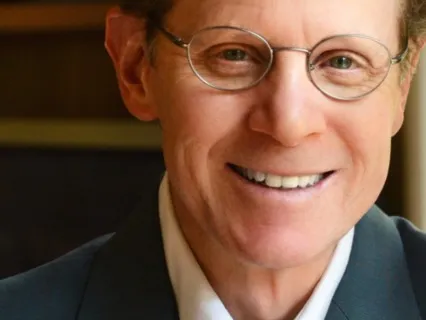
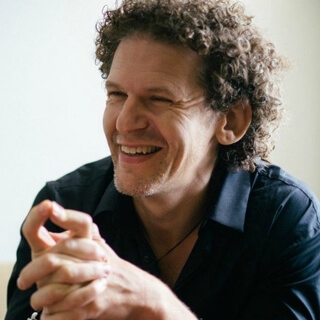
Our guest on this episode is Dr.
Dan Siegel.
He's a graduate of Harvard Medical School and completed his post-graduate medical education at UCLA.
He is currently a clinical professor of psychiatry at the UCLA School of Medicine,
And executive director of the Mindsight Institute,
An educational center devoted to promoting insight,
Compassion,
And empathy in individuals,
Families,
Institutions,
And communities.
His books include Mindsight,
The Developing Mind,
And Parenting from the Inside Out.
He has been invited to lecture for the King of Thailand,
Pope John Paul II,
His Holiness the Dalai Lama,
Google University,
And TEDx.
His latest book is called Mind,
A Journey to the Heart of Being Human.
If you value the content we put out each week,
Then we need your help.
As the show has grown,
So have our expenses and time commitment.
Go to oneufeed.
Net slash support and make a monthly donation.
Our goal is to get to 5% of our listeners supporting the show.
Please be part of the 5% that make a contribution and allow us to keep putting out these interviews and ideas.
We really need your help to make the show sustainable and long-lasting.
Again,
That's oneufeed.
Net slash support.
Thank you in advance for your help.
Hi Dan,
Welcome to the show.
Hi Eric,
Thanks for having me.
I'm happy to have you on.
You've written a number of books over the years about the mind,
And you've written in a more.
.
.
I don't love the word,
But it's the first one coming to mind right now.
A more holistic sense of what the mind is than what we tend to hear,
The very reductive sense of the mind just being the brain.
And so we'll get into all that in just a couple minutes.
But let's start like we always do with the parable where there's a grandfather who's talking with his grandson.
He says,
In life,
There are two wolves inside of us that are always at battle.
One is a good wolf,
Which represents things like kindness and bravery and love.
And the other is a bad wolf,
Which represents things like greed and hatred and fear.
And the grandson stops and he thinks about it for a second.
And he looks up at his grandfather and he says,
Well,
Grandfather,
Which one wins?
And the grandfather says,
The one you feed.
So I'd like to start off by asking you what that parable means to you in your life and in the work that you do.
Well,
Eric,
First of all,
That's such a beautiful parable.
Thank you for sharing that.
And for me,
The power of the parable from the perspective of my personal life and also professionally what I've been doing is the idea that you have these two states you can get into,
One you might call a receptive state,
Where you're really promoting something called integration.
And that is kind of what leads to this idea of joy and peace,
Love,
Hope,
Humility,
Kindness,
Empathy,
Compassion,
Truth.
All those things are part of an integrated life.
There's also a way you can become reactive instead of receptive,
Where you actually become unintegrated.
Integration is differentiation and then the linkage of those differentiated parts.
And when we're threatened,
For example,
We enter this reactive state of anger,
Jealousy,
Greed,
All these ways.
We can have hatred and things shutting us down.
And so for me,
The parable parallels the idea that we have the integrated state of receptive harmony and the non-integrated state,
Which brings us to either chaos or rigidity,
Wolves that he calls the bad wolf.
I would call it the non-integrated state.
And when the grandfather beautifully responds,
The one you feed is the one that,
As the boy asks,
Wins,
To me,
That's exactly what we've learned from science,
That where attention goes,
Neural firing flows and neural connection grows.
So feeding the wolf in many ways is how you put attention to either non-integrated states or integrated states,
How you reinforce them in your life,
Meaning in your relationships and in your brain,
Because the mind is not just brain activity.
It's fully embodied and it's fully relational,
As we can talk about,
But it's this mind as a self-organizing,
Emergent process of both embodied and relational energy flow that,
For me,
Is a way of seeing the mind and understanding what a healthy mind is.
A healthy mind is a mind that optimizes self-organization by actually promoting integration.
So that's where you see the whole framework there in one perspective.
So let's break that down a little bit.
There tends to be a lot of reductive science today that posits that the mind or consciousness or anything is simply just the brain.
The mind is what the brain does,
I think you say,
As they put it.
So help me understand your perspective that says the mind is more than just the brain itself.
Yes.
Well,
Eric,
You're absolutely right.
You know,
Since the time of Hippocrates,
2500 years ago,
Where he said in a book called On the Sacred Disease,
That the mind is only,
And I emphasize the word only,
From the activity up in the head,
The brain,
Reaffirmed by a fellow named William James,
Who is a physician who's thought of as the grandfather of modern psychology.
In The Principles of Psychology,
He said,
Yeah,
That's basically the truth.
For me,
As a scientist and clinician,
As a father,
As a husband,
As a person on the planet,
It just felt like the word mind,
Which refers,
First of all,
To our subjective experience,
Is different from brain firing.
So people saying that their synonyms,
Mind is what brain does,
Just didn't quite make scientific sense.
So that we need to realize subjective experience is something that's quite real,
And it's just not the same as brain firing.
Even if it ends up that it's completely dependent on it,
It's not the same as it.
So that's the first thing.
Consciousness,
For example,
While it may have neural correlates,
Is just not the same as brain firing.
And we even have information processing that's beneath conscious awareness.
So those things,
Information processing,
Consciousness,
And subjective textures of life,
Subjective experience,
Those are what we mean by mind,
And they're not just the same as brain firing.
Now,
There's a fourth facet of mind,
Which takes us beyond these descriptions into the world of a definition.
And it's hard to just grasp it,
Because it's really looking at mind as something that is both shared by us,
Like right now between you and me,
Eric,
And anyone listening to us,
But also happening within the body.
And if you think about this,
What is the essence of some system,
A singular system,
That could exist both within your body,
Including its brain,
As well as in your relationships with other people,
And even your connection with the planet,
Your connection with nature?
Well,
That relational and that embodied process can be seen as energy and information flow that is not constrained by the skull nor constrained by the skin.
So then you see the singular system is energy and information flow manifesting itself,
For example,
In the brain,
As electrochemical energy flow in the body.
There's all sorts of ways energy flows.
And in our relationships,
Like right now,
It's auditory.
It's the movement of air molecules.
And if we were together in person,
Eric,
It would be seeing each other with photons.
So to be really clear,
This process of energy and information flow is not some loosey-goosey idea.
It is grounded in science.
And it's just not the usual way scientists think about things,
But it's completely scientific.
And when you take it to the next step and say,
OK,
What does the mind have to do with that system of energy and information flow that's both within you and between you?
It's a long story,
But the short version of the story goes like this.
The system has the mathematical features of a complex system.
It's open,
Chaos-capable,
And nonlinear.
And we'll just put that aside to say that the science of math tells us that a system with these qualities is a complex system and it has emergent properties.
One of them that arises from the interaction of the elements in the system,
In this case energy and information flow,
Is called self-organization.
And so the proposal I made back in 92 was that the mind might be beyond subjective experience,
Consciousness,
Information processing,
Maybe related to it,
Maybe not.
But just to put those aside for now,
This fourth facet of mind could be defined as a self-organizing,
Emergent,
And relational process that is regulating the flow of energy and information both within you and between you and the world.
And with that definition,
You can then say what a healthy mind is because you can ask the question,
What is optimal self-organization made from?
And the answer for math is you differentiate and you link.
When you don't do that,
You get chaos and rigidity.
That's your so-called bad wolf.
And when you do differentiate and link,
You get the harmony of integration,
Which has flexibility,
Adaptability,
The math quality of coherence,
Which means resilience over time.
It's energized and it's stable.
And if you're an acronym nut like me,
That spells the word faces,
Flexible,
Adaptive,
Coherent,
Energized,
And stable.
That's the joy,
The love,
The kindness,
The humility,
The sense of vitality in life.
That's the good wolf.
You said a lot there.
And I want to try and see if I can summarize it just a little bit for the listeners.
And this will probably be some oversimplification.
But I think you're saying that when we think of the mind and everything that happens in the realm of the mind,
That thinking that it's just the brain is leaving out a lot of important pieces of information.
Obviously,
The brain is very important,
But you're suggesting that it's a system that has the brain as part of it,
As well as our embodied experience,
And as well as the relation that we have to things outside of us,
The information that's coming in and out.
And that as a whole thing is a system.
And that system mirrors what we know about complex systems,
That it fits all the definitions of that.
And one of the features of a complex system is that it has a tendency to have a self-organizing principle,
That it is able to,
Of itself,
Refine itself and make itself better.
Is that a reasonably short summary?
That's a beautiful summary.
And,
You know,
For people listening,
That last part you said is exactly the part that I think gets people a little feeling uncomfortable because it's very counterintuitive,
That something could be arising from something,
And then going back and regulating the very stuff from which it arises,
So then therefore its own arising is shaped by what it just regulated.
So it feels like that's bizarre and paradoxical and shouldn't exist.
But in the study of complex systems,
What we find in the universe we live in,
Is that they have this self-organizing emergent property that while it's counterintuitive,
It's present all around us.
And so let's look at an unhealthy mind.
An unhealthy mind tends towards one of two extremes.
It either is too rigid or it is too chaotic.
And it can actually be both of those things.
And you talk about going through the DSM and looking and seeing that all of the,
I'll call them the mental illnesses that we describe,
Fall into those two categories in one sense or another.
That's right.
You use a great analogy of a river,
Right?
One bank is chaos,
One bank is rigidity,
And then in the middle is the river,
Which I think is integration,
Correct?
Exactly.
Can you give me a couple examples of a chaotic mindset,
A rigid mindset?
And then let's talk a little bit about what integration is and how we as humans can make it so that it can be more of a common feature for us.
Well,
You know,
It's helpful to realize some ways in which our minds may have challenges to the natural,
Innate drive toward integration,
Because if it is the self-organizing emergent property of our lives as a part of a complex system,
It's a natural part of what the mind is,
In a sense,
There to do.
So we can have two broad ways to think about it.
One is you've just had the process of growing in your life with inherent things,
Perhaps you literally inherited or perhaps exposure to toxins earlier in life or infections,
Something that has affected your life and impaired the capacity to create integration.
An example might be people with the condition called schizophrenia or people with a condition called autism or people with bipolar disorder,
Manic depressive illness.
Now,
Let's look at just bipolar disorder as an example.
The experience of mania would be example of racing thoughts and behaviors that are not in one's control.
That would be chaos.
For that same individual in a depressed state,
The shutting down of feelings and the closing down of their sense of life,
Vitality would be rigidity.
That is not from what parents have done.
It's an innate condition and we can actually show,
As in with every study of the brain of people with different psychiatric conditions,
Impaired integration in the brain as there is in bipolar disorder,
Schizophrenia and autism.
If you move then to the next large grouping,
Which is conditions that have been caused by experience,
Examples of trauma,
Let's take a look at post-traumatic stress disorder as related to developmental experiences of severe abuse or neglect.
What those do is they also impair the growth of integrated regions of the brain.
And Eric,
If you want to talk about it,
We can,
But basically you can look at the brain and see how the differentiated areas are linked or not and whether they're differentiated or not.
And what trauma in the form of abuse or neglect does is it blocks the growth of integration in the brain.
And the symptoms that is what you experience in your life can be,
For example,
Intrusive memories.
You can have this flooding of emotions.
You can have this sense where your thoughts are out of control as a part of post-traumatic states.
That's chaos.
Or you can have the rigidity of feeling numb to your body or disconnected from other people.
Those would be examples of rigidity.
So a given individual,
Just like you're pointing out,
Can have both chaos and rigidity in their life.
Hey,
Everybody,
A couple of quick announcements.
You may have noticed that we are re-releasing a bunch of episodes between Christmas and New Year's sort of as a holiday gift and as a preparation for the new year as people start thinking about behavior change.
In addition to that,
We are starting something new right after the first of the year called the One You Feed group transformation program.
And this is going to be sort of like group coaching.
There'll be 10 people.
It's a hundred dollars a person.
And we will meet throughout the month and focus on how you can make lasting change in your behavior,
How you can take those things you want to change and actually change them and keep them changed throughout the year.
So if you're interested,
Send an email to eric at one you feed dot net.
Let me know.
We'll get you signed up again the first 10 people and then we'll close it off.
And finally,
We appreciate all the support from the people who have been making donations.
Very kind,
Very helpful.
If you're interested in supporting the show,
We can certainly use your help.
One you feed dot net slash support.
So happy holidays,
Whether you love them or hate them.
I hope you're getting through them.
Okay.
And now back to the interview with Dr.
Dan Siegel.
When you're talking about integration on a certain level,
You are being very literal about the different parts of the brain and their ability to communicate with each other in an integrated fashion.
So we're talking physical here also.
Yes.
So let's start with the brain and we can talk about relationships.
There's a new word that's been used called the connect home.
C o n and e c t connect and then home.
Oh,
And the connect home studies are basically looking at how the differentiated areas meaning different or specialized areas of the brain are then linked to each other.
So it's a way of actually looking at integration structurally and functionally in the brain.
And what the connect home studies show is that when they live this October 2015,
If you want to look at the study,
When they look at every measure of well-being they can look for in a person's life,
The one neural state that predicts it is how interconnected the connect home is.
That is how integrated the brain is,
How you're linking the differential areas together is the best predictor of well-being.
And then if you look at the other side in terms of the brain,
Every study that's ever been done to date of someone with a psychiatric condition,
Whether it's caused by experience like abuse and neglect or just inherent,
You just got it not by experience,
It has shown impaired integration of the brain.
So we now have this incredible set of empirical findings,
Your research studies that show well-being is connected to integration of the brain and impaired well-being is associated with impaired integration.
And then when you go to the relationship side,
You can look at,
For example,
When in a relationship like let's say between you and me right now,
When we honor differences,
Really respect differences,
Maybe even thrive on the differences,
That's differentiation,
But then we compassionately,
Respectfully communicate with each other as a linkage,
Then our friendship would be thriving.
And if there was a parent-child relationship,
That describes what's called secure attachment.
And the amazing thing is for attachment studies,
When relationships,
Obviously it's a functional kind of integration,
Honoring differences,
Promoting linkages through communication patterns,
Sharing of energy and information flow.
When you have a developmental relationship that's integrated,
It promotes the growth of integration in the brain.
And here's the startling finding,
Every form of regulation depends on brain integration.
So when you regulate your mood and emotion,
When you regulate attention,
Thought and memory,
When you regulate behavior,
Relationships and morality,
Each of those forms of regulation depend on integration of the brain.
So what we've just said is,
Amazingly,
Relational integration stimulates the growth of brain integration,
Which is the basis of healthy regulation.
So one way to work to integrate the parts of the brain that you're saying is by our relations with other people.
If those relationships show the signs of integration,
Then our brain is going to change along those lines,
Or I'm going to say our mind is going to change along those lines and become more integrated.
What are other ways to promote integration in the brain beyond having integrated relationships?
I wrote a book called Mindsight,
Which kind of goes through nine domains of integration with lots of examples of how to do this.
And one way to think about it is simply this.
If you're talking about,
Let's say,
Relationship integration,
We're talking about how to make sure people are seeing that their mind is seen beneath their behavior,
That there's respect to what that person's personal meaning is in life,
And that communication is linking them to each other.
In the brain,
The way you think about it is this.
For example,
You have a higher part of the brain and a lower part of the brain,
And there are people who are entering lots of chaotic and rigid ways of being because they've disconnected these two differentiated areas of the nervous system,
And you can actually do what's called interoceptive practice,
Where you have them perceive,
That's the septive part,
The interior,
That's the intero part.
And at UCLA,
Studies have been shown,
For example,
That when you do this,
You actually develop the strength of an area called the insula,
Which connects the lower parts of the brain and,
In fact,
The whole body,
To the higher cortex.
And when you do that,
You have more self-awareness,
More emotion regulation,
And even more empathy,
And that promote well-being.
So,
As one example,
You can show you can link the left and right as differentiated areas of the brain and link them together.
There's memory integration.
You can show that people with trauma have impaired integration memory.
You can even demonstrate the basic way you do that,
Because that's the question you're asking me,
Is quite simply like this.
Attention is that process which directs energy and information flow.
That's just what attention is.
Now,
Where attention goes,
Neural firing flows in the brain.
So,
If you know what the chaos and rigidity are due to,
Like up and down is not working,
Left and right,
Memory issues,
All sorts of things,
You actually can,
In a very skillful way,
Direct attention to areas,
Let's say,
That are under-differentiated,
Like the left hemisphere or the right hemisphere,
Or access to,
Let's say,
The sensations of the body.
And where attention goes,
Neural firing flows,
And here's the secret.
When neurons are firing repeatedly,
They activate genes in the associated neurons.
The activation of genes leads to the growth of connections.
Neurons that fire together,
Wire together.
Exactly.
So,
Attention leads to neural firing,
Neural firing leads to neural rewiring.
That is,
Where attention goes,
Neural firing flows,
And neural connection goes,
You want to get those neurons firing simultaneously,
So they wire together.
Exactly.
And so,
Mindsight helped me understand,
Is it different from,
Or is it just an interpretation that you have on the concept of mindfulness in general,
I'd say more specifically,
Like of a Vipassana-type mindfulness,
Where you're actually looking at the various parts of consciousness.
The word mindsight is a term I made up when I dropped out of medical school,
Because my professors were not respecting or even recognizing the internal mental experience,
The feelings,
The thoughts,
The meanings of what was going on in their patients.
And it was so upsetting for me that I basically dropped out of school.
And when I was away,
I realized that we have two kinds of sight,
Two kinds of perceptual abilities.
We can see the physical world,
And my professors were brilliant at doing that.
They were very famous and powerful researchers.
They were great at physical sight,
But they were kind of clueless when it came to seeing the mind.
You know,
They were clueless when it came to seeing the mind.
So that made me,
When I decided to go back to school,
Make up this word mindsight back in the late 70s,
Early 80s.
And when I came back to school,
It was a very helpful notion that we can see the mind or not.
So years later,
When I became an attachment researcher and a therapist,
That I heard about this story called mindfulness,
Which,
You know,
There isn't a fixed definition of mindful awareness,
But generally what people mean is being aware of the present moment without being swept up by judgment,
Right?
So mindsight is not quite the same as mindfulness,
But there,
You know,
First of all,
Mindfulness as a practice is found in every culture.
It's been around for thousands of years.
You can now study it.
Mindsight is just the idea that we have insight into the mind and we have empathy for other people's minds.
And now it includes a third aspect,
Which is integration.
That is,
Honoring differences and promoting linkages.
So there are different constructs.
In a way,
Mindsight would include mindfulness,
But not be limited to it.
And it's been exciting to become a part of,
You know,
The whole mindfulness community and the research that goes on on that.
And,
You know,
When I work in our center,
We have a center at UCLA called the Mindful Awareness Research Center.
You know,
The mindsight ideas were useful at doing practices there,
But,
You know,
You could have mindfulness fully there without any kind of influence by mindsight.
And mindsight does not mean mindfulness at all as a construct.
So mindfulness is a tool in creating what you're calling mindset.
Or it's one of the tools that could be used for that.
If you look at every brain study of mindfulness,
What they show with mindful awareness training is it leads to a more integrated brain.
That we didn't know,
You know,
Before about 10 years ago,
But now we're learning that.
So it's,
You know,
The mindsight frame of insight,
Empathy,
And,
You know,
Integration embraces the idea that mindful awareness is a wonderful tool to increase well-being.
So what are some other practices that people could do?
So we've got relationship,
We've talked about mindfulness,
Or we'll just call it meditation in this case,
Or a type of meditation.
What are other tools?
I know you've got what you call the Wheel of Awareness.
And I've just completed a study of 10,
000 individuals who've done the wheel.
And I put the results in this book called,
Mind,
A Journey to the Heart of a Human.
And what's been so exciting about that is if you take the concept that change seems to involve consciousness.
So if you're a parent wanting your child to change,
Or a teacher in school,
Or a therapist,
You know,
All those different approaches to helping people develop and grow well involve consciousness.
If you take that finding and combine it with our proposal that integration,
You know,
Differentiating and linking,
Is the basis of health.
What I did back in the 90s was say,
What would happen if you integrated consciousness?
And there's a table here in the office where you could put,
In the center of tables like a hub of a wheel,
The knowing of consciousness,
Sense of receptive awareness,
And distinguish that to differentiate that from the knowns.
And let's put them on a rim.
And then there are these things holding up the table that look like spoke.
So we'll say the spoke is attention.
And then with my patients,
I would have them do this practice where we'd walk around the table and distinguish the knowing from the known,
And then link them to each other systematically.
And they started reducing their symptoms of trauma,
Or anxiety,
Or mild to moderate depression.
So that was really interesting to me.
So then I started teaching it to my students,
And they said they were getting good results.
So then I decided to do workshops in this,
And people had these profound experiences.
So it became not just a way of integrating consciousness,
But actually illuminating the nature of consciousness and the very nature of the mind.
So we can talk about that if you want,
But it's a very simple practice.
People can do it from our website,
Go to the resources tab.
And it's a very profound experience to hear the universality of it,
Of people around the planet,
Of how they respond to it.
Out on your website,
And I'll have this in the show notes,
There are guided meditations or guided practices that you do to walk through it.
The model is sort of hard to interpret just from hearing it.
You're basically starting,
And correct me where I get this wrong,
But you're looking at,
First you're touching in with all of your senses.
What are each of my senses perceiving?
And then you're moving into,
You know,
Your thoughts and your feelings.
What are the thoughts and feelings that are happening in the mind?
And then you move into the overall sense of having a body as a whole,
And what's happening as a whole.
And then where does it go from there?
That's as much as I remember.
You've got good memory,
Eric.
So you start with the outside world with the five senses,
Then you go to what's called the sixth sense,
The interior of the body.
Then you go to the mental activities,
As you say,
In this third segment of the rim.
And then the fourth is your relational sense,
Your sense of connections to things outside of the body.
And then in a more advanced form,
You actually bend the spoke of attention around,
And you explore the nature of pure awareness.
And it's been just absolutely amazing to hear the universal experience that when people do have an opening of that,
How they share it,
They actually talk about this sense of joy,
Of love,
Of energy,
The sense of eternity,
Illuminating this sense that they're connected to everything,
Of God,
This wholeness.
You know,
In many ways,
It has this quality that,
If you want to get into it,
We can talk about what energy may actually be.
So when we say the mind is an emergent property of energy,
There's some really profound notions.
And I know it's hard to talk about in a short time,
But there's some profound notions about what the origin of consciousness itself might be,
If you want to get into the notion of energy.
But it's been something that,
You know,
People have been experiencing,
And also I presented it to scientists in quantum physics who are extremely excited about it.
And it may help us understand kind of the relationship between thoughts,
And feelings,
And memories,
And beliefs,
And then consciousness itself.
Well,
That's just too much of a teaser to just leave on the table.
I'll have people calling me,
Insisting to know what it is.
So let's go ahead and,
You know,
Try and do it relatively quickly.
But I think definitely we want to talk through that.
So first of all,
Eric,
You and I should put on our seatbelts.
You know,
If I hadn't done this with 10,
000 people and recorded the results,
And found the universality of it,
I would think it was just some peculiarity of,
You know,
People from this place or that place.
But it's everywhere,
And it doesn't matter a person's meditation history.
They could be,
You know,
Never meditated or had therapy before.
They could be running a monastery in Korea.
You know,
It doesn't matter.
I mean,
It's absolutely amazing.
So here's the basic idea.
I'll try to say it in a condensed way,
But I understand,
You know,
This is a new way for us all to think.
And that's why I wrote the book,
Mind,
So that people could go through it really gently through direct experience and questions,
Because it is a new way to embrace what our mind is,
What our self is,
What our relationships are,
And what,
You know,
Reality is all about.
So here we go.
If you say,
Well,
The mind is more than the brain,
But it includes the brain,
And then you come to the statement,
Well,
The mind might be an emergent property of energy flow,
Sometimes that symbolic value of energy,
So we call it information,
Flow means change,
But then you ask the question,
Well,
All right,
Fine,
What is energy?
So when I've asked physicists this,
This is what they say.
Energy is the movement from possibility to actuality through a series of probabilities.
So the way they describe it is there's a sea of potential.
That's the possibility part.
And what arises from the sea of potential are particular subsets of those potentialities,
Those possibilities that will call,
As you rise up,
If you can imagine a diagram of a plane of possibility,
Imagine that you've now moved up to a plateau of increased probability.
To give you a specific example,
If I say to you,
Eric,
I'm going to say a word,
And let's say there are a billion words I might say,
So the sea of potential is the billion words.
Then for you to guess it,
It's one out of a billion.
So the probability that you're going to guess it is near zero.
It's very low certainty,
Right?
So it's near zero.
That's sea of potential.
What's that?
I guessed it,
Tree.
Good.
You got it.
I've seen your talk.
So when I say tree,
Right,
That's now gone beyond just a plateau up to a peak of certainty.
That's 100% certainty.
You said tree.
I was going to say tree.
Beautiful.
Now let's say I decide I'm going to say all plants,
And let's say there are maybe 10,
000 plants.
I know there are more,
But let's just make it 10,
000.
So the plateau of all plants is a much higher probability,
One out of 10,
000 than one out of a billion,
Right?
So it's a plateau,
And from that plateau will arise all these peaks of all the plants I could set.
All right.
So basically what we've just said is the thought of tree and the statement of tree is a peak.
The state of mind,
I'm only going to say plants to Eric,
Will be a plateau.
And the pool from which all things could arise is the plane of possibility.
And if you had to map this out on a graph,
It would be the near zero place of certainty,
Amazingly,
Is open possibility.
And the higher you get in a plateau,
The higher certainty it is,
But the more restricted you are until you're finally below these peaks for thinking,
And then you get a thought,
For remembering,
You get a memory,
For emoting,
You get an emotion.
Okay,
So that's the frame.
Now here's the amazing thing.
When I've done the Wheel of Awareness practice now and recorded the results,
When people bend the spoke around and explore deep awareness,
That is,
Receptive awareness,
The source of knowing,
The hub,
They describe openness,
Boundarylessness,
Eternity,
The infinite,
God,
This joy,
This incredible sense of peace,
This openness,
This quality,
Basically,
That correlates with the plane of possibility.
And so what looks like might be the case,
Underscore might a thousand times,
This could be completely wrong,
But it's consistent with the observable data.
And it's not said in quantum physics,
But it's consistent with quantum physicists,
My colleagues tell me.
What we're saying then is that consciousness itself,
The knowing of consciousness,
Receptive awareness,
May be arising when energy is in the plane of possibility,
And that when you have a mood or intention or a belief or aspiration,
It's a plateau,
Where the energy is moved up from that plane and is now in a plateau state.
And then when it moves upward,
You've got cognitive processes like emoting and thinking and remembering that are sub-peak values.
And then when you hit a peak,
You've arrived at like a memory,
An emotion,
A thought.
And then you see this continuity between cognition that's there as peaks all the way down to consciousness itself.
And then you start understanding,
For example,
When people get trapped in certain plateaus with only limited numbers of peaks that can arise from that,
Like if I'm depressed and all I think is I'm no good,
I shouldn't live,
And other ways in which we get restricted.
And so practices which give you access to the plane of possibility free you up because it looks like the plane of possibility is the portal that allows integration to naturally unfold.
I might be speechless for the first time in 150 episodes because I don't quite know how to respond to that,
But I find it a fascinating theory.
Well,
People do the wheel and they experience it.
It's like you get the theory and then you get the experience and then you go,
Whoa,
Like that,
Just like you did.
Yeah,
And I'm not actually the experience.
I don't doubt in any way,
Shape or form.
I've known too many people and read too many different things about a mystical,
You know,
Non-dual type experience,
You know,
Headed in that direction myself at points that I believe the experience is 100% a true thing.
What it is is the your way of describing it is the fascinating part to me.
Well,
What's so exciting about hearing that from you,
Eric,
Is first of all,
The profound way where all of us need to say,
OK,
We have our subjective experience of what we go through in life and we can understand that that's fantastic.
And then for me as,
You know,
A scientist and clinician and just person on the planet,
You know,
I've been just driven to try to say,
Well,
Can we bring the fields of like science and clinical practice and,
You know,
Meditation practice and spirituality in general,
Can we bring them together?
And what is so thrilling about this is,
You know,
What's possible here?
And this is why I try to describe this in the mind book really slowly,
Because it can make even the writer's speech.
Those like inside,
You know,
You go,
Whoa,
Because if this is true,
It fits with a lot of the wisdom traditions.
It fits with the meditation traditions.
It actually gives a sort of guideline for what therapists might do.
It helps parents understand it.
And just for an everyday life kind of thing,
For example,
For me,
What it helps me with in my own life is how I approach,
You know,
When relatives have gotten ill or died or,
You know,
Like my dad died four years ago,
It was very helpful to really understand that and my feelings about that for my own life and death.
It's changed my relationship to death,
Really.
And what it's given me is this feeling because it's my regular practice.
I do the wheel of awareness,
You know,
Pretty much every day.
And what's so empowering about it,
It means different every day.
But what's so empowering about it is when you kind of develop the capacity to drop into that plane of possibility,
That is to go to the metaphoric hub and not be lost on the rim from a point of view of the plane.
It's so filled with joy and so filled with love.
You just get this feeling of,
You know,
Falling in love with people and things.
It's just this it's wild.
And of course,
Sometimes you get lost in the plateaus and peaks and get reactions to things.
And in other words,
You're you're just a human.
But it gives you this strength of resilience to access this plane of possibility that becomes woven into your daily life.
It's it's very exciting.
Wonderful.
Well,
I think that is a great place to wrap up the conversation.
There's certainly a lot there.
The book Mind I read and it's a great journey.
As you said,
You kind of walk people through this stuff step by step,
Really interweaving it very closely with your own personal story and how your own knowledge of the mind and yourself has grown over the years.
So,
Like I said,
I'll have links to all that stuff in the show notes.
Fantastic,
Eric.
And,
You know,
The thing that's so exciting about this conversation when you're here is as we move forward on this planet,
I think the more we can talk about this,
You know,
The more we can feed the integrated world.
And in some ways,
You know,
Your plane and my plane and everyone listening plane are really the same plane that is infinity is infinity.
And so the place we really find each other is not in our differentiated plateaus and peaks,
Which are great.
That's where we have our differences and we need to really love those differences.
But we also have to find our connections.
So the more we can understand,
Wow,
The mind really is the source of love and the source of connection.
I think that's how we're going to open ourselves up to really collaborating with each other and having a more integrated way of living in our interconnected world.
I hope so.
We sure could use it.
Yes.
Well,
Dan,
Thank you so much for taking the time to come on.
Thanks for the work that you're doing.
Yeah,
Thank you.
Thanks.
Bye.
You can learn more about this podcast and Dr.
Dan Siegel at OneUFeed.
Net.
If what you just heard was helpful to you,
Please consider making a donation to the OneUFeed podcast.
Head over to OneUFeed.
Net slash support.