As long as the ego is in place,
You will justify what pleases your ego,
On the left or the right.
Welcome to The One You Feed.
Throughout time,
Great thinkers have recognized the importance of the thoughts we have.
Quotes like,
Garbage in,
Garbage out,
Or you are what you think ring true.
And yet,
For many of us,
Our thoughts don't strengthen or empower us.
We tend toward negativity,
Self-pity,
Jealousy,
Or fear.
We see what we don't have instead of what we do.
We think things that hold us back and dampen our spirit.
But it's not just about thinking.
Our actions matter.
It takes conscious,
Consistent,
And creative effort to make a life worth living.
This podcast is about how other people keep themselves moving in the right direction.
How they feed their good wolf.
Thanks for joining us.
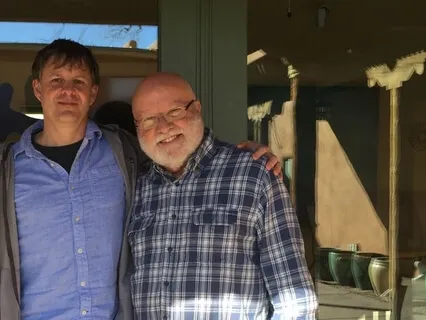
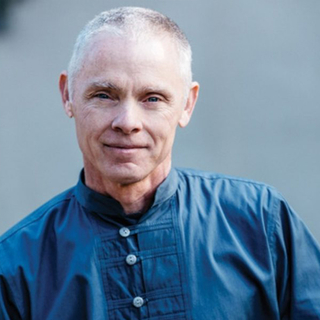
Our guest on this episode is Father Richard Rohr,
A globally recognized ecumenical teacher bearing witness to the universal awakening within Christian mysticism and the perennial tradition.
He is a Franciscan priest of the New Mexico province and founder of the Center for Action and Contemplation.
Richard's teaching is grounded in the Franciscan alternative orthodoxy,
Practices of contemplation and self-emptying,
Expressing itself in radical compassion,
Particularly for the socially marginalized.
He is the author of numerous books including The Naked Now,
Falling Upward,
Immortal Diamond,
And his newest book,
The Divine Dance,
The Trinity,
And Your Transformation.
If you value the content we put out each week,
Then we need your help.
As the show has grown,
So have our expenses and time commitment.
Go to 1uFeed.
Net slash support and make a monthly donation.
Our goal is to get to 5% of our listeners supporting the show.
Please be part of the 5% that make a contribution and allow us to keep putting out these interviews and ideas.
We really need your help to make the show sustainable and long lasting.
Again,
That's 1uFeed.
Net slash support.
Thank you in advance for your help.
And here is part one of our interview with Father Richard Rohr,
Recorded live at the Center for Action and Contemplation in New Mexico.
Stay tuned in the upcoming weeks for part two.
Hi Father Richard,
Welcome to the show.
Good to be with you.
Thank you.
We are here at your Center for Contemplation and Action in Albuquerque,
New Mexico doing this live.
So thanks so much for having us out.
We're really excited to do this conversation.
Glad to have you.
You've been writing about the Christian faith,
About mysticism,
About how to live a good life for a long time.
And we will get very specific on some of your writings here shortly.
But let's start like we always do with the parable.
There's a grandfather who's talking with his grandson.
He says,
In life,
There are two wolves inside of us that are always at battle.
One is a good wolf,
Which represents things like kindness and bravery and love.
And the other is a bad wolf,
Which represents things like greed and hatred and fear.
And the grandson stops and he thinks about it for a second and he looks up at his grandfather and he says,
Well,
Grandfather,
Which one wins?
And the grandfather says,
The one you feed.
So I'd just like to start off by asking you what that parable means to you in your life and in the work that you do.
Wow,
That's very well put.
I just finished a book called Just This.
And in the opening pages,
I talk about maybe the same thing,
Not as cleverly as that.
I call it the two reservoirs.
And it all depends on which reservoir is filled at any one moment.
If your negative one with brackish or toxic water has been the one you've been filling,
That's what's going to determine your reaction.
So it's the same point.
And I think what the tradition probably meant by daily prayer,
I know that word has been trivialized and probably overused,
But was to somehow do almost as it were a scan of what are you holding right now?
What is your primary energy?
Is it negative?
Is it positive?
And if you don't do that with some regularity,
All the evidence is even from neuroscience,
Is that the negative voices dominate.
There's even some kind of attraction in us to feelings of justified hurt or resentment or anger.
And we look at our world and that's not hard to believe,
Is it?
So I very much agree with that.
That's a beautiful way of making the point.
Which wolf do you feed?
Which reservoir is full or half full or empty?
Well,
I will be looking forward to reading that book when it comes out.
I want to start by talking about something that you actually say it's a fixation of yours.
And it's something that I think about a lot and talk about and write about,
Which is the middle way.
Or I've heard you refer to it as non-dualistic thinking,
The third eye,
Lots of different things.
But I think the term the middle way comes from the Buddha.
And I think it's maybe one of the wisest teachings out of that tradition.
So I'd like to start off by exploring that concept a little bit with you.
And getting your take on it.
You've certainly said that for yourself,
If you're not careful,
You can go into black and white thinking.
And that a lot of the troubles in your life have come from exactly that.
I talk about that in my book,
The Naked Now,
Where I recognize that I'm a perfectionist,
I'm an idealist.
I want to do the best thing,
The right thing.
Now that sounds so wonderful,
But it's really terrible.
Because it makes you ignore a lot of your own inner evidence.
It makes you overly judge and expect the positive or the negative.
And that's never good.
We always say,
Every expectation is a resentment waiting to happen.
So I've had to face that for many years,
Much of my life.
That my very gift of a certain kind of idealistic thinking has a perfectionistic streak to it.
And that's not good.
It's too dualistic,
It's too all or nothing,
It's too oppositional.
It's too binary,
To use the language we use today.
The middle way for me is not just balancing the opposites,
Which I think is what a lot of people assume,
But it's holding them.
Now I say that as a Christian,
Where I see that as the very meaning of the cross.
The holding of the tension of opposites that we see in Jesus is really different.
He doesn't balance it out.
He suffers it.
He holds it until it transforms him,
Which we call resurrection.
And that's much harder to teach.
For years I myself thought it was a balancing act.
And I'd seek to be more balanced,
And that's good.
That is the middle way too.
We used to say in Latin,
In medio stat virtus,
Virtue stands in the middle.
But holding it,
Oh,
God,
That takes years of practice to know how to do it.
I'm not sure I'm there yet.
Yeah,
You say in one of the books,
I want to emphasize that it's a holding of a real tension,
Not necessarily a balancing act,
A closure,
Or any full resolution.
It is agreeing to live without resolution,
At least for a while.
And I think that living without resolution is probably part of the reason it's so hard to not think dualistically,
Because I think we're wired to want an answer.
We're wired to want certainty.
Well,
You know,
What the human psyche does,
Grabbing for identity,
It identifies with things.
It doesn't relate to them.
It identifies with them.
It wraps around them.
It grabs onto them.
Those are different words we use.
And identification is always a game.
It's not really your identity.
It's searching for an identity.
But we stop right there,
And we get all elated about this opinion,
Or how terrible that person is,
Or whatever.
And it's an over-identification,
Finally.
You also use the tale in the Garden of Eden as a way to talk about this sort of thinking,
As in the apple from the tree being the dualistic thinking,
The knowledge of good versus evil.
That,
To me,
Is so evident.
And that's probably arrogant of me to say it.
But I'm amazed that the tradition has not made more of that point.
That in our creation story,
In the Judeo-Christian tradition,
Yahweh,
The God of Israel,
Says to supposedly Adam and Eve,
You may eat of all of the trees in the garden.
That's a huge act of permission.
It's a lot of them.
Wow.
It's saying you can make mistakes.
There's only one I'm really forbidding you to eat from.
Only one.
And it's the tree of the knowledge of good and evil.
So for me,
That's a warning against what has been the bane of every religion,
Thinking it knows what perfect good is and what perfect evil is.
It knows who's going to heaven and who's going to hell.
I've had to say to some of my evangelical friends who seem preoccupied with answering that question,
I say,
You do know it's none of your business,
Don't you?
Why do you make that your concern that you have to decide and you have to know who's going to heaven and who's going to hell?
All you need to do is keep growing up yourself and leave that to God.
So I think we find at the beginning of the Judeo-Christian Bible,
A warning against dualistic,
All or nothing,
Moralistic absolutes.
And the statement is very strong.
If you eat of this tree,
You will most surely die.
It's the death of the soul.
It really is.
You don't grow anymore after that because you can't deal with the subtlety,
The ambiguity that real life always is,
Always,
Without exception.
I mean,
Jesus says it in the Gospels.
Why do you call me good?
Only God is good.
Stop this idle flattery of naming people good.
I don't need to be thought of as good.
St.
Francis told us,
I've got it actually in a poster in my little house on the wall.
Do not think of yourself as good and do not need other people to think of you as good.
Brilliant.
Absolutely brilliant.
Then you're free.
But as long as you're living up to persona,
You're really not in love with God.
You're in love with your self-image.
It takes probably half of your life to recognize that that's true.
Yeah,
And we're going to talk about true self,
False self,
And the two parts of life here in a little bit.
Another word for holding these things is paradox.
And you've got a wonderful definition of paradox.
You say a paradox is something that initially appears to be inconsistent or contradictory,
But might not be a contradiction at all inside of a different frame or seen with a different eye.
I deeply believe that.
And I believe that what the great religions have done is almost always present people with paradoxes that they have to resolve.
They took the form of Coens in Zen Buddhism,
Parables in Jesus,
Or even the great major doctrines of Christianity.
Jesus is fully human and fully divine.
That's a paradox.
That's a contradiction.
Right.
Or Catholics,
We believe the bread is Jesus,
But it's bread.
That is not resolved.
It's a leap of faith that puts the two together.
Yeah.
And I think that's where a lot of people,
Myself included,
Can get lost in the spiritual world is because I go,
That doesn't make any sense.
Right.
And it's because I'm coming from a logical,
Rational brain.
You talk about something trans-rational.
Can you share more about trans-rational?
Well,
Let's first of all distinguish trans-rational from irrational.
Those are two different words because those are two different realities.
Irrational would be,
It's contrary to reason.
Trans-rational means that the dualistic,
Logical,
Formed largely by the Greek notions of logic that eliminate the third always,
The rational mind doesn't have any knowledge of the trans-rational.
It believes if it's trans-rational beyond access to rational mind that it's irrational.
And that's a falsity.
Yeah.
Because your mind can't get to it,
Doesn't make it irrational.
So now there were different words for that in history,
The contemplative mind,
The intuitive mind,
The non-dual mind.
In my opinion,
All the world religions at the higher levels discovered that we needed a different processor,
A different thinking cap as the nuns used to tell us to access the great things.
Now I talk about the great things in the naked now being five.
I've added a six since then.
Love,
Death,
Suffering,
Any honest notion of God and any honest notion of infinity or eternity.
The human mind can't form such thoughts.
It can't.
I got a no six.
It's sex.
Ah.
I added sexuality since I wrote the book.
But I believe sexuality is in the realm of mystery.
And much of the faulty sexual teaching of so many religions that tend to be dualistic is because we haven't dealt with sex as a mystery.
We've tried to deal with it rationally by logical,
Rational morality.
And almost everybody ended up losing because we're dealing with something that isn't rational.
No.
So you need a different set of rules if you want to even call them rules.
So those are the six that I would call in the realm of the trans-rational.
Love,
Suffering,
God,
Death,
Eternity,
And sexuality.
That you have to put on a different mind.
Now the way most historic Christians spoke of that is I have to pray about that.
They didn't realize what they were saying,
But what they were saying is they got to put on a different hat,
A different processor.
Yep.
Now no one taught them the different processor.
So they usually said their prayers with a dualistic mind.
Do you understand?
So it didn't help.
Hey everybody.
Don't hit the fast forward button like you normally do over the part where I ask for donations because boy,
That thing with the books worked well.
So we're going to try it again.
So we're going to run a contest from this episode till next episode.
So from the moment this goes live till the next episode goes live,
I will pick one person who I will send five books from authors who have been on the show.
Your odds are pretty good at winning this because last week about 15 people made a contribution.
So that's one in 15 odds of winning five books in addition to the other gifts you get and the joy of supporting the show.
So go to one you feed dot net slash support,
Donate at any level and be entered into a contest to win five books from our authors.
So one you feed dot net slash support,
You can win books,
You get the normal prizes and it is incredibly good for your health.
I've heard that it reduces blood pressure up to 10 points if you contribute to this show.
I'm trying to get a guest who will validate that for me,
But we'll keep working on it.
Thanks.
And now the rest of the interview with the wonderful Richard Rohr.
I want to talk about engaging in the world in debate,
Discussion,
Activism,
You know,
This opposing things,
Right?
Because on one hand,
You get a message that says go beyond right and wrong.
You've got this non-dual message.
All is one,
Right?
God allows everything.
And then on the other hand,
You've got the what I would consider more the activist virtues of Christianity where Jesus is talking about how you treat other people.
And we are at a point in our country where,
Boy,
It's a tough time right now.
It doesn't seem like we know how to talk to each other at all across the spectrum right now.
And I'm curious because I wrestle back and forth with here's the action I need to take.
Here's what I believe in.
And you say it yourself a bunch of times,
You say something along the lines of you go too deep into dual thinking with people,
You go too deep into the fight with people.
That's who you become.
Yes.
How do we do both?
How do we stand out there and,
You know,
Be active,
But also not how do we not hate our enemies?
How do we,
You know,
I'm just it's a tough time.
I think a lot of people are wrestling with that.
Very much so.
I had the students on site last week and it's much of what we talked about the whole week.
Let me say it this way.
You have to first succeed at clear headed,
Rational,
Logical,
Dualistic thinking.
Or otherwise it's just amorphous,
Nothing means nothing.
You understand?
There's nothing wrong with being clear headed and having a certain degree of logic and reasonableness.
Or otherwise people aren't going to take you seriously.
Nor should they.
But as I said before,
You hit a ceiling.
So then to deal with the issues that come up inside of your dualistic argumentation,
You need another mind,
Another level,
Another spirituality,
Whatever it might be,
To actually know how to respond to those.
Let me again,
Because Jesus is my primary teacher,
Give him as an example.
He will make very dualistic statements like you cannot serve God in mammon.
That's dualistic.
It's harder for a rich man to get into the kingdom of God than a camel to pass through the eye of a needle.
Wow.
If you'll notice where he's always dualistic is on issues of justice.
Because there are people who want to get away with murder,
Literally.
We're not so inclined toward issues of justice.
So he will make strong statements like that.
But then the actual people are the situations that he finds himself in.
He will deal with very compassionately,
Very mercifully,
Very non-dually in his response.
So my father's son shines on the good and the bad.
His rain falls on the just and the unjust.
He will name reality with utter clarity,
Particularly in regard to major issues of justice.
But then his response to people is always merciful,
Forgiving,
And just.
Merciful,
Forgiving,
Compassionate,
And inclusive.
Non-dual.
So if I wouldn't put it that way,
You could rightly accuse me of being dualistic.
If I'm going to say dualistic thinking is wrong and non-dual is right,
That's not true.
They're both right.
Right.
Right.
They're both needed.
They're both needed.
And we have to say that this is sometimes a legitimate critique of people we call conservatives,
Of people we call liberals.
And sometimes liberals really do not believe there is any basis in truth.
Truth is what you make it.
It's all relative.
It's all relative.
And we push the right farther to the right when we deny all truth claims.
And many progressive people deny all truth claims.
And that creates a very amorphous,
Scary world for the psyche.
And we're in it now.
Yeah.
Like I said,
I feel concerned about policies that I see.
I feel more concerned about the way I see everybody talk to each other.
The right picks the worst example of the left,
To justify the case.
The left are looters,
Right?
And the left pick white supremists.
And that is the representation that each side holds of the other.
I'm just flummoxed by how can we move towards a middle ground again as a society?
It's just a very tough time.
This is going to demand of the person a kind of radical conversion on the left or the right from their egocentricity.
That's why both Buddha and Jesus would so emphasize this,
Unless the grain of wheat diet remains just a grain of wheat and will not bear any fruit,
You know?
As long as the ego is in place,
You will justify what pleases your ego on the left or the right.
And you'll find all the arguments to justify your conservative position.
And our last year in America has proven this,
You know?
Yeah.
That a high percentage of people,
Even people with PhDs on both sides,
If they're not converted,
Who cares?
You can have all the PhDs you want.
Transformation,
Enlightenment,
Conversion is not the same as education.
And I'm all for education.
I couldn't talk here if I hadn't been well educated by the Franciscans,
But we've confused information with transformation.
And transformation is very different.
It's what the religions of the world at the higher levels,
Not the lower levels,
At the higher levels are talking about.
Yep.
Along the same lines,
One of the guiding principles of your center,
It's written,
The best criticism of the bad is the practice of the better.
You say,
I learned this from my father,
St.
Francis.
Yes.
That's very much Franciscan spirituality.
It's called soft prophecy.
Hard prophecy is,
You know,
Denouncing the king or whatever it might be.
And there might be a place for that.
Someone better do it now and then.
But soft prophecy is what I,
Frankly,
More see in Jesus.
Where,
For example,
He just ignores the Roman empire.
He never directly attacks it.
He gives it no credence.
He gives it no incense.
See,
He offers it no respect.
That's almost a deeper way of subverting it.
But most Western Christians have to now be taught that because we've been taught to sort of bow before the powers that be.
We haven't been taught how to withdraw our allegiance from false power.
Maybe churches like the Amish or the Mennonites are good at that.
But most of the mainline Christians or mainline Judaism often doesn't know much about that.
It's pretty much a part of the system.
There's a phrase that has been used for what you were just describing.
Something about the type of belief that that is when you're sort of mainstream and you're using your spirituality as a way of getting additional material things.
Well,
The prosperity gospel.
That's the one.
Of course.
That's the one.
That's the common in America.
I mean,
Most of people have been given what I would call as a Catholic,
Imperial Christianity.
The view from the empire down.
How to maintain the status quo,
Which always just happens to be privileging me.
So I love to say,
There's no such thing as being non-political.
There's no such thing.
To pretend everything is beautiful is a political statement.
It's a maintaining of the status quo.
That's political.
I wish Christians could see that.
Most of them are intensely political while having a self-image of being apolitical because I don't dirty my hands by criticizing the president or anybody else.
We can't get away with that any longer.
And Christianity,
By not critiquing the bad,
By doing it differently.
And that you don't have to directly denounce,
As I said,
But just do it differently.
Which means maybe you don't totally think capitalism and Christianity are the same thing,
To use a very contemporary example.
And a lot of Christians have never critiqued capitalism 1%.
Understand?
1%.
It's all perfectly,
You think it fell from heaven.
So probably the reason we got into this hole is most Christians were not taught the prophets.
And why more Jews tend to be self-critical than Christians is because they learned self-critical thinking from the prophets.
Whereas we Christians pretended that the only meaning of the prophets was to foretell Jesus.
That's about 2%,
If that,
Of their message.
Yep.
You miss their real message when you think their job is just to foretell Jesus.
That's very self-centered on our part.
They were talking to contemporary situations with contemporary messages in the 8th century,
The 7th century,
The 6th century,
Before Christ.
And they weren't just sitting around waiting for Jesus.
Now,
Did the message they communicate set a trajectory that led to people who could think like Jesus?
Absolutely.
So in that sense,
You can say they foretold Jesus.
That's very different.
Very different point.
Well,
That leads us very well into,
I couldn't have made a better segue myself talking about being self-critical,
Into a theme I see in a lot of your work is that you say that it's kind of at the heart of the message.
We need to change ourselves,
Not other people,
Right?
You say Jesus' very first message in the Gospels,
Which is usually translated as convert,
Repent,
Or reform,
Is the Greek word metanoia?
Metanoia.
Metanoia,
Which quite literally means to change.
Which quite literally means to change your mind.
You read the right things in my book.
Thank you.
Jesus' first word to us was change.
At least two,
Is it three,
Of the Gospels.
The very first word's out of his mouth.
Now,
Again,
It's always translated reform or repent.
Repent,
Yeah.
And so we all picture somebody walking in New York with a sandwich board and saying you're going to hell or something like that.
Change your mind is the literal metanoia,
Noose's mind or thinking.
Go beyond it.
Maybe it would be a better.
Go beyond your ordinary mind and think differently.
Maybe that would be a close translation.
You look good in a sandwich board,
By the way.
This reform just lends itself to low-level morality.
Do you understand?
Stop drinking and burn your Playboy magazines and this means you love Jesus.
Do you understand?
We can't call that morality anymore.
I've been using lately,
Learned from my friend Ken Wilber,
The difference between cleaning up,
Growing up,
Waking up,
And showing up.
And we've confused basic cleaning up with growing up and waking up.
Do you understand?
Stop drinking and burn your Playboys.
I hope you do that just to get some minimal level of decent human relationship.
But don't call that awakening.
It isn't even close.
We got a long way to lead you beyond that.
So I like his language.
And much of our work here at the Center is much more about waking up and growing up.
And the action piece is showing up.
I always sort of presume the cleaning up has already taken place.
But when you see churches that,
You know,
Their sermons after 10 years of going to church are still about stop drinking.
Well,
This isn't church anymore.
That's a recovery movement.
And there's a place for that.
Right.
I'm all for the recovery movement,
As you probably know from some of my books.
But don't call basic recovery transformation.
Right.
Right.
Yeah,
I actually you have so many books that,
You know,
In preparation there was.
Well,
I was really interested in reading the your book on the 12 steps because I'm a recovering alcoholic and addict myself.
So but I didn't get to it yet.
No,
No,
I,
You know,
It's mainly used in jails and prisons.
Yeah,
That's where it sells just.
It makes me so happy because,
As you know,
So many people in,
Yeah,
In jails and prisons,
They just darn it.
Yep,
It's not their fault,
But they had the disease early and it made them make some stupid mistakes.
You talk about the ego and we're going to get into false self,
As I said later,
But you say you start to recognize the underlying bias of the ego.
The ego diverts your attention from anything that would ask you to change.
You turn your attention from that to righteous causes that invariably ask others to change.
You know,
It's so evident once you hear it,
You know,
The ego wants two things.
It wants to be separate,
Define itself as individual and superior,
Separate and superior.
And to actually admit its faults is to be dang it like everybody else.
Yeah.
So we're not good at shadow work.
We're not good at admitting our own faults.
What about the other side of that going too far where you think,
Because I've noticed people tend to either think it's all everyone else's fault or all their own fault.
Actually,
That's a very good point.
Thanks for making it early on because I speak of them as there's projectors who project their faults on other people.
And there are,
As you just wisely said,
Introjectors who just beat up on themselves endlessly.
Yep.
It goes back usually to their early parenting where blaming was away and you're the fault and they internalize those voices and they take on their mother's critical voice or their father's critical voice and always blame themselves.
So that is an important corrective to the point we were making.
It's still ego though,
Right?
It's still about me.
Another good point.
See,
To need to be the worst person in the world.
Is to be special.
Yeah,
It's again.
I played that role.
It's again an ego game.
Look how terrible I am and that makes me special in a negative way.
That's right.
Very good.
I've seen it.
Prayer comes up in a lot of different contexts with you and I think we'll spend more time when I move into how do we put on the different thinking cap because I think that's where prayer comes in.
But one of the things you say about prayer is it's about changing you,
Not changing God.
And that seems to be very different than the way most prayers are.
You know,
Again,
For Christians,
It's straight in the Sermon on the Mount.
Why do you babble on like the pagans do?
Don't you know God already knows what you need?
He's telling us right there that prayer should not be making announcements to God,
Trying to talk God into things,
Trying to tell God things,
Things that God doesn't know.
He was pulling out the whole rug from beneath the immature understanding of prayer.
Didn't do much good because we went right back to it.
These weak Catholics did.
But it appears Protestants largely imitated most of what we Catholics did is because it's the early level patterns,
The early level pattern.
So,
Yeah,
Prayer is much more allowing God to change you,
To change your glasses,
Your set of eyes.
You don't need to change God.
God is a thousand times more compassionate than you are and more caring than you are,
More merciful than you are.
So you don't need to talk God into caring about your sick grandma or thinking that if we get 25 people to care for sick grandma,
God will be talked into it.
It is that when we're praying and perhaps you've heard this in some of my books,
We're always and I'm going to say all was seconding the motion.
The first intuition to raise your heart in trust and love always comes from God,
Always.
God is always the initiator.
Then you think in your mind,
Oh,
I think I'm going to say a prayer now.
You were just touched.
Do you understand?
And that's what made you second the motion.
The prayer is always seconding the motion.
Now that is so consistent,
At least in the great Catholic mystics,
You know,
Going back to the desert fathers and mothers,
The medieval saints,
Teresa of Avila,
John of the Cross,
Any of them,
You know,
We're only responding.
And once you develop a subtle inner life and you recognize you were just touched and you thought you were initiating the prayer,
You are continuing the prayer.
Meister Eckhart,
The German mystic,
Put it so well,
The eyes with which we look back at God are the very same eyes by which God first looked at us.
All we're doing is completing the circuit.
God looks at you,
You receive the loving gaze,
Your heart is softened and you gaze back with love.
You're always completing the circuit.
It doesn't mean that you're always asking for something or telling God something.
It's just a little interior glance of love,
As Brother Lawrence puts it.
And it grounds you,
It expands you,
It opens your heart space,
You see,
And you're different afterwards.
The last thing on this topic of changing ourselves,
I love this line,
It's really rang true in my life.
If you find yourself resenting the faults of others,
Stop resenting your own.
And boy,
I tell you,
I became a lot easier on people when I became easier on myself.
Stop being hard on yourself.
Yeah,
Makes total sense.
See,
That's that feeding the bad wolf.
You're beating up on yourself for the moment you open your eyes at six in the morning or whenever it is.
That inner reservoir is now filled with negative energy.
And you're going to bounce it back onto the first person you run into in the kitchen,
You understand?
Because your inner space is death,
Not life.
It's negativity,
Not grace.
But that's why I say we got to scan it almost.
Where am I?
And you know,
Yesterday even I woke up,
I don't know if I had bad dreams.
I think I did.
I had some confusing dreams at least.
But I woke up already in a state of,
Ugh,
That's the best.
It was just,
You know,
It was not an embracing of life,
But a sort of pushing it away.
And I had nothing bad to look forward to yesterday.
He just was inside me already.
But I was able to see it.
I did my little sit at home,
Lit my candle and sat and read some spiritual reading.
And I think before I left the house,
It was recognized and let go of.
But if I wouldn't have let go of it,
It would have dominated the morning,
I'm sure.
One of the questions I ask people on the show a lot,
And I'm always sort of trying to get the balance right,
Is how much should we,
You describe waking up in a,
I'll just call it a bad spot for a simple word,
Right?
And I never know,
Like,
There seems to be a couple approaches that are advocated.
One is change your mind,
Look at the positive change.
The other is feel what you're feeling,
Accept it,
What does it have to teach you?
And I always feel like I sit and kind of look both,
And I sometimes I'm not sure which direction to go.
Do you have anything that,
Any thoughts on that idea of when to do which thing?
Or maybe it's both at the same time.
I don't know.
I just am always curious about it.
You know,
The first one you mentioned I call replacement therapy.
Where,
Okay,
Replace your negative thoughts with positive thoughts.
Sometimes that can work,
Sometimes it does work.
Then there's letting go therapy,
And that's primarily what you teach in meditation contemplation.
To surrender your obsessive,
Negative,
Critical,
Judgmental thoughts.
To just not feed them,
As you said,
Right at the beginning.
Now,
The third one you mentioned,
Or the second one you mentioned was?
I always say it sort of between repressing our emotions and completely indulging in them.
Going through them and learning from them,
Yes,
Yes.
What would we call that?
Just teachable moments.
Right,
Because suffering is such,
I mean,
It's one of your big themes,
Right?
How important suffering is in transformation.
For transformation.
Yeah,
To see everything as a teachable moment.
I mean,
That's what a lot of us are trying to do with the political situation in America.
That's just,
Okay,
Are you going to spend the next years just fighting back or acting as if we've been saved?
Both of which are illusions.
Can we say,
What can we learn from this?
And how can we grow up?
That would seem to be a positive way of.
.
.
Yeah.
But teachable moment does mean that I'm willing to change.
Right.
Yeah,
I'm willing to let something change me.
That's good.
Yeah.
Always good.
Well,
I think that will be a good place to maybe take a brief break.
And then if you're okay,
Come back and hit a few more.
Yes,
Yes,
That's fine.
You take your break and I'll take mine.
All right.
Be right back.
If what you just heard was helpful to you,
Please consider making a donation to the One You Feed podcast.
Head over to oneyoufeed.
Net slash support.