You can do positive thinking courses and learn to think more positively,
But it's not going to stop negative thoughts from showing up.
Like if you learn to speak Spanish,
You're not going to forget English.
Welcome to The One You Feed.
Throughout time,
Great thinkers have recognized the importance of the thoughts we have.
Quotes like garbage in,
Garbage out,
Or you are what you think ring true.
And yet,
For many of us,
Our thoughts don't strengthen or empower us.
We tend toward negativity,
Self-pity,
Jealousy,
Or fear.
We see what we don't have instead of what we do.
We think things that hold us back and dampen our spirit.
But it's not just about thinking.
Our actions matter.
It takes conscious,
Consistent,
And creative effort to make a life worth living.
This podcast is about how other people keep themselves moving in the right direction,
How they feed their good wolf.
Thanks for joining us.
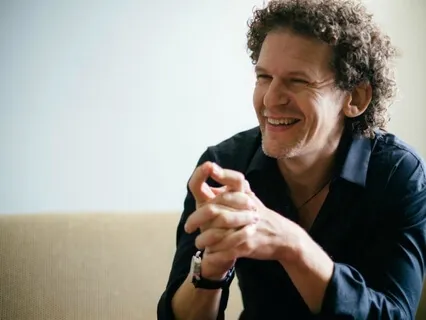
Our guest on this episode is Russ Harris.
This episode is part one of a two-part interview with Russ.
He's a medical practitioner,
Psychotherapist,
And leading expert in acceptance and commitment therapy,
Also known as ACT.
His books include ACT with Love,
ACT Made Simple,
The Confidence Gap,
And The Happiness Trap,
Which has now been translated into 22 languages.
Russ lives in Melbourne,
Australia,
And travels internationally to train mental health professionals in the ACT approach.
This episode is brought to you by Casper Mattress.
Go to casper.
Com slash wolf and use the promo code wolf to save $50 off your purchase.
And here's part one with Russ Harris.
Hi,
Russ.
Welcome to the show.
Oh,
Thanks for inviting me.
I'm really excited to have you on.
You're the second person we've had on the show that writes about and practices ACT,
Acceptance and commitment therapy.
And I'll give the second shout out to our listener,
Paul,
In Ireland,
Who told me that I should really look into it because it basically sounds like a lot of the things we talk about on the show,
And it's definitely true.
And then the other thing is you use the phrase to create a life worth living,
Which I said to you before is the sub theme of this show,
You know,
Conversations about creating a life worth living.
So I think this is going to be a great conversation,
And I'm excited to have you on.
But let's start like we always do with the parable.
And it's kind of funny because when I originally asked you to come on the show,
You wrote back and you said you may not like my response to the parable,
Which is which is great.
So I'm looking forward to hearing it.
So there's a grandfather who's talking with his grandson.
He says in life,
There are two wolves inside of us that are always at battle.
One is a good wolf,
Which represents things like kindness and bravery and love.
And the other is a bad wolf,
Which represents things like greed and hatred and fear.
And the grandson stops and he thinks about it for a second.
He says,
Well,
Grandfather,
Which one wins?
And the grandfather says,
The one you feed.
So I'd like to start off by asking you what that parable means to you in your life and in the work that you do.
So as I wrote to you,
I'm not overly happy with the way that parable ends,
Because it conveys the idea that there's we need to have this battle going on between the positive thoughts and feelings and the negative thoughts and feelings.
And the way I would love that metaphor or story to finish is that the grandfather says,
You know,
As long as these two wolves are fighting each other,
Neither side will win.
Nobody wins in a war.
Both sides lose.
What we want to do is help these wolves to live with each other,
Work with each other,
Make peace with each other,
Learn from each other and cooperate with each other.
And then,
You know,
They are both much stronger than if they were fighting with each other or if one is trying to win,
Because no wolf will win for any long period of time.
And this is kind of what the act approach is about.
It's about embracing all of our thoughts,
Feelings,
Emotions,
Memories,
Even the most painful or difficult ones,
We can learn from them and use them in effective ways.
I love that idea and one of the things I like about the parable,
I think,
Is the idea that sort of humanizes the idea that,
You know,
What we're going to have both these things in us and they're going to be there.
And you know,
That's just what what happens.
But yeah,
I love your take on it.
So let's go into you've written several books.
The most recent one is called The Reality Slap.
You've written one called The Happiness Trap,
The Confidence Gap.
And these are all books that are you're using act acceptance and commitment therapy as a way to sort of look at these different domains of challenges.
I really love the reality slap and then what it produces is the reality gap.
So I'd like to start off and just talk a little bit about what that is.
What is the reality slap?
And then and then what follows it is the reality gap.
Okay.
I like all my books to have rhyming titles.
The reality slap,
To tell you,
I use for any of those big life events that knock you around when life slaps you in the face,
Turns you upside down,
Shakes you around those kind of unexpected wake up calls.
And that can be anything from from a really small reality slap where you suddenly realize that you know,
You've you've acted in a way that's completely inappropriate and it's not who you want to be.
And you're just kind of shocked at what you've done.
You can't believe that you just lost your temper with the person that you love and said something really,
Really hurtful.
That would be like a small version to a big version where you suddenly get diagnosed with cancer or the person that you love dies or you know,
Your business goes bankrupt overnight.
So any of those kind of moments,
Brief or great,
Where basically reality slaps you in the face and and you're not expecting it.
I like that idea of the reality slap.
And one of the examples that you use in the book is like,
When we see something in life that we wish we had,
So we see somebody else who's being more successful.
So I see a podcast that started later than ours that's taken off and is really successful.
Or you know,
We see somebody who who has the job we want,
Or those different things.
I was kind of curious,
You know,
In your mind,
What are some of the ways to start to deal with that reality slap?
If I can just talk about the difference between the reality slap and the reality gap.
Yes.
So the reality slap is those moments where you just kind of get slapped in the face by,
You know,
They're kind of quite shocking moments.
The reality gap may not be as dramatic as that,
You know,
Reality gap just means a gap between the reality that we want and the reality that we have.
So you know,
For example,
Most of us have a bit of a reality gap about our bodies,
You know,
We often don't have quite the body and the looks and appearance and the six pack or the legs that we would like to have.
And that's a kind of ongoing reality gap.
But there's often a gap between the sort of person I want to be in my relationships and the sort of person that I am being in my relationship.
So those are kind of when you're talking about the successful podcast or the person who's got the job that you want or the person who's got the life that you think that you would like to have.
Those are more kind of long term reality gaps that kind of in our face a lot of the time.
And of course,
That gives rise to the perfectly normal human emotion of envy,
Something that we all experience.
And there's different ways of responding to envy might just be worth talking about the difference between jealousy and envy.
So envy is,
You know,
A kind of a mixture of anxiety and resentment about somebody has something that I really want.
And I would like to have it.
And it's not fair that I haven't got it and they've got it and I want it.
So this comes out of kind of grudging resentment in there.
And there's often underneath that a bit of kind of anxiety is like,
You know,
How is the world like this and why haven't I got this and I need this and a kind of sense of need.
Whereas jealousy is like a possessiveness of a person.
So I want this person to spend time with me and be interested in me.
And if I see this person kind of spending time with other people,
Then I get jealous about that.
So often the terms are used interchangeably,
But they actually have this difference.
So when there's a reality gap in the sense that they've got something that I really want,
First thing to do is to simply notice it,
Become aware of it.
We often respond to these reality gaps on automatic pilot.
And that's when we get caught up in our envy or our resentment.
Or sometimes,
You know,
We start judging the other person or finding ways to discount them.
Oh,
Well,
That podcast is a lot of rubbish compared to my podcast.
You know,
And the starting point is always just to simply notice there's a reality gap here and I'm feeling something right now that's really painful.
And often that will be envy,
But it could be other emotions too.
That's your starting point,
Because when you start to notice and become aware of how you're feeling and what you're responding to,
It pulls you out of automatic pilot mode.
I agree,
And I think that becoming aware of what's happening is such an important step.
Let's go ahead and pivot into ACT a little bit.
So Acceptance and Commitment Therapy.
I want to talk through what it is and then there are different principles that lie through.
But why don't we just start with a high level overview from your perspective of what Acceptance and Commitment Therapy or ACT is.
So ACT is an empirically supported model of therapy with over a thousand published studies created originally by Stephen Hayes,
Who I believe you've had on the show.
And it's basically a way to maximize human potential for living a rich and meaningful life.
So it started off in the field of therapy with things like depression and anxiety,
But now it's spread to schools,
To sports teams,
To businesses.
It's really applicable to any part of human life,
Whatever that human endeavor is,
Whatever humans are dealing with in their day to day life.
How can we help them live richer,
Fuller,
More meaningful lives while handling more effectively the painful thoughts,
Feelings that life inevitably gives us all?
Yeah,
You say that the core philosophy of ACT is neatly encapsulated in the Serenity Challenge,
Which is your version of the well-known Serenity Prayer,
Which I think is one of the wisest things that's ever been written,
The Serenity Prayer.
And your version of it is develop the courage to solve those problems that can be solved,
The serenity to accept those problems that can't be solved,
And the wisdom to know the difference.
I love it because I just think it basically sums up like the whole kit and kaboodle of how to deal with the world.
Yeah,
Exactly.
So,
You know,
I mean,
That's why ACT is called Acceptance and Commitment Therapy.
So it's accept what's out of your personal control and commit to action that improves and enriches your life.
And unfortunately,
We're often not very good at realizing what is out of our control.
And even when we do,
We're often not very good at accepting it.
Yeah,
And I found,
You know,
That people tend to err on one side or the other,
Not in all areas,
But there tends to be,
You know,
I know people who not accept things that are clearly out of their control and spend a lot of energy on it.
I think the area that I have probably struggled more with is taking responsibility and the commitment for the things that I can change.
And maybe there's more in my power that I'm able to change than sometimes in the past I might have thought.
So that's kind of the side that I err on.
But I see lots of other people who err on the other side.
And that's why I love it,
Because it basically just,
You know,
Wherever you are on that spectrum,
It points you back towards the middle.
Yeah,
Exactly.
I've just earlier last year created a protocol,
An act-based protocol for the World Health Organization,
Which they are currently rolling out in refugee camps around the world,
Starting in Syria and Uganda.
And so this is very important in those refugee camps.
You can't just leave.
You know,
You may be stuck in these camps for months or years or even decades before you get out of there.
So can you recognize that leaving is not an option?
But within the refugee camp,
You still have choices.
You can stay in your tent all day,
Or you can come out of your tent and engage with the people in the tents around you.
And when you go out and engage with the people in the tents around you,
You can be hostile,
Unfriendly,
Or you can be friendly and warm.
You can be supportive and caring and kind to your neighbor,
Or you can be deceitful,
Dishonest and mean to your neighbor.
So even within,
You know,
All of the difficulties of,
I mean,
They're pretty dire situations,
These refugee camps.
Probably seen on the news,
And your readers have probably seen,
You know,
Living in these tents and often,
You know,
Lack of food and water and sanitation and so forth.
But there are still choices available to you.
So it's about accepting what's out of your control.
What's out of your control is you're in a refugee camp.
What's out of your control is you're going to have lots of painful thoughts and feelings.
You can't expect to feel happy and joyous when you're stuck in a refugee camp.
It's going to be lots of anxiety and sadness and anger and so forth.
Can you accept those and commit to action that improves your life,
Doing things that help you to get on with your neighbors,
Joining in the social activities in those camps that are kind of life enhancing,
Teaching your kids,
Playing with your kids,
You know,
And so forth?
Accept what's out of your control and commit to action that improves your life.
Yeah.
And that's one of the things I love about ACT is the real idea that,
Okay,
You're going to have thoughts and feelings.
You've got some degree of control of those.
The more intense they are,
Probably the less control you have.
But what really matters are the actions that you take and that you can take those actions regardless of the emotions you're having.
And I think that was one of the biggest turning points in my life.
And for me,
I think the first time I started realizing that was when I was just starting to recover from drug addiction.
And I started to realize all of a sudden like,
Oh,
Wait a minute,
I can feel this way,
But that doesn't mean I have to act that way.
And that was a very fundamental shift in the way that I saw the world.
And it remains for me one of the really key principles,
I think,
That I base my life around.
Like in ACT,
You can't really control your mood.
And I think some of us have better or worse mood sets,
Right?
Like I think I have a mood set that's not real wonderful a lot of the time,
Right?
And I do what I can with it.
But if my actions are based on my moods,
I've seen where that leads me.
Absolutely.
Coming back to the point about awareness is the starting point.
Because when you consciously stop to notice how you're feeling,
Then you have more control over your actions.
Whereas on automatic pilot,
Your feelings just jerk you around like a puppet on a string.
So you know,
Envy shows up.
And on autopilot,
We just do whatever the envy wants us to do.
But if I can start to notice,
Oh,
I'm feeling envious here.
Here's my mind kind of pulling me to things that I want.
And I've got this tight feeling in my chest and knots in my stomach.
And I'm kind of noticing there's a reality gap here.
Then that moment of conscious awareness starts to give us some choice.
And say,
Now,
What do I want to do in response to this reality gap?
What do I want to do?
How do I want to respond to these feelings?
How do I want to respond to this situation?
As I mentioned earlier,
Our sponsor on this episode is Casper mattress.
And Casper is a sleep brand that created one perfect mattress sold directly to consumers.
And the mattress industry has kind of forced consumers into paying notoriously high markups.
And Casper is revolutionizing the mattress industry by cutting the cost of dealing with resellers and showrooms and then passing that savings on directly to the customer.
The Casper is an obsessively engineered mattress at a shockingly fair price.
It combines supportive memory foams to create an award winning sleep surface with just the right sink and just the right bounce.
If you get a chance to lay down on one of these things,
I highly recommend it because they're really amazing.
There's over 20,
000 reviews and an average of 4.
8 stars.
So it's quickly becoming the internet's favorite mattress.
You can get free shipping and returns to the US and Canada,
Which if you think about shipping a mattress and or having to return one,
That's an extremely tantalizing offer.
You can try Casper for 100 nights risk free in your own home.
And then if you don't love it,
They just pick it up and refund you everything.
It's designed,
Developed and assembled in the USA.
And I'll remind you how you find it.
You go to casper.
Com slash wolf and use the promo code wolf W O L F and you'll save $50 off your purchase.
And here's the rest of the interview with Russ Harris.
In a minute,
We're going to go into the six core principles in ACT.
But I want to start with one of the things that ACT says that it will help provide you or a goal,
Which is psychological flexibility.
Can you talk a little bit about what that is?
Yeah,
It's the ability to be present,
Open up and do what matters.
So to be in the present moment right here,
Right now,
Paying attention to focusing on and engaging in what's happening here and now to be present,
To open up.
That means to kind of open up and make room for all the thoughts and feelings that are showing up for you in this moment,
Not fighting with them,
Not running away from them,
But just opening up and making room,
Allowing your thoughts and feelings to flow through you without getting into a fight with them and without getting swept away by them.
And to do what matters,
That means to act in line with your values,
Your heart's deepest desires for the sort of human being that you want to be,
What you want to be about and let your values guide your actions.
So to be present,
Open up and do what matters.
And the greater your capacity to do that,
The greater your quality of life,
Lots of research.
Let's move into the first principle of ACT,
Which is diffusion.
So can you talk a little bit about what diffusion is?
And then I'd like to maybe talk about some techniques that we can use to help us defuse.
So basically,
If you think of two sheets of metal that are fused together,
There's no separation.
They're kind of completely stuck and meshed with each other.
And so that's where the term diffusion comes from.
When we're fused with our thoughts,
We're all caught up in them.
Our thoughts basically,
They dominate our awareness.
So for example,
If we're really worrying or stressing or kind of getting into revenge fantasies,
Our thoughts are just completely dominating our awareness.
Or they dominate our actions.
Our thoughts kind of tell us what to do and they jerk us around like a puppet on a string.
And either of these represents fusion.
Basically when our thoughts control our behavior in self-defeating ways or dominate our awareness in self-defeating ways,
We would call that fusion.
So diffusion is a way of kind of unhooking from those difficult thoughts,
Stepping back,
Noticing our thought processes and taking the power out of them so that they don't control us,
So that they don't dominate us.
Another way of saying that might be to say that we recognize our thoughts as being thoughts and not the truth.
Well,
They may or may not be true.
What happens is,
Your first part of your point is absolutely right.
We recognize our thoughts as thoughts.
These are words and pictures that are popping up in my head to convey a story or a message.
And the question in the app model is not whether they're true or false or positive or negative or optimistic or pessimistic.
The question that we're interested in is,
If I let these thoughts,
If I let these words and pictures in my head guide my actions,
Is that going to take me towards the sort of life that I want to live or away from the life I want to live?
My mind says,
I'm going to get you,
You son of a gun.
And if I let that thought control my actions,
Am I going to be behaving like the sort of person I really want to be?
Am I going to be doing the things that I would be proud of when I look back in retrospect or is it going to pull me into some sort of mean type revenge thing that I'm later going to regret?
I've heard you also refer to that in a slightly different way,
Which is,
Is this thought useful or not?
And to your point,
Useful in taking my life in the direction we want it to go.
Yeah.
Is it useful?
Is it helpful?
Where's it going to lead me?
Where's it going to guide me?
And the thing is,
If we can come back to the idea of the two wolves,
Even the most negative,
Unhelpful thoughts can in some way be useful for us because they're at least pointing us to something that we need to address or deal with or that we're struggling with.
You know,
So like if we get lots of angry,
Vengeful thoughts,
Then if we start to explore what's underneath all of that,
We usually get to another important part of the app model,
Which is values.
There's something important.
There's something that matters.
So what are some strategies for practicing diffusion?
It's a concept that's relatively easy to understand and a whole lot more challenging to do without,
At least in my experience,
A lot of practice.
I mean,
That's a fair call.
The two simplest strategies to use are what we might call noticing and naming.
So the first step in diffusing is to notice your thoughts or notice what your mind is telling you.
You know,
When you're completely fused,
You don't even realize that you're thinking.
You're just so caught up in your thoughts.
So just stopping to notice,
Notice,
You know,
What is my mind saying right now?
Or what am I thinking right now?
What kind of thoughts are showing up?
And the second strategy that usually goes hand in hand with the first one is naming.
So let's find a non-judgmental way of actually labeling these thoughts as thoughts.
So ah,
Here's my mind speaking to me again.
Or ah,
There's a thought popping up,
Or ah,
There's the I'm not good enough story,
Or there's my mind worrying,
Or you know,
His revenge fantasy is popping up again.
Just kind of a non-judgmental way of naming that cognitive process,
That thought or thinking pattern.
Probably some of the more playful ways of doing that may often be more useful.
So you know,
It's quite often if there's a recurrent theme that your mind keeps pulling you back to again and again,
It's nice to kind of label that theme in a playful way.
So the most common one that people struggle with is the I'm not good enough story.
Our mind's got so many ways of telling us that we're not good enough.
And if we can each time a thought link to that pop up,
We can go,
Ah,
Okay,
There's the not good enough story.
Or you might make it more specific.
Ah,
There's the old and lonely story,
Or there's the lousy podcast story,
Or you know,
There's the lousy interviewee story,
Whatever.
So just that kind of noticing and naming the thinking process immediately starts to give us a little bit of diffusion.
Another one of them that you guys talk about is the I like this,
I'm having the thought that.
So instead of saying I'm a stupid,
Terrible person,
I think I'm having the thought that I'm a stupid,
Terrible person.
And for me,
That's one that actually is semi helpful in giving me a little bit of distance in those ways.
I encourage you listeners to try that right now.
So let's all do it together.
Bring to mind a kind of worrying or difficult thought.
Just kind of for five seconds by into it,
Get caught up in that thought,
Then replay it with these words in front.
I'm having the thought that.
I'm having the thought that my podcast is not very good.
I'm having the thought that I'm not giving a great interview to Eric.
And then go a stage further.
If you're doing this,
If you're participating in this,
Go a stage further.
The next thing is put the words noticing.
I notice I'm having the thought of that.
I notice I'm having the thought that I'm boring.
If your viewers have actually tried this,
Most people will find that there's a kind of progressive sense of unhooking or separating or detaching or distancing from the thought.
The first phrase gives you a little bit of distance and the second phrase gives you a little bit more.
And you know,
This is a very different approach to most models of therapy.
We're not debating whether the thought is true or false.
We're just starting to see it for what it is.
It's a thought.
May or may not be true or false.
That's a secondary issue.
But I think that's a really important distinction in ACT,
Which is that the goal of this is not to make those thoughts go away.
These are,
You refer to them as control strategies.
These are not control strategies.
It's about getting a little bit of distance and allowing yourself,
Sort of like you said about the good and the bad wolf,
To coexist.
Yeah,
Exactly.
It's,
You know,
So we often in ACT talk away,
Talk about how the default setting of the normal human mind is to think negatively.
Your mind basically wants to protect you from things that can hurt or harm you.
And the minds of your ancestors were the same.
Your ancestors survived longer if they were good at predicting and anticipating and staying away from things that could hurt or harm them.
So our modern mind today is constantly on the lookout for things that could hurt or harm us.
Constantly telling us,
You know,
Don't do this and don't do that.
And trying to,
You know,
A lot of beating ourselves up is our minds actually trying to help us be better people,
Just not using a very good strategy.
A lot of our worrying and catastrophizing and predicting the worst is our minds trying to save us from getting hurt.
If we opt out of difficult challenges,
It's our mind trying to save us from the pain of failure.
And so,
You know,
You can do positive thinking courses and learn to think more positively,
But it's not going to stop negative thoughts from showing up.
Just like if you learn to speak Spanish,
You're not going to forget English.
So the point I'm making here is that,
You know,
Your mind will keep generating these kinds of unhelpful thinking processes over and over and over again.
And in this approach,
We don't want to try to get into fighting and battling with those thoughts and trying to prove them false and trying to get rid of them.
What we want to do is learn to have a new relationship with them so that we can just kind of let them come and go.
Are you familiar,
Eric,
With the kind of radio doom and gloom metaphor from Act?
I am.
Yeah.
I think you use that in one of your books.
I love that one.
Why don't you expand it a little bit for people?
Well,
Yeah,
The idea is because our minds are like this and they just,
You know,
Naturally tend to worry and judge and criticize and so forth.
You know,
Radio doom and gloom is just often broadcasting kind of doom and gloom stuff about the past,
About the future,
About what's wrong with life,
What's wrong with me,
About all the things that I'm not doing or other people aren't doing right or what's wrong with the world and so forth.
That's its natural setting.
Now,
Have you ever had the experience of doing some sort of activity that you really enjoy or you're passionate about?
When there was a radio playing in the background and you were so absorbed in the activity that you hardly even noticed the radio was there.
Have you had that experience,
Eric?
Absolutely.
Yep.
And I'm sure that your listeners have too.
So and then suddenly one of your favorite songs came on the radio and so then you were maybe singing along with the radio or listening to the song,
Really tuning into it.
And then the song changed and the radio faded into the background and you were able to kind of refocus your attention fully on what you were doing.
And this is what we're aiming to do with our own minds in the Act approach.
Focus our attention on here and now activities that are important and meaningful,
Guided by our values,
Doing the stuff that builds richer lives and just kind of let our mind play on like a radio in the background.
And if it happens to be broadcasting something useful and helpful,
Then let's kind of use that but if not,
Just let it play on in the background.
And this is very different to trying to ignore a radio.
Eric,
What happens if you try to ignore a radio playing in the background?
You're probably likely to hear it more.
Exactly.
We've all,
You know,
Tried not to hear that loud voice in the restaurant or that car alarm going off in the street outside.
You know,
The more you try to ignore it or not hear it,
The more it bothers you.
And it's radically different to bringing in a second radio.
Oh,
Let's bring in radio positive and optimistic to try to drown out radio doom and gloom.
Let's bring in radio logical and rational.
And if we turn the volume of that one up enough,
Then it'll drown out radio doom and gloom.
It's pretty hard to focus on what you're doing while you've got two radios in your head playing two different channels.
The next principle is called expansion.
But I think that diffusion is more about thoughts.
Expansion is more about dealing with emotions.
But before we go all the way there,
Can you talk about the difference between what thought and emotion is?
That's a great question because it's often an artificial distinction.
The convention is that thoughts are words and pictures,
Pictures that pop up in our heads that tell us stories,
And emotions are more things that we feel in our body.
But it's a largely artificial distinction.
You know,
People would often say sadness or anger or guilt.
Those are emotions.
But if you explore those emotions,
You'll find lots and lots of thoughts.
No one's ever felt sad or guilty or angry without lots of thoughts as a part of that process.
So in some sense,
It's an artificial distinction.
Thoughts create feelings and your feelings are full of thoughts.
But if you want to kind of go with convention,
The simplest way to think about it is thoughts are words and pictures in your head and emotions are largely feelings in your body.
I like that,
That it's largely an artificial distinction because after spending a lot of time thinking through that,
I've realized like,
Okay,
There is a little bit of difference,
But boy,
You usually don't get one without the other.
Yeah,
Exactly.
You certainly don't get emotions without thoughts.
The cerebral cortex,
The kind of thinking cap of your brain that's involved in thinking is also involved in all emotions.
You know,
All parts of the brain are activated.
You may get thoughts without kind of strong emotional responses,
But you certainly always have thoughts as part of feelings and emotions.
Let's move into the second principle of ACT,
Which is called expansion.
Can you tell us a little bit about what expansion is?
The official name in ACT is actually acceptance.
But in my books,
I changed it to expansion because people misunderstand the term acceptance.
People often think acceptance means liking it,
Wanting it,
Approving of it,
Or tolerating it,
Sucking it up,
Putting up with it,
Resigning yourself to it.
And none of those are what we mean.
So I changed it in my books to expansion.
This idea of opening up,
Making space,
Making room for all our kind of difficult,
Unwanted,
Painful thoughts,
Feelings,
Emotions,
And memories.
So an idea of opening up and making space for this stuff so that it can freely flow through us in its own good time.
Sometimes these painful thoughts,
Feelings flow through us very rapidly.
Other times they hang around for a while.
Sometimes they kind of get bigger before they get smaller.
So it's this idea of kind of expanding,
Opening up,
Making lots of space for my thoughts and feelings to do what they're doing in this moment,
To come and go in their own good time.
What are some steps to do that?
I've had a listener ask me this idea of being with your thoughts and emotions.
It sounds great,
And then you go to do it,
And it's kind of like,
Well,
Now what?
What am I doing here?
So are there steps towards being able to practice this effectively?
Yeah,
I think probably,
Again,
The first two steps of diffusion are also the first two steps of expansion.
So there's this huge overlap here.
Noticing and naming.
So let's start by noticing the difficult thoughts and feelings that are present and naming them in a non-judgmental way.
So anxiety is probably the single most common emotion that people struggle with.
So start by kind of noticing,
Okay,
Here's anxiety showing up.
I am noticing anxiety.
I'm noticing tightness in my chest.
I am noticing knots in my stomach.
I'm noticing my mind telling me scary stories right now.
And it's interesting,
If we step aside from that and just look at terms of neuroanatomy,
What's happening in the brain as you do this is that you're starting to activate pathways in the cerebral cortex,
The thinking cap of the brain that connect to the kind of fight or flight response parts of the brain that kind of trigger these strong emotions such as fear and anger and anxiety.
And it starts to help you,
Again,
Switch off automatic pilot and start to regain more control over your actions and what you're doing.
So noticing and naming would be your first steps.
And then the next step would be to see if you can allow,
Let's stick with feelings for the time being.
This applies to any kind of private experience,
With thoughts,
Feelings,
Emotions,
Memories,
But we'll stick with feelings.
See if you can get a sense of just allowing the feeling to be there and probably,
So not liking it,
Not wanting it,
Not approving of it,
But just allowing it to be there.
For about 90% of people,
An effective way of doing that,
I say 90%,
So some people hate this,
But a lot of people find it's useful to kind of notice where in your body you're feeling it most intensely.
It's likely to be your chest or your tummy or your jaws or your throat,
But it could be anywhere in your body where you're wired a bit differently.
Pick the area in your body where you're feeling it most intensely and see if you can just breathe slowly into and around that part of your body.
And as you breathe into and around it,
See if you can just kind of imagine a sense of space opening up,
Making room around that feeling rather than trying to do what we normally do,
Which is try to push it away or squash it down.
So kind of breathing in,
Opening up,
Making room.
We had Tara Brock on the show and I've heard her use a phrase like,
Can I be with this?
Which is just to kind of open yourself to like,
Okay,
I'm able to sit with this emotion.
I talked earlier about the big revelation for me as an addict was that I didn't have to follow my emotions or my actions.
That was kind of a big one for me too,
Was realizing like,
Okay,
This emotion is not going to kill me.
I can be here with it,
It can exist.
And doing that for me at least took what felt like the enormity of them,
It put them in a little bit better perspective for me.
Yeah,
I think that kind of self-talk is often very helpful.
A phrase that I often recommend is for people that are really struggling with this is to kind of say,
I don't like it,
I don't want it,
But I'll allow it.
And then the question that I often get asked is,
Well,
Why would I allow it?
Why would I allow these painful feelings to be here?
And so,
You know,
Part of the app model is,
You know,
We would never ask anybody to accept painful thoughts and feelings unless it was going to help them to live a richer,
Fuller,
More meaningful life,
Unless it was going to help them to live their values and do what's important.
Do we want to go into this,
Some of the problems that occur when people start trying to get rid of unwanted feelings?
Sure.
Yep.
I've heard you refer to it as,
You know,
When you flip on the struggle switch.
So that's one of my favorite metaphors.
So the idea that at the back of your mind,
There's a struggle switch.
And as soon as a painful emotion shows up,
The struggle switch goes on and you start struggling with it.
So let's suppose anxiety shows up.
Struggle switch goes on.
Oh,
Here's anxiety.
I hate this feeling.
Oh,
Why is it coming back again?
Now I've got anxiety about my anxiety.
It's getting bigger.
Oh no,
My anxiety is getting bigger.
What's going on?
What's going on?
Now I've got anxiety about my anxiety,
About my anxiety.
So it acts as an emotional amplifier.
Now if I keep that struggle switch on,
Then I may start to get angry about my anxiety.
Oh,
Oh,
Why does this keep happening to me?
This is not fair.
Now I've got anger about my anxiety.
Then I may get sad about that.
Oh,
Is this my life?
Am I doomed to this anxiety?
And then I may even start getting angry with myself for my own reaction.
How pathetic am I to kind of be reacting this way to my own anxiety?
And so as long as this struggle switch stays on,
It amplifies our emotions.
They get bigger and bigger and messier and stickier.
And I can relate to that myself very strongly.
I talk a lot and I've done a couple mini episodes on the Buddhist concept of the second arrow,
Which is essentially the same thing.
The first arrow is the emotion or the feeling that we have.
And then the second arrow is or the third or the fourth or the fifth arrow are all the ones that we then turn around and shoot at ourselves,
Which is exactly kind of like you're saying it's all the stories that come after that.
I can't handle it or why am I like this or why do I feel like this?
And I also now,
In addition to the second arrow,
I love the idea of the struggle switch because I think that's a very good metaphor also.
What we want to do then is learn how to turn off the struggle switch.
So let's run through it again.
But this time anxiety shows up and I switch off the struggle switch.
So I don't like the anxiety.
I don't want it.
I don't approve of it.
But I'm not going to invest any energy in struggling with it.
I'm just going to let it be there,
Let it flow through me in its own good time.
So now anxiety is there.
I've still got tight chest knots in my stomach.
But instead of struggling with it,
I'm going to put all my energy and all my attention into doing some meaningful life enhancing activity guided by my values,
Behaving like the person I want to be,
Doing something that's important to me.
And I'll just let that anxiety do its own thing.
So now it doesn't get amplified.
You don't get all of this anxiety about anxiety and the anger and the sadness and all the other stuff that goes with it.
And it may get higher if I'm in a really challenging,
Anxiety provoking situation facing one of my greatest fears.
It may hang around for a long time.
It may move on very rapidly.
But the point is it's free to come and go.
Whereas with the switch on,
It's definitely going to hang around.
And it doesn't get amplified with all of this secondary stuff.
And it doesn't eat up all our energy and our attention struggling with it.
We can now put that instead into other more meaningful activities.
Wonderful.
Well,
You and I talked before,
We're going to make this a two part series.
And so we're going to come back in the next episode and we're going to talk about some of the other act principles.
We're going to talk about connection,
The observing self.
And we're also going to talk about what you've said several times,
Which is knowing what your values are and then taking committed action.
So I'm having this emotion,
But here's what I value.
And here's how I take committed action.
And I think that's such an important part that I want to spend more time focusing on is how do we do that even in spite of these emotions that we're having?
So part two will be coming out next week.
So Russ,
Thank you for this.
And listeners,
Part two will be out next week.
Thank you.