How do we become present enough and open enough and courageous enough to really be with the life that's here?
Welcome to The One You Feed.
Throughout time,
Great thinkers have recognized the importance of the thoughts we have.
Quotes like,
Garbage in,
Garbage out,
Or you are what you think ring true.
And yet,
For many of us,
Our thoughts don't strengthen or empower us.
We tend toward negativity,
Self-pity,
Jealousy,
Or fear.
We see what we don't have instead of what we do.
We think things that hold us back and dampen our spirit.
But it's not just about thinking.
Our actions matter.
It takes conscious,
Consistent,
And creative effort to make a life worth living.
This podcast is about how other people keep themselves moving in the right direction.
How they feed their good wolf.
Thanks for joining us.
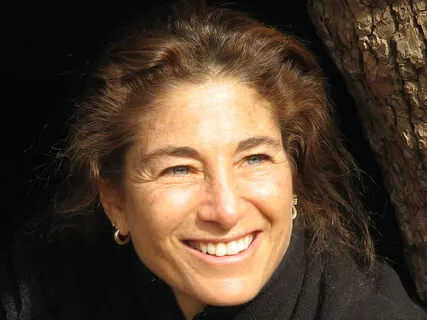
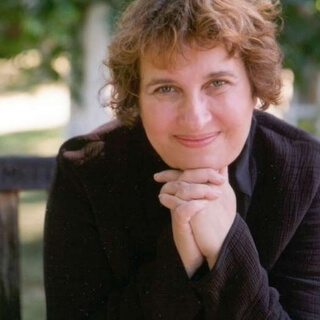
Our guest on this episode is Tara Brock,
An American psychologist and proponent of Buddhist meditation.
She is a guiding teacher and founder of the Insight Meditation Community of Washington,
DC.
She also teaches about Buddhist meditation at centers for meditation and yoga in the United States and Europe,
Including Spirit Rock Meditation Center in Woodacre,
California,
The Kripalu Center,
And the Omega Institute for Holistic Studies.
Brock is an engaged Buddhist specializing in the application of Buddhist teachings to emotional healing.
Her 2003 book,
Radical Acceptance,
Embracing Your Life with the Heart of a Buddha,
Focuses on the use of practices such as mindfulness for healing trauma.
Her 2013 book,
True Refuge,
Finding a Place of Freedom in Your Own Awakened Heart,
Offers practices for tapping into inner peace and wisdom in the midst of difficulty.
Hey everybody,
Just a couple of quick announcements.
First is a reminder about our Facebook group.
It's going very well.
Just in the last week,
We've had conversations about listeners' favorite books,
Favorite songs,
Favorite episodes,
And the conversation continues to grow.
So we'd love to have you over there.
Go to oneufeed.
Net slash group or search on Facebook for the One You Feed discussion group.
The second announcement is that this Saturday,
September 17th in Columbus,
There is the Independence Day Festival.
It's got lots of bands and art and film,
Lots of different things.
This year,
They're also going to have a podcast tent.
And we will be there at 1.
30 p.
M.
On Saturday recording some listeners and different people on what they think about the parable,
And we'll be using that for an upcoming episode.
So if you're in Columbus,
We would love to see you at 1.
30 on Saturday,
This Saturday,
The 17th in Franklin at the Independence Festival.
And here is the interview with Tara Brock.
Hi,
Tara.
Welcome to the show.
It's lovely to be with you,
Eric.
I am very excited to have you on.
I think I've been trying to arrange this for a while.
When I started the show,
You were one of the guests right away that I was like,
I definitely want to get her on the show.
Your writing and your teachings have been a big influence on me and on several people that I am close with.
So I'm really happy to have you.
Thank you.
Thank you.
So let's start like we always do with the parable.
There's a grandfather who's talking with his grandson.
He says,
In life,
There are two wolves inside of us that are always at battle.
One is a good wolf,
Which represents things like kindness and bravery and love.
And the other is a bad wolf,
Which represents things like greed and hatred and fear.
And the grandson stops and he thinks about it for a second.
He looks up at his grandfather and he says,
Well,
Grandfather,
Which one wins?
And the grandfather says,
The one you feed.
So I'd like to start off by asking you what that parable means to you in your life and in the work that you do.
And I know you know it because it was in one of your books.
Yeah.
It was a very familiar one and I remember it was coming out right after the bombing of the World Trade Center and so on.
And that was one of the ones that was circulating.
And I think what it means is that every one of us has the conditioning towards greed and aversion and aggression.
We all have that in our nervous system,
Our kind of primitive limbic conditioning.
And we also,
Each one of us has this evolving brain and evolving consciousness that's capable of unfathomable amounts of loving and of creativity and of presence.
And so the question is,
Do we get hijacked and is our life run by the fear parts or do we have more increasing access to our highest potential?
And so the parable says it's whichever one you feed.
And I would say that's partly accurate.
And by that I mean it's really important to pay attention to and nourish our hearts and to bring to mind the goodness in other people and be very compassionate towards where they're suffering.
And when the more primitive conditioning arises,
Which it does,
I think,
For every one of us every day,
Every single day.
When you have a judgment,
That's a more primitive part of our conditioning.
When that arises,
It's not about starving that wolf.
It's more about bringing that into our awareness with interest and with care.
So when the fearful wolf appears,
Not to make it bad,
It's just a frightened part of ourselves,
But to not buy into the narrative,
Not buy into the narrative that the only way that people will do what I want is if I threaten them or if I judge them.
Not buy into the narrative.
Watch that part of ourselves with interest and with care so that our identity doesn't get captured by it.
Yeah,
Exactly.
And I'd like to talk about clarifying that idea just a little bit because in your work you talk a lot about being present with the emotions.
Here is this situation,
Here is this emotion,
Being present with it and opening to it.
At the same time,
Also in the Buddhist tradition and a lot of your work,
We talk about the direction that we point our mind is going to be more of what we get.
If we think more about hostility,
We get more hostility.
And I'm always interested in where's the balance between those things.
What's the right way to tell?
I'm genuinely feeling an emotion.
I'm going through what I need to go through versus I'm telling myself a story or I'm taking a point of view that is painful and should be dropped.
I think the way you asked that question,
Eric,
Actually points to a response,
Which is that if you're paying attention to the storyline of the repeating stories of somebody else's wrong and bad or I'm wrong and bad,
Then you're just going to be perpetuating the cycle.
In other words,
Whatever thoughts are going through have a certain biochemistry and we get stuck in that state.
But if instead you actually come into the body and in a very unconditional and kind way open to the feelings and the energy in the body,
Then there's actual transformation.
Then what happens is that there's a shift in awareness where you open into a larger sense of being and the emotions are currents in your ocean but you're not identified with them.
So I would say whenever there's a strong,
Sticky,
Charged emotion,
That's the time it's asking for attention.
A great sage once said that if there's one question you ask yourself,
It's,
What am I unwilling to feel?
And it's the raw,
Sticky,
Vulnerable stuff we're unwilling to feel and it's in the moment that we become willing that it no longer has so much control.
It's like the shamans say that when you begin to name a fear and then touch into it,
It's no longer controlling you.
So I would say that that's a key element in healing and spiritual awakening and sometimes it's described as,
You know,
In the Tibetan art you see these animal-headed goddesses that represent delusion and fear and hatred and so on and you see them really at the gateway to the temple,
That you have to go through them to enter sacred space and you see them around the circle of the mandala that you have to go through them to get really to the place of stillness and peace.
So that's one key domain in spiritual life.
But then there's another one which is to be able to remember and visualize and pray for and turn towards the light.
In other words,
It's already there in us.
Our awakened potential is already there but there's a real value to remembering the goodness,
To on purpose remembering what we love,
Remembering what we're grateful for because we can get a habit,
We can get in this habit of being addicted to the suffering.
So I think that's kind of what you're pointing to and that balancing of yes,
Be with the difficult emotions,
Feel them in your body and take time each day to remember what you're grateful for.
Or when you see something beautiful,
Pause and savor it because we don't take in really sometimes the goodness and the beauty,
We tend to kind of skim over it,
We're so busily on our way somewhere else.
Yeah,
I love that whole description of it's kind of not one or the other,
It's both,
Right?
Exactly.
And we had Rick Hanson on who I know that you also know and he talked a lot about that idea of taking in the good.
Positive thinking sometimes is presented as a panacea for a lot of things and that's not what this is.
This is just choosing there is good there at any time.
You don't have to make it up.
It's that which gets the most of our attention if we can to place it there.
And so I love what you're saying because and Rick talks about this a lot too,
We do have our survival conditioning,
That negativity bias that gives us the habit of looking for what's wrong.
And one of the things I've become aware of in the last decade or so is how often we're in a mindset where we think we have a problem,
That there's something we need to solve or figure out or there's something that's wrong about what's happening right now and we need to change it.
And I have become very aware that in the moments that we stop thinking of it as a problem and just say,
Oh,
So this is what's happening,
It's asking for my attention,
We actually have a lot more access to creativity,
To empathy,
To a real vitality.
So it's an interesting inquiry and I invite your listeners to consider this,
You know,
If right now there's not a problem,
Really what's the moment like?
I mean,
If there's really no problem,
If there's nothing wrong and we can get without a taste of freedom to not add the negativity bias in.
Yeah,
That's such a powerful idea.
I was asked that question once by a meditation teacher,
Like,
What is here,
You know,
Just pretend for a minute that nothing is wrong.
You may not believe it,
But just pretend that everything is perfect right in this moment.
You know,
There's nothing you have to do or solve.
What is it like?
And there is a,
You know,
I had a pretty profound experience in that moment when I kind of went,
Whoa.
And I think that second thing is a guest recently referred to our brains as a problem factory.
Like if,
You know,
Once one is gone,
It just creates another.
And I've noticed that for myself.
If I'm not,
If I'm not consciously working on being more present and more aware,
It's just,
I just go from one to the next and,
And I'll probably find one because that's what my brain is used to doing is working on problems.
Yeah.
It's almost like if we're not being vigilant and,
You know,
Tossing around a problem,
We feel like there's something that's going to blindside us.
So we're always,
You know,
In that kind of defensive mode,
That sense that around the corner something's going to be too much to handle.
So it becomes very powerful when we challenge that because in a way,
If we're living all the time,
Like around the corner,
Something's too much,
We're not really bringing our wholeheartedness and our tenderness and our clarity to what's right here.
And so this idea of coming back to the present moment,
You know,
That,
That being the one of the solutions to a lot of what troubles us is one of those things that is easy to say,
But is hard to do,
At least I found certainly earlier and still sometimes like I would come back to the present moment,
But I wouldn't,
I wouldn't know what was here.
And then my brain would be back in two seconds and there I would be again.
And I would come back to the present moment.
And again,
Same thing.
It's like,
I'm here,
But wait,
There's nothing compelling enough in this moment.
Is your perspective that that's really just a thing of training,
That the formal meditation process and the formal process of awareness allows us to come back to see the deeper nuances in the present moment so that we're able to stay there longer?
Yeah,
I think you're saying it in a really powerful way.
One teacher said,
You know,
When asked to describe the world,
His response was lost in thought.
And we spend so many moments in a virtual reality where we're in some trance of thinking,
We don't actually have that much experience staying in our senses.
And if you ask yourself right this moment,
How aware am I right this moment of the energy inside my hands or my feet or the feeling in my heart?
It's like for most of us,
We're mostly in the head and in our ideas of the world.
So the training really of coming into the moment is coming into our senses.
So if we can pause and start practicing bringing the attention down into the body and feel the throat and the chest and the belly and get the knack of staying a bit more,
Then all the nuances of what we call presence start coming alive because in the space where we're not lost in thought,
Really the light of awareness begins to shine through.
Back to my point that this is easier said than done,
I think that's one of the things that can be discouraging for people is you do it and then it's kind of done and then you feel like you have to keep doing it.
And you have a line that I love in which you say that meditation is a setup for feeling deficient unless we respectfully acknowledge the strength of our conditioning to race away from presence.
That's the truth and one thing I've noticed is that the more we have either trauma or major wounding early on,
The more the strategy of dissociating and leaving our body is pronounced.
So for those that have had that kind of really difficult early childhood or whatever,
It's even harder.
It's even harder because the rawness in the body feels intolerable.
So it takes a tremendous self-compassion.
I probably rate self-compassion as the single quality that most can serve us in meditating and in getting more intimate with each other and whatever matters to us in our lives.
Yeah,
That is such an important piece and I think that recognition that this is a really challenging endeavor and it doesn't happen quickly and unfortunately,
I think we all wish we had some silver bullet to give that would be like,
Okay,
Now everything's better.
But this constant coming back to awareness into the moment and to our body can take a great deal of time to get better at.
And I think it's so important because I hear people say all the time,
Well,
I can't meditate.
I'm not any good at meditating and I'm sure you hear that also.
It's that recognizing that like,
A,
There isn't any goal and B,
That's the human condition and it's okay.
Exactly right.
It really helps to know that we're not alone in it,
That coming into the present moment is hard for everyone.
But it's also important to know that it's really possible.
One of the challenges is if we've just been introduced to one kind of meditation or another that isn't a match for what really is a good gateway for us,
Then we can get discouraged.
So when I teach and I offer hundreds and hundreds of guided meditations,
I offer a lot of different gateways in because for some people it's going to be through a very gentle repeated scanning of the body.
And for another person it might be through a heart meditation that helps us remember and trust our own goodness.
And yet for another person,
Listening to sounds,
Just listening to sounds helps to quiet the mind and then for another person,
There's a certain kind of breathing that actually calms the nervous system and makes it easier to quiet and collect and arrive.
So part of what I really invite is experiment.
Experiment and trust that there's something in us that wants to settle and we will if we find kind of the pathway that's most of a match for us.
Well,
You led me perfectly into the next question because I'm one of those people that the breath doesn't work and that's what I tried year after year after year and never really became a consistent meditator.
And then when I heard about sound and the body,
All of a sudden kind of everything changed.
But my question is,
I agree,
I think experimentation is great,
But what I don't have a good handle on and that I find myself wrestling with is,
Okay,
I'm going to meditate today.
What am I going to do?
Should we pick the one that we like and just sort of stay on that path or is there some degree of trying different ones?
That's what I'm kind of going through now is,
Should I just keep doing the same thing or there's several different approaches that I seem to get results with?
And it ends up being,
I try and make that decision before I go into meditation,
Obviously,
But sometimes I'm in the middle of meditation,
Well,
This isn't as good,
Maybe I should be trying that kind or that kind,
Which is obviously profoundly against the point.
So what are your thoughts on that?
It's a great question.
So two levels of response and one is,
I've now watched people over probably four decades,
People all different kinds of spiritual traditions and meditations and so on.
And one thing I've noticed,
The difference between people that really keep on evolving and unfolding in a creative way and those that either plateau out or quit,
It doesn't have anything to do with what particular meditation or practice they're doing,
Whether it's Tai Chi,
Qigong,
Dzogchen,
Zen,
Whatever.
It has to do with staying connected with a very sincere quality of aspiration,
Really sincere about waking up.
And when somebody,
That's the longing,
There's a passion about truth,
Really what's the nature of reality?
And there's a passion about loving without holding back,
Like I just really want this heart to be free.
And there's a coming back again and again to that aspiration.
There's a certain intuition then about finding our ways to the practices that serve.
There's less inclination to pull away from a practice just because it's challenging.
There's less inclination to hop around because we're restless,
But there's less inclination to stick with something out of duty when we might be experimenting.
So it's really very individual.
I mean,
If you're the kind of person that is restless and is going to,
Is kind of always needs to sample something else on the menu,
Then I'd encourage you to let some roots go down and just gain some real familiarity with some meditation practice that you know in some ways is helping you become more present.
If on the other hand you're a person that doggedly just always stays with one thing or doesn't,
You know,
Just somebody tells you something,
You just keep doing it,
Take a chance and experiment.
For you it sounds like you might want to have a weave that you do that includes something that's you know is going to keep on letting go of armoring around the heart,
But also bringing clarity and then keep going deeper and deeper with that.
So it's always going to be case by case,
But there are some guidelines that we can kind of stay alert to.
The deepest thing though is your intention and I really encourage us all to at the beginning of every,
Whether it's an interview like this or a meditation sitting or being with somebody to just remember what about this really matters to me because our heart is a compass.
It will show us where to go.
Yeah,
That's great advice and it's something I took from reading your book again in preparation for this interview that I don't think I had landed on before which is to set an intention.
Why am I,
I find that helpful in keeping a steady meditation practice for sure is remembering why am I doing this?
It's not another chore on the list.
There's a reason that I'm doing this.
We will not stay with meditation unless there's a certain degree of fun and pleasure in it for us.
It just won't work.
If you're grim,
It just won't work.
So I know for myself part of what's going on is I really want to follow my interests and interest not like conceptual,
But I want to stay where it feels alive and I also,
There has to be a certain amount of pleasure in it.
So weaving in the heart practices,
Really bringing alive sensation and whatever helps to feel us most vibrant in it,
Play around because humans don't keep doing things unless they feel gratified.
That's right.
It's that elephant and the rider analogy.
The rider is your conscious brain and it's trying to direct things and the elephant is your emotional side and you know,
The elephant is only going to go where the rider wants it to go so long if it doesn't want to go,
Right?
Exactly.
You got to get the elephant engaged in the game and that's the emotional piece of it,
The reward and the enjoyment and the feeling of satisfaction.
Exactly.
So one of the things that I wanted to explore a little bit more is there's this idea,
We talked about it right out of the gate about dropping into the body,
About feeling our emotions,
Dealing with difficult emotions,
But a lot of people that I know and myself firmly included in this camp,
Depression is one of the things that I tend to wrestle with more and I get this question from listeners a fair amount,
Which is I don't feel much of anything.
So what am I dropping into?
I don't have a strong emotion I'm working with.
What I've basically got is numbness and I drop into my body and I pay attention to my hand and honestly doesn't feel like there's much going on there.
What's the way that we work with that in order to deal with that condition or that situation?
I'm really glad you brought up depression because I've had many people say,
You know,
Either that I try to get in touch with it and it's numb or when I get in touch with it,
I sink and it's like,
It's just like an endless sinking downward.
It's like it doesn't,
There's no real insight or anything refreshing that comes out of it.
I just feel more depressed.
So there's a few things,
You know,
For all of us,
The deepest place of transformation is when there's just pure awareness.
Awareness is what wakes us up and there are all these different skillful means that help us to be positioned in a way that we can be more aware.
And for depression,
The skillful means really often have to do with exercising and engaging our body and mind with nature,
With the elements and with other people.
Getting enough sleep and then being physically and emotionally engaged is a skillful means if there's depression to activate enough so then as you bring the attention inward,
You actually can connect with the aliveness.
Yep.
I think that's such good advice.
And I think for me,
It's that active movement and nature that are the two best antidepressants I know.
Me too.
Me too.
Anti-anxiety too.
Yeah.
And of course the challenge that can make depression such a monster is that it's that the energy to do anything is so lacking.
It's like this sort of catch-22.
Like if you do something,
You'll feel better but I really can't,
You know,
I don't have the energy.
And so for me,
I think over the years,
It's become a,
I've made it into just sort of a habit that like when I start to feel that way,
Like I just,
I have learned to propel myself into motion.
Depression hates a moving target is the saying I love.
It's a very good saying and it helps to have other people,
You know,
On the team with you.
In other words,
Sometimes whether it's having a running partner or walking partner or whatever,
Engagement.
Depression needs engagement.
And it needs one other thing which is it needs to be forgiven because we,
Whether it's depression or shame or whatever,
We take it personally like it's my depression or my fear and then that brings more of a sense of something's wrong with me which actually deepens the cycle.
So to add to engagement,
Commit and this I'm speaking to all of us,
Commit to truly forgiving the presence of the difficult emotion.
It's not our fault.
It's like depression is not our fault.
Whether it's genetic or epigenetic having to do with early childhood stuff or the culture,
It's just not like we,
You know,
Got born and pressed the button saying this is the emotion I want to be living with,
You know,
We didn't choose it.
And so there's something about forgiveness that actually creates space.
Like I'll often,
I do it with anger.
You know,
I have anger will come up and I'll have this idea of,
Oh,
I shouldn't be angry.
I mean,
It's not a spiritual feeling,
You know,
Feeling.
And one of the first things I'll do is go,
Okay,
Forgiven,
Forgiven.
I send that message into the anger like it's just another weather system.
It's coming just like the outer weather.
And when I forgive the anger,
I'm not so identified with it and I can then just feel it as sensations and not believe the dialogue that goes with it.
And it comes and it goes in a much more wholesome way.
So forgive the depression.
Yeah,
I think that's such a big one and such an important one.
And the parable of the,
I don't know if it's a parable,
But the Buddhist teaching of the second arrow is one that I talk about on the show all the time because it's that I'm feeling bad about feeling bad that we can actually work with,
Right?
Like it's very hard to not feel depressed,
Right?
There's things we can do.
But I do feel like we have more control over what we layer on top of that.
And you talk about this in your book and it kind of leads into that next question,
Which is your first book was really about accepting ourselves the way we are in the suffering that happens to ourselves.
And your second book is more a little bit about,
Hey,
There's going to be suffering out in the world.
That's an inevitable fact or pain that comes in from the outside world.
But how do we deal with that in the most skillful way?
And that's one of the things I love about the Buddhist teachings is it really normalizes for me that things are not going to be going well in life.
Like difficult things happen.
That's part of being human.
And to your point,
It's not our fault and it's not a failure.
But what are some of the more skillful means we can use when life presents us with things that we really wish it wouldn't?
Yeah,
It's a powerful question.
That is why I wrote True Refuge.
I had in my own life,
I got really sick and the spiral of sickness went on and on.
So I was going pretty downhill.
And that's an example of,
Okay,
Stuff happens.
And,
You know,
I went from being very,
Very athletic to not being able to even walk up a slight incline.
I am now much,
Much better than I was.
But for about eight years,
I didn't know what was going to happen.
And what that did was it forced me to find a way to get my arms around sickness,
Death,
Dying.
At the same time,
I lost both parents.
And,
You know,
So all the encounters and the teachings both in Buddhism and I think it's really all the perennial teachings basically point us towards finding the awareness and heart that's really timeless.
It's accessible to each of us that helps us to rest in something large enough so we have room for the waves.
And that can sound abstract.
And yet if you've been with somebody that's dying and you've sensed how the only thing that's big enough for that dying is the loving that's there,
That's the only thing that allows it still hurts,
But there's space for it.
And that's the way it is with everything,
That there are things that are still going to hurt us tremendously.
But if we find access to that,
What I sometimes think of as the fearless heart,
The heart that is big enough for fear,
Big enough for the losses and the grief,
Then we have a way to take refuge,
A way to come home to beingness that can move through things with a sense of tenderness and open-heartedness and grace even when it's really,
Really difficult.
That's the essential message in True Refuge,
My second book,
And really how to then find our way to that timeless heart.
How do we become present enough and open enough and courageous enough to really be with the life that's here?
I'm going to ask a question that I don't think there's really an answer for,
But I'm always fascinated by it and I find more and more people asking me this question,
Which is,
What is the meaning of life or why are we here?
And I'm just curious to get your take on that.
I don't actually believe you have the answer.
If you do,
Though,
I'm very excited to hear it.
You know,
That's not the kind of question I pose in my own inquiries.
I don't pose the why questions so much,
You know,
Why are we here or whatever,
But a similar question is what matters the most to me or to us.
And that has a similar feeling tone to it.
And I could say,
You know,
For myself,
What matters and sometimes described as the two wings of awareness that we really need both to be free,
What matters is deeply understanding truth or understanding reality,
Not like in a mental way,
But a lived way.
And the other side of that is loving fully.
And so if I had to say,
What's our purpose or anything,
It's to love fully,
To totally inhabit our being in a way that we feel our belonging to all other beings and can express that,
Really express that authentically in the way we live our lives.
And do you think that you don't think about and ask those questions because you have an experience of being alive that feels meaningful?
The word meaning sometimes trips me and others up because it's a cognitive word.
So for me,
What matters is more mattering,
What I long for,
What my heart cares about has a more visceral experience than meaning,
Which is a little more mental.
So it may be just that I'm going at it with a more feminine quality of inquiry.
I'm not sure.
Yeah.
But I like that word matter because the analogy I've been thinking about lately is intellectually,
I'll never have any idea why this is and what's happening.
And I could never intellectually convince you of why something was important.
But if I walked out my door right now and I saw a dog laying in front of me suffering,
I would know,
To your word,
That it mattered that dog not suffer.
I could never explain it intellectually.
There would be no way I could be like,
Well,
You could be like,
Well,
There's billions of dogs.
I could go through the whole,
You know,
But you could never talk me out of in that moment that that dog suffering mattered.
And for me,
That was a big turning point when I went,
Oh,
I'm never going to answer this question intellectually.
I'm never going to get there.
But I can feel kind of and I think it's exactly what you just said in a more elegant way than I had been saying it is that what matters is what connects us to those bigger things.
And it's a felt sense,
Not an intellectual sense.
And the reason I asked you if you thought you didn't ask those questions is that the more I have moved into that part of my life and in that way,
The less I've had those questions also.
And I'm just kind of curious because I do get them,
You know,
From people.
I'm sure you do too.
And it's a genuine yearning,
But it seems to come up less in people who are truly engaged in life in a deeper way.
Well,
That's why when I get a conceptual question,
I reframe it in a way that allows a person to discover what is true for them in a more visceral way.
And that's why I would shift the word meaning to matters.
Yeah,
That makes a lot of sense.
You use the word trance a lot.
You talk about different types of trances,
But let's talk about what what you mean in the use of that word in general.
When I talk about trance,
I'm talking about a kind of narrow,
Distorted,
Contorted experience of reality.
And it narrows because there's an overlay of mental conceptual,
You know,
Words,
Ideas,
Interpretations.
And so to step out of a trance means to step out of our mental interpretations and into reality,
Back into our bodies and our hearts and what we're directly experiencing.
And the biggest way we have a trance in our lives,
The most immediate,
Is that we move around with an ongoing storyline about moi,
About who I am,
What I need to do,
What's wrong with me,
What's going to make a difference and so on.
It's like our world is very narrowed into this self-conscious,
Self-centered narrative.
And it's not that we're bad for it.
It's more that it's just keeping us from a much more mysterious and vibrant experience of beingness.
So the way out of trance is just to recognize,
Oh,
Okay,
I'm living right now in a thought realm,
You know,
And thoughts are like a map.
We need them.
In other words,
It's what allows humans to be the most dominant species on planet earth.
It's our,
You know,
Surviving and thriving and so on.
We need them.
But if that's the end of development,
Then we're stuck in a conceptual world.
There's a further evolution beyond a self living inside thoughts.
And that's a self that's actually awake in awareness.
Yeah,
I like the way that you have addressed it before,
Because I hear a lot of Buddhist teachings saying that the sense of a separate self is an illusion.
And I like the way that you sort of describe it as,
Well,
It's not exactly an illusion,
But it's only,
It's a very small part of the picture.
It's a very limited way of viewing it,
Because I think when people hear it's an illusion,
They go,
Well,
It feels so real.
And I like that instead of saying what it is,
Is giving a context of it as,
As it's not the only way to view reality.
One of the phrases that I find most valuable when you think of,
Let's say I have a story about myself,
And then I'm falling short.
And I say to somebody,
Well,
If you're believing that is really,
Is that belief really true?
And they say,
Well,
It feels really true.
It feels like I'm deficient,
I'm defective,
I'm a failure.
So the phrase I like is real,
But not true.
And the reason I like that phrase is that the belief,
I'm deficient,
I'm defective,
It's a real story in our minds,
And it feels real in our body.
So it's real in that way.
It's happening,
The thoughts happening,
The feelings are happening,
It's real.
But it's not the truth of existence.
In other words,
It's not that that's what's actually the living reality.
In other words,
It's just an idea in our mind and a feeling in our body.
And to begin to get that opens up a little space so we can sense there's something bigger and maybe more living reality than our belief about ourselves.
It helps us to shake some of the most limiting experiences that really bring suffering in our lives.
That's really powerful.
I love that one.
I had not heard that before and I think that is a very useful tool.
We're nearing the end of our time here,
But I want to ask you,
You say that we all have our own ways of distancing ourselves from reality or going into trance or,
You know,
Call it whichever of these things there are.
We all have our own ways for doing that that are kind of individual,
But that the process of waking up is universal.
Can you tell me a little bit more about that?
And then I'd like to maybe circle it back to some of our earlier conversation around how for each of us,
Some of the things on the path are going to be different.
You know,
Some of it's individualized.
So what's universal and what parts are kind of ours to tailor to what we need?
We all have strategies of trying to control things.
You know,
Every one of us comes,
I sometimes think of it like we come into this world and conditions are not always cooperative.
So we have,
You know,
Parents that might not see us for who we are,
Might not give us unconditional love.
We have a culture that's addictive and violent.
So we all put on a spacesuit.
We all are trying to navigate best as we can.
And the spacesuit is our ego control systems to defend ourselves,
To appear good,
To try to produce,
Sometimes to pretend something so others don't attack us,
To we have addictive qualities to numb and soothe.
So we all have our strategies and they're all ways of trying to control things so we don't have to feel bad,
So we can feel more comfortable.
So it's universal that we have ways of leaving the present moment and there's all sorts of particulars on your strategies versus mine.
Some people are more have withdrawing strategies and others are more aggressive.
They're all spacesuit strategies.
But the universal is that when we have those strategies we get identified with the strategies,
With our ego control system and we forget who's looking through the mask.
We forget the consciousness right now that's listening to these words and we forget the tenderness and the heart that really cares about living and loving.
So there's a forgetting and that's universal.
If they're suffering it's because you've forgotten really who you are.
You're identified with a more limited version of being,
With the spacesuit self.
And so the way back first is just to begin to notice how that's happening.
Okay,
So what happens when I feel threatened?
Just to begin to notice our strategies without judging them.
Just to notice.
And the very simple strategy for coming back is just to name what we notice.
Okay,
Defending,
Afraid,
Often obsessions,
Just to name it.
And then just very gently kind of invite ourselves back into the moment,
Into the body,
Into the heart.
That's kind of a universal of noticing the way we strategically dissociated and gently bringing ourselves back.
Another universal is that this is from the Bodhisattva path,
You know,
The path of the awakening being,
Is it has to be with compassion.
So one of the things I teach most regularly is when you're suffering just to put your hand on your heart and offer some message of kindness inwardly.
Because in the moment there's a gesture of kindness,
Even if it's just the intention to be kind,
Something in the armoring of the separate self begins to soften and we begin to get a little more of a taste of who we are beyond that spacesuit self.
We begin to sense the purity of our hearts and trust that a little more.
So those are two examples of the ways of coming back that are universal,
To notice the strategy,
Come back into the body and feel what's right here and to bring a gesture of kindness to that moment.
I think that's a beautiful place for us to wrap up the interview.
Tara,
Thank you so much.
Again,
I encourage everybody to check out your talks and your books and everything.
You've been a genuine inspiration to me and I've really gotten a lot out of this conversation.
And so have I,
Eric.
You're wonderful to talk to.
I love your inquiry and thank you for what you're offering.
I feel like you're offering something that really invites others into this whole stream of waking up.
So many blessings.
Yes,
To you also.
Okay.
Take care.
All right.
All right.
You too.
Bye.
You can learn more about Tara Brock and this podcast at OneUFeet.
Net slash Brock.