The terrible knowledge is that we can be erased in a second.
And I don't say that to scare anyone.
Welcome to The One You Feed.
Throughout time,
Great thinkers have recognized the importance of the thoughts we have.
Quotes like,
Garbage in,
Garbage out,
Or you are what you think,
Ring true.
And yet,
For many of us,
Our thoughts don't strengthen or empower us.
We tend toward negativity,
Self-pity,
Jealousy,
Or fear.
We see what we don't have instead of what we do.
We think things that hold us back and dampen our spirit.
But it's not just about thinking.
Our actions matter.
It takes conscious,
Consistent,
And creative effort to make a life worth living.
This podcast is about how other people keep themselves moving in the right direction.
How they feed their good wolf.
Thanks for joining us.
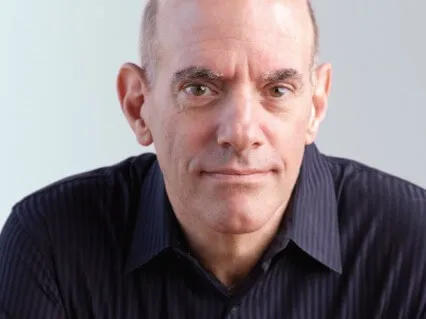
Our guest on this episode is Mark Nepo,
A poet,
Philosopher,
And cancer survivor who has taught in the fields of poetry,
Health,
And spirituality for 40 years.
A New York Times number one bestselling author,
He has published numerous books and audio projects.
Mark has appeared with Oprah Winfrey on her Super Soul Sunday program on OWN TV,
And has also been interviewed by Robin Roberts on Good Morning America.
Our sponsor on this episode is Spirituality and Health Magazine,
Which offers spiritual support and health news along with advice,
Prayer,
And meditation.
For your free trial offer,
Go to spiritualityhealth.
Com slash One You Feed,
And that's all spelled out,
O-N-E-Y-O-U-F-E-E-D,
And get a free no obligation issue.
If you love the magazine,
Then One You Feed listeners will receive a special VIP offer of two years for just $19.
95.
And here's the interview with Mark Nepo.
Hi Mark,
Welcome to the show.
Thank you.
It's great to be with you.
It's a real pleasure to have you on.
I have seen your books on shelves for years.
The Book of Awakening I read years ago and I really liked,
And I really enjoyed your latest book Inside the Miracle.
So I'm looking forward to getting into that book in more detail.
But we'll start like we normally do with the parable.
There's a grandfather who's talking with his grandson.
He says,
In life,
There are two wolves inside of us that are always at battle.
One is a good wolf,
Which represents things like kindness and bravery and love.
And the other is a bad wolf,
Which represents things like greed and hatred and fear.
And the grandson stops and he thinks about it for a second and he looks up at his grandfather and he says,
Well,
Grandfather,
Which one wins?
And the grandfather says,
The one you feed.
So I'd like to start off by asking you what that parable means to you in your life and in the work that you do,
As well as any ways that you like to feed the good wolf in your own life.
Sure.
Well,
Thank you.
Well,
I love that parable.
I know it.
I know it well.
And as I'd like to reflect on it,
I'd like to move away from good and bad.
You know,
I find in my not to a place of relativism where we say there is no good or bad,
But in terms of how we move through life,
I'd like to reflect on this in terms of things that are life-affirming and things that are life-draining.
Because often I find when we're told we're good or we're bad or we're up or we're down or we're true or we're false or,
You know,
All of these directional judgments,
They're just not specific enough to be helpful.
You know,
If you tell me I'm bad,
I feel bad,
But I don't really understand what that means in a way that's going to help me change.
And likewise,
If you tell me I'm good,
Well,
I feel relieved for a minute.
But I also don't really know what that means in terms of what to reinforce.
So for me,
I feel like we are made up just like X and Y chromosomes.
We begin with,
I think,
Everything we need inside us.
And as we engage in the life of experience,
We move constantly between life-affirming energies and life-draining energies.
And the life-draining energies make us look for only things that will confirm what we already know,
Look for things that will only give us the illusion that we're in control,
You know,
And they will feed fear and violence and hate and sameness.
But when we pursue our aliveness,
Which I think is what the soul wants us to do,
When we pursue our aliveness,
Which changes for every individual throughout their life,
Then we come alive and we inhabit our gifts.
And so which one do we feed?
Do we feed what's life-affirming or do we feed what's life-draining?
Yeah,
That makes a lot of sense.
One of the things in your book that you talk about a little bit,
You were just talking about control,
And in the latest book,
You say that our personal suffering is often intensified by our want to control life.
And failing to be in control while believing in control makes us feel accountable for all that breaks along the way.
And so there is guilt,
But where guilt is secreted by a controlling mind,
Compassion emanates from an accepting heart.
Yeah,
You know,
And I think,
You know,
We're just all comparing notes.
Nobody really has a clue about this great history of life.
And that's the wonderful thing is when we can admit we don't know anything,
Then we can really begin a true journey or inquiry together.
So,
You know,
Let me first say I don't have any answers,
But all I can do is speak from my own experience.
And,
You know,
All of these things,
Even what we talked about in terms of life-draining and life-affirming energies,
I have,
You know,
Pursued both.
I have fallen trying to control things.
And it's part of being human.
Where we go with it and what we do with it and when we fall down,
Do we get up?
And so,
You know,
I think that I learned through my journey and my cancer journey many years ago,
We really have very little control over life,
Which doesn't mean,
Oh,
Therefore there's nothing to do.
I should acquiesce and just live like a rock.
You know,
There's a difference between participating and engaging in life and trying to control events and people and the thoughts and feelings of those around us.
And when we do try to control things,
Which is impossible,
We wind up becoming more and more anxious and irritated.
And we wind up resenting the life around us that won't stay controlled.
Right.
So,
You know,
There's a,
It's not in this book,
But I have a small little very,
Very short story in my book of stories,
As far as the heart can see.
It's called Cain and Abel.
I can't recite it,
But I can tell you exactly the essence of it.
And the essence is that,
You know,
Two brothers,
They find themselves with one small berry in their weaker hand.
And the one,
The one brother looks at it and it's so small compared to everything he's worked for and wanted and dreamed of that it makes him bitter.
But the other brother looks at the small berry and he says,
Oh,
My God,
I think,
I think all my work has led me to this small berry.
I think the whole world is inside that one little berry.
And so he,
And you can also,
This is another version of,
Of which one will you feed?
And we both,
We all have these voices in us.
We have the voice that looks at whatever we're given and goes,
Is that it?
After all I've done,
After all I've worked,
Is that all I get?
And that,
That makes us bitter.
That makes us want to,
You know,
File a grievance with God somewhere.
But,
But the other is we wake up like I did after my cancer journey and I go,
Oh,
My God,
It was all here right all along.
It's in this little berry.
Let me eat this berry that has everything.
Oh,
My God,
How amazing is that?
And I think everybody has this ongoing conversation between these two voices.
And one other thing I have learned along the way is that as soon as we,
We stop,
And we all do,
To compare or count our experience compared to our dream of what we're working toward or compared to others or compared to those in history,
As soon as we compare or count,
We lose our access to everything that matters because you can't be present and compare or count.
Right.
Yeah,
That's something we talk about on the show a lot is this idea of,
You know,
How,
How painful comparison can be.
I think it was maybe Teddy Roosevelt who said that,
You know,
Comparison is the thief of joy.
Oh,
That's beautiful.
Yeah,
That's a wonderful expression.
What I've noticed about it is when you're,
Once you're in the comparing mind,
You can always look and be like,
Well,
I've got more than that person,
But I've got less.
You know,
Wherever you are in the scale,
You can always look up or down.
And my experience of that is always that it neither of those points am I connecting.
This leads,
Eric,
To another kind of ongoing challenge that's part of the human journey.
And that is that everyone alive goes through repeated challenges about inflating ourselves or deflating ourselves.
And the practice,
I think,
Or at least what I aspire to is whenever I'm going one way or the other,
Is to really try to just assume my full stature,
Not larger than I am and not smaller than I am.
And,
You know,
I was I'm sixty four,
But in each decade I have a different form of exercise.
But when I was in my forties,
I jogged and I was jogging one day in the summer.
I was living in Albany,
New York at the time,
And I was,
You know,
Tired about three miles in and had was sweating and I had panting and my hands were on my knees.
And it had rained the night before and I was looking in a puddle.
And all of a sudden I saw this full grown man in the puddle and it was me.
And and I realized,
You know,
I had been a little boy running around in a big man's body for years.
And all of a sudden I saw myself just briefly,
Accurately.
And it was one of those moments that changed,
Changed me,
That changed me to assume my accurate,
Full stature,
Not to be anybody else and not to be inflated or deflated.
Right.
There's that spiritual idea of humility,
Which is often,
I think,
Interpreted as being,
You know,
Oh,
I'm nothing,
I'm nothing.
Whereas,
You know,
The way I the best way I've always heard humility defined is an inaccurate reading of really who we are,
What we're good at,
What we're not good at.
I mean,
Just a very accurate picture of who we are is is humility versus a sort of a false sort of condescension towards ourselves.
Yeah.
And when we when we can be accurate about ourselves,
We're we're open to life around us.
We're more open to life around us because when we're bigger than we are,
Then we're like the Wizard of Oz.
We're really trying to keep puffing it up.
And when we're smaller than we are,
Then we're doing that comparing thing.
And we're always trying to knock everything else down because we feel so small.
And neither neither allows us to truly relate to life and to those around us.
Yeah.
One of my favorite lines of yours is you say if peace comes from seeing the whole,
Then misery stems from a loss of perspective.
Yeah.
Yeah.
You know,
I think this that also really came to me through my own suffering because I think that I learned while I was going through my cancer journey that to be broken is no reason to see all things as broken.
And that and again,
It's like we're talking here.
It's not about it's not about,
You know,
When we're in pain and when we're in fear,
It's natural and human to want.
Well,
OK,
The whole world is painful.
I'm broken.
Therefore,
Everything everything's terrible.
The world's chaotic and broken.
And then when I'm in pain,
Then everything is painful or I'm afraid.
Therefore,
The whole world is it's understandable to do that.
But the truth is,
Both things are true.
You know,
When I when I was,
You know,
Broken and sick and and,
You know,
Close to dying and afraid,
I had,
You know,
I had a moment where that was all true.
And that was overwhelming.
And the light outside of my home that day was still beautiful.
And somewhere not very far away,
Though,
I don't know where somebody was making love and somewhere else not very far away.
A child was being born and somewhere else.
Someone was helping somebody.
And and so,
You know,
Both things are true.
And while when we're suffering,
We need the company of those who know what it's like to suffer when I'm suffering,
I need I need everything.
Everything that's not suffering the heel.
When I'm broken,
I need everything that's solid to heal.
And so being in the moment,
Which we talk a lot about in our age,
And I think rightfully so,
But we tend sometimes to make a cartoon out of it.
Being in the moment isn't just,
Oh,
Well,
I can forget about responsibility or the past or the future or others and just live with abandon and enjoy it.
Now,
Being in the moment means being in my moment to the depth of my experience where it starts to touch on all experience and being in the moment of life that is happening everywhere at the same time,
Beyond my individual journey and allowing those things to merge.
You know,
It's interesting that we're taught as we grow up,
We're all taught to discern things,
To sort,
To prioritize and then choose.
And this is a very great skill that the mind has that helps us navigate the surface world.
It helps me put gas in the car and choose cottage cheese over milk and,
You know,
Choose cough syrup and not the poison,
The ant poison that's next to it.
And that's all necessary.
But I think,
You know,
That kind of mental acuity is not a code to live by.
It's a skill to help us live.
And what experience has taught me is that the longer I go and the deeper I feel things,
Both wonderful and difficult,
The more I feel like experience asks us to let everything in,
To absorb it and let it integrate,
To let it synthesize.
And the mind can't do that.
Only the heart,
I believe,
Can do that.
And that when we can hold the truth of all things,
Then it releases a logic of the heart.
And this is where we get into the realm of paradox.
Yes.
One of the guardians of truth.
Paradox has been a great teacher for me.
And one of the ways that I understand paradox is that we can describe paradox as any moment where more than one thing is true at the same time.
And so if we can withstand that seeming tension of opposites,
We start to be instructed in a deeper way,
A deeper way of things being like the fact that I could be struggling and sick with cancer.
And a mile away,
Somebody is being born.
And one is not more valuable than the other or competing with the other.
They inform each other.
As I mentioned earlier,
Our sponsor on this episode is Spirituality and Health magazine.
And Spirituality and Health is the print and online magazine leader for offering in-depth wisdom teachings and an exploration of alternative health practices.
And Eric,
Do you want to talk a little bit about the current issue and what we've got in there?
Yep.
The January and February issue has just arrived.
It's got lots of great things.
I love lists of best books in Music of the Year.
There's the 10 best spiritual books of the year they have in here.
And I'm happy to say that three of them have been guests on the show.
There's also an article from Josh Korda,
Who is one of the teachers at Dharma punks in New York City.
If anybody remembers the Noah Levine episode we did,
That's that same organization.
I think all the teachers in that group are great.
Very realistic,
Down-to-earth Buddhist practices.
So Josh Korda has an article in the New Magazine that's really good.
And very timely,
What you need to know about Muhammad.
So it's an exploration from sort of a spiritual principle about Muhammad and the person.
So I think it's a timely and relevant thing as always.
I think the magazine is great if you like what you're hearing on the show.
You want another avenue to sort of incorporate these things into your life,
Which we all need.
More and more reminder,
The magazine is a great way to do that.
And for your free trial offer,
Go to spiritualityhealth.
Com.
That's all spelled out.
O-N-E-Y-O-U-F-E-E-D.
And you'll get a free no obligation issue.
And if you love the magazine,
Then one you feed listeners will receive a special VIP offer of two years for just $19.
95.
Take advantage of that.
I'm a subscriber.
It's a great magazine.
And here's the rest of the interview with Mark Nepo.
In the latest book,
You have a line that speaks very much to what we were just talking about that I had pulled out.
And it says,
The sighted fin only implies the wonder of the great fish pumping below and the sighted star only implies the oceans of light flooding the universe beyond the range of our eyes.
In just this way,
Everything worth knowing is cloaked in paradox because everything substantial defies being revealed in its totality.
Thank you.
Thank you.
And I think that,
You know,
So in that way,
We're always,
I think,
The physical world,
The tangible world is like the tip of the iceberg.
It's a manifestation of the invisible energies of life,
Whatever you want to call them.
And,
You know,
The mystical call it,
You know,
The glow and shimmer of spirit.
And,
You know,
Physicists call it the wave theory that's in between particles.
But whatever we call it,
There's more than just the surface world.
It points to the invisible.
And so one of the things I think that we're asked to do in being human and in coming alive is to maintain our relationship with all that is unseen and unknown,
To stay in conversation with what we don't know.
It's a huge point of contention in our modern global world because we live in an age where there is fundamentalism worldwide.
Nobody has a kind of a monopoly on fundamentalism,
Not right.
You know,
We have domestic fundamentalism and every culture has its orthodoxy and fundamentalism.
But I also believe and I write about this in the Endless Practice,
But we've developed a personal fundamentalism where,
You know,
We become so accustomed to what's familiar that we think of that as truth.
And actually that insight is not mine.
That's Robert Keagans from who's the psychologist from Harvard,
Developmental psychologist,
Which I love as he talks about egocentrism as when we substitute what is familiar as true.
Because it's familiar,
We believe it's true.
And now only things that are familiar to us will we allow in.
And then we start to fear that anything that's not familiar is dangerous.
And therefore we start having racism and prejudice and violence.
And as opposed to,
You know,
Plato said that we're all born whole,
But we need each other to be complete.
And in the Jewish tradition,
That wholeness that we're born with is spoken about as the indwelling presence of God that's only manifest when we are in relationship with each other or with life or in conversation with our soul.
So there's a huge emphasis in the Jewish tradition on relationship and dialogue and conversation,
Because that's how,
You know,
Which assumes that we're not,
I don't talk to you to confirm our sameness.
I talk to you so that I can learn from you what I don't know and you from me what you don't know and together we are made more whole.
So those have always been fundamental,
You know,
Different kind of starting points in the human journey.
At any point in history you can find,
You can find,
There really are two lineages.
Yeah,
And I think that modern culture has a definite sense of,
To not have the answer is something that we're very afraid of.
Yeah,
And actually,
You know,
I think that we've been miseducated that we should even look for answers.
I view a question now at this point in my life as a doorway that I would like to open and go through with someone,
Not for an answer so that we can live something together.
Yeah,
There's that great old quote from Rilke about learning to love the questions and then someday you might be able to live your way into the answers.
Yeah,
That's a beautiful,
Beautiful statement.
So your latest book is called Inside the Miracle,
Enduring Suffering,
Approaching Wholeness,
And it's a series of writings from a lot of different times in your life.
But the original,
Some of the original parts of the book were from when you had cancer,
I believe back in the late 80s.
So a lot of the book is focused on,
If I had to,
If I had to summarize a big part of it,
Is that it's precisely these challenging experiences,
These difficult experiences that we go through that turn us into who we are.
That that's the path to wisdom very often.
What I've done with this book,
Which I'm very grateful to my publisher,
Sounds True,
For the chance to do this,
Is I've taken work over 30 years,
Starting with my cancer journey and moving through,
You know,
All the different ways that my perceiving has changed and other struggles and losses to try to glean the lessons in the inquiry.
And so to put that together after all this time was a real gift to be able to explore that.
And I'm not like deifying suffering,
You know.
It's not about that.
It's more about,
It's like you wouldn't dispute gravity,
You know,
Like it just is.
And,
You know,
Suffering and difficulty and obstacles,
As well as surprise and wonder and the overwhelming impetus of love,
All of these things,
They're equivalent to what friction and erosion are in nature.
So in the natural world,
Things are eroded to their beauty.
You know,
We save up money and we go on vacation to look at the Grand Canyon or to go to the edge of one of the continents and look at cliffs that have been pounded for thousands of years by the sea.
And so the human equivalent to that is great love and great suffering,
Great surprise and great obstacle.
And it seems like the order of the universe,
However you want to deem that,
Whether you believe in God or Aakman or Dharma or quantum physics or everything or nothing,
Whatever it is,
It seems like the universe has been designed to be just the human journey,
The life journey,
Not just human,
Is difficult enough that we need each other to hold each other up to that erosion and wearing down.
And I think that ensures the journey of love.
And,
You know,
In the same way that a piece of coal can be pressurized into a diamond,
So too we.
And so this is just kind of a spiritual physics that I don't know that I would have seen had I not been pressurized myself and eroded and broken open.
And so I think that I'm more my work is focused on has always been focused on,
And I think all the traditions are focused on.
So what do we do once we're opened?
And that becomes part of that becomes a big part of the spiritual journey.
We will be opened.
There's no question about it,
Just the same way that there's gravity or that rain will fall to the ground or that erosion will wear mountains away.
We will be broken open and how we hold each other up and support each other and what we do with what's opened is when the soul starts to show itself in the world.
And,
You know,
This is the thing in the Tibetan tradition,
A spiritual warrior,
Not a military warrior,
A spiritual warrior is one who is committed to a life of transformation,
Not knowing what that is,
Will look like.
But a spiritual warrior always has a crack in their heart because that's how the mysteries get in.
And so,
You know,
We are cracked open.
And and when that happens,
What the the the light that is in us comes out and the light of the world comes in.
And now,
Now for the first time,
We can't distinguish what's the world and what's me.
And now we are more one and our compassion begins to be released.
There's a beautiful line in the new book where this gets back to what you're talking about a minute or so ago was about this,
The need for others and how how we come together.
And there's a line in the book where you're describing the great care that your friend and your wife gave to you during a particular difficult time during your cancer.
And you say that we made it through and I'll never forget what they have taught that reaching in and touching the spot that hurts if done with selfless love can release the pain the way a dark branch can be gently shook to free it of all those steely crows.
Yeah,
Yeah.
You know,
I mean,
I think we we underestimate the power of of love and of presence,
You know,
For all the things that we can do.
You know,
I can if you if I if we were together and you were to fall over or trip,
I can help you up and I can get you a bandaid and I can get you a glass of water.
But for the things that can't be seen,
The things that we have to deal with inside,
Our presence,
Our bearing witness,
Our holding,
Our listening is is has always been great,
Great medicine.
Great medicine and we often underestimate that.
Or forget it.
Forget that that it even matters.
In the book,
You talk about something that you received is the word I'll use from having cancer and you talk about something called the terrible knowledge.
Well,
The terrible knowledge and I know that there's an essay that I wrote about that and the terrible knowledge is this paradox of the fragility of life,
Of how miraculous and amazing and precious and unrepeatable every moment is that all of eternity is in every moment in this moment between us right now.
And the terrible knowledge is that we can be erased in a second.
And I don't say that to scare anyone.
It's always been this flickering,
This shimmering paradox that life is precious and life by itself is indestructible.
But those of us all the forms blessed to carry life are not indestructible.
And so it makes life all the more precious and depending on what side of that terrible knowledge we land is whether we are in the most graceful state or or the most fearful state.
And so there's no solving the terrible knowledge.
There is only our journey just just the way a dolphin will will break surface and go under and break surface and go under like a whale.
You know,
And we will as well.
However,
I tend to think that when we break surface is when we're prey to the fear and the delicacies of things and the fragility of things and when we're when we're in the depth is when we're carried by the indestructible nature of life.
And I think that,
You know,
We have there are throughout history.
You know,
This is an ongoing unstoppable cycle,
I believe.
So it's not about staying in any one place.
It's about how do we live and hold and be a part of this ongoing miracle and indestructible and slash for fragility of life.
And so those who get caught or stuck if we,
You know,
In the destructive side,
The fragile,
Impermanent,
Fearful side,
Well,
You know,
Then those are the people who are pessimistic and nihilistic and life is full of chaos and random and and all there is is fear.
And those who are who try to be stuck on on the other side to transcend all of that,
You know,
Life is a panacea.
It's beautiful if we could just get out of this icky stuff on the ground.
Well,
It's it's I think it's always both.
And and,
You know,
The the impermanence of life grounds us from from running away from everything that's here and the miraculous light of the indestructible nature of life lifts us from the impermanence.
And we have so I think,
You know,
I think part of our spiritual practice,
Whatever that looks like for anybody individually,
I think it has some form of how how do we allow both in?
How do we allow both and how do we how do we live with both?
And it is a terrible knowledge in that,
You know,
When we fall down,
It can be terrifying and terrible.
But when we're standing strong,
It's full of awe.
It's full of awe.
And I think the the the value of impermanence within one,
You know,
We tend from the Buddhist perspective of impermanence,
We always immediately think,
Oh,
That means we're going to die and we all will.
But but impermanence within a life means that whatever we're going through,
Including all the difficulties with that's not permanent either.
It won't last.
Doesn't make it easier,
But it won't last.
Depending on the state you're in impermanence is either good or bad news,
But it's always true.
That's right.
One of the things on the show that I talk about a lot is how do you balance ambition and striving with being right where you are in life?
So you're somebody who has,
You know,
You have written an enormous number of books,
Books of poetry,
Books of nonfiction.
So you're clearly,
You know,
You have some degree of ambition is probably not the right word,
But creative drive.
Call it what you will.
And yet you've also said things.
And this conversation confirms a lot of it,
Like that we think that accomplishing things will complete us when it is experiencing life that will.
So how do those things balance out in yourself?
Yeah,
Well,
Thank you.
It's a wonderful question.
And,
You know,
They don't balance out because I don't have any ambition.
And I'll tell you how this all I was very driven before my cancer journey in my 30s.
I was a driven artist.
And through no wisdom on my part,
It wasn't like I almost died and said,
Oh,
Well,
I'm going to give that up.
And,
You know,
I just woke up on the other side and I was living from my heart and not my head.
And I also had lost my drive.
And this was very disorienting at the time.
I mean,
It really was troubling.
And,
You know,
It was enough that I almost died and I was still here.
And now I was I was here and I felt like I'd lost my gift.
I had lost my creativity.
And I was very wandering for almost,
You know,
Eight months or so or nine months when I slowly came to understand that I was now freed of the drive and I was drawn to things.
And the image that helps helps me understand that was it was like a river,
You know,
A strong river makes a lot of noise because the banks are holding it.
And so it roars down through kind of the gully of the banks and the riverbed.
But when that river reaches the sea and all rivers reach the sea,
That current doesn't disappear.
It goes deeper and continues to run strong.
But because it's deeper,
It doesn't make any noise and it joins with all the other water.
And that's what going through cancer and almost dying and still being here did to me against my will,
Without my knowledge,
You know.
And and so then when I started to understand I was drawn to things,
I was actually freer and there was so much more joy in creating.
And so things started to shift because I wasn't I was no longer creating to produce something.
I was creating to stay in conversation with life and the trail of that conversation started to become my teacher.
So while,
Of course,
These writings have have parts of me,
They have a lot of me,
But I wouldn't say that I create them out of nothing.
I would say that I retrieve them and I give of myself and myself is in the mix,
Just like silt on the bottom of a river gets taken along by the river.
But then what what comes.
Becomes my teacher.
So,
You know,
If I the key to my being prolific has not been ambition,
It's been that I've learned how to get out of the way.
And then I've learned how to to write about what I need to learn.
I don't write about what I know.
And the truth is,
I don't know if many authors will admit that I think that's true for everybody.
I write about what I need to learn,
And then I become it becomes my teacher.
If I only wrote about what I understood,
I would have written very little.
And so,
You know,
I wrote a book about awakening the Book of Awakening because I needed to be more awake.
And I wrote a book called The Exquisite Risk because I needed to be able to learn how to take more risks.
I wrote a book about courage because whether people thought I was courageous in in facing what I had to deal with,
That doesn't matter.
I had reached the end of what what was courage for me.
And I in order to continue to grow,
I needed to learn more about how do I be more courageous.
So our and listening the book on listening.
So,
You know,
I think that one of the inescapable gifts,
Hard gifts of almost dying,
What has been that,
You know,
I look forward to things.
I plan things.
You know,
I look forward to our call.
But my dreaming is always returned to now.
It's always my work is always now.
There's nowhere to go.
There is no ambition.
I'm not going anywhere.
There's nothing to achieve,
You know.
And so in this way,
You know,
We've been taught eternity as you stack up years forever,
Like on some imaginary ladder.
Actually,
Eternity to me is more like it's it's all of life that is released in the center of of every moment when we can be fully here.
So it's more like a drop of water that ripples.
Clearly in all directions.
And,
You know,
I write and express and and blessed to be in teaching circles because that conversation is when I feel most alive.
So let me say one other thing about this,
Because it's a very important subject.
So let's talk about ambition and goals and dreams.
I think that we have to have them.
And this is where I don't think we need to choose between becoming or being.
I think that,
You know,
We have to have them in order to engage ourselves in life.
But we hold on to our dreams and our goals and ambitions too tightly,
As if that's where we're going.
I think they're kindling for the fire of aliveness.
Dreams and goals and ambitions are what the heart and the soul use to bring us alive.
And it's the aliveness that matters.
So,
You know,
We work toward dreams and a lot of times our dreams don't come true.
But,
You know,
As long as we give our full heart and all of our work and effort,
Which I believe in,
To to whatever we think we're working on,
Our dreams may not come true,
But by being so devoted,
We may come true.
Yeah,
That's a beautiful way to phrase that.
Do you have any regular spiritual practices that you engage in that help you to stay more alive,
To stay in tune with these things that we're talking about?
Yeah,
You know,
I mean,
I've practiced a lot of different things,
You know,
From meditation to prayer to,
You know,
All kinds of things.
And at this point in my life,
And they're all wonderful.
So it's like whatever works for anybody.
OK,
You know,
It could be gardening,
It could be a formal spiritual practice,
And it could be being an auto mechanic on weekends.
You know,
It doesn't really matter what it is.
But what I at this point in my life,
I'm really committed to an integrated practice.
So I try to have my days,
You know,
I purposely interrupt my days.
I begin by working and then I'll take our dog for a walk and I'll work some more and then I'll purposely go out and do errands to to break up the day.
And so I try to really have things be integrated throughout throughout the day.
And and and I'll tell you why.
And it's and I wrote about this in another book.
But,
You know,
It comes from the life of Beethoven and Beethoven among many things.
But Beethoven,
One of his amazing innovations is he he created its Opus one thirty one.
It's a it's a string concerto for a quartet.
And and at that time,
Quartet concertos string quartet,
They they only had four movements.
And he wrote this one with seven and the musicians at the time were all kind of like,
You know,
They were like,
What what is he thinking?
And they were also like challenged to see if they could play it.
You know,
And one of the other things he did in this was that,
You know,
In music,
There are rest stops.
There are pauses where there is no beat and it just that beat is filled with silence as a rest.
Well,
Not only did he make this with seven movements,
But he made the entire thing without any rest stops.
There were no pauses.
Now,
Professional string classical musicians who play string instruments,
They are gifted enough and practiced enough that they use those pauses to retune their instruments because you can't play more than one movement if you're lucky without your strings going out of tune even slightly.
So Beethoven was saying to the musicians and it was and it was a comment on life.
You know,
You can practice,
You can do all of this,
But yeah,
You're going to have to tune as you go.
It's not going to be perfect music and you're not going to be able to get a rest stop and you're going to have to tune as you go.
And and certainly we do have rest stops and we we can pause.
But there are times in life,
You know,
We talk here and then we'll get off and you'll go into your life tomorrow and I'll go into mine.
And when life happens,
We're going to have to tune as we go.
It may sound out of tune and it doesn't matter because we're not here.
We're not here to do it perfectly.
We're here to do it thoroughly.
Yeah,
I love that story.
That's a great way to think about engaging in life.
Well,
I think that is a great place to wrap up the interview.
I have really enjoyed talking with you.
I really enjoy your writing a lot.
You are a great writer.
There's a lot of poetry,
Even in the prose.
It's very poetic.
And then,
Of course,
You write a lot of poems.
So we will have links in the show notes to certainly your latest book as well as many of your other works.
But again,
Mark,
Thank you so much for taking the time.
It's been a pleasure to talk with you.
Thank you,
Eric.
It's great to be a part of your good work,
Too.
Okay.
We'll take care.
All right.
Bye bye.