Hello and welcome to the first of our specific type of meditations.
This is Vipassana meditation.
It's also known as insight meditation.
To understand why we got to go way back in history and hear a story,
But good news it's a good story.
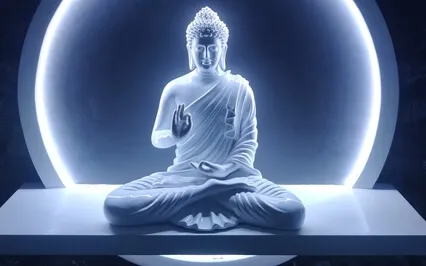
So this story starts with a rich prince called Sradhata Gautama.
He had two castles,
One for summer,
One for winter and every day of his life was filled with luxury and pleasure.
Despite all this at age 30 he realized that suffering was still coming to him and his family just like it came to everyone else's.
He realized his wealth couldn't protect him from suffering and this really concerned him.
Concerned him so much they left everything he knew behind him and went out into the wild to try find the answer to suffering.
Why it happens and how we could stop it.
He tried every religious faith there was to find his answer but frustrated he found that none of them gave him what he was looking for.
Frustrated he sat under a Bodhi tree and proclaimed he would not move until he either died there or had his answer.
He went into a deep meditative state and when he woke up he opened his eyes and actually proclaimed I am the Awoken One I am the Buddha.
Now no doubt you've heard of the Buddha and sometimes we think about him as a deity but in fact he was just a guy who's just a guy looking for answers and this type of meditation helps him find the answer he was looking for.
Him proclaiming he was the Buddha the Awoken One was a proclamation that he had found an answer but that you could find an answer to if you just did the same thing if you looked inwards.
His answer to suffering was that we shouldn't run away from things that give us discomfort and we shouldn't run towards things that give us pleasure.
We shouldn't desire those things we should embrace all those feelings with equal measure.
It's a lot easier said than done and that's why meditation is a practice we do it over and over again to get better at it.
It's a hard thing to wrap your head around this idea of not running away from what we don't like and desiring the things we don't have but really the art of suffering comes from those two things at least according to Buddha.
Now this started an entire movement that is one of the most popular things out there.
I refrain from calling it religion because it has some differences but if you want to call it religion you can.
The Buddhist faith is very much designed around his teachings and his insight through this meditation so it's a worthwhile one to go into I think.
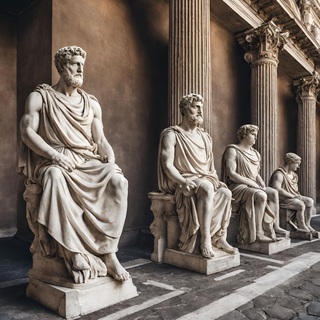
He also echoes the philosophies of some other very old ancient people such as Socrates who proclaimed you should know thyself and that a life unexamined is a life not worth living.
So through this meditation we actually examine our own lives in every facet in all observations.
As we proclaimed before the definition we're working towards when it comes to meditation is one of observation in a non-judgmental way and this extends itself to not thinking about things as good or bad at least when we're meditating.
Now it comes with distinct advantages three as far as I'm concerned.
The first being that it takes advantage of something that's happening right now while you're watching this while you're listening to this it is happening.
Your body is designed to take in information it's literally at your fingertips like that your fingertips touch hearing sight feelings all of those things are happening right now.
Your five senses as well as some other things we can go into are giving you information at all times so all we have to do is tune into these things it starts with just paying attention to them it's not that we have to do something different we just have to shift our focus like having a spotlight and instead of it being somewhere else we turn it inwards but it found that the answer was inside it allows us then to master this focus on what's happening in our experience right here right now.
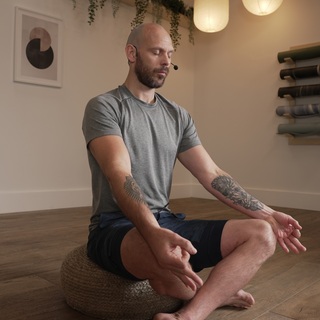
Now this is advantageous like I said because you don't actually have to do anything you just have to sit watch listen feel.
The other advantage is that it really is at the core of making the unconscious conscious.
Now we've spoke before about Carl Jung and his quote until you make the unconscious conscious it'll run your life and you call it fate.
This echoes some of the ideas we had about habits as we found out from Wendy Wood habits form 40 to 90 percent of our daily routine so the things we do every day are habits 40 to 90 percent of them that's almost it that's you know if we take the aggregate that's more than half of the things we do are things that we're not necessarily thinking about.
Now that's great if all of those things are helping you get to where you want to get to in life however if they're not then we want to pay attention to that we want to know.
The same can be said for our thoughts so in the last part of our advantages I spoke about how we can pay attention to what's happening in our body but we can extend this practice into what's going on in our mind not just when we're meditating but throughout our life as you walk through our life what are the thoughts that are pervasive in our mind are those helpful what are the actions that we're doing day to day are those helpful it's very easy to walk through life in this fugue state where we don't pay attention where we're unawoken and then we're just gonna breathe through life with nothing really happening to us good or bad it's sometimes said that art should make you feel something whether that's good or bad and maybe we should make our life our own art instead of running away because it's a beautiful thing as we find with this type of meditation we start to pay more and more attention to what's going on and we get this richer tapestry of life as it unfolds ahead of us we also found out from Buddha that suffering comes from aversion from discomfort or desire of something pleasurable again we can go through a life and start to pay attention to our actions and decide is that someone we're doing are we running from the discomfort or we're running towards the pleasure is there a way we can alleviate our suffering we can only decide that if we pay attention so that's another one of the big advantages of this type of meditation lastly it has at the core of it being present as we pay attention to the things that are happening right here and right now we can't help ourselves but be in the present this is particularly useful because our brain actually has a default mode a default mode is to think and it's to mind wander I sometimes think about the brain like a stallion like a thoroughbred horse and if you already ever been around a horse you'll notice that if you don't train them lots they they get quite agitated a little bit like dogs you've got to exercise their true nature now your mind's true nature is to think so if you don't give it something to think about it'll do its own thing and you may say well what's wrong with mind-wandering well let me tell you someone's done the hard work for us and he has looked at what happens when we mind wander and what the effect that can have on our happiness and our general feeling about life our satisfaction his name is Matt Kingsworth and his TED talk will be linked after this and as I said there's a default mode to the brain there's actually an area of the brain called the default mode network this area lights up when we mind wander and we've got another part of the brain that lights up when we're focused on an activity those two areas can't light up simultaneously so either one is on or the other one is on we can turn one off by turning the other one on you think about it like a seesaw switch only one can be on at any given time my killings worth wanted to go into this a little bit further he did quite interesting study where he gave people an app on their phone and over a period of time he had their phone ping at regular intervals they would then check their phone and answer series of questions those questions would start with what are you doing right now he then would ask a series of other questions that were ascertained whether someone was particularly satisfied or happy with what they were doing or what was their general mood what he found was quite interesting what he found was that those who were mind-wandering tended to be less happy than those that were focused on a task now straightaway people thought well this makes sense if you're thinking about something that was horrible in the past you know maybe uncomfortable memory or you're anxious about something in the future then of course being in the present moment is great because it's basically a distraction from those horrible things but what he found is it was still preferable even to people that were thinking about something very pleasurable in the past or some of you very pleasurable that was coming in the future even if it was a fantasy even in that scenario being present was beneficial and it was preferable so this type of meditation can put us in to the present moment and that's gonna make us happier overall make sure you check out that link it's a very interesting TED talk but for now let's get on to our vipassana meditations coming up next