Meditation number two,
The body as a model.
We are going to dive into the relationship we have with both physical and mental tension,
And how our intuition of releasing physical tension can be a model for us on how to release mental tension.
So,
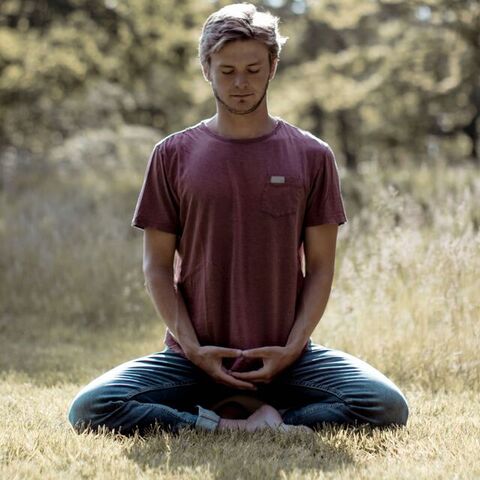
Finding somewhere that you can sit undisturbed,
And somewhere that you can sit comfortably,
Somewhere that will allow you to be completely still,
And finding somewhat of an intentional posture,
Not overly strained,
Just enough so that we're not slouching,
And letting the eyes close.
Just like in the last meditation,
We're going to start with relaxing the tension in our face.
So,
Noticing any tension that you're holding on to in the face,
In the eyes,
In the forehead,
In the forehead,
Letting the face be completely soft.
Now,
To the shoulders.
If the shoulders are shrugged at all,
Just completely letting them relax,
Not to the extent that you slouch,
But to whatever extent you can.
Now,
To the belly,
The abdomen,
And letting the breath come down into the abdomen,
Almost as if the lower belly were receiving each breath.
So,
Our face is relaxed,
Shoulders,
Abdomen is relaxed,
And our breath is down in the belly.
Now,
Letting the legs relax.
And so,
We're letting go of any unnecessary tension,
Any tension that isn't supporting our posture.
And just like we let our attention drop,
Letting our attention drop,
And the focus point here can be either the breath in the lower belly,
Feeling the expansion of the abdomen and the contraction with each breath.
So,
That can be where you place your attention for this meditation.
That can be the focal point and orientation of your attention for this meditation.
Or,
If you'd like,
You could let attention drop even a bit more,
Down to,
I like to say,
The bottom most part of your experience,
Which is your connection with the floor,
With your seat,
That sense of pressure of gravity pulling you into the earth,
Your own sense of weight,
The contact points between the body and your seat.
So,
These focus points for the rest of the meditation are just a gentle orientation for your attention.
We're not rigidly focused here.
We're not pushing away any other part of our experience.
So,
Again,
Face,
Shoulders,
Belly,
Breath,
Attention,
Present to the still,
Relaxed body,
Noticing any sounds that you hear.
And so,
In releasing physical tension,
We have a very obvious intuition of how to do that.
If your shoulders are shrugged,
And you realize your shoulders are shrugged,
It's very obvious to you of how to completely let go of that.
This is something that we know really well.
And so,
Given that we have this intuition that may seem absurdly obvious,
We know how to let go.
We realize our face is a bit tight,
Or that we've sucked in our belly a bit,
Or that our shoulders are shrugged.
We recognize it,
And we intuitively release the tension,
Because we know we don't need to hold on to it.
When it comes to our mind,
Our psychological state,
Our thinking,
Or our restlessness in sitting still,
All of the other forms of tension that we hold on to,
It's not so obvious to us of how to let go of that.
And so,
Often,
Unconsciously,
What we do is we try to manage our mental tension,
And negotiate with it,
And create certain conditions that ease our mental tension,
Which there's absolutely a place for all of that.
But when we sit still,
Quietly,
We are faced with whatever amount of tension that we're faced with.
Sometimes it may be a lot more than others.
And so,
Naturally,
The question arises,
Well,
How do I let go of mental tension?
How do I let go of what's making me uncomfortable right now?
If someone asked you,
How do you let go of the tension in your shoulders when you realize that your shoulders are shrugged,
You wouldn't have any answer.
There is no how-to.
There's being aware of it,
And there's letting go of it.
Again,
Relaxing the face,
Shoulders,
Belly,
Breath,
Legs.
So,
What does it mean to let go of mental tension?
To let go of emotional tension?
To let go of whatever I'm holding onto internally?
What might that mean?
What would that look like for you?
Of course,
I can't give you an answer.
I can't give you a how-to.
But what we can do,
What's so available to us,
Is releasing physical tension.
We know that we can successfully do that all of the time.
Whenever we notice physical tension,
We know how to release it.
And that's why at any point in the meditation,
When you noticed that your face got a little tight,
Or your shoulders shrugged a little bit,
Or any part of your body harbored tension,
You let go of it.
We can integrate and engage this capacity successfully.
We have clear,
Obvious control of that.
And,
Of course,
That is an intuition.
We know letting go.
And so,
In this way,
In our continual letting go,
Our intuition of this and our body is a model for us.
It's a model to our mind.
It's a model to our emotional body.
It's showing that we know how to let go.
Meditation is,
In a sense,
The first step of letting go.
And it's the becoming aware part.
Just like when we let our shoulders drop.
To do that,
We have to be aware first that we're holding on to tension.
And meditation is this kind of prolonged,
Though not necessarily,
But often prolonged,
First step of becoming aware of our mental tension.
Really encountering it.
And,
At the same time,
Continuously engaging our intuition of letting go.
And we do this through the body.
Willingly letting tension be free of your grasp.
Becoming aware of your mind,
The ways that you hold on psychologically.
It's a very dynamic process.
And we all have to have our own way with that.
And we have to find value in that.
And we have to care enough about ourself,
And what makes us us,
To want to really sincerely take a look at ourself.
And so,
In closing,
You really have to trust your own process.
And trust your own intuition.
And trust your own unfolding.
And let the body guide you.
Let that be your model.
Just keep returning to yourself.
You can stay here for as long as you'd like in the body.
Or you can gently open the eyes.
So that concludes this meditation.
And thank you for joining me.