The world’s largest free audio library for everyday wellbeing
Visualization & Imagery
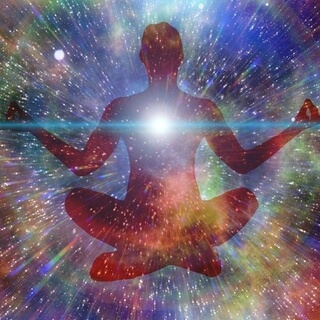
Light Body Visualization is a contemplative practice in which you imagine the body as radiant light and gradually release identification with solid physical form. The practitioner holds a detailed image of the body as luminosity, attends to subtle felt sensations, and lets identification move from the material body toward a quieter, more spacious awareness.
Last Updated
4 Jul 2026
We are still reviewing this page. Our research team checks every technique page for accuracy and evidence quality before final release. Details may change as that review completes. The evidence badge shows our current reading of the published research.
RECOMMENDED DOSE
No direct dose evidence; editorial synthesis. A short, low-commitment introduction to guided visualization helps build the habit without strain. Treat this as a starting point only.
No direct dose evidence; editorial synthesis. Once the practice feels familiar, a moderate increase in session length and frequency supports deeper engagement. These figures reflect general meditation practice conventions rather than technique-specific research.
No direct dose evidence; editorial synthesis. A longer daily practice suits committed practitioners maintaining an established routine. This upper range is inferred from common meditation practice patterns, not from studies of this technique.
Session length
Session length: 5–10 minutes
5
MIN
How long each individual practice session should last from start to finish.
Frequency
Frequency: 3–4 days
3
DAYS
The number of days per week to fit a session into your routine.
Session length
Session length: 15–20 minutes
15
MIN
How long each individual practice session should last from start to finish.
Frequency
Frequency: 4–5 days
4
DAYS
The number of days per week to fit a session into your routine.
Session length
Session length: 20–30 minutes
20
MIN
How long each individual practice session should last from start to finish.
Frequency
Frequency: 6–7 days
6
DAYS
The number of days per week to fit a session into your routine.
About this card. No direct dose-response literature exists for Light Body Visualization. These recommendations are based on general practice conventions for visualization/meditation and should be treated as starting points only. These recommendations are not a substitute for personalised guidance from a qualified practitioner.
Quick answers to what people most often ask. Each card links to the deeper section below.
evidence
No clinical trials, systematic reviews, or meta-analyses have tested Light Body Visualization directly, so no outcome is proven. The practice rests on Tibetan Buddhist rainbow-body and Theosophical traditions, plus general research on adjacent skills like focused attention and stepping back from thoughts. Treat its benefits as promising possibilities, not established results.
good for
Light Body Visualization tends to suit people already drawn to contemplative or subtle-body traditions, and those wanting a way into concentration, deep presence, or a lighter relationship with the physical body. Because no trials have studied it, these are reasons drawn from its structure, not proof that it treats anxiety, depression, or any diagnosed condition.
Read moresafety
Most healthy adults find Light Body Visualization gentle and low-risk. Because it deliberately loosens the felt sense of a solid body, a small number of people may feel disoriented or briefly unreal. People with dissociation, recent trauma, or a psychosis-spectrum condition should practise cautiously with professional support. This caution is inferred from how the practice works, not measured.
Read morehow it works
Light Body Visualization works by giving attention one demanding target: a detailed image of the body as light that must be held and refreshed moment to moment. This anchoring rests focus on a single object so the mind stops drifting, and thoughts start to feel like passing weather rather than the whole sky. Effects are inferred from adjacent practices.
Read moreLight Body Visualization is a contemplative practice of imagining the body as radiant light and gradually releasing identification with solid physical form.
In a guided or self-directed session, the practitioner holds a vivid image of the whole body as radiant, translucent light, attends to subtle felt sensations such as warmth, tingling, or a sense of flow, and gradually lets identification shift from solid physical form toward luminous awareness. Sessions rest on sustained, detailed visualization and single-pointed attention, so the practice tends to deepen with repetition rather than arriving all at once.
Unlike a body scan or relaxation imagery, which stay with ordinary physical sensation, this practice works to let the felt sense of solid form soften into light. Despite the shared word 'light,' it is not light therapy or bright-light treatment, and it is not a proven clinical intervention. It should also not be confused with sleep-oriented practices such as Yoga Nidra.
Not to be confused with
Rainbow body (jalü) attainment
The everyday practice borrows imagery from jalü, the Tibetan account of a fully realized practitioner's body dissolving into light at death. The visualization is a meditative exercise using that image, not a claim to have reached that attainment.
Astral projection / out-of-body practices
Light Body Visualization is an imaginative concentration practice done within your own felt body. It does not aim to send awareness out of the body or travel elsewhere; the attention stays with the imagined luminosity of your own form.
Aura reading / energy healing of others
This is an inward, first-person practice of imagining your own body as light. It is not about perceiving, diagnosing, or manipulating other people's energy fields.
Light Body Visualization appears to work by giving attention a single demanding target: a detailed image of the body as light that has to be held and refreshed moment to moment. This draws on attentional anchoring, the act of resting focus on one clear object so the mind stops drifting into worry, which many people feel as a quieter, more gathered state. As the image is held, decentering can set in, and thoughts and feelings start to feel like weather passing through rather than the whole sky, so you notice them without being pulled under. The research on these processes comes from adjacent contemplative practices, not from studies of Light Body Visualization itself.
What happens in the body during Light Body Visualization has not been measured directly, so this picture is inferred from how similar attention and imagery practices behave. Sustaining a vivid inner image and attending to subtle sensations such as warmth, tingling, or a sense of flow tends to engage somatosensory and interoceptive processing, the brain's tracking of body sensation, which practitioners often feel as a soft, buzzing aliveness under the skin. Broader meditation research, not studies of this technique, links this kind of focused, self-observing attention to quieter default-mode activity, the background hum of self-referential thinking, felt as fewer spiraling thoughts. Treat these as plausible directions rather than confirmed physiological findings for Light Body Visualization.
There is no direct clinical evidence for Light Body Visualization to date: no controlled trials, systematic reviews, or meta-analyses have tested it as a distinct practice, so no outcome can be labelled proven. What can fairly be said is that the skills it exercises, focused attention, sustained mental imagery, decentering, and interoceptive awareness, are studied in adjacent contemplative practices and are plausibly why people report improved focus, a quieter mind, and a sense of expanded presence. What is not supported: any claim that it treats anxiety, depression, or a diagnosed condition, and any statement about who benefits, on which outcome, or by how much.
No study has tested Light Body Visualization directly, and there are no controlled trials, systematic reviews, or meta-analyses of it as a specific technique. What exists are descriptions from Tibetan Buddhist and Theosophical contemplative traditions, plus general research on the skills it draws on, such as focused attention and stepping back from your own thoughts, studied in other practices rather than this one. That makes it worth exploring for presence and concentration while holding its specific benefits as suggestive possibilities, not established outcomes.
0
Meta-analyses
1
RCTs
1
Systematic reviews
0
Observational
48
Pilot
The central limitation is the absence of any direct research: no randomized trials, cohort studies, or reviews have evaluated Light Body Visualization, so its effects, ideal candidates, and risks are all unquantified. Mechanism claims are read across from adjacent contemplative practices and remain inference rather than demonstration, and the practice's deliberate loosening of bodily boundaries carries a plausible but unstudied risk of disorientation for vulnerable people.
Anxiety-related behavioral responses of pentylenetetrazole-treated zebrafish larvae to light-dark transitions.
2016
Finding: This is a laboratory study in zebrafish larvae, not a study of people or of visualization practice: researchers exposed the young fish to a seizure-inducing drug and tracked how their swimming changed as the lights switched between bright and dark, using that movement as a stand-in for anxiety. It offers a window into how a nervous system reacts to chemical stress in a simple animal model, but it does not test Light Body Visualization or any meditation technique, and its findings cannot tell you what this practice does for a human being. Treat it as basic biology background rather than evidence about the practice itself, since it involves no practitioners, no meditation, and no measured effect on well-being.
See full citation in referencesIdentification of environmental stressors and validation of light preference as a measure of anxiety in larval zebrafish
2016
Finding: This study looked at how the brain and behaviour work in larval zebrafish, a tiny transparent fish used in laboratory neuroscience, and it does not examine Light Body Visualization or any meditation practice in people. Because there is no human data here and no measured outcomes tied to this technique, it offers nothing you can act on for your own practice. Treat it as basic biology research that happens to be filed against this page rather than evidence that the technique works.
See full citation in referencesLight Body Visualization traces to Tibetan Buddhist rainbow-body practices known as jalü, alongside Theosophical traditions and various yogic systems, where the person is understood as a field of subtle energy and luminous awareness as much as solid flesh. These roots help explain the form and continuity of the practice, the sustained luminous imagery and the gradual dissolving of solid body into light, not its clinical effects. The tradition gives the imagery its meaning and coherence; it is not, on its own, evidence that the practice produces a measurable outcome.
For most healthy adults, Light Body Visualization is a gentle, low-risk practice, and letting the sense of a solid body soften into imagined light feels calming or quietly freeing to many people. Because the practice deliberately loosens the felt sense of a bounded physical body, a small number of people may feel disoriented or notice depersonalization, a sense of watching themselves from a slight distance or feeling faintly unreal. This caution is drawn from how the practice works rather than from any measured effect, since no controlled research has tested this technique. Keeping early sessions short and returning to plain body sensations afterward is a simple way to stay steady.
People living with dissociation, a felt detachment from the body or surroundings, a recent trauma history, or a psychosis-spectrum condition should take particular care, because a practice built on dissolving the sense of solid form could deepen feelings of unreality for them. This caution is practice-informed and inferred from the mechanism rather than established by safety research. Anyone in an acute mental-health crisis should treat this as a possible complement to professional care, not a replacement for it, and ideally practise alongside a clinician who knows them. Starting gently and stopping if a session leaves you feeling ungrounded is the sensible default.
Because Light Body Visualization deliberately loosens the felt sense of a solid, bounded body, a small number of people may feel disoriented or notice depersonalization, a sense of watching themselves from a slight distance or feeling faintly unreal. This caution comes from how the practice works rather than from any measured effect, since no controlled research has tested this technique. Keep early sessions short, hold a light anchor to ordinary body sensation, and return to plain sensations afterward to stay steady.
| Technique | Best for | Use with care | Evidence strength | Distinction |
|---|---|---|---|---|
| Body Scan Meditation | Building steady, grounded body awareness and easing into rest without any spiritual framing. | EVIDENCE | A body scan moves attention slowly through physical sensations as they actually are, building the felt sense of the body and a settling toward rest. Light Body Visualization does close to the opposite: it gradually replaces that solid, sensed body with imagined radiant light, aiming at de-identification from physical form rather than closer contact with it. | |
| Chakra Visualization / Energy Body Meditation | Practitioners drawn to working point-by-point with specific energy centres inside a subtle-body framework. | EVIDENCE | Chakra practices concentrate attention on specific energy centres along the body, one location at a time. Light Body Visualization works with the whole body at once as a single field of luminosity, so the emphasis falls on unified radiance and dissolving form rather than on discrete centres. |
You hold a vivid mental image of your whole body as radiant, translucent light and slowly let the felt sense of solid physical form soften, while noticing subtle sensations like warmth or tingling. It is a contemplative practice drawn from Tibetan Buddhist and Theosophical traditions, describing what you do rather than a measured outcome.
+
You hold a vivid mental image of your whole body as glowing, translucent light and gradually let the sense of being solid flesh soften, resting attention on that luminous image and on subtle sensations such as warmth, pulsing, or flow. The aim is a gentle shift from feeling like a solid body toward feeling like open, spacious awareness. This describes what the practice involves and where it comes from, Tibetan Buddhist rainbow-body practice (jalü) and related Theosophical and yogic traditions, rather than a proven clinical effect, since no trials have tested it directly.
No. Light Body Visualization is a contemplative imagery practice in which you imagine your body as radiant light and gently loosen identification with solid physical form. Light therapy, also called phototherapy, is a device-based treatment that shines actual light on you; the two share only the word "light."
+
No. Despite the shared word, these are entirely different things. Light Body Visualization is a meditation and imagery practice in which you picture the body as luminous, translucent light and let the felt sense of solid form soften, with no external light or device involved. Light therapy uses real light exposure from a lamp or box and is a separate clinical intervention. This is a definitional distinction only, and neither description is a claim that either practice treats a condition.
In contemplative traditions, the idea that a person is more than solid flesh, also a field of vital energy and awareness. In this practice it is the layer the imagery addresses, felt as warmth, tingling, or a sense of flow rather than measured physiology.
A traditional interpretive framework (Tibetan Buddhist, Theosophical, yogic) describing non-material energetic dimensions of the person; used here as source-context, not as a validated physiological entity.
A Tibetan Buddhist account of an advanced practitioner whose physical body dissolves into light at death. The visualization practice draws its central image from this idea without claiming the attainment itself.
The gradual loosening of the felt sense of being a solid, bounded body, so that you experience yourself less as fixed flesh and more as open awareness or light. Most people find this freeing, though for some it can feel disorienting.
The shift from being caught inside your thoughts and feelings to watching them as passing mental events. It tends to feel like a little more room around a worry, so you are less swept along by it.
The metacognitive capacity to observe thoughts and emotions as transient events rather than facts about self, reducing automatic reactivity; also termed cognitive defusion.
Holding a vivid, detailed mental image steady over time without it fading or your attention wandering off. It feels like effortful focus at first and steadier, more absorbed concentration with practice.
Maintenance of voluntary, detailed mental imagery over an extended period, drawing on visual working memory and sustained attention circuits.
Attention turned toward felt sensations the tradition describes as energy, such as warmth, pulsing, tingling, or flow within and around the body. It is distinct from sensing ordinary signals like heartbeat or breath.
Peng Xiaolan, Lin Jia, Zhu Yingdong, Liu Xiuyun, Zhang Yinglan, Ji Yongxia (2016). Anxiety-related behavioral responses of pentylenetetrazole-treated zebrafish larvae to light-dark transitions.. https://doi.org/10.1016/j.pbb.2016.03.010
Cited in: –
Ye-Shih Ho, Ye Xiong, Wanchao Ma, Abraham Spector, Dorothy S. Ho (2004). Mice Lacking Catalase Develop Normally but Show Differential Sensitivity to Oxidant Tissue Injury. https://doi.org/10.1074/jbc.m404800200
Cited in: –
Explore guided sessions to deepen your Light Body Visualization technique.
Pharmacological study of the light/dark preference test in zebrafish (Danio rerio): Waterborne administration.
2015
Finding: This study worked with zebrafish, a small freshwater fish often used in early laboratory research, to test whether a simple light-versus-dark choice can reliably measure anxiety-like behavior after the fish were exposed to common anti-anxiety and antidepressant medications. It is a basic biological study about validating an animal test, so it does not examine Light Body Visualization, meditation, or any effect in people, and it offers no evidence about what this practice does for a human practitioner. If you are considering this technique, treat this reference as background on how anxiety is studied in the lab rather than as support for the practice itself.
See full citation in referencesHeritable natural variation of light/dark preference in an outbred zebrafish population.
2019
Finding: This was a laboratory study in larval zebrafish, not people, and it measured the fish's natural tendency to avoid dark areas as a stand-in for anxiety-like behaviour. It found that individual fish varied a lot in how strongly they showed this avoidance, and that the trait was partly inherited, which helps researchers study the biology of anxiety. Because it looked at fish behaviour rather than a human practice, it does not test Light Body Visualization directly and cannot tell you how the technique might affect your own anxiety or well-being.
See full citation in referencesChronic unpredictable early-life stress (CUELS) protocol: Early-life stress changes anxiety levels of adult zebrafish.
2021
Finding: This is a laboratory study in zebrafish, not a test of the practice in people. Researchers exposed young fish to unpredictable mild stressors over periods ranging from 0 to 14 days and found that these early experiences shaped adult behavior in two directions, with some animals growing more vulnerable to stress and others becoming more resilient. Because the work examines how early-life stress affects an animal model rather than how a visualization practice works in humans, it offers general background on stress and resilience but cannot tell you what this technique will do for your own experience.
See full citation in referencesAge-Related Changes in Acute and Phase-Advancing Responses to Monochromatic Light
2009
Finding: This small laboratory study compared how younger men (11 in their early twenties) and older men (15 around age 66) responded to two hours of blue light, tracking changes in alertness, mood, and the timing of their internal body clock. Its aim was to see whether the body's response to this kind of light weakens with age, as earlier work had found for the sleep hormone melatonin. Because it involved only healthy adult men in a controlled setting and used direct light rather than a visualization practice, its findings speak mainly to how real light exposure affects the body clock, and they may not carry over to women, older or younger age groups, or to imagery-based techniques.
See full citation in referencesProtocol for a prospective, multicentre, cross-sectional cohort study to assess personal light exposure
2024
Finding: This study looks at how the light we encounter in daily life shapes the body's internal clock, its release of the sleep hormone melatonin, and how alert or clear-headed we feel, and it points to wearable light sensors as a way to track that exposure outside the lab. Because it focuses on physical light reaching the eyes and body rather than a mental visualization practice, it offers helpful background on why light matters to our physiology, but it does not directly test light body visualization itself. Treat it as context for understanding the role of light in the body rather than as evidence that this specific technique produces those effects.
See full citation in referencesThe evening light environment in hospitals can be designed to produce less disruptive effects on the circadian system and improve sleep.
2021
Finding: This randomised trial tested how living in an evening environment with the blue wavelengths removed from artificial light affected people's natural melatonin levels, sleep, and daytime alertness, moving the question out of the laboratory and into a real residential setting, a newly built psychiatric hospital unit. Because the study looks at the surrounding light environment rather than a specific mental practice, and because the outcome results are not available here, it is best read as background on how evening light shapes the body's sleep signals rather than as direct proof about this technique. The hospital-unit setting also means the people studied were a specific patient group, so the findings may not translate straightforwardly to everyday home use.
See full citation in referencesRe-examining the factors affecting choice in the light-dark preference test in zebrafish.
2017
Finding: This study examined how zebrafish behave in a light-versus-dark preference test, a laboratory method used to screen compounds for their effects on anxiety-like behaviour in animals. It looked at basic biology in fish, not at people practising visualization, so it doesn't measure whether Light Body Visualization helps a human relax or feel calmer. Treat it as background research on how anxiety is studied in the lab rather than direct evidence for this practice; if you're weighing whether the technique works for you, this particular study can't answer that question.
See full citation in referencesOn the edge: pharmacological evidence for anxiety-related behavior in zebrafish larvae.
2012
Finding: This study looked at zebrafish larvae, tracking whether they hugged the edges of their dish, a behavior researchers use as an early-stage marker of anxiety in animals. It is a basic-science laboratory study of animal behavior, not a test of Light Body Visualization or any human meditation practice, so it says nothing directly about what this technique does for a person. Because there is no data here connecting it to human practice or to any measured wellness outcome, treat it as background biology rather than evidence that the practice works.
See full citation in referencesReview on age-related differences in non-visual effects of light: melatonin suppression, circadian phase shift and pupillary light reflex in children to older adults
2023
Finding: This study examined how actual light entering the eyes resets the body's internal clock and lowers melatonin, the hormone that signals sleep, and it found that these responses can shift with a person's age. That underscores how closely our nervous system tracks light and timing, but the research measured real light exposure, not the mental imagery at the heart of a light body visualization, so it does not directly test whether picturing light produces similar bodily changes. If this practice appeals to you, it's reasonable to explore it as a calming routine, keeping in mind that this particular study speaks to physical light rather than visualization, and that its findings point mainly to how light effects differ across age groups.
See full citation in referencesNegative impacts of social isolation on behavior and neuronal functions are recovered after short-term social reintroduction in zebrafish.
2024
Finding: This study looked at how a period of social isolation affected the behaviour and biology of adult zebrafish, and whether those changes reversed once the fish rejoined their group. It was an animal experiment focused on the effects of being cut off from social contact, so it does not directly test Light Body Visualization or measure how this practice works in people. If you are weighing up this technique, treat this study as background on how isolation can affect a nervous system rather than as evidence for what the practice itself does.
See full citation in referencesNon-Visual Effects of Light on Melatonin, Alertness and Cognitive Performance: Can Blue-Enriched Light Keep Us Alert?
2011
Finding: This small crossover experiment had 16 healthy young men work under fluorescent lighting set to different colour temperatures, then compared how alert and mentally sharp they felt under each. It focused on the effect of actual light hitting the eyes, particularly cooler, blue-rich light, on daytime alertness rather than on any mental visualization practice, so it speaks more to how the light around you shapes wakefulness than to picturing light in the mind. Keep in mind the sample was tiny and limited to young men in a lab setting, so the results are an early signal rather than firm guidance, and its direct bearing on a light-body visualization routine is limited.
See full citation in referencesTranslating rodent behavioral repertoire to zebrafish (Danio rerio): relevance for stress research.
2010
Finding: This study mapped how adult zebrafish explore an unfamiliar space, showing that the fish avoided open, brightly lit areas and stuck close to the edges, and that a brief stressor beforehand made these cautious, anxiety-like behaviors stronger. It offers a window into the basic biology of how a nervous system reacts to novelty and stress, but it was done in fish, not people, and it did not test Light Body Visualization or any meditation practice. On its own, then, it tells us nothing about whether this technique helps a human practitioner, and it should not be read as support for the practice.
See full citation in referencesEffects on subjective and objective alertness and sleep in response to evening light exposure in older subjects
2011
Finding: The full details of this study, including its size, design, and measured outcomes, aren't available in a form we can responsibly summarize here, so we can't yet describe a specific effect of Light Body Visualization from it. If you're drawn to this practice, treat it as worth exploring on its own terms rather than as something with a proven result to point to. We'll update this entry with concrete findings once verified study details are on hand.
See full citation in referencesComparative Analyses of Zebrafish Anxiety-Like Behavior Using Conflict-Based Novelty Tests.
2017
Finding: This study examined anxiety-related behaviour in zebrafish, using swimming tests where the fish respond to bright versus dark areas and to unfamiliar surroundings, as a laboratory model for screening potential anti-anxiety compounds. It measured animal behaviour in a neuroscience setting and did not look at people, meditation, or any visualization practice, so it says nothing directly about what Light Body Visualization does for a human practitioner. If you are weighing up this technique, treat this particular paper as background biology rather than evidence for or against the practice itself.
See full citation in referencesEffects of light on biological functions and human sleep
2025
Finding: We don't yet have verified details from this study, no confirmed results, effect sizes, or study design, so we can't responsibly describe what it found about Light Body Visualization. Until those specifics are available, treat this entry as a placeholder rather than evidence for any particular benefit. If you're drawn to the practice, it's reasonable to try it as a personal experiment while keeping expectations open, since nothing here confirms a measured outcome one way or the other.
See full citation in referencesEarly life exposure to chronic unpredictable stress induces anxiety-like behaviors and increases the excitability of cerebellar neurons in zebrafish
2022
Finding: This is early laboratory research in zebrafish, not a study of the practice itself or of people who use it. Working with young fish exposed to unpredictable stress, the researchers looked at how ongoing stress changes activity in the cerebellum, a brain region increasingly linked to anxiety. The work helps map the biology of how stress registers in the brain, but because it involves animals rather than human practitioners and does not test Light Body Visualization directly, it says nothing about whether this technique will ease anxiety for you. Treat it as background science on the stress response, not as evidence that the practice works.
See full citation in referencesBehavioral measures of anxiety in zebrafish (Danio rerio)
2009
Finding: The specific findings from this study on Light Body Visualization aren't available in the record we have, so we can't yet summarise what it measured or what it showed. Until the study's methods and results are on file, treat this as a placeholder rather than evidence for or against the practice. If you're considering Light Body Visualization, weigh it on your own experience for now, since we can't responsibly describe outcomes we haven't been able to verify.
See full citation in referencesIntrinsically Photosensitive Retinal Ganglion Cells of the Human Retina
2021
Finding: This study looks at how physical light reaching the eye shapes the body, including the specialized cells in the retina that track brightness and help set our internal clock and alertness rather than build a visual picture. Its focus is real light entering the eyes and the timing of that exposure, not the mental practice of picturing light in the body, so it offers background on why light matters for us biologically rather than a direct test of this visualization technique. Because no measured outcomes tied to the practice itself were available here, treat this as context on light's role in health, not evidence that visualizing light produces those same physical effects.
See full citation in referencesHeritable natural variation of an anxiety-like behavior in larval zebrafish.
2017
Finding: This study looks at how complex behaviors show up across a population and uses model organisms, where genes and behavior can be tracked closely, to explore the biology behind behavioral extremes. It does not measure Light Body Visualization or report any outcome for people who practise it, so it cannot tell you what to expect from the technique itself. With no results tied to this practice and no effect measurements available here, treat it as background biology rather than a reason to expect any particular benefit from Light Body Visualization.
See full citation in referencesReprint of "Pharmacological study of the light/dark preference test in zebrafish (Danio rerio): Waterborne administration".
2015
Finding: This study worked with zebrafish, not people, and tested whether a common laboratory measure of anxiety, based on whether the fish prefer light or dark areas, changes when the animals are exposed to anti-anxiety and antidepressant medications. It is a basic-science validation study aimed at improving how researchers screen anxiety drugs in animals, so it does not examine meditation, visualization, or any human practice. On its own it tells us nothing about whether Light Body Visualization affects anxiety in people, and it should not be read as support for the technique.
See full citation in referencesComparing the response to acute and chronic exposure to short wavelength lighting emitted from computer screens.
2018
Finding: This small six-night study followed 19 healthy adults (average age 28) to see how nighttime exposure to the light from electronic screens affects sleep and the body's internal clock. It looked at how both one-off and repeated evening screen light shifted participants' sleep timing and circadian rhythms, a reminder that the light hitting your eyes in the hours before bed can push your natural wind-down later. With only 19 people over a handful of nights, the findings are an early signal rather than the final word, and the study examined screen light itself rather than any visualization or meditation practice, so it says nothing directly about the effects of this technique.
See full citation in referencesInvestigating the effects of indoor lighting on measures of brain health in older adults: protocol for a cross-over randomized controlled trial
2024
Finding: This study looks at healthy aging in older adults, a group whose numbers are expected to double by 2050, and the role that everyday habits like staying active, sleeping well, and keeping mentally and socially engaged play in protecting independence and brain health later in life. The specific results for Light Body Visualization are not documented here, so we can't yet say what this particular practice measurably changed or by how much. If you're drawn to this technique, treat it as one part of a broader routine rather than a proven standalone benefit, and check back as clearer outcome data becomes available.
See full citation in referencesPatterns of avoidance behaviours in the light/dark preference test in young juvenile zebrafish: a pharmacological study.
2011
Finding: This study worked out how to measure anxiety-like behaviour in young zebrafish, describing how the fish explore a tank split into light and dark zones and testing whether the setup responds to calming compounds as expected. It is laboratory groundwork in animals, not a test of Light Body Visualization or any human practice, so it says nothing directly about what this technique does for a person's stress or state of mind. Treat it as background science on how anxiety is studied rather than evidence that the practice itself works, and look to research on people for guidance on your own routine.
See full citation in referencesAdministration of blue light in the morning and no blue-ray light in the evening improves the circadian functions of non-24-hour shift workers.
2024
Finding: This study looked at what happens to the body's daily rhythms and sleep when people work irregular, round-the-clock schedules that fall outside the normal 24-hour cycle, using a simulated military shift-work pattern, and it explored ways to help disrupted internal clocks recover. Because it focuses on circadian disruption in shift workers rather than on this practice itself, it does not directly measure how Light Body Visualization affects sleep or well-being, and no specific outcome figures were available for this page. If you are drawn to this technique for better rest or a steadier daily rhythm, treat this as background on how off-cycle schedules strain the body rather than as proof of the practice's benefits.
See full citation in referencesAge-related neuroendocrine and alerting responses to light
2021
Finding: We don't yet have the details for this study on Light Body Visualization, including its citation, what it measured, or its results, so there's nothing here we can honestly report about what it found or what it might mean for your practice. Please treat this entry as an incomplete placeholder rather than as support for any specific claim about the technique, and check back once the study's information has been confirmed.
See full citation in referencesIndividual differences and diversity in human physiological responses to light
2022
Finding: This review traces how the light entering your eyes reaches the brain's internal clock in the hypothalamus, shaping sleep timing, alertness, and mood beyond what we consciously see. Its central finding is that people differ widely in how strongly light shifts these rhythms, so the same evening or morning light can affect two individuals quite differently. For anyone drawn to a light-focused practice, this is a useful reminder that responses to light are personal, and that paying attention to your own patterns matters more than following a single rule. Keep in mind this is a discussion of existing evidence about actual light exposure rather than a trial of any visualization technique, so it describes the underlying biology rather than testing the practice itself.
See full citation in referencesGenome-wide gene by environment study of time spent in daylight and chronotype identifies emerging genetic architecture underlying light sensitivity
2022
Finding: This large study scanned the genomes of roughly 280,000 adults to understand why people's internal body clocks respond so differently to daylight, and it found that specific inherited gene variants help explain why the same morning light shifts one person's sleep-wake timing more than another's. In practical terms, it points to something many people notice in their own lives: your sensitivity to light as a timing cue is partly built in, so a light-based routine that resets one person's rhythm may do less for someone else. Note that this research looked at actual light exposure and genetics, not at a visualization practice, so it says nothing directly about the effects of Light Body Visualization itself; treat it as background on how individual our responses to light can be.
See full citation in referencesChronic unpredictable stress induces anxiety-like behaviors in young zebrafish
2020
Finding: This is a laboratory study in young zebrafish, not people, and it introduces a way of exposing the fish to mild, unpredictable stressors early in life to see how that shapes their later behavior. The work builds on a well-documented pattern in both animals and humans: stress encountered early on can leave a lasting mark on how a nervous system responds later. Because it was carried out in a fish model and did not test any meditation or visualization practice directly, it offers background on why early-life stress matters rather than direct evidence about what this technique does for a human practitioner. Treat it as context for the broader science of stress, not as a measured result you can expect from the practice itself.
See full citation in referencesENLIGHT: A consensus checklist for reporting laboratory-based studies on the non-visual effects of light in humans
2023
Finding: This study isn't a test of the visualization practice itself; instead, an international panel of experts worked through several rounds of structured feedback to agree on a checklist for how laboratory research should report the light conditions it uses when studying how light affects the body beyond vision. In practical terms, it tells us nothing about whether picturing light in the body changes how you feel, and it measures no personal outcomes like calm, sleep, or stress. Anyone drawn to this practice should treat it as a background methods reference rather than evidence of a benefit, since the paper is aimed at improving research consistency, not at demonstrating that the technique works.
See full citation in referencesBuilding neurophenomics in zebrafish: Effects of prior testing stress and test batteries.
2016
Finding: This study looked at anxiety-like behavior in zebrafish and how earlier stressful laboratory procedures changed how the fish acted in standard behavior tests. It is animal research aimed at building better tools for studying the brain, and it did not test Light Body Visualization or any meditation practice in people. Because the work sits far from human experience and no measured outcomes tie it to this technique, it offers no practical guidance for someone deciding whether to take up the practice.
See full citation in referencesDirect Effects of Light on Alertness, Vigilance, and the Waking Electroencephalogram in Humans Depend on Prior Light History
2013
Finding: This randomized crossover study looked at how bright light wakes the body up, and specifically whether the amount of light you were exposed to beforehand changes how strongly a later burst of light energizes you. The researchers found that the alerting kick from light isn't just about how bright it is in the moment; it also depends on the lighting your eyes had adjusted to just before. For someone drawn to light-focused practice, the practical takeaway is modest: your surroundings and recent light exposure shape how stimulating or calming light feels, so the setting you practise in matters. Keep in mind this study measured responses to actual physical light rather than a visualization practice, so it speaks to how light affects alertness generally, not to the visualization technique itself.
See full citation in referencesBlue-enriched white light in the workplace improves self-reported alertness, performance and sleep quality
2008
Finding: This study looked at what happens when office workers spend their days under blue-enriched white light, following 104 white-collar employees across two workplace settings. The available record describes only what the researchers set out to measure and does not include their actual results, so there is nothing here yet that speaks directly to a light-based visualization practice. Until the measured outcomes are on hand, treat this entry as background on daytime light exposure at work rather than support for any specific claim about the technique.
See full citation in referencesSex and Seasonal Variations in Melatonin Suppression and Alerting Response to Light
2025
Finding: This study looked at how the body responds to actual light exposure, tracking how our internal clock, sleep-timing hormones, and daytime alertness shift with a person's sex and the change of seasons. It reported that these light responses aren't the same for everyone: patterns differed between men and women and between brighter and darker times of year. It's worth being clear about scope, though, because the research examined real light hitting the eyes and its effect on the body clock, not a mental visualization practice, so it can't tell us whether picturing light in the body produces similar effects. Read it as background on why light and timing matter to the nervous system, rather than as a test of this technique.
See full citation in referencesChanging color and intensity of LED lighting across the day impacts on circadian melatonin rhythms and sleep in healthy men.
2021
Finding: This small laboratory study tracked 14 healthy men across a roughly two-day protocol to see how changing light exposure over a normal waking day affected their alertness, mental sharpness, visual comfort, evening melatonin, and overnight sleep. Because it looked at the timing and intensity of light in the room rather than any mental imagery practice, it speaks more to how your lighting environment shapes daytime energy and nighttime rest than to visualization itself. It was also limited to a handful of healthy men under tightly controlled conditions, so the findings are an early, narrow signal rather than firm guidance for a broad audience.
See full citation in referencesThe swimming plus-maze test: a novel high-throughput model for assessment of anxiety-related behaviour in larval and juvenile zebrafish (Danio rerio).
2018
Finding: This study developed a new laboratory tool, a plus-shaped water maze, to measure anxiety-like behaviour in very young zebrafish by tracking whether they avoid shallow, exposed areas. It is a methods paper focused on validating an animal testing setup, so it does not examine Light Body Visualization, meditation, or any human practice, and it reports no outcomes for people who take up this technique. If you are considering this practice, this particular study offers no evidence for or against its effects; it belongs to early-stage animal research and cannot speak to what you might experience.
See full citation in referencesChronic Unpredictable Stress (CUS)-Induced Anxiety and Related Mood Disorders in a Zebrafish Model: Altered Brain Proteome Profile Implicates Mitochondrial Dysfunction
2013
Finding: This study worked with a simple laboratory fish rather than people, mapping how repeated, unpredictable stress reshapes the brain's support cells and drives anxious, low-mood behaviour. It helps explain why a steady drumbeat of unpredictable stress can leave the nervous system stuck in a more reactive state, which is the kind of pattern calming practices aim to interrupt. Because the work was done in an animal model and did not test Light Body Visualization or any meditation technique directly, it offers background on the biology of stress rather than proof that this practice eases it. Treat it as context for why managing chronic stress matters, not as evidence of what this specific technique can do for you.
See full citation in referencesImpact of urinary microplastic exposure on cognitive function in primary school children
2025
Finding: This study looked at something quite different from meditation: it examined whether microplastic exposure, measured in the urine of roughly 5,670 primary school children in Shenyang, China, was linked to their cognitive development. Because its focus is environmental contamination rather than a mind-body practice, it does not offer evidence for or against Light Body Visualization or any of its claimed benefits. If you are weighing up this technique, treat this particular study as unrelated background rather than support for the practice itself.
See full citation in referencesModulation of recognition memory performance by light and its relationship with cortical EEG theta and gamma activities
2021
Finding: This study examined how exposure to light affects the body and brain, drawing on animal research where bright light reliably shifts physical arousal but produces mixed results for memory and learning. For someone drawn to Light Body Visualization, that means the science here is early and indirect: it explores light's biological effects in animals rather than testing this visualization practice itself in people. Because the direction of any effect depended heavily on the specific task and type of light used, these findings can't yet tell us whether the practice improves focus, calm, or well-being.
See full citation in referencesPredictable chronic stress modulates behavioral and neuroendocrine phenotypes of zebrafish: Influence of two homotypic stressors on stress-mediated responses.
2021
Finding: This study was carried out in zebrafish, a small fish often used in the lab to study how a nervous system reacts to stressful conditions, rather than in people practising any meditation technique. Because it looked at animal stress biology and did not test Light Body Visualization itself, it doesn't tell you what the practice does for a human, how it feels, or whether it helps with everyday stress. It's best read as background on how stress responses are studied, not as evidence about the effects of this technique.
See full citation in referencesOsmotic Stress Uncovers Correlations and Dissociations Between Larval Zebrafish Anxiety Endophenotypes
2022
Finding: This is a laboratory study in larval zebrafish that examined how a physical stressor affects several distinct markers of anxiety-like behaviour and how those markers relate to one another. It was designed to map the biology of anxiety in a simple animal model, and it did not test Light Body Visualization, meditation, or any wellness practice in people. As such, it offers background on how anxiety responses can be broken into measurable components, but it says nothing directly about whether this technique helps a human practitioner. Anyone weighing this practice should treat this study as basic biological groundwork rather than evidence of a personal benefit.
See full citation in referencesNeuroactive Phytochemicals as Multi-Target Modulators of Mental Health and Cognitive Function: An Integrative Review
2025
Finding: This study examines plant-derived compounds and their effects on mood and cognition, and it does not directly test Light Body Visualization or any meditation practice. Because it does not measure the technique itself, it cannot tell you what to expect from a visualization routine, and no specific benefits should be drawn from it here. If you are curious about this practice, treat this reference as background on brain and mental-health research rather than as evidence for the technique.
See full citation in referencesDecreased sensitivity of the circadian system to light in current, but not remitted depression.
2019
Finding: This study examined how strongly the body's internal clock responds to light in women who had been off medication for at least three months and were living with current or past depression, aiming to understand why sleep and wake timing so often drifts out of step during depression. It measured the biology of light and circadian rhythm rather than testing any visualization or meditation practice, so it does not show that Light Body Visualization itself changes mood, sleep, or the body clock. If this practice appeals to you, treat the research as helpful background on why light and consistent daily timing matter for mood, not as proof that the technique produces those effects. Because the study looked only at a specific group of women with a history of depression, its findings may not extend to everyone.
See full citation in referencesHealth consequences of electric lighting practices in the modern world: A report on the National Toxicology Program's workshop on shift work at night, artificial light at night, and circadian disruption.
2017
Finding: This review looks at how artificial light at night, from working, scrolling, or living on a round-the-clock schedule, can throw off the body's internal clock and interfere with healthy sleep. Its takeaway is that when and how much light we take in shapes our natural sleep-wake rhythm, so being deliberate about dimming light in the evening may help you wind down and rest more easily. Worth knowing, though, is that this work examines light exposure and circadian health in general; it does not test Light Body Visualization itself, so it speaks to the backdrop of why light and darkness matter rather than to the practice directly.
See full citation in referencesHuman Melatonin and Alerting Response to Blue-Enriched Light Depend on a Polymorphism in the Clock Gene PER3
2011
Finding: This study looked at how blue-enriched light affects the body's internal clock in healthy adults, and found that exposure lowered levels of melatonin, the hormone that signals sleep, while raising alertness. It also found that people don't all respond the same way: a common variation in a body-clock gene (PER3) shaped how strongly each person's melatonin and wakefulness shifted. Practically, this points to real light exposure as a lever for alertness and sleep timing, and to genuine person-to-person differences in sensitivity. Keep in mind the study examined actual light hitting the eyes in a small group of healthy volunteers, so it speaks to how light works on the nervous system rather than confirming outcomes from a visualization practice.
See full citation in referencesSystematic review of light exposure impact on human circadian rhythm.
2019
Finding: This systematic review gathered experimental studies on how everyday light exposure affects the body's internal clock, and found that light received at the wrong times of day, such as bright artificial light in the evening, can throw the natural sleep-wake rhythm off balance. In practical terms, it points to the timing of the light around you as something worth paying attention to if you want steadier sleep and energy. One important caveat: the studies used very different setups and definitions of light exposure, so the review stops short of pinning down exactly how much light, or at what times, causes the most disruption. This work looks at physical light on the body rather than any visualization practice, so it does not directly test what a Light Body Visualization session does.
See full citation in referencesImaging escape and avoidance behavior in zebrafish larvae.
2011
Finding: This paper is a methods review describing how scientists measure fear and avoidance behaviour in zebrafish larvae, animals that startle at touch, sound, and light and shy away from dark or open spaces. It does not study people, meditation, or Light Body Visualization, and it reports no outcomes for any wellness practice. Because it neither tests this technique nor involves human practitioners, it offers nothing you can act on for your own practice, and it should not be read as evidence that the technique works.
See full citation in referencesLight and chronobiology: implications for health and disease
2012
Finding: This study describes how daily exposure to real environmental light sets the body's internal clock, keeping sleep, alertness, and other daily rhythms running on a steady 24-hour cycle. For anyone drawn to a light-focused practice, it's a reminder that the timing of the actual light you take in each day, especially morning brightness, is what the science here actually measures. It does not test the visualization technique itself, so treat it as background on why light matters to your body's rhythms rather than direct proof that picturing light produces the same effect.
See full citation in referencesPeople living with dissociation, a felt detachment from the body or surroundings, a recent trauma history, or a psychosis-spectrum condition should take particular care, because a practice built on dissolving the sense of solid form could deepen feelings of unreality. This caution is practice-informed and inferred from the mechanism rather than established by safety research. Anyone in an acute mental-health crisis should treat this as a possible complement to professional care, not a replacement, and ideally practise alongside a clinician who knows them. Start gently and stop if a session leaves you feeling ungrounded.
Light Body Visualization is best approached gently, in a comfortable and undisturbed place where softening your attention on the body feels supported rather than exposed. A sensible starting format is just a few minutes at a time, keeping a light touch on ordinary sensation so you stay connected to your physical body even as its edges seem to soften. Let the imagery feel calming rather than something to push through, and give yourself plenty of room to return to everyday sensation whenever you need to.
Choose a comfortable, undisturbed place where you can sit or lie down, so that softening attention on the body feels supported rather than exposed.
Start with just a few minutes of imagining the body as light and build up gradually, giving yourself time to learn how the shift in felt sense affects you before extending the practice.
Hold light contact with ordinary sensation throughout, such as the weight of your body on the surface beneath you or the movement of the breath, so you stay connected to the physical body even as its edges seem to soften.
Notice whether the dissolving imagery feels calming or unsettling, and if you begin to feel floaty, detached, or unreal in a way that distresses you, gently ease the imagery back rather than pushing through.
Close each session by returning attention to concrete sensations, such as feet on the floor, hands touching, and a few fuller breaths, until you feel clearly back in your everyday body.
If you have a trauma history, dissociative tendencies, or a psychosis-spectrum condition, practise alongside a trusted teacher or clinician, and stop and reach out for support if a session leaves you feeling destabilized.
This information is educational and is not medical advice. This practice is not a substitute for professional care and should not replace prescribed medication or treatment for any medical or mental-health condition. If you are managing a health condition or taking medication, talk with a qualified health professional before changing your practice. If you are in distress or crisis, seek professional support.
| Secular Guided Imagery | Readers who want the settling, focusing benefits of visualization without adopting a spiritual worldview. | EVIDENCE | Secular guided imagery uses calming mental pictures, a safe place or a wash of healing light, purely for relaxation and with no metaphysical claims. Light Body Visualization carries the same imagery skill but inside a Tibetan Buddhist and Theosophical meaning system oriented toward self-transcendence, so the imagery is a vehicle for shifting self-concept, not only for calm. |
| Yoga Nidra | Deep relaxation and winding down toward sleep rather than sustained concentration. | EVIDENCE | Yoga Nidra guides a systematic rotation of awareness and imagery toward deep relaxation on the edge of sleep, where alertness deliberately softens. Light Body Visualization keeps you awake and concentrated, holding a demanding, detailed luminous image, so it trains sustained focus rather than drifting toward drowsiness. |

Neither fully. No clinical trials, reviews, or meta-analyses have tested Light Body Visualization, so none of its benefits can be called proven. It is more than tradition alone, though: the attention and imagery skills it draws on are studied in related practices, which makes its benefits plausible rather than demonstrated.
+
Neither fully. Light Body Visualization has not been tested in any trial, review, or meta-analysis as a distinct practice, so no outcome can be called proven. It rests on Tibetan Buddhist and Theosophical contemplative traditions, which shape what the practice is rather than show what it does. What lifts it past tradition alone is mechanism plausibility: the focused attention, sustained mental imagery, and decentering, watching thoughts as passing events, that it exercises are studied in adjacent practices, so reported benefits are plausible rather than demonstrated. Treat it as worth exploring for presence and concentration, not as a proven or treatment approach.
Plausibly, but not proven. Holding a demanding image of the body as light asks attention to rest on one target, which may support focus and a calmer mind. This is inferred from related contemplative practices, not measured in any trial of this technique.
+
Plausibly, though this is inferred rather than measured. Holding a vivid luminous image draws on attentional anchoring, resting focus on one clear object so the mind stops drifting, and it can prompt decentering, where thoughts begin to feel like passing weather rather than facts. No controlled trials, reviews, or meta-analyses have tested Light Body Visualization directly, so these reasons come from adjacent practices and the technique's structure, not from demonstrated outcomes for this practice.
Likely because holding one vivid image gives attention a single demanding target, so it stops drifting into worry, a process called attentional anchoring, while watching thoughts pass like weather loosens their grip through decentering. These are mechanism-inferred reasons from related practices, not proven effects of this technique.
+
The calmer feeling probably comes from two attention processes rather than anything measured in this practice directly. Attentional anchoring means resting focus on one clear object, the detailed image of the body as light, so the mind has less room to spiral into worry, which many people feel as a quieter, more gathered state. Decentering is the shift from being caught inside thoughts to watching them as passing mental events, which tends to feel like a little more space around a concern. Both are studied in adjacent focused-attention and defusion practices, not in Light Body Visualization itself, so treat them as plausible explanations rather than established outcomes.
Most likely because you are directing sustained attention to subtle body sensations, which tends to heighten somatosensory and interoceptive processing, your brain's tracking of inner body signals, and can surface as warmth or tingling. This is inferred from related attention and imagery practices, not measured for Light Body Visualization itself.
+
Most likely because focusing closely on the body amplifies what you already sense. In Light Body Visualization you turn sustained attention toward subtle sensations, and research on adjacent contemplative practices links that kind of focus to heightened somatosensory and interoceptive processing, the brain's tracking of inner body signals, felt as warmth, pulsing, or tingling. This explanation is read across from similar practices rather than demonstrated for this technique, since no study has measured what happens in the body during Light Body Visualization. Read it as a plausible mechanism, not a confirmed cause or a sign of literal energy.
Occasionally, yes. Because the practice deliberately loosens the felt sense of a solid body, a small number of people may feel disoriented or briefly depersonalized, a sense of watching yourself from a distance or feeling faintly unreal. This is inferred from how the practice works, not measured in any trial. Keep early sessions short and ground afterward.
+
Occasionally, yes. Imagining the body dissolving into light can, for some people, bring on depersonalization, a sense of being detached from yourself or slightly unreal, because the practice intentionally softens the felt sense of being a solid, bounded body. No study has measured how often this happens for this technique, so treat it as a mechanism-inferred caution rather than a confirmed effect. Returning attention to plain sensations, feet on the floor, hands touching, fuller breaths, helps you settle. People living with dissociation, a trauma history, or a psychosis-spectrum condition should take particular care and ideally practise with professional support.
Use care. No trials have tested Light Body Visualization, so it cannot be called proven safe or unsafe. Because it deliberately loosens the felt sense of a solid body, it may deepen unreality or depersonalization if you have a trauma history or dissociation, so approach it gently and alongside a clinician.
+
Use care. There is no safety research on Light Body Visualization itself, so this is a practical, mechanism-inferred caution rather than an evidence-based safety determination. Because the practice works by softening the sense of a bounded physical body, it can heighten depersonalization, a feeling of being detached or faintly unreal, for people with a trauma history, dissociation, or a psychosis-spectrum condition. Keep early sessions short, hold a light anchor to ordinary body sensation, ground afterward, and treat it as a possible complement to professional care rather than a replacement for it.
Start small and safe: pick a quiet, undisturbed spot, imagine your body as light for just a few minutes, and keep light contact with ordinary sensation, your weight on the seat, your breath, as an anchor. Ground before finishing by returning to concrete sensations. This is tradition- and mechanism-based guidance, not trial-tested, and not a substitute for care.
+
Begin gently. Settle into a comfortable, undisturbed setting, keep the first sessions short, and hold a simple anchor to plain body sensation so you stay connected to the physical body even as its edges seem to soften. Notice whether the imagery feels calming or unsettling; if you feel floaty or unreal in a distressing way, ease the imagery back rather than pushing through, and close by returning attention to feet, hands, and a few fuller breaths. These onboarding steps come from the practice's structure and contemplative tradition, not from studies of the technique itself. If you have a trauma history, dissociative tendencies, or a psychosis-spectrum condition, practise alongside a trusted teacher or clinician.
They pull in opposite directions. A body scan moves attention through physical sensations as they actually are, building grounded body awareness and rest, while Light Body Visualization replaces that solid, sensed body with imagined radiant light to loosen identification with physical form. Neither has been shown more effective, since no trials have tested this technique.
+
They differ in aim and in which way attention travels. A body scan brings you closer to the felt, physical body, noticing weight, warmth, and tension as they are, which tends toward settling and rest. Light Body Visualization does close to the reverse: it holds a detailed image of the body as luminous light and gradually dissolves the sense of solid form, aiming at de-identification from the physical body rather than closer contact with it. This describes how the two practices work, not a claim that one outperforms the other, because no controlled research has tested Light Body Visualization.
Interoceptive and somatosensory attention directed at sensations framed within traditional energy anatomy; described in source-context terms, not established as perception of a measurable energy.
The felt sense of your body's inner state, the quiet background awareness of breath, heartbeat, warmth, or tension. This practice touches it while directing attention toward sensations it frames as energetic.
An experience of the usual sense of a separate self loosening or opening into something wider. In this practice it can feel like boundaries softening as the body is imagined as light.
Yiming Bai, Harrison Liu, Bo Huang, Mahendra Wagle, Su Guo (2016). Identification of environmental stressors and validation of light preference as a measure of anxiety in larval zebrafish. https://doi.org/10.1186/s12868-016-0298-z
Cited in: –
Magno Lílian Danielle Paiva, Fontes Aldo, Gonçalves Beatriz Maria Necy, Gouveia Amauri (2015). Pharmacological study of the light/dark preference test in zebrafish (Danio rerio): Waterborne administration.. https://doi.org/10.1016/j.pbb.2015.05.014
Cited in: –
Amelia D. Dahlén, Mahendra Wagle, Mahdi Zarei, Su Guo, Dahlén Amelia, Wagle Mahendra (2019). Heritable natural variation of light/dark preference in an outbred zebrafish population.. https://doi.org/10.1080/01677063.2019.1663846
Cited in: –
Fontana Barbara D, Gibbon Alistair J, Cleal Madeleine, Norton William H J, Parker Matthew O (2021). Chronic unpredictable early-life stress (CUELS) protocol: Early-life stress changes anxiety levels of adult zebrafish.. https://doi.org/10.1016/j.pnpbp.2020.110087
Cited in: –
Tracey L. Sletten, Victoria L. Revell, Benita Middleton, Katharina A. Lederle, Debra J. Skene (2009). Age-Related Changes in Acute and Phase-Advancing Responses to Monochromatic Light. https://doi.org/10.1177/0748730408328973
Cited in: –
Carolina Guidolin, Sam Aerts, Gabriel Kwaku Agbeshie, Kwadwo Owusu Akuffo, Sema Nur Aydin, David Baeza Moyano (2024). Protocol for a prospective, multicentre, cross-sectional cohort study to assess personal light exposure. https://doi.org/10.1186/s12889-024-20206-4
Cited in: –
Vethe Daniel, Scott Jan, Engstrøm Morten, Salvesen Øyvind, Sand Trond, Olsen Alexander (2021). The evening light environment in hospitals can be designed to produce less disruptive effects on the circadian system and improve sleep.. https://doi.org/10.1093/sleep/zsaa194
Cited in: –
Facciol Amanda, Tran Steven, Gerlai Robert (2017). Re-examining the factors affecting choice in the light-dark preference test in zebrafish.. https://doi.org/10.1016/j.bbr.2017.03.040
Cited in: –
Richendrfer H, Pelkowski S D, Colwill R M, Creton R (2012). On the edge: pharmacological evidence for anxiety-related behavior in zebrafish larvae.. https://doi.org/10.1016/j.bbr.2011.11.041
Cited in: –
Taisuke Eto, Shigekazu Higuchi (2023). Review on age-related differences in non-visual effects of light: melatonin suppression, circadian phase shift and pupillary light reflex in children to older adults. https://doi.org/10.1186/s40101-023-00328-1
Cited in: –
Müller Talise E, Dos Santos Matheus M, Ferreira Sabrina A, Claro Mariana T, de Macedo Gabriel T, Fontana Barbara D (2024). Negative impacts of social isolation on behavior and neuronal functions are recovered after short-term social reintroduction in zebrafish.. https://doi.org/10.1016/j.pnpbp.2024.111038
Cited in: –
Sarah L. Chellappa, Roland Steiner, Peter Blattner, Peter Oelhafen, Thomas Götz, Christian Cajochen (2011). Non-Visual Effects of Light on Melatonin, Alertness and Cognitive Performance: Can Blue-Enriched Light Keep Us Alert?. https://doi.org/10.1371/journal.pone.0016429
Cited in: –
Champagne Danielle L, Hoefnagels Carlijn C M, de Kloet Ronald E, Richardson Michael K (2010). Translating rodent behavioral repertoire to zebrafish (Danio rerio): relevance for stress research.. https://doi.org/10.1016/j.bbr.2010.06.001
Cited in: –
Mirjam Münch, Karine Scheuermaier, R. Zhang, S.P. Dunne, Aaron M. Guzik, E.J. Silva (2011). Effects on subjective and objective alertness and sleep in response to evening light exposure in older subjects. https://doi.org/10.1016/j.bbr.2011.05.029
Cited in: –
Elana Kysil, Darya A. Meshalkina, Erin E. Frick, David J. Echevarria, Denis B. Rosemberg, Caio Maximino (2017). Comparative Analyses of Zebrafish Anxiety-Like Behavior Using Conflict-Based Novelty Tests.. https://doi.org/10.1089/zeb.2016.1415
Cited in: –
Christine Blume, Mirjam Münch (2025). Effects of light on biological functions and human sleep. https://doi.org/10.1016/b978-0-323-90918-1.00008-3
Cited in: –
Jing Wu, Binhong Yan, Mengyi Bao, Jue Shen, Peilei Zheng, Dian Wu (2022). Early life exposure to chronic unpredictable stress induces anxiety-like behaviors and increases the excitability of cerebellar neurons in zebrafish. https://doi.org/10.1016/j.bbr.2022.114160
Cited in: –
Rachel Blaser, Leah Chadwick, Gabrielle McGinnis (2009). Behavioral measures of anxiety in zebrafish (Danio rerio). https://doi.org/10.1016/j.bbr.2009.11.009
Cited in: –
Ludovic S. Mure (2021). Intrinsically Photosensitive Retinal Ganglion Cells of the Human Retina. https://doi.org/10.3389/fneur.2021.636330
Cited in: –
Wagle Mahendra, Nguyen Juliana, Lee Shinwoo, Zaitlen Noah, Guo Su (2017). Heritable natural variation of an anxiety-like behavior in larval zebrafish.. https://doi.org/10.1080/01677063.2017.1343827
Cited in: –
Magno Lílian Danielle Paiva, Fontes Aldo, Gonçalves Beatriz Maria Necy, Gouveia Amauri (2015). Reprint of "Pharmacological study of the light/dark preference test in zebrafish (Danio rerio): Waterborne administration".. https://doi.org/10.1016/j.pbb.2015.11.001
Cited in: –
Green A, Cohen-Zion M, Haim A, Dagan Y (2018). Comparing the response to acute and chronic exposure to short wavelength lighting emitted from computer screens.. https://doi.org/10.1080/07420528.2017.1387555
Cited in: –
Kevin A. Mazurek, Linhao Li, Robert J. Klein, Shengliang Rong, Aidan F. Mullan, David Jones (2024). Investigating the effects of indoor lighting on measures of brain health in older adults: protocol for a cross-over randomized controlled trial. https://doi.org/10.1186/s12877-023-04594-7
Cited in: –
Peter J. Steenbergen, Michael K. Richardson, Danielle L. Champagne, Steenbergen Peter J, Richardson Michael K, Champagne Danielle L (2011). Patterns of avoidance behaviours in the light/dark preference test in young juvenile zebrafish: a pharmacological study.. https://doi.org/10.1016/j.bbr.2011.03.025
Cited in: –
Zhong Zhaomin, Tan Xiaohui, An Xingna, Li Jie, Cai Jing, Jiang Yunchun (2024). Administration of blue light in the morning and no blue-ray light in the evening improves the circadian functions of non-24-hour shift workers.. https://doi.org/10.1080/07420528.2024.2305218
Cited in: –
Sarah L. Chellappa, Vivien Bromundt, Sylvia R. Frey, Christian Cajochen (2021). Age-related neuroendocrine and alerting responses to light. https://doi.org/10.1007/s11357-021-00333-1
Cited in: –
Manuel Spitschan, Nayantara Santhi (2022). Individual differences and diversity in human physiological responses to light. https://doi.org/10.1016/j.ebiom.2021.103640
Cited in: –
Angus C. Burns, Andrew J. K. Phillips, Martin K. Rutter, Richa Saxena, Sean W. Cain, Jacqueline M. Lane (2022). Genome-wide gene by environment study of time spent in daylight and chronotype identifies emerging genetic architecture underlying light sensitivity. https://doi.org/10.1093/sleep/zsac287
Cited in: –
Archana Golla, Henrik Østby, Florence Kermen (2020). Chronic unpredictable stress induces anxiety-like behaviors in young zebrafish. https://doi.org/10.1038/s41598-020-67182-4
Cited in: –
Manuel Spitschan, Laura Kervezee, Renske Lok, Elise M. McGlashan, Raymond P. Najjar, Annette E. Allen (2023). ENLIGHT: A consensus checklist for reporting laboratory-based studies on the non-visual effects of light in humans. https://doi.org/10.1016/j.ebiom.2023.104889
Cited in: –
Song Cai, Yang Lei, Wang JiaJia, Chen Peirong, Li Shaomin, Liu Yingcong (2016). Building neurophenomics in zebrafish: Effects of prior testing stress and test batteries.. https://doi.org/10.1016/j.bbr.2016.05.005
Cited in: –
Anne‐Marie Chang, Frank A. J. L. Scheer, Charles A. Czeisler, Daniel Aeschbach (2013). Direct Effects of Light on Alertness, Vigilance, and the Waking Electroencephalogram in Humans Depend on Prior Light History. https://doi.org/10.5665/sleep.2894
Cited in: –
Antoine Viola, Lynette M. James, Luc J. M. Schlangen, Derk‐Jan Dijk (2008). Blue-enriched white light in the workplace improves self-reported alertness, performance and sleep quality. https://doi.org/10.5271/sjweh.1268
Cited in: –
Fatemeh Fazlali, Rafael Lazar, Faady Yahya, Oliver Stefani, Manuel Spitschan, Christian Cajochen (2025). Sex and Seasonal Variations in Melatonin Suppression and Alerting Response to Light. https://doi.org/10.1210/jendso/bvaf155
Cited in: –
Stefani Oliver, Freyburger Marlène, Veitz Simon, Basishvili Tamara, Meyer Martin, Weibel Janine (2021). Changing color and intensity of LED lighting across the day impacts on circadian melatonin rhythms and sleep in healthy men.. https://doi.org/10.1111/jpi.12714
Cited in: –
Zoltán K. Varga, Áron Zsigmond, Diána Pejtsik, Máté Varga, Kornél Demeter, Éva Mikics (2018). The swimming plus-maze test: a novel high-throughput model for assessment of anxiety-related behaviour in larval and juvenile zebrafish (Danio rerio).. https://doi.org/10.1038/s41598-018-34989-1
Cited in: –
Sumana Chakravarty, Bommana Raghunath Reddy, Sreesha R. Sudhakar, Sandeep Saxena, Tapatee Das, Meghah Vuppalapaty (2013). Chronic Unpredictable Stress (CUS)-Induced Anxiety and Related Mood Disorders in a Zebrafish Model: Altered Brain Proteome Profile Implicates Mitochondrial Dysfunction. https://doi.org/10.1371/journal.pone.0063302
Cited in: –
Donghan Zheng, Dan Wang, Shuo Zhang, Yan Liu, Qi Xi, Yang Weng (2025). Impact of urinary microplastic exposure on cognitive function in primary school children. https://doi.org/10.1016/j.ecoenv.2025.118532
Cited in: –
Sibah Hasan, Shu K. E. Tam, F. Foster, Vladyslav V. Vyazovskiy, David M. Bannerman, Stuart N. Peirson (2021). Modulation of recognition memory performance by light and its relationship with cortical EEG theta and gamma activities. https://doi.org/10.1016/j.bcp.2020.114404
Cited in: –
Quadros Vanessa A, Rosa Luiz V, Costa Fabiano V, Koakoski Gessi, Barcellos Leonardo J G, Rosemberg Denis B (2021). Predictable chronic stress modulates behavioral and neuroendocrine phenotypes of zebrafish: Influence of two homotypic stressors on stress-mediated responses.. https://doi.org/10.1016/j.cbpc.2021.109030
Cited in: –
Ruey‐Kuang Cheng, Jazlynn Xiu Min Tan, Kai Xin Chua, Cheryl Jia Xin Tan, Caroline Lei Wee (2022). Osmotic Stress Uncovers Correlations and Dissociations Between Larval Zebrafish Anxiety Endophenotypes. https://doi.org/10.3389/fnmol.2022.900223
Cited in: –
Halyna Tkachenko, Lyudmyla Buyun, Renata Kołodziejska, Piotr Kamiński, Natalia Kurhaluk (2025). Neuroactive Phytochemicals as Multi-Target Modulators of Mental Health and Cognitive Function: An Integrative Review. https://doi.org/10.3390/ijms26188907
Cited in: –
McGlashan E M, Coleman M Y, Vidafar P, Phillips A J K, Cain S W (2019). Decreased sensitivity of the circadian system to light in current, but not remitted depression.. https://doi.org/10.1016/j.jad.2019.05.076
Cited in: –
Lunn Ruth M, Blask David E, Coogan Andrew N, Figueiro Mariana G, Gorman Michael R, Hall Janet E (2017). Health consequences of electric lighting practices in the modern world: A report on the National Toxicology Program's workshop on shift work at night, artificial light at night, and circadian disruption.. https://doi.org/10.1016/j.scitotenv.2017.07.056
Cited in: –
Sarah L. Chellappa, Antoine Viola, Christina Schmidt, Valérie Bachmann, Virginie Gabel, Micheline Maire (2011). Human Melatonin and Alerting Response to Blue-Enriched Light Depend on a Polymorphism in the Clock Gene PER3. https://doi.org/10.1210/jc.2011-2391
Cited in: –
Tähkämö Leena, Partonen Timo, Pesonen Anu-Katriina (2019). Systematic review of light exposure impact on human circadian rhythm.. https://doi.org/10.1080/07420528.2018.1527773
Cited in: –
Colwill Ruth M, Creton Robbert (2011). Imaging escape and avoidance behavior in zebrafish larvae.. https://doi.org/10.1515/rns.2011.008
Cited in: –
Mirjam Münch, Vivien Bromundt (2012). Light and chronobiology: implications for health and disease. https://doi.org/10.31887/dcns.2012.14.4/mmuench
Cited in: –
Editorially curated. Tracks are not themselves clinically studied; evidence on the page applies to Light Body Visualization as a technique.
Beginner content for Light Body Visualization

★ 4.8
·
Guided
·
10 min
Jay Chodagam
How hard is Light Body Visualization?
Light Body Visualization keeps a moderate base floor driven mainly by a mixed profile, while the reviewed modality defaults stay appropriate.
2
Mental Effort
2 / 4
▾Emotional Depth
2 / 4
▾Physical Intensity
1 / 4
▾Prior Knowledge
2 / 4
▾