The world’s largest free audio library for everyday wellbeing
Attention & Awareness
Witness Consciousness is a contemplative practice of resting as the aware observer that watches thoughts and feelings arise and pass, drawn from the Advaita Vedanta teaching of the sakshi, or inner witness.
Last Updated
3 Jul 2026
We are still reviewing this page. Our research team checks every technique page for accuracy and evidence quality before final release. Details may change as that review completes. The evidence badge shows our current reading of the published research.
RECOMMENDED DOSE
No direct dose evidence; editorial synthesis. A short, near-daily sit is a low-barrier way to become familiar with resting as the observer of experience, favouring consistency over duration.
No direct dose evidence; editorial synthesis. Once a brief daily habit is established, extending each sit to 15–20 minutes gives more room to sustain witnessing awareness. This reflects general meditation-practice conventions rather than technique-specific trial data.
No direct dose evidence; editorial synthesis. Longer daily sessions suit experienced practitioners maintaining an established practice; this is an editorial maintenance range, not a trial-verified dose for witness consciousness.
Session length
Session length: 5–10 minutes
5
MIN
How long each individual practice session should last from start to finish.
Frequency
Frequency: 5–7 days
5
DAYS
The number of days per week to fit a session into your routine.
Session length
Session length: 15–20 minutes
15
MIN
How long each individual practice session should last from start to finish.
Frequency
Frequency: 6–7 days
6
DAYS
The number of days per week to fit a session into your routine.
Session length
Session length: 30–40 minutes
30
MIN
How long each individual practice session should last from start to finish.
Frequency
Frequency: 7 days
7
DAYS
The number of days per week to fit a session into your routine.
About this card. No direct dose-response literature exists for witness consciousness itself; the available research concerns related breathing and yoga-based practices rather than this technique, so these recommendations are based on general meditation-practice conventions and should be treated as starting points only. These recommendations are not a substitute for personalised guidance from a qualified practitioner.
Quick answers to what people most often ask. Each card links to the deeper section below.
evidence
No randomized trials test Witness Consciousness directly; supporting evidence is borrowed from related meditation and self-distancing research. Studies link an observer stance to lower emotional reactivity, brain imaging ties nondual states to quieter self-focused thinking, and meta-analyses of yoga and mindfulness report lower cortisol (the body's main stress hormone), blood pressure, and heart rate.
Read moregood for
Adults who feel caught inside reactive thoughts, self-critical stories, or persistent worry may benefit from Witness Consciousness, learning to watch experience from a slight distance so feelings loosen their grip. It suits people drawn to quiet, inward observing, but is not a substitute for professional care for anxiety, depression, or trauma.
Read moresafety
Most healthy adults can practise Witness Consciousness safely on their own. Because it turns attention inward, sustained observing can sometimes surface painful memories or a sense of feeling detached from yourself. People with a history of trauma, post-traumatic stress, or dissociation should approach with extra care and trauma-informed professional support.
Read morehow it works
Witness Consciousness appears to work through decentering, the shift from being immersed in thoughts to seeing them as passing mental events, so a worry feels like weather moving through rather than a fact to obey. A background awareness of your own mind's state loosens the automatic hold of any single feeling.
Read moreWitness Consciousness is a contemplative practice of resting as the aware observer that watches thoughts, feelings, and sensations arise and pass, rooted in the Advaita Vedanta teaching of the sakshi, or inner witness.
The practice centres on repeatedly recognising awareness as the silent, unchanging background to experience, then letting thoughts, sensations, and emotions come and go while attention rests as the one observing rather than as what is observed. It works through self-inquiry and the gradual loosening of identity from anything that can be watched, rather than through posture, breath sequencing, or guided imagery. It can be done seated in stillness or carried into daily life, returning again and again to the observer stance.
Witness Consciousness is often confused with ordinary mindfulness observation, but it goes further: where mindfulness notices present experience, this practice rests on the Advaita claim that the witness is one's true nature, or atman, not a passing state you produce. It is also distinct from psychological detachment or dissociation, since the witnessing stance is framed as recognising an awareness that was always present, not as numbing out or defensively splitting off from experience.
Not to be confused with
Dissociation
Dissociation is a protective disconnection from thoughts, feelings, or surroundings, often following trauma. The witness stance is meant to be the opposite: a clear, present recognition of experience rather than a numbing or splitting-off from it.
Emotional suppression
Watching a feeling from a slight distance is not the same as pushing it down or refusing to feel it. In witnessing, emotions are fully allowed to arise and pass while awareness simply observes them, rather than being blocked or bottled up.
Depersonalization
Depersonalization is a distressing sense of unreality or of being detached from oneself. The observer stance aims instead at steady, grounded clarity; if witnessing tips into feeling unreal or destabilising, that is a signal to pause and seek support.
Witness Consciousness appears to work through decentering, the shift from being immersed in thoughts to seeing them as passing mental events, so a worry can feel like weather moving through rather than a fact you must obey (Vago, 2013), (Vago & Silbersweig, 2012). Closely related is de-identification, which is the freeing sense that the one noticing is separate from what is noticed; it loosens the automatic hold of any single feeling or self-story. Underneath both runs meta-awareness. That is a quiet background knowing of your own mind's state, the felt equivalent of catching yourself mid-thought and stepping back instead of being carried along. Research on self-distancing in adults also connects taking this observer stance to lower emotional reactivity (Ayduk & Kross, 2010), though these mechanisms are drawn from mindfulness and self-awareness research broadly, not from trials of Witness Consciousness itself.
Stepping back to watch a difficult thought or feeling from a slight distance, instead of being swept into it, is linked to calmer emotional responses (Ayduk & Kross, 2010). Witness Consciousness trains this observer stance, the practice of resting as the one who notices rather than as what is noticed, and awareness frameworks describe how holding that vantage point may loosen self-focused reactivity (Vago & Silbersweig, 2012).
A worried thought can feel like a fact about you until you catch it as just a thought moving through. That catch is decentering, relating to thoughts and feelings as passing mental events rather than truths about who you are, and observer-based practices like resting as the witness are thought to strengthen it (Vago, 2013), (Vago & Silbersweig, 2012).
Catching yourself mid-thought, noticing "I was just lost in that," is the everyday form of meta-awareness, the mind's quiet ability to register its own state. Witness Consciousness trains that background noticing so the mind can sense when it is calm, distracted, or reactive without breaking the experience, a shift researchers link to relating to thoughts as passing events rather than facts (Vago, 2013), (Vago & Silbersweig, 2012).
A racing thought can feel like a fact you have to obey. De-identification is the moment you register the thought as something passing through awareness rather than something you are, and observer-based practices are thought to make that small separation more available, so a feeling or self-story can be seen instead of automatically believed (Vago, 2013), (Vago & Silbersweig, 2012).
Much of mental life runs as a steady stream of labels and inner commentary. Witness Consciousness may work partly by cultivating non-conceptual awareness, a mode of resting attention that stays with bare experience rather than the words describing it, which researchers describe as a distinct way of being aware (Vago & Zeidan, 2016). Many practitioners notice this as a quieter, more spacious background in which experience is simply present before the mind names it.
During deep witnessing practice, the usual sense of being a separate self, set apart from what you are experiencing, can soften, so thoughts, sensations, and surroundings feel less divided from the awareness that notices them. Researchers describe this as nondual, nonconceptual awareness, a mode of resting attention rather than effortful focus, and treat it as distinct from ordinary states of mind (Vago & Zeidan, 2016).
The most consistent measured change shows up in the brain rather than the body. Reviews of brain imaging in experienced meditators link nondual, witness-style states to reduced activity in the default mode network, the circuitry busiest during self-focused, mind-wandering thought (Cooper et al., 2022). Felt from the inside, this often shows up as the running self-commentary quieting, so thoughts feel less sticky and less personal, though the finding comes from advanced meditators across several practices rather than Witness Consciousness specifically, and the direction is mostly a decrease but mixed. Broader meditation and yoga practices have also been tied to lower physiological signs of stress such as blood pressure, heart rate, and cortisol (Pascoe et al., 2017), which many people notice as the body feeling less braced, though this too is inferred from adjacent practices rather than measured in this one.
You may notice the constant self-focused commentary, the running story about yourself and your worries, start to quiet, so thoughts feel less sticky and more like passing weather. Brain-imaging reviews of experienced meditators link this witness-style awareness to reduced activity in the default mode network, the circuit most active during self-focused, mind-wandering thought (Cooper et al., 2022).
Many practitioners describe the constant inner commentary of "me and my story" going quiet, with less rumination and a felt sense of stepping back from their own thoughts. Brain imaging links this to lower activity in the default mode network, the self-focused, mind-wandering circuit, during nondual states of awareness in experienced meditators (Cooper et al., 2022).
A lot of ordinary mental chatter, replaying the past, rehearsing the future, keeping up a running story about you, moves through the default mode network, the brain's self-focused circuit. Reviews of brain imaging in experienced meditators find this network quieter during nondual, witnessing states (Cooper et al., 2022), a shift practitioners often feel as the self-commentary settling while awareness stays clear.
The running inner commentary, the story about what everything means about you, tends to quiet during deep witnessing. Brain-imaging reviews link nondual awareness in experienced meditators to reduced self-referential processing, the brain's habit of filtering experience through a story about the self (Cooper et al., 2022). Many people feel this as thoughts losing their personal grip, so it seems more like watching them pass than being caught inside them.
When you rest as the witness, the running inner commentary about yourself can quiet down, so thoughts and feelings feel less personal and easier to let pass. Brain-imaging reviews of experienced meditators link witnessing states to reduced activity in the default mode network, the circuitry busiest during self-focused, mind-wandering thought (Cooper et al., 2022).
When you rest as the observer, thoughts and feelings can start to feel less personal, watched from a slight distance rather than lived from inside. Brain-imaging reviews of experienced meditators link these witnessing states to quieter self-referential processing, the mind's habit of filtering everything through a sense of me and my story (Cooper et al., 2022).
A settled, unhurried heaviness and slower breathing are what many people feel as the body stops bracing for the next thing. In broader meditation and yoga practices, not this technique specifically, blood pressure, the force of blood pushing against artery walls, has been measured to fall as the rest-and-recovery branch of the nervous system takes over (Pascoe et al., 2017).
As attention settles into the observer stance, the body's stress signals tend to ease. Heart rate, how fast the heart beats, has been measured to slow in related meditative and yoga practices (Pascoe et al., 2017), a shift many people feel as a steadier pulse and the body dropping out of high alert. Direct measurement during Witness Consciousness itself is not yet available, so this slowing is inferred from adjacent practices rather than confirmed for this technique.
The wired, can't-quite-settle feeling that lingers after a stressful stretch is shaped in part by cortisol, the body's main stress hormone. In broader meditation and yoga practices, cortisol output has been measured to fall (Pascoe et al., 2017); direct studies on Witness Consciousness itself aren't yet available, but practitioners often describe the body feeling less keyed up and more able to rest as they settle into the observer stance.
Many people notice their body feeling less braced and keyed-up, as though it is no longer waiting for the next demand. In studies of related meditative and yoga practices, cortisol and other stress hormones sit lower at rest (Pascoe et al., 2017), though this marker has not yet been measured in Witness Consciousness itself.
Emerging and largely indirect evidence supports Witness Consciousness for reduced emotional reactivity and a more decentered, less fused relationship with thoughts, where difficult mental content is watched rather than automatically believed (Ayduk & Kross, 2010), (Vago, 2013), (Vago & Silbersweig, 2012). Moderate evidence from the wider family of meditation and yoga practices, not this technique specifically, links regular practice to lower physiological signs of stress (Pascoe et al., 2017). What is not yet supported: there are no randomized controlled trials of Witness Consciousness itself, no effect sizes for the practice, and no basis for treating it as a substitute for care for any diagnosed anxiety, mood, or trauma condition.
Most of what research can say about Witness Consciousness comes from studies of closely related awareness and meditation practices rather than the practice by name, and they describe a recognisable shift: thoughts start to feel like passing mental events you can watch rather than facts you are stuck inside (Vago, 2013), (Vago & Silbersweig, 2012). Brain-imaging reviews of experienced meditators link states of nondual awareness to quieter self-referential activity (Cooper et al., 2022), self-distancing studies in adults connect an observer stance to calmer emotional responses (Ayduk & Kross, 2010), and a meta-analysis of yoga and mindfulness programs reports lower cortisol, blood pressure, and heart rate (Pascoe et al., 2017). The main limitation is directness, since almost none of this evidence tests Witness Consciousness itself, so the findings are borrowed from adjacent practices and populations, and no effect sizes exist for the technique.
1
Meta-analyses
0
RCTs
0
Systematic reviews
0
Observational
6
Pilot
Studied populations
Outcomes measured
The research is useful for setting expectations, but study methods and participant groups vary. Treat the findings as general guidance rather than a promise about any single session, and not a replacement for clinical care.
Self-awareness, self-regulation, and self-transcendence (S-ART): a framework for understanding the neurobiological mechanisms of mindfulness
2012
Finding: This paper lays out a theoretical model of how observer-based awareness training may work, proposing that steady practice builds meta-awareness, better emotion regulation, and a lighter grip on the self-focused thinking that fuels stress, by strengthening the brain networks involved in attention and self-processing. In practical terms, it offers an explanation for why watching your thoughts as passing events, rather than treating them as facts, might loosen their emotional hold over time. It is important to know this is a proposed framework for meditation and mindfulness in general, not a test of Witness Consciousness itself, so it describes how the practice might operate rather than proving that it does.
See full citation in referencesBeyond the veil of duality—topographic reorganization model of meditation
2022
Finding: This review of brain-imaging studies looked at what happens in the brains of experienced meditators during states of "nondual awareness," where the usual sense of a separate self dissolves. It found that as these states deepen, activity quiets in the brain networks tied to self-referential thinking (the running mental commentary about "me"), while networks involved in focused attention become more engaged, suggesting the practised sense of being a witness may reflect a genuine shift in how the brain handles the self. Keep in mind this describes seasoned meditators across many different practices rather than Witness Consciousness specifically, and it maps directional patterns without measuring the size of the effect, so it points to a plausible mechanism rather than proving what this particular technique does for you.
See full citation in referencesThe brain on silent: mind wandering, mindful awareness, and states of mental tranquility
2016
Finding: This is a theory paper rather than a trial, and it maps out how a "restful mind" might work: the authors describe skilled awareness as the ability to move between two modes, the conceptual mind that labels and narrates experience, and a quieter, nonconceptual mode that simply witnesses what is happening without commentary. They connect states of stillness and nondual, witnessing awareness to the brain's background activity, offering a plausible explanation for why dropping out of self-referential thinking can ease the mental churn behind stress. For a practitioner, it lends a credible rationale for what the witnessing stance may be doing, though it is worth knowing this is a conceptual framework, not a measurement of the practice itself. Because the study did not directly test Witness Consciousness or track outcomes in people, treat it as a well-reasoned map of the mechanism rather than proof that the technique delivers a specific result.
See full citation in referencesMapping modalities of self‐awareness in mindfulness practice: a potential mechanism for clarifying habits of mind
2013
Finding: This paper maps out how mindfulness and observer-based practices are thought to work in the mind, drawing on both Buddhist tradition and modern neuroscience. Its central idea is that the simple act of noting or labeling what you are experiencing helps you see thoughts and emotions as passing mental events rather than fixed truths, a shift researchers call decentering, which may loosen the grip of habitual, automatic reactions. For someone practising an observer-oriented technique, that suggests the value lies less in stopping thoughts and more in changing your relationship to them. This is a theoretical account of contemplative practice in general, though, not a direct test of Witness Consciousness, so it explains a plausible mechanism rather than proving one specific to this technique.
See full citation in referencesYoga, mindfulness-based stress reduction and stress-related physiological measures: A meta-analysis
2017
Finding: This review of 42 randomized controlled trials found that yoga and mindfulness-based stress reduction practices lowered physical markers of stress, including cortisol, blood pressure and resting heart rate, compared with active comparison groups, pointing to steadier nervous-system and stress-hormone regulation. For someone drawn to Witness Consciousness, this hints that related contemplative and body-based practices can leave the body in a calmer baseline state. Two things are worth keeping in mind, though: the trials tested yoga and mindfulness rather than Witness Consciousness itself, and the studies were quite varied and reported the direction of these effects without a single precise measure of how large they were.
See full citation in referencesFrom a distance: Implications of spontaneous self-distancing for adaptive self-reflection.
2010
Finding: Across three studies, adults who naturally stepped back to view a painful memory from an observer's distance, rather than reliving it from inside, showed calmer emotional and physical stress responses and were less troubled by intrusive replays of the event afterward. What seemed to make the difference was reworking the meaning of the experience instead of just re-narrating what happened, which points to why watching your own experience from a step removed may ease its emotional grip. Worth noting: this research studied self-distancing during memory reflection, not Witness Consciousness itself, so it lends plausibility to an observer-perspective practice rather than direct proof that this specific technique lowers reactivity.
See full citation in referencesAdverse Childhood Experiences and Trauma-Informed Care in Rehabilitation Clinical Practice
2019
Finding: This is a framework paper rather than a trial of the practice itself, so it does not measure whether the technique changes any particular outcome. What it lays out is how common difficult early-life experiences are, and why that history keeps shaping physical, behavioural, and mental health well into adulthood, to the point that it counts as a widespread public-health concern. Its central argument is that health and rehabilitation professionals need a shared way to recognise and respond to that background when someone comes to them for care. For anyone weighing up this practice, the honest takeaway is context, not proof: the paper explains why an awareness-based approach to past adversity is worth taking seriously, but you won't find measured effects on stress, mood, or recovery here.
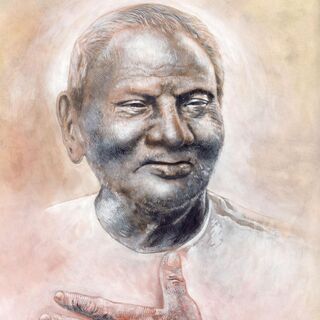
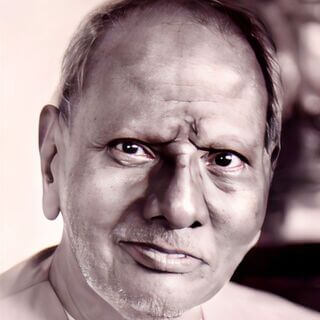
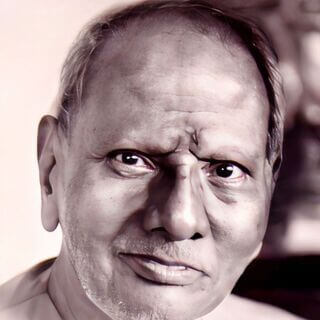
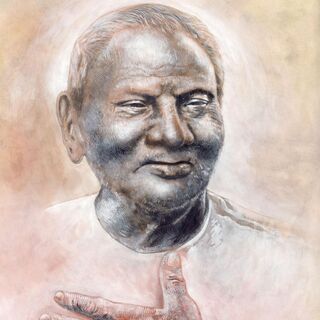
See full citation in referencesWitness Consciousness comes from the Advaita Vedanta tradition of Hinduism and its teaching of the sakshi, the inner witness, systematised through the lineage of Shankara and carried into modern practice by teachers such as Ramana Maharshi and Nisargadatta Maharaj. In this nondual worldview, the witness is understood to be one's true nature, or atman, an awareness always present rather than a state to be manufactured. These roots help explain the practice's form, its emphasis on self-inquiry and resting as the observer, not its clinical effects.
For most healthy adults, resting as the witness is a gentle, low-risk practice you can explore on your own. Because it asks you to turn attention inward and watch thoughts, sensations, and emotions closely, that sustained inward watching can sometimes surface painful memories or strong feelings, for some people it may bring distressing material into awareness, or a sense of feeling detached from yourself rather than settled. This is a moderate, practice-informed caution: it comes from the broader clinical case for trauma-informed awareness work, not from harm measured in Witness Consciousness itself. Where inward attention feels overwhelming rather than steadying, working alongside a trauma-informed therapist or teacher can help (Ranjbar & Erb, 2019).
People with a history of trauma, post-traumatic stress, or a tendency toward dissociation, feeling unreal or cut off from your own body, may find that closely observing inner experience intensifies intrusive memories or that sense of detachment, so extra care and professional support are worth having in place. This is a practice-informed caution rather than an evidence-based contraindication, since no trial has measured harm from this specific practice. Anyone currently managing a significant mental health condition is best treating witnessing practice as a complement to professional care, not a replacement for it.
Because witnessing asks you to turn attention inward and watch thoughts, sensations, and emotions closely, sustained inward observing can surface painful memories or intensify intrusive thoughts for people with a history of trauma or post-traumatic stress. This is a practice-informed caution drawn from broader trauma-informed contemplative-care literature, not a harm measured in Witness Consciousness itself. Keep sessions short, stay grounded with your eyes open and your feet on the floor, and work alongside a qualified trauma-informed therapist or teacher when inward attention feels overwhelming rather than steadying (Ranjbar & Erb, 2019).
If you are prone to dissociation, feeling unreal or cut off from your own body, closely observing inner experience can sometimes deepen that sense of detachment rather than settle it. The witness stance is meant to be clear, present recognition, not numbing or splitting-off, so treat feeling flooded, panicky, or unreal as a signal to ease off, ground yourself, and stop. This is a practice-informed caution rather than an evidence-based contraindication, since no trial has measured harm from this specific practice; extra care and professional support are worth having in place (Ranjbar & Erb, 2019).
If you are currently managing significant anxiety, depression, trauma, or another mental health condition, treat witnessing practice as a complement to professional care, not a replacement for it. Direct research on Witness Consciousness is limited, and it is not a substitute for treatment where these conditions are severe. Where inward attention surfaces distressing material that is hard to work with alone, explore it with a qualified professional.
Resting as the witness is best approached lightly, as something spacious rather than effortful, so keeping your early sessions brief and low-pressure gives the state room to become familiar. It helps to have a steady physical anchor within reach and to stay attentive to how the watching feels, so that calming and settling is what you build on rather than anything that tips into feeling flooded or detached.
Begin with brief sessions of a few minutes and let the practice stay light. There is no need to force stillness or push through discomfort; resting as the observer is meant to feel spacious, not effortful.
Let attention rest on something steady and physical, such as the weight of the body or the sensation of the breath, so you always have a place to return to if inner watching starts to feel unsettling.
As you observe thoughts and emotions, they should gradually feel calmer and less sticky. If instead you feel flooded, panicky, or detached from yourself, treat that as a signal to ease off rather than continue.
If distressing memories or strong emotions surface, open your eyes, feel your feet on the floor, and shift attention to your surroundings until you feel grounded again. Stopping is always a valid choice.
If inward observing repeatedly brings up overwhelming or traumatic material, practise alongside a qualified trauma-informed therapist or teacher who can help you work with that material safely.
This information is educational and is not medical advice. This practice is not a substitute for professional care and should not replace prescribed medication or treatment for any medical or mental-health condition. If you are managing a health condition or taking medication, talk with a qualified health professional before changing your practice. If you are in distress or crisis, seek professional support.
| Technique | Best for | Use with care | Evidence strength | Distinction |
|---|---|---|---|---|
| Mindfulness meditation | Building everyday present-moment attention and stress skills through structured, well-studied programs such as MBSR or MBCT. | strong EVIDENCE | Both practices watch thoughts and feelings arise and pass, but mindfulness treats observing as a skill cultivated moment to moment, while Witness Consciousness frames the observer as your unchanging true nature (atman) that was always present rather than a state to be built. Mindfulness carries by far the larger research base, so much of what is claimed for witnessing is inferred from mindfulness studies rather than measured in the Advaita practice itself. | |
| Cognitive defusion (Acceptance and Commitment Therapy) | Structured, goal-oriented therapy for unhooking from sticky or distressing thoughts in service of changing behavior. | moderate EVIDENCE | Decentering, seeing a thought as a passing event rather than a fact, is the research cousin of cognitive defusion. ACT delivers this as a structured clinical technique aimed at valued action and behavior change, whereas Witness Consciousness arrives at the same unhooking through contemplative self-inquiry and resting as awareness. | |
| Self-distancing | Reflecting on one specific upsetting memory or situation with less emotional heat. | emerging EVIDENCE | Self-distancing, deliberately viewing a hard experience from an outside vantage point, is a secular, lab-studied version of the observer stance. It is typically used as a brief reflective strategy for a specific memory or situation rather than as a sustained practice of resting as awareness itself. | |
| Non-dual awareness practices | Practitioners drawn to contemplative traditions that explore the nature of awareness itself rather than a single symptom or outcome. | emerging EVIDENCE | Witness Consciousness is one path into non-dual awareness. The wider family includes other contemplative styles that also cultivate a mode of resting attention in which the felt line between observer and observed softens, though each arrives there through its own tradition and method. |

Usually it feels like stepping back a little: thoughts and feelings keep coming, but you watch them from a slight remove, with a small beat of space before you react. Many people describe the inner narrator softening and a steady, open awareness resting in the background.
+
Most practitioners describe it as watching experience from a slight distance rather than being swept into it, so a worry can feel less sticky and less personal. Some notice the running self-commentary quieting into steady background awareness; others simply feel a beat of space before reacting. Early sessions can feel like little is happening, and the observer stance usually grows more familiar with repetition rather than arriving all at once. These are subjective descriptions from the Advaita tradition and adjacent awareness research, not a measured clinical outcome.
Not quite. Both watch thoughts and feelings arise and pass, but Witness Consciousness, from Advaita Vedanta's sakshi, or inner witness, frames the observer as your true nature, the atman, while mindfulness treats observing as a skill you cultivate. Mindfulness also carries a far larger research base.
+
Not quite. The two overlap in method, since both rest as the one who notices experience rather than being swept into it, but they differ in framing. Witness Consciousness, drawn from Advaita Vedanta's teaching of the sakshi, or inner witness, holds that this observing awareness is your true nature, the atman, something always present rather than a state you build; mindfulness presents observing as a trainable skill. This is a definitional and source-context distinction, not a claim that one works better, and direct research on Witness Consciousness itself is limited, so much of what is said about it borrows from the larger body of mindfulness and awareness studies (Vago, 2013), (Vago & Silbersweig, 2012).
It's more than belief, but not directly proven. No randomized trials or effect sizes exist for Witness Consciousness itself, yet its core mechanisms, decentering and an observer stance linked to calmer emotions, have indirect research support (Vago, 2013), (Ayduk & Kross, 2010).
+
It sits between the two: suggestive rather than settled. The practice has not been tested in its own randomized trials, so no effect sizes exist for it directly (Vago & Silbersweig, 2012). What support there is comes from adjacent research: self-distancing linked to lower emotional reactivity (Ayduk & Kross, 2010), decentering that lets thoughts be seen as passing events (Vago, 2013), quieter self-referential activity in the brain's default mode network among experienced meditators (Cooper et al., 2022), and moderate meta-analysis findings that meditation and yoga lower stress markers (Pascoe et al., 2017). The Advaita worldview frames the practice but is not proof of clinical effect, and it is not a treatment for any diagnosed condition.
Possibly, though the evidence is indirect. Observing thoughts from a slight distance is linked to calmer, less reactive emotional responses, and related meditation and yoga practices are tied to lower physiological signs of stress. No trials test Witness Consciousness itself for anxiety, so treat it as support for steadier reactions, not a treatment for diagnosed anxiety (Ayduk & Kross, 2010), (Pascoe et al., 2017).
+
Possibly, though the support is emerging and borrowed rather than proven for this practice. Self-distancing research links taking an observer stance toward difficult experience to calmer emotional responses, and decentering studies describe thoughts starting to feel like passing mental events rather than facts you must obey (Ayduk & Kross, 2010), (Vago, 2013), (Vago & Silbersweig, 2012). Moderate evidence from the wider family of meditation and yoga, not this technique, ties regular practice to lower physiological stress signs (Pascoe et al., 2017). Be clear on the limit, though. There are no randomized trials or effect sizes for Witness Consciousness itself, and no basis for treating it as a substitute for care for diagnosed anxiety (Cooper et al., 2022).
Indirectly, brain-imaging reviews of experienced meditators link nondual, witness-style states to quieter activity in the default mode network, the circuitry busiest during self-focused, mind-wandering thought (Cooper et al., 2022). This is borrowed from advanced meditators across several practices, not measured in Witness Consciousness itself.
+
Indirectly, brain-imaging reviews point to a measurable shift. In experienced meditators, nondual awareness, a mode of attention in which the felt line between observer and observed softens, is connected to reduced activity in the default mode network and quieter self-referential processing, the brain's habit of filtering experience through a running story about the self (Cooper et al., 2022), (Vago & Zeidan, 2016). The direction is mostly a decrease but mixed, and these findings come from advanced meditators across several practices rather than trials of Witness Consciousness, so there are no effect sizes for this technique and this is not a proven brain effect of the practice or a treatment claim.
No. Observing a feeling from a slight distance lets it arise and pass while you watch it, which is different from pushing it down or refusing to feel it. This shift, called decentering, is linked to a calmer relationship with emotions rather than blocking them (Vago, 2013), (Ayduk & Kross, 2010).
+
No. In witnessing, emotions are fully allowed to arise and pass while awareness simply observes them, whereas suppression or avoidance means blocking or bottling a feeling up. Decentering, the shift from being immersed in a feeling to seeing it as a passing mental event, and self-distancing, taking a step back to view a difficult experience from an outside vantage point, are both tied to steadier, less reactive responses rather than numbing (Vago, 2013), (Vago & Silbersweig, 2012), (Ayduk & Kross, 2010). This support is indirect, drawn from mindfulness and self-distancing research rather than trials of Witness Consciousness itself. For some people, inward observing can tip into feeling detached rather than settled; if that happens, ease off and ground.
Use care. With a trauma, PTSD, or dissociation history, closely observing inner experience can sometimes intensify intrusive memories or detachment, so grounding, shorter sessions, and trauma-informed support are advised. No trial has measured harm in this specific practice, so treat witnessing as a complement to professional care, not a replacement (Ranjbar & Erb, 2019).
+
Use care. Witness Consciousness asks you to turn attention inward and watch thoughts and feelings closely, and for people with trauma, PTSD, or a tendency toward dissociation, a sense of feeling unreal or cut off from your body, that sustained inward observing can sometimes surface distressing memories or deepen detachment rather than settle it. This is a practice-informed caution drawn from broader trauma-informed contemplative-care literature, not a harm measured in Witness Consciousness itself, since no trial has tested adverse effects for this practice (Ranjbar & Erb, 2019). If inward attention feels overwhelming, ground yourself, open your eyes, and work alongside a qualified trauma-informed professional; witnessing complements rather than replaces care.
Watch the direction it takes you. Helping feels like calmer, less sticky thoughts and a small beat of space before reacting; tipping into detachment feels flooded, panicky, or unreal and cut off from your body. If it turns unsettling rather than steadying, open your eyes, feel your feet on the floor, and pause.
+
Watch the direction it takes you. When witnessing is helping, thoughts and feelings feel less sticky and more like passing events, with steady, open awareness in the background. Warning signs point the other way: feeling flooded, panicky, or detached from yourself, a sense of unreality rather than grounded clarity. Treat those as cues to slow down, ground, or stop, and if overwhelming or traumatic material keeps surfacing, work alongside a qualified trauma-informed therapist or teacher. This is a practical, practice-informed caution rather than a diagnosis, since no harm has been measured in this specific technique.
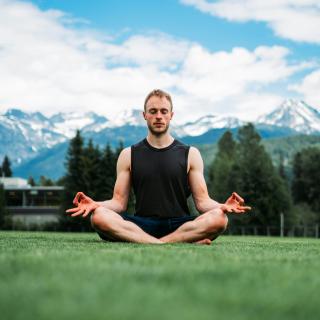
Start small. Sit comfortably for a few minutes and simply rest as the observer that notices thoughts and feelings arising and passing, keeping a felt anchor like the breath or the weight of your body to return to. If inward attention feels flooding rather than settling, open your eyes, ground in your surroundings, and stop.
+
Start small and gentle. Witness Consciousness rests attention as the aware observer that watches thoughts and feelings come and go, so begin with brief sessions and let attention settle on a steady physical anchor, such as the breath or the sensation of the body, that you can return to. Observing should gradually feel calmer and less sticky; if instead it brings up distressing memories or a sense of detachment, ease off, feel your feet on the floor, and stop. The observer stance tends to become more familiar with repetition rather than arriving all at once, and if inward watching repeatedly feels overwhelming, working alongside a qualified trauma-informed teacher or therapist is wise.
That is normal and expected. In Witness Consciousness the observer stance is meant to feel subtle rather than dramatic, and it tends to become more familiar with repetition rather than arriving all at once. Feeling like little is happening early on is not a sign you are doing it wrong.
+
That is normal and expected. Many people notice thoughts and feelings simply continuing as before, and the shift is often quiet, a small beat of space around what is passing through, rather than a strong or obvious event. The practice is meant to be non-effortful, so there is no need to force stillness or push for a result; resting as the observer usually becomes more recognisable gradually, with repetition. This is a practical note about how the practice tends to unfold, not a claim about any measured outcome.
In Advaita Vedanta, the sakshi is the inner witness: the aware presence that observes all thoughts, sensations, and emotions without being changed by them. Resting as this witness is the core of the practice.
In Advaita Vedanta, atman is one's true self understood as pure awareness. The tradition holds the witness to be atman, something always present, rather than a mental state to be manufactured.
Stepping back to see thoughts and feelings as passing mental events rather than facts about who you are, so a worry can arise with a small gap of space around it.
A shift from immersion in mental content to observing thoughts and emotions as transient events; the research term is cognitive defusion.
Recognising and releasing the automatic sense that you are your thoughts, feelings, or roles, so the one noticing feels distinct from what is noticed.
Disidentification, or self-concept flexibility: releasing fused identification with mental content, creating experiential distance between awareness and its contents.
The mind's ability to notice its own current state, such as knowing you are distracted or calm, without that noticing disrupting the experience.
Metacognitive monitoring: awareness of the ongoing state and processes of one's own mind.
Watching your own thoughts and emotions from a slight distance, as if from the position of a steady witness, so there is a beat of space before you react.
Deliberately viewing a difficult experience from an outside vantage point rather than from inside it, a shift linked to calmer emotional responses.
A mode of resting attention in which the usual felt line between the observer and what is observed softens, so experience and the awareness of it feel less divided.
The set of brain regions most active during self-focused thought and mind-wandering; quieter activity there tends to mean less internal chatter centred on 'me'.
A network of interacting brain regions active during self-referential, internally directed cognition and mind-wandering, and relatively less active during externally focused tasks.
The brain's habit of filtering experience through a running story about the self; when it quiets, thoughts feel less personal and more like passing events.
David R. Vago, David Silbersweig (2012). Self-awareness, self-regulation, and self-transcendence (S-ART): a framework for understanding the neurobiological mechanisms of mindfulness. https://doi.org/10.3389/fnhum.2012.00296
Cited in: Benefits, How it works, Research
Austin Clinton Cooper, Bianca Ventura, Georg Northoff (2022). Beyond the veil of duality—topographic reorganization model of meditation. https://doi.org/10.1093/nc/niac013
Cited in: Research, What happens in the body
David R. Vago, Fadel Zeidan (2016). The brain on silent: mind wandering, mindful awareness, and states of mental tranquility. https://doi.org/10.1111/nyas.13171
Cited in: How it works, Research
David R. Vago (2013). Mapping modalities of self‐awareness in mindfulness practice: a potential mechanism for clarifying habits of mind. https://doi.org/10.1111/nyas.12270
Cited in: Benefits, How it works, Research
Michaela C. Pascoe, David R. Thompson, Chantal F. Ski (2017). Yoga, mindfulness-based stress reduction and stress-related physiological measures: A meta-analysis. https://doi.org/10.1016/j.psyneuen.2017.08.008
Cited in: Benefits, Research, What happens in the body
Özlem Ayduk, Ethan Kross (2010). From a distance: Implications of spontaneous self-distancing for adaptive self-reflection.. https://doi.org/10.1037/a0019205
Cited in: Benefits, How it works, Research
Noshene Ranjbar, Matt Erb (2019). Adverse Childhood Experiences and Trauma-Informed Care in Rehabilitation Clinical Practice. https://doi.org/10.1016/j.arrct.2019.100003
Cited in: Use with care
Editorially curated. Tracks are not themselves clinically studied; evidence on the page applies to Witness Consciousness as a technique.
Explore guided sessions to deepen your Witness Consciousness technique.
Beginner content for Witness Consciousness

★ 4.9
·
Guided
·
46 min
Mooji
How hard is Witness Consciousness?
Witness Consciousness keeps a meaningful floor because the practice depends on a specific witness-identity shift beyond ordinary observation, while the reviewed modality defaults still fit.
3
Mental Effort
3 / 4
▾Emotional Depth
1 / 4
▾Physical Intensity
1 / 4
▾Prior Knowledge
2 / 4
▾