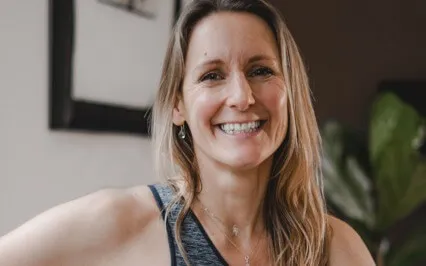
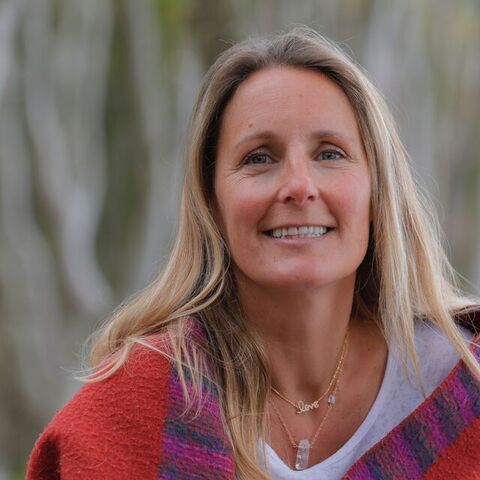
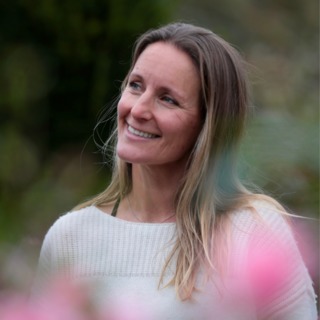
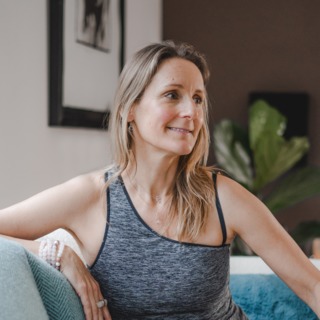
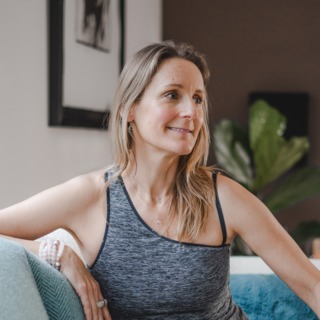
The following practice is led by Sonia Lockyer,
Host of the Wellbeing Ritual Club.
So let's start our practice by finding your sitting bones,
Finding the weight of your pelvis.
Maybe the pelvis is the seat of gold within your body.
And allow that to become heavy.
And allow the pelvis to awaken by gently bringing in awareness and a contraction that is not forced.
Merola Banda is a very interesting thing.
When I first started doing yoga 20 years ago and I was doing Ashtanga,
I heard multiple stories of women that had activated Mula Bandhas to such an extent that the muscles had actually gone into spasm and when they then became pregnant and needed to give birth,
They weren't able to relax Mula Banda.
And so it's so typical that our culture would glorify the contraction and not allow the relaxation.
It's a fractal of a pattern that goes on in everything,
Doesn't it?
Work harder,
Push harder,
Be stronger.
And on its own it's just totally out of balance and it becomes toxic.
We need the other side which is work less hard,
Relax,
Rest and release and let go.
So maybe before we go into our breath practice,
You can just experience Mula Banda for what it feels like for you.
When you contract and when you release,
Knowing that both are as important as each other.
So our breath practice today is focusing on the pelvis but we're going to make our way there slowly.
So allow whatever it is you find here to be,
You don't need to change it,
You're just observing.
And then bring your awareness to your breath,
Perhaps up to your nostrils as you breathe in and out through your nose.
Watching for yourself your own curiosity,
How it feels to breathe in and out through the nose.
You may have the benefit of the research that scientists have made that show us that we are breathing in and out through our nose.
The optimum length of your breath is somewhere around a count of five or six.
Notice for yourself what your breath is naturally moving towards.
Just this bringing of awareness to breath usually lengthens it.
One capacity is a personal thing,
We each have our own cadence,
Our own capacity.
The awareness of where you are with your breath is helpful.
Sometimes it's not the lung capacity,
Sometimes it's the structure of the architecture of your body around your lungs.
I was lucky enough to have a massage last week and at the end of the massage I was able to take a full breath.
What I hadn't noticed was the intercostal muscles,
The muscles around my collar and shoulders were all contracted and locked up and so my breath was forced to be shallow.
Sometimes it's helpful to get a third party to help us with our body and our practice.
Let the tongue press gently up into the roof of your mouth.
Notice your sense of hearing,
What sounds you can hear in this moment.
What can you hear as the furthest sound in this moment?
Then calling your hearing back in to notice the sounds of your body,
Your breath,
Maybe your heart,
Maybe a gurgle of the tummy.
You're beginning to circle the head,
A slow sweeping circle to give you the opportunity to feel your neck this morning.
Listening out for the sounds as you do so.
Switching directions.
F steps.
Then allowing the shoulders to circle.
It's not uncommon for there to be quite a symphony of noise from inside the body.
Elbow seconding.
Then firm extension circling.
You're resting the hands on your knees circling your heart.
Bringing your awareness to your spine and any part of your body that calls on your awareness.
And changing direction.
Coming back to center.
We'll just rock the pelvis forwards and back.
So as you exhale,
Your tailbone drops down.
Your heart will just lean back a little and then as you inhale,
The pubic bone presses down towards the floor and your heart will rock forwards.
In fact,
This ripple effect will be felt throughout the whole body.
You might find that your gaze rises and falls,
Even with the eyelids closed.
Becoming acquainted with the rhythms of your own body.
What might sometimes feel smooth and silky in movement,
Other days might feel jaggedy and stop and starty.
I'm coming to rest in center.
Keeping yourself to be comfortable,
So possibly placing right hand on top of left hand,
Palms facing upwards.
If you become uncomfortable,
Then change your position.
You don't have to suffer to be in perfect stillness.
You can move and still contain the stillness.
Very often as I practice breath and meditation,
I'll find myself swaying and I never stop that.
I allow it.
It feels good.
Soften the lips,
The jaw.
If you're able to,
Then breathe in and out through the nose.
Encouraging but definitely not forcing the breath to lengthen.
I set an intention to practice for the good of all,
Offering up our practice that it may be felt by all beings.
On your next inhale,
Drawing the breath down into your heart space.
As you exhale,
Allowing the breath to radiate from the center of your heart,
The heart of your heart out in all directions.
Without a doubt.
Breathing in and out.
Broadening out.
Perhaps you might be aware of a sensation or a feeling as you breathe into your heart space.
Maybe allow more of that feeling,
That heart feeling to expand.
Then draw the next in breath right the way down to the pelvis,
Deep within the pelvic bowl.
See if you can find the heart of your pelvis.
The landscape of the pelvis is very unique to every woman and every man.
We're all women here practicing today.
Just see if you can explore for yourself where does the in breath and your awareness take you within the pelvis.
Where does your body understand the core of your pelvis to be?
And allowing the exhale to expand out in all directions from there.
Great.
So the heart of the womb space is usually.
.
.
Sorry,
The heart of the pelvis space is usually the womb.
And that is true regardless of the presence of the organ of your womb.
Even if that has been removed,
The energetic imprint remains and that space continues to be the heart of the womb.
Taking your in breath all the way down.
Noticing what it feels like to be aware of that womb energy and exhaling,
Allowing that energy to expand out in all directions.
And it's not uncommon for it to feel difficult to bring your awareness down into your pelvis.
So sometimes it's more a question of visualizing it,
Imagining it.
However the practice unfolds for you,
Take that to be the perfect way.
And then allow your awareness to sweep over to the right hand side of the pelvis.
So deep within the pelvic bowl but over to the right and notice what you feel.
Inhale takes your awareness all the way down to within the pelvis over to the right hand side and the exhale expands from there.
Sometimes there's a shift in temperature or texture.
And drawing your inhale back to the centre of the pelvis.
And allowing your awareness to move over to the left hand side of the pelvis.
Drawing your inhale all the way down and over to the left.
Allowing the exhale to radiate out from that left hand side in all directions.
To move our awareness around,
In some ways we're listening.
Going to the landscape,
The terrain of our own bodies.
That doesn't require us to fit a certain shape or size or texture or experience.
We stay open to what is,
Trusting that that is the perfect experience for us.
Or maybe it feels different from left to right.
That's not unusual either.
And then bringing your in breath right down into the womb spacing in.
And now channelling the breath up and down through the spine.
So inhaling into the pelvis,
Exhaling up and out through the spine and out through the crown of your head.
If you want to bring some movement into the spine that could feel good.
Soften the face into a gentle smile.
Notice how it feels to be in your body now.
To be aligned and reconnected with the midline of your being.
Whole and fully yourself and fully present.
And we invite that wholeness to stay with us through our day to day.
And we offer the experience of wholeness to all beings on earth so that as we practice our personal well being it becomes collective well being.
Namaste.